
Judgment Day

Most days are good days for me. Every once in a while I’ll feel a bit more intense and may have a tendency to behave in ways that are out of character for me. Recently I observed a situation that reminded me of how dangerous it can be to let my guard down in this way. Allow me to set the stage for this story.

We were vacationing with friends and enjoying breakfast in a small outdoor café. A mid-60s couple was sitting at a nearby table. The woman was seated next to a small ledge and unwittingly shifted her chair and toppled over backwards. Immediately my friend who was closest, jumped up and rushed to her assistance. With her glasses askew and an embarrassed look on her face, she got back on her feet with my friend’s help. Fortunately she was not hurt.

The focus of this story is not on the woman’s accident but on the husband and how he reacted. He just sat there. While my friend came to the rescue, the husband just sat in his seat drinking his coffee like nothing had happened. At one point he joked to his wife that she “looked like a circus clown.” Once she regained her composure, the woman left the café – smiling but humiliated. After a moment the husband looked at us and said half in jest, “Well, you sure made me look bad.” And then he left.

Now here’s the most instructive part of this episode. Once the husband was gone the café patrons were abuzz and angry. People couldn’t believe the husband had treated his wife this way. As she cleared the table, the server exclaimed, “He just sat there. I can’t believe he didn’t get up to help her!” I heard references to “jerk,” and “a**hole,” just to name a few.

This man was being judged by a jury of his peers and he was found guilty. He left a lasting impression on everyone in that restaurant and it was 100% negative. Just a single action. For all we know, this man might be one of the finest, most generous and thoughtful human beings on the planet. He might have just donated $100 million to build a new wing on the local hospital, and named it in honor of his wife. But at that moment in time, and without any other context, he was an ogre to his jury and will forever remain frozen in that image.

Most of us care about how others see us. We want to be viewed in a favorable light or at worst, in a neutral manner. The husband in this story obviously had enough self-awareness to realize he was wrong as evidenced by his statement that, “You made me look bad.” Unfortunately that comment probably sealed his fate for the onlookers. He chose to blame my friend for how others saw him rather than taking responsibility for his own poor behavior. I’d bet that if he apologized to his wife in the restaurant and admitted that he had a momentary lapse in judgment, the impression he left would have been different.

We all have momentary lapses in our behavior. But it’s important to take corrective action to repair the damage as quickly as possible. Failure to do so may result in an extremely harsh and lasting judgment by a jury of our peers.

This blog is being written in tandem with my book, “An Entrepreneur’s Words to Live By,” available on Amazon.com in paperback and Kindle (My Book), as well as being available in all of the other major eBook formats.

5.0.2

The Enemy?

Evil, dirty, underhanded, devious, conniving, despicable, dishonest, cutthroat, backstabbing, snobbish, arrogant, lying and cheating. These are terms I’ve heard applied to competitors over the last 40 years. Without a doubt I’ve missed some. What emotions are evoked when you think about your competitors? Some entrepreneurs I know have pure hatred for the competition and others display a great deal of fear. Why do we associate such negativity to our competition?

The amateur psychologist in me believes it has something to do with our childhood (don’t all of our issues?). On the playground we engaged in competitive duels involving kickball, dodge ball, four-square and other gladiator-like activities. Losers were vanquished with taunts and teasing. When we were older, competition for relationships with the opposite sex was intense. When a sought-after girl or boy chose someone else, we were crushed and dejected. Fast forward to today and it’s no wonder that we often see our competition as the enemy.

But do we really benefit from viewing our competitors in this manner? Competition is actually a wonderful thing. Let’s look at several of the reasons why.

  • Competition stimulates creativity and innovation. Every day we know that our competitors are working overtime to develop new products or services. To keep from being left behind we do the same. New discoveries are made out of this process that may generate greater profits and capture a larger market share.
  • Best practices emanate from a competitive environment. Let’s face it; we don’t have all the answers. So, observing how others do things and testing our approach accordingly can lead us to implement better systems and processes. Without competition what would be the incentive to improve?
  • An inefficient market is the byproduct of competition. Some competitors are stronger and some are weaker. If every competitor was equally strong how would anyone win? The concept of winners and losers is critical to a healthy yet inefficient market.
  • Hand-in-hand with the inefficient market theory is the opportunity for differentiation. This is good for the consumer and it’s outstanding for the entrepreneur. Why? Because we have the opportunity to create a level of variety that may appeal to more customers. It’s not just about “better;” it’s also about “different.” If every boutique sold the same black dress, doesn’t it stand to reason that a boutique selling a purple skirt might win a few more customers than the black dress sellers?
  • Competition helps to broaden the talent pool. It provides career paths for the workforce into which we as entrepreneurs can tap. We can create cultures where people want to work, giving them the chance to grow and advance their careers. And in the process we get to attract the best and the brightest.

For years we’ve enjoyed good relationships with our competitors. We view them with respect and in some cases, admiration. Other terms come to mind as well; friendship, collaboration, empathy and gratitude. Collaboration you say? Yes, we’ve often referred customers to our competitors when we couldn’t meet their needs and they’ve done the same for us. In 2008 a Maine portable restroom business owned by Jeff Bellino burned to the ground. Who came to the rescue? Bellino’s competitors! They provided portable restrooms, toilet tissue and chemicals so that he could keep going while he rebuilt his operation. Competition is at its healthiest when competitors have each other’s backs in a time of need.

When we embrace the notion of strong and healthy competition we enhance our chances for success. There’s no doubt that competition makes us better entrepreneurs in every respect.

This blog is being written in tandem with my book, “An Entrepreneur’s Words to Live By,” available on Amazon.com in paperback and Kindle (My Book), as well as being available in all of the other major eBook formats.
gladiators

Dead End or . . . ?

Have you ever found yourself pursuing an idea or an initiative only to discover you’ve reached a dead end? Often times people give up and move on to something else. Why waste any more time on something that’s not going to work, is the conventional thinking. But what if this is an entrepreneurial endeavor in which we’ve invested serious money as well as time and energy? Walking away isn’t so easy. In fact there may be a tendency to stubbornly throw good money (and time and energy) after bad.

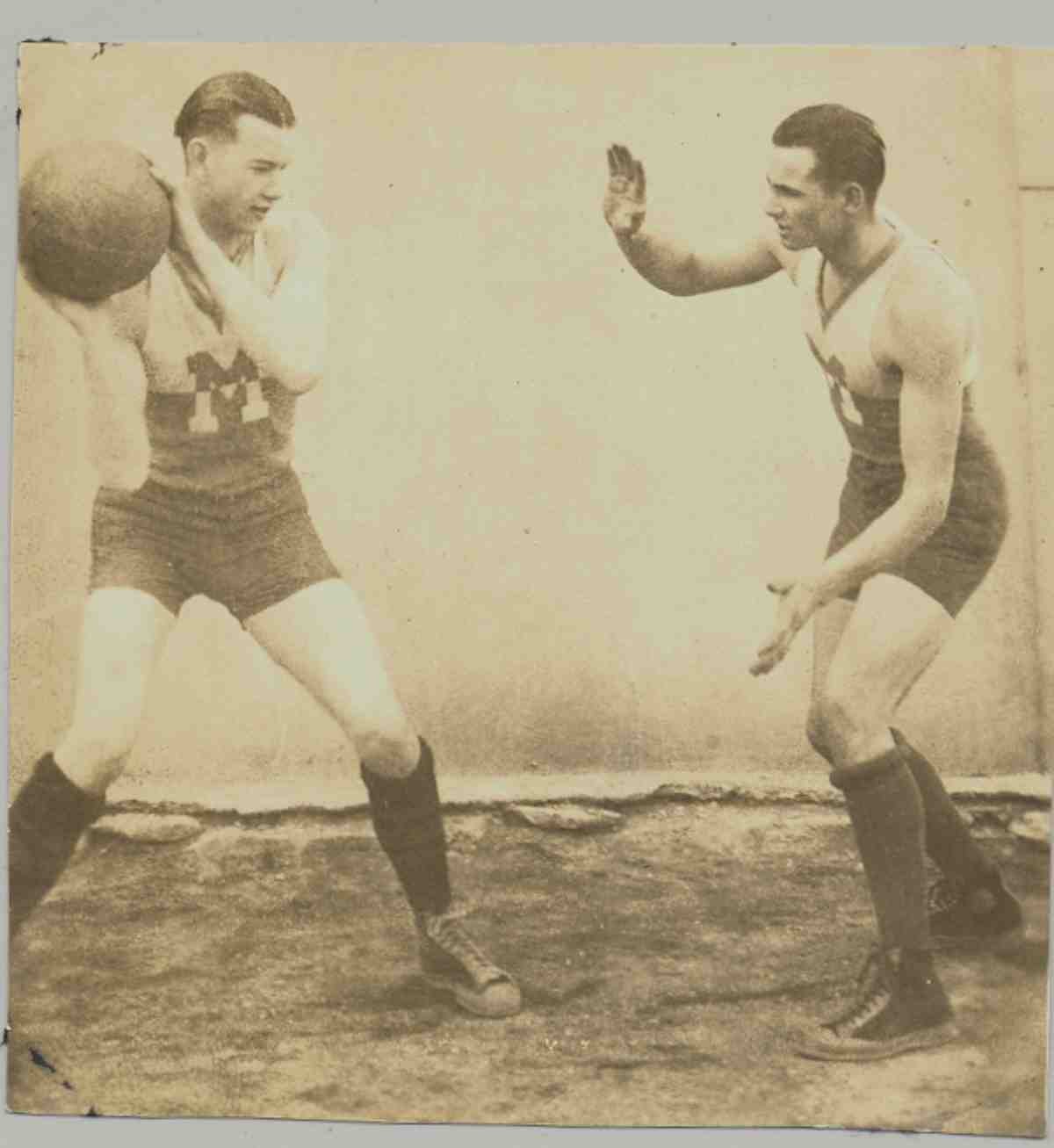
There is a way to turn some dead-ends into cul-de-sacs. This is done through a process called pivoting. Very simply, a pivot is a change of direction. I remember playing high school basketball and having the ball thrown to me close to the basket. Usually there was a defender trying to stop me from scoring which required me to pivot or change direction to get a better unobstructed shot. Sometimes I was so hell-bent on bulling my way to the basket that my shot would be blocked or the ball would be stripped away. Frustrating? You bet. But it was my failure to finesse the situation and pivot that resulted in my failure to score.

While pivoting seems like an easy and obvious course of action, it’s not. We entrepreneurs tend to be a proud lot. We often think we have the best ideas since sliced bread. We also believe we can make anything work with discipline and perseverance along with our charm and good looks. We may not even realize we’re headed down a dead-end street. How can we become more objective on our journey? Setting milestones at the beginning of the process can be very helpful. This is accomplished by establishing measurable performance indicators that enable us to know if we’re progressing toward our end goal or not. By keeping track of our milestones it becomes easier for us to see when we need to make a course correction.

There are numerous examples of pivots in American business that resulted in extraordinary products and companies. The likes of Pay Pal, Groupon, Starbucks, Nokia, Flickr, Hewlett-Packard, Nintendo, Instagram, Wrigley, Avon, Pinterest and Suzuki are all case studies. An article in Forbes Magazine dated October 8, 2014 by Jason Nazar and Rochelle Bailis chronicles one of the most famous pivots of the modern era – Twitter.

“The most legendary pivot in social media history is the transformation of Odeo into Twitter. Odeo began as a network where people could find and subscribe to podcasts, but the founders feared the company’s demise when iTunes began taking over the podcast niche. After giving the employees two weeks to come up with new ideas, the company decided to make a drastic change and run with the idea of a status-updating micro-blogging platform conceived by Jack Dorsey and Biz Stone.”

Keeping an open mind; avoiding being married to an idea; setting and watching milestones; collaborating with others, and maintaining an environment for innovation is the perfect recipe for discovering when and how to pivot. Sometimes multiple pivots may occur before we nail it. Smart entrepreneurs are always on the lookout for pivots that will deliver the results they are seeking.

A pivot may actually bring about an even more exciting product or service (or company) than originally intended. The process of pivoting will also help to minimize or eliminate the incidences of dead-ends.

This blog is being written in tandem with my book, “An Entrepreneur’s Words to Live By,” available on Amazon.com in paperback and Kindle (My Book), as well as being available in all of the other major eBook formats.
pivots

Watch Your Language!

Words, words, words. Research by Louann Brizendine of the University of California indicates that on average, women speak 20,000 words per day and men speak 7,000. I share this to point out how many opportunities we have as men and women to create positive or negative energy with what we say. Our words can be uplifting or demoralizing; they can be helpful or hurtful, and they can be passive or aggressive. In my opinion one of the most important things to remember is that what we speak is an affirmation.

As entrepreneurs and for everyone in general, we want our affirmations to be positive. Affirmations have power. They pattern our conscious and subconscious minds. The seemingly innocent things we say are cumulative and can have a profound impact on our lives. Let’s look at some of the “benign” statements that are made every day.

“I didn’t have time . . .” I’ve been working hard to eliminate from my vocabulary any reference to not having enough time. I realize that I make a choice about how I spend my time and I’m not somehow under its spell. Sure, there are things that don’t get finished, but I chose which tasks those were. Understanding this has helped me become much more adept at prioritizing what I do each day.

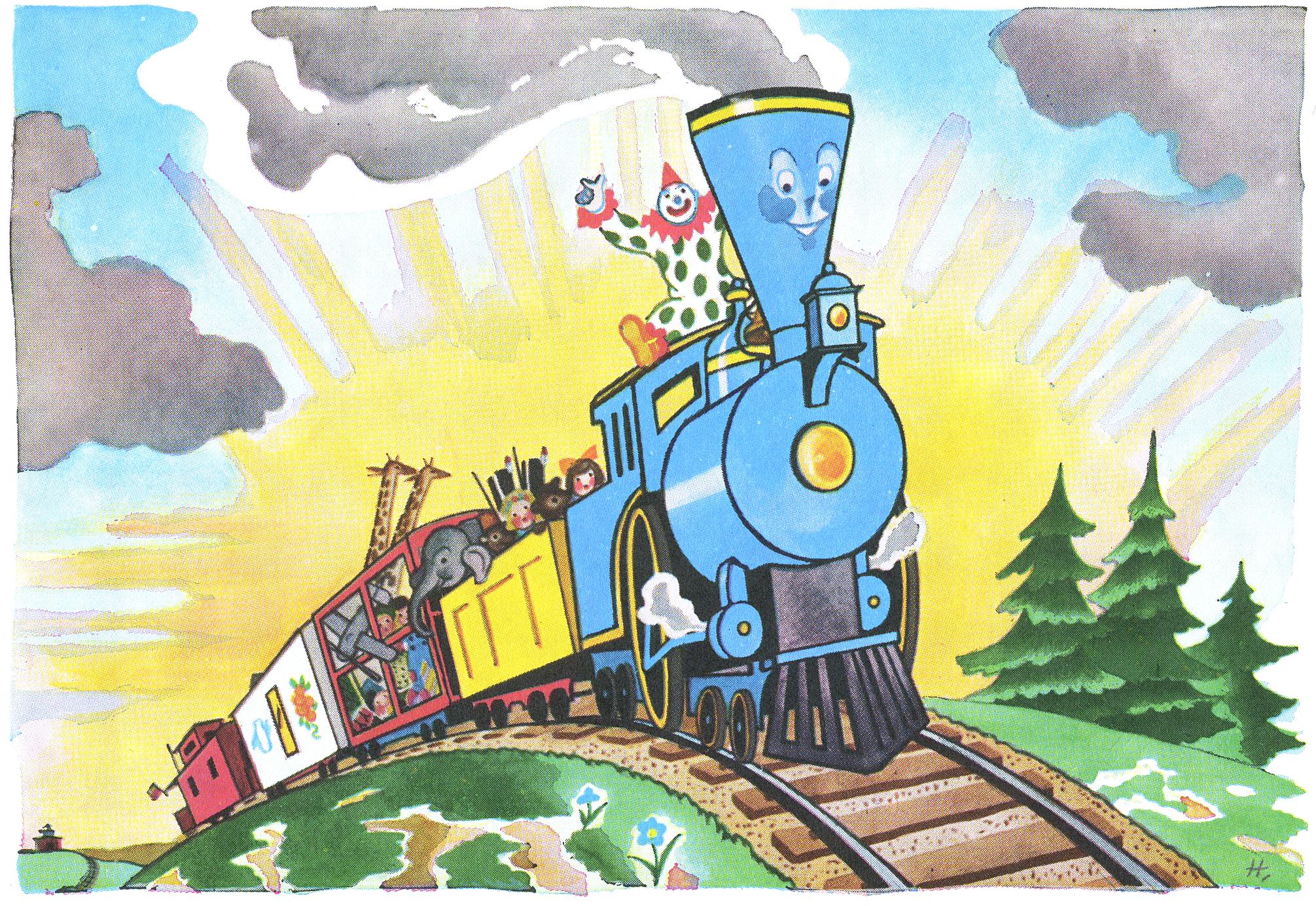
“I can’t do . . .” This one is dangerous. The more we say this, the easier it becomes to admit defeat – and “I can’t” is clearly the flag of surrender. As cliché as it may seem, I try to replace “I can’t” with my childhood memory of the 1930 story by Watty Piper, The Little Engine That Could. I’ve decided that I’d rather “think I can,” try and fail, than “think I can’t” and not try at all.

“I’m sick.” I refuse to acknowledge this. It’s true that I may get a sniffle from time-to-time but I’m not about to affirm that I’ve succumbed to ill health. If I do feel a bit under the weather I will affirm that I’m healthy and whole. That, along with lifestyle changes I’ve made, powers me past whatever may be trying to ail me.

“I hate . . .” I’m guilty on this one and realize that I need to change. I say things like “I hate red lights, idiot drivers and incompetent bureaucrats.” Unfortunately there’s a touch of anger – albeit fleeting – that is present when I say, “I hate.” And anger – even a short and subtle burst – can have a physiological effect on our bodies. A combination of brain chemistry and muscular response can weaken our immune systems.

“Why did this happen to me?” There are a multitude of variations of victim-speak. “He/she screwed me,” or “I didn’t win the contract because my competitor is unscrupulous.” I’ve been working for years to recognize the fact that I’m in control of my own destiny and I’m not about to give my power to others, especially through verbal (and negative) affirmations. If I lose it’s going to be of my own doing and not because of someone else.

That which we affirm has a higher probability of manifesting than that which we do not. Why then would we want to affirm anything but positive results for ourselves?

This blog is being written in tandem with my book, “An Entrepreneur’s Words to Live By,” available on Amazon.com in paperback and Kindle (My Book), as well as being available in all of the other major eBook formats.

Little Engine That Could

Great Idea!

Entrepreneurs are brimming over with new ideas. Some are novel, some are revolutionary and some well, let’s just say there’s a lot of room for improvement. Regardless, we often find ourselves enthralled and passionate about our ideas. It’s our nature to share these ideas with others to attain validation and receive encouragement. And because most people are nice, we seldom hear rejection – especially from friends and family. Further, we may interpret tepid enthusiasm as an endorsement and plunge ahead to develop our ideas in the absence of a solid reality check.

How do we find out if our ideas are worthy? We start by treating our ideas as if they are a product or service – and they very well may be. Does our idea solve a problem? In the world of venture capital that funds ideas, a different question is asked. Is the idea a “vitamin pill” or a “painkiller?” People take vitamins because they desire better health. They take painkillers because they hurt. Which has the higher probability of being purchased on a consistent and ongoing basis? You got it – the painkiller. Consumers can put off purchases that make their lives better, but they won’t do so when they hurt. So, is your idea a “painkiller” that solves a real problem? If so, you may have a winner. But just because your idea might be a “vitamin pill” doesn’t mean it won’t work. However your case for someone to “purchase” may need to be more compelling.

Next, who is going to use your idea? In other words, who is your customer? Remember that we’re looking at our ideas as though they are products or services. To successfully implement an idea we must understand who our customer is as well as their various characteristics, traits and tendencies. For example, let’s say that we have an idea to launch a new process within our company. Who are the members of our team that will be utilizing this process? Could there be a “generation gap” with the way we plan to deploy our process? If we’re Baby Boomers, and Millennials will be using the process, we need to make certain that Millennials can relate to it.

In keeping with our ideas-are-products-or-services theme, we need to test our idea with our potential customers. Bouncing an idea off a spouse or friend isn’t the same as having an in-depth discussion with those who are going to use our idea. Before we completely perfect an idea, it’s best to work with a small focus group of eventual customers. We lay out our thesis and describe the problem we are attempting to solve. We explain the “vitamin pill” or “painkiller” notion of our idea. Then we share our solution and solicit feedback – just like we would do if we truly were launch a product or service in the marketplace. The responses we receive will be invaluable in refining our idea to be that much more appealing and useful to our “customers.”

Once we’ve completed these three steps we can evaluate whether or not our ideas are worthy of pursuit. In some cases we’ll get a thumbs-up signal, and in others we’ll either need a complete idea overhaul or throw it on the scrap heap. While sometimes challenging, being completely objective is the byword.

Evaluating ideas as a product or service reduces the chance for us to emotionally chase a fantasy. It allows us to allocate our time and energy pursuing viable opportunities that we envision.

This blog is being written in tandem with my book, “An Entrepreneur’s Words to Live By,” available on Amazon.com in paperback and Kindle (My Book), as well as being available in all of the other major eBook formats.

Aspirin-tablet-300x300