
Who Is This Murphy Guy?

Suppose you are an entrepreneur who is seeking start-up funding for a terrific idea you have. You do your homework and put together a solid business plan. Market research shows a lot of upside. Then you pitch your idea to a group of investors and hear the following observations, “I’m concerned that it would be very easy for a competitor to take this idea and run with it faster than you will.” Or, “you are projecting revenues to grow at a 25% rate per quarter for the first three years. Do you seriously believe this can be accomplished?” And finally, “your burn rate seems pretty low – in my experience a rate double what you suggest would seem more appropriate.” What do these statements and questions represent? If you said “skepticism,” you are correct.

Skepticism can be a healthy thing for entrepreneurs and non-entrepreneurs alike. In 1987, Ronald Reagan made his famous “trust but verify” statement about a treaty with the then-Soviet Union. This is a great guidepost for us where skepticism is kept in a positive perspective. Part of advancing new ideas is to have them challenged. A lot of questions are to be expected, many of which may be doubting in nature. This is good – if our ideas can survive rigorous scrutiny and we can provide evidence that is sufficient to prove our case, everyone wins.

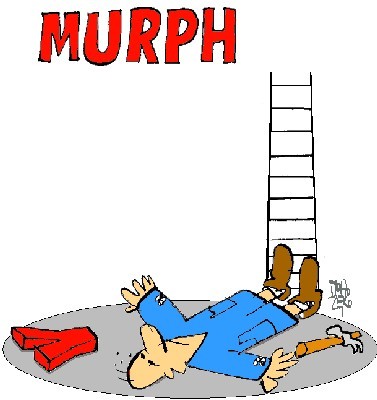
There’s a very fine line between the kind of skepticism that is all about looking for answers or proof, and that which questions veracity or integrity. When others become suspicious of our motives, we’ve entered dangerous territory for now we’re on the border of “cynicism.” Cynics suspect that others are motivated by self-interest and at times exhibit varying degrees of paranoia. When cynicism exists in an organization it’s like a cancer. The attitude of a cynic is negative. I believe that cynics are related to Murphy – you know, the Murphy of Murphy’s Law . . . anything that can go wrong will go wrong. Cynics are often denigrating, disapproving, apprehensive, sarcastic, and like to run other people down. You can see why cynics and their cynicism are so unproductive for any organization or institution.

Let’s juxtapose the skeptic and the cynic in our previous example of the start-up seeking funding. I already provided statements and questions that might have been made from a skeptical point of view. Now, here is what the cynic might say. “This idea is unoriginal and doesn’t stand a chance to succeed. Why are you pitching this to us? I’ll bet you’re going to take our money; buy a few computers; have a big party; shut down your company, and leave us holding the bag!” Not one positive thing was said there. And all of the various cynical tendencies were on full display – sarcasm, suspicion, bitterness, paranoia, and disapproval. Sure this may be a bit over-dramatized. But the illustration shows the stark contrast that is important to understand.

We need to maintain a certain dose of skepticism lest we suffer too large a degree of naïveté. Skepticism can be difficult for some entrepreneurs. We are optimists and have powerfully positive mindsets. There may be times when we aren’t interested in looking at the downside of our ideas. That’s why it’s critical that we have people on our team who exhibit a higher level of skepticism. And we must give them permission to prod and probe while expressing their skepticism in a constructive manner. Skeptics serve the entrepreneur well as a counterbalance to wild, pie-in-the-sky unrealistic notions. On the other hand, we must constantly be on the lookout for cynics and eliminate them when they surface.

Embracing healthy skepticism helps to build a better and more sustainable organization. Denying cynicism before it takes root is equally important to the long-term success of whatever it is that we are pursuing.

You can also listen to a weekly audio podcast of my blog. What you hear will be different than what you read in this blog. Subscribe on iTunes or wherever you get your podcasts. You can also click on this link – Click here to listen to Audio Episode 63 – Go Away – We’re Closed!

This blog is being written in tandem with my book, “An Entrepreneur’s Words to Live By,” available on Amazon.com in paperback and Kindle (My Book), as well as being available in all of the other major eBook formats.

“Don’t You Know Who I Am?!”

The actor, Alec Baldwin, purportedly was riding his bike the wrong way near Union Square in New York and was stopped by police officers. After uttering some profanities, he produced this gem, “Don’t you know who I am?” We’ve all heard this before. Someone isn’t getting his or her way and so they play the “Don’t you know who I am” card. This statement is reflective of the ultimate entitlement mentality. Entrepreneurs are often on the road to success – sometimes in a big way. This success may lead to wealth, fame and power. What it doesn’t produce is entitlement.

Let’s define entitlement a bit more clearly. There are certain circumstances where entitlement is perfectly legitimate. For example, suppose we pay through the nose to fly first class on an airline. There are perks that inure to our benefit when we pay extra for them. Similarly, if we pay a premium for a luxury automobile, there will likely be some special treatment that we receive at the dealership when we arrive for service. Again, we are entitled to this special treatment because we paid for it.

Now, contrast this with the guy who always parks his luxury car in a “no parking” zone. Or the woman in an expensive mink coat who cuts in line at the grocery store or the theater. Or in 2009 when a young woman ordered a hamburger in a fast food restaurant and upon asking her name for the order, she replied to the server, “You don’t recognize me? I’m Miley Cyrus!” I don’t know about you, but I cringe when I witness this kind of behavior. This type of entitlement mentality is not the legitimate kind.

As leaders we’re role models whether we like it or not. Our team members are watching every move we make. If we happen to be in the public eye, there are many more eyeballs and ears that are taking notice of everything we are doing and saying. Oh, and they are judging us AND our organization at the same time. It’s one thing to have a great deal of self-confidence and assertiveness – this is entirely necessary to succeed in today’s rough and tumble world of commerce. But the line is crossed when that self-confidence and assertiveness becomes boorish, arrogant and aggressive.

The whole issue is one of self-esteem. The way we see ourselves comes from within and not from the outer. It’s probably no secret that people who are shoving their fame, fortune or power in the face of others, are acting from a feeling of low self-esteem. Sometimes the resulting sense of misplaced entitlement leads to destructive actions such as heaving drinking, drug use, gambling, extramarital affairs and other sorts of outrageous behaviors.

There’s absolutely nothing wrong with driving a luxury automobile, wearing expensive jewelry and clothing, or being on a magazine cover. It’s how we feel about ourselves and how we treat others that matters most. Country singer Dolly Parton is one of the nicest and most humble mega-stars on the planet. Soccer star David Beckham is super polite, and actress Jennifer Lawrence is known for being very down-to-earth and easy to work with. There’s no doubt that all three are members of the rich and famous class. And yet they aren’t overcompensating for their insecurities (and they may not have any) by displaying an attitude of entitlement. They, and many others like them are gracious and put others first.

Our station in life is not a rung on a ladder. Instead, it’s simply a stepping stone that is part of a long and winding journey. Each of us is on a similar journey. When we offer a helping hand to others our lives are enriched.

You can also listen to a weekly audio podcast of my blog. What you hear will be different than what you read in this blog. Subscribe on iTunes or wherever you get your podcasts. You can also click on this link – Click here to listen to Audio Episode 62 – 2300 Feet and No Ropes!

This blog is being written in tandem with my book, “An Entrepreneur’s Words to Live By,” available on Amazon.com in paperback and Kindle (My Book), as well as being available in all of the other major eBook formats.

Sliced Tomatoes

While vacationing, my wife and I had the occasion to dine at several restaurants that we have enjoyed over the years. Something happened at two of them that was somewhat of a surprise. Here’s what occurred. At the first restaurant we had been told by a nearby merchant that a particular dish was extremely good. Naturally we wanted to partake, only to be told by the waiter that this item was only available on the bar menu. I told him that we were willing to pay an upcharge if necessary in order to enjoy this seemingly delectable delight. No dice was his reply. He went on to spin a tale about how the kitchen was too small to serve both the bar and the dining room. The explanation was not remotely plausible.

We had enjoyed a scrumptious dinner at the second restaurant and were attended to by a very outgoing server. The entrée I selected had a side dish that I didn’t prefer and I asked if some sliced tomatoes could be substituted. This was done without issue and the service was impeccable. Roll the tape forward a week with a different server but the same entrée. Again, I asked for sliced tomatoes and was very abruptly informed that the chef was not going to accommodate my request. This server (a bit on the snippy side to begin with) said that there had been quite a conversation with the chef about such a substitution and he wasn’t going to slice any tomatoes.

In both situations, the desires of the customer were secondary to the desires of the restaurants. In both cases, I wrote social media reviews pointing out that the operational efficiencies of the eateries were apparently more important than offering a memorable customer experience. And as I thought about it more I realized how often this approach is taken by many businesses. But why?

We’re in the day and age of creating customer experiences. No longer is it just about selling a product or service. I’ve advocated for years that we should avoid “selling to” customers (product-centric) and help customers “buy from” (customer-centric). Helping people buy something provides us with an opportunity to create a more tailored and pleasant experience – something they might mention in a positive manner when speaking with friends and family . . . or posting on social media. Both restaurants failed the test. The food was so-so at the first establishment but truly amazing at the second. Yet, the wonderful cuisine was overshadowed by the negative experience of a chef who apparently was throwing a hissy fit for unknown reasons. I would have certainly understood if the tomatoes were of poor quality and that had been explained to me. And while the chef may have had a limited supply of tomatoes to be reserved for other dishes that included tomatoes, there is a fabulous modern day invention called a “grocery store.”

I eat breakfast regularly at a restaurant where the proprietor often makes a run to the nearby grocery store when she runs low on a particular food item. The last thing she wants to tell a customer is that she is out of something and can’t accommodate a request. The upshot of all of this is to pause for a moment and look at our own operations. Are there things we can do to make sure we are creating a positive customer experience? Do we have systems and processes that are designed to make our operations more efficient and profitable, but could potentially stand in the way of putting a smile on the customer’s face? Are we a slave to rigidity and adherence to a very precise “recipe?” Perhaps we should consider applying the “reasonableness test.” In other words, is the request of a customer reasonable or not? If it is, we should accommodate it to create the desired experience. If I had asked for Baked Alaska, that probably wouldn’t have passed the “reasonableness test.” But sliced tomatoes?

Entrepreneurs can differentiate themselves by working to create a memorable customer experience. This can be accomplished by developing a reasonableness test when it comes to customer requests.

You can also listen to a weekly audio podcast of my blog. What you hear will be different than what you read in this blog. Subscribe on iTunes or wherever you get your podcasts. You can also click on this link – Click here to listen to Audio Episode 61 – The Zone of Doom.

This blog is being written in tandem with my book, “An Entrepreneur’s Words to Live By,” available on Amazon.com in paperback and Kindle (My Book), as well as being available in all of the other major eBook formats.

Spock-Like

When I was a kid growing up it seems like my mother was always cooking something in a pressure cooker. I have no recollection of exactly what food she was preparing; I just remember the mystique of the pressure cooker. I think I must have been warned that there was an inherent danger with this device and I never wanted to stand too close. It’s possible that I was told that the thing could blow up at any second and I would be maimed by flying shrapnel, pork chop bones or some other lethal object. In retrospect, I think this admonition was one more way to keep me out of the kitchen while Mom was cooking dinner.

Anger is like the pressure cooker. It can simmer for a while and then seemingly explode in an unpredictable manner. From a physiological standpoint, the amygdala is the part of our brain that is the culprit. When the amygdala sounds the alarm to the body that something is present that will make us angry, our adrenal glands start pumping and testosterone is also produced. We begin speaking in a louder and more rapid voice. Our muscles tense, our cheeks flush and our heart starts beating faster. Anger is the ticket to higher risk for heart disease, and it also accelerates the aging process as well as decreases lung functions. Pure and simple – anger isn’t good for us.

Here’s the thing. It takes a superhuman effort not to get angry, especially when things aren’t going as planned. Now think about leadership and anger. Is there a productive correlation? The answer is obvious. To be strong and effective leaders we must curb our temper. Perhaps we’ve experienced the type of boss who has a hair trigger. When he goes off the meltdown is epic. His face gets beet red. He yells and screams. There may be a plethora of profanities laced throughout his diatribe. In extreme cases he may even shove files and papers to the floor or even throw something. What is the usual result of such a tantrum? There’s a general feeling of embarrassment and a specific sympathetic reaction to the party that is bearing the brunt of the boss’s emotion. Everyone keeps their head down and makes a detour away from the boss for the rest of the day. Overall, morale is destroyed. Fear is palpable. Is there any silver lining here? The simple answer is, no.

If all of the preceding is true, what is the point in getting angry? You guessed it – there is none. Do we truly feel better after we get angry? Do we enjoy the headache that ensues; the elevated blood pressure, and increased anxiety? I’ve worked for decades at “lengthening my fuse.” Those who have known me for a long time can attest to the fact that I rarely get mad anymore. This doesn’t mean that I’ve become a pushover. I’ve just learned that the toll that anger takes on my colleagues and me is just too high.

Here’s what I’ve discovered. When something is about to trigger an anger response I recognize the need to become stoic. A stoic is defined as “a person who can endure pain or hardship without showing their feelings or complaining.” Think Mr. Spock in Star Trek or Andy Dufresne in the Shawshank Redemption. I have also come to realize that maintaining a positive mindset in every circumstance is critical to problem solving. Anger is a negative emotion and does nothing to get to a solution. This doesn’t mean that I don’t feel disappointment or even a momentary flash of “extreme dissatisfaction.” But staying in such a feeling is poisonous in every respect and is not the way I want to model for others.

Temper tantrums are for little kids and are usually best ignored. The best leaders are able to control their emotions and help their team move in a positive direction no matter what.

You can also listen to a weekly audio podcast of my blog. What you hear will be different than what you read in this blog. Subscribe on iTunes or wherever you get your podcasts. You can also click on this link – Click here to listen to Audio Episode 60 – Innie or Outie?

This blog is being written in tandem with my book, “An Entrepreneur’s Words to Live By,” available on Amazon.com in paperback and Kindle (My Book), as well as being available in all of the other major eBook formats.