
The Moat-Building Entrepreneur

We know from our history lessons that in medieval days, members of noble families often lived in castles. These fortresses were imposing in appearance and have stood for centuries – a testament to their design and construction. Castles were built over a 900-year timeframe which is truly amazing. These structures were protected by a wide range of defenses including various forms of artillery, arrows, boiling oil, tar and sewage, and there are even reports of diseased dead bodies being catapulted at assailants. Finally, deep wide ditches were dug around many castles and filled with water, requiring access via drawbridges. In fairy tales we heard about moats being home to alligators, crocodiles, and other horrible monsters though it is doubtful that in real life moats were populated in this fashion.

So, what is your moat? Strange question you ask? I have written several times in the past about how important it is that entrepreneurs differentiate themselves from their competitors. In 2007, Warren Buffet was speaking to a group of University of Florida MBA students and had this to say about differentiation.

“I don’t want a business that’s easy for competitors. I want a business with a moat around it. I want a very valuable castle in the middle. And then I want…the Duke who is in charge of that castle to be honest and hard-working and able. And then I want a big moat around the castle, and that moat can be various things.”

“The moat in a business like our auto insurance business at GEICO is low cost. I mean people have to buy auto insurance, so everybody’s going to have one auto insurance policy per car basically, or per driver. And…I can’t sell them twenty…but they have to buy one. What are they going to buy it on? They’re going to buy it based on service and cost. Most people will assume the service is fairly identical among companies, or close enough, so they’re going to do it on cost, so I gotta be the low cost producer. That’s my moat. To the extent my costs get further lower than the other guy, I’ve thrown a couple of sharks into the moat.”

Thinking about differentiation in terms of a moat is a slightly different perspective than I have had in the past. I have viewed differentiation proactively and as an opportunity to exploit. Buffet seems to be seeing it from a defensive standpoint – thus his moat analogy. Either way, we get to the same place. There must be a reason that people want to do business with us beyond our charm and good looks.

I am advocating for a combination of defense and offense with respect to differentiation. On the one hand, I am looking for products and services that have high barriers to entry. Perhaps this is due to substantial capital requirements; extremely complex aspects to the product or service; maybe it is a patent; or perhaps there is a vertically integrated process that is extremely difficult to replicate. All those factors become the moat. They make it hard for competitors to easily jump into our space and make inroads.

Now let’s play offense. Simply keeping our competition at bay does not ensure success or profitability. It is what we do inside the castle that really counts. We can sit on a throne, eat rich foods, and get fat (dumb and happy), or we can exploit the opportunity we have to function in an arena where competition may not be as intense. This might take the form of developing a premium product, or a marketing strategy that creates FOMO – the Fear of Missing Out. Maybe exploiting the opportunity looks like the streamlining of an internal process that produces even greater profits. The point is that with a moat in place we can take our endeavor to an even higher level than ever before.

Differentiating ourselves as entrepreneurs is essential to our success. Doing so with a dual strategy of building a moat and exploiting the opportunity allows us to play defense and offense at the same time.  

This blog is being written in tandem with my book, “An Entrepreneur’s Words to Live By,” available on Amazon.com in paperback and Kindle (My Book), as well as being available in all of the other major eBook formats.

What’s Wrong With Retail?

During 2020, 12,200 retail stores closed, up from 9,300 store closures in 2019. Another 5,700 retailers closed their doors in 2018, and 8,000 closed in 2017. That is a total of 35,200 stores over a four-year timeframe. Experts have offered several reasons for this trend including the growth of e-commerce as well as the opening of too many stores in years past. Certainly, these are likely factors in the struggles experienced by the retail industry. But there are some basic and fundamental reasons as well. Entrepreneurs would do well to pay attention to how these basics and fundamentals could have an impact on every business – whether retail or otherwise.

We recently traveled several miles to a large national furniture home store in search of a particular kind of lamp we wanted to purchase. When we arrived, there was a grand total of one salesperson on the showroom floor and he was working with a family that appeared to be pondering a significant purchase. I cannot say that I blame him for focusing all his attention on a customer that would earn him a very nice commission. Unfortunately, he did not even acknowledge us or try to find another salesperson to assist us. We waited approximately 20 minutes and then I began wandering the store and came across another salesperson who was arranging a display. He didn’t even ask if I needed help until I finally told him we had questions and would appreciate speaking with a salesperson. I then showed him the lamps that were exactly what we needed and asked him to ring up the sale and we would take the lamps home with us. Not so fast, he responded. The store did not keep lamps in stock and would have to order them. I asked if we could just buy the floor models and he said no. If they did that, they would not have anything to display on the floor. He then informed me that it would be about four weeks before the lamps would be delivered. Disappointed, we told him that we would order them online from a different supplier which we did – and had them three days later.

A friend of ours related another story which she said she has encountered several times. She recently visited a large national department store chain in a local mall. As happens so often, there were no salespeople on the floor, and she had to go looking for them – sound familiar? Once found, the salespeople (remember, this happened on numerous occasions) were uncaring and unknowledgeable. She wanted to try on different clothing items only to find the dressing rooms filthy to the point that she did not want to use them.

Finally, we periodically patronize a large national household goods store. This chain purportedly sells everything under the sun. And yet, we always leave with at least one or two very common items remaining on our shopping list. Why? Because the items are not in stock for one reason or another. We have tracked down sales associates who tell us that if it is not on the shelves, they do not have it. This was understandable during COVID-19, but the problem was occurring well before the pandemic.

So, let’s review. A large retailer does not carry floor items in stock so that customers can take their purchases with them. In fact, a customer must wait longer to receive such items from the store than if they make the purchases through an e-commerce site. Several large, national retailers do not have adequate sales associates available to help customers. And, in several cases the sales associates they do have are of no help. Finally, cleanliness in a few cases is apparently not on anyone’s “To Do” list.

Let’s be clear. There are many retail establishments that are doing it correctly. Home Depot and Lowe’s have plenty of friendly and knowledgeable sales associates who are instantly available to assist. This is not an indictment of the retail industry as a whole. But the fact that so many large, national chains are falling short is baffling – especially considering the existential threat posed by e-commerce.

As entrepreneurs we should understand how critical the customer experience is to our success. This is certainly an obvious statement; so why are so many businesses continuing to fall short with the basics and fundamentals? I am sure as you read this that you can relate your own examples of the disappointing encounters you have had in the retail sector. Just remember to make sure that your customers aren’t saying the same things about your business.

This blog is being written in tandem with my book, “An Entrepreneur’s Words to Live By,” available on Amazon.com in paperback and Kindle (My Book), as well as being available in all of the other major eBook formats.
The Premium-Priced Entrepreneur

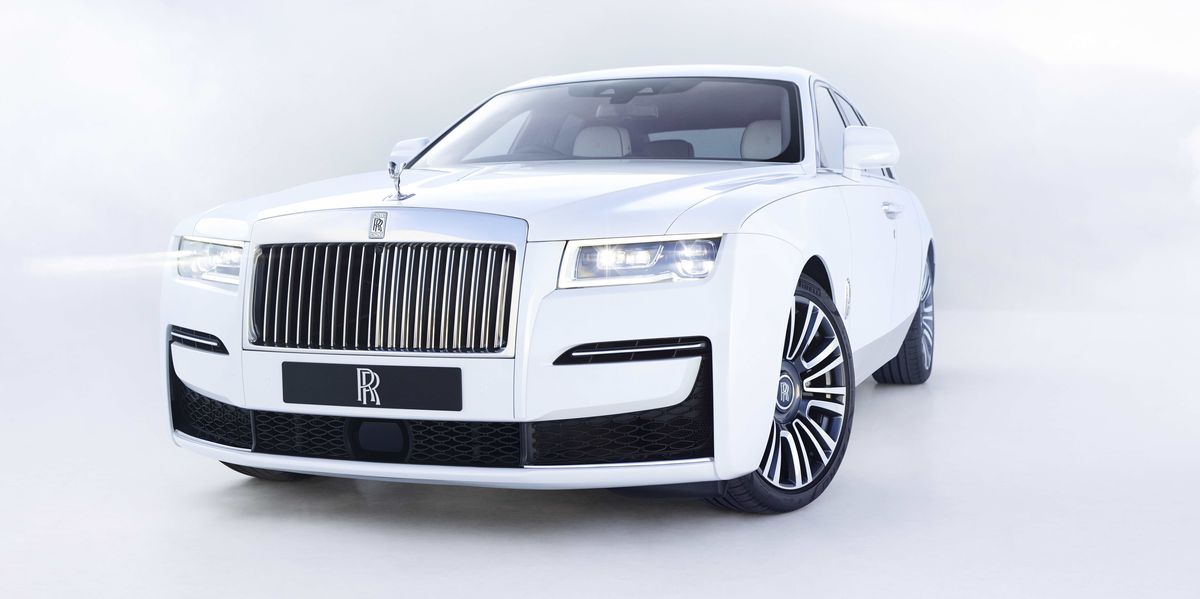
What do the following have in common? A To’ak Chocolate Bar, Sapporo’s Space Barley Beer, the Shure KSE1500 Electrostatic Earphone System, the Rolls Royce Phantom Serenity automobile, and the Bunn Tiger XL Super-Auto Espresso Machine? OK, here is a hint. The chocolate bar costs $260; the beer retails at $110 per six pack; the earphone system costs $2,999; the Rolls Royce runs $1.1 million, and the Bunn coffee machine is $12,000. It is obvious that all are ultra-premium products. A Hershey Bar at Sam’s Club can be purchased for $.57. A six-pack of Bud Light is about seven bucks. For less than $20 you can buy Philips SHE3590 earphones. A Toyota Corolla will set you back $18,500, and a Mr. Coffee BVMC-SJX33GT-AM 12-Cup Programmable Coffee Maker with Thermal Carafe Option is available on Amazon.com for $18.26 – and in a chrome finish no less!

You may be thinking “A chocolate bar is a chocolate bar,” right? And why would anyone want to drink a beer that costs $18.33 – would it really taste 1,467% better than a Bud Light because that is the cost differential! Isn’t driving from Point A to Point B basically the same whether it’s in a Corolla or a Rolls? Why is there so much of a difference between a regular product and a premium one?

In nearly every industry there is always a product or service that commands a premium price. In this extremely competitive world in which we live, how can this be? There are a lot of wannabes when it comes to premium products, but most come up short. As entrepreneurs we want to look for the opportunity to create a premium product or service that generate huge margins and burnish our reputation. So, what do we do?

Let’s look at the primary elements that comprise a premium product or service. Certainly, Quality is at the top of this list. The Rolls Royce Phantom Serenity is amazing in the category of quality. A Gearheads.org write-up had this to say, “The interior of the car received exceptionally crafted elements that are probably the most perfectly sculpted and crafted elements in the car world. Bloom effect and bloom motifs that are scattered throughout the cabin are applied by artists using a squirrel hairbrush. The extent of lunacy of perfection went so far that Rolls-Royce imported a specially woven silk from Suzhou in China and integrate it throughout the cabin. Bloom effect was added onto the silk as well and Rolls-Royce officially published information that painting one silk panel with bloom effect required 600 working hours. You have read that right too. Basically, a man should work fifteen weeks straight to make a perfect blossom motif on only one silk covered panel.”

Another component attributable to the premium label is that of Features. Listen to this about the Shure KSE1500 from the Shure website. “Offers five EQ presets, four customizable EQ settings, and Bypass Mode which bypasses digital processing for pure analog audio enjoyment. Features high-resolution 24/96 ADC/DAC, aligning with the Japan Audio Society High-Resolution requirements for both analog-to-digital and digital-to-analog conversion. Works with any earphones or headphones with a 3.5 mm jack; compatible with Mac, PC, iOS, and Android devices. Includes paired earphones and amplifier (not compatible with other earphones or amplifiers), charger, Lightning® and OTG cables, two 1/8″ cables, 1/4″ adapter, airline adapter, attenuator, cable clip, two security bands, cleaning cloth, case and user guide.” If I wanted a set of premium earphones, I would be impressed with such a wide array of meaningful features.

The final primary facet of a premium product (or service) revolves around Brand. Sometimes a brand can be so legendary that it overshadows the actual product. There is no doubt that a Rolls Royce is exquisite in terms of quality, but the Rolls brand is so steeped in a tradition of luxury that just about any automobile it produces will be perceived as an ultra-premium vehicle.

We entrepreneurs would do well to study premium products and services and model them to the greatest extent possible in our own organizations. Too often companies charge higher prices just because it costs more to produce whatever they are selling rather than providing true value to the customer. When we give premium value to our customers, we are well on our way to achieving a level of product or service differentiation that commands a premium price.

This blog is being written in tandem with my book, “An Entrepreneur’s Words to Live By,” available on Amazon.com in paperback and Kindle (My Book), as well as being available in all of the other major eBook formats.
The Incremental Entrepreneur

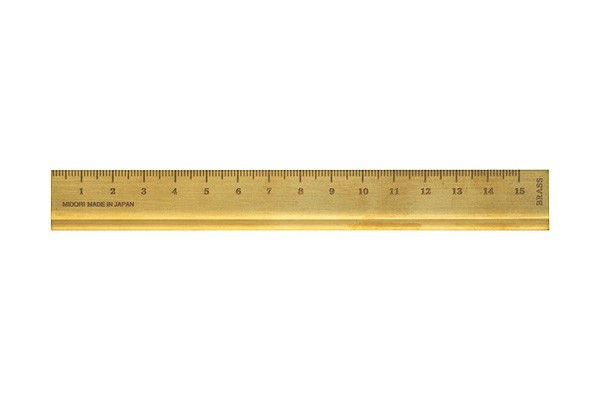
The drive from New York to Los Angeles covers 2,791.8 miles. Or put another way, that is 176,888,448 inches. And to show you that I am not playing favorites – for those of you who prefer the metric scale, the New York to LA trip spans 449,295,541.2 centimeters. Why the obsession with inches (or centimeters)? Simply put, it is about progress. Totally confused? Let me explain.    

We all know that progress is “a movement toward a goal or to a further or higher stage,” according to most dictionaries. We entrepreneurs hold a steadfast belief that progress is the Holy Grail, and wheel spinning will send us spiraling into a major funk. Even progress that seems too slow to us can be cause for great angst. I certainly stand before you guilty as charged! But here is what I have learned. Sweeping change may not be lasting. Here is an example. Suppose that our business begins to grow at a very rapid pace. Year-over-year our top line revenues (fueled by sales) increases 35% to 50%. What a wonderful problem to have – right? Well, rapid growth comes with a price. Often, there is not time to lay a solid foundation of systems and processes. We are just go-go-go all the time. And the success masks over the rickety infrastructure that may have been installed in haphazard fashion.

Let us look at another example. We are negotiating a new contract with a vendor that has proposed taking over our entire human resources function. There could be a substantial savings involved. But this is a big leap, and what if it does not work? How do we rebuild our HR operation? Would making a change force us to hire another outsource provider because re-starting our internal HR department would be too difficult?  

There is something to be said for embracing incremental change. I am not saying that taking the inch-by-inch approach is right for every situation. There is no doubt that there are situations where making a big, honkin’ impact is the right thing to do. But I know that too often I want everything at once in nearly every circumstance. And of course, this leads to mounting frustration when it does not happen to my liking. I have written before about patience – a gene that is absent for most entrepreneurs. Embracing incremental change is not all about patience, however.

Incremental change can be plain smart business. Take the example of the outsourcing of the HR function. Perhaps there would be a way to dip our toe in the water with the vendor. Maybe we outsource a portion of the HR function on a test basis and evaluate the results. If after sufficient time we feel comfortable, maybe we move another portion of the HR function (or even the rest of it). Maybe rather than grow at 50% per year we throttle back to 25% or 30%, and intentionally invest resources in building a solid infrastructure. Instead of rolling out an entirely new sales training program, we prioritize our weakest areas and develop training around them. The ultimate goal would be to implement a new sales training program, but over the course of 18 to 24 months.

As much as we want everything to happen right now, sometimes we are better served by making change inch-by-inch. We take what the market will give us. We take the gains that our team can generate. Sure, it is nice to score a touchdown with a 103-yard punt return in 11 seconds. But we score the same seven points when we grind out positive yards. Yes, sometimes we achieve a first down with just an inch or two to spare. If we are in it for the long haul, the incremental approach may even be more rewarding because our wins are not the result of a fluke or a lucky break. We know how to win.

This blog is being written in tandem with my book, “An Entrepreneur’s Words to Live By,” available on Amazon.com in paperback and Kindle (My Book), as well as being available in all of the other major eBook formats.