
The Entrepreneur’s Three-Legged Stool

We entrepreneurs have no shortage of books and other resource materials at our disposal to understand how to win in today’s environment. We are barraged with a multitude of tips, tactics, strategies, and a host of other concepts. Everyone has an opinion, and everyone insists theirs is the right way. Ask any coach or consultant and undoubtedly each will have their own secret sauce. I have no issue with any of this and believe that this diversity of ideas is healthy for entrepreneurship as a whole. Fortunately, no one individual has it all figured out . . . so we continue to seek. As one of the “seekers” I might as well add my thoughts to the mix.

My approach involves a three-legged stool, and it is a very simple calculus. The first leg is that of Culture. For most of my career I was not very focused on Culture, and we certainly didn’t do much to promote it. Our Culture just kind of happened in a laissez-faire manner. Oh sure, we had a company picnic every now and then as well as a Christmas party; and from time-to-time we would undertake a community service project. But for the most part it was nose-to-the-grindstone – chew ‘em up and spit ‘em out. However, I have learned a lot over the past few years, and I am now drinking the Culture Kool-Aid – lots of it. Why? Because I have found that Core Values matter. Not just to the company but to each member of our team. And we really live our Core Values every single day. As a result, we now have a team of people who have a common alignment and purpose. We can connect with Millennials and Boomers alike and productivity has markedly increased. While Culture is more than just Core Values, they serve as the foundation for a Culture.

The second leg of the stool is Product. With the strengthening of our Culture, we have become more creative and innovative with respect to the products and services we provide. The positive environment that has emerged in our companies has enabled us to shine a spotlight on our Product set. We are constantly making tweaks every chance we get to differentiate from our competition that which we offer. “How is it different?” has become our mantra. We have become much more targeted with our marketing and sales effort in a manner that complements our Product refinement. A clear focus on Product has been the impetus for a much more strategic approach to decisions that we make as opposed to the small-ball tactics that we used to deploy.

Finally, the third leg of the stool is Customer. Many companies pay lip service to their customers. Everyone recognizes that without customers we do not stay in business very long. But to succeed entrepreneurs must go far beyond basic customer service. We must do the deep dive into understanding what makes the Customer tick. It is more than just needs and wants . . . it is also a more comprehensive understanding of buying patterns and lifestyles. It is about anticipating what the Customer will value. Thus, the value proposition becomes the Holy Grail. How does the customer experience attain complete and total fulfillment?

Maybe I have oversimplified this, but everything else seems incidental beyond Culture, Product and Customer. Without a strong Culture how can we possibly create a great Product and take care of the Customer? Without a great Product, our Culture begins to crack as team members become demoralized, and the Customer eventually suffers. And yes, without the Customer, there is no point in a Culture or a Product. 

Culture, Product and Customer. A three-legged stool that looks simple but is strong enough to support a long winning streak for us as entrepreneurs.

This blog is being written in tandem with my book, “An Entrepreneur’s Words to Live By,” available on Amazon.com in paperback and Kindle (My Book), as well as being available in all of the other major eBook formats.


The Customer-Centric Entrepreneur

Way back in the olden days I can envision a prehistoric man trapping a small animal of some variety and trading it to another prehistoric man for a new spear. And at that precise moment in time, the first entrepreneur and the first customer were born. Now suppose that this first entrepreneur continued to trap small animals and trade them to other “customers” for the basic necessities that they could provide. This economy worked reasonably well until something happened. Another prehistoric man decided to do his own trapping and he too made his “product” available for trade. But a funny thing occurred. He was willing to trade it for something of less value than the first entrepreneur. So “customers” flocked to him leaving the first entrepreneur with “unsold” “inventory.” And thus, competition was born.

Ever since the earliest days of commerce, entrepreneurs have developed a rudimentary understanding of their customers. More recently, highly sophisticated techniques and technologies have been created to aid with this customer understanding. Yet still, a vast number of businesses do not truly have the depth of customer knowledge that is necessary to consistently win. How could this possibly be considering the amazing advances that have been made since prehistoric days? The answer is relatively simple. Many entrepreneurs have not chosen to make their customers the absolute primary focus of their business. Much time and effort are spent improving processes, creating systems, increasing productivity, cutting costs, managing revenue and a host of other business practices. There’s no question that all of this is necessary. But from where does it emanate? If it starts with the bottom line instead of with the customer, the road may be rocky.

A customer-centric business starts with the basic question, “How well do I really know my customer?” Most of us think we have a pretty good idea who our customers are and what makes them tick. But I’m willing to bet that we probably have only scratched the surface with respect to the depth of our customer knowledge. Do we know the stratification of age cohorts across our product and service offerings? That’s an easy one. Do we understand the subtle preferences, needs and desires of these different age groups? Have we spent much time fine tuning our products and services to address this information? Oh sure, we conduct ongoing customer surveys. But often they are designed to determine whether our customers are satisfied with our products and services. How much survey work do we do to get to know our customers better? We suspect that live customer focus groups might provide some valuable insights, but we believe that this approach is too expensive, something left to big corporations, or we have no idea how to go about implementing such focus groups.

I submit that we all need to step back and take a deep breath. Then we need to pull together our team and begin to examine just how we are going about a deep dive into customer understanding. I’m championing this effort in my own companies and believe that it may dramatically transform our product and service offerings. Big Data is a treasure trove in this regard. We’ll be combining extensive demographic studies with customer focus groups, surveys and other initiatives to know for certain that we absolutely understand exactly what our customers need and want. We are looking for more than just what our customers tell us, however. Big Data will help us go beyond the obvious and identify the buying habits and other trends with our customers that might not be readily apparent. And then with the customer front-and-center, we’ll make sure that our products and services precisely meet those needs and wants – stated and unstated.

Developing a deep understanding of what our customers really want and need will help us create more customer-centric organizations. Then we can align our products and services with this customer focus that will manifest in high levels of customer satisfaction and greater profitability for our enterprises.

This blog is being written in tandem with my book, “An Entrepreneur’s Words to Live By,” available on Amazon.com in paperback and Kindle (My Book), as well as being available in all of the other major eBook formats.

Four Customer No-No’s

Once upon a time there were entrepreneurs who cared about their customers. They understood what it took to make their customers happy and keep them coming back. Then their businesses grew and grew until one day they weren’t small anymore. Instead, they became large behemoths that cared less about the customers and more about bureaucracy, CYA, policy and how to squeeze more dollars out of their customers. In the process, many of their customers had experiences that were unacceptable and downright maddening. In this blog, I would like to relate several stories about encounters I’ve had as a customer of several larger companies. The names of the companies are irrelevant. What is instructive are the lessons we can learn as entrepreneurs and especially what we don’t want to emulate.

Let’s start with the airlines. The large domestic carriers are consistently stepping in it with their customers. One summer we made flight reservations on a major airline and then a few weeks later needed to change one leg of the flight. The airline’s website was impossible to negotiate to figure out how to make such a change. So, I called the customer service line and got into the queue. Thirty minutes later they called back and were ready to assist me. I was informed that because I had a “special” fare, I would have to pay the difference of $173 plus a $200 change fee. I protested and pointed out that the special fare was still being advertised on the flight to which I was changing. And I also said that I found it unreasonable to charge a $200 change fee for a couple of minutes of re-booking. The representative wouldn’t budge. I said that I would leave the original reservation in place and in the future, find another airline to fly with friendlier policies. The “haughty” young man representing the airline said, “All of the legacy carriers are charging the $200 change fee.” Wow! Of course, we know this is true, but a statement like this sounds like blatant collusion. The message to me, the customer was, “We’re going to screw you and so are the other major airlines.” Lesson #1: Never use the “everyone else is doing it” explanation when interacting with a customer.

My wife and I were in Washington, DC and made reservations for dinner at a major national steakhouse chain. It was a Tuesday evening and when we placed our order we naturally wanted – you got it – steak. Well, steak wasn’t an option at this restaurant. They were out of every cut of beef except for a low-end sirloin cut. When I spoke to the assistant manager, she said that there had been a delivery issue. Seriously? They do have grocery stores and meat markets in Washington, DC. My entrepreneurial instincts caused me to wonder why someone hadn’t simply gone to the store and purchased enough steaks to cover until the delivery arrived. I’ve been to other restaurants where the server or the manager has literally made a mad dash to the store and purchased something I wanted, and they didn’t have. Lesson #2: Never tell a customer “We’re out of that.” Do whatever it takes to ensure that the customer gets what he or she wants.

Here’s a classic. A national chain store closes at 8:00 PM. I arrive at exactly 8:00 PM. What do you suppose will happen next? The store manager won’t allow me to enter and says, “Sorry, we’re closed.” So here I am, a ready, willing, and able customer and the store representative doesn’t want to serve me. Adding insult to injury, I’m told to come back the next day when they reopen at 9:00 AM. But what if that’s not convenient for me? In this case it’s apparently more important to avoid inconveniencing the store employees than the customers. Lesson #3: Always remain open for business until the last customer leaves. And if someone else wants to enter and it’s after hours, by all means accommodate him or her.

Finally, here’s another one that I’m sure will sound familiar. I made an appointment for an MRI at a large chain of imaging centers. I arrived 15 minutes early to make sure that all the paperwork was completed prior to my appointment time. Then I waited, and waited, and waited. About 20 minutes after my appointed time, I asked once how long it would be and was told, “We should get to you soon.” After another 15 minutes I inquired again and the receptionist said in exasperation, “Sir, I have no idea how long it will be before we will get to you.” I left. Lesson #4: Never tell a customer that you have no idea when he or she will receive service.

As our businesses grow it’s critical that we amplify our efforts to maintain customer focus even if it costs extra to do so. The additional investment will more than pay off when our happy customers continue to return and refer other customers to us as well.

This blog is being written in tandem with my book, “An Entrepreneur’s Words to Live By,” available on Amazon.com in paperback and Kindle (My Book), as well as being available in all of the other major eBook formats.
The Customer-Obsessed Entrepreneur

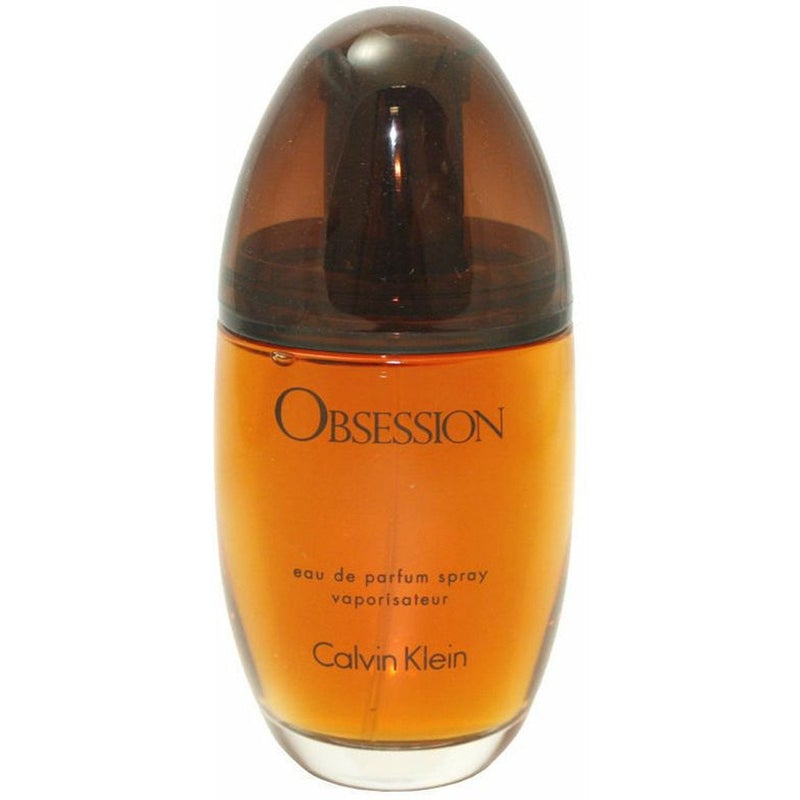
Calvin Klein has a women’s fragrance called Obsession Perfume. It’s relatively inexpensive – around 25 bucks or so for a 3.4-ounce spray bottle. This blog is not about the perfume, but it is about a particular type of “obsession;” one that is worth far more than 25 bucks.

What dominates our thoughts as entrepreneurs? Is it cash flow? How about the competition? Maybe it’s growth or perhaps it’s market share. Most of these aspects aren’t worth becoming obsessions. In fact, there is very little that rises to the level of importance to be worthy of obsession. Yet, there is one element that is so fundamental to the success of our businesses that it should be front and center as a focal point. You might say it’s the “Obsession on a Pedestal.” Everyone throughout the organization starting with the CEO should be obsessed about . . . the Customer.

Well of course, you say, it’s obvious that the Customer is important. No, I’m talking about something more intense than “important.” Customer Obsession takes many forms. There are certain business establishments – stores, restaurants, gas stations, etc., where I enter the restroom and am amazed at how sparkling clean they are. And they even smell good! That’s Customer Obsession. There are certain business establishments where I am called by name when I walk in the door. That’s Customer Obsession. Or take the case of a regular customer of a resort who developed a fondness for a particular type of clock radio. She looked high and low trying to purchase one but to no avail. She messaged the resort staff to see if they could point her in the right direction but was told that the clock was not commercially available. She was pleasantly surprised on her next visit to find a clock radio waiting for her as a gift upon her arrival. That’s Customer Obsession.

Wouldn’t it be incredible if we could create a culture where everyone is equally obsessive about the Customer? This utopia would have every member of the team smile and greet a Customer in a friendly manner when in his or her presence. This utopia would be a flurry of random thank-you notes, thank-you calls and other forms of true expressions of gratitude to our Customers. When a mistake occurs involving a Customer, our culture encourages a quick, heartfelt apology and a genuine attempt to make amends.

When I think about Customer Obsession, I want to know exactly what the Customer needs and wants. This requires a deep dive into data and other methods to understand what makes the Customer tick. And I want to go way beyond understanding what the Customer currently needs and wants. I must determine what his/her future needs and wants are going to be. I want my Customers to seek me out and tell me that they aren’t just satisfied. No, I want them to tell me that they are fulfilled beyond their wildest dreams.

I want to know when a Customer quits and why; and then I want to make a supreme effort to save that Customer and regain his or her trust. I want to talk directly to our Customers on a regular basis to understand as much as I can about the experience we have provided them. I realize that the cash flow, the competition, the growth, and the market share are all secondary to Customer Obsession. Those aspects of our business will be fine if we have an ever-expanding base of Customers for whom we are fanatical about making ecstatically happy. Finally, I want to constantly innovate with an eye on how to better serve the Customer. Running in place is not an option. We can and must always do better for the Customer’s sake.

Many obsessions aren’t necessarily healthy. However, obsessing about our Customers will help ensure that our business is healthy and prosperous for years to come.

This blog is being written in tandem with my book, “An Entrepreneur’s Words to Live By,” available on Amazon.com in paperback and Kindle (My Book), as well as being available in all of the other major eBook formats.

The Entrepreneur’s Three-Legged Stool

We entrepreneurs have no shortage of books and other resource materials at our disposal to understand how to win in today’s environment. We are barraged with a multitude of tips, tactics, strategies, and a host of other concepts. Everyone has an opinion, and everyone insists theirs is the right way. Ask any coach or consultant and undoubtedly each will have their own secret sauce. I have no issue with any of this and believe that this diversity of ideas is healthy for entrepreneurship as a whole. Fortunately, no one individual has it all figured out . . . so we continue to seek. As one of the “seekers” I might as well add my thoughts to the mix.

My approach involves a three-legged stool, and it is a very simple calculus. The first leg is that of Culture. For most of my career I was not very focused on Culture and we certainly didn’t do much to promote it. Our Culture just kind of happened in a laissez-faire manner. Oh sure, we had a company picnic every now and then as well as a Christmas party; and from time-to-time we would undertake a community service project. But for the most part it was nose-to-the-grindstone – chew ‘em up and spit ‘em out. However, I have learned a lot over the past few years, and I am now drinking the Culture Kool-Aid – lots of it. Why? Because I have found that Core Values matter. Not just to the company but to each member of our team. And we really live our Core Values every single day. As a result, we now have a team of people who have a common alignment and purpose. We are able to connect with Millennials and Boomers alike and productivity has markedly increased. While Culture is more than just Core Values, they serve as the foundation for a Culture.

The second leg of the stool is Product. With the strengthening of our Culture, we have become more creative and innovative with respect to the products and services we provide. The positive environment that has emerged in our companies has enabled us to shine a spotlight on our Product set. We are constantly making tweaks every chance we get to differentiate from our competition that which we offer. “How is it different?” has become our mantra. We have become much more targeted with our marketing and sales effort in a manner that complements our Product refinement. A clear focus on Product has been the impetus for a much more strategic approach to decisions that we make as opposed to the small-ball tactics that we used to deploy.

Finally, the third leg of the stool is Customer. Many companies pay lip service to their customers. Everyone recognizes that without customers we do not stay in business very long. But to succeed entrepreneurs must go far beyond basic customer service. We must do the deep dive into understanding what makes the Customer tick. It is more than just needs and wants . . . it is also a more comprehensive understanding of buying patterns and lifestyles. It is about anticipating what the Customer will value. Thus, the value proposition becomes the Holy Grail. How does the customer experience attain complete and total fulfillment?

Maybe I have oversimplified this, but everything else seems incidental beyond Culture, Product and Customer. Without a strong Culture how can we possibly create a great Product and take care of the Customer? Without a great Product, our Culture begins to crack as team members become demoralized and the Customer eventually suffers. And yes, without the Customer, there is no point in a Culture or a Product. 

Culture, Product and Customer. A three-legged stool that looks simple but is strong enough to support a long winning streak for us as entrepreneurs.

This blog is being written in tandem with my book, “An Entrepreneur’s Words to Live By,” available on Amazon.com in paperback and Kindle (My Book), as well as being available in all of the other major eBook formats.

The Anti-Gotcha Entrepreneur

I purchased a couple of new beds for our home at a national mattress store. One was a fancy model that is adjustable, vibrates and has other bells and whistles. I would normally pay for such a purchase outright, but the mattress store was offering free financing for a year. I thought, “what the heck, why not?” So, I paid the monthly principal amounts over the course of 12 months like clockwork. Toward the end of this one-year period I started looking for a payoff balance to show up on the monthly statement, but it never did. Then I received a statement showing a large amount of “deferred interest” that when calculated produced an exceptionally high interest rate.

In looking back at the previous month’s statement (four pages of legal-size paper), I found a single sentence in small print advising me to look elsewhere in the statement for an acceleration amount. I finally found the payoff figure – again in small print. Unfortunately, I had missed the deadline by ten days and now owed over $3,000 in interest charges. I called the national bank that had purchased the paper from the mattress company and pointed out what my intentions had been from the outset and that the small print notice was deceptive and easily overlooked. I spoke with a supervisor and then a manager who ultimately cut my interest cost by 75%. I still contend that the interest should have been fully waived.

The national bank involved in this incident was clearly playing a “gotcha game.” There is no doubt in my mind that they intentionally used fine print and required the customer to hunt through the bill to find the amount owed. This is despicable behavior and does nothing to help the cause of entrepreneurship. I am not a fan of a lot of government regulation, but it is situations like this that trigger calls for more regulation in the first place. 

As entrepreneurs we should look at our business practices to see if we too are playing the “gotcha game.” Are the documents we use with our customers very clear relative to what is owed as well as the terms and conditions for payment? Or are we using fine print, misdirection, and incomprehensible language to obfuscate and confuse the customer? And if we are doing this, what is our end game . . . to shake down the customer for extra dollars?

Companies that are winning in today’s environment are focused on culture, product, and the customer. Profitability at any cost is not part of this calculus. Businesses that gouge their customers like the national bank with which I dealt, will ultimately suffer through new regulatory initiatives and/or customer abandonment. We entrepreneurs have a golden opportunity to identify competition that is perpetrating such behavior and differentiate ourselves in striking fashion. With the right messaging, winning customers from the bad actors should be relatively easy.

The integrity we maintain with our customers is one of the most valuable assets we possess. Playing the “gotcha game” can quickly turn that asset into a liability.

This blog is being written in tandem with my book, “An Entrepreneur’s Words to Live By,” available on Amazon.com in paperback and Kindle (My Book), as well as being available in all of the other major eBook formats.

Swivel Head

A good pilot has his head on a swivel. He is constantly scanning his instrument panel as well as the skies around him. There may be other airplanes in the immediate area to avoid. Maybe there are TV towers or smokestacks to miss. Engine performance gauges must be monitored and navigational displays are critical to comprehend. All of this can be summarized in two words . . . situational awareness. Without situational awareness we are more vulnerable to physical dangers around us. A lack of it can result in an auto accident, stepping off a curb and breaking an ankle, or starting a fire when the grill is too close to the house.

In the entrepreneurial world, situational awareness is worth its weight in gold. Now, you may be wondering how this concept applies to business situations. It has less to do with physical proximity and more to do with possessing a sixth sense about a multitude of factors. As entrepreneurs we can attain a much higher degree of success as we develop our entrepreneurial awareness. For example, how well do we sense what is happening in our marketplace? There’s more to this than just crunching numbers. The key is to look behind the empirical data and understand what is truly happening. Here’s a simplistic illustration. A quick look at market share might show that our firm is way out in front of the competition. And yet, we know that a start-up company has won three of the last five contracts for which we’ve competed. Not enough to move the market share needle, but could signal trouble down the road. Situational awareness would have us take immediate action to understand why they are winning and we are losing, and then do something about it.

Situational awareness from an entrepreneurial perspective involves a deep understanding of our customers and what makes them tick. Customer satisfaction surveys help in this regard, but we may need more than data. In person meetings are the best bet for getting a good read on our customers. If not in person, the next best option is a phone conference. At the root, we’re looking for little tells that might indicate whether or not our customers are 100% in our camp. We encountered a situation a few years ago where we thought our client was totally satisfied with our services. Our team was convinced that we had performed as or better than expected. And yet, I had a gnawing feeling that something was amiss. When we dug in deeper we learned that the client was actually hiring a competitor. The reason had nothing to do with our performance and everything to do with the fact that a corporate decision had been made to consolidate its business to a national company. I’ve always wondered whether we might have saved the business by doing some things in a radically different manner had our situational awareness enabled us to act sooner.

Finally we must keep our finger on the pulse of our team. Are we on the lookout for signs of tension, boredom or anxiety? It’s easy to get caught up in the day-to-day chaos that we all experience and miss the signs that are flashing relative to our team. Perhaps an outgoing team member who normally participates in company activities gradually pulls back and is less gregarious. Without situational awareness, we could easily overlook that this individual is headed for the exits until it’s too late. Realizing this sooner might have given us a chance of resolving whatever issue is causing our teammate to look elsewhere.

Situational awareness at the entrepreneurial level requires a certain degree of intuition. But even more important is our being intentional about having a deeper understanding of that which is happening around us. Then we’re less likely to unwittingly step off the cliff and into the abyss.

This blog is being written in tandem with my book, “An Entrepreneur’s Words to Live By,” available on Amazon.com in paperback and Kindle (My Book), as well as being available in all of the other major eBook formats.

Shark

The Three-Legged Stool

We entrepreneurs have no shortage of books and other resource materials at our disposal to understand how to win in today’s environment. We’re barraged with a multitude of tips, tactics, strategies and a host of other concepts. Everyone has an opinion, and everyone insists theirs is the right way. Ask any coach or consultant and undoubtedly each will have their own secret sauce. I have no issue with any of this and believe that this diversity of ideas is healthy for entrepreneurship as a whole. Fortunately no one individual has it all figured out . . . so we continue to seek. As one of the “seekers” I might as well add my thoughts to the mix.

My approach involves a three-legged stool, and it’s a very simple calculus. The first leg is that of Culture. For most of my career I wasn’t very focused on Culture and we certainly didn’t do much to promote it. Our Culture just kind of happened in a laissez-faire manner. Oh sure, we had a company picnic every now and then as well as a Christmas party; and from time-to-time we would undertake a community service project. But for the most part it was nose-to-the-grindstone – chew ‘em up and spit ‘em out. However, I’ve learned a lot over the past few years and I’m now drinking the Culture Kool-Aid – lots of it. Why? Because I’ve found that Core Values matter. Not just to the company but to each member of our team. And we really live our Core Values every single day. As a result, we now have a team of people who have a common alignment and purpose. We are able to connect with millennials and Boomers alike and productivity has markedly increased. While Culture is more than just Core Values, they serve as the foundation for a Culture.

The second leg of the stool is Product. With the strengthening of our Culture we’ve become more creative and innovative with respect to the products and services we provide. The positive environment that has emerged in our companies has enabled us to shine a spotlight on our Product set. We’re constantly making tweaks every chance we get to differentiate from our competition that which we offer. “How is it different?” has become our mantra. We’ve become much more targeted with our marketing and sales effort in a manner that complements our Product refinement. A clear focus on Product has been the impetus for a much more strategic approach to decisions that we make as opposed to the small-ball tactics that we used to deploy.

Finally, the third leg of the stool is Customer. Many companies pay lip service to their customers. Everyone recognizes that without customers we don’t stay in business very long. But to succeed entrepreneurs must go far beyond basic customer service. We must do the deep dive into understanding what makes the Customer tick. It’s more than just needs and wants . . . it’s also a more comprehensive understanding of buying patterns and lifestyles. It’s about anticipating what the Customer will value. Thus, the value proposition becomes the Holy Grail. How does the customer experience attain complete and total satisfaction?

Maybe I’ve oversimplified this, but everything else seems incidental beyond Culture, Product and Customer. Without a strong Culture how can we possibly create a great Product and take care of the Customer? Without a great Product, our Culture begins to crack as team members become demoralized and the Customer eventually suffers. And yes, without the Customer, there’s no point in a Culture or a Product.

Culture, Product and Customer. A three-legged stool that looks simple, but is strong enough to support a long winning streak for us as entrepreneurs.

This blog is being written in tandem with my book, “An Entrepreneur’s Words to Live By,” available on Amazon.com in paperback and Kindle (My Book), as well as being available in all of the other major eBook formats.

3LeggedStool1