
The Sustainable Entrepreneur

This topic may be uncomfortable for some, but it is a very necessary discussion to have. What happens to your organization if you die tomorrow? Would it be a loss so catastrophic that the company fails? Or have you created a sustainable business that can survive and thrive without you? Many entrepreneurs neglect this subject – after all we think we have a lot of good years left. And besides, it is a real downer to think about dying.

One of my most important objectives is to make sure that each of the various companies with which I am involved is sustainable for the long haul. I care deeply for the hundreds of families that depend upon us for their livelihood. Even if your company only has six employees, they likely have families too that are counting on you. So, we need to take the steps necessary to ensure sustainability. Let us examine the different components of a sustainability plan.

Growing future leaders is critical to sustainability. And avoiding a power struggle is equally critical. Who is your heir apparent? I do not believe that it is healthy for any leadership team to wonder at any point in time who will step in to lead in the event of the demise of the leader at any level. If your potential successor is not yet apparent, perhaps someone you know very well, and trust could be designated to step in on an interim basis. There is no doubt that identifying such a person may be tough, but this is tough stuff, and your team deserves to know who is going to succeed you. Focusing on sustainability always forces us to make leadership development a top priority. A quarterly review of a hypothetical organizational chart is a good approach to spotting the gaps and filling them promptly.

If we are the majority owners of our company, what will happen to the ownership going forward? Will it be left to one or more family members? If so, what will they plan to do with the business? Many heirs are not prepared to own a company and all that is entailed. It is crucial to have a conversation with family members and offer them a clear understanding about what will happen to the ownership if we die suddenly. What if there are multiple owners? Buy/sell agreements are an excellent tool for situations like this and can be funded by insurance. Such agreements should be precise on exactly how a deceased owner’s interest is to be valued.

Let’s talk about money. The death of an entrepreneur can have far-reaching consequences financially. There may be covenants that accelerate loans. Perhaps the entrepreneur has been self-funding a certain project or expansion of the business. It is also possible that without the entrepreneur’s balance sheet, credit facilities may dry up creating varying degrees of hardship. Again, insurance can help but may not be the long-term solution. It may be prudent to identify a potential financial partner that could be called upon to help. Of course, there is a price to pay for this kind of support – an ownership stake or a percentage of the profits – but such an arrangement may be necessary for sustainability. Now is the time to figure this out while we are still alive to do so.

Finally, we need to contemplate how our vision and the culture we have created can be preserved. This is the trickiest and most intangible task that we will face in planning for sustainability. Have we sufficiently communicated our vision; reinforced it repeatedly, and is it shared by all? Many leaders are so consumed by tactical decisions that the vision for their organization is muddled. And it goes without saying that our culture is built around our vision. Maintaining a vibrant culture can only be accomplished if it is front and center every day. Do we have core values? Are we truly living them?

Creating a sustainable organization that will survive requires intense planning and tough decision making. Doing so is the greatest gift we can give to our team members.

This blog is being written in tandem with my book, “An Entrepreneur’s Words to Live By,” available on Amazon.com in paperback and Kindle (My Book), as well as being available in all of the other major eBook formats.


The Entrepreneur “Gut Whisperer”

Entrepreneurs make decisions every day. Some are large and many are small. Have you ever stopped to determine how it is that you go about making your decisions? Some entrepreneurs are deliberate and others tentative. Some are procrastinators and some use a consensus approach. I’d like to focus on two methodologies that present quite a conundrum for entrepreneurs – gut vs. data.

How many times have you heard the expression, “go with your gut?” We all know what this means. When presented with a choice or several choices, we use our intuition to select the one that “feels” right. Gut level decisions typically require no cognition or rational thought. To a great extent they are based simply on a feeling that we have. But . . . that feeling is generally developed over time based on a wide range of experiences. The word “experience” is the key here. I’ll grant that there may be times when a gut decision can be successful without foundational experience. But I do not believe that gut-driven decision making can consistently be accurate in the absence of incrementally derived experience.

Decisions that are made utilizing factual data and logic may seem like a safe bet. But . . . there are a couple of caveats. First, we can sometimes be too analytical. We ponder the data and agonize over it. Do we have every last fact that might make a difference? What if one or more of the facts aren’t correct? Ultimately, we can end up in an analysis paralysis situation that turns into a first-class muddle. Second, even with data we still must interpret it. Assume that all the facts are correct and that we have everything we need. The wrong conclusion can be reached if the information is improperly interpreted.

Early in our careers we should make decisions much more based on facts and logic. As much as we might want to “trust our gut,” we just don’t have the experience necessary to do so and consistently make the right decisions. As we gain age and experience there’s a possibility that we also become a bit wiser. Wisdom is the magical ingredient that allows us to listen to our gut and make the right call. This doesn’t mean that we ignore fact-based decision making. But there will be situations where we’ve seen this rodeo several times. And as a result, we can pretty much predict what is going to transpire.

We all have intuition at the earliest stages of our adult lives. The big question is whether to trust it. Steve Jobs famously said, “Have the courage to follow your heart and intuition. They somehow know what you truly want to become.” This is all fine and good. However, lofty and soaring statements like this aren’t necessarily helpful. The point I’m trying to make is that we can sharpen our intuitive skills by validating the patterns we observe over time. Here’s an analogy that will put this in a better perspective. Suppose we have a 26-year-old airline pilot. He’s very good at executing the mechanics of flying a jet aircraft. He’s been flying since he was 16 and has logged nearly 5,000 hours in the cockpit including 400 in his current aircraft type. Suppose you are one of 120 passengers aboard his aircraft. How comfortable are you placing your life in his hands if he tends to be more “intuitive” about the way he flies? Compare this to a 60-year-old airline captain who has been flying for more than 40 years. He has over 35,000 hours of flight time including 10,000 hours in the Boeing 757 that he currently drives around the sky. Which pilot’s “intuition” are you more likely to trust?

The veteran pilot has developed a sixth sense – aka intuition – for his aircraft and for flight in general. He’s seen it all over the course of his career. While he flies by the book and always checks the facts on all things weather, mechanical and aeronautical, he just “knows” when he needs to act on something that may not be factual in nature. Perhaps a little voice is telling him that there’s a problem with an engine even though the gauges are in the green. That little voice might be a subtle tone or vibration that only he can feel. Why? Because he knows his airplane so well that he has almost become one with it.

When we combine age, experience, and wisdom, we sharpen our intuitive skills. Laying such a foundation enables us to rely more and more on our gut as we move down our career path.

This blog is being written in tandem with my book, “An Entrepreneur’s Words to Live By,” available on Amazon.com in paperback and Kindle (My Book), as well as being available in all of the other major eBook formats.
The Macho Entrepreneur

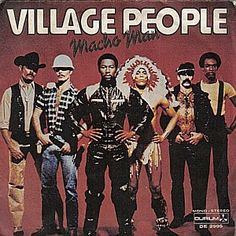
Just about everyone has heard the 1978 song called “Macho Man” by the Village People. The first verse goes like this:

“Every man wants to be macho macho man. To have the kind of body, always in demand. Jogging in the mornings, go man go. Work outs in the health spa, muscles glow. You can best believe that, he’s a macho man. Ready to get down with, anyone he can.” Ugghh. I never did like that song. Usually this term refers to the male species and generally speaks to “showing aggressive pride in one’s masculinity,” according to one dictionary. The word is often associated with “machismo” which introduces the concept of self-reliance. I’m going to take some liberties here and loosely use the term as it relates to entrepreneurs – male and female.

Allow me to paint a picture of the Macho Entrepreneur. This individual is scrappy and passionate about his or her endeavors. The Macho Entrepreneur is driven to excel – a real Type A personality. Hard-charging and brimming over with ideas, this person sometimes has a mindset of “if you want it done right, you must do it yourself!” The Macho Entrepreneur is not going to let anything stand in his or her way to achieving success and will always “die trying.” Do you know anyone who displays these traits and tendencies? This used to be my self-portrait though I think I’m in more of a “recovery” mode at present.

The Macho Entrepreneur means no harm and thinks he or she is being noble by modeling strong-willed behavior and commitment. But there are inherent pitfalls in this approach that don’t promote the notion of building a team and ultimately a sustainable organization. When I was much more inclined in the macho mode, I received feedback that some people felt it was my way or the highway. In reality, I have a high level of ego-drive which when translated, means that I want to persuade anyone and everyone to see things my way. And my enthusiasm could sometimes come across to others like a steamroller. I was somewhat of a perfectionist – even when it made no sense to be so – which is a result of some obsessive-compulsive tendencies on my part. Finally, I’ve always been inclined to keep calm and “never let ‘em see you sweat.”

Here’s what I’ve learned. Being a Macho Entrepreneur is a dead-end. Well, maybe it’s more of a cul-de-sac because one can turn around and exit the behavior and take a new path. Regardless, the macho traits really don’t lead to building a successful organization. Trust me on this because I’ve lived through it all from start to finish. So, what’s the alternative?

I’ve said it many times – we must have the right people on the bus. These are people who share our values and have passion for what they do. This is critical because they will be motivated only if they understand our vision of the future and how they fit into the process of getting there. When we know we are surrounded by the right people we are more inclined to delegate. We don’t have to do it all ourselves. And we understand that while others may do some things differently than we might have, empowering them is even more important. As long as the ultimate objective is achieved in an efficient manner with integrity, we agree that allowing some latitude is a healthy thing. This gets us to the point of allowing others to make decisions. I once heard an entrepreneur say that he only wanted to make four decisions a year – four major decisions! This forced him to delegate decision-making and truly trust his team.

Discarding the Macho Entrepreneur label also means collaborating with others. This sends the signal that their opinions are valued and desired. And believe it or not, many members of our respective teams actually have some pretty good ideas! What comes next? We get to celebrate the success of others which reinforces the notion that they are capable of making decisions and moving the organization forward. Finally, we learn how to be a coach rather than command. No longer is coercion a necessity or an option (it probably never was). We help our team members look at the different possibilities and work through a process of determining the right approach to achieve the desired outcome.

Our lives and our organizations will be richer and more rewarding when we figure out how to transform away from being the Macho Entrepreneur. We accomplish this by surrounding ourselves with the right people who understand and share our vision; to whom we can delegate decision making and promote collaboration, and who we can coach and ultimately celebrate their victories.

You can also listen to a weekly audio podcast of my blog. What you hear will be different than what you read in this blog. Subscribe on iTunes or wherever you get your podcasts. You can also click on this link – Click here to listen to Audio Episode 99 – Narrow Guardrails.

This blog is being written in tandem with my book, “An Entrepreneur’s Words to Live By,” available on Amazon.com in paperback and Kindle (My Book), as well as being available in all of the other major eBook formats.

Stylin’

Question: I am fascinated by different leadership styles. Which style seems to work the best?

Answer: Of course there is no one particular style that works for all situations. So let’s focus on a few common approaches.

In the “olden days” the leader led by dictate. The process was autocratic. Organizational hierarchy was respected at all costs. The phrase “it’s lonely at the top” was an ingrained belief system. All eyes were on the man (seldom a woman) in the corner office. The leader rarely sought input from the management team. It’s possible that he had a “consigliore” or confidant. He made the decisions and issued orders to his troops. Often he valued fear and intimidation as techniques for maintaining order in the ranks. Imagine how today’s millennials would respond in this environment. There would be a mass exodus of biblical proportion! Thankfully the autocratic era has passed.

Some leaders use a consensus approach. Perhaps they have a senior leadership team or an executive committee where ideas are presented and discussed by everyone sitting at the table. Participants are able to express their thoughts with impunity and feel as though their opinions count. The real test of this style comes in how decisions are made. Does the leader ask for a vote of his/her team on the issue at hand and then carry forward with the results of that vote? There may be certain situations where following the majority-rule is appropriate. But in many cases this is simply management by committee and an abdication of leadership.

The style that I believe shows strong leadership involves the leader soliciting input from the various stakeholders. She/he listens to and weighs the opinions and the evidence . . . and then makes the decision. Sometimes the decision may be contrary to what the senior team or executive committee wants. The leader must be willing to fully explain his/her decision and have a valid reason for not following the advice of the group. Perhaps the leader has more information and a broader perspective. Or there could be a legitimate philosophical difference. But the leader makes the ultimate decision and will be held accountable accordingly.

Leadership is about a clear vision and purpose. It involves effective communications. A strong and effective leader shows sensitivity for others and values their input. A good leader considers the facts and overlays his/her moral compass on the situation at hand. And finally, a true leader makes the decision when it’s appropriate and doesn’t abdicate it to others.

Sound leadership principles empower us to make decisions even when it’s tough to do so. As leaders we should model the opportunity to make tough decisions which in turn will help others learn how to become strong leaders.

This blog is being written in tandem with my book, “An Entrepreneur’s Words to Live By,” available on Amazon.com in paperback and Kindle (My Book), as well as being available in all of the other major eBook formats.

Ducks

What to Do?

Question: Lately I’ve been faced with some tough decisions. I struggle in this department. How can I make this easier?

Answer: Entrepreneurs by definition have to make a lot of hard decisions. Do we add a new product line or not? Should we raise our prices? Should we fire a client? Can we afford to buy a new piece of expensive equipment? All of these decisions are weighty for a reason. They could have adverse consequences if we’re wrong about what we decide.

Life is full of tough calls. Whether in our business or personal lives one factor that makes decisions hard is a little thing called emotion. The more we can eliminate emotion from our decision making process, the more likely we will be to turn the tough call into the right call. Without emotion we can then turn to a factual approach in this process.

Something that has worked for me over the years has been the use of a decision tree. When I have to make a complex or difficult decision I draw one or more lines down the page. At the top of each column I write a decision that I could make to address a particular situation. There might be two or three possibilities – maybe even more. From each decision I draw lines with boxes underneath. We all know that when decisions are made there are consequences. These boxes contain the consequences. By laying out all of the decisions and the various potential consequences I am able to assess the probability of outcomes and determine which yield the best result with the lowest risk. Doing this insures that emotion remains on the sideline.

Some people say, “Follow your gut instincts.” So you may ask, isn’t gut instinct an emotion? Actually gut instinct is the result of experience. There’s no such thing as pure gut instinct that isn’t based on some level of experience. And this experience can be developed by making decisions over and over utilizing facts and decision trees. Eventually you just know what to decide because you’ve done it so many times. But a strong factual foundation was laid early on.

We can all make the tough decisions with ease when we take the emotion out of the equation. By turning to an examination of the facts we are able to logically figure out what steps to take. And after we do this long and often enough, we develop strong instincts that enable us to act quickly and decisively.

This blog is being written in tandem with my book, “An Entrepreneur’s Words to Live By,” available on Amazon.com in paperback and Kindle (My Book), as well as being available in all of the other major eBook formats.

decisions