
The “Loyal-to-a-Fault” Entrepreneur

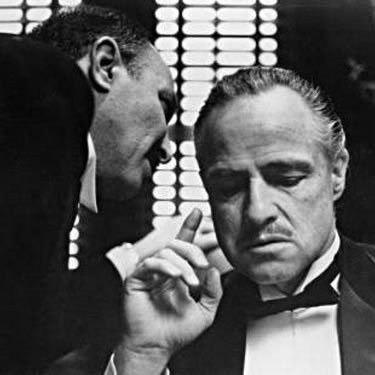
Think about how much loyalty is a part of your life. How loyal are you to others? And how loyal are they to you? Do you have loyal customers; loyal partners; loyal employees, loyal friends and loyal family members? Loyalty is a strong and positive quality. It’s a key element in building and maintaining relationships. So, everything must be peaches and cream, right? Ah, but there’s a bit of a dark side to loyalty.

You probably have heard the term, “loyal to a fault.” This is when we may be too loyal to someone else, and that loyalty clouds our judgment and may even be damaging to our business. Whether or not we’re being too loyal can be a tough call. It requires us to be very objective about a particular person and their performance. This can be exceptionally difficult for anyone and nearly impossible for someone who places a very high value on the loyalty trait.

Here’s a scenario that may be familiar. Perhaps it’s even happened in your own organization. A high-level executive has been with a firm for 30 years and reports to the founder and CEO. This executive is part of the CEO’s inner circle, and his advice and counsel are often sought by the CEO. Unfortunately, this executive is also a flaming jerk. He’s very nice and thoughtful to other senior level executives, but when it comes to those who don’t have as prominent a position in the organization, he can be unreasonably demanding and thoughtless. Because of his tenure with the CEO, his behavior is tolerated. The employees of the firm have learned to steer clear of him and know that he is “protected” by the CEO. Complaints were lodged about him in years past but it’s well known by everyone working for this company that he will always get away with whatever he wants.

If asked about this high-level executive, the CEO would undoubtedly say, “I know that he can sometimes be a bit abrasive, but overall, he’s done a great job for this company.” The CEO might also say something like this, “He and I were fraternity brothers, and he’s always had my back.” Sound like something you might have heard before? In this situation, many of the employees of this company have lost respect for the CEO because he won’t fix the problem. If this was a family business, it could very well be that the CEO and high-level executive are related – brothers perhaps. The bottom line is that the organization cannot function effectively because the CEO has misplaced loyalty to a problem individual.

As entrepreneurs we must learn how to maintain our objectivity, especially when it comes to employees and team members who are key to us. We must be able to separate our feelings of loyalty from what is best for our organization. Loyalty can easily become a blind spot for us unless we have a method to deal with it. In a larger organization this can be done through a human resources department. The HR director must be given permission by the CEO to lay the facts on the table about every employee. In a smaller firm, it may be helpful to hire a consultant who can facilitate the performance of a 360-degree review of senior executives or even all members of the firm. In both cases, the HR director or the consultant should provide an honest perspective to the CEO that one of his or her reports needs to be coached, disciplined or even dismissed. 

Loyalty is generally a good thing. But when there’s loyalty to a fault, we need to be willing to listen to someone tell us when we have a problem. And then we must deal with it accordingly.

This blog is being written in tandem with my book, “An Entrepreneur’s Words to Live By,” available on Amazon.com in paperback and Kindle (My Book), as well as being available in all of the other major eBook formats.

The Cumulative Effects Entrepreneur

Customers quit all the time. Many entrepreneurs work extremely hard to prevent the big screw-ups that alienate and enrage customers. Yet, even with this effort, there are still customers that leave and don’t come back. What’s up with this?

Consider this scenario. An entrepreneur has opened a new restaurant and works 24/7 to develop a loyal clientele. Over time the restaurant grows and enjoys success – it’s even profitable! But then its trajectory levels off. It’s not growing like it was and some of the regular faces aren’t there anymore. The entrepreneur studies his operation but can’t find anything glaring that is causing this trend. His puzzlement and frustration grow. Why isn’t he winning like he used to?

Had the entrepreneur taken a much closer and more granular look, he might have discovered the root cause of his problem. Had he followed one of his oldest customers – we’ll be original and call him Mr. Smith – he might have observed several disturbing occurrences. On one occasion, Mr. Smith made a reservation in advance, but when he arrived the time was wrong. The hostess apologized profusely, but it did cause minor inconvenience to the customer. In another instance Mr. Smith’s credit card was declined. After an embarrassing moment for Mr. Smith, the server found that the credit card terminal was on the fritz. A few weeks later Mr. Smith was in a hurry to leave for a business appointment and his lunch was delayed due to a mix-up in the kitchen. Another time his steak wasn’t properly prepared. In still another instance, one of the side dishes he ordered was forgotten.

These seemingly small and inconsequential issues continued to occur over a period of months. Mr. Smith did not encounter problems every time he ate at the restaurant. But they happened often enough that he began to feel as though this eatery wasn’t the bright and shiny object that it had once appeared to be. Gradually Mr. Smith came to the restaurant with less frequency. The final straw came on a day when Mr. Smith noticed he had been charged for an appetizer he hadn’t ordered. The bill was corrected, but that was the last time Mr. Smith ever patronized the restaurant.

I call what happened here The Cumulative Effect of Little Things. The entrepreneur who owned the restaurant was prone to look at each minor problem on a stand-alone basis. And when viewed in this manner, it’s a mystery to see how a slightly undercooked steak here or a credit card snafu there could be enough to chase away a customer. He was looking for and trying to prevent, much larger issues. What he failed to understand is that the small stuff contributes to an overall customer experience. If Mr. Smith had visited the restaurant only once, he probably wouldn’t have given much thought to the fact that his meal arrived four minutes before that of his dining companion. But Mr. Smith was a regular customer, and his impression of the restaurant was driven by an accumulation of experiences.

We can keep The Cumulative Effect of Little Things from causing our customers to quit. How? There are two ways. First, we must be sticklers for the small details. With the right systems, processes, and team member training, we can eliminate the small mistakes that seemingly happen every day and yet are excused as too minor to matter. Second, we must be joined at the hip with our customers. It’s crucial that we know what they are always experiencing. Continuing with the restaurant example, when the owner or general manager shows up at my table at some point during the meal; chats briefly with me and asks (genuinely) what can be done to make my dining experience better, then I know I’m dealing with someone who really cares about me as a customer. I generally don’t ever encounter problems in those restaurants.

Customers leave often because of The Cumulative Effect of Little Things rather than a major malfunction. Caring about the little details AND the customer will go a long way to creating a loyal following.

This blog is being written in tandem with my book, “An Entrepreneur’s Words to Live By,” available on Amazon.com in paperback and Kindle (My Book), as well as being available in all of the other major eBook formats.

Commitment and the Entrepreneur

A few years ago, we offered a managerial position to a prospective team member. All the background screening was complete, and he accepted the offer. We even had a firm starting date and appreciated the fact that he felt that he needed to give two weeks’ notice to his current employer. A few days before his starting date he let us know that he wouldn’t be coming to work with us after all. It seems that his employer had offered him $12,000 more annually and he was going to stay put. There is so much wrong with this that I don’t know exactly where to start. Unfortunately, this has happened to us several times since. And I know that other businesses have encountered the same thing.

From the prospective team member’s standpoint, I have a real problem with this individual making a commitment and then reneging. Oh, I’ve heard all sorts of rationalization. “This is just the way of the world today.” Or “You can’t really blame someone for wanting to simply take care of his family.” And “This is classic Millennial behavior.” To all of this I say . . . hogwash. Strong relationships are built on commitment. It’s this way in a marriage, in a friendship, in business and certainly between an employer and an employee. Yet, some people see a potential job shift to force their current employer to give them a raise – never mind that they’ve led their prospective employer down the primrose path.

Let’s look at the other side of the equation. By offering more money not to leave, the current employer is effectively saying to its employee, “We’ve been underpaying you all along and we knew it.” How does this reflect the commitment of the employer? How is it that on one day an employee is worth what he has been paid all along, and the next day he’s suddenly worth $12,000 a year more? Why would the employee want to continue working for a company that does this?

One of our company’s five core values is Commitment. It’s definition – “We hold ourselves accountable and deliver on our promises.” Our rationale – “When we are fully committed, we are reliable and work diligently. Our commitment fosters dedication and loyalty.” We also wrap this core value with individual and organizational actions. From an individual perspective, “I take responsibility for my roles and accountabilities and strive to surpass expectations. I do what I say, I follow through and take ownership of my actions. I contribute constructive input for our company when requested or when needed.” From an organizational perspective, “Our leaders follow through and honor their commitments. Our leaders strive to make decisions keeping in mind the company, team members, customers, and stakeholders. Our leaders are dedicated to supporting their team members so they can fulfill their commitments.”

In 1975, I interviewed for several jobs as I was about to graduate from college. I agreed to work for my current company and was immediately contacted by another prospective employer and offered a position that would have paid more. The thought never crossed my mind to even consider the offer because I had already made a commitment to my current firm. That was the way of the world in 1975. Sadly, as a society we’ve lost the meaning of the word Commitment.  

For entrepreneurs trying to build a business, probably the most valuable resource we have is people. Without people, it’s virtually impossible to build an organization that provides a product or service to our customers. To attract and retain people we must demonstrate commitment in many forms. Our team members need to see that we are committed to making certain they are paid as promised. They need to know that we as leaders are committed to their well-being, to their growth and development, and to the long-term sustainability of our organizations. Perhaps by modeling commitment on our end, we can attract team members who will value this and become dedicated and loyal over the long haul.

I recommend that every entrepreneur adopt Commitment as a core value. By delivering on it each day, maybe it’s possible that the tide will turn, and we can return to the day when our word is our bond.

This blog is being written in tandem with my book, “An Entrepreneur’s Words to Live By,” available on Amazon.com in paperback and Kindle (My Book), as well as being available in all of the other major eBook formats.
The “Loyal-to-a-Fault” Entrepreneur

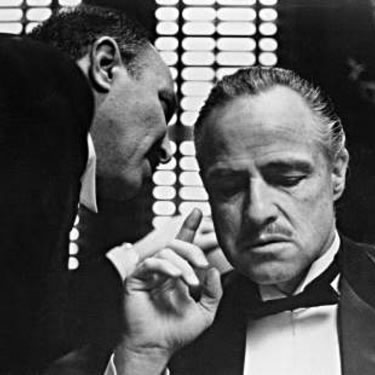
Think about how much loyalty is a part of your life. How loyal are you to others? And how loyal are they to you? Do you have loyal customers; loyal partners; loyal employees, loyal friends and loyal family members? Loyalty is a strong and positive quality. It’s a key element in building and maintaining relationships. So, everything must be peaches and cream, right? Ah, but there’s a bit of a dark side to loyalty.

You probably have heard the term, “loyal to a fault.” This is when we may be too loyal to someone else and that loyalty clouds our judgment and may even be damaging to our business. Whether or not we’re being too loyal can be a tough call. It requires us to be very objective about a particular person and their performance. This can be exceptionally difficult for anyone and nearly impossible for someone who places a very high value on the loyalty trait.

Here’s a scenario that may be familiar. Perhaps it’s even happened in your own organization. A high-level executive has been with a firm for 30-years and reports to the founder and CEO. This executive is part of the CEO’s inner circle and his advice and counsel are often sought by the CEO. Unfortunately, this executive is also a flaming jerk. He’s very nice and thoughtful to other senior level executives, but when it comes to those who don’t have as prominent a position in the organization, he can be unreasonably demanding and thoughtless. Because of his tenure with the CEO, his behavior is tolerated. The employees of the firm have learned to steer clear of him and know that he is “protected” by the CEO. Complaints were lodged about him in years past but it’s well-known by everyone working for this company that he will always get away with whatever he wants.

If asked about this high-level executive, the CEO would undoubtedly say, “I know that he can sometimes be a bit abrasive, but overall he’s done a great job for this company.” The CEO might also say something like this, “He and I were fraternity brothers and he’s always had my back.” Sound like something you might have heard before? In this situation, many of the employees of this company have lost respect for the CEO because he won’t fix the problem. If this was a family business, it could very well be that the CEO and high-level executive are related – brothers perhaps. The bottom line is that the organization cannot function effectively because the CEO has misplaced loyalty to a problem individual.

As entrepreneurs we must learn how to maintain our objectivity, especially when it comes to employees and team members who are key to us. We have to be able to separate our feelings of loyalty from what is best for our organization. Loyalty can easily become a blind spot for us unless we have a method to deal with it. In a larger organization this can be done through a human resources department. The HR director must be given permission by the CEO to lay the facts on the table about each and every employee. In a smaller firm, it may be helpful to hire a consultant who can facilitate the performance of a 360-degree review of senior executives or even all members of the firm. In both cases, the HR director or the consultant should provide an honest perspective to the CEO that one of his or her reports needs to be coached, disciplined or even dismissed.

Loyalty is generally a good thing. But when there’s loyalty to a fault, we need to be willing to listen to someone tell us when we have a problem. And then we must deal with it accordingly.

This blog is being written in tandem with my book, “An Entrepreneur’s Words to Live By,” available on Amazon.com in paperback and Kindle (My Book), as well as being available in all of the other major eBook formats.

The Handshake Heard Around the World

Recently we offered a managerial position to a prospective team member. All of the background screening was complete and he accepted the offer. We even had a firm starting date and appreciated the fact that he felt that he needed to give a two week notice to his current employer. A few days before his starting date he let us know that he wouldn’t be coming to work with us after all. It seems that his employer had offered him $12,000 more annually and he was going to stay put. There is so much wrong with this that I don’t know exactly where to start. Of course this isn’t the first time this has happened. And I know that other businesses have encountered the same thing.

From the prospective team member’s standpoint I have a real problem with this individual making a commitment and then reneging. Oh, I’ve heard all sorts of rationalization. “This is just the way of the world today.” Or, “You can’t really blame someone for wanting to simply take care of his family.” And, “This is classic Millennial behavior.” To all of this I say . . . hogwash. Strong relationships are built on commitment. It’s this way in a marriage, in a friendship, in business and certainly between an employer and an employee. Yet, some people see a potential job shift as a way to force their current employer to give them a raise – never mind that they’ve led their prospective employer down the primrose path.

Let’s look at the other side of the equation. By offering more money not to leave, the current employer is effectively saying to its employee, “We’ve been underpaying you all along and we knew it.” How does this reflect on the commitment of the employer? How is it that on one day an employee is worth what he has been paid all along, and the next day he’s suddenly worth $12,000 a year more? Why would the employee want to continue working for a company that does this?

One of our company’s five core values is Commitment. It’s definition – “We hold ourselves accountable and deliver on our promises.” Our rationale – “When we are fully committed, we are reliable and work diligently. Our commitment fosters dedication and loyalty.” We also wrap this core value with individual and organizational actions. From an individual perspective, “I take responsibility for my roles and accountabilities and strive to surpass expectations. I do what I say; I follow through and take ownership for my actions. I contribute constructive input for our company when requested or when needed.” From an organizational perspective, “Our leaders follow through and honor their commitments. Our leaders strive to make decisions keeping in mind the company, team members, customers and stakeholders. Our leaders are dedicated to supporting their team members so they can fulfill their commitments.”

In 1975, I interviewed for several jobs as I was about to graduate from college. I agreed to work for my current company and was immediately contacted by another prospective employer and offered a position that would have paid more. The thought never crossed my mind to even consider the offer because I had already made a commitment to my current firm. That was the way of the world in 1975. Sadly, as a society we’ve lost the meaning of the word Commitment.

For entrepreneurs trying to build a business, probably the most valuable resource we have is people. Without people, it’s virtually impossible to build an organization that provides a product or service to our customers. To attract and retain people we must demonstrate commitment in many forms. Our team members need to see that we are committed to making certain they are paid as promised. They need to know that we as leaders are committed to their well-being; to their growth and development, and to the long-term sustainability of our organizations. Perhaps by modeling commitment on our end, we can attract team members who will value this and become dedicated and loyal over the long haul.

I recommend that every entrepreneur adopt Commitment as a core value. By delivering on it each day, maybe it’s possible that the tide will turn and we can return to the day when our word is our bond.

You can also listen to a weekly audio podcast of my blog. What you hear will be different than what you read in this blog. Subscribe on iTunes or wherever you get your podcasts. You can also click on this link – Click here to listen to Audio Episode 102 – Sabotage?

This blog is being written in tandem with my book, “An Entrepreneur’s Words to Live By,” available on Amazon.com in paperback and Kindle (My Book), as well as being available in all of the other major eBook formats.
Misplaced

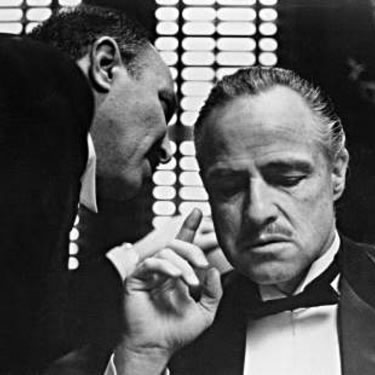
Think about how much loyalty is a part of your life. How loyal are you to others? And how loyal are they to you? Do you have loyal customers; loyal partners; loyal employees, loyal friends and loyal family members? Loyalty is a strong and positive quality. It’s a key element in building and maintaining relationships. So everything must be peaches and cream, right? Ah, but there’s a bit of a dark side to loyalty.

You probably have heard the term, “loyal to a fault.” This is when we may be too loyal to someone else and that loyalty clouds our judgment and may even be damaging to our business. Whether or not we’re being too loyal can be a tough call. It requires us to be very objective about a particular person and their performance. This can be exceptionally difficult for anyone and nearly impossible for someone who places a very high value on the loyalty trait.

Here’s a scenario that may be familiar. Perhaps it’s even happened in your own organization. A high-level executive has been with a firm for 30-years and reports to the founder and CEO. This executive is part of the CEO’s inner circle and his advice and counsel is often sought by the CEO. Unfortunately this executive is also a flaming jerk. He’s very nice and thoughtful to other senior level executives, but when it comes to those who don’t have as prominent a position in the organization, he can be unreasonably demanding and thoughtless. Because of his tenure with the CEO, his behavior is tolerated. The employees of the firm have learned to steer clear of him and know that he is “protected” by the CEO. Complaints were lodged about him in years past but it’s well-known by everyone working for this company that he will always get away with whatever he wants.

If asked about this high-level executive, the CEO would undoubtedly say, “I know that he can sometimes be a bit abrasive, but overall he’s done a great job for this company.” The CEO might also say something like this, “He and I were fraternity brothers and he’s always had my back.” Sound like something you might have heard before? In this situation, many of the employees of this company have lost respect for the CEO because he won’t fix the problem. If this was a family business, it could very well be that the CEO and high-level executive are related – brothers perhaps. The bottom line is that the organization cannot function effectively because the CEO has misplaced loyalty to a problem individual.

As entrepreneurs we must learn how to maintain our objectivity, especially when it comes to employees and team members who are key to us. We have to be able to separate our feelings of loyalty from what is best for our organization. Loyalty can easily become a blind spot for us unless we have a method to deal with it. In a larger organization this can be done through a human resources department. The HR director must be given permission by the CEO to lay the facts on the table about each and every employee. In a smaller firm, it may be helpful to hire a consultant who can facilitate the performance of a 360-degree review of senior executives or even all members of the firm. In both cases, the HR director or the consultant should provide an honest perspective to the CEO that one of his or her reports needs to be coached, disciplined or even dismissed.

Loyalty is generally a good thing. But when there’s loyalty to a fault, we need to be willing to listen to someone tell us when we have a problem. And then we must deal with it accordingly.

This blog is being written in tandem with my book, “An Entrepreneur’s Words to Live By,” available on Amazon.com in paperback and Kindle (My Book), as well as being available in all of the other major eBook formats.

Loyalty