
The Smarty Pants Entrepreneur

Think about the most brilliant people you know. Do they own or run a company, or do they work for someone else? Chances are that they fall into both categories. For many years I have been trying to hire people who are smarter than am I. Fortunately I have succeeded several times and it certainly pays big dividends.

Across the business landscape you will find many employers who simply will not hire scary-smart people. You will hear a wide range of excuses – they are too high maintenance, they will stick around for a short period of time and then they will leave, and others in the organization will resent them. For the most part this is simply code for, “I feel threatened when I have to deal with someone smarter.” Politicians are the worst offenders. Many of them have egos that are so big that they always want to be the smartest people in the room. That is why we see so many blunders and missteps in our political and legislative process. If really smart people in much greater numbers were advising our elected officials, perhaps things might be better in the public arena.

In the entrepreneurial world we can see the result of not hiring the smartest people simply by looking at the politicians and their staffs. To begin with, we must avoid the ego trap that does not allow us to admit that there are people who have great ideas . . . maybe even better than ours! Once we get this out of the way it is a downhill run from there. The word gets around that we are looking for the best and brightest and they beat a path to our door. Right? Well, maybe, but there is more work to be done for this to happen.

First, we must truly value the opinions of others. I can tell you that I went through a period in my career where I would seek the input of others but was not convincing that I really wanted it. Rather than incorporate the suggestions of others, I simply went ahead and did things the way I wanted. I was not doing this intentionally – I just did not know how to take such input and do anything with it. Together with this problem was the fact that I was way too controlling in the decision-making process. So, not only was I not valuing the opinions of others, but I was also shutting them out when it came to deciding what to do.

Smart people want to take real responsibility. They want to be coached – not told what to do. They want to believe that they are valuable to an organization and not just another cog in the wheel. Smart people need to understand our vision for the future and what role they will play along the way. They need to be challenged. Woe be to the entrepreneur who allows smart people to become bored! Keep piling on the challenges at a manageable pace and do not stop. Above all, show gratitude on a regular basis, but do not hesitate to provide constructive criticism when necessary. Most of this advice applies for every member of the team, but it is especially critical for the high achievers.

When we get our ego out of the way, we open a world of possibilities in terms of hiring amazingly gifted talent. In so doing, we create organizations that are better able to compete and win at an extremely high level.

This blog is being written in tandem with my book, “An Entrepreneur’s Words to Live By,” available on Amazon.com in paperback and Kindle (My Book), as well as being available in all of the other major eBook formats.

The Prom Night Entrepreneur

The Holy Grail for business start-ups and mature organizations alike is customer procurement. Winning customers at a sufficient pace is critical to the survival of every company and especially for those at the fledgling stage. And yet I cannot tell you how many times I have seen entrepreneurs focus more on other aspects of their businesses rather than making sure they have enough customers to keep the doors open.

There is no doubt that we must have a minimally viable product that our customers want to buy. And implementing a wide variety of systems and processes is also an important factor. But without the customers, everything else is moot. To find the customers and convince them to spend their money with us requires pulling out all the stops. Top notch interactive websites, regular informational blogs, referral programs, social media, drip marketing, multi-media advertising and positive publicity are building blocks toward customer procurement. Yet, even with full implementation, the customers may not come in numbers or as quickly as are needed. What to do? Go back to the basics and fundamentals.

Think back to prom night – what was happening? Girls had their hair done. Guys were renting tuxedos. Corsages and boutonnieres were purchased; makeup was applied, and shoes were shined to a fine gloss. In other words, we were all trying to look our very best. Think about this with respect to our products or services. Have we done everything possible to look fantastic to those outside our company?

Do prospective customers clearly understand our value proposition? How strongly are we able to demonstrate that our product or service solves a problem and preferably one with which a lot of pain is associated? This is a major failure for a vast number of companies. Their product/service might be nice to have, but the customer cannot find a compelling reason to purchase it. Think Colgate Kitchen Entrees. Never heard of this? You are not alone. The folks that make Colgate toothpaste thought it might be a good idea to launch a line of frozen dinners. Customers could eat a Colgate meal and then use Colgate toothpaste to brush their teeth. What kind of a value proposition is that?! If we can’t nail our value proposition, then neither can our customers.

Customers have many choices when purchasing a product or service. Entrepreneurs sometimes become so enamored with their own ideas that they fail to objectively assess the competition. I have certainly been guilty of this myself in the past. I would pooh-pooh a competitor and rationalize that our approach was far more sophisticated and desirable. And yet, I did not ask the bottom-line question of what customers liked better about the competition. We may have a product or service that truly is twice as good as anything else on the market, but unless we can make a clear and concise case for differentiation, we’ll be stuck with the rest of the pack. Effectively communicating product or service differentiation means life or death in the business world.

A strong uptrend for customer procurement will happen if we practice the basics and fundamentals. This can be accomplished by presenting our product or service in as attractive a manner as possible; when we have a killer value proposition, and when we effectively communicate how we are different. Doing all of this will ensure that we will be the hit of the party.

This blog is being written in tandem with my book, “An Entrepreneur’s Words to Live By,” available on Amazon.com in paperback and Kindle (My Book), as well as being available in all of the other major eBook formats.

The Sensitive Entrepreneur

We have all known hard-charging Type A entrepreneurs who have a “take no prisoners” attitude. These people are the doers. They are decisive and they know how to execute. But sometimes there is a downside to this sort of personality. Yes, sometimes those of us who are very driven may tend to be insensitive. This usually is not intentional but nonetheless it can have a detrimental effect on our team members and the culture we are trying to build.

There are many ways that insensitivity can manifest. It can be as direct as making derogatory or belittling comments to as subtle as failing to acknowledge someone with a friendly greeting in the morning. Think about an exchange like this. Team member – “I’d like to volunteer to work with Jim on the Norton project.” Entrepreneur – “No, you just need to stay focused on what you are doing.” While it may be absolutely true that the team member needs to keep doing what she’s doing, the way the entrepreneur delivered the message could be construed as insensitive. A different selection of words would make all the difference. How about this instead? “Jan – thanks for the offer. Your project is critically important, and I am counting on you to get it wrapped up. But I will take a rain check on having you help with the next one.” This statement acknowledges the team member with an expression of appreciation and affirms her value. And it gives her hope that she will be given another opportunity in the future.

So, how do we develop the appropriate level of sensitivity without going so far as to sing Kumbaya all the time? There is a very simple method that I have learned over the years. I will admit to once-upon-a-time being the insensitive Type A hard-charger that was described in the opening paragraph. I justified my behavior by believing that I was simply being expedient in my dealings with others. After all, I was moving at 100 miles an hour and the quicker I could get through with one meeting the sooner I could move on to the next. But I gradually became aware that my people skills were suffering. I was not doing anything to cultivate relationships or goodwill. Eventually I developed a new awareness by just putting myself in the other person’s shoes. How would I feel if someone spoke to me a certain way; said something in a certain manner, or failed to somehow acknowledge me?

The key is to practice, practice and constantly practice. I try to pay attention to how everyone around me is feeling. In a restaurant, I want to make sure that the wait staff is properly appreciated. At the office I try to make eye contact with members of our team as I walk by and greet each and every one of them. I pay attention to the language that I use, going the extra mile to avoid careless statements that could be misconstrued. Again, I am always testing what I say or do against the basic premise of how I would want to be treated if I were the other person. After a while it becomes very intuitive.

The mark of a good leader is how he or she treats others. Running roughshod or being humble and sensitive? The choice is easy when walking a mile in another’s shoes.

This blog is being written in tandem with my book, “An Entrepreneur’s Words to Live By,” available on Amazon.com in paperback and Kindle (My Book), as well as being available in all of the other major eBook formats.
The Mistake-Prone Entrepreneur

I have a philosophy that mistakes are simply unfinished experiments in the laboratory of life. That does not mean we want to leave unfinished the same experiment over and over. But being too tentative and too cautious to avoid making a mistake may itself be a mistake! The obvious conclusion is that we want to learn from our mistakes and turn them into productive experiences.

To turn our mistakes into productive experiences we need to analyze them in a process-oriented manner. Being a go-go entrepreneur, it is not easy for me to slow down long enough to reflect on what went wrong. Generally, I just want to get back in the game and do it right the next time. This worked somewhat well in the past, but as I have gotten older, I’ve learned that being more intentional about analyzing mistakes increases the odds of not making the same mistake again. It also has caused me to look for the “silver lining” – that nugget of information that might enable me to turn the mistake into something unintentionally positive.

Step One in my mistake analysis process involves the simple act of identifying what went wrong and writing it down. Yes, I know this takes time, but it forces us to take a hard look at what happened. Did I follow an established process, or did I deviate from it – maybe even wing it? Did I fail to build-in a sufficient margin of safety at the front end? Did I somehow ignore warning signals that were flashing at me? Was I driven by emotion or was my initiative grounded in facts? I have found that most of my mistakes came from deviating from an established process. Because of my go-go nature I want results to happen very quickly. By analyzing my mistakes, I have recognized a tendency pattern to cut corners.

Step Two requires that we consciously determine what we need to do differently and commit to do it. Knowing that I have the propensity to cut corners, I have become committed to following established processes. Before I move forward with anything I am doing, I stop myself and ask the simple question, “What is the process that needs to be followed?” I make certain that I know exactly what the process should be and then I affirm, “I know the process and I will follow it.” Sometimes I may even make this pledge to a close colleague for accountability sake.

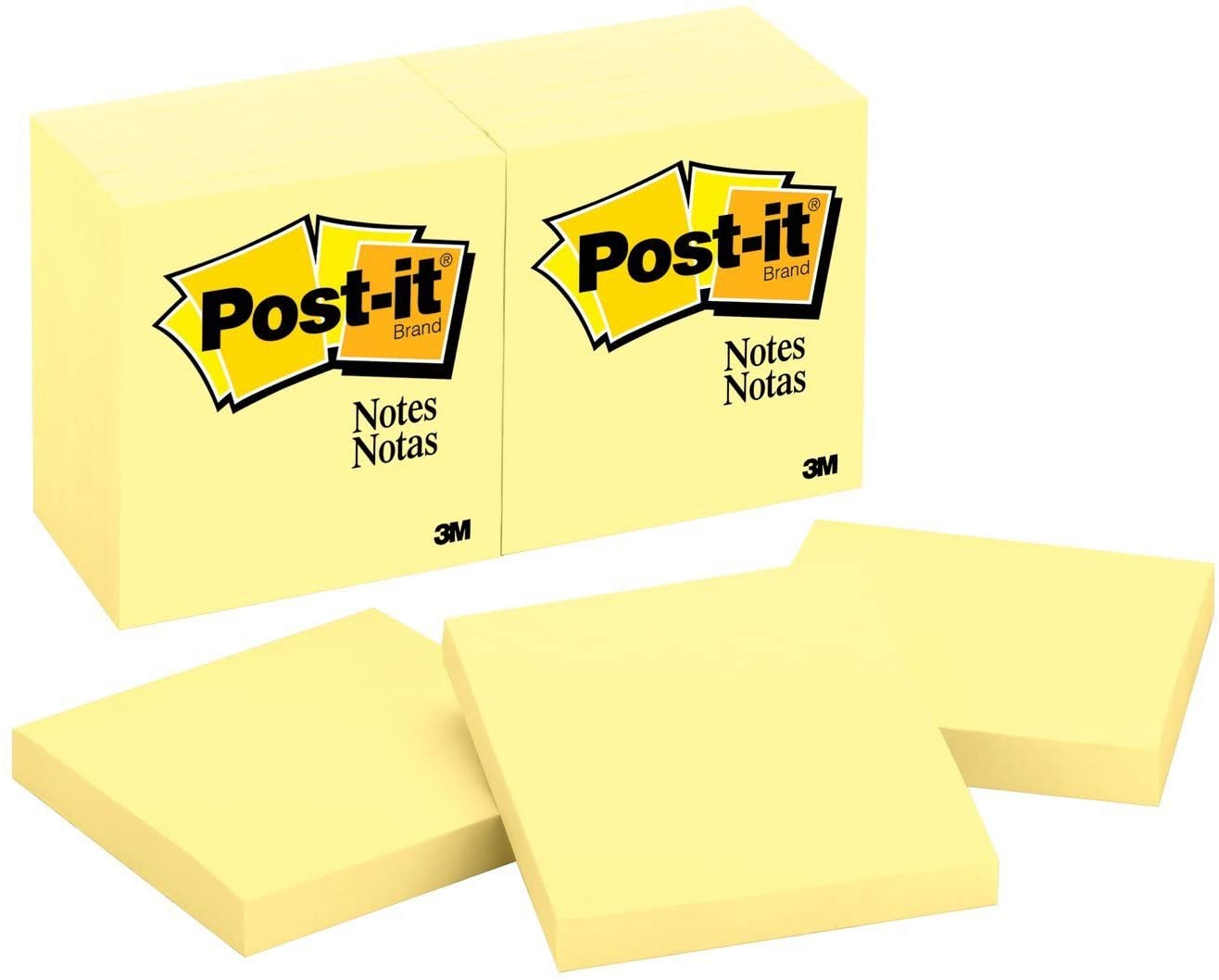
The final step in mistake analysis is that of looking for the “silver lining.” History is littered with mistakes that resulted in brilliance. Alexander Fleming discovered penicillin due to a mistake he made in his lab. Another famous mistake at the 3M laboratories turned into Post-it Notes. Plastic was invented as the result of a mistake – some say that Charles Goodyear left a mixture of rubber and sulfur on the stove too long and found that he had created a new material. Wilson Greatbatch was building a heart rhythm recording device in 1956; used a wrong part and realized that the device would maintain a heart rhythm – thus the pacemaker was born. If we do not look for the silver linings in our mistakes, we may never find that little (or big) something that manifests into a positive development. Finding the silver lining requires a creative mindset – perhaps this is an exercise that can be done with others. Take the mistake and purposefully look through the “rubble” to see if there is anything of value that might be useful.

Mistakes don’t have to be the end of the world for us if we take the time to find out what happened; how we’re going to act differently in the future and committing to such different action, and finding the silver linings that may be hiding in plain sight.

This blog is being written in tandem with my book, “An Entrepreneur’s Words to Live By,” available on Amazon.com in paperback and Kindle (My Book), as well as being available in all of the other major eBook formats.