Unknown's avatar

About anentrepreneurswords

R. Lee Harris grew up in Manhattan, Kansas and has lived in the Kansas City area since 1977. A 1975 graduate of Kansas State University, Harris began his career with Cohen-Esrey, LLC as an apartment manager two weeks after he graduated. Now president and CEO, he is involved in apartment management, development and investment; construction and tax credit syndication on a nationwide scale. Over the course of his career Harris has overseen the management of more than 27 million square feet of office building, shopping center and industrial space and nearly 60,000 multi-family units. He has started dozens of business enterprises over the past 40+ years. In 1991, Harris wrote a book entitled, The Customer Is King! published by Quality Press of Milwaukee. In 2012 he authored the book, An Entrepreneur's Words to Live By. He has mentored a number of business people over the years and has been a long-time participant in the Helzberg Entrepreneurial Mentoring Program. He and his wife Barb have two grown daughters and one grandson. They are active in their church, community and university.

Can’t Get No Satisfaction

Question: I held a dinner party recently for a number of business leaders and was disappointed that a couple of people I was counting on didn’t come. I’m sure they had legitimate reasons but it still stings a bit. What should I make of their absence?

Answer: Oh there are so many “maybes” here that it will be hard to pick one. Maybe they were sick. Maybe they had another engagement. Maybe they had a favorite television program that wanted to watch. Maybe they forgot. Maybe they don’t like you . . . Playing the maybe game will just drive you crazy. Here’s the revelation that might come from this experience. What about all the folks who did attend the dinner party? How about being grateful for them?

As entrepreneurs we have a tendency to always want more. Our business is off-the-charts, but we want more customers and more sales. We have more possessions than we ever imagined possible, but we always want more. We play a lot, but we want to play more. We want to eat more, drink more, find more excitement, and vacation more. Are we ever content with anything?

Wanting more isn’t necessarily a bad thing. It just depends upon why we want more. Do we want more because we are “competing” with someone else? Think about the guy who buys a newer and bigger boat because someone he knows just bought a new boat. His motivation is to always “one-up” his friend or acquaintance. Do we want more because we want others to see us a certain way? If we do something bigger and better perhaps we will gain greater approval from them. Do we want something more because we’re easily bored? I’ve known people who were scared to death to just sit alone quietly and do absolutely nothing. As a result, they are constantly on the go in an attempt to avoid ever being in this situation.

From time-to-time it’s healthy to examine our motivation for wanting more of something. Our entrepreneurial drive needs to be balanced against how we feel if we don’t get more. As with the dinner party, if we are able to celebrate that which we have and not feel anger, resentment or disappointment for that we which we don’t, then we are in a good place.

In 1965 the Rolling Stones released a tune entitled, “I Can’t Get No Satisfaction.” We can get satisfaction if we never stop wanting more out of life but pursue it in a grateful and balanced manner.

This blog is being written in tandem with my book, “An Entrepreneur’s Words to Live By,” available on Amazon.com in paperback and Kindle (My Book), as well as being available in all of the other major eBook formats.
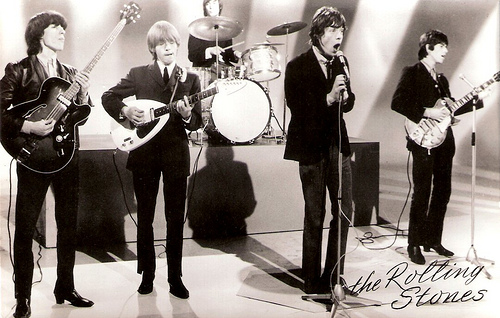
rollling-stones

Slave or Tool?

Question: Recently my spouse told me that I’m constantly on my smartphone. I guess this is probably true but I’m not sure it’s necessarily a bad thing. Is it?

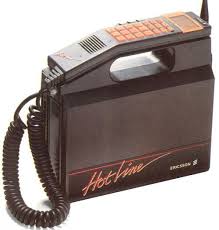
Answer: How times have changed. I know I sound like an old geezer, but when I started in business in 1975, there weren’t smartphones, and computers weren’t available for everyday use. Heck, we didn’t even have fax machines back then and I don’t think we had a copy machine either. I remember that we used carbon paper – hey Millennials, have you ever seen carbon paper? Thinking back, I don’t even know how we did business “back in the day.” Obviously we did, but technology has accelerated our capabilities beyond belief. Younger people take this technology for granted since they know nothing else. But the advances that we’ve seen in recent times are both a blessing and a curse.

I have found myself being a slave to my smartphone. These things are really cool with all of the applications that can be downloaded. Go to any restaurant or coffee shop and you’ll see patrons with their heads down looking at their smartphones. I know I rationalize my own behavior by pointing to the fact that I’m being “on-the-spot efficient” with my time and “customer-centric” when reading and responding to e-mails in the car, at the restaurant, on vacation and just about everywhere else. The other day I made a conscious effort not to look at my smartphone while eating dinner in a restaurant. It wasn’t easy.

Obviously we can use our smartphones as a tool, or be enslaved by them. Here’s what I’ve decided. If we find ourselves needing to be on our smartphones a large percentage of the time, then we’re probably in the slave category. Think about this. If we are in a meeting, with other people or driving in our car and just can’t resist the urge to check our phone, then we may need to take stock.

Here are the questions I ask myself to determine if I’m using my smartphone as a tool or not. When I turn it on is it because I feel a compulsion to do so? Is the use of my smartphone at a given time rude to others? Does its use create an unsafe situation (i.e. while driving)? Am I using my smartphone in the presence of another person because I subconsciously want to avoid a conversation with that person? Did I just check my e-mail two minutes ago? Five minutes ago? Ten minutes ago? How do I feel if I don’t check my smartphone when the urge hits me? Anxious? Guilty?

Smartphones are wonderful inventions and can be a real blessing in our lives. To keep from allowing ourselves to become enslaved by them we must regularly and intentionally check our motivations for using them. Only then will they truly be the tool we want them to be.

This blog is being written in tandem with my book, “An Entrepreneur’s Words to Live By,” available on Amazon.com in paperback and Kindle (My Book), as well as being available in all of the other major eBook formats.

cellphones

Are the Restrooms Clean?

Question: I keep hearing talk about building on a strong foundation. I know this applies to a business and to life. Can you give some examples of what this means?

Answer: Building on a strong foundation has become a bit of a cliché in recent years. Business writers use it. Politicians use it. Ministers use it. The premise is sound but it needs to be called something different. I’m going to rename the concept, “Are the Restrooms Clean?”

I can tell you how well any business is being run by the condition of its restrooms. Some of the fanciest national restaurant chains spend millions in marketing and advertising trying to entice us with mouthwatering food. And yet, their restrooms are filthy. What does this say about their operation in general? To me it says that little things don’t matter – it’s all flash and glitz. Where else are they cutting corners? Do I even want to peek into their kitchen? Think about the last time you were in a dirty restroom. What overall opinion did you form about the business?

The little things do matter. As entrepreneurs and with life in general it’s easy to get caught up in the big picture and sometimes neglect the seemingly trivial. After all, what’s more important – understand the cost of goods sold or a sparkling urinal? But here’s the thing. The little things are the foundational elements on which success is built. Are we on time when attending meetings or are we tardy? Are we gracious and well-mannered or are we arrogant and a bit narcissistic? Do we always do the right thing even when no one is looking and no one will ever know?

One of the best illustrations of how a little thing can have catastrophic consequences is the story of the space shuttle Challenger. On January 28, 1986, the Challenger lifted off from Cape Canaveral, Florida with seven astronauts aboard. Just 73 seconds into the flight the shuttle broke apart and exploded resulting in the loss of the entire crew. How did this tragedy occur? An O-ring seal failed on the right solid rocket booster allowing hot gas to escape and causing the horrifying separation of various structural components. When a business fails or when we as individuals fail, it often starts with something small.

I’ve written in the past about being strategic and not getting bogged down in straightening paperclips. And that advice still holds true. But it’s just as true that we can’t ignore the small details in our businesses and our personal lives. There must be a balance between big stuff and little stuff. The key is being aware enough to regularly take stock and make sure that the little things aren’t going to bite us.

Metaphorically speaking, if our restrooms are spotless there’s a good chance that we’re tending properly to the small things upon which we build our businesses and our lives.

This blog is being written in tandem with my book, “An Entrepreneur’s Words to Live By,” available on Amazon.com in paperback and Kindle (My Book), as well as being available in all of the other major eBook formats.

outhouses

What to Do?

Question: Lately I’ve been faced with some tough decisions. I struggle in this department. How can I make this easier?

Answer: Entrepreneurs by definition have to make a lot of hard decisions. Do we add a new product line or not? Should we raise our prices? Should we fire a client? Can we afford to buy a new piece of expensive equipment? All of these decisions are weighty for a reason. They could have adverse consequences if we’re wrong about what we decide.

Life is full of tough calls. Whether in our business or personal lives one factor that makes decisions hard is a little thing called emotion. The more we can eliminate emotion from our decision making process, the more likely we will be to turn the tough call into the right call. Without emotion we can then turn to a factual approach in this process.

Something that has worked for me over the years has been the use of a decision tree. When I have to make a complex or difficult decision I draw one or more lines down the page. At the top of each column I write a decision that I could make to address a particular situation. There might be two or three possibilities – maybe even more. From each decision I draw lines with boxes underneath. We all know that when decisions are made there are consequences. These boxes contain the consequences. By laying out all of the decisions and the various potential consequences I am able to assess the probability of outcomes and determine which yield the best result with the lowest risk. Doing this insures that emotion remains on the sideline.

Some people say, “Follow your gut instincts.” So you may ask, isn’t gut instinct an emotion? Actually gut instinct is the result of experience. There’s no such thing as pure gut instinct that isn’t based on some level of experience. And this experience can be developed by making decisions over and over utilizing facts and decision trees. Eventually you just know what to decide because you’ve done it so many times. But a strong factual foundation was laid early on.

We can all make the tough decisions with ease when we take the emotion out of the equation. By turning to an examination of the facts we are able to logically figure out what steps to take. And after we do this long and often enough, we develop strong instincts that enable us to act quickly and decisively.

This blog is being written in tandem with my book, “An Entrepreneur’s Words to Live By,” available on Amazon.com in paperback and Kindle (My Book), as well as being available in all of the other major eBook formats.
decisions

A Glance Back

Question: I was recently told that I don’t listen very well. I think I do but I feel like I’m being defensive if I say so. How should I respond?

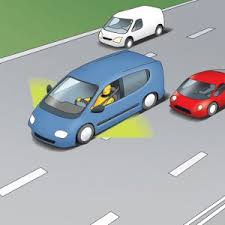
Answer: Take a glance over your shoulder. What do I mean? When we’re driving a car and we’re going to change lanes what do we do? We check in the mirror. But if that’s all we do we could still have an accident. Why? Because the mirrors don’t necessarily allow us to see in our blind spot. Instead, we look over our shoulder to visually make certain we aren’t going to collide with another car.

This is a great life metaphor. When we look in the mirror we don’t always see what others see. To “glance back” is to accept feedback from others, and sometimes it may be something we don’t want to hear about ourselves. Then we have to make a choice. We can be defensive and reject what we are being told. Or we can swallow our pride (often false pride) and take a long and introspective look. Perhaps there’s some truth to the ugly rumor that we have a characteristic or trait that needs to be modified.

If we want to succeed as entrepreneurs we must be willing to become vulnerable and pay attention to how others feel about us. Earlier in my career I was a bit tone deaf when it came to being sensitive to other’s feelings. Apparently I had a tendency to run roughshod over people. I was told this several times and could not see my blind spot. In reality I was in denial about what I was being told. Ultimately I began to change my behavior after it adversely impacted my relationships and caused hard feelings. To stay on the straight and narrow I give my colleagues permission to “hit me on the head with a two-by-four” if ever again I fall into the same behavior.

It’s a rare individual who has no blind spots. We should accept the fact that we have them. But what we do to learn about them is a test of our character. When we pay attention to how others are responding to us we’ll be able to sense whether or not the reaction is positive or negative.

Actively glancing over our shoulder and checking with others to learn of our foibles will help us strengthen our relationships. In so doing we avoid allowing our blind spots to become destructive.

This blog is being written in tandem with my book, “An Entrepreneur’s Words to Live By,” available on Amazon.com in paperback and Kindle (My Book), as well as being available in all of the other major eBook formats.

blindspot

Square Pegs, Round Holes

Question: There are times when the harder I try to get something to work the less likely I am to succeed. Naturally this is frustrating but I don’t want to give up. Help!

Answer: Take solace – we’ve all been there at one time or another. Here’s what happens. We have a goal in mind. Let’s simplify it for illustrative purposes. We want to thread a tiny fishing line into a tiny eye of a tiny hook. We have the best of intentions – we just want to thread the hook. But our eyesight may not be the best; our fingers might be too big; the light might not be right; we may have trouble holding the hook steady (and maybe the line too) – all of these elements may be working against us. What do we do? We keep pushing that line at the hook’s eye and we keep missing. Over and over and over we do this with the frustration mounting.

How do we finally thread the line through the hook? We slow down. We make sure the light is right. We put our reading glasses on. We take a deep breath and relax. And guess what – the line goes right into the eye of the hook. The lesson here is that when we try and force things we often fail.

As entrepreneurs we need to use this simple lesson as we go about our daily business. I spent many years trying to “muscle” my way to accomplish my goals. There were times when I tried to “will” things to happen the way I wanted. This was a classic case of trying to pound a square peg into a round hole. It just didn’t work. Oh, there were plenty of times that I accomplished my goal. But that square peg may have been mangled in the process.

I finally broke the code when I realized that my “muscle” approach was actually causing me to be “muscle bound.” I learned that my high sense of urgency was causing me to plunge into trying to accomplish something without the necessary foundation being laid. I discovered that doing more research and creating a solid plan was a good launching pad. It also became apparent that maintaining a higher sense of awareness about what was happening along the way would serve me well. How were people responding to my approach? Did I need to provide better and clearer directions? By relaxing and keeping a positive attitude I was able to still maintain my sense of urgency, and the path to success was smoother and more certain.

When we feel as though we are running into walls it’s time to take a step back. Reassess the situation. Create a new plan. Relax. Then start again with a new and positive attitude.

This blog is being written in tandem with my book, “An Entrepreneur’s Words to Live By,” available on Amazon.com in paperback and Kindle (My Book), as well as being available in all of the other major eBook formats.
square-peg-round-hole

Noise

Question: Sometimes when I’m trying to make decisions I begin to have doubts. There are so many external factors that could impact my decisions. How do I get past this paralysis?

Answer: We are so inundated with information these days it’s easy to become overwhelmed. And when we’re overwhelmed the paralysis you reference sets in. Sometimes rather than becoming paralyzed, this crush of information causes us to reach false conclusions and we act irrationally. The best example of this is the stock market. The day starts out with good economic news and the Dow Jones Industrial Average soars. So does the NASDAQ and the S&P 500. Early in the afternoon word of political issues in a foreign country cause a major reversal and the markets close substantially down. The next day, the markets rebound and close higher. How can a seemingly unrelated event in a foreign country have that much impact on our economy and on our financial markets? It shouldn’t and it really doesn’t.

It’s all just noise. Markets move on fear and on jubilance. Neither really makes much sense. But we’ve become conditioned to volatility in the financial markets and the overload of information permeates the rest of our lives causing similar volatility in our decision-making process . . . or just paralysis.

It’s important that we recognize noise when it’s present. The best way to do this is to have a clear understanding of the goal or objective we are pursuing. That goal has attached to it a series of decisions that must be made. Is there information that we sift through that might have a true bearing on this goal? If we always measure against the goal we can then block out the noise. For example, let’s say that my goal is to renovate an historic building in a small town and convert it to apartments. A lot of data will come flooding at me every day. I’ll hear about political strife in another country; political strife in our country; the stock market rose/fell 200 points; oil prices may be rising; a competitor just abandoned an historic renovation project (what does he know that I don’t?); interest rates may increase; the cost of lumber may increase; new regulations may be implemented by OSHA, and my favorite restaurant is closing. What to do?

I focus on my goal and I quickly process the information deluge. Of course there are a lot of unknowns, but if I’ve properly assessed the risks of my project, I have a mitigation plan for things like rising interest rates and higher material costs. The rest of it . . . I ignore.

Life is full of noise. The trick is to turn it into white noise that is in the background with no discernible impact on our daily lives. We do that by remembering our goals, our assessment of the risks and our plan to mitigate those risks.

This blog is being written in tandem with my book, “An Entrepreneur’s Words to Live By,” available on Amazon.com in paperback and Kindle (My Book), as well as being available in all of the other major eBook formats.

cymbals

Blockages

Question: Lately it seems like everything is harder than it should be. My concentration isn’t as good as it needs to be and I feel like I’m running into walls. What is wrong?

Answer: Sometimes we experience blockages in our lives. We create these blockages and don’t even realize we are doing it. To understand and  effectively deal with blockages, we must first understand the flow of positive energy. I believe that every human being is born into a constant flow of positive energy. Do you know what it feels like when everything seems to be going right? That’s the flow of positive energy. Now some may say that this sounds a little “woo-woo.” Woo-woo or not, there’s not a doubt in my mind that this river of positive energy is always there.

What happens when we place a log or a rock in a river? It blocks the water flow at that immediate point, though the water continues to flow over, under and around the log or rock. We create blockages that interrupt the flow of positive energy. When we have thoughts of limitation – a blockage will form. Every time we say “I can’t,” that’s a blockage. And these blockages aren’t targeted. They permeate every cell of our being. Blockages are also caused by disease, anger, envy and general negativity, just to name a few.

Armed with the knowledge that we create our own blockages we can proceed to eliminate them. The word elimination is the key here. I’m sure someone will say, “You claim that disease is a blockage – I can’t help it if I get sick!” Ah, but how we choose to deal with disease determines whether or not it will be a blockage. If we continually affirm that we are sick, the blockage to our positive energy flow will be created. As entrepreneurs, we must be on the lookout for blockages and eliminate them each time we become aware. Entrepreneurial spirit thrives on positive energy and dies under the weight of negative blockages. As an entrepreneur, there are times when I find myself in a funk and am not experiencing normal levels of success. The first thing I do is look for blockages and once identified, I eliminate them. If I’ve had an unhappy experience with a particular individual, I will apologize and try to make things right. Waiting to do this only keeps the blockage in place that much longer and has a profound impact on our lives.

Restoring and maintaining our flow of positive energy is crucial to our happiness and success. Quickly identifying the source of blockages and eliminating them ensures that we will stay in the positive flow at all times.

This blog is being written in tandem with my book, “An Entrepreneur’s Words to Live By,” available on Amazon.com in paperback and Kindle (My Book), as well as being available in all of the other major eBook formats.

beaver-dam

Perfectly Perfect

Question: I’m striving to achieve Six Sigma in my business but I’m getting a lot of internal resistance. What can I do to convince my team that this should be our ultimate goal?

Answer: Maybe it shouldn’t be the ultimate goal. Six Sigma is an admirable concept, but only in certain situations. It was developed by Motorola as a manufacturing process in 1985 with an end result of 99.99966% defect-free products. I can remember the business world was abuzz with this revolutionary idea – everyone was trying to apply it to their own company, regardless of what that company did. In essence, everyone was trying to achieve near-total perfection.

Should perfectionism truly be our goal? It depends. If you are a heart surgeon, Six Sigma is for you – in fact, your work should be 100% defect-free. If you’re a banker transferring money in or out of my bank account, 99.99966% correct ain’t good enough – you need to be absolutely perfect with the transfer! As entrepreneurs we’ve grown up with the belief that everything needs to be 100% perfect.

I have changed my mind on this as the years have passed. No longer do I believe without question that everything deserves total perfection. Why the change of heart? I know you’ve heard of something called “diminishing returns.” As entrepreneurs we must deliver top quality with our products and services. But in a great many situations something less than 100% perfection is just fine with our customers or clients. They may be ecstatic if we deliver 80% or 90% perfect. The cost to get to 100% may be extraordinarily high and eat into our profit margins when we set this as our goal. And if our competition is delivering 75%; we deliver 80% and our customers are thrilled, what’s the point in achieving total perfection?

You might say that I’ve relaxed my standards. But as entrepreneurs we need to find a healthy balance between what needs to be perfect and what doesn’t. Blindly striving to make everything 100% when 80% is good enough, may not be a good deployment of resources. There’s a parallel to this in our personal lives. Are we trying so hard to be perfect in so many areas that we’re wasting our lives on things that really don’t matter? Does the Christmas video really need to be defect-free? So what if there is a weed or two in the front lawn (especially if the only person who notices is you). Is the world going to come to an end if we miss the high note while singing in the church choir on Sunday morning?

A slight imperfection here or there makes life more real. This doesn’t give us license not to try and achieve a flawless outcome. But learning when it matters and when it doesn’t is a sign of wisdom.

This blog is being written in tandem with my book, “An Entrepreneur’s Words to Live By,” available on Amazon.com in paperback and Kindle (My Book), as well as being available in all of the other major eBook formats.
Arrows in a bullseye

Cucumber Cool

Question: Some people never seem to get flustered when situations become chaotic. How do they do that?

Answer: We all would like to stay cool, calm and collected when the pressure rises. Sometimes it’s not easy to do. My dad was one such individual. He was trained as a scientist and was absolutely steady as a rock. When my mother would become excited about something, he was unflappable. I studied his quiet manner for many years and often wondered if what I saw on the outside was really happening the same way on the inside. As an adult I was finally able to answer this question the more mature I became.

Dad really was cool as a cucumber inside and out. His scientific background helped him analyze everything and find the facts rather than getting caught up in the emotion. Dad also never took himself too seriously. I can’t remember a single display of egotistical behavior in all of the years he was alive. These attributes are instructive for all of us.

When things start to spin out of control, we can look for the facts. Analytical thinking tends to be a calming process and may be a steadying influence. Imagine a circumstance where we are feeling “fight or flight.” Suppose a large customer has just indicated that it is no longer going to purchase from us. The revenue loss from this customer will mean employee layoffs and potential losses for the company. The staff is upset and panicked over the news. What is needed is someone who hasn’t lost his or her cool. This can happen if we focus on obtaining the facts about the situation. Our words and demeanor are soothing and our pursuit of a logical conclusion is comforting to those around us. Panic and discouragement give way to our team figuring out how to turn lemons into lemonade.

In addition to calmly tackling the situation in a clinical fashion we also avoid letting our egos get in the way. We show concern for others and help them manage through their feelings. We stay positive and upbeat. The people around us see that we’re unruffled and in a problem-solving mode and they respond in kind. Our approach to an unsettling situation helps to defuse the anxiety and channel it productively.

Staying cool, calm and collected is not an act but a mindset. Generally an emotional response to a negative situation does little to produce a resolution. When we shift into analyzing the facts and subordinate our egos to others, they are reassured and able to function in a fruitful manner.

This blog is being written in tandem with my book, “An Entrepreneur’s Words to Live By,” available on Amazon.com in paperback and Kindle (My Book), as well as being available in all of the other major eBook formats.

Cucumber on White