
Why Do They Quit?

Question: In this day and age of heightened customer service awareness, why are there still businesses that deliver such a lousy customer experience?

Answer: You are so right about this observation. For a number of years we’ve seen a barrage of books and articles about how companies are more focused on delivering top quality customer service. But for some reason, on a regular basis there’s still a disconnect between the theory and the practice.

For more than 20 years my wife and I went to the same dentist – every six months like we’re supposed to do. During my final encounter with this dentist I asked him to do some minor cosmetic work on my front teeth and inquired as to the cost. He quoted an amount; we scheduled an appointment, and the work was performed. When I received the bill I was in for a shock. It was double what he had told me. Because he is so hard to reach in person during the day, I sent him an e-mail explaining the situation. His response was, “What I quoted was for one tooth.” Now I don’t know about you, but I liken this to having the brake pads replaced on your car and the mechanic gives you a quote for one brake pad. I told the dentist how disappointed I was that he had not made his pricing clearer. He responded that in the future, each patient would receive such a quote in writing to eliminate any confusion. What he failed to do however, was apologize to me and knock some amount (any amount would have been fine) off my bill. As a result, he lost two patients forever. How simple it would have been to show a bit more consideration by simply acknowledging the mistake and making a minor financial adjustment.

Here’s another 20+ year story. A certain pool company has received thousands of dollars from me over that timeframe through opening and closing our swimming pool as well as replacing the liner two or three times and servicing our hot tub. This year the pool was opened on schedule. Normally the cover is removed, chemicals dumped in the water, the pump and filter are started and the crew comes back a few days later to vacuum and finish the clean-up. We’ve had a wet spring and as a result the company fell behind on its schedule and never came back to finish the job. Of course they weren’t hesitant to send me a bill which I quickly paid. I placed several phone calls during which I was told they’d “take care of it.” An e-mail went unanswered. Finally a month later I hired someone else to finish the job and sent a letter to the owner of the pool company terminating their services. Ironically, the same day the opening was finally finished, the pool crew showed up only to realize their job had been completed by another party. To this day I haven’t heard a peep out of the owner of the pool company. And of course he wasn’t honorable enough to refund a portion of what I had paid.

It is important to remember that when serving others the key to keeping a customer happy is honesty and communications. We humans will tolerate an awful lot as long as we feel that we are being treated fairly and have expectations communicated to us in a clear and timely manner. Lack of these elements shows disrespect and is the main reason we quit companies that serve us. Yes, we want performance and quality products. But the way we are treated is equally important if not more so.

There’s a very simple yet powerful adage to remember that will ensure that we will keep our customers happy. It goes like this. Do unto others as you would have them do unto you.

This blog is being written in tandem with my book, “An Entrepreneur’s Words to Live By,” available on Amazon.com in paperback and Kindle (My Book), as well as being available in all of the other major eBook formats.


customer-service

30,000 Feet

Question: Sometimes I tend to get caught up in the details and miss the big picture. What should I do to develop my abilities to have a broader focus?

Answer: Life in general and entrepreneurship specifically, is a mixture of strategy and tactics. It is very easy to fall into a routine of dealing with tactics on a daily basis and letting someone else worry about strategy. After all, this subject is a bit fuzzy anyway. The work has to get done and if the details aren’t tended to, then everything falls apart – right?

Actually the reason many people are extremely tactical is because the overall strategy has never been adequately explained to them. Let me give you an example that borders on the absurd, but will illustrate the point well. Let’s say that you are blindfolded and led into the cockpit of an airplane. The blindfold is removed and you are told that your job is to fly the plane. Let’s also assume that you actually know how to fly the plane. Great. Now what? No other instructions are given. Are you supposed to fly the plane to another destination? If so where? Will there be passengers on the plane or are you flying cargo? Maybe this is just a test flight. Are you starting to get the picture? You know how to fly the airplane – that is to say, that you understand the tactics. But you have no idea what the end result is supposed to be – that is to say, the strategy. By now it’s pretty obvious that the “What” is the strategy, and the “How” are the tactics.

Stop and think about you daily routine. Do you understand the strategies to which your tactical efforts are aimed? If you are a leader, how well do you explain the strategies to those you are expecting to implement tactics to deliver said strategies? This may sound like a very simple premise but it’s one of the biggest areas of miscommunication in our lives today. As a result, many people toil in frustration, feeling like one more cog in a wheel that is going nowhere.

Starting today, resolve to understand the strategic aspects of what you are doing. Make certain that you communicate the strategies to everyone involved if you are the leader. If the strategy is to deliver better customer service than any of your competitors, make sure that you clearly articulate this and make everyone aware of the metrics to be used for accountability. If your team understands the strategy, it can develop the tactics that will lead to success. But if the strategy is unclear and poorly communicated, don’t be surprised if you don’t have the buy-in of the team members.

Each of us wants to feel as though what we are contributing matters. Only when the strategy is clear to all do the tactics matter. And then our sense of self-worth can be fulfilled.

This blog is being written in tandem with my book, “An Entrepreneur’s Words to Live By,” available on Amazon.com in paperback and Kindle (My Book), as well as being available in all of the other major eBook formats.

cockpit_B777

The Ear and the Brain

Question: I’m struggling to communicate with a co-worker. How do I get him to listen to me?

Answer: This question sure hits home. The mind of an entrepreneur is racing at 100 miles per hour. We juggle balls of all shapes and sizes. Frequently we are on the move at warp speed. People think we listen . . . and WE think we listen. But sometimes there are complicating factors.

If I say “hello” to you, usually you will say “hello” back to me. Does that mean that I listened to you? Maybe. But it’s for certain that I heard you. Listening is more complicated than the simple act of hearing. Let’s assume that you come into my office and tell me that there’s an issue with a particular client. You describe a course of action that you want me to approve to resolve this issue. I nod. I may murmur, “uh-huh.” And you leave believing that you have my consent. A week later you tell me that the matter was taken care of although there was some fallout with the client. I give you a blank stare at which point you say, “I told you about this last week!” You get another blank stare from me at which point I might suggest how you could have resolved the issue without the fallout. In the end you are irritated because of this outcome. What happened here?

This is a real life classic example of hearing and not listening. Members of my team who read this are nodding their heads so hard right now that they’re going to get whiplash. When you came into my office I had just finished a phone conversation and was still processing the gist of it. A thought also popped into my head about a related matter, and I needed to leave for a lunch meeting. I certainly heard you but didn’t have the presence of mind to slow down and listen to what you were saying.

There are several solutions. The easiest is to make certain that I am in a listening mode. Ask me if now is a good time to chat. I may ask if we could do it later and set an appointment with you. Or, if I have time, I’ll talk then. After you are finished telling me what you have to say, ask me for specific feedback – pros and cons or other thoughts I might have. Once a course of action is determined, ask me to summarize what I understand is going to happen. This can be done by you simply saying, “I want to make sure I do this the way we have agreed. Would you mind summarizing what you understand that I am to do?”

We all know that clear communications is paramount to success. It’s critical that we make certain that the people with whom we are communicating are truly listening to us and not just hearing what we say. Ultimately it’s our responsibility to make this happen.

This blog is being written in tandem with my book, “An Entrepreneur’s Words to Live By,” available on Amazon.com in paperback and Kindle (My Book), as well as being available in all of the other major eBook formats.
ears

Just the Facts Ma’am

Question: I have become increasingly concerned about the tone of e-mails that I have been receiving lately. And I find that people aren’t responding to my e-mails in a timely manner. Why aren’t people more courteous?

Answer: E-mail is a wonderful medium. It’s hard to remember what it was like before the days of “You’ve Got Mail.” We’ve become so accustomed to popping off an e-mail every time we feel like it that we take for granted this amazing tool. And now we don’t have to be sitting at a computer to send an e-mail – we can do it from our phones or an electronic tablet. All this makes for a high level of efficiency – wouldn’t you agree?

But we are paying a price with this advancement. We sit in our offices and send an e-mail to a colleague who may be less than 10 feet away. We send text messages to family members sitting in the same room. We send messages via Facebook and Twitter. So what don’t we do? We don’t talk to each other anymore. What I’ve come to learn is that e-mail is a great one-dimensional form of communications. It is perfect for conveying factual information. But all too often we use e-mail to express emotion and sometimes this can be misinterpreted by others.

I remember as a kid how a neighbor’s German shepherd would sometimes chase me into my house while nipping at my heels. Once inside, I’d turn around and scold the dog through the screen door – knowing he couldn’t bite me because I was safe inside. We may have the tendency to say things in an e-mail that we wouldn’t say in person. I call this “talking tough behind the locked screen door.” How easy it is to fire off an e-mail that expresses our feelings about something – especially if those feelings aren’t totally positive. Yet the recipient cannot see our eyes or the expression on our face. He or she cannot hear the intonation in our voice.

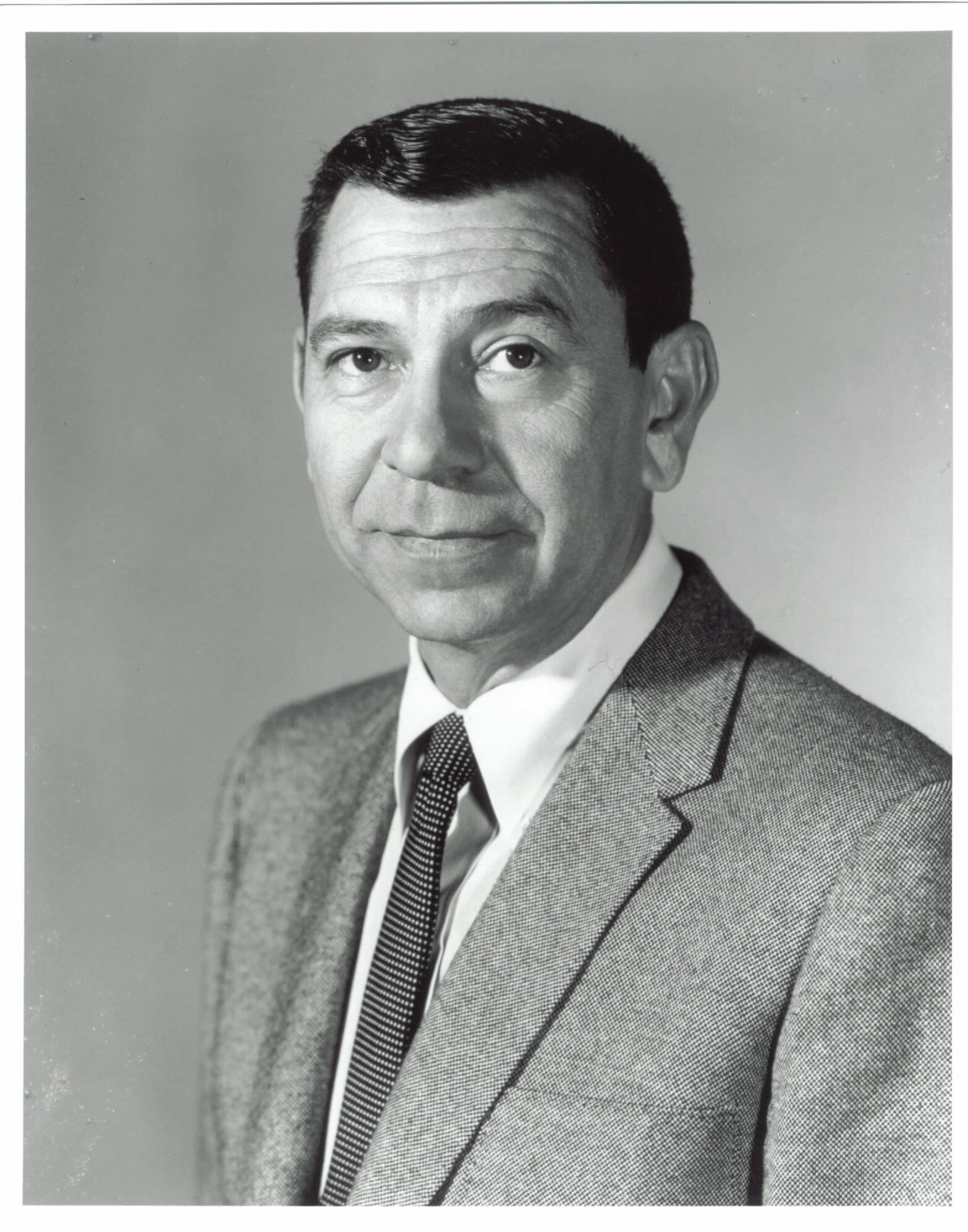
We should consider reserving e-mail for what I call “just the facts ma’am” communications. Remember how that was the trademark line from Sgt. Joe Friday of the old TV program, Dragnet? When there is a chance that something slightly contentious needs to be discussed, the best way is in person or at least by phone. I find that when I do this, I’m more likely to be sensitive of the other person’s feelings and talk about the issue in a more positive manner.

E-mail makes our business and personal lives more productive. Good old-fashioned, eyeball-to-eyeball encounters protect relationships, and enable us to maintain our personal connections with others.

This blog is being written in tandem with my book, “An Entrepreneur’s Words to Live By,” available on Amazon.com in paperback and Kindle (My Book), as well as being available in all of the other major eBook formats.