
A lot has been made in recent times over insensitivity, hurt feelings and words that are seemingly offensive. There are many sociological factors in play – I’m going to refrain from debating them. Our culture is shifting in seismic fashion and where it will end is anyone’s guess. It’s easy for the modern entrepreneur to get caught up in this brouhaha which I can assure you is a losing proposition. Staying out of the fray is relatively easy but requires discipline.
There are two sides to this coin. Let’s start with our reaction as an entrepreneur to things that are said to us, and actions directed our way. We are going to take slings and arrows from a multitude of constituencies. Customers may say horrible things about us and our product or service. Team members may accuse us of a wide range of transgressions. What our competitors say may be even worse. Regulators, bureaucrats, politicians, and members of the public in general may be generous in taking their shots at us. At times it may seem that we’re a punching bag and a pin cushion all rolled into one.
So, here’s where the discipline enters the picture. It’s 100% our choice whether we let ourselves be hurt or otherwise impacted by what others say and do. This isn’t just a matter of having thick skin and amazing resilience. When someone says or does something to us that is negative, we must be able to dispassionately analyze the words or deeds and look for the truth. For example, suppose we are slammed by a customer for a defective product. A product review is posted online that says among other things, “the ABC Company produces a substandard product, and their CEO is a crook for taking my money.” Actually, this is a pretty mild review but will work for illustrative purposes.
What is the truth here? Does our company really produce a substandard product? We must be able to objectively evaluate this claim. Have there been other complaints? If so, how many? Is there a chronic problem with the product or do we truly have a Six Sigma level of success? Assume for a moment that our extremely low error rate is exceptional, which allows us to know the truth . . . we do not produce a substandard product. And the personal statement about the CEO is easily dismissed as an ad hominem attack. Personal attacks like this can generally be completely ignored because they are inherently dishonest. Of course, we want to try and solve the problem encountered by our customer, but we choose not to be hurt by what has been said. Boiled down to its simplest form, this is a case of, “if the shoe fits, wear it.” And if it doesn’t, then don’t.
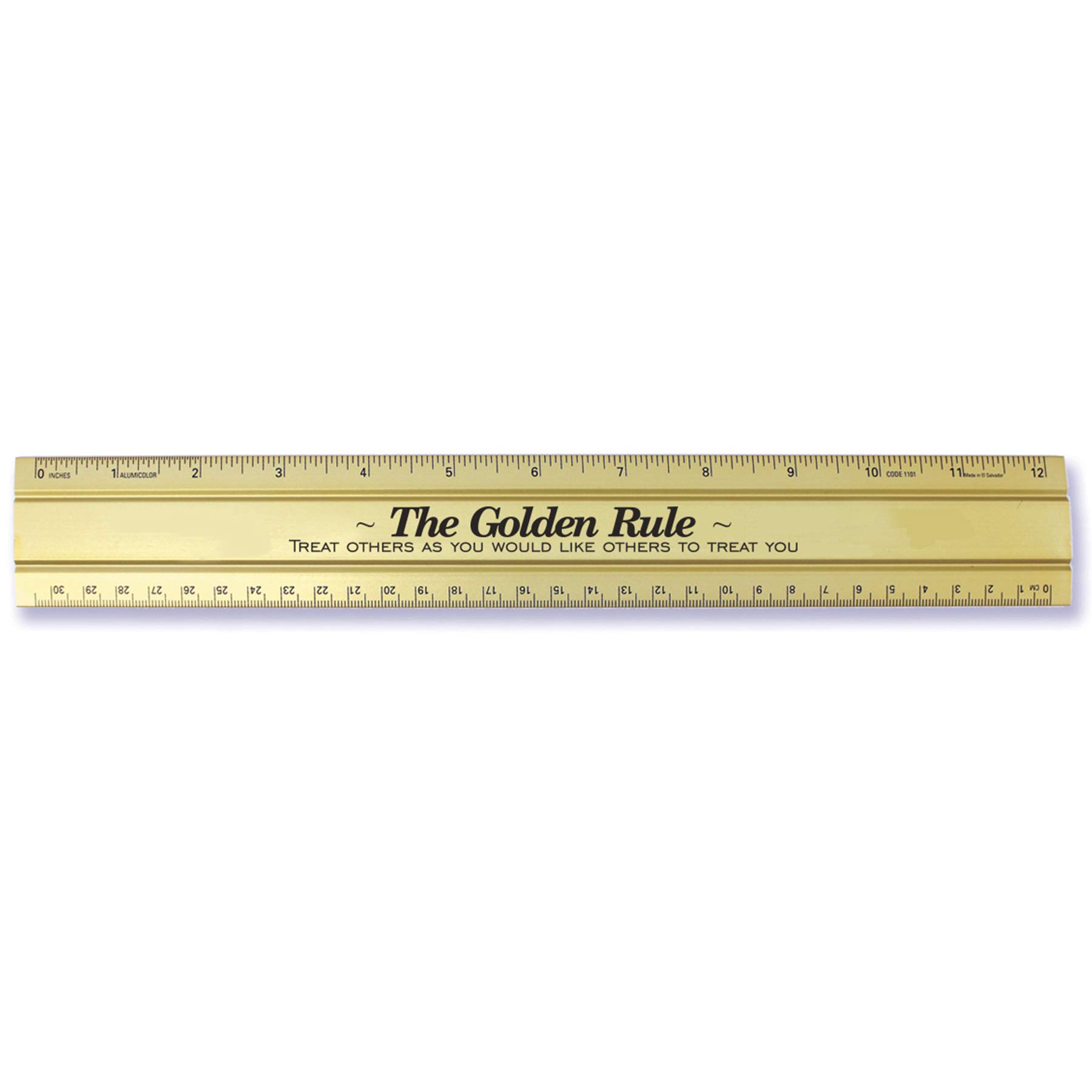
Now to the other side of the coin. How is what we say and do impacting others? This also requires discipline on our part. But again, it’s really very simple. We practice the Golden Rule whereby we treat others as we would want to be treated. Do we make it a practice to denigrate or berate others? Are we guilty of making ad hominem attacks of our own? Before we say something potentially contentious to someone else, do we stop for a moment and measure it against the Golden Rule? While it’s true that we all make a choice as to whether we will be hurt or offended, it’s important that we as entrepreneurs try and avoid putting others in the position of having to make such a choice. This doesn’t mean we have to walk on eggshells or adopt political correctness. Instead, we must understand our audience and try and be sensitive to how they might react to us. I’ve always found that focusing on the Golden Rule in such situations is usually sufficient to avoid trampling on the feelings of others.
The interpersonal functioning of society today is fascinating but can also be bewildering. We choose not to be hurt by what others say and do, and we practice the Golden Rule when communicating or acting. Taking this approach will help us skirt around the current cultural minefield.
This blog is being written in tandem with my book, “An Entrepreneur’s Words to Live By,” available on Amazon.com in paperback and Kindle (My Book), as well as being available in all of the other major eBook formats.

 An Entrepreneur's Words to Live By