
Now What?

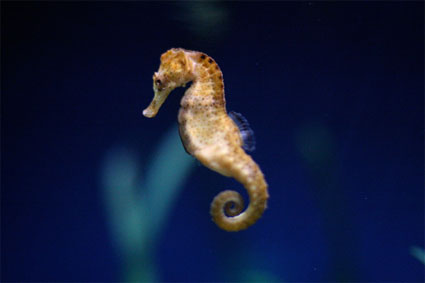
I recently was at the beach and watched seagulls flying across the water with large objects hanging from their mouths. Upon closer examination I realized that they had plucked seahorses from the waves. But they were struggling to eat them. To begin with, the seahorses were way too large to swallow. And there was no way for the gulls to tear them apart because seahorses have a tough armor-like skin. A few weeks later I watched another seagull flying with a large fish in its mouth while being chased by two more seagulls. Finally one of them stole the fish from the first (in mid-air!) but ended up dropping it in the water. The third retrieved it, landed on the beach and tried to swallow it – but the fish was too big.

All of this seagull activity got me thinking about an interesting issue that we entrepreneurs face from time to time. We often chase a piece of business that we very much want to win. Sometimes it’s a really, really big piece of business and we think to ourselves, “This may be way out of our league but why not give it a whirl? Maybe we actually could win!” Our pursuit of this business may be somewhat fanciful, but stranger things have happened and lo and behold we do win. OK, now what?

A number of years ago our apartment management business unit was pursuing a very large property management assignment. We had not previously done business with the prospective client, but the firm was well-respected in the industry. Months and months of relationship-building culminated in a “mystery” dinner with the client representative where we were told we were going to be awarded a large management contract. The client explained that a portfolio of apartments was going to be assigned to us but we couldn’t be told where the properties were located until right before we assumed management. The reason – the client was self-managing the properties and didn’t want the on-site or corporate office staffs to know about the management change until the day the company-wide announcement was to be made. We had also been told that the property assumptions would occur over a phased period of time – two or three months. When all was revealed we ended up with more than 3,000 units in 52 apartment properties scattered across the country. Oh, and they were dumped in our lap all at once with no phase-in. We were literally the dog that chased and caught the bus!

Needless to say, this assignment did not work well for us. It turns out that this client gave us all of the “dogs and cats” (tough properties) in its portfolio – so we were behind the eight ball from the beginning. Client expectations were unrealistic; our compensation did not begin to cover our costs, and our team was running ragged. After 18 frustrating months, we resigned the account at a loss of approximately $250,000.

What did I learn from watching the seagulls and my own experience? It’s very simple. It’s great to plan to catch a whale, but we must have a plan for what to do with the whale once it’s caught. There’s no question that the property management assignment I described overtaxed our resources. Unfortunately we had no idea how large the portfolio was going to be in the first place – we never should have put ourselves in that position. But as a quintessential entrepreneur I’ve often had the attitude, “Let’s just get the business and then we’ll figure out how to deal with it.” I’ve found that this approach is a great way to crash and burn. Pulling together the entire team for a series of planning sessions is paramount. Understanding how to scale our human and capital resources is vital. And sometimes we just have to say “no.” That’s pretty tough for an entrepreneur to do, but saying “yes” to the wrong opportunity could be extraordinarily costly.

Thinking big and pursuing big opportunities are part of our DNA as entrepreneurs. Comprehensive precision planning for the big wins paves the way for long-term success.

This blog is being written in tandem with my book, “An Entrepreneur’s Words to Live By,” available on Amazon.com in paperback and Kindle (My Book), as well as being available in all of the other major eBook formats.

seahorse

Intentional Grounding

Question: I personally have a problem with pursuing the future. When I do, I don’t live in the “now.” How can a person remain in the moment but also remain mindful of his future vision?

Answer: It does seem like we must have a bit of a split-personality to do both, doesn’t it? And there’s no doubt that it can be quite confusing at times. On the one hand we’re advised to live in the moment. I certainly subscribe to the philosophy of “live today like you’re going to die tomorrow.” If we spend too much time planning for the future we miss what’s happening today. But on the other hand, if we give no thought to the future, we may not achieve our ultimate goals and objectives.

I’m by nature a planner. I totally enjoy the “vision thing” and plotting a course of action to get there (the mission). A song from 1974 really put it in perspective for me though, and could easily be the national anthem for entrepreneurs . . . The Cat’s in the Cradle by Harry Chapin. To refresh your memory, the song refers to a father and son who are like ship’s passing in the night – always paying lip service to each other but never making the choice to spend quality time together. That song has served as a perpetual reminder to feel the full experience of what I’m doing every moment.

Living in the present and holding a future vision are not mutually exclusive. We entrepreneurs are so driven by our vision that we never have to worry about losing sight of it. It’s our natural disposition to gravitate to holding and nurturing our vision. What we generally have to work harder to accomplish is being in the now. I believe that the key to succeeding in both realms is to be intentional. This means that for whatever we’re doing we need to focus and really see what we’re looking at. If it’s a daughter’s soccer game or a son’s piano recital we need to intentionally focus our attention on this event. Enjoy it, embrace it, and celebrate it. Likewise, when we are contemplating our future vision, we do the same. Be there intentionally without any other distractions and enjoy, embrace and celebrate it. To steal a football term, I like to call this “intentional grounding.”

In the end it’s important to remember what we value. As entrepreneurs we value the passion we have for our friends and families as much as our passion for our chosen profession. The only way we can adequately tend to both passions is to be totally present for each. Succeeding in this regard takes a great deal of practice – it won’t happen overnight. But intentionality will make it so.

This blog is being written in tandem with my book, “An Entrepreneur’s Words to Live By,” available on Amazon.com in paperback and Kindle (My Book), as well as being available in all of the other major eBook formats.
spyglass

Which Wire Do I Cut?

Question: I often find myself pressed for time due to a deadline of some kind. The more pressure I’m under the more mistakes I make. What can I do to feel less stress and perform at a higher level?

Answer: You may be expecting me to tell you to just relax, right? And while that’s good advice, that’s not going to be my answer here. Instead, consider turning the tables. This may sound counterintuitive but it works. What were the thoughts that ran through your mind when you faced a seemingly impossible deadline? “I’ll never get this done in time!” Or, “this is ridiculous, why did I agree to this crazy due date?”

What do you suppose would happen if you said this instead? “Wow, this is a fantastic opportunity! I have a chance to push myself to succeed where in the past I might have failed.” Naturally the words mean nothing if the mindset isn’t there. Think about all of the benefits of working under pressure. First, we get to grow. How does staying comfortable stimulate personal growth? Only when we stretch do we really learn how to be better. Second, we become even more effective at planning. The odds are better for successfully meeting a tight deadline if we create a precision plan to identify and execute all of the necessary steps. Finally, we get more done. In the overall context of eternity, our lives are but a blink of an eye. Working continuously in short deadline mode means that we get to experience a lot more of life.

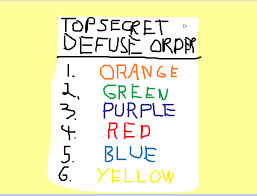
Here’s a game that I devised years ago to help me handle the pressure of meeting deadlines. Imagine that you are a James Bondesque individual and you just learned that you are in a building containing a nuclear bomb that is set to explode in five minutes vaporizing you and tens of millions of people. There’s no time to call anyone – it’s totally up to you to defuse this device. You have to find the bomb; figure out how to remove its housing; determine if there’s a booby trap to disarm, and then decide which of the colored wires should be snipped (if you ever find yourself in this situation, never cut the red wire). Meanwhile the clock is ticking and you could very soon become a bug on the great cosmic windshield if you screw up. This exaggerated imagery has made me laugh, prompted me to plan, encouraged me to keep score (of how many times I’ve saved the world) and taught me never to procrastinate.

Whether we’re entrepreneurs or not, our lives are filled with deadlines. Perhaps seeing ourselves as Mission Impossible heroes will spur us into action and allow us to actually enjoy the process of reaching the finish line. Alive!

This blog is being written in tandem with my book, “An Entrepreneur’s Words to Live By,” available on Amazon.com in paperback and Kindle (My Book), as well as being available in all of the other major eBook formats.

bomb defusing