
The Doomed Entrepreneur

What do we dread most in our business and personal lives today? No, it’s not losing. When that happens, we simply pick ourselves up and go after it again. And it’s not being overwhelmed by our workload. We solve this with a few adjustments to time management and delegating to other team members. Our biggest “dread” is insidious and frustrating beyond belief. Here’s an example of what happens. We’re attempting to do business with someone. We’re past the cold calling stage and have been interacting with other party. We send an e-mail and wait a day or two. Then we call and leave a voicemail. Perhaps we even send a text. A week goes by with radio silence. We’re officially in the Zone of Doom.

The Zone of Doom is the black hole of non-responsiveness. Unfortunately, it’s become an epidemic. With caller ID many people simply ignore calls from those of us with whom they do not wish to speak. Blowing off e-mails is even easier. I know I sound like an old geezer, but when I was growing up in the business world, I quickly learned that protocol dictated the return of every phone call the same day or next morning. We didn’t have e-mail back then, so letters and memos were the standard for written communication. The expectation was that the response be immediate. There never was any thought of not responding at all. In fact, when someone slipped and failed to provide a timely response, the word usually got back to corporate leadership and there was hell to pay.    

The biggest challenge relayed to me by members of our team is that their interactions with so many people outside the company are one-way. Simply trying to reach people is so much harder than ever before. Long ago, I resolved not to fall into this category. I think I’m about 95% true to this resolution. I do return my phone calls in a timely fashion – though I will admit that there may be a cold call here or there from a salesperson that I miss. I believe most people will attest to the fact that I usually return all my e-mails the same day if not the same hour.

So how are we supposed to deal with the Zone of Doom?  How are we supposed to do business when people are so unresponsive? There’s no question that failure to respond is not acceptable. But we must ask ourselves what might be the root cause for our receiving the silent treatment? This goes beyond the fact that people are busy. It all boils down to priorities. Think about how we develop our own set of priorities. What goes at the top of the list and what goes at the bottom? I find that the things that are most important are those which are most impactful to my business and my life. It’s a pretty good bet that others set their priorities in the same manner. When I’m trying to reach someone else, I try to bear in mind whether communicating with me will make that much difference to the other person. There’s the word . . . difference.

We must be able to differentiate ourselves when competing with someone else’s priorities. Is what we are attempting to communicate really that important to them? If not, then what can we do to push it up toward the top of the ladder. This is where relationship building becomes so important. I’ve written many times that relationships are all about service. I’ve found that the harder I work to establish and serve a relationship the more likely someone will reciprocate my attempt to communicate. You may be thinking, “How can I possibly build and serve relationships with everyone with whom I come into contact?” No one said it would be easy. Relationships take time to build and there’s no time to waste. Any and every little thing that can be done to help someone else builds that relationship. Many businesspeople seek to establish relationships to benefit themselves. If we do it differently and make every attempt to help others, our efforts will be recognized as genuine and authentic.

We can avoid the Zone of Doom by building relationships for the purpose of serving others. And through our relationships, we move up the priority list of those we are serving.

This blog is being written in tandem with my book, “An Entrepreneur’s Words to Live By,” available on Amazon.com in paperback and Kindle (My Book), as well as being available in all of the other major eBook formats.

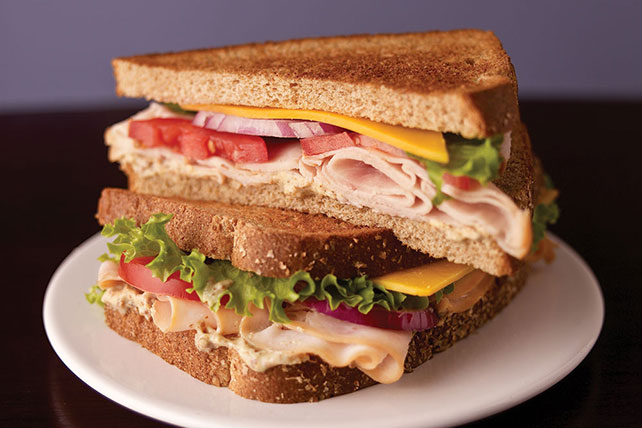
The Sandwich Savoring Entrepreneur

On October 30, 2002, David Letterman hosted the last appearance of Warren Zevon, an American rock singer-songwriter and musician. You may remember a couple of his most notable hits – Werewolves of London and Lawyers, Guns & Money. Zevon had appeared numerous times on Letterman’s show and the two had become fast friends. Recently, Zevon had been diagnosed with terminal lung cancer and Letterman spent an entire hour talking openly and frankly with Zevon about his plight. I watched the YouTube video of the show and was amazed at the humor and grace that Zevon displayed. One of the simplest of things he said was so profound, “You’re reminded to enjoy every sandwich.” Of course, he went on to talk about enjoying every minute of playing in his band and playing with his kids. But the notion of enjoying something so mundane as a sandwich struck a chord with me. Tragically Zevon died on September 7, 2003, at the age of 56.

We entrepreneurs are in a constant state of hyper-drive. We all know that we should stop and smell the roses. We also know that we need to maintain work-life balance. And yet we can often find it difficult to carve time out of a packed schedule to do these things . . . or so we think. Part of the problem is the fact that we are so passionate about what we do. We’re obsessed with building our business. And I know for a fact that any entrepreneur who doesn’t have this obsession will either fail or be only marginally successful. But the passion and obsession does not mean that we can’t “savor the sandwich.”  

What if we treated every interaction we have with others as though it would be the last time we would see them? What if every activity – professional or personal – was treated in a similar fashion? The thought of this may seem somewhat morbid and maybe even hard to comprehend. But, what if . . . ? We all have a terminal diagnosis. We just don’t know whether it’s far into the future or right around the corner.

While this has been a difficult subject for me to get my head around, I’ve thought about it quite a bit the older I’ve become. I find that I prioritize differently. I want to make absolutely certain that the most important things on my to-do list are always finished. And at the same time, I have become more and more thankful for the little things in life. I revel in the warm sunshine and find moments of wonder gazing at a full moon. An early morning walk is no longer just exercise, but now a time for inspiration. Dinner at a favorite restaurant with my bride has become less about checking e-mail and social media, and more about the pinch-me feeling that is the result of nearly five decades together. No longer do I quickly scan through photos of my grandkids, but instead take in the twinkle in their eyes and the look of pure joy on their faces. During a meeting, I look around the room and think about how proud I am of the team we have assembled and what they are accomplishing. Of course, there are obstacles that are faced every single day – but the endorphins are going full blast with the anticipation of how we will creatively overcome them together.

Savoring the sandwich means being present in every moment of every day. It means eliminating the “taking things for granted” syndrome that plagues each one of us to some degree. I have worked hard to develop the ability to compartmentalize the challenges we face in our enterprise. In so doing, I’m able to have greater appreciation for the little things that are happening around me. I am more obsessed than ever with scaling our various business initiatives. But I’m equally obsessed with seeing all of life in color. There’s no question that both can be done at the same time. Lending a helping hand to others and expressing appreciation and gratitude to them is also part of the equation.

We can savor each sandwich as though it will be our last. And it doesn’t have to take the diagnosis of a terminal illness to unlock this ability.

This blog is being written in tandem with my book, “An Entrepreneur’s Words to Live By,” available on Amazon.com in paperback and Kindle (My Book), as well as being available in all of the other major eBook formats.

The Sweaty Entrepreneur

We entrepreneurs sweat a lot. Our perspiration is the result of a lot of heavy lifting. It’s the byproduct of many a nervous moment whether it be scrambling to make a payroll or waiting to find out if we won a major contract. We’ve all heard the phrase – “don’t sweat the small stuff.” But what exactly does this mean? Someone needs to write a handbook for entrepreneurs on what we should sweat about! So here goes.

Don’t sweat what type of new office furniture to buy. Do sweat whether or not sales people are spending too much time sitting on the new office furniture instead of meeting face-to-face with customers. Don’t sweat whether the receptionist is wearing a sundress that is an inch too short. Do sweat how the receptionist is greeting customers in person and on the phone. Don’t sweat whether or not the expense report format is just right. Do sweat whether it’s clear to the team what expenses are eligible for the expense report.

Don’t sweat the design of the uniforms for the company softball team. Do sweat a bad Google customer review. Don’t sweat that someone parked over the line in the parking lot. Do sweat the cleanliness of the public restrooms in your place of business. Don’t sweat the fact that a team member seemed snippy to you this morning. Do sweat whether or not you made eye contact with and cheerfully greeted every team member you saw this morning. Don’t sweat the proposal binder that started to come apart in your client meeting. Do sweat the manner in which you differentiated your product or service in that proposal. Don’t sweat the naming conventions for your electronic files. Do sweat the critical documentation that needs to be in those files.

Don’t sweat those e-mails from colleagues that ramble on forever. Do sweat the content of the e-mails and what might be discoverable in some future litigation. Don’t sweat how much it cost for lunch with a customer. Do sweat how much that lunch helped to improve your relationship with the customer. Don’t sweat how you looked in a candid photo at the company picnic that was posted on your company’s Facebook page. Do sweat whether you made sure that every member of your team felt appreciated and valued at the company picnic. Don’t sweat it that you could only afford $25 gift cards for your team at Christmas. Do sweat whether your team members see you as a genuine and authentic leader.

Don’t sweat not taking credit for the successful completion of a project you led. Do sweat sharing the credit with members of your team that ensured the success of that project. Don’t sweat being a little late for the weekly game of pickle ball with friends. Do sweat being a few minutes early for a client presentation. Don’t sweat the fact that the restaurant mixed up your dinner order. Do sweat the note of condolence to be written to a team member who just lost a loved one. Don’t sweat that your name wasn’t mentioned in a newspaper article about your company. Do sweat whether or not your company will be mentioned in a newspaper investigative report for mishandling a customer complaint.

Don’t sweat the details of the co-pay on your company’s new health insurance plan. Do sweat the details of your company’s ten-year vision. Don’t sweat the wording of your personnel handbook’s section on the dos and don’ts of copy machine usage. Do sweat the wording of the contract you are about to sign for a major equipment purchase. Don’t sweat trying to look like a hipster in your new clothes. Do sweat looking to your team like a confident and competent leader. Don’t sweat bailing out on the umpteenth all-hands conference call to discuss (ad nauseum) the final changes to the company training manual. Do sweat making it to your daughter’s school musical in which she is performing.

Yes, there are plenty of things to sweat about and plenty of things to not. The trick is figuring out that which is important. The best measure is to focus on what is best for your customers and your team members. Much of the rest may be superfluous.

You can also listen to a weekly audio podcast of my blog. What you hear will be different than what you read in this blog. Subscribe on iTunes or wherever you get your podcasts. You can also click on this link – Click here to listen to Audio Episode 115 – Overflowing.

This blog is being written in tandem with my book, “An Entrepreneur’s Words to Live By,” available on Amazon.com in paperback and Kindle (My Book), as well as being available in all of the other major eBook formats.

Unregrettable

There’s no Question and Answer this week. Because what I want to write about is of a most serious nature. The husband of my oldest friend in the whole world was diagnosed with late-stage brain cancer just a short time ago. Of course he fought hard but today we mourn his passing and celebrate his life. And it brings into focus a much bigger point that must be made. How exactly are we living our lives? What are putting off until tomorrow? In my book, An Entrepreneur’s Words to Live By, the entire first chapter is about living today like we’re going to die tomorrow. In honor of my friend and her husband, please allow me to excerpt a few thoughts on this subject from my book.

A goldfish will only grow as large as the container in which it lives.  Humans are no different. Living today like you’re going to die tomorrow is all about capacity. By definition capacity is the ability to receive or contain. Most people will tell you to live life to your full capacity – regardless of its size. Truly amazing success comes not when you fulfill your capacity but expand and surpass it.  You have to get a bigger fishbowl.  But how?

1.    Create a sense of urgency in your work life and in your personal life. Become much more adept at planning and time management. In turn you will become more proficient at prioritizing. Remember that you are doing this not just to live to your capacity for life, but to expand your capacity for life and then live to it.

2.    Learn how to live in the moment. The past is good for pleasant memories and as a learning tool. The future may never come. Tend to your priorities. If attending your son’s little league baseball game is a priority, then by all means, be there. If participating in a brainstorm session with your work colleagues is a priority, focus on doing your part in the brainstorm.

3.    Don’t worry. Think about and find solutions for what you can control and ignore the rest.

4.    Eliminate the propensity for procrastination by making certain that you clearly understand your goals and objectives. Then identify and prioritize the tasks that must be completed to achieve your goal. This makes it hard to put off doing what needs to be done.

5.    Become aware of unnecessary actions and wasted motion in your life. Then look for ways to replace them with greater productivity which is another way to expand your capacity for life.

6.    Understand that quality downtime is critical to being able to live in a healthy and productive manner. You are no good to yourself or the people who depend upon you if you burn out.

7.    Make an inventory of what your family and business associates would need in the event that you die. Then, take the steps to put your affairs in order. This will give you the peace of mind to live each moment to the fullest.

The question I ask myself at the end of every day before I go to sleep is, “Do I have any regrets?” I am so blessed because I can honestly answer this question with “No.” I believe that my friend and her husband would also answer it the same way. Can you?

This blog is being written in tandem with my book, “An Entrepreneur’s Words to Live By,” available on Amazon.com in paperback and Kindle (My Book), as well as being available in all of the other major eBook formats.

dancing

Disorderly Conduct

Question: Sometimes entrepreneurial environments become wild and crazy. How do I keep from getting sucked in and swallowed up by all this confusion?

Answer: Don’t you just love it? The environment you describe is typical of a dynamic, fast-paced organization. Meetings and phone calls – one right after another; multiple deals and projects to be tended; and e-mails flying at a dizzying speeds, all add up to only one thing. Chaos. Personally, I am energized by such situations. But it wouldn’t be hard for everything to tip over and fall into the abyss, metaphorically speaking.

Managing chaos is a test in multi-tasking; thinking three-dimensionally; practicing patience; maintaining composure; having a sense of humor; demonstrating physical and mental stamina; being flexible; staying positive; thinking creatively, and communicating effectively. Whew! Seems like a pretty tall order, doesn’t it? Wouldn’t it be more productive if there was more of an orderly flow within an organization? Maybe, but chaos can produce some amazing results.

When things become chaotic, entrepreneurial leaders find out who in an organization can step up and produce results. They see clearly who wilts and who thrives under the pressure. And out of chaos can actually emerge some of the best ideas. One of the finest examples is the Empire State Building. Imagine this. Construction began in January 1930, just when the Great Depression was settling over the country. More than 3,400 workers swarmed the site and built the tallest building in the world – 1,250 feet and containing 2,248,355 square feet (the size of 47 football fields) – and they completed it in 410 days! Imagine the enormity and complexity of this project. The chaos we experience as entrepreneurs is a fraction of what must of have been present with the Empire State Building. I consider this building to be a literal and figurative monument to creating order out of chaos.

So what’s the trick to making chaos work productively and not letting it consume us? First, it’s important to ignore all of the “noise” that comes with chaotic situations. We must become expert at focusing on only that which matters – keep an eye on the prize so to speak. Block out everything else. Second, it is critical that we identify priorities in the jumble of craziness, tasks and emotions. Failure to prioritize is one of the most lethal and negative aspects of chaos. Finally, consciously look for the positive results that can emanate from chaotic situations and feed off of them. This is obviously a state-of-mind opportunity and a choice we can make. The choice is really pretty simple. We can either allow ourselves to be overwhelmed by the chaos, or we can rise above it and use it as a tool to propel our cause.

Chaos is a highly-charged energy flow. It simply has no order to it. When we are able to harness the positive energy elements of chaos, we can use the momentum to create order and attain our goals at a much higher level than otherwise possible.

This blog is being written in tandem with my book, “An Entrepreneur’s Words to Live By,” available on Amazon.com in paperback and Kindle (My Book), as well as being available in all of the other major eBook formats.

chaos-300x213