
The Entrepreneur’s “Reasonableness” Test

Some time ago while vacationing, my wife and I had the occasion to dine at several restaurants that we have enjoyed over the years. Something happened at two of them that was somewhat of a surprise. Here’s what occurred. At the first restaurant we had been told by a nearby merchant that a particular dish was extremely good. Naturally we wanted to partake, only to be told by the waiter that this item was only available on the bar menu. I told him that we were willing to pay an upcharge, if necessary, to enjoy this seemingly delectable delight. No dice was his reply. He went on to spin a tale about how the kitchen was too small to serve both the bar and the dining room. The explanation was not remotely plausible.

We had enjoyed a scrumptious dinner at the second restaurant and were attended to by a very outgoing server. The entrée I selected had a side dish that I didn’t prefer, and I asked if some sliced tomatoes could be substituted. This was done without issue and the service was impeccable. Roll the tape forward a week with a different server but the same entrée. Again, I asked for sliced tomatoes and was very abruptly informed that the chef was not going to accommodate my request. This server (a bit on the snippy side to begin with) said that there had been quite a conversation with the chef about such a substitution and he wasn’t going to slice any tomatoes.

In both situations, the desires of the customer were secondary to the desires of the restaurants. In both cases, I wrote social media reviews pointing out that the operational efficiencies of the eateries were apparently more important than offering a memorable customer experience. And as I thought about it more, I realized how often this approach is taken by many businesses. But why?

We’re in the day and age of creating customer experiences. No longer is it just about selling a product or service. I’ve advocated for years that we should avoid “selling to” customers (product-centric) and help customers “buy from” (customer-centric). Helping people buy something provides us with an opportunity to create a more tailored and pleasant experience – something they might mention in a positive manner when speaking with friends and family . . . or posting on social media. Both restaurants failed the test. The food was so-so at the first establishment but truly amazing at the second. Yet, the wonderful cuisine was overshadowed by the negative experience of a chef who apparently was throwing a hissy fit for unknown reasons. I would have certainly understood if the tomatoes were of poor quality and that had been explained to me. And while the chef may have had a limited supply of tomatoes to be reserved for other dishes that included tomatoes, there is a fabulous modern-day invention called a “grocery store.”

I used to eat breakfast regularly at a restaurant where the proprietor often made a run to the nearby grocery store when she was low on a particular food item. The last thing she wanted to tell a customer was that she is out of something and couldn’t accommodate a request. The upshot of all of this is to pause for a moment and look at our own operations. Are there things we can do to make sure we are creating a positive customer experience? Do we have systems and processes that are designed to make our operations more efficient and profitable, but could potentially stand in the way of putting a smile on the customer’s face? Are we a slave to rigidity and adherence to a very precise “recipe?” Perhaps we should consider applying the “reasonableness test.” In other words, is the request of a customer reasonable or not? If it is, we should accommodate it to create the desired experience. If I had asked for Baked Alaska, that probably wouldn’t have passed the “reasonableness test.” But sliced tomatoes?

Entrepreneurs can differentiate themselves by working to create a memorable customer experience. This can be accomplished by developing a reasonableness test when it comes to customer requests.

This blog is being written in tandem with my book, “An Entrepreneur’s Words to Live By,” available on Amazon.com in paperback and Kindle (My Book), as well as being available in all of the other major eBook formats.

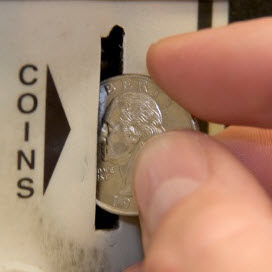
The Coin-Operated Entrepreneur

Jeff sells office equipment. He eats, sleeps, and breathes office equipment. His product line is significant – copy machines, postage meters, calculators, file cabinets, laser printers, desks, chairs – you name it, he sells it. Jeff has taken every sales training course known to mankind. He has read every book on selling techniques and attended a gazillion seminars. His lexicon includes words and phrases such as targets, sales funnel, objections, buying signals, gatekeeper, closed-end questions, open-end questions, deal flow, decision maker – you get the picture. And every day Jeff puts into practice what he has learned. But is he successful at what he does? Sure, he makes a decent living but while reaching for the stars, he’s lucky to make it to McDonald’s on the last exit out of town. While not exactly a Willy Loman, Jeff can be classified as a coin-operated salesperson.

The world is full of entrepreneurs who are really just coin-operated salespeople. They all want to be superstars and almost every single one of them will never be. They hew to the traditional basics and fundamentals of sales. The Jeffs of the world will absolutely try and close the deal seven times because that’s what the experts say must be done. They will sweat their quotas and worry that the last deal they did will be the last deal they’ll ever do. Their ultimate goal is to ring the cash register. Move that product in every increasing numbers. Numbers, numbers, numbers! What a shame. It doesn’t have to be this way. Jeff and his ilk could take a much easier road – one that would be far more productive for them and their customers.

First and foremost, real “sales” isn’t about selling. It’s about helping people buy. What’s the distinction you ask? It begins with the real reason for a sales encounter. If that reason is to put money in my pocket as a salesperson, then the motivation is all wrong out of the gate. Instead, we might want to see the sales encounter as an opportunity to help someone else. To do this we need to build a genuine relationship with the customer. We need to understand what the customer needs. Far too many salespeople are unwilling to invest the time and effort that is required to really understand their customers. If they can’t get a sale quickly, they are ready to drop the customer instantly and move on to the next one. After all, they rationalize this behavior because they have a family to feed.

We can hone our entrepreneurial approach to avoid being a coin-operated salesperson. As entrepreneurs, we’re always selling. But if we adopt the attitude that we’re going to help people buy, our mindset will be so different that we’ll avoid the coin-operated traps. For starters, we are customer-centric instead of product-centric. This means that we will do whatever it takes to make sure that we are being of service to our customers. We aren’t going to try and foist our products or services on them if they aren’t interested in buying from us. And yet we’ll continue to work to build a relationship with them over time – even if they aren’t buying today. Relationships are kings of the castle.

Building lasting relationships requires a lot more than what we learn from standard sales training. It taps into our intuition and forces us to “read” people in such a way as to understand them and the complexities of their lives. Building true relationships avoids manipulation. It avoids quid pro quo. We’ll do things for our customers because we are here to serve the relationship – regardless of whether they buy from us. And as I’ve said many times, this is not a Pollyanna-ish concept. I’ve lived my life this way and have countless examples of relationships that I’ve served that never bought anything from me. But great good has come into my life as result of these relationships whether from the referral of other customers, new team members or opportunities of which I would never have been aware. I know that it’s hard not to be a coin-operated salesperson when there’s a mortgage to pay, the kids need braces, and the car is on its last legs. But that’s even more reason to dump the “paint-by-numbers” approach and focus on relationship-building and being customer-centric.

We will have much more success when we help people buy what they need than when we try to sell to them. This requires the long-term process of building and serving relationships. But the payday in the end is far greater than the coin-operated method of selling.

This blog is being written in tandem with my book, “An Entrepreneur’s Words to Live By,” available on Amazon.com in paperback and Kindle (My Book), as well as being available in all of the other major eBook formats.