
The Sensitive Entrepreneur

We have all known hard-charging Type A entrepreneurs who have a “take no prisoners” attitude. These people are the doers. They are decisive and they know how to execute. But sometimes there is a downside to this sort of personality. Yes, sometimes those of us who are very driven may tend to be insensitive. This usually is not intentional but nonetheless it can have a detrimental effect on our team members and the culture we are trying to build.

There are many ways that insensitivity can manifest. It can be as direct as making derogatory or belittling comments to as subtle as failing to acknowledge someone with a friendly greeting in the morning. Think about an exchange like this. Team member – “I’d like to volunteer to work with Jim on the Norton project.” Entrepreneur – “No, you just need to stay focused on what you are doing.” While it may be absolutely true that the team member needs to keep doing what she’s doing, the way the entrepreneur delivered the message could be construed as insensitive. A different selection of words would make all the difference. How about this instead? “Jan – thanks for the offer. Your project is critically important, and I am counting on you to get it wrapped up. But I will take a rain check on having you help with the next one.” This statement acknowledges the team member with an expression of appreciation and affirms her value. And it gives her hope that she will be given another opportunity in the future.

So, how do we develop the appropriate level of sensitivity without going so far as to sing Kumbaya all the time? There is a very simple method that I have learned over the years. I will admit to once-upon-a-time being the insensitive Type A hard-charger that was described in the opening paragraph. I justified my behavior by believing that I was simply being expedient in my dealings with others. After all, I was moving at 100 miles an hour and the quicker I could get through with one meeting the sooner I could move on to the next. But I gradually became aware that my people skills were suffering. I was not doing anything to cultivate relationships or goodwill. Eventually I developed a new awareness by just putting myself in the other person’s shoes. How would I feel if someone spoke to me a certain way; said something in a certain manner, or failed to somehow acknowledge me?

The key is to practice, practice and constantly practice. I try to pay attention to how everyone around me feels. In a restaurant, I want to make sure that the wait staff are properly appreciated. At the office I try to make eye contact with members of our team as I walk by and greet each one of them. I pay attention to the language that I use, going the extra mile to avoid careless statements that could be misconstrued. Again, I am always testing what I say or do against the basic premise of how I would want to be treated if I were the other person. After a while it becomes very intuitive.

The mark of a good leader is how he or she treats others. Running roughshod or being humble and sensitive? The choice is easy when walking a mile in another’s shoes.

This blog is being written in tandem with my book, “An Entrepreneur’s Words to Live By,” available on Amazon.com in paperback and Kindle (My Book), as well as being available in all of the other major eBook formats.

The Macho Entrepreneur

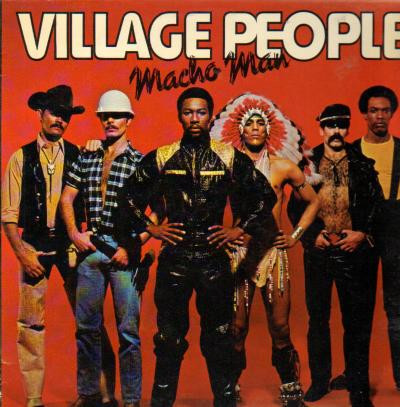
Just about everyone has heard the 1978 song called “Macho Man” by the Village People. The first verse goes like this:

“Every man wants to be macho macho man. To have the kind of body, always in demand. Jogging in the mornings, go man go. Work outs in the health spa, muscles glow. You can best believe that he’s a macho man. Ready to get down with, anyone he can.” Ugghh. I never did like that song. Usually, this term refers to the male species and generally speaks to “showing aggressive pride in one’s masculinity,” according to one dictionary. The word is often associated with “machismo” which introduces the concept of self-reliance. I’m going to take some liberties here and loosely use the term as it relates to entrepreneurs – male and female.

Allow me to paint a picture of the Macho Entrepreneur. This individual is scrappy and passionate about his or her endeavors. The Macho Entrepreneur is driven to excel – a real Type A personality. Hard-charging and brimming over with ideas, this person sometimes has a mindset of “if you want it done right, you must do it yourself!” The Macho Entrepreneur is not going to let anything stand in his or her way to achieving success and will always “die trying.” Do you know anyone who displays these traits and tendencies? This used to be my self-portrait though I think I’m in more of a “recovery” mode at present. 

The Macho Entrepreneur means no harm and thinks he or she is being noble by modeling strong-willed behavior and commitment. But there are inherent pitfalls in this approach that don’t promote the notion of building a team and ultimately a sustainable organization. When I was much more inclined in the macho mode, I received feedback that some people felt it was my way or the highway. I have a high level of ego-drive which when translated, means that I want to persuade anyone and everyone to see things my way. And my enthusiasm could sometimes come across to others like a steamroller. I was somewhat of a perfectionist – even when it made no sense to be so – which is a result of some obsessive-compulsive tendencies on my part. Finally, I’ve always been inclined to keep calm and “never let ‘em see you sweat.”

Here’s what I’ve learned. Being a Macho Entrepreneur is dead-end. Well, maybe it’s more of a cul-de-sac because one can turn around and exit the behavior and take a new path. Regardless, the macho traits really don’t lead to building a successful organization. Trust me on this because I’ve lived through it all from start to finish. So, what’s the alternative?

I’ve said it many times – we must have the right people on the bus. These are people who share our values and have passion for what they do. This is critical because they will be motivated only if they understand our vision of the future and how they fit into the process of getting there. When we know we are surrounded by the right people we are more inclined to delegate. We don’t have to do it all ourselves. And we understand that while others may do some things differently than we might have, empowering them is even more important. If the ultimate objective is achieved in an efficient manner with integrity, we agree that allowing some latitude is a healthy thing. This gets us to the point of allowing others to make decisions. I once heard an entrepreneur say that he only wanted to make four decisions a year – four major decisions! This forced him to delegate decision-making and truly trust his team.

Discarding the Macho Entrepreneur label also means collaborating with others. This sends the signal that their opinions are valued and desired. And believe it or not, many members of our respective teams have some pretty good ideas! What comes next? We get to celebrate the success of others which reinforces the notion that they can make decisions and move the organization forward. Finally, we learn how to be a coach rather than command. No longer is coercion a necessity or an option (it probably never was). We help our team members look at the different possibilities and work through a process of determining the right approach to achieve the desired outcome.

Our lives and our organizations will be richer and more rewarding when we figure out how to transform away from being the Macho Entrepreneur. We accomplish this by surrounding ourselves with the right people who understand and share our vision; to whom we can delegate decision making and promote collaboration, and who we can coach and ultimately celebrate their victories.   

This blog is being written in tandem with my book, “An Entrepreneur’s Words to Live By,” available on Amazon.com in paperback and Kindle (My Book), as well as being available in all of the other major eBook formats.