
Hello, Hello?

Question: I’m having trouble getting someone to answer my business e-mails. I’ve thought about sending a text message but wonder if it’s appropriate. Should I do this?

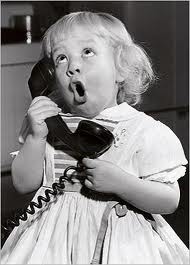
Answer: I would do something else first. Pick up the phone and call the person. I’ve written about this subject before but I believe the message is worth repeating. For some reason we aren’t calling each other as much anymore. This trend is especially prevalent with the millennial generation.

So what is happening to some of the basic forms of communications these days? I still receive a letter occasionally – usually in the form of a PDF document sent to me electronically. Ninety-nine percent of the snail mail I receive is junk that gets tossed. We send massive numbers of e-mails. Text messages are as commonplace as waking up in the morning. We Tweet and we re-Tweet. We send private messages via Facebook and can e-mail through LinkedIn. In other words, it’s easier for us to be in touch 24/7 than ever before. But are we truly in “touch?”

My phone hardly rings anymore. In the mid-80s my company had two full-time receptionists who processed thousands of calls each day. They wrote message slips that we used for returning our calls. Voicemail was not yet fully developed. Today some companies don’t even have a live person answer the phone. An automated attendant handles the function in a very sterile and antiseptic manner. We tried that for a while and realized how much we didn’t like it. Now a live person answers our phone.

I’ve become a champion of Alexander Graham Bell’s invention. It’s not that I have a problem with e-mail or text messages, but I miss the human-to-human personal interaction. All of the modern electronic methods of communications are one-dimensional and lack the ability to convey true feelings. Oh, and what we say (or don’t say) in an e-mail or a text can easily be misconstrued.

Not only have I become a champion of the phone, I’m also a big fan of videoconferencing. When you and I talk, or better yet, when we see each other and talk, the dynamic changes considerably. We can hear voice inflection and read facial expressions and body language. I constantly hear people complain about their e-mails being ignored. We’re at the point where ignoring e-mails may even be excusable when the guilty party throws up his/her hands and says, “I’m sorry. I get 200 e-mails a day and can’t possibly keep up!” Maybe we can all relate. There’s something different about the phone however. Perhaps the etiquette standards are higher. Of course there are people who blow off phone calls too, but I find the percentage to be lower than those ignoring e-mails.

We can improve our chances of building lasting relationships and communicating more effectively when we make that simple phone call. Give me a call sometime. I’d love to chat.

This blog is being written in tandem with my book, “An Entrepreneur’s Words to Live By,” available on Amazon.com in paperback and Kindle (My Book), as well as being available in all of the other major eBook formats.
phone talk

Stylin’

Question: I am fascinated by different leadership styles. Which style seems to work the best?

Answer: Of course there is no one particular style that works for all situations. So let’s focus on a few common approaches.

In the “olden days” the leader led by dictate. The process was autocratic. Organizational hierarchy was respected at all costs. The phrase “it’s lonely at the top” was an ingrained belief system. All eyes were on the man (seldom a woman) in the corner office. The leader rarely sought input from the management team. It’s possible that he had a “consigliore” or confidant. He made the decisions and issued orders to his troops. Often he valued fear and intimidation as techniques for maintaining order in the ranks. Imagine how today’s millennials would respond in this environment. There would be a mass exodus of biblical proportion! Thankfully the autocratic era has passed.

Some leaders use a consensus approach. Perhaps they have a senior leadership team or an executive committee where ideas are presented and discussed by everyone sitting at the table. Participants are able to express their thoughts with impunity and feel as though their opinions count. The real test of this style comes in how decisions are made. Does the leader ask for a vote of his/her team on the issue at hand and then carry forward with the results of that vote? There may be certain situations where following the majority-rule is appropriate. But in many cases this is simply management by committee and an abdication of leadership.

The style that I believe shows strong leadership involves the leader soliciting input from the various stakeholders. She/he listens to and weighs the opinions and the evidence . . . and then makes the decision. Sometimes the decision may be contrary to what the senior team or executive committee wants. The leader must be willing to fully explain his/her decision and have a valid reason for not following the advice of the group. Perhaps the leader has more information and a broader perspective. Or there could be a legitimate philosophical difference. But the leader makes the ultimate decision and will be held accountable accordingly.

Leadership is about a clear vision and purpose. It involves effective communications. A strong and effective leader shows sensitivity for others and values their input. A good leader considers the facts and overlays his/her moral compass on the situation at hand. And finally, a true leader makes the decision when it’s appropriate and doesn’t abdicate it to others.

Sound leadership principles empower us to make decisions even when it’s tough to do so. As leaders we should model the opportunity to make tough decisions which in turn will help others learn how to become strong leaders.

This blog is being written in tandem with my book, “An Entrepreneur’s Words to Live By,” available on Amazon.com in paperback and Kindle (My Book), as well as being available in all of the other major eBook formats.

Ducks

Mom Threw Out My Baseball Cards!

Question: I looked at my desk the other day and shuddered. It’s an absolute mess and I have no idea where to start (my garage at home is in the same condition, only worse). Should I light a match?

Answer: Hold off on the match for a while. As I pondered this question I realized how easy it is for our lives to become cluttered with “stuff.” We live in a society of possessions. In the 1800s, pioneers made their way across this country with some clothing, an heirloom or two and not much else. How well would we fare if we didn’t have 90% of the “stuff” that we have? I know it would certainly be tough for me. And I tend to discard things that don’t work anymore or that I don’t need or want. My parents were hoarders. It was amazing the things that they accumulated over the years. Fortunately I do not possess the hoarding genes.

The physical clutter in our lives can be a mirror of the clutter that resides in our minds. How much “stuff” is rattling around in the attic of our brain? What does this clutter mean for our emotions; our creativity; our personality, and our ability to function at a high level? I have an easy self-test that serves as a bit of an early warning system when I’m getting mind clutter. When I find that my concentration level begins to slip, that’s my brain telling me that it’s on overload and the clutter is reaching the critical level. So what have I done to resolve this dilemma? My solution is what I call “selective memory.” It used to be that I tried to remember every last detail of everything with which I was involved. This was the case in my personal life as well as my business life. And one day I just couldn’t do it any longer. So I decided that it’s just not important to remember every single detail. Now, I live in the moment and then move on. If there is something important that I need to remember I slow down long enough to make sure I’ve absorbed it and I tell myself that I must remember it. I’m a slave to my electronic calendar, task list and electronically archived documents. No longer do I try and remember where I’m supposed to be four days from now at 2:00. I just look at my calendar and I know.

You may be reading this and think that I’m the Master of the Obvious – and maybe that’s true. But wait until you’re my age and are trying to recall decades upon decades of “stuff.” I wish I’d learned how to prevent mind clutter much earlier in life and bet that my productivity would have increased immensely. Today I make no apologies when someone asks me about something someone said several weeks ago and they get a blank stare from me.

The process of selective memory protects me from mind overload; allows me to live in the moment, and release that which isn’t important for me to remember forever. As entrepreneurs we can improve our productivity by de-cluttering our physical and our mental lives. Maybe my mom started teaching me this when she threw out my baseball card collection nearly 50 years ago . . .

This blog is being written in tandem with my book, “An Entrepreneur’s Words to Live By,” available on Amazon.com in paperback and Kindle (My Book), as well as being available in all of the other major eBook formats.

Baseball Cards

Unregrettable

There’s no Question and Answer this week. Because what I want to write about is of a most serious nature. The husband of my oldest friend in the whole world was diagnosed with late-stage brain cancer just a short time ago. Of course he fought hard but today we mourn his passing and celebrate his life. And it brings into focus a much bigger point that must be made. How exactly are we living our lives? What are putting off until tomorrow? In my book, An Entrepreneur’s Words to Live By, the entire first chapter is about living today like we’re going to die tomorrow. In honor of my friend and her husband, please allow me to excerpt a few thoughts on this subject from my book.

A goldfish will only grow as large as the container in which it lives.  Humans are no different. Living today like you’re going to die tomorrow is all about capacity. By definition capacity is the ability to receive or contain. Most people will tell you to live life to your full capacity – regardless of its size. Truly amazing success comes not when you fulfill your capacity but expand and surpass it.  You have to get a bigger fishbowl.  But how?

1.    Create a sense of urgency in your work life and in your personal life. Become much more adept at planning and time management. In turn you will become more proficient at prioritizing. Remember that you are doing this not just to live to your capacity for life, but to expand your capacity for life and then live to it.

2.    Learn how to live in the moment. The past is good for pleasant memories and as a learning tool. The future may never come. Tend to your priorities. If attending your son’s little league baseball game is a priority, then by all means, be there. If participating in a brainstorm session with your work colleagues is a priority, focus on doing your part in the brainstorm.

3.    Don’t worry. Think about and find solutions for what you can control and ignore the rest.

4.    Eliminate the propensity for procrastination by making certain that you clearly understand your goals and objectives. Then identify and prioritize the tasks that must be completed to achieve your goal. This makes it hard to put off doing what needs to be done.

5.    Become aware of unnecessary actions and wasted motion in your life. Then look for ways to replace them with greater productivity which is another way to expand your capacity for life.

6.    Understand that quality downtime is critical to being able to live in a healthy and productive manner. You are no good to yourself or the people who depend upon you if you burn out.

7.    Make an inventory of what your family and business associates would need in the event that you die. Then, take the steps to put your affairs in order. This will give you the peace of mind to live each moment to the fullest.

The question I ask myself at the end of every day before I go to sleep is, “Do I have any regrets?” I am so blessed because I can honestly answer this question with “No.” I believe that my friend and her husband would also answer it the same way. Can you?

This blog is being written in tandem with my book, “An Entrepreneur’s Words to Live By,” available on Amazon.com in paperback and Kindle (My Book), as well as being available in all of the other major eBook formats.

dancing