
Prom Night

The Holy Grail for business start-ups and mature organizations alike is customer procurement. Winning customers at a sufficient pace is critical to the survival of every company and especially for those at the fledgling stage. And yet I can’t tell you how many times I’ve seen entrepreneurs focus more on other aspects of their businesses rather than making sure they have enough customers to keep the doors open.

There’s no doubt that we must have a minimally viable product that our customers want to buy. And implementing a wide variety of systems and processes is also an important factor. But without the customers, everything else is moot. To find the customers and convince them to spend their money with us requires pulling out all of the stops. Top notch interactive websites, regular informational blogs, referral programs, social media, drip marketing, multi-media advertising and positive publicity are building blocks toward customer procurement. Yet, even with full implementation, the customers may not come in numbers or as quickly as are needed. What to do? Go back to the basics and fundamentals.

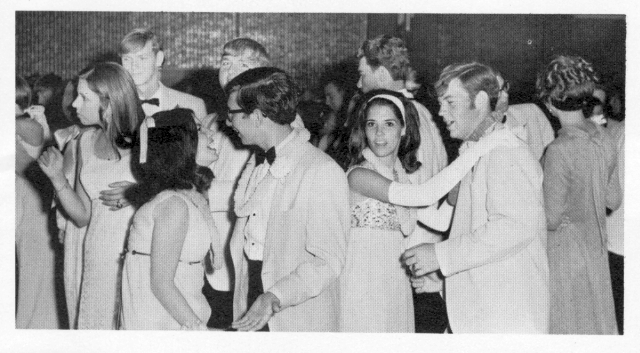
Think back to prom night – what was happening? Girls had their hair done. Guys were renting tuxedos. Corsages and boutonnieres were purchased; makeup was applied, and shoes were shined to a fine gloss. In other words, we were all trying to look our very best. Think about this with respect to our products or services. Have we done everything possible to look fantastic to those outside our company?

Do prospective customers clearly understand our value proposition? How strongly are we able to demonstrate that our product or service solves a problem and preferably one with which a lot of pain is associated? This is a major failure for a vast number of companies. Their product/service might be nice to have, but the customer can’t find a compelling reason to purchase it. Think Colgate Kitchen Entrees. Never heard of this? You’re not alone. The folks that make Colgate toothpaste thought it might be a good idea to launch a line of frozen dinners. Customers could eat a Colgate meal and then use Colgate toothpaste to brush their teeth. What kind of a value proposition is that?! If we can’t nail our value proposition then neither can our customers.

Customers have many choices when purchasing a product or service. Entrepreneurs sometimes become so enamored with their own ideas that they fail to objectively assess the competition. I’ve certainly been guilty of this myself in the past. I would pooh-pooh a competitor and rationalize that our approach was far more sophisticated and desirable. And yet, I didn’t ask the bottom-line question of what customers liked better about the competition. We may have a product or service that truly is twice as good as anything else on the market, but unless we can make a clear and concise case for differentiation, we’ll be stuck with the rest of the pack. Effectively communicating product or service differentiation means life or death in the business world.

A strong uptrend for customer procurement will happen if we practice the basics and fundamentals. This can be accomplished by presenting our product or service in as attractive a manner as possible; when we have a killer value proposition, and when we effectively communicate how we’re different. Doing all of this will ensure that we’ll be the hit of the party.

This blog is being written in tandem with my book, “An Entrepreneur’s Words to Live By,” available on Amazon.com in paperback and Kindle (My Book), as well as being available in all of the other major eBook formats.
prom night

The Really Deep Dive

Way back in the olden days I can envision a prehistoric man trapping a small animal of some variety (probably a mini-dinosaur) and trading it to another prehistoric man for a new spear. And at that precise moment in time, the first entrepreneur and the first customer were born. Now suppose that this first entrepreneur continued to trap small animals and trade them to other “customers” for the basic necessities that they could provide. This economy worked reasonably well until something happened. Another prehistoric man decided to do his own trapping and he too made his “product” available for trade. But a funny thing happened. He was willing to trade it for something of less value than the first entrepreneur. So “customers” flocked to him leaving the first entrepreneur with “unsold” “inventory.” And thus, competition was born.

Ever since the earliest days of commerce, entrepreneurs have developed a rudimentary understanding of their customers. More recently, highly sophisticated techniques and technologies have been created to aid with this customer understanding. Yet still, a vast number of businesses do not truly have the depth of customer knowledge that is necessary to consistently win. How could this possibly be considering the amazing advances that have been made since prehistoric days? The answer is relatively simple. Many entrepreneurs have not chosen to make their customers the absolute primary focus of their business. Much time and effort is spent improving processes, creating systems, increasing productivity, cutting costs, managing revenue and a host of other business practices. There’s no question that all of this is necessary. But from where does it emanate? If it starts with the bottom line instead of with the customer, the road may be rocky.

A customer-centric business starts with the basic question, “How well do I really know my customer?” Most of us think we have a pretty good idea who our customers are and what makes them tick. But I’m willing to bet that we probably have only scratched the surface with respect to the depth of our customer knowledge. Do we know the stratification of age cohorts across our product and service offerings? That’s an easy one. Do we understand the subtle preferences, needs and desires of these different age groups? Have we spent much time fine tuning our products and services to address this information? Oh sure, we perform ongoing customer surveys. But often they are designed to determine whether our customers are satisfied with our products and services. How much survey work do we do to get to know our customers better? We suspect that live customer focus groups might provide some valuable insights, but we believe that this approach is too expensive, something left to big corporations or we have no idea how to go about implementing such focus groups.

I submit that we all need to step back and take a deep breath. Then we need to pull together our team and begin to examine just how we are going about a deep dive into customer understanding. I’m championing this effort in my own companies and believe that it may dramatically transform our product and service offerings. Big Data is a treasure trove in this regard. We’ll be combining extensive demographic studies with customer focus groups, surveys and other initiatives to know for certain that we absolutely understand exactly what our customers need and want. We are looking for more than just what our customers tell us however. Big Data will help us go beyond the obvious and identify the buying habits and other trends with our customers that might not be readily apparent. And then with the customer front-and-center, we’ll make sure that our products and services precisely meet those needs and wants – stated and unstated.

Developing a deep understanding of what our customers really want and need, will help us create more customer-centric organizations. Then we are able to align our products and services with this customer focus that will manifest in high levels of customer satisfaction and greater profitability for our enterprises.

This blog is being written in tandem with my book, “An Entrepreneur’s Words to Live By,” available on Amazon.com in paperback and Kindle (My Book), as well as being available in all of the other major eBook formats.
deep dive

Walking Shoes

We’ve all known hard-charging Type A entrepreneurs who have a “take no prisoners” attitude. These people are the doers. They are decisive and they know how to execute. But sometimes there is a downside to this sort of personality. Yes, sometimes those of us who are very driven may have a tendency to be insensitive. This usually isn’t intentional but nonetheless it can have a detrimental effect on our team members and the culture we are trying to build.

There are a number of ways that insensitivity can manifest. It can be as direct as making derogatory or belittling comments to as subtle as failing to acknowledge someone with a friendly greeting in the morning. Think about an exchange like this. Team member – “I’d like to volunteer to work with Jim on the Norton project.” Entrepreneur – “No, you just need to stay focused on what you are doing.” While it may be absolutely true that the team member needs to keep doing what she’s doing, the way the entrepreneur delivered the message could be construed as insensitive. A different selection of words would make all the difference. How about this instead? “Jan – thanks for the offer. Your project is critically important and I’m counting on you to get it wrapped up. But I will take a rain check on having you help with the next one.” This statement acknowledges the team member with an expression of appreciation and also affirms her value. And it gives her hope that she’ll be given another opportunity in the future.

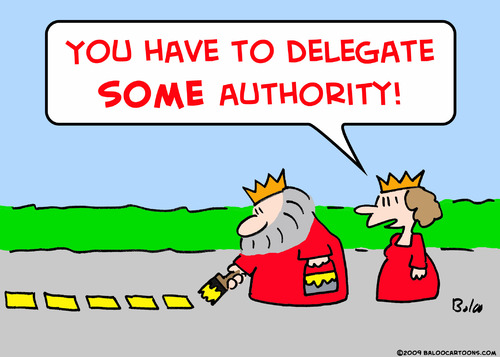
So, how do we develop the appropriate level of sensitivity without going so far as to sing Kumbaya all the time? There’s a very simple method that I’ve learned over the years. I will admit to once-upon-a-time being the insensitive Type A hard-charger that was described in the opening paragraph. I justified my behavior by believing that I was simply being expedient in my dealings with others. After all, I was moving at 100 miles an hour and the quicker I could get through with one meeting the sooner I could move on to the next. But I gradually became aware that my people skills were suffering. I wasn’t doing anything to cultivate relationships or goodwill. Eventually I developed a new awareness by just putting myself in the other person’s shoes. How would I feel if someone spoke to me a certain way; said something in a certain manner, or failed to somehow acknowledge me?

The key is to practice, practice and constantly practice. I try to pay attention to how everyone around me is feeling. In a restaurant, I want to make sure that the wait staff is properly appreciated. At the office I try to make eye contact with members of our team as I walk by and greet each and every one of them. I pay attention to the language that I use, going the extra mile to avoid careless statements that could be misconstrued. Again, I’m always testing what I say or do against the basic premise of how I would want to be treated if I were the other person. After a while it becomes very intuitive.

The mark of a good leader is the manner in which he or she treats others. Running roughshod or being humble and sensitive? The choice is easy when walking a mile in another’s shoes.

This blog is being written in tandem with my book, “An Entrepreneur’s Words to Live By,” available on Amazon.com in paperback and Kindle (My Book), as well as being available in all of the other major eBook formats.
dirty shoes

On It or In It?

I have the good fortune to regularly mentor several amazing entrepreneurs. One question I frequently ask is, “how much time do you spend working on your business versus in your business?” A similar question is, “how much time do you spend working on strategy vs. tactics?” Usually the answer to both questions is, “not much.” The problem is easy to identify. Entrepreneurs find themselves sucked into the daily grind of firefighting and there’s no time left to do much else.

So how do we focus on strategy and vision when the bullets are flying and we’re hunkered down in our foxholes? For starters, we need to examine exactly what it is that we are doing. As part of my mentoring process I inquire on specifically what an entrepreneur is spending his or her time. It’s interesting to listen to the responses which often reflect the fact that  entrepreneurs are handling things that really shouldn’t be their responsibility. Mostly this includes performing tasks for which others should be held accountable. And it’s not just about the failure to delegate. Some entrepreneurs take the position that “if I want it done right, I need to do it myself.” Or, “I really don’t have the time to show someone else how to do it – it’s more efficient for me to bang it out.”

To solve this we need to understand what prevents us from delegating that which should be handled by others. Do we have the right people on the bus? Do we have enough people? Are the right people properly trained? Are we too high control? When I have experienced problems with delegation in the past it’s usually been the result of not having the right people to whom I can delegate. Getting to the root cause of our inability to delegate is crucial. If we don’t have the right people, what is more important than solving this problem? One of the nice things about having the right people on the team is the fact that they may not need as much training – bright, right people figure out a lot of things on their own.

How is an entrepreneur who has a very small team able to delegate effectively? In other words, he or she is a player/coach and is on the field for every single play. This is where blocking out specific amounts of time to plan and strategize can be invaluable. Perhaps this occurs every morning from 8:00 to 9:00 without fail. During that timeframe, the entrepreneur takes no phone calls or any other interruptions and refines the strategy for the enterprise, reviews key performance indicators and determines if the business is on track with respect to vision and mission. Then the entrepreneur suits up and runs out on the field with the rest of the team to face another day. I cannot emphasize enough how absolutely nothing can be allowed to disrupt this daily routine.

We can ill afford to procrastinate when it comes to working on our business because we are too busy working in our business. The more this happens the more likely it is that we’ll get caught on the hamster wheel. Around and around we go as fast as our legs will churn – but we’re not making any headway. Why exert so much energy (and money) to end up right back where we started?

Learning how to delegate and hold others accountable will allow us to strategize and envision the future for our enterprise. And sequestering ourselves for a specified period of time every single day will enable that planning and visioning to happen.

This blog is being written in tandem with my book, “An Entrepreneur’s Words to Live By,” available on Amazon.com in paperback and Kindle (My Book), as well as being available in all of the other major eBook formats.

delegate_authority_king_621555