
Lincoln vs. Douglas

We may often find ourselves in situations where we are on the opposite side of a particular position that is being advocated by someone else. At this point we have a choice to make. Do we speak up or keep quiet? Obviously it all depends upon the circumstances and whether or not a discussion is actually merited. I enjoy a good healthy debate but have learned that it’s not necessary to go to the mat every time someone is espousing a point of view that is different than my own. The bottom line – what is to be gained from engaging in such a discussion? Will I persuade the other person to change his or her mind? Are there others who might be listening that I want to influence? In many cases, I decide to forgo the debate when I’m reasonably certain that the other person is entrenched in his or her point of view and there is no one else around to influence.

Let’s assume that we do want to convince others to adopt our perspective on an issue. How we go about doing this will be a real test of our skill in communications and diplomacy. If you ever watch political debates pay close attention . . . and then do just the opposite of what the politicians do. Often they obfuscate, make ad hominem attacks, avoid the question and use emotional appeals. There is a much better way.

Stick to the facts. Utilizing a fact-based approach to construct our own arguments is both rational and appropriate. Of all the classes I took in college my hands-down favorite was Logic. Connecting the dots with logic supported by well-sourced data is powerful and persuasive. And my Logic professor always used to say that a clear indication that you are winning a logical argument was when the other party resorts to playing on emotions. In addition to supporting our own thesis with facts, we can also de-construct the opposing point of view in similar fashion.

Depersonalize. As we debate an issue it’s easy to become passionate about our position and allow things to get personal. Watching our words is critically important at this point. Consider the following statement. “I just don’t understand why you are being so hard-nosed with your position.” How do you suppose the other party is going to react? It would be easy to become defensive if you are on the receiving end of this barb. How does this sound? “Help me understand the ABC Company’s position.” The word “you” has been replaced with the ABC Company. And the statement avoids an inflammatory tone.

Be respectful. Above all, we should maintain a level of friendliness during our discussion. Being respectful of the other party is paramount. Belittling and mocking statements do us no favors. Others who may be listening will be turned off by this approach. We are better served by acknowledging that the opposing point of view has merit even if we disagree. For example, we might say, “John, I understand that you believe that we should invest more marketing dollars in print media and I’m sure that we would get results. On the other hand, four independent studies have shown that the ROI for an investment in social media is five times higher than with print media.” Here, we’ve been respectful of John and his position, and then de-constructed his argument with our own facts.

Debate is healthy and productive when engaged in a positive manner. Using facts, avoiding becoming personal and maintaining respect are the best ways to persuade others to accept and adopt the position that we advocate.

This blog is being written in tandem with my book, “An Entrepreneur’s Words to Live By,” available on Amazon.com in paperback and Kindle (My Book), as well as being available in all of the other major eBook formats.

debate

A Punch in the Mouth

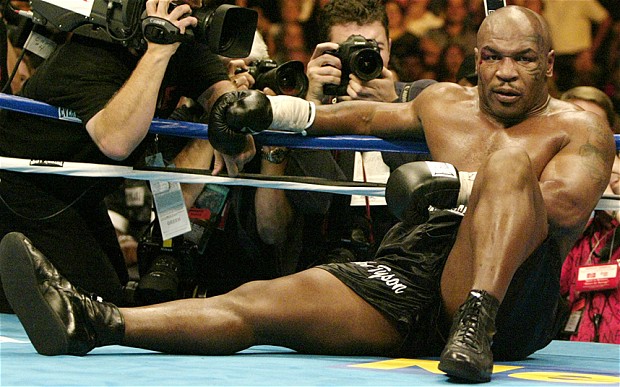
The boxer Mike Tyson is credited with once saying, “Everyone has a plan ‘till they get punched in the mouth.” This is actually a pretty profound statement even considering the source. I’ve written extensively before about resilience after getting knocked down. But let’s take another look at this subject from a different perspective. Simply put – what’s your Plan B?

It’s our nature as entrepreneurs to optimistically create a plan and work it with the full expectation that we will achieve our desired outcome. Sometimes these plans can be quite comprehensive and well-thought. And while it’s always in the back of our mind that things probably won’t go entirely as expected, we generally are confident enough in our abilities that we’ll be able to avoid running off the track. Perhaps we’ve been able to “dodge the bullet” for years with this approach. But at some point when we least expect it, that “punch in the mouth” may stagger us and as our head begins to clear we ask the question, “Now, what do I do?”

This question can be avoided entirely if we create a contingency plan prior to embarking upon whatever endeavor we are pursuing. Resilience is having the will to keep on keeping on. But to what end? We may have the resolve to never be beaten, but if something hasn’t worked we must be able to try a different way. Suppose we started a business that relies heavily on outside sales and we have a topnotch salesperson that is crushing it. Her sales volume is off the charts and our business has become very profitable. Then the unthinkable happens. Our superstar salesperson decides to leave and start her own business in another field. When we hear the news we are in a panic. Who will we ever find to replace her? How long will it take? Will the next salesperson be as strong and effective?

Alternatively, we have already contemplated that this could happen and developed a contingency plan that we implemented the day our key salesperson started. In this case, we consciously chose to build as many relationships as we could with other salespeople in a multitude of industries. Our plan directed us to make a certain number of “touches” every month with talented people who would come to know and respect us – maybe even clamor to come and work for us. Then when our superstar walked out the door we already had a list of well-vetted replacements in our hip pocket. At this point there’s no freak-out. We reach out to the top name(s) on our list and within a short period of time we are able to announce the hiring of a new salesperson.

Of course this all sounds very simple and practical. But let me ask this question. How many of us really have a well-designed Plan B for each of the numerous “punches in the mouth” that we could encounter? Better yet, how many of us have actually documented our Plan B’s; work them, and review them periodically? Contingency planning isn’t necessarily pleasant. To have a Plan B may feel like we don’t really believe that our Plan A will work in the first place. Isn’t this the kind of negative thinking that could doom our success? Not at all. The key is that we know the truth – the truth that we will succeed. We may not get to the finish line exactly the way we had anticipated, but we will win the race.

Having a contingency plan allows us to plunge ahead in a worry-free manner. We can then concentrate our energy and focus on the steps necessary to the positive results that we desire.

This blog is being written in tandem with my book, “An Entrepreneur’s Words to Live By,” available on Amazon.com in paperback and Kindle (My Book), as well as being available in all of the other major eBook formats.

mike-tyson_

Hyperopia

Here’s a fundamental question for all entrepreneurs. Are you a visionary? Being a visionary and having a corporate vision are two different things, so take care not to confuse the two. For a company, a non-profit or any other organization to thrive and succeed over a long period of time, visionary leadership is paramount. And unfortunately, many companies stagnate and die when the visionary leader moves on for whatever reason. That’s why it’s crucial for a company to continuously develop visionaries across generations that will help to sustain the organization in the future.

It’s not hard to think about individuals who exemplify the term “visionary.” Steve Jobs comes to my mind before anyone else. He was a rebel and an unconventional thinker who wasn’t afraid to take risks. Similarly, Bill Gates was a visionary who became the richest man in the world as a result of his ability to understand and shape the future. What comes to mind when you hear these names – Henry Ford, Wilbur and Orville Wright, John D.  Rockefeller, Thomas Edison, Sam Walton, Sergey Brin, Larry Page and Mark Zuckerberg? Each was a phenomenal innovator. Each had an uncanny sense of where the world was going. Each had dreams but was also a doer.

Being a visionary is partially innate and partially learned. So, what can we do to develop our visionary leadership skills? How curious are you? Do you read everything you can get your hands on? Visionaries are expansive readers and are curious about everything. Curiosity stimulates the imagination and helps bring forth new ideas manifesting in a high degree of creativity. How persevering are you? The next time you’re ready to throw in the towel remember that visionaries have a stick-to-it attitude. They are highly resilient and believe they can solve any problem. Visionaries love discussion and debate. Some may see this as confrontation but it really isn’t. Instead, a visionary likes to listen to differing points of view even when it gets a bit lively.

What other ways can we model visionary behavior? Do you embrace change or are you more comfortable living with doing things the same way? Visionaries are change agents. They like to teach and are focused on doing the right thing. Integrity ranks high on their list of values. Do you have high expectations for your team? Sometimes the line between high vs. unreasonable expectations can blur a bit. But don’t expect a visionary to set a low bar. Visionaries tend to be eternal optimists and can’t see a glass half empty – it’s always half full. And visionaries are some of the most passionate people you’ll ever meet. Finally, visionaries don’t live in the details – they are quintessential delegators.

A visionary has a knack for looking at a collection of data and telling the future. He sees things that others don’t and isn’t the least bit concerned if his ideas are pooh-poohed. In fact, he’ll work hard to persuade others to buy into what he believes because he has a supreme degree of self-confidence.

By emulating their behaviors, traits and tendencies, we too can become visionaries. Our value to our organization increases exponentially when we provide visionary leadership.

This blog is being written in tandem with my book, “An Entrepreneur’s Words to Live By,” available on Amazon.com in paperback and Kindle (My Book), as well as being available in all of the other major eBook formats.

eye doctor

The Wheels of the Bus Go Round and Round

Here’s a scenario. Sales are flat. The product development team is feuding with the marketing folks. Production is lagging and customer complaints are trending in the wrong direction. Sounds like a nightmare situation – right? It’s at a time like this that makes us wonder why we became entrepreneurs in the first place! As we try to sort out this mess, something becomes quickly apparent. We have the wrong people on the bus.

The whole problem wouldn’t even exist if we had selected the right people in the first place. But for most of us, we are where we are and have to deal with an unwise hire here and a hopeful hire there. Rarely do we make the right hiring decisions from the get-go and find smooth sailing forevermore. Something I’ve grappled with for decades is when to change out the people on the bus – and sometimes the bus driver to boot! The mistake I’ve made over and over has been to give people too many chances and believe that if I just find the “right slot” for someone, that I can “save” him or her. In recent times I’ve come to realize that we’re not in the business of doing social work and it does no favor to someone who is miscast to continue to try and salvage them.

Most of us have a level of empathy that prevents us from being Donald Trump . . . that is to simply say, “You’re fired!” But there’s undoubtedly a middle ground. We don’t have to have a hair trigger and instantly terminate someone who is beginning to struggle. And we also don’t need to continue to enable someone for months or even years who can’t get the job done.

As with much about entrepreneurship, there is a process that can make the decision to invite someone off the bus both humane and timely. We start with clear written roles and accountabilities. It’s imperative that our team members truly understand what is expected of them. Roles and accountabilities should be quite comprehensive and they must be measurable. We also must make sure that our team members understand how to perform their roles and accountabilities and that they have the proper resources to succeed. If I tell a non-pilot that he is responsible for flying a passenger jet from New York to LA I can be very clear about this. But if he’s not trained to fly the plane, then it will either fail to get off the ground or if it does, well, what happens might not be pretty. I realize that this is a bit of an exaggeration, but it illustrates the point.

Hand-in-hand come key performance indicators. These are the metrics by which we determine if the roles and accountabilities are being sufficiently executed. Ongoing performance reviews are also an important element of ensuring that the right people are on the bus. Some companies do an annual performance review. This may be fine in a formal sense, but team members need a continual feedback loop. Then there will be no surprises when the annual review is performed. It’s also helpful (and often judicious) to offer a written assessment as part of the continual feedback process. It’s not so much to build the file as it is to make sure that everyone is on the same page regarding where improvement is needed.

Often when things are going poorly, it’s the result of a lack of roles and accountabilities; or a lack of training; or a lack of proper resources to get the job done; or a lack of measuring results; or a lack of providing team member feedback, or all of the above. When this happens and we must make a change in personnel, we dread having to take action. Why? Because we know deep inside that we probably didn’t do everything necessary to be completely fair with our team member.

Ensuring that we have the right people on the bus is a strong step toward building a successful culture and producing the results we desire. And following a well-designed process to invite people off the bus who aren’t the right fit will allow us to act objectively and at the right pace.

This blog is being written in tandem with my book, “An Entrepreneur’s Words to Live By,” available on Amazon.com in paperback and Kindle (My Book), as well as being available in all of the other major eBook formats.

school bus