
The Hard Times/Happy Times Entrepreneur

The entrepreneurial experience produces emotions of all sorts, often extending across the positive to negative spectrum and all in the same day! Most entrepreneurs will attest to the fact that there have been hard times at different points in their careers. These hard times may be the result of personal challenges, professional challenges, or both. They run the gamut from aging parent issues, marital strife, divorce, rebellious children, lawsuits, financial pressures, unfair competition, loss of market share/customers, and a multitude of other mole hills and in some cases, mountains – really big mountains. Through it all, there’s a central question that we grapple with. How do we make hard times into happy times? Is it even possible?

Let’s start with the whole notion of happiness. Are you happy overall? Where do you land on the happiness scale? Are you happy some of the time but not always? Are you moderately happy or are you ecstatically happy? When you encounter hard times, are you able to maintain your level of happiness or does it slide down (or off) the scale? Obstacles are a part of life. They’ll always be there. When we sign on to be an entrepreneur, we also understand that we’re signing up for a roller-coaster ride. Our gut check determines if we can be happy while we’re riding the roller-coaster, the bucking bull or whatever metaphor is chosen to represent the challenges we inevitably will face.

Over the course of my nearly 70 years I’ve learned many things about happiness. Allow me to share them with you.

  1. Happiness is a choice. First and foremost, I’ve come to understand that my happiness is 100% my choice. Where I land on the happiness scale is totally my choice. This concept may not be easy to grasp when we’re in the throes of a crisis. But I’ll be darned if I’m going to let what is happening around me determine whether or to what degree I’m going to be happy. Some may say that this sounds like a Pollyanna type of response – after all the world is crumbling around us and we’re going to choose to be happy? Yes, that’s exactly what I’m saying. It may not be as easy to dial up happiness when we’re getting punched in the gut . . . but it definitely is a choice that we make.
  2. Go to bed with a clear conscience. My wife is constantly shaking her head. When my head hits the pillow at night, I’m fast asleep within 30 seconds or so. One of the reasons is the fact that I go to bed every night with a clear conscience. I know that my integrity is intact, and I haven’t intentionally stepped on anyone’s toes. A sure-fire way to unhappiness is breaching the trust of others. There may be other problems that crop up along life’s road, but this isn’t going to be one of them.
  3. Be grateful. Gratitude is one of the keys to happiness. I find that when I am grateful to someone and express it, I feel an endorphin rush. And because it feels so good to express gratitude, I try to do it every single day. I have found that being grateful helps to create a balance in my life that pushes up the happiness meter.
  4. Serve others. Years ago, I discovered that getting out of myself was a major factor in being a perpetually happy person. Rather than dwelling on my own inadequacies, mistakes, and failures, I found that serving others produced those same endorphins I felt when I was in gratitude. When I could make others happy it became infectious and made me happy as well. I volunteered at a children’s hospital; have served as a mentor to aspiring entrepreneurs; created a scholarship program for young people studying to be teachers, and many other examples.
  5. Turn the tables. Look, I said it before. Hard times are inevitable. But we can use them to learn and grow. We can use them to stimulate creativity and innovation. I have come to thrive on complexity and challenges that some might find would push them over the edge. Instead, I say, “bring on the tough stuff!” I’m not about to be defeated by hard times because they present an opportunity to excel and move to even higher levels of performance. And that’s just as applicable in my personal life as it is in my business.

Hard times and happy times can coexist. We need to recognize that happiness is a choice, and it can be realized when we operate in integrity, express gratitude, serve others and use our challenges as opportunities for growth.

This blog is being written in tandem with my book, “An Entrepreneur’s Words to Live By,” available on Amazon.com in paperback and Kindle (My Book), as well as being available in all of the other major eBook formats.


The Successful Sacrificing Entrepreneur

Much has been made about “work/life balance” over the past several years. This discussion is a somewhat backhanded slap at past generations where high achievers sometimes (maybe often) spent a great deal of time and effort clawing their way to the top. Today’s meme is that there is a better and smarter way to reach the pinnacle of success. And it involves much less of something we old-timers know as “sacrifice.” I submit that there is a fundamental misunderstanding about both these notions – work/life balance and sacrifice.

Entrepreneurship is more competitive than ever. Competition pushes us to innovate and find better ways of doing things that result in winning. Believe me when I say that the entrepreneurial environment doesn’t care about work/life balance. This is a full-throttle pull-out-all-the-stops world in which we compete. Then, does this mean that we can’t achieve work/life balance AND achieve high levels of success? The answer is . . . yes and no.

The yes and no answers are a sliding scale. At one end of the scale, we have a healthy work/life balance and some level of success. At the other end of the scale, we are making considerable sacrifices and achieving some other level of success. The wild card is the level of success we really want to attain. Some entrepreneurs can operate a business that is successful enough to provide a very comfortable lifestyle. And they can do so without giving up much to do so. There are other entrepreneurs that are driven to the point that they become single-minded in their focus to the exclusion of all else – and achieve unimaginable success. The key to understanding what we must sacrifice is to understand exactly what level of success we want and what it will take to achieve it.

Many of us who entered business in the 1970s and 1980s know what it was like to “pay our dues.” We started at the bottom of the corporate ladder, learned our business, and perfected our craft. While we were always chomping at the bit to get ahead, we also knew that we were going to have to prove that we were worthy. Sometimes that meant 100-hour weeks and toiling in the salt mines for what seemed like an eternity. There was much frustration, anguish, and a healthy dose of fear. We ultimately prevailed through a formula that was one-part smart enough, one-part hard work, and a secret ingredient called pure passion.

While passion drove me when I was young and still drives me today, I was able to prioritize in such a way as to never miss an event involving my daughters; never miss taking a vacation with my wife, and never endangering my health. My work and my personal life became intertwined to the point of being inseparable. I’m not sure how a big vision can be reached without this sort of work/life relationship.

There are many young entrepreneurs brimming with confidence and vowing to do things differently than their parents and grandparents. That’s fine and I wish them well. What they will need to eventually determine is what level of success they want to achieve and what will be required to achieve it. It’s an extremely rare individual who can dream a big idea, implement it, and create a moonshot while coasting on a cloud and exerting minimal effort. Most of the time, moonshots require incredible amounts of blood, sweat and tears. Entrepreneurs who are too impatient or are unwilling to make certain sacrifices are going to see their dream fizzle and fall into the sea. There’s no question that young entrepreneurs can and should learn from the mistakes made by previous generations. This will help smooth the path to success. But what can’t be ignored are the benefits of business experience, life experience and the notion of eating, sleeping, and breathing entrepreneurial vision. And there’s no way around it . . . there will be sacrifices.

We’ve all heard about some of the legends of enterprise. Steve Jobs worked non-stop, calling close associates late into the evening to bounce around ideas. Mark Cuban didn’t take a vacation for seven years during the time he was launching his initial business venture. Marissa Mayer worked 130-hour weeks when she was at Google and sometimes slept under her desk. Elon Musk said in an interview with Vator News, “You just have to put in 80-to-100-hour weeks every week. If other people are putting in 40-hour work weeks and you’re putting in 100-hour work weeks, then, even if you’re doing the same thing, you know that you will achieve in four months what it takes them a year to achieve.”

Achieving extraordinary levels of success still requires sacrifice. Entrepreneurs need to decide for themselves what level of success they desire and understand what it will take to achieve it.

This blog is being written in tandem with my book, “An Entrepreneur’s Words to Live By,” available on Amazon.com in paperback and Kindle (My Book), as well as being available in all of the other major eBook formats.
The Grateful Entrepreneur

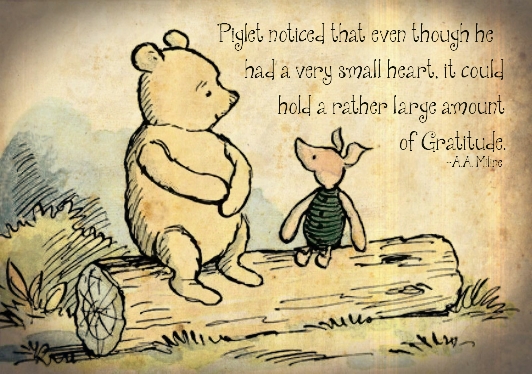
When I was a young lad in my formative years there was a hard and fast rule set for my sister and me. As soon as the Christmas or birthday wrapping paper was discarded, we went to our respective rooms and began writing thank-you notes. It didn’t matter how insignificant the gift (or whether it was something we wanted) a thank-you note was written. And writing something like, “Dear Grandmother – thank you for the sweater you sent for Christmas,” was wholly insufficient. Mom expected something more in the order of, “Dear Grandmother – thank you for the lovely sweater you sent me for Christmas. I can’t wait to wear it at my upcoming band concert. I’ll send you a picture of me wearing the sweater after the concert. We miss you and wish we could see you more often.” And by golly, I wore that sweater at the band concert and sent a follow-up note with the photo.  

Our daughters were subjected to the same practice when they were young though I’m not sure that our grandchildren have adopted the ritual . . . which is unfortunate. It sometimes seems that expressing gratitude is becoming a lost art. I’ve written before about how living in gratitude makes our lives so much richer and rewarding. It opens the flow of positive energy that allows us to thrive in any situation. I’ve advocated for keeping a gratitude journal in which we write daily, making note of the various people and things for which we are grateful each day. I know that when I hit a rough spot in my life, focusing on that for which I am grateful always centers me and puts me back on track.

Here’s the thing. Entrepreneurs have endless reasons to be grateful. Who among us hasn’t been encouraged by someone along the way? Who among us hasn’t received a helping hand from a kind soul who selflessly made our way smoother? Who hasn’t been the beneficiary of opportunities that were created by someone else? Do we truly feel grateful for these actions, or do we take them for granted? Perhaps we have even rationalized a sense of entitlement . . . which would be unfortunate. “I know my company has assigned me some terrific projects that have been very helpful to my career, but I work long hours to make these projects successful.” What is not said (but maybe thought) is, “I don’t need to express gratitude to anyone because I go above and beyond to do my job.”

What is the proper way to express gratitude to others? First and foremost, it needs to be heartfelt. Simply going through the motions (like I did with my sweater letter) is not true gratitude. We need to think specifically about what others have done for us. This is where a gratitude journal can be helpful. It establishes a practice whereby we focus on our bounty – material or otherwise – and identify the source that facilitated it. This doesn’t take anything away from our own accomplishments. It simply completes the circle of gratitude. We acknowledge that source as well as being proud of what we ultimately accomplished.

When our gratitude is coherent with our head and our heart, we can offer an outward expression of it. Perhaps it takes the form of looking someone in the eye and telling them how much their support has meant and how appreciative we are. Maybe it’s a handwritten note of thanks. Possibly it takes the form of a gift of some sort. Regardless of the method, intentionality is the key and will be felt by the recipient.  

Learning how to be grateful and expressing gratitude to others is a practice that is critical to living an amazing entrepreneurial life. And I want to say thank you to my mom in heaven for instilling in me the foundational elements of gratitude.

This blog is being written in tandem with my book, “An Entrepreneur’s Words to Live By,” available on Amazon.com in paperback and Kindle (My Book), as well as being available in all of the other major eBook formats.

The Supremely Confident Entrepreneur

There is at least one must-have trait for successful entrepreneurs. Without confidence the road is very steep and rocky. College basketball is one of the most interesting demonstrations of how confidence or a lack thereof can impact outcomes. I’ve watched many games where the players on a team are tentative. They lack energy and they are missing their shots. Often, they are out of position and cannot rebound or chase down loose balls. A few days later the same team plays another game. This time there is fluidity in their motion. They are passing the ball crisply; players are getting nice elevation when they shoot, and the ball is going in the hole. The night-and-day difference between the two contests is that of confidence.

What is the secret to gaining and maintaining confidence? There are several elements that are required. The first is that of “mastery.” Mastery is achieved through constant practice and the repetitive patterning that occurs as our experience builds. This is particularly important for millennials to understand. Fair or not, many millennials are tagged with the stereotype that they have an incredibly high sense of urgency. They don’t want to wait for results and can be impatient at times. However, I’ve seen millennials and people of all ages try something a couple of times and believe they have mastered it. Then I watch as they try it again and bomb badly. With confidence shaken they are humbled and may become afraid to jump in the water again. All of this could have been avoided had real mastery been achieved. One of the biggest fears in society today is that of public speaking. And the only way to resolve this fear once and for all, is to practice speaking over and over and over. The fear doesn’t suddenly evaporate after a handful of gigs. It took me 50 or 60 times to reach the point that I began to feel comfortable in front of a group.  

The second element is that of achieving a history of desired outcomes. It’s one thing to repeat a process enough times to master something. That helps to build confidence. But achieving the results we want is the validation necessary for us to know that we’re on the right track with our mastery. Let’s use our basketball example again. A team may be executing the basics and fundamentals properly; it may be playing strong defense, and the players are running the plays as designed. But if the scoreboard isn’t showing a W for the team on a regular basis, it’s hard to build confidence. I’ve never heard anyone profess that losing all the time builds confidence . . . but winning does. As entrepreneurs we must tweak our approach until we begin to win consistently. For example, if our sales approach isn’t working and we keep doing it the same way, it’s time to start experimenting to learn what it takes to win. After all, there’s no point in “mastering” losing!

The third aspect of building confidence is to always maintain a positive attitude – no matter what. We must believe that eventually we’ll get it right; eventually we will win. I’ve said many times that what we think in mind produces in the outer after its kind. When we believe at our core that we are going to win, eventually we will win. If we have doubts or know in our bones that we’re going to lose, eventually we will lose. I have never seen anyone become more self-confident by having a negative attitude. Attitude is critical to the success of individuals and to the team. If one member of the team is positive and the rest are negative, the confidence of the team will be adversely affected. As entrepreneurial leaders it is incumbent upon us to make sure that our team is unanimous with a positive attitude.  

Developing mastery, achieving success and being eternally optimistic are the rocket fuel that will propel us to a perpetual state of self-confidence. This patterning also inoculates us from having our self-confidence shaken when from time-to-time we might stumble. We’ve been there before. We know what we must do, and we are able to re-calibrate and get back on track with ease and grace. There is no panic or desperation – we simply remember to follow the formula that has worked so well in the past.

Building self-confidence is a process much like riding a bicycle. Once learned, we may fall off on rare occasions; but when we do we get up, dust ourselves off and start riding the bike again like it never happened.

This blog is being written in tandem with my book, “An Entrepreneur’s Words to Live By,” available on Amazon.com in paperback and Kindle (My Book), as well as being available in all of the other major eBook formats.

The Toxic Entrepreneur

Tyler is mad at Gilbert. Mad may not be an adequate description. Tyler is so livid that he doesn’t trust himself to talk to Gilbert about “the incident” for fear that he might end up in handcuffs after the encounter. I think you get the picture. Here’s the rest of the story. Tyler is an entrepreneur who has built a small but rapidly growing company that buys fledgling software projects and fully develops them into commercial products. Gilbert is a software engineer who has a terrific idea that he began to develop and talked extensively with Tyler about taking it to the next step. The two hit it off very well and a very close relationship grew over time. Negotiations had progressed to the point that documents were prepared, and a signing date was set. Then it happened. Tyler received a phone call late one afternoon from an industry analyst informing him that Gilbert had just signed an agreement with Tyler’s closest competitor, to develop the software. Tyler called Gilbert and got his voicemail. He texted and e-mailed – radio silence. Naturally Tyler feels totally betrayed, blindsided and embarrassed. Betrayed because Gilbert had committed the deal to him; blindsided because Gilbert hadn’t had the decency to call him first, and embarrassed because he heard about it from someone else.

You probably know the rest of the story. Tyler finally reaches Gilbert and confronts him about the situation. Gilbert says, “Tyler, it’s only business. I made a decision that I felt was best for me.” This only adds fuel to the fire raging inside Tyler and a long-term grudge ensues with ongoing thoughts of revenge and payback. And, at the end of the day this is the classic Entrepreneur’s Poison.

It’s understandable that Tyler is upset about Gilbert’s actions. But Tyler faces a fork-in-the-road choice at this point. He can hold a grudge for a long period of time and plot ways to get back at Gilbert, drinking the Entrepreneur’s Poison in the process. Or he can learn from the experience and move on. I emphasize the fact that this is a choice that Tyler will make. He’s in control – not Gilbert. As entrepreneurs we will likely face similar circumstances at some point in our careers – maybe we already have. Do we drink the Entrepreneur’s Poison or not?

On December 13, 1977, during an NBA game between the Los Angeles Lakers and the Houston Rockets, Lakers forward Kermit Washington threw a punch that shattered the face of Houston player, Rudy Tomjanovich. The blow was so devastating that spinal fluid was leaking out of the wound as Tomjanovich was rushed to the hospital. His injuries were life threatening and it took several surgeries to repair the damage. Jonathan Feigen’s 2018 book “100 Things Rockets Fans Should Know and Do Before They Die,” details how Tomjanovich felt the need to forgive Washington who had apologized to him in 1987. Feigen states, “Washington could not have known that Tomjanovich had come to believe that holding resentment is ‘a poison’ people ingest needlessly. ‘If I keep those other things, self-destructive things, a part of who I am, I’m missing a good life,’ Tomjanovich said.”

Here’s the thing. When we feel that we’ve been wronged by someone else, harboring feelings of resentment and plotting revenge takes a lot of energy – and worse, it’s negative energy. This same energy could be used in positive ways that benefit ourselves and others. Someone I know was recently betrayed by a long-time friend. She wonders how she’ll ever be able to trust this individual again. My response was to ask if deciding in absolute terms that trust is broken forever is the best perspective. She asked what I would say to this friend, and I responded, “The trust has been broken and it will take a while to earn it back.” Then we move on and live our lives without holding a grudge or resentment. It becomes the choice of the transgressor to rebuild the trust or not. Dwelling on the situation and replaying it over and over does nothing to undo what happened.

In our entrepreneurial world it’s extremely important that we operate in a positive sphere. No one can harm us unless we allow them to do so. Forgiveness is the key even though it may take time for relationships to be repaired. Taking this approach allows us to avoid drinking the Entrepreneur’s Poison.

This blog is being written in tandem with my book, “An Entrepreneur’s Words to Live By,” available on Amazon.com in paperback and Kindle (My Book), as well as being available in all of the other major eBook formats.