
The Big and Bold Entrepreneur

A few years ago, I saw a video clip of the Haohan Qiao Bridge that stretches 980 feet between two cliffs in China’s Shiniuizhai National Geological Park. It’s a suspension footbridge that is extremely unique in one particular sense . . . it’s made of glass. As you walk (or crawl) across, you see through the glass floor and look straight down 600 feet to the canyon below. We’re told that the glass is 25 times stronger than ordinary glass and if it breaks it is so dense that a person won’t fall through.

What’s interesting about this bridge is the fact that it’s bold, it’s big AND it’s safe (we’ll assume for the moment that what we’re being told about the bridge’s safety is correct). This bridge is the perfect metaphor for what we’re trying to accomplish as entrepreneurs. There’s nothing wrong with small ball, but after playing this way for many years we sometimes yearn to take that big leap across the canyon. Doing so requires that we push beyond our comfort zone and summon a fearlessness that we may not have previously experienced.

What prevents us from taking big and bold action? Often, it’s a question of safety. We’ve invested much in the way of blood, sweat and tears to get to where we are today and we don’t want to risk our bank account, our 401(k), our home, our health, our reputation and yes, the possibility of failure. The risk of failure is likely the Number One reason we don’t take those big and bold steps. The rest of the risks can be successfully managed. We use them as “why not” reasons, but ultimately it all boils down to the chance that we might fail.

What does failure look like to you? Many of us are programmed to abhor failure. In school, getting an F was something to dread. Our parents were disappointed. We thought we looked stupid in the eyes of our classmates. There was real shame associated with this letter grade. Throughout our lives we have been conditioned to avoid failure at all costs. And so, we say things like, “I don’t want to go all-in on my business idea because I can’t afford to put my family at risk.” But at the root of it, we are afraid to get that paper back from the teacher with a red F in the upper right-hand corner.

I’ve said many times that failure is simply an unfinished experiment in the laboratory of life. Failed experiments can sometimes be the only way we eventually get it right. I’ve started numerous business ventures that failed. In one case we raised investor money to fund a particular concept but could not get the traction we were looking for. Within a few months we realized that we were going to fail and so we gave everyone’s money back and shut down the venture. The goodwill from the early recognition of our failure and the act of returning the investment capital enabled us to build even stronger relationships with those investors who have invested in subsequent ventures. Long ago I realized that there is nothing to be ashamed of when we fail and maintain our integrity in doing so. I just haven’t figured out how to go big and bold without the risk of failure somewhere in the equation.

Here’s the bottom line. Step One – think big and then think bigger. Step Two – focus on how to mitigate the risks that could be associated with failing when launching that big (bigger) idea. Step Three – release the ego and realize that failure doesn’t diminish us as individuals. Step Four – create a solid implementation plan. Step Five – GO FOR IT!

Going big and bold is a process to be managed. But it also means that we must get out of our own way to deny the insecurities and perceptions of failure that prevent us from moving forward.

This blog is being written in tandem with my book, “An Entrepreneur’s Words to Live By,” available on Amazon.com in paperback and Kindle (My Book), as well as being available in all of the other major eBook formats.

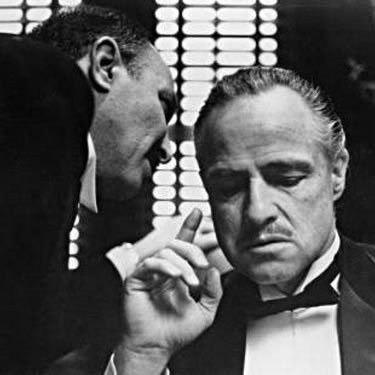
The “Loyal-to-a-Fault” Entrepreneur

Think about how much loyalty is a part of your life. How loyal are you to others? And how loyal are they to you? Do you have loyal customers; loyal partners; loyal employees, loyal friends and loyal family members? Loyalty is a strong and positive quality. It’s a key element in building and maintaining relationships. So, everything must be peaches and cream, right? Ah, but there’s a bit of a dark side to loyalty.

You probably have heard the term, “loyal to a fault.” This is when we may be too loyal to someone else, and that loyalty clouds our judgment and may even be damaging to our business. Whether or not we’re being too loyal can be a tough call. It requires us to be very objective about a particular person and their performance. This can be exceptionally difficult for anyone and nearly impossible for someone who places a very high value on the loyalty trait.

Here’s a scenario that may be familiar. Perhaps it’s even happened in your own organization. A high-level executive has been with a firm for 30 years and reports to the founder and CEO. This executive is part of the CEO’s inner circle, and his advice and counsel are often sought by the CEO. Unfortunately, this executive is also a flaming jerk. He’s very nice and thoughtful to other senior level executives, but when it comes to those who don’t have as prominent a position in the organization, he can be unreasonably demanding and thoughtless. Because of his tenure with the CEO, his behavior is tolerated. The employees of the firm have learned to steer clear of him and know that he is “protected” by the CEO. Complaints were lodged about him in years past but it’s well known by everyone working for this company that he will always get away with whatever he wants.

If asked about this high-level executive, the CEO would undoubtedly say, “I know that he can sometimes be a bit abrasive, but overall, he’s done a great job for this company.” The CEO might also say something like this, “He and I were fraternity brothers, and he’s always had my back.” Sound like something you might have heard before? In this situation, many of the employees of this company have lost respect for the CEO because he won’t fix the problem. If this was a family business, it could very well be that the CEO and high-level executive are related – brothers perhaps. The bottom line is that the organization cannot function effectively because the CEO has misplaced loyalty to a problem individual.

As entrepreneurs we must learn how to maintain our objectivity, especially when it comes to employees and team members who are key to us. We must be able to separate our feelings of loyalty from what is best for our organization. Loyalty can easily become a blind spot for us unless we have a method to deal with it. In a larger organization this can be done through a human resources department. The HR director must be given permission by the CEO to lay the facts on the table about every employee. In a smaller firm, it may be helpful to hire a consultant who can facilitate the performance of a 360-degree review of senior executives or even all members of the firm. In both cases, the HR director or the consultant should provide an honest perspective to the CEO that one of his or her reports needs to be coached, disciplined or even dismissed. 

Loyalty is generally a good thing. But when there’s loyalty to a fault, we need to be willing to listen to someone tell us when we have a problem. And then we must deal with it accordingly.

This blog is being written in tandem with my book, “An Entrepreneur’s Words to Live By,” available on Amazon.com in paperback and Kindle (My Book), as well as being available in all of the other major eBook formats.

The Entrepreneur’s False Choices

It’s 3:00 AM. You’ve just awakened with a start. Your heart is racing – not pounding, just a generally anxious sort of feeling. You aren’t sure why this is happening. There’s no sound of an intruder and everything externally seems to be in order. Then you lay there struggling to return to your slumber. You know you must get up in two or three hours, and you know you desperately need to finish getting your rest. But there’s one BIG problem. Your mind won’t let you.

I’ve never figured out exactly what causes this. There’s obviously something churning around in our subconscious. And it’s frustrating beyond belief to wake up this way, not know why, and then try to drift back to the Land of Nod. And I can attest to what happens next. I will allow my mind to conjure up False Choices. Perhaps I’ve been in the middle of a complicated real estate deal that has a lot of “hair” on it – that is, many moving parts that aren’t all moving as planned. At this point the game begins. Here’s the dialogue that occurs.

What if the appraisal for the apartment complex comes back at slightly less than is needed? Then the loan amount will be less, and the equity requirement will be more. But wait a minute – I only have an equity commitment for the exact requirement, and I don’t have time to raise the extra amount that will be needed! Oh my (or some other less printable phrase) – we won’t be able to close this deal!! If this happens, we’ll lose the earnest money that is now totally at-risk; we’ll lose all of our credibility within the industry; we’ll never be able to do another deal again; I’ll go broke and have to live under a bridge!!!!!!

OK, the bridge part may be a little dramatic, but you get the idea. The point is that in this state of semi-consciousness it’s very easy for our mind to magnify our concerns and create wild scenarios that are disconcerting. Often, logic is totally absent in these moments, and because of this the False Choices become overwhelming. Fortunately, I’ve gotten to the point where I rarely experience this anymore. But I can tell you that in years past I’ve gotten so worked up that I had to get out of bed and become totally awake to bring my full faculties to bear and find the solution. Kind of blows the opportunity to get any more sleep completely out of the water . . . right?

Rather than trying to figure out what triggers this kind of response, I’ve learned how to avoid letting my mind run away in this manner. If I do wake up with that general feeling of unease or even if something specific looms in my mind’s-eye, I immediately deny it. That’s it. I refuse to allow the monsters in my brain to come to the surface and get any satisfaction whatsoever. It’s my belief that we are extremely vulnerable when we are half-awake and half-asleep, and trying to resolve any sort of issue is futile and dangerous. If we let down our guard, invariably we end up in False Choices.

Learning how to deny these thoughts will not be easy at first. It will take a lot of practice. What I do is quickly translate the issue that is bubbling up into a visual image – perhaps it’s a dragon from a fantasy world. Then I take out my mighty dragon slaying sword and thrust it deeply into the dragon’s chest at which point it melts away and I fall asleep again. Thus, I’ve taken the horrible problem that somehow has invaded my sleep; turned it into a dragon; killed it instantly and gone back to sawing logs. While this might sound corny, I can tell you that with practice it works. It doesn’t matter what the outer issue is, I simply turn it into a dragon and eliminate it.

We must avoid the False Choices that may be presented while we sleep. Denying them before they have a chance to take hold of our minds will allow us to deal with them in a rational fashion when we are awake.

This blog is being written in tandem with my book, “An Entrepreneur’s Words to Live By,” available on Amazon.com in paperback and Kindle (My Book), as well as being available in all of the other major eBook formats.

The Blessed Entrepreneur

We all have aspirations. So, what kind of an entrepreneur do we aspire to be? I would like to be a Blessed Entrepreneur. How would this manifest?

The Blessed Entrepreneur has a rock-solid set of principles and core values. He or she marches to a tune of integrity and honor. Decisions are made in part with an eye toward how others are helped and most certainly an avoidance of intentionally hurting anyone. The purest test of this individual comes when a choice must be made between earning substantial profits by “cutting corners” or doing the right thing that generates little or no gain.

The Blessed Entrepreneur sees the glass not half empty or half full. This person sees many glasses overflowing and is always in deep gratitude for such bounty. A completely positive mindset is one of the strongest attributes of the Blessed Entrepreneur. Thoughts of lack and limitation are quickly swept away with optimism and hope; then translated into process and action that pre-ordains the desired outcomes. Even moments of doubt and challenge are transformed into opportunity and silver linings.

The Blessed Entrepreneur exudes quiet confidence. There is no arrogance – only competence. This confidence evolves through knowledge, experience and selflessness. The Blessed Entrepreneur is never too proud to ask for help or admit ignorance about a particular subject or situation. He or she is totally comfortable in his or her own skin. There’s no need to “put on airs” or pretend to be someone they’re not.

The Blessed Entrepreneur is the quintessential leader. This person is a role model and a collaborator. A command-and-control style is never utilized. Coaching is the approach most favored, and a clear vision is continuously articulated. The Blessed Entrepreneur inspires members of the team to do better and be better. He or she is always looking for ways to recognize the accomplishments and success of others. An intentionally positive culture is developed and nurtured.

The Blessed Entrepreneur understands his or her priorities. Outside of a vocation, this individual has a strong focus on living a healthy lifestyle. This includes regular exercise, eating right and getting regular medical checkups. The Blessed Entrepreneur is aware that good health impacts all other aspects of his or her life. Similarly, this person also pays attention to the family unit, spending quality time with a spouse or partner, children, parents, grandparents and other family members. Most important of all, being fully present defines quality time.

The Blessed Entrepreneur is financially prosperous but not because wealth is his or her goal. Instead, a passion for a profession drives this person to excel and discover new opportunities. This passion unlocks a powerful creative flow that results in amazing success. And part of this success can be measured in a level of financial benefit that becomes a by-product of the overall effort.

The Blessed Entrepreneur embraces change and fearlessly pursues innovative solutions to problems that are faced. The prospects of change stimulate excitement and a desire to lead the process that enables an orderly transition. There’s no hand wringing about the past – only a positive outlook for the future with an expectation that every day will be even better than the last. This attitude converts to boundless energy that is infectious for all those with whom contact is made.

Finally, the Blessed Entrepreneur lives a life of service to others. He or she is always looking for ways to offer a helping hand without quid pro quo. There is no need or anticipation for accolades and recognition. The Blessed Entrepreneur has an innate ability to spot those who need assistance whether it be a colleague, a friend, a family member or even a stranger. This giving of oneself may be small in nature or significant – it matters not.

Blessed Entrepreneurs lead complete and satisfying lives. They are committed to their aspirations which become inspirational for the rest of us.

This blog is being written in tandem with my book, “An Entrepreneur’s Words to Live By,” available on Amazon.com in paperback and Kindle (My Book), as well as being available in all of the other major eBook formats.