
Unknown's avatar

About anentrepreneurswords

R. Lee Harris grew up in Manhattan, Kansas and has lived in the Kansas City area since 1977. A 1975 graduate of Kansas State University, Harris began his career with Cohen-Esrey, LLC as an apartment manager two weeks after he graduated. Now president and CEO, he is involved in apartment management, development and investment; construction and tax credit syndication on a nationwide scale. Over the course of his career Harris has overseen the management of more than 27 million square feet of office building, shopping center and industrial space and nearly 60,000 multi-family units. He has started dozens of business enterprises over the past 40+ years. In 1991, Harris wrote a book entitled, The Customer Is King! published by Quality Press of Milwaukee. In 2012 he authored the book, An Entrepreneur's Words to Live By. He has mentored a number of business people over the years and has been a long-time participant in the Helzberg Entrepreneurial Mentoring Program. He and his wife Barb have two grown daughters and one grandson. They are active in their church, community and university.

After the Love Has Gone

Earth, Wind & Fire recorded a song in 1979 called, After the Love Has Gone. And of course there was the classic 1976 tune by KISS, Love ‘Em and Leave ‘Em. There’s an eerie parallel with these titles and our relationships – with our friends and with our customers. Remember when we were growing up? Most of us had a number of friends during our school years. Then we launched our careers and families, and guess what? Many of those friendships went on hold. We found ourselves burning the candle at both ends and struggling to make the kids’ soccer games, juggle business trips with date nights, and generally keep our heads above water. Sound familiar? Gradually we sort of drifted away from all but a very small, close-knit group of friends. If we are introspective about our entrepreneurial lives, is the same thing happening with our business relationships?  

I’ve written before about my philosophy on relationships. I want to build and nurture as many relationships as possible over the course of my career for the purpose of serving them. And I’ve said before that I try to do this without any sense of quid pro quo. Deep at my core I believe that if we are truly committed to serving our relationships in whatever way possible, the Law of Attraction will bring great good into our lives.

So what happens after the sale? We work hard for six months (sometimes much longer) to build a relationship with a prospective customer. Then she buys what we’re selling. We’re elated and we make sure that the product or service is delivered in fine fashion. Then what? Six months later, what have we done to maintain the relationship? If the customer is going to buy our product or service on a recurring basis, chances are that we’ll stay in touch and continue “selling.” Maybe we take the customer to a ballgame or out for dinner. But what about a customer that has purchased something and there’s virtually no chance that another purchase will occur in the future? Do we “love ‘em and leave ‘em?

It’s rare that we find an entrepreneur who builds the relationship for the purpose of serving it. Usually there are strings attached. I’ve been on the receiving end of this my entire life. When someone wants to sell me something they butter me up and shower me with accolades, gifts and other forms of attention. If I don’t buy, they may try for a while, but eventually they drift away. If I do buy and there’s not a reason to buy the same product or service again, I’m usually dropped like a hot potato within a week. The National Sales Executive Association says that 80% of sales are made on the fifth through the twelfth contact. This means that a significant amount of time and effort must be invested to build a relationship sufficient to close the deal. This being the case, why would we not want to continue to maintain that relationship in perpetuity?

Some of us may be thinking, “This makes sense. Even though the customer might not buy again from us, keeping the relationship alive could be good for referrals.” Yes, this may be true, BUT once again we’ve attached strings to the relationship. What if we maintained the relationship because it’s the right thing for us to do? What if we maintained the relationship because we genuinely want to help other people? What if we maintained the relationship because it’s a form of expressing gratitude for all of the wonderful things that others have done for us? If we’re thinking that we just don’t have time to nurture relationships after the sale, then we are working against the Law of Attraction. There’s good flowing all around us – but if we start putting limits on our relationships we’re preventing that good from flowing our way.

Maintaining friendships and business relationships requires an intentional effort. It also means that we have to make a choice about the true purpose of such relationships. Will it be “Get Off of My Cloud” (Rolling Stones – 1965) or “Better Together” (Jack Johnson – 2005)?

You can also listen to a weekly audio podcast of my blog. What you hear will be different than what you read in this blog. Subscribe on iTunes or wherever you get your podcasts. You can also click on this link – Click here to listen to Audio Episode 11 – A Warm Blanket.

This blog is being written in tandem with my book, “An Entrepreneur’s Words to Live By,” available on Amazon.com in paperback and Kindle (My Book), as well as being available in all of the other major eBook formats.


get_off_my_cloud

The LFT Problem

I knew a person who always seemed to have a black cloud following over his head. He encountered some of the most bizarre situations I’ve ever known. His drive to work regularly was a harrowing experience. I’d hear tales of near-death situations involving rogue drivers forcing him off the road. Then there was the incident at the sporting goods store. He tried to return an item he purchased and got into a massive fight with the store that involved an ongoing string of e-mails and phone calls. Finally he always seemed to be feuding with a friend. The reasons were so banal that I never figured out what was really the problem.

At one point I dug in a little deeper to try and understand why this individual was always struggling so much. And guess what I found? He had an LFT problem. If you haven’t figured it out by now, LFT means Looking for Trouble. He was continually loaded for bear and saw a conspiracy against him every time he turned around. Turns out he was a pretty aggressive driver (I rode with him once and he scared the bejabbers out of me). He could be very demanding so I imagine that in a retail store he might have been inclined to run roughshod over the sales clerk. He told me that his motto was to “expect the unexpected” and be ready to “play offense.”

Going through life with an LFT mindset must be pretty depressing. And it’s an attitude that’s pure poison for entrepreneurs. I can see preparing for the unexpected, but intentionally expecting something bad to happen seems like it could become a self-fulfilling prophecy. I truly believe that if we see conflict and strife in every situation then that’s how we’ll live. Those types of thoughts are like a magnet.

I can count on two or three fingers the number of times I’ve had close calls in my car. I know I’m pretty vigilant when it comes to driving and while alert, I’m not “waiting for the other shoe to drop.” In other words, I don’t believe that there is someone out there looking to make my driving experience a miserable one. As an entrepreneur I’m well aware of the fact that there may be others who are looking to gain an unfair advantage. But I don’t obsess on this awareness. Instead, I go into each situation with the belief that the person across the table from me is going to deal honorably and I know that we’ll find a mutually acceptable conclusion to our interaction.

Life is so much better when we are in an LFG mode. LFG? Looking for Good. Don’t be fooled by this approach. It’s not naïve or Pollyanna-ish. LFG is relatively simple. We look for the good in every experience and with every person. This type of thought is also like a magnet. When we Look for Trouble we find it. When we Look for Good . . . we find it! It doesn’t mean that I’m going to walk down a dark alley in a big city and flash a big roll of Franklins! After all I’m not bulletproof. But it does mean that until someone proves me wrong, I’m going to choose to see a positive outcome in whatever I’m doing.

The entrepreneur who wakes up in the morning with a siege mentality and wonders who or what is going to come at him today, is in trouble before his feet hit the floor. By contrast, the entrepreneur who wakes up and knows that today is going to be positive and productive has just set the stage for a great day. Oh sure, there will be challenges because that’s just life. But the challenges are so much easier to resolve when we don’t have a nagging belief that there’s someone hiding around the corner ready to whack us in the kneecap.

So which will it be – LFT or LFG? The choice is 100% ours to make. There is no conspiracy. And there is no “other shoe” about to drop.

You can also listen to a weekly audio podcast of my blog. What you hear will be different than what you read in this blog. Subscribe on iTunes or wherever you get your podcasts. You can also click on this link – Audio Episode 10 – Urgently Patient.

This blog is being written in tandem with my book, “An Entrepreneur’s Words to Live By,” available on Amazon.com in paperback and Kindle (My Book), as well as being available in all of the other major eBook formats.

falling shoe

Go Away – We’re Closed

Once upon a time there were entrepreneurs who cared about their customers. They understood what it took to make their customers happy and keep them coming back. Then their businesses grew and grew until one day they weren’t small anymore. Instead they became large behemoths that cared less about the customers and more about bureaucracy, CYA, policy and how to squeeze more dollars out of their customers. In the process, a number of their customers had experiences that were unacceptable and downright maddening. In this blog, I would like to relate several stories about encounters I’ve had as a customer of several larger companies. The names of the companies are irrelevant. What is instructive are the lessons we can learn as entrepreneurs and especially what we don’t want to emulate.

Let’s start with the airlines. The large domestic carriers are consistently stepping in it with their customers. One summer we made flight reservations on a major airline and then a few weeks later needed to change one leg of the flight. The airline’s website was impossible to negotiate to figure out how to make such a change. So I called the customer service line and got into the queue. Thirty minutes later they called back and were ready to assist me. I was informed that because I had a “special” fare, I would have to pay the difference of $173 plus a $200 change fee. I protested and pointed out that the special fare was still being advertised on the flight to which I was changing. And I also said that I found it unreasonable to charge a $200 change fee for a couple of minutes of re-booking. The representative wouldn’t budge. I said that I would leave the original reservation in place and in the future, find another airline to fly with friendlier policies. The “haughty” young man representing the airline said, “All of the legacy carriers are charging the $200 change fee.” Wow! Of course we know this is true, but a statement like this sounds like blatant collusion. The message to me, the customer was, “We’re going to screw you and so are the other major airlines.” Lesson #1: Never use the “everyone else is doing it” explanation when interacting with a customer.

My wife and I were in Washington, DC and made reservations for dinner at a major national steakhouse chain. It was a Tuesday evening and when we placed our order we naturally wanted – you got it – steak. Well, steak wasn’t an option at this restaurant. They were out of every cut of beef with the exception of a low-end sirloin. When I spoke to the assistant manager she said that there had been a delivery issue. Seriously? They do have grocery stores and meat markets in Washington, DC. My entrepreneurial instincts caused me to wonder why someone hadn’t simply gone to the store and purchased enough steaks to cover until the delivery arrived. I’ve been to other restaurants where the server or the manager has literally made a mad dash to the store and purchased something I wanted and they didn’t have. Lesson #2: Never tell a customer “we’re out of that.” Do whatever it takes to ensure that the customer gets what he or she wants.

Here’s a classic. A national chain store closes at 8:00 PM. I arrive at exactly 8:00 PM. What do you suppose happens next? The store manager won’t allow me to enter and says, “Sorry, we’re closed.” So here I am, a ready, willing and able customer and the store representative doesn’t want to serve me. Adding insult to injury, I’m told to come back the next day when they reopen at 9:00 AM. But what if that’s not convenient for me? In this case it’s apparently more important to avoid inconveniencing the store employees than the customers. Lesson #3: Always remain open for business until the last customer leaves. And if someone else wants to enter and it’s after hours, by all means accommodate him or her.

Finally, here’s another one that I’m sure will sound familiar. I made an appointment for an MRI at a large chain of imaging centers. I arrived 15 minutes early to make sure that all the paperwork was completed prior to my appointment time. Then I waited, and waited, and waited. About 20 minutes after my appointed time I asked once how long it would be and was told, “We should get to you soon.” After another 15 minutes I inquired again and the receptionist said in exasperation, “Sir, I have no idea how long it will be before we will get to you.” I left. Lesson #4: Never tell a customer that you have no idea when he or she will receive service.

As our businesses grow it’s critical that we make amplify our efforts to maintain customer focus even if it costs extra to do so. The additional investment will more than payoff when our happy customers continue to return and refer other customers to us as well.

You can also listen to a weekly audio podcast of my blog. What you hear will be different than what you read in this blog. Subscribe on iTunes or wherever you get your podcasts. You can also click on this link – Click here to listen to Audio Episode 9 – Mistake Prone

This blog is being written in tandem with my book, “An Entrepreneur’s Words to Live By,” available on Amazon.com in paperback and Kindle (My Book), as well as being available in all of the other major eBook formats.

Closed sign

Liars

Here’s a set-up question. What do you think of companies that aren’t honest with their customers? The answers range from, “That’s terrible” to “It happens every day.” Unfortunately both answers are correct. What’s particularly irritating is when those companies beat their chests about how much they care about their customers. There’s a disconnect between words and actions which is pretty disturbing and serves as an excellent lesson for entrepreneurs.

Allow me to tell you a personal story. Each summer we look forward to spending a couple of weeks at a beautiful destination spot in the mountains with enormous trees, blue skies and a fabulous lake. We fly into a nearby airport, collect our bags and head to the car rental counter where we’ve previously made a reservation. After checking in we venture to the car pick-up area – and every single year, bar none, our vehicle is never ready. We’ve waited anywhere from 20 minutes to as long as 45 minutes. The attendants smile and promise that “They are just cleaning up the car as we speak – it will only be a few more minutes.” Fifteen or twenty minutes later they smile again and disappear to go “check” and see where things stand. Sometimes we go through the same drill with two or three more attendants – they seem to work in a tag team sort of manner. Finally, someone tells us that “They’re bringing around the car right now.” Any reasonable person would conclude that would mean the car would arrive in two or three minutes. But it never happens. Eventually we may get the car we ordered. More often than not, we end up with a different vehicle – sometimes better and sometimes worse. Adjustments are made to the price and we’re finally on our way.                                                                                                                                                                                Here’s what’s so bothersome about this experience. We are never told the truth. The attendants are friendly enough. They explain that they’ve been slammed with returns and pickups. But the string-a-long routine is always the same. Yes, I know. I should probably use a different car rental company – though I’ve encountered similar issues elsewhere with other firms. With this particular car rental company, on their website they make a big deal about how they focus on the customer. Part of their mission statement extolls their desire “To exceed our customers’ expectations for service, quality and value.” Elsewhere we’re told that, “Take care of your customers and employees first, and the profits will follow.”

This situation is emblematic of a pervasive problem in the business and entrepreneurial world today. Sometimes we’re so afraid of disappointing a customer that we’d rather try to give them hope while we juggle difficult circumstances. We say things that aren’t quite true and eventually we’re in worse shape than if we would have just been totally honest. Lying doesn’t usually end well. I learned this as a kid and have watched others suffer the consequences as an adult. What should the car rental company have done? For starters, they have a very sophisticated IT operation and could easily have collected data from every hour of every day at every location. Then they would know from my stated pick-up time that there usually is a 30-minute wait and set my expectation accordingly. But we all know that sometimes things unexpectedly go wrong. Training their employees to have empathy in such situations and be totally honest would go a long way.

In a circumstance like this, here’s what I would rather have someone say to me. “We had 50 cars returned within a 30-minute timeframe. Normally we never have more than 20 cars returned in such a short period of time. We’re running at least 45 minutes behind. I’m going to give you a 15% discount for the delay and recommend that you come back at 3:30. In the meantime, here are some drink coupons for the bar inside the airport terminal. Please accept our most sincere apologies.” This statement is pro-active and wrapped with empathy, honesty and realistic expectations. The customer may not be pleased, but at least the company can’t be criticized for not doing everything possible to atone for a bad situation.

We need to ask ourselves whether or not we set honest and realistic expectations for our customers. When we do, we’ll have a much greater chance of solidifying customer loyalty – even when things don’t go as planned.

You can also listen to a weekly audio podcast of my blog. What you hear will be different than what you read in this blog. Subscribe on iTunes or wherever you get your podcasts. You can also click on this link – Click here to listen to Audio Episode 8 – The E Factor.

This blog is being written in tandem with my book, “An Entrepreneur’s Words to Live By,” available on Amazon.com in paperback and Kindle (My Book), as well as being available in all of the other major eBook formats.

Pinnochio

D or D?

Let’s look at two scenarios. A busy and stressed-out entrepreneur is on the run. He stops by the desk of a colleague and says the following, “I need some PowerPoint slides for a presentation about our XYZ product. This is a top priority – I need it ASAP.” Now, let’s contrast that with the same encounter but different characters.

A busy and stressed-out entrepreneur is on the run. She goes to the office of a colleague and sits down to explain what she needs. “We have an opportunity to make a presentation to the ABC Company for potentially one of the largest orders of our XYZ product ever received. We’ve been building a relationship with ABC for the past year and they called last night and said we could have 30 minutes on Tuesday. Could you please help me put together this presentation? I’m going to work on exactly what I’m going to say – would you be able to put together eight PowerPoint slides that show how the XYZ product is different than the top competing products? I’m wide open to any ideas you have to be creative here. I realize that this will require some juggling on your part – what is a reasonable time line to get this completed? What can I do to help?”     

The difference in approaches isn’t hard to spot. In the first case, the entrepreneur performed the Dump and Run maneuver flawlessly. If Olympic judges were grading him, he would have nailed a perfect 10. In the second case, the entrepreneur used the Delegation technique. She too would have received high marks. So, if you were on the receiving end of this encounter, which of these entrepreneurs would you prefer to work with?

Dump or Delegate. Both start with the same letter but that’s where the similarity ends. Which is more efficient and effective? Some might say that from the entrepreneur’s perspective, handing off an assignment and quickly moving on to the next task is indeed efficient. And there’s no doubt that there are many things that simply can be “dumped” with a minimum of explanation. The problem is that some of us tend to make this the default practice rather than the exception. When I discussed this with another business person at some point in the past, he told me that “if my people aren’t smart enough to figure it out for themselves, then I have the wrong people.” I think I disagree . . . strongly.

Delegating work in a true sense requires collaboration. I’ve found the collaborative approach to be much more efficient and effective. Why? Because by spending the time necessary to bring others up-to-speed the chances for an error-free outcome increase substantially. Further, the odds also improve for a higher quality result. This happens because people are actually able to engage their brains in a much more comprehensive manner when they have a full understanding of the situation at hand. It stands to reason that if I just give someone a “snapshot” of what is needed without the broader context then I’m likely to get a narrowly-focused work product.

Here are the steps I’ve found most productive when delegating to others.

  • First, I try to provide the whole story – not just snippets. In doing so, I’m showing respect to my colleague by making sure they have the same information as do I.
  • Second, I try to be as specific as I can about what I need. But I also encourage my colleague to be innovative to the extent the situation warrants. This sends a message of flexibility as opposed to rigidity. It also enables the colleague to “personalize” the finished product.
  • Third, I make sure my colleague understands the overall timeline. It’s important that the colleague understand when I learned of the assignment. How many times have we seen someone sit on a project then do the last-minute mad dash to finish in time? The last thing I want is for my co-worker to think I’m doing this to him or her. I also want my colleague to set the deadline for completing what I’ve asked to be produced. If his/her timing doesn’t work for the assignment, I can always negotiate a tighter date.

Our team grows stronger when we Delegate every chance we get. While it may take a little longer at the front end, the final result is usually much better than what comes from the Dump scenario.

You can also listen to a weekly audio podcast of my blog. What you hear will be different than what you read in this blog. Subscribe on iTunes or wherever you get your podcasts. You can also click on this link – Click here to listen to Audio Episode 7 – Brick Walls.

This blog is being written in tandem with my book, “An Entrepreneur’s Words to Live By,” available on Amazon.com in paperback and Kindle (My Book), as well as being available in all of the other major eBook formats.

dumptruck

Hall of Famer

“Just concentrate on throwing the ball over the plate rather than breaking the sound barrier, and be more varied and selective with your pitches.” That’s the advice catcher Norm Sherry gave to future Hall of Fame pitcher, Sandy Koufax, in 1961. Prior to that Koufax had labored through several seasons of mediocre pitching. Once he solved his control problem he became nearly unhittable striking out 2,396 batters in his relatively short career. Koufax retired from the game in 1967 at age 30. Without a doubt, he went out a winner.

When we think of winning, what comes to mind? Most of us would say that we have achieved the success of victory – that’s the obvious answer. But when we’re asked how we won, the answer becomes a bit murkier. So, exactly how do we win? Do we simply throw the ball harder than anyone else? Or is there something deeper?

As we study great winners in sports and other walks of life one thing becomes abundantly clear. Great winners are fanatical about the basics and fundamentals of what they do. We’ve all heard how the basics and fundamentals are the foundational elements to success. And yet many times we just want to swing hard and hit the ball into the left field seats. The result is that we often strikeout. Lesson #1 – we’ll strikeout less and win more if we pay attention to how well we are executing the basics and fundamentals of our game. In business, perhaps we have enjoyed a winning streak lately. Human nature may cause us to take our foot off the accelerator and start enjoying the ride. What happens then? Maybe our winning streak comes to an end. We haven’t spent the time and energy continuing to cultivate relationships. We aren’t making the follow-up calls that we used to make. And we aren’t doing the homework necessary to understand what our customers really need and want.

Sandy Koufax would be an anomaly in today’s sports environment. He shunned the spotlight and stayed out of the public eye. He loved violin music – it’s said that Mendelsohn was one of his favorite composers. He chose not to chase the money and quit the game rather than risk further injury to an ailing arm. He was his own man which in itself is a special mindset. Lesson #2 – ignoring the noise in the world around us and maintaining our focus puts us on the path to winning.

Winning is seemingly about competing – right? Well, yes and no. If we are out to “beat” someone else the chances are higher that we won’t. In other words, if we become fixated on how to beat the competition we’re really ceding our power to someone else. Why? Because our focus has shifted away from what we need to do to execute in the necessary fashion, and we’re now conjuring a methodology that we think will give us a competitive advantage. Unfortunately we’ve forgotten that the way we win is to ignore the noise around us and execute our game plan in a flawless manner. Lesson #3 – don’t allow our competition to dictate the terms and conditions for winning.

Zig Ziglar famously said, “You were born to win, but to be a winner, you must plan to win, prepare to win, and expect to win.” I used the term “special mindset” in this blog. The only thing really special is the absolute, 100% core belief that we deserve to win and we will win. But there’s one more piece to this puzzle. We must relax into winning. If our intensity is too great, we can easily deviate from the basics and fundamentals and overcompensate. I’ve seen terrific baseball pitchers that start losing because they are so amped up that they try to “throw” the ball and over-control it, rather than relaxing and “pitching” the way they know how. Lesson #4 – to win, we must believe that we will and we must remain relaxed while doing so.

Winning is a relatively simple formula that involves always executing the basics and fundamentals; ignoring all the noise that is going on around us; playing our game and not trying to beat the competition, and believing without any doubt that we’ll win. Oh, and yes, relax. Putting it altogether ensures that we’ll be Hall of Famers in our own right.

You can also listen to a weekly audio podcast of my blog. What you hear will be different than what you read in this blog. Subscribe on iTunes or wherever you get your podcasts. You can also click on this link – Click here to listen to Audio Episode 6 – A Right Way and a Wrong Way.

This blog is being written in tandem with my book, “An Entrepreneur’s Words to Live By,” available on Amazon.com in paperback and Kindle (My Book), as well as being available in all of the other major eBook formats.

sandy-koufax

2,300 Feet and No Ropes!

On May 15, 1963, astronaut Gordon Cooper blasted into space on Mercury-Atlas 9. The Mercury capsule was 10.8 feet long and 6.0 feet wide. The duration was 34 hours and 19 minutes 46 seconds at a maximum velocity of 17,547 miles per hour and an altitude of 166 miles.

Alex Honnold is a world-renowned big wall free solo rock climber. He is particularly famous for climbing Yosemite’s Triple Crown – The Nose (El Capitan), Mt. Watkins and The Regular Northwest Face of Half Dome – completed in 18-hours and 50-minutes. Free solo climbing is done without ropes, pitons or carabiners.

Navy Commander Jeremiah Denton was a POW in North Vietnam for eight years (1965-1973) four of which were in solitary confinement. He was forced to participate in a 1966 televised press conference during which he blinked the letters T-O-R-T-U-R-E in Morse code. After his release from captivity he retired at the rank of Rear Admiral and became a U.S. senator from Alabama.

What is the common thread that runs through all three of these individuals? Of course their physical stamina is obvious. But perhaps even more amazing is their mental toughness. I can’t imagine what it would have been like stuck in a tiny Mercury capsule all by myself hurtling through space at an incredible speed. What if something went wrong and I couldn’t get back down? Or how about being 2,300 feet up the 3,000 foot face of El Capitan with no ropes or anchors and suddenly feeling sick? And being tortured and isolated for years in a prison camp is incomprehensible. Without mental grit, think about how easy it would have been to go stark-raving mad in each of these situations and just totally lose it.

Fortunately as entrepreneurs we’re generally not faced with situations that threaten our mortality. But developing a strong mental state is critical to our entrepreneurial success. There are many situations that we encounter that call for mental toughness. If we waver or lose our way, we can lose a whole lot – financially, in terms of relationships, team members and reputation.

Exactly what should we do to become mentally tougher? First, how do we contemplate and deal with failure? Failing is actually a crossroads for us. When something doesn’t work the way we had planned we have a choice to make. We either give up or we get back up and keep trying. Feelings of pain and discomfort create patterns that our brain wants to avoid in the future. True progress is made when we decide to move forward past the pain and into a state of endurance.

Second, we need to identify the self-imposed limitations that hold us back. Do we have routines that have actually become ruts? If we keep pushing the goal we achieve real growth. Breaking out of old habits and happily accepting new challenges is mentally stimulating and helps us become conditioned for success. As is always the case, constantly maintaining a positive attitude is an enormous step toward becoming mentally tough.

Finally, we visualize the end result then write the script for the journey to get there. Mental toughness cannot be achieved aimlessly. We must have an end game in mind. Gordon Cooper wanted to finish the mission and get home safely. Alex Honnold wanted to get to the summit of El Capitan. Jeremiah Denton wanted to put his feet back on American soil. In each case they had a clear objective and kept it front and center at all times.

To become mentally tough we embrace failure and use it to create endurance. We discard self-imposed limitations and through positivity, set the table for success. Ultimately we paint a clear picture of what our success will look like and then execute the strategy and tactics that take us there.

You can also listen to a weekly audio podcast of my blog. What you hear will be different than what you read in this blog. Subscribe on iTunes or wherever you get your podcasts. You can also click on this link – Click here to listen to Audio Episode 5 – Now What?

This blog is being written in tandem with my book, “An Entrepreneur’s Words to Live By,” available on Amazon.com in paperback and Kindle (My Book), as well as being available in all of the other major eBook formats.
Yosemite_El_Capitan

Gawker, Thiel and Vengeance

Something happened in the entrepreneurial world that is so strange that I literally did a double-take. Here’s what was reported in the New York Times on May 25, 2016.

“A billionaire Silicon Valley entrepreneur was outed as being gay by a media organization. His friends suffered at the hands of the same gossip site. Nearly a decade later, the entrepreneur secretly financed a lawsuit to try to put the media company out of business.”

“That is the back story to a legal case that had already grabbed headlines: The wrestler Hulk Hogan sued Gawker Media for invasion of privacy after it published a sex tape, and a Florida jury recently awarded the wrestler, whose real name is Terry Gene Bollea, $140 million.”

“What the jury — and the public — did not know was that Mr. Bollea had a secret benefactor paying about $10 million for the lawsuit: Peter Thiel, a co-founder of PayPal and one of the earliest investors in Facebook.”

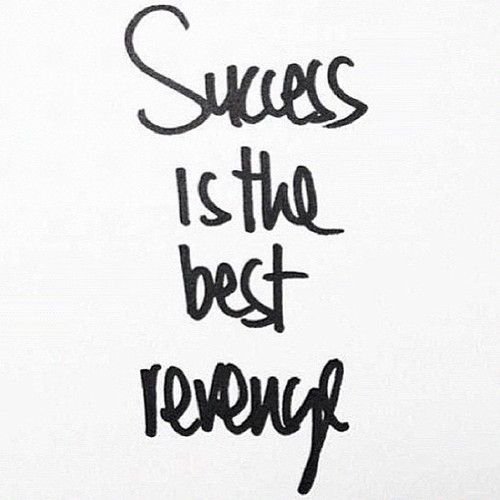
We’ve all heard the phrase, “don’t get mad – get even.” I think this example takes the concept to a whole new level.  Ultimately Gawker filed for bankruptcy so I suppose that Thiel achieved his objective. Thiel claims that his financing of lawsuits against the company was about deterrence rather than revenge. But that’s a bit hard to swallow. Several issues surface with this situation including whether or not it’s right for wealthy people to use lawsuits to attack free speech. But that’s a subject for others to discuss. The focal point for this blog is how we as entrepreneurs choose to react when we perceive that others have been unfair with us.

Undoubtedly we’ve all experienced a time when the Golden Rule was taken out of the drawer and used to beat rather than measure us. And when this happens our first instinct may be to fight the injustice that we’ve experienced. Thoughts cross our minds like, “we’ll sue,” or “let’s steal one of their clients or employees.” This is perfectly natural . . . and totally unproductive. Of course there are situations where it’s perfectly valid to take legal action. But doing so out of revenge or spite may not be in our best interest.

I’m making no judgment about Peter Thiel. But I know for myself that even a hint of vengeance in my persona is a very bad thing. Vengeance is nothing but negative energy which can lead to all sorts of undesirable consequences. Why take a chance on attracting illness, loss of relationships, financial hardship and other unfavorable outcomes because we dwell in the negativity of revenge? Instead, why not focus on the goals and objectives at hand and deny the temptation to wander down the payback path? Rather than looking for retribution, look to use the injustice as a powerful incentive to succeed.

The English philosopher Francis Bacon once said, “A man that studieth revenge, keeps his own wounds green, which otherwise would heal.” In other words, wallowing in revenge keeps reminding us of our negative experience. It crowds out other thoughts and feelings that might be the new idea we need or the solution to a problem we’ve been seeking. The pursuit of punishment and retaliation keep us stuck in neutral and prevents us from moving forward. Competition is tough enough these days – why allow our competitors to lap us while we are stuck in the metaphorical pit stop of vengeance?

As entrepreneurs we fortunately are able to make our own choices. Choosing not to accept the negative emotions that are associated with unfair or unjust treatment puts us that much closer to prize which we desire.

You can also listen to a weekly audio podcast of my blog. What you hear will be different than what you read in this blog. Subscribe on iTunes or wherever you get your podcasts. You can also click on this link – Click here to listen to Audio Episode 4 – The Anti-Bulldozer.

This blog is being written in tandem with my book, “An Entrepreneur’s Words to Live By,” available on Amazon.com in paperback and Kindle (My Book), as well as being available in all of the other major eBook formats.

Revenge

“No” Flippers

Here is a fascinating subject for all entrepreneurs (and everyone else for that matter). It’s the world of auto-antonyms with a focus on one particular word in the English language. What is an auto-antonym you ask? Don’t worry; you didn’t miss anything in school. Until I looked it up, I had no idea about auto-antonyms, sometimes called a contranym. Simple answer – it’s a word that can mean the opposite of what it appears to mean. Now that the picture is completely confused, let’s focus on the word . . . NO.

“No” seems like a pretty simple word to understand – right? Not so fast. In my world “No” can actually mean “Yes.” Let me explain. Remember when we were kids and we bugged our parents for something? Often times the default answer was “No.” But we became conditioned to realize that “No” could be changed to “Yes.” I remember a trip to Disneyland in Anaheim, California when I was five years old. There was one particular ride that I wanted to try as soon as I hit the park. My parents – in unison – said, “No” (emphasis not added). They reasoned that I was too young. But I continued to harangue them throughout the day and wore them down to the point that before we left the park that afternoon, they finally said, “Yes.” In fact I was too young for the ride and had no clue what to do – one of the attendants had to come and rescue me – but I was victorious in my quest to flip “No” to “Yes.” I guess that was the launch of my persuasive powers on the road to becoming an entrepreneur.

Too often, we hear “No” and accept it as gospel. We interpret the word as a form of rejection; feelings may be hurt, and we may become dejected and deflated. This next statement is very, very important. NO. DOES. NOT. ALWAYS. MEAN. NO. If we simply accept the word for what we think it means then it’s Strike Three and game over. But if we see “No” as the starting point for getting to “Yes,” there’s still a chance for extra innings. And who knows – we might win the game in the bottom of the 12th!

Entrepreneurs who hear “Yes” when they are told “No” are “No Flippers.” They understand that being told “No” just means that they need to become more persuasive and work harder to build their relationships. By doing so, they increase the odds of flipping the “No” answer to a “Yes” answer. When we are told “No,” we have a chance to zero-in and learn something. If we’re helping someone buy our product or service, it’s imperative that we find out why the other party has declined. By politely asking for feedback we might discover that a minor change in the product or service could result in a totally different outcome. Had we simply accepted the “No” answer, we might not have had the chance to make the tweak that led to a sale. Sometimes we are told “No” not because the other party doesn’t like us or what we are offering, but the timing isn’t right for them. This is where relationship-building is critical. We remain in touch and work to serve the relationship in whatever ways possible while staying in front of the customer in a positive manner. But remember – there’s a fine line between the obnoxious childish whining we did as kids to get our way, and doing what it takes to be in the right place at the right time to serve our customers.

I can’t begin to count the number of times I’ve been told “No” whether it was in raising equity from investors to acquire properties; securing a loan for an acquisition; negotiating the purchase or sale of a property, or trying to hire a particular individual to join our team. Maybe I’m just thickheaded, but when I hear “No,” it’s just a signal to step-up my game.

As entrepreneurs we need to become accomplished “No Flippers.” It may take a while and we will need to be creative, but eventually we’ll get someone to say “Yes.” Maybe it’s the person we have been trying to convince all along, or perhaps it’s someone else. We use the knowledge we gain from hearing “No” to make the changes necessary to get to “Yes” and achieve success.

You can also listen to a weekly audio podcast of my blog. What you hear will be different than what you read in this blog. Subscribe on iTunes or wherever you get your podcasts. You can also click on this link – Click here to listen to Audio Episode 3 – Visually Unimpaired.

This blog is being written in tandem with my book, “An Entrepreneur’s Words to Live By,” available on Amazon.com in paperback and Kindle (My Book), as well as being available in all of the other major eBook formats.
yes

The Anatomy of an Entrepreneur

As entrepreneurs exactly who are we? What makes us tick? Is there some sort of DNA gene that we can point to? I’ve thought a lot about some of the exceptional entrepreneurs I’ve known over the past four decades and have identified some of their traits and tendencies that stand out.

Let’s start with creativity and innovation. Entrepreneurs use their creative powers to innovate and find a better way to do something. Elon Musk has to be one of the most prolific entrepreneurs when it comes to innovation – Tesla Motors, SpaceX, Pay Pal and Solar City come to mind to name a few. Often, creative entrepreneurs are also visionaries. They have an uncanny ability to see into the future and understand what their customers will want and how their company needs to be designed to win. GoPro CEO Nick Woodman, is one of the foremost visionaries in America today. Who could ever have imagined a series of high definition video cameras that are small, durable and light enough to capture our daily adventures – daring and mundane? And successful entrepreneurs understand risk. Rather than taking risk they are adept at managing it.

When they get knocked down, great entrepreneurs get back up – over and over and over. They are amazingly resilient and don’t see failure . . . only opportunity. Walt Disney was fired by his employer, the Kansas City Star, because he supposedly lacked creativity. That didn’t seem to impact his storied career. When things don’t work out as planned they are flexible and know how to adapt and make the best of every situation. Top flight entrepreneurs are persuasive and can convince others to say yes. They do so through the power of their passion. Does Steve Jobs come to mind? Look what he convinced us to buy! Along with their persuasive powers, successful entrepreneurs are strong communicators in both verbal and written formats.

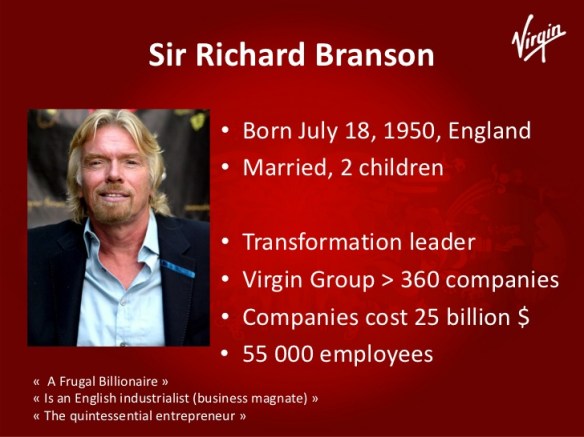
Entrepreneurs are assertive – the great ones are less aggressive than assertive. They have a healthy degree of empathy and are sensitive to the feelings of others. Entrepreneurs at the top of their game have a certain amount of charisma. They can be sociable and gregarious – even if those aren’t their core tendencies. Without charisma an entrepreneur will find it tougher to raise money, develop important relationships and influence others. Billionaire entrepreneur Sir Richard Branson is one of the most charismatic leaders on the planet. And he has woven his charisma into a tapestry of empathy and caring about other people.

Culture King is another descriptor for the cream-of-the-crop entrepreneur. Ben Chestnut is the founder and CEO of MailChimp fits into this category in the ways he has empowered the 500+ members of his team. Hand-in-hand with a strong culture is a smart entrepreneur’s ability to delegate. According to a 2013 Gallup survey of Inc. 500 CEOs, an average three-year growth rate of 1,751% was realized where the CEO had a high Delegator talent. Entrepreneurs typically have a high sense of urgency and tend to be very self-structured – there’s no way anyone is going to tell them what to do! Entrepreneurs simply don’t want to be a cog in someone else’s machine. Most entrepreneurs also have the ability to juggle many things at once and in fact need to feel the rush and excitement of pursuing multiple projects and initiatives simultaneously. Finally, ultra-successful entrepreneurs are generally positive and optimistic people. They don’t dwell on mistakes and never play the victim.

Remember the DNA thing I mentioned at the beginning of this blog? Well, there may be something to it. A February 17, 2016, research paper published in the Austin Journal of Molecular and Cellular Biology reported on the Dopamine Receptor D4 Gene and concluded that entrepreneurs have a higher tolerance for risk-taking in part, due to this gene (Link to research publication.). Apparently genetics govern approximately 30% of what makes one an entrepreneur. But that leaves 70% to a wide range of personality traits and tendencies.

There are many such traits and tendencies that are identified with entrepreneurs. No one person possesses them all, but the more to which we lay claim the closer we come to attaining world class status.

You can also listen to a weekly audio podcast of my blog. What you hear will be different than what you read in this blog. Subscribe on iTunes or wherever you get your podcasts. You can also click on this link – Click here to listen to Audio Episode 2 – The When Affliction.

This blog is being written in tandem with my book, “An Entrepreneur’s Words to Live By,” available on Amazon.com in paperback and Kindle (My Book), as well as being available in all of the other major eBook formats.

richard-branson-as-a-leader-4-728