
Unknown's avatar

About anentrepreneurswords

R. Lee Harris grew up in Manhattan, Kansas and has lived in the Kansas City area since 1977. A 1975 graduate of Kansas State University, Harris began his career with Cohen-Esrey, LLC as an apartment manager two weeks after he graduated. Now president and CEO, he is involved in apartment management, development and investment; construction and tax credit syndication on a nationwide scale. Over the course of his career Harris has overseen the management of more than 27 million square feet of office building, shopping center and industrial space and nearly 60,000 multi-family units. He has started dozens of business enterprises over the past 40+ years. In 1991, Harris wrote a book entitled, The Customer Is King! published by Quality Press of Milwaukee. In 2012 he authored the book, An Entrepreneur's Words to Live By. He has mentored a number of business people over the years and has been a long-time participant in the Helzberg Entrepreneurial Mentoring Program. He and his wife Barb have two grown daughters and one grandson. They are active in their church, community and university.

A Right Way and a Wrong Way

My cell phone rang the other day. The person on the other end started by introducing himself but did not speak clearly so I couldn’t catch his name. He immediately launched with a hearty, “Mr. Harris, how are you doing today?” This sort of greeting is always a warning signal for me that someone is going to try and sell something. Being a polite person I responded by saying that I was fine. Before I could say anything else he began reading from his script. He was peddling the most amazing product since the invention of the light bulb and it was going to save me millions of dollars . . . or something like that. This guy literally filibustered for more than 30 seconds without taking a breath. He obviously had a lot of practice doing this.

Does this sort of old school cold-calling really work? Perhaps it does to a point, but I question whether it is the most effective approach. Let’s examine all of the ways I found this conversation to be off-putting. #1 – Failure to speak clearly – the fact that he spoke so fast that I couldn’t understand his name was certainly not the right way to get started. #2 – Cliché greeting – asking how I was doing is incredibly trite and inauthentic. #3 – No need-determination – this was at the heart of his ineffective approach. He arrogantly assumed that I needed his product or service and made no attempt to validate this assumption. #4 – Reading from a script – I had no confidence that he understood what he was supposed to be selling. After listening to him tout his product for a while I finally interrupted him and said, “I’m not interested, thank you.” And then I hung up. I wonder how many times this happens to him every day?

This type of cold calling utilizes a classic high-pressure technique and I’m surprised that in today’s business world there are still companies (and sales people) who use it. Cold calling can be a thankless task yielding poor results except for a high degree of discouragement. Cold calling should be less about the product or service we are selling and more about building and collecting relationships that we can serve. The problem is that many companies still expect sales people to meet quotas and apply extreme pressure to sell, sell and sell. The alternative (and much more effective) approach is to call without making any attempt whatsoever to sell anything. Instead the call is to introduce one’s self and build a rapport with the customer. This process includes making an attempt to understand how the customer does business and to identify his points of pain.

I would begin a call like this by indicating that I’m not calling to sell anything. This statement is usually somewhat disarming and increases the chance for a customer to stay on the phone. Instead, I’m doing some research to learn more about how customers are dealing with a certain issue. If my product is inventory management software, I’m going to ask open-ended questions that get the customer to talk about what problems he might be experiencing with his current inventory management system. And I’m going to carefully listen to his responses and ask pertinent follow-up questions based upon what he has told me. I will not read from a script. Once I have a greater understanding about my prospective customer and his needs, I’m going to thank him for his time and hang up.

I’ll follow-up with a handwritten note expressing appreciation to the customer for his time. Very few people write notes anymore. I won’t send it by e-mail because I won’t stand out as much. I may wait several days and send him something relating to the conversation we had – perhaps it’s an article that is applicable to his situation. But I’m still not selling him anything. Instead, I’m working to build a relationship. By the time I call him again, he knows who I am. And there’s a reasonable chance that I’ve differentiated myself from the high-pressure cold callers he hears from every day. When I finally call him days or even weeks later to help him buy my product, it’s now a warm call.

Effective selling isn’t about the product we’re pushing. It’s all about the customer and his or her needs. And while this premise seems so basic, it’s not practiced extensively. Thus, when we take the personal approach rather than the product approach, we have a real opportunity to stand out from our competition.

This blog is being written in tandem with my book, “An Entrepreneur’s Words to Live By,” available on Amazon.com in paperback and Kindle (My Book), as well as being available in all of the other major eBook formats.

cold calling

The Personal Acronym

Almost every entrepreneur has heard about the acronym, SWOT. It stands for Strengths, Weaknesses, Opportunities and Threats. Typically the SWOT analysis is used as a corporate assessment. We gauge each of these areas relative to our own businesses and then create strategies to respond accordingly. But there is another application of the SWOT analysis that I’ve rarely (maybe never) heard utilized. And that is to perform a personal SWOT analysis. As the entrepreneur, it is a good practice to self-perform the SWOT. But it would also be enlightening to have a peer or trusted colleague do the same to gain an additional perspective.

We start this process by analyzing our personal Strengths. Are we strong leaders – if so, how is this demonstrated? Are we persevering? Do we have exemplary resilience in the face of adversity? Perhaps we have a strong innovative flair. Could we safely say that we are calm, patient, kind or generous? We should identify and assess the strengths that matter most.

Seeing our Weaknesses may not be so easy especially if we aren’t an introspective type. This may require help from that trusted colleague or a peer who isn’t afraid to tell it like it is. Do we have a temper? Does our ego ever get in the way? Do we always treat others with respect? Are we perceived to be of high integrity? Do we give up too easily? Maybe we have a tendency to lose focus.

Analyzing our Opportunities is an exercise in determining whether our glass is half empty or half full. Think about what we personally have the potential to do. Could we become more philanthropic? Is there a mentoring or coaching opportunity in our future? Do we begin speaking at industry conferences? Perhaps we could develop a new product or service. Ultimately this is about how we can become more fulfilled as human beings as well as becoming even more valuable to our enterprise.

Finally we must look at our Threats. Could our lifestyle be a threat to our health? Is there a lurking situation that could degrade our financial security? Does our mindset work for or against us? When we evaluate Threats in a corporate sense we generally are contemplating external pressures that we may think are beyond our control. As we consider Threats from a personal standpoint we find that most will be of an internal nature. We can be our best friend or our worst enemy.

Once we complete an honest and realistic personal SWOT assessment, we need to take the next step of creating strategies that bolster our Strengths; resolve our Weaknesses; take full advantage of our Opportunities, and eliminate our Threats. The ensuing plan can become the centerpiece for leading a balanced work and personal life. And revisiting it often will ensure its implementation.

A personal SWOT analysis can be an invigorating and exhilarating process. When done in concert with a SWOT for a company, the results can be a powerful catalyst for positive change in both the entrepreneur and his or her enterprise.

This blog is being written in tandem with my book, “An Entrepreneur’s Words to Live By,” available on Amazon.com in paperback and Kindle (My Book), as well as being available in all of the other major eBook formats.

SWOT-Analysis

Making the Distinction

There’s a lot of talk these days about mentoring. Many members of Generation X and Generation Y (Millennials) have told researchers that having a mentor is of high importance to them. As a Baby Boomer, I take great pleasure in being called upon to mentor other entrepreneurs. But as the CEO of our family of companies, I made the mistake of also thinking that I could be a mentor to some of the up and coming leaders in our organization. This realization has just recently become apparent to me and its subtlety is what tripped me up.

By my definition, a mentor is an advisor and nothing more. The mentee can take what the mentor offers and do with it what he or she wishes. A mentor typically has no “skin in the game” where the mentee is concerned. As a result, the mentor is able to freely dispense advice and opinions without an agenda. CEOs should not try to be mentors within their own companies. Why? Because they clearly have an agenda which is first and foremost shaped around what is in the company’s best interest. In my experience trying to be a mentor to a handful of leaders in our firm has not worked effectively. They are deferential to a fault because I’m the CEO. They listen to what I have to say differently than if I were outside the organization. For example, when I challenge them with a particular question or premise, they take it as gospel. The relationship of the CEO to any member of the team is going to be such that a true mentoring relationship will be very difficult.

So what is an appropriate role for a CEO to play in developing leaders within his or her company? I have found that becoming a coach is the right path to take. Let’s use sports as the metaphor here. The coach is a teacher. He/she may call the plays from the sidelines until a sufficient level of expertise and trust is developed with the players to allow them to call their own plays. A coach should be wise and compassionate; yet there are times when he may be appropriately demanding and exacting.

Gen Xers and Millennials are well-served to understand the distinction between coaching and mentoring. I believe that a future leader should have both. Find a mentor who is older and has plenty of experience outside the company. By building extensive relationships throughout the community, one can usually connect with someone who may be willing to serve in a mentoring capacity. Then, try and establish a coaching relationship with a superior inside the company, assuming that the individual has a coaching personality. Unfortunately this isn’t always the case with certain people in positions of authority who are insecure and have power issues. I submit that it is healthy for the organization to move away from the boss-employee mentality and develop an attitude of coach-player.

CEOs and members of their teams can be fulfilled by a healthy coaching relationship. And an outside mentor can be the icing on the cake.

This blog is being written in tandem with my book, “An Entrepreneur’s Words to Live By,” available on Amazon.com in paperback and Kindle (My Book), as well as being available in all of the other major eBook formats.

coach

To Proposition or Not To Proposition

The other day I was talking with an entrepreneur about his company. For a number of years he had achieved a reasonable level of success with the manufacture and sale of a particular product. But more recently his sales had trailed off and he was becoming worried. He made very telling statement, “the product is the same as it has been for the past 15 years – I don’t understand why people aren’t buying it in the quantities they once did.” Framed in this manner, the problem is obvious. But how often do we march on oblivious to the changes that are occurring around us?

I asked the entrepreneur to explain his value proposition, a question that was followed by silence. He admitted that he really hadn’t thought about it for quite some time (actually it had been several years). The bottom line was that his customers no longer saw the value in his product the same way as they had in the past. Tastes change. Competition is fierce. Customers can sometimes feel like they are being taken for granted. Unless we make an effort to continually understand why our customers buy our products or services, we aren’t in a position to make the tiny tweaks or major overhauls that are necessary to maintain our winning streak.

Conventional wisdom says that a value proposition is a promise of value to be delivered. Obviously there’s a lot more to it. A restaurant where we eat sometimes seems to be having a bit of a struggle with its value proposition. I suppose that the proprietor could say to me the customer, “You pay me money and I’ll cook your dinner.” Technically that’s a value proposition – but a pretty bad one. The website for this restaurant references “a special dining experience.” There are some other superlatives in the “About” section of the website, but nothing that would really grab you. There are a lot of little things about this place that demonstrate a lack of focus on a strong value proposition. The prime rib is fatty and gristly; the wait staff isn’t trained to make sure that a diner’s glass of tea or water is always full – even if it’s not their assigned table; likewise, empty plates aren’t cleared by the bus staff while guests are at the table (only by the primary server), and finally, service can be a bit slow at times.

A value proposition needs to reflect the culture of the organization. In the case of the restaurant previously mentioned, there doesn’t seem to be a culture of attention to detail. This restaurant probably gets 95% of the dining experience right, but doesn’t seem to care enough to nail that last 5%. If I owned the restaurant, I would re-tool the culture and become fastidious about the little things. My ultimate value proposition would be something like this: “Most restaurants can cook you a meal. We focus on that last 5% to make your dining experience 100% perfect.” Then I’d follow that with a further explanation – “your drink glass will never be empty; we select only the highest quality beef, pork, poultry and fish; our wait staff will always be looking for ways to serve you – regardless of whether or not it’s their assigned table.” Not only does this clearly state what value we’ll be delivering, but it also defines the points of differentiation with competing venues.

A good value proposition is clear, inspiring and differentiating. To avoid becoming irrelevant, entrepreneurs must continually review and refine their value propositions.

This blog is being written in tandem with my book, “An Entrepreneur’s Words to Live By,” available on Amazon.com in paperback and Kindle (My Book), as well as being available in all of the other major eBook formats.

old diner

Now What?

I recently was at the beach and watched seagulls flying across the water with large objects hanging from their mouths. Upon closer examination I realized that they had plucked seahorses from the waves. But they were struggling to eat them. To begin with, the seahorses were way too large to swallow. And there was no way for the gulls to tear them apart because seahorses have a tough armor-like skin. A few weeks later I watched another seagull flying with a large fish in its mouth while being chased by two more seagulls. Finally one of them stole the fish from the first (in mid-air!) but ended up dropping it in the water. The third retrieved it, landed on the beach and tried to swallow it – but the fish was too big.

All of this seagull activity got me thinking about an interesting issue that we entrepreneurs face from time to time. We often chase a piece of business that we very much want to win. Sometimes it’s a really, really big piece of business and we think to ourselves, “This may be way out of our league but why not give it a whirl? Maybe we actually could win!” Our pursuit of this business may be somewhat fanciful, but stranger things have happened and lo and behold we do win. OK, now what?

A number of years ago our apartment management business unit was pursuing a very large property management assignment. We had not previously done business with the prospective client, but the firm was well-respected in the industry. Months and months of relationship-building culminated in a “mystery” dinner with the client representative where we were told we were going to be awarded a large management contract. The client explained that a portfolio of apartments was going to be assigned to us but we couldn’t be told where the properties were located until right before we assumed management. The reason – the client was self-managing the properties and didn’t want the on-site or corporate office staffs to know about the management change until the day the company-wide announcement was to be made. We had also been told that the property assumptions would occur over a phased period of time – two or three months. When all was revealed we ended up with more than 3,000 units in 52 apartment properties scattered across the country. Oh, and they were dumped in our lap all at once with no phase-in. We were literally the dog that chased and caught the bus!

Needless to say, this assignment did not work well for us. It turns out that this client gave us all of the “dogs and cats” (tough properties) in its portfolio – so we were behind the eight ball from the beginning. Client expectations were unrealistic; our compensation did not begin to cover our costs, and our team was running ragged. After 18 frustrating months, we resigned the account at a loss of approximately $250,000.

What did I learn from watching the seagulls and my own experience? It’s very simple. It’s great to plan to catch a whale, but we must have a plan for what to do with the whale once it’s caught. There’s no question that the property management assignment I described overtaxed our resources. Unfortunately we had no idea how large the portfolio was going to be in the first place – we never should have put ourselves in that position. But as a quintessential entrepreneur I’ve often had the attitude, “Let’s just get the business and then we’ll figure out how to deal with it.” I’ve found that this approach is a great way to crash and burn. Pulling together the entire team for a series of planning sessions is paramount. Understanding how to scale our human and capital resources is vital. And sometimes we just have to say “no.” That’s pretty tough for an entrepreneur to do, but saying “yes” to the wrong opportunity could be extraordinarily costly.

Thinking big and pursuing big opportunities are part of our DNA as entrepreneurs. Comprehensive precision planning for the big wins paves the way for long-term success.

This blog is being written in tandem with my book, “An Entrepreneur’s Words to Live By,” available on Amazon.com in paperback and Kindle (My Book), as well as being available in all of the other major eBook formats.
seahorse

Hero or Not?

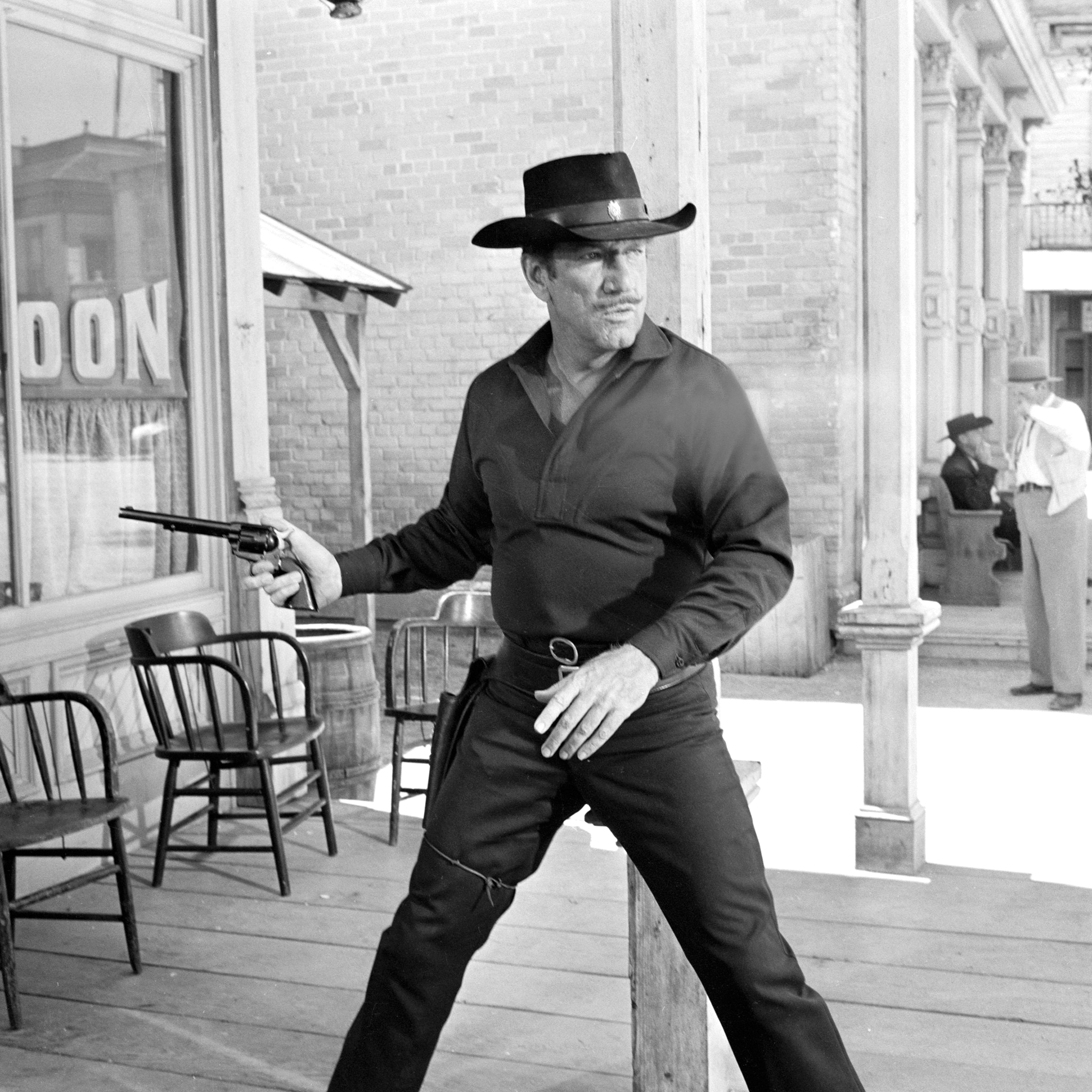
I grew up in an age where the hero of the day was a cowboy or someone like Superman. I think my favorite was a character named Paladin played by Richard Boone in Have Gun Will Travel TV western series that ran from 1957 to 1963. Paladin wore a black hat, but he was definitely a good guy. He took care of the bad guys with his cunning and his fast gun. He wore a stoic expression and generally solved the problems he faced by himself. You never saw him flinch. There were no high fives; no fist bumps; no complaints, and he was always the gentleman. Many of us grew up idolizing macho heroes of this sort.

Paladin is a wonderful metaphor for today’s entrepreneur. How many of us take the “never let ‘em see you sweat” approach and soldier on to the finish line regardless of the obstacles we encounter? I know that I certainly have felt responsibility for the hundreds of employees and their families that are integral to the success of our companies. And as a result, there have been times when I have sacrificed mightily to make certain that my colleagues are safe and secure. After all, isn’t that what a leader is supposed to do?

We entrepreneurs often spend more time working in rather than on our businesses. I will stand at the head of the line to admit that in the past I handled things that others could have been doing because I a) wanted to set a good example, b) figured that I could get it done more quickly than showing someone else how to do it, or c) wanted it done properly. After a while I began to wonder why everyone stepped back and let me do these things not realizing that the example I was setting was encouraging people to believe that I would handle it! I suppose at the time that there was a feeling of indispensability on my part. I needed to be in the middle of things to pave the way to victory.

So what did I learn following this path? I learned that no one saw me as “the hero.” They became reliant upon me and they also felt that I didn’t have confidence in them. Apathy became a real problem. The quality of work slipped because the “Lee will fix it – he fixes everything” syndrome was in full swing. I was burning out and not having as much fun as I had in the past.

As I’ve gotten older I’ve come to realize that if I really care about my team members and their families – and I really do – the most important thing I can do for them is to create a sustainable organization. Companies where the founder or key principal micromanages everything and strangles everyone are doomed to die when the leader retires or dies. I can’t bear the thought of that happening to the people I’ve worked with for decades. My solution has been to develop a culture of empowerment and coaching. I now spend time helping my teammates learn how to fish as opposed to doing the fishing for them. It’s my responsibility to hold the vision for our companies, but that has become a shared vision rather than just my vision. Delegation is a key element to sustainability and all team members now have clearly defined roles and accountabilities with training and resources devoted to helping them succeed.

Heroes come from the battlefield or burning buildings and not from the boardroom. Sharing responsibility is the best way to create a sustainable organization.

This blog is being written in tandem with my book, “An Entrepreneur’s Words to Live By,” available on Amazon.com in paperback and Kindle (My Book), as well as being available in all of the other major eBook formats.
paladin

Calamity Jane

What would you do if you were visiting in another city, fell and broke your front teeth? And what if it happened in the evening and on a weekend? Well of course you would try and find a dentist. Unfortunately though, it’s not that easy.

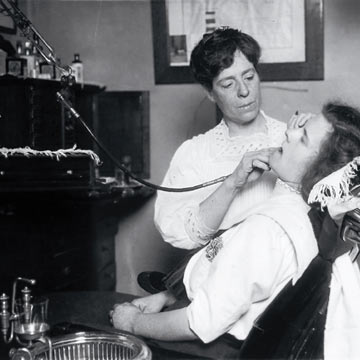
A friend of ours related the story of her friend who encountered this very calamity. She was carrying a platter of meat at dinner time from the common outdoor grill in the condo where she was staying, tripped on a step and did a face plant. In the process she broke her top teeth and actually pushed one of them back at a 45-degree angle. Needless to say, she was in a lot of pain. A dentist lived in the condo building but wasn’t home, so she began calling dental offices in the city. She made contact with approximately 30 practices – presumably it was answering service in each case. Only one dentist called her back.

He was a young man and told her to meet him at his office at 8:30 that evening. When she arrived he opened the office and proceeded to make the necessary dental repairs. She thanked him profusely and his reply was the clincher. “I only hope that if my wife was ever in another city and had this happen, that someone would help her.” I have no idea whether the other 29 dentists even were notified by their answering services so I’m hesitant to make any judgments here. Suffice it to say that she only needed one dentist to respond, and one did.

This dentist clearly displayed an attitude of service. While it may seem like a rather obvious thing, our perception of medical service providers as compassionate and caring isn’t always accurate. Actually, this can be said about most professions and industries. Too often in too many fields, practitioners are focused less on their customers and more on other objectives. Does this person have insurance? Will this person become a repeat customer? I’m busy. Someone else will handle this. I just finished a 12-hour day and I’m too tired. Get the picture?

At what point do we put the needs of the customer ahead of our own? Do we do this only when it is immediately profitable to do so? A lot of businesses apparently have adopted this philosophy. Or, do we believe in serving every customer, client, patient, etc. as we would want to be served? This is a very uncomplicated subject. We either serve or we don’t. It’s totally our choice. But there is a natural law at work here. For when we do good for others, good comes back to us in greater and greater abundance.

As entrepreneurs, the rewards are enormous for putting the needs of others ahead of our own. When service comes first the profits will be bigger than we ever could expect.

This blog is being written in tandem with my book, “An Entrepreneur’s Words to Live By,” available on Amazon.com in paperback and Kindle (My Book), as well as being available in all of the other major eBook formats.

Dentist

Zorro

Once upon a time there was a man who rode a horse, wore a mask and brandished a rapier. He was dedicated to helping the downtrodden and fiercely protected those upon whom bad men preyed. His name was Zorro! The legend of Zorro dates back to 1919 and was a movie and television show. I have fond childhood memories of this dashing figure – he was a fictional hero to many in my generation. Why? Because he stood up for his beliefs. What do you believe in more strongly than anything else? Have you discovered how you want to express this belief? Everyone should be Zorro at least once in their life and stand up for something in which they believe.

We don’t have to be radicals to stand up for that which we believe. It’s not necessary to march in a picket line or participate in a demonstration to accomplish this. The key is finding a productive and positive way to be a modern day Zorro. We start with truly understanding ourselves and our core values. What do we really care about? Why is this important?

I submit that there are three parts to discovering and acting upon that for which we want to take a stand. The first part is fact-based. Perhaps we have strong beliefs about the U.S. Constitution. Or maybe it’s the environment, the sick or the poor. It might involve entrepreneurship, politics, animals – the list goes on. Whatever it is, we need to do extensive research to develop our position. This fact-gathering process will help shape our beliefs in an intelligent manner. And we’re more likely to persuade others to understand and respect our beliefs if we can present a thoughtful fact pattern in support.

The second part in becoming Zorro involves emotional intelligence. It’s the fire and the passion that we have when we are in the belief-zone. But it goes a step beyond and allows us to manage our passion and emotions in a constructive manner. We use our emotional intelligence to maintain quiet strength and conviction, and thus we have “emotion for” our beliefs without becoming “emotional.” When we become emotional, we risk our credibility if others perceive that we are excessive in this regard. To persuade others to support our position, we must find just the right balance between facts and emotions. If there is too much emphasis on facts, others may not see our passion and are unconvinced. If there is too much emphasis on emotion, others may discount our position in similar fashion.

The third and final part in becoming Zorro focuses on how we take action. This requires planning and starts with determining what form of action will have the greatest positive impact on the largest number of people. Obviously we must scale our action plan to fit the resources we have available – time, treasure and talent. My wife and I are passionate about educating young people to become teachers. In 1999 we created a scholarship program for high school students that want to attend our alma mater and enter the education field. Not only have we made a serious financial commitment, but we also make it a point to get to know each one of our scholarship awardees and his or her parents. We also maintain contact during their college years and even beyond.

One of the factors in determining our action plan was the fact that a teacher touches and shapes the lives of many young people. When we did the math, we realized that over a period of many years we could make a difference in the lives of thousands of young people by helping educate teachers. One hundred teachers in the classroom for 20-years with a class size of 20 will educate approximately 40,000 children. After understanding the exponential nature of the numbers, it was a no-brainer to fund our scholarship program.

We should all take the opportunity to be Zorro at least once in our lives. By crystallizing our beliefs through facts, emotion and action, we can make the world a better place.

This blog is being written in tandem with my book, “An Entrepreneur’s Words to Live By,” available on Amazon.com in paperback and Kindle (My Book), as well as being available in all of the other major eBook formats.

zorro-image

Judgment Day

Most days are good days for me. Every once in a while I’ll feel a bit more intense and may have a tendency to behave in ways that are out of character for me. Recently I observed a situation that reminded me of how dangerous it can be to let my guard down in this way. Allow me to set the stage for this story.

We were vacationing with friends and enjoying breakfast in a small outdoor café. A mid-60s couple was sitting at a nearby table. The woman was seated next to a small ledge and unwittingly shifted her chair and toppled over backwards. Immediately my friend who was closest, jumped up and rushed to her assistance. With her glasses askew and an embarrassed look on her face, she got back on her feet with my friend’s help. Fortunately she was not hurt.

The focus of this story is not on the woman’s accident but on the husband and how he reacted. He just sat there. While my friend came to the rescue, the husband just sat in his seat drinking his coffee like nothing had happened. At one point he joked to his wife that she “looked like a circus clown.” Once she regained her composure, the woman left the café – smiling but humiliated. After a moment the husband looked at us and said half in jest, “Well, you sure made me look bad.” And then he left.

Now here’s the most instructive part of this episode. Once the husband was gone the café patrons were abuzz and angry. People couldn’t believe the husband had treated his wife this way. As she cleared the table, the server exclaimed, “He just sat there. I can’t believe he didn’t get up to help her!” I heard references to “jerk,” and “a**hole,” just to name a few.

This man was being judged by a jury of his peers and he was found guilty. He left a lasting impression on everyone in that restaurant and it was 100% negative. Just a single action. For all we know, this man might be one of the finest, most generous and thoughtful human beings on the planet. He might have just donated $100 million to build a new wing on the local hospital, and named it in honor of his wife. But at that moment in time, and without any other context, he was an ogre to his jury and will forever remain frozen in that image.

Most of us care about how others see us. We want to be viewed in a favorable light or at worst, in a neutral manner. The husband in this story obviously had enough self-awareness to realize he was wrong as evidenced by his statement that, “You made me look bad.” Unfortunately that comment probably sealed his fate for the onlookers. He chose to blame my friend for how others saw him rather than taking responsibility for his own poor behavior. I’d bet that if he apologized to his wife in the restaurant and admitted that he had a momentary lapse in judgment, the impression he left would have been different.

We all have momentary lapses in our behavior. But it’s important to take corrective action to repair the damage as quickly as possible. Failure to do so may result in an extremely harsh and lasting judgment by a jury of our peers.

This blog is being written in tandem with my book, “An Entrepreneur’s Words to Live By,” available on Amazon.com in paperback and Kindle (My Book), as well as being available in all of the other major eBook formats.

5.0.2

The Enemy?

Evil, dirty, underhanded, devious, conniving, despicable, dishonest, cutthroat, backstabbing, snobbish, arrogant, lying and cheating. These are terms I’ve heard applied to competitors over the last 40 years. Without a doubt I’ve missed some. What emotions are evoked when you think about your competitors? Some entrepreneurs I know have pure hatred for the competition and others display a great deal of fear. Why do we associate such negativity to our competition?

The amateur psychologist in me believes it has something to do with our childhood (don’t all of our issues?). On the playground we engaged in competitive duels involving kickball, dodge ball, four-square and other gladiator-like activities. Losers were vanquished with taunts and teasing. When we were older, competition for relationships with the opposite sex was intense. When a sought-after girl or boy chose someone else, we were crushed and dejected. Fast forward to today and it’s no wonder that we often see our competition as the enemy.

But do we really benefit from viewing our competitors in this manner? Competition is actually a wonderful thing. Let’s look at several of the reasons why.

  • Competition stimulates creativity and innovation. Every day we know that our competitors are working overtime to develop new products or services. To keep from being left behind we do the same. New discoveries are made out of this process that may generate greater profits and capture a larger market share.
  • Best practices emanate from a competitive environment. Let’s face it; we don’t have all the answers. So, observing how others do things and testing our approach accordingly can lead us to implement better systems and processes. Without competition what would be the incentive to improve?
  • An inefficient market is the byproduct of competition. Some competitors are stronger and some are weaker. If every competitor was equally strong how would anyone win? The concept of winners and losers is critical to a healthy yet inefficient market.
  • Hand-in-hand with the inefficient market theory is the opportunity for differentiation. This is good for the consumer and it’s outstanding for the entrepreneur. Why? Because we have the opportunity to create a level of variety that may appeal to more customers. It’s not just about “better;” it’s also about “different.” If every boutique sold the same black dress, doesn’t it stand to reason that a boutique selling a purple skirt might win a few more customers than the black dress sellers?
  • Competition helps to broaden the talent pool. It provides career paths for the workforce into which we as entrepreneurs can tap. We can create cultures where people want to work, giving them the chance to grow and advance their careers. And in the process we get to attract the best and the brightest.

For years we’ve enjoyed good relationships with our competitors. We view them with respect and in some cases, admiration. Other terms come to mind as well; friendship, collaboration, empathy and gratitude. Collaboration you say? Yes, we’ve often referred customers to our competitors when we couldn’t meet their needs and they’ve done the same for us. In 2008 a Maine portable restroom business owned by Jeff Bellino burned to the ground. Who came to the rescue? Bellino’s competitors! They provided portable restrooms, toilet tissue and chemicals so that he could keep going while he rebuilt his operation. Competition is at its healthiest when competitors have each other’s backs in a time of need.

When we embrace the notion of strong and healthy competition we enhance our chances for success. There’s no doubt that competition makes us better entrepreneurs in every respect.

This blog is being written in tandem with my book, “An Entrepreneur’s Words to Live By,” available on Amazon.com in paperback and Kindle (My Book), as well as being available in all of the other major eBook formats.

gladiators