
The Work-Life Balance Entrepreneur

We’ve all heard the constant drumbeat over the last several years about work-life balance. It’s the notion that we must find a healthy equilibrium between our work and everything else that is occurring outside of work. It’s an admirable and noble goal and certainly achievable . . . to a point. I don’t mean to burst the proverbial bubble, but there are situations where it just isn’t going to happen. Let me explain.

When I joined my company in 1975, we were a fledgling organization founded just five years earlier by an entrepreneur’s entrepreneur. We were scrapping and clawing our way to success. The competition was fierce, and we were in a “take no prisoners” industry. Back then you did whatever it took to win and keep business. I worked 100+ hours a week. I remember arriving at the office at 3:00 AM to get a head start on the day and would routinely see one of my partners leaving at the same time to go home and get a few hours of sleep before tackling it again later that morning. I still recall being at the office on New Year’s Eve at 11:30 PM working on an important proposal that had to be in the hands of a prospective client at 8:00 AM on January 2. We didn’t complain; we didn’t whine; we weren’t even aware of the term “work-life balance.” When our children were born, the juggling act became even more acute. I’m proud to say that I never missed any of my daughters’ school or sporting events though I know there were mad dashes at times to be present.

What would have happened if we had not worked the crazy hours and made the sacrifices along the way? There’s no way to know for sure, but I suspect that we would have missed opportunities and our company would not have grown and succeeded the way it has. Early on, I skipped vacations. I loved what I was doing, and my wife was immersed in her career. Did I feel like we were deprived of a more satisfying life at that point? No. I had a long-term view that if we invested heavily at the beginning of our lives, we eventually would be able to enjoy the fruits of our labor later in life. And this was not about “paying my dues” as a young whippersnapper. I never saw it as a climb up the corporate ladder. It was 100% about building a profitable business that was sustainable for the long haul.

Which brings us to the environment today. I’m thrilled that members of our team do not have to work 100+ hours a week. I’m ecstatic that members of our team can spend more time with their families and friends and have healthy interests outside of the business. But I can guarantee that if we were starting from scratch, someone would find it necessary to do exactly what we were doing in the 1970s and 1980s, and that is work long hours with a singular focus on long-term success.  

The bottom line is that in start-up situations, it’s going to be very difficult to experience today’s definition of “work-life balance.” If you are an entrepreneur and thinking about starting a business, I encourage you to not do so if you are unwilling or unable to make significant sacrifices to establish your enterprise successfully in the marketplace. You would be better off working for a company where someone else has already made those sacrifices that have led to a high level of achievement. Fortunately, my story is a happy one. I have been able to integrate multiple facets of work and personal interests into a wonderful and fulfilling life. I don’t compartmentalize work, philanthropy, family, friends, civic, etc. Everything blends together. But it would not have been possible had I (and others in the organization) not invested my time and talent in an extremely focused manner many years ago.

Work-life balance is possible in the right situation. For an entrepreneur desiring to launch a new endeavor there must be a recognition that there will be large sacrifices regardless of how smart one is able to function.

This blog is being written in tandem with my book, “An Entrepreneur’s Words to Live By,” available on Amazon.com in paperback and Kindle (My Book), as well as being available in all of the other major eBook formats.

Is the Grass Really Greener?

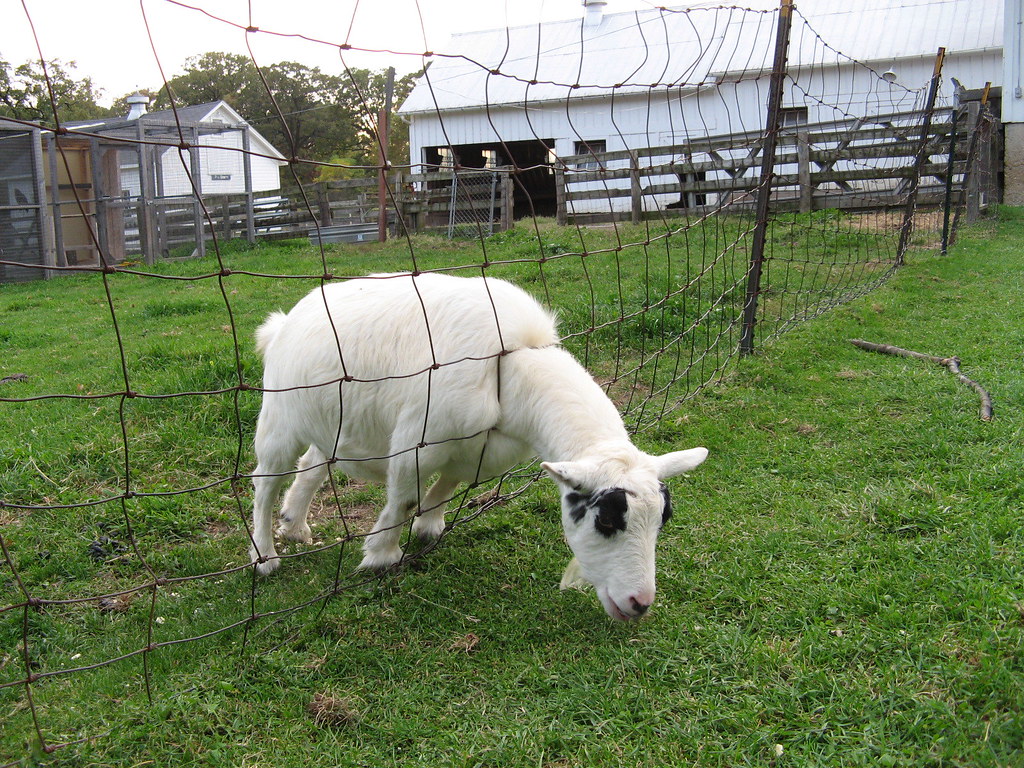
The U.S. unemployment rate is at its lowest since 1969. As I’m writing this, unemployment is hovering around 3.5%. Companies are becoming more and more creative in their recruiting efforts. From an employee’s perspective, times have probably never been better. There’s certainly a temptation to job-hop the way up the compensation ladder in the belief that an employer is going to be much more generous than would have been the case during the Great Recession and for many years thereafter. But the question must be asked, is the grass really greener on the other side of the fence?

Everyone knows that there’s much more to a career than a paycheck. Those who blindly chase the dollars may get what they want – but there may be a whole lot more than they bargained for. I know many people who were thrilled with the amount of money they were going to make only to find out that their new boss was ridiculously difficult, the stress levels were off the charts and working conditions were abysmal. Yet, it’s very tempting to jump at the chance to make a lot more money and pick up a cool new title. So, how should we look at the “grass” on the other side of the fence?

Over the past 48+ years, I’ve had numerous opportunities to make the jump. I resisted every time. Why? Long ago I realized that 1) I was working for and with honorable people; 2) I was allowed incredible freedom to be creative and experiment, and 3) I was working in an industry that I loved and had dreamt about since I was in the 8th grade. You’ll notice that nowhere did I mention money. The reason is simple. I was allowed to continually figure out how to add value to whatever I was pursuing, and my compensation increased accordingly. This approach is my suggested template for viewing the “grass is greener” dilemma.

I’ve always believed that most people work a job. A few pursue a career. And then there are those of us who are lucky enough to live our passion. I don’t think I’ve felt at any point in time (after the first three months in the mid-1970s) that I was working a job. For a while I was pursuing a career. But for most of my adult life I’ve been able to live my passion. This is important to understand for it’s one of the three foundational elements to answering the “grass is greener” question. Each of us must find our own passion to pursue, and the sooner the better.

Let’s assume that we generally know that we are in the right industry – yes, I know – that’s a big assumption to make. But we must start somewhere. This brings us to the other two foundational elements. Am I working for and with honorable people? There’s much more to this question than its literal interpretation. What is the company’s culture? Is there a vision of where the organization is heading? Are there core values that are more than slogans in a fancy frame on the wall? Are employees valued and treated fairly? Do senior leaders express gratitude? Do they seek out feedback; listen to it, and act upon it? No situation is going to be perfect. But if the environment is comfortable and efforts are constantly being made to improve, that’s a good sign that we are amid honorable people.

Finally, we need to measure how likely we will be to succeed over the long haul. In my case, I was pretty much allowed to make my own way. Sure, I had specific roles and responsibilities, but I always wanted to do more and be more. I saw a myriad of opportunities and developed plans to exploit them. I made plenty of mistakes – more than I can count. But I was allowed to make them and learn valuable lessons in the process. I always figured that if my successes exponentially outweighed my failures, I was on solid ground. And that turned out to be true. You’ve likely heard the adage, “the cream rises to the top.” If we are working for and with honorable people, we can always know that we earn more trust and more latitude through our performance.

Ultimately there’s no need to look at the grass on the other side of the fence so long as we can grow a lush, green lawn on our side. When we do this, we’ll surely reap the benefits accordingly.

This blog is being written in tandem with my book, “An Entrepreneur’s Words to Live By,” available on Amazon.com in paperback and Kindle (My Book), as well as being available in all of the other major eBook formats.
Is the Grass Really Greener?

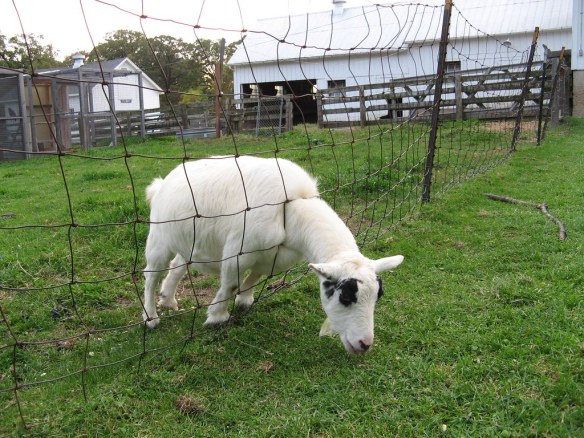
The U.S. unemployment rate is at its lowest since 1969. Companies are becoming more and more creative in their recruiting efforts. From an employee’s perspective, times have probably never been better. There’s certainly a temptation to job-hop the way up the compensation ladder in the belief that an employer is going to be much more generous than would have been the case during the Great Recession and for many years thereafter. But the question must be asked, is the grass really greener on the other side of the fence?

Everyone knows that there’s much more to a career than a paycheck. Those who blindly chase the dollars may get what they want – but there may be a whole lot more than they bargained for. I know many people who were thrilled with the amount of money they were going to make only to find out that their new boss was ridiculously difficult, the stress levels were off the charts and working conditions were abysmal. Yet, it’s very tempting to jump at the chance to make a lot more money and pick up a cool new title. So, how should we look at the “grass” on the other side of the fence?

Over the past 44 years, I’ve had numerous opportunities to make the jump. I resisted every time. Why? Long ago I realized that 1) I was working for and with honorable people; 2) I was allowed incredible freedom to be creative and experiment, and 3) I was working in an industry that I loved and had dreamt about since I was in the 8th grade. You’ll notice that nowhere did I mention money. The reason is simple. I was allowed to continually figure out how to add value to whatever I was pursuing, and my compensation increased accordingly. This approach is my suggested template for viewing the “grass is greener” dilemma.

I’ve always believed that most people work a job. A few pursue a career. And then there are those of us who are lucky enough to live our passion. I don’t think I’ve felt at any point in time (after the first three months in the mid-1970s) that I was working a job. For awhile I was pursuing a career. But for most of my adult life I’ve been able to live my passion. This is important to understand for it’s one of the three foundational elements to answering the “grass is greener” question. Each of us must find our own passion to pursue, and the sooner the better.

Let’s assume that we generally know that we are in the right industry – yes, I know – that’s a big assumption to make. But we must start somewhere. This brings us to the other two foundational elements. Am I working for and with honorable people? There’s much more to this question than it’s literal interpretation. What is the company’s culture? Is there a vision of where the organization is heading? Are there core values that are more than slogans in a fancy frame on the wall? Are employees valued and treated fairly? Do senior leaders express gratitude? Do they seek out feedback; listen to it, and act upon it? No situation is going to be perfect. But if the environment is comfortable and efforts are constantly being made to improve, that’s a good sign that we are in the midst of honorable people.

Finally, we need to measure how likely we will be to succeed over the long haul. In my case, I was pretty much allowed to make my own way. Sure, I had specific roles and responsibilities, but I always wanted to do more and be more. I saw a myriad of opportunities and developed plans to exploit them. I made plenty of mistakes – more than I can count. But I was allowed to make them and learn valuable lessons in the process. I always figured that as long as my successes exponentially outweighed my failures, I was on solid ground. And that turned out to be true. You’ve likely heard the old adage, “the cream rises to the top.” If we are working for and with honorable people, we can always know that we earn more trust and more latitude through our performance.

Ultimately there’s no need to look at the grass on the other side of the fence so long as we can grow a lush, green lawn on our side. When we do this we’ll surely reap the benefits accordingly.

This blog is being written in tandem with my book, “An Entrepreneur’s Words to Live By,” available on Amazon.com in paperback and Kindle (My Book), as well as being available in all of the other major eBook formats.
Perceptive Passion.

Question: Why is it that many entrepreneurs seem so animated about what they do?

Answer: There’s no doubt – entrepreneurs are a different breed of cat. Successful entrepreneurs somehow seem to live in a “zone.” Things always seem to go right for them. It’s almost like they have a sixth sense about everything. How does this happen?

It’s all about perspective. Some people see what they do for a living as a job. Others see it as a career. Successful entrepreneurs live it as a passion. Their vocation may have started out as a job and progressed into the career phase. But somewhere along the line something clicked and it became a passion. I remember when I graduated from college and went to work for the firm that I’m still with. My first position was a job and I hated it. But I was intrigued enough to stick with it and before long it became a career. I knew it was what I wanted to do for a long, long time. This was followed by years of toil, angst and stress – certainly not the most fun period of my life. Then it was as if the clouds parted and the sun began to shine.

For me the difference was the realization that I was actually living the dream I always had. My creativity level was off the charts and I was truly having a lot of fun. I never sought the passion I was feeling, but gradually it was just there. Today I understand that it was all about mindset. Had I willfully focused on changing my perspective I might have succeeded in reaching the passion stage much sooner. I’m lucky that the gradual shift in my mindset occurred. I wonder how many would-be entrepreneurs never achieve this gradual shift.

Intentionally changing your perspective is the key to moving past job and career and into a state of passion about what you love to do. This means understanding that everything you experience can build toward the good you desire. Look for the silver linings. Look for opportunities. Dwelling on what may seem negative is a passion killer. Use these situations as a challenge to learn perseverance and problem-solving. And this will lead to the silver linings and opportunities.