
The Macho Entrepreneur

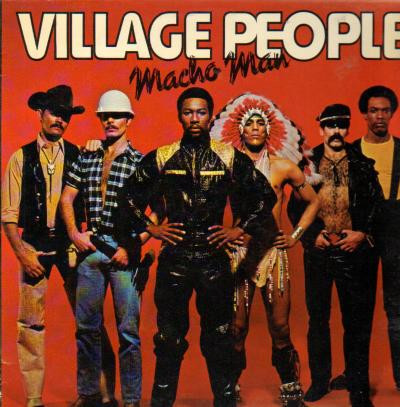
Just about everyone has heard the 1978 song called “Macho Man” by the Village People. The first verse goes like this:

“Every man wants to be macho macho man. To have the kind of body, always in demand. Jogging in the mornings, go man go. Work outs in the health spa, muscles glow. You can best believe that he’s a macho man. Ready to get down with, anyone he can.” Ugghh. I never did like that song. Usually, this term refers to the male species and generally speaks to “showing aggressive pride in one’s masculinity,” according to one dictionary. The word is often associated with “machismo” which introduces the concept of self-reliance. I’m going to take some liberties here and loosely use the term as it relates to entrepreneurs – male and female.

Allow me to paint a picture of the Macho Entrepreneur. This individual is scrappy and passionate about his or her endeavors. The Macho Entrepreneur is driven to excel – a real Type A personality. Hard-charging and brimming over with ideas, this person sometimes has a mindset of “if you want it done right, you must do it yourself!” The Macho Entrepreneur is not going to let anything stand in his or her way to achieving success and will always “die trying.” Do you know anyone who displays these traits and tendencies? This used to be my self-portrait though I think I’m in more of a “recovery” mode at present. 

The Macho Entrepreneur means no harm and thinks he or she is being noble by modeling strong-willed behavior and commitment. But there are inherent pitfalls in this approach that don’t promote the notion of building a team and ultimately a sustainable organization. When I was much more inclined in the macho mode, I received feedback that some people felt it was my way or the highway. I have a high level of ego-drive which when translated, means that I want to persuade anyone and everyone to see things my way. And my enthusiasm could sometimes come across to others like a steamroller. I was somewhat of a perfectionist – even when it made no sense to be so – which is a result of some obsessive-compulsive tendencies on my part. Finally, I’ve always been inclined to keep calm and “never let ‘em see you sweat.”

Here’s what I’ve learned. Being a Macho Entrepreneur is dead-end. Well, maybe it’s more of a cul-de-sac because one can turn around and exit the behavior and take a new path. Regardless, the macho traits really don’t lead to building a successful organization. Trust me on this because I’ve lived through it all from start to finish. So, what’s the alternative?

I’ve said it many times – we must have the right people on the bus. These are people who share our values and have passion for what they do. This is critical because they will be motivated only if they understand our vision of the future and how they fit into the process of getting there. When we know we are surrounded by the right people we are more inclined to delegate. We don’t have to do it all ourselves. And we understand that while others may do some things differently than we might have, empowering them is even more important. If the ultimate objective is achieved in an efficient manner with integrity, we agree that allowing some latitude is a healthy thing. This gets us to the point of allowing others to make decisions. I once heard an entrepreneur say that he only wanted to make four decisions a year – four major decisions! This forced him to delegate decision-making and truly trust his team.

Discarding the Macho Entrepreneur label also means collaborating with others. This sends the signal that their opinions are valued and desired. And believe it or not, many members of our respective teams have some pretty good ideas! What comes next? We get to celebrate the success of others which reinforces the notion that they can make decisions and move the organization forward. Finally, we learn how to be a coach rather than command. No longer is coercion a necessity or an option (it probably never was). We help our team members look at the different possibilities and work through a process of determining the right approach to achieve the desired outcome.

Our lives and our organizations will be richer and more rewarding when we figure out how to transform away from being the Macho Entrepreneur. We accomplish this by surrounding ourselves with the right people who understand and share our vision; to whom we can delegate decision making and promote collaboration, and who we can coach and ultimately celebrate their victories.   

This blog is being written in tandem with my book, “An Entrepreneur’s Words to Live By,” available on Amazon.com in paperback and Kindle (My Book), as well as being available in all of the other major eBook formats.

The Empathetic Entrepreneur

Building a successful business requires human interaction at many levels. We’ve all seen the stereotypical entrepreneur who is moving fast and speaks in a short-clipped manner. He (or she) is the picture of efficiency and wastes little time in getting down to brass tacks. Sometimes this entrepreneur can be seen as brash and even a little bit arrogant. He (or she) often wears this description as a badge of honor. This might be a typical conversation with a member of the team. “Matthew, this is not your best work. It’s sloppy and totally misses the mark. You can and must do better. I’m very disappointed in you.” The entrepreneur might see this as brutal honesty. But is it productive?

Carol Burnett talks about her storied career in show business. She reminisces, “Back in the day, the men – Jackie Gleason, Sid Caesar, and Milton Berle – if they said: ‘Hey guys, this sketch sucks. Get with it! What’s the matter with you?” They were fine because they were guys. But if a woman did it, she would be labeled a bitch. So, I tap-danced around it a lot.” Burnett went on to say, “If a sketch wasn’t working, I’d call the writers down to rehearsal and I’d say, ‘can you help us out here? I’m not saying this right. Maybe you could come up with a different line that would make it easier for me to get a laugh.’”

In his book, The Culture Code, author Daniel Coyle introduces a concept that makes a lot of sense for entrepreneurs to adopt. He contrasts Brutal Honesty with Warm Candor. Warm candor is the notion that we can still make our point – very clearly – without causing another person to feel small and unworthy. Feedback can be delivered without tearing down that person in a de-motivating manner.

How do we move toward a more “Carol Burnett-style” of offering warm candor and not be namby-pamby about the message we want to deliver? I believe it starts with our everyday personality. Are we generally positive and upbeat? Are we always looking for good in every situation? Do we acknowledge others and give them pats-on-the-back when they are deserved? Or are we generally assaholics who are negative about everything and complain incessantly? Are we such perfectionists that nothing is ever right . . . and our team members know it?

If we embrace the positive personality previously described, candid conversations with members of our team can be very constructive. I rarely ever tell someone I’m “disappointed” in him or her. If I do use the term, it’s that I’m disappointed about something – but not in that person. There are other key words and phrases that are unnecessary. Attacking someone personally may seem like brutal honesty, but it’s just mean-spirited and serves no purpose. I’m not looking for a confrontation. I simply want to provide feedback that is factual and will help my team members do better next time. I try to communicate with empathy. If after multiple attempts to coach the individual on how to step-up and there is still no progress, then I have no problem starting the transition process for this team member to exit the organization. But there’s no reason that I can’t always show a level of respect that allows the team member to maintain his or her dignity.

Building strong and positive relationships with our co-workers and colleagues allows us to effectively use the “entrepreneurial two-by-four” of warm candor when warranted. Purity of intention is critical. We all know entrepreneurs who prefer to act like “bosses” and want to be seen as big shots. Their deployment of brutal honesty is not so much about team member growth as it is demonstrating their dominance. These so-called leaders do not understand the value of connection and creating an environment of safety. Their team members live in fear of being singled out and ridiculed. True leaders go the extra mile to create a nurturing culture that sees mistakes not as failure, but as unfinished experiments in the laboratory of life.

Honesty and candor are vital ingredients to the success of an entrepreneurial endeavor. Delivering them in an empathetic and constructive manner will seal the deal.   

This blog is being written in tandem with my book, “An Entrepreneur’s Words to Live By,” available on Amazon.com in paperback and Kindle (My Book), as well as being available in all of the other major eBook formats.

The “Eliminator” Entrepreneur

What do you think of when you hear the word “elimination?” Does it have a positive or negative connotation? What could “elimination” possibly have to do with entrepreneurship? Is it a sinister plot to get rid of the competition? Happily, “elimination” is a very positive concept for entrepreneurs. Let me explain.

Nature has installed a regular elimination process within our bodies. We eat and drink foods and liquids which provide nourishment. But not all of what we consume is useful and our system eliminates this as waste. If this elimination process did not exist, we would eventually become so bloated we would explode – or at least that’s my speculation!

I read a staggering statistic recently. Apparently, the National Science Foundation published a paper in 2005 stating that the average person has between 12,000 and 60,000 thoughts per day! The paper went on to say that 80% of our thoughts are negative and 95% of them are repetitive. If true, this is astounding. It’s no wonder that the older we get, the harder it seems to remember things – it’s probably because our minds are so cluttered with the cumulative effect of our thoughts.

So, what does this mean for us as entrepreneurs? Having a fresh mind that can think clearly is paramount to our success. And of course, mental clutter and negative thoughts impede our creativity. If 80% of our thoughts are truly negative, we are living in a danger zone when it comes to flourishing entrepreneurship. It’s one thing to acknowledge that we need to change our mindset. But that is easier said than done. After years of “practice,” negative thoughts may come naturally to us.

The answer is to embrace a process of elimination. The first step is to realize when negative thoughts have crept into our consciousness. Keeping a “thought journal” for a few days might be helpful in this regard. Every time we have a negative thought, we write it down in our journal. In a short period of time, we will become very mindful of our thought patterns and identify the triggers for negative thinking. The second step is to eliminate negative thoughts. This might be accomplished in a symbolic way by taking the negative thoughts we’ve transferred into our journal, then tearing out the page at the end of the day and burning or destroying it in some manner.

Because nature abhors a vacuum, the elimination of negative thoughts will create a void into which we can pour positive thoughts. A few that come to mind are gratitude, enthusiasm, optimism, exhilaration, confidence, and fulfillment. It’s these positive nuggets that will provide us with the “entrepreneurial energy” to reach the pinnacle of success. Just remember that the elimination process is just as important as the positive thoughts we think. Without elimination, the negative thoughts of fear, lack, limitation, envy, jealousy, hurt and unworthiness, continue to hang around and fester. They make it that much harder to usher in the positive energy that allows us to thrive. The bottom line is that we must be very intentional about the process of elimination.

There’s one more thing we can do that will physically reinforce the notion of elimination to make way for greater good in our lives. If you are like me, we have all sorts of “stuff” that has accumulated over the years – material things in our garages, attics, basements, storage sheds – you name it and it’s probably there. While cleaning out these areas may not be our idea of a fun Saturday project, it certainly can be therapeutic when we see it working in tandem with eliminating negative mindsets. And it never ceases to amaze me that I save some of the darnedest things. For example, I received a monthly financial publication for decades and saved every one of them. I guess I figured that I might go back and look at them at some point in the future. Except that I never have – not one single time. And now all that information and more is easily available on the Internet. So, I found it somewhat liberating to get rid of all these magazines (and my house is less of a firetrap to boot). The point is that eliminating unneeded physical possessions is an act that supports the elimination of unneeded and unwanted thoughts of the mind.

Entrepreneurial energy can be gained when we intentionally practice the process of eliminating negative thinking. Then the creativity and positivity that flows into the void will help propel our success like rocket fuel. 

This blog is being written in tandem with my book, “An Entrepreneur’s Words to Live By,” available on Amazon.com in paperback and Kindle (My Book), as well as being available in all of the other major eBook formats.

The Money-Trapped Entrepreneur

There are many motivating factors for becoming an entrepreneur. Some of us want to be in control of our own destiny. Others are overwhelmed with passion for a particular idea. And still others want to change the world. As we embark upon our entrepreneurial journey it’s important that we understand exactly what is motivating us to do so. Are we seeking recognition; do we want to build something important; do we desire to express greater creativity, or do we want to become wealthy? Likely our motivation is a combination of a number of these factors and even others not mentioned here.

As we contemplate our motivations there’s something else that is very important for us to consider. I’m going to call it the Entrepreneur’s Trap. It could also be called the Money Trap. The thesis goes something like this. An entrepreneur – let’s call him Dylan – wants to start a business. His friends ask him why and he professes that he has a novel idea that will make a real difference in the world. He doesn’t fit the corporate environment and has always wanted to be his own boss. These friends along with members of his family shower him with accolades for the purity of his motivations and encourage him to take the plunge.

What Dylan doesn’t tell anyone is that he really believes he can make a ton of money. He wants a massive mansion and a 70-foot yacht on an exclusive beachfront somewhere in the world. In fact, he may be suppressing this urge and trying to fool himself into believing that wealth and materialism really isn’t his main motivation. And of course, if he were to state publicly that he wants to become filthy, stinking rich, he would be viewed in a negative light by his friends and family.

Let’s get one thing straight. There’s absolutely nothing wrong with the desire to amass great wealth. An entrepreneur who denies that making money is a motivating factor may struggle to succeed. Why? Because driving profitability is vital to the survival of every company. The investment of capital and time along with the inherent business risks deserves a return. Where it goes off the rails is when wealth and materialism is the ultimate objective. On the other hand, if achieving wealth and materialism is a means to a bigger end, the calculus is healthy.  

What does all this mean in a practical sense? If Dylan is obsessed with making money so he can build his massive beachfront mansion and buy the 70-foot yacht, he may become quickly frustrated when he misses his profit forecasts early on. He may lose patience just when it is needed the most. Certainly, there are examples of instant wealth that can be cited. But often, creating and building wealth is a marathon, not a sprint. The quest for being a “one percenter” can be fraught with other baggage. There may be an inclination to take shortcuts that are deficient in integrity or even legality. And how exactly do we build an organizational culture that is solely about making money for the entrepreneur? That’s certainly not a very inspiring mission for a team.  

I’ve written and said before that earlier in my career I was more inclined to worship the almighty dollar. But it seemed that the more I chased it, the more elusive it was. As I grew older and more mature my focus changed. There’s no doubt that wealth accumulation was still important, but it wasn’t my singular focus. Eventually my wife and I determined that we wanted to build wealth for the purpose of giving it away. Thus, was born the notion for us that generating wealth through entrepreneurship was a means to a bigger end. In our case, we established a family foundation with a mission and a purpose that will eventually provide funding for our preferred charitable causes after we are gone. But we aren’t waiting until we’re dead and buried to start this process. In 1999 we launched a scholarship program to help young people with their college expenses who aspire to become teachers. Not only do we know that in the future our financial assets will be directed to doing good work, but we get to witness the difference it makes right now while we are still alive.

We can avoid the Money Trap by using wealth and materialism to a bigger end. When we focus on that greater calling – whatever it may be – wealth will become a healthy result.

This blog is being written in tandem with my book, “An Entrepreneur’s Words to Live By,” available on Amazon.com in paperback and Kindle (My Book), as well as being available in all of the other major eBook formats.

The Opportunity-Driving Entrepreneur

There’s a Netflix series that I used to watch entitled, “Better Call Saul.” It’s about a scummy low-life ambulance-chasing Albuquerque lawyer named Jimmy McGill. Spoiler alert – in one episode, McGill becomes a minor celebrity when he rescues a man hanging from a billboard. A wealthy eccentric rancher sees the local newscast video of the rescue and calls McGill for a meeting. The rancher proceeds to announce that he and his multi-thousand-acre ranch are going to secede from the United States. He needs a lawyer and offers Jimmy $1 million to handle the case – $500,000 up front and the other $500,000 when secession is final. You can see McGill sitting in the rancher’s living room – about to burst into a massive happy dance. The rancher goes to his safe and brings back a tray with bricks of 100-dollar bills. Wait for it . . . when McGill looks at one of the bricks, the bills are emblazoned with the face of the rancher! Perfectly legal tender portends the rancher, in his newly formed country. The scene ends with McGill driving away from the ranch in his beaten-up two-tone Suzuki Esteem.

You may be wondering what this television episode has to do with entrepreneurship. Jimmy McGill was clearly “opportunity-driven.” In other words, opportunity knocked, and he answered. You may also be wondering what’s wrong with this – why wouldn’t every entrepreneur grab opportunity as they emerge? And that’s just the problem. Being opportunity-driven is effectively allowing external factors to shape our businesses and lives. Sometimes we win and sometimes we end up with a brick of fake 100-dollar bills.

There’s a great temptation for young organizations (and young people) to “grab” opportunities as they see them. This is certainly understandable. Perhaps we don’t have a lot of traction or credibility yet and need to pay the bills. The entire career of many entrepreneurs is stuck in the opportunity-driven mode. I call it the “Jim Rockford $200 per day plus expenses” approach. Those of you old enough to remember James Garner’s Rockford Files television series from 1974 – 1980 can relate to this. As a private investigator, Jim Rockford would do anything (mostly legal) for $200 per day plus expenses. I loved that show, but it taught me a great lesson – the lesson of personal limitation. Rockford would pretty much take any case that came his way and limited himself to a fixed amount of compensation and lived hand-to-mouth in a trailer on the beach.

There is another way. It’s called “opportunity-driving.” The difference between being opportunity-driven and opportunity-driving is rooted in strategy. The entrepreneur that is opportunity-driving is operating on a very strategic basis. He or she has a winning aspiration; knows where to play; knows how to win; has developed core capabilities and resources and has created the necessary systems and processes.Utilizing this approach, the entrepreneur is focused on creating opportunities that fit the strategy.

I can relate this concept to my own business interests. In the earlier days of our organizational evolution, we would take pretty much any business that dropped in our lap. Our property management operation handled all sorts of properties – apartments, condominiums, office buildings, shopping centers, industrial facilities, and even a golf course at one point in time. We rationalized accepting assignments of all types by positing that we were in the property management business. It’s true that we developed enough critical mass with these various types of properties, but I know for a fact that not all the business was profitable. In fact, we lost money on certain assignments. We also claimed that we were taking assignments to develop relationships that could grow into something bigger and yes, profitable. Occasionally that happened. Often, it didn’t.

Today, we are much more targeted with what we do. Our different business units are disciplined in handling projects that are strategically aligned. And yes, we once again were involved with a golf course, but only because it came with the 612-unit apartment community that we acquired as part of a strategic initiative. Fortunately, we found a competent operator to whom we contracted the golf course operations since this specialty is outside our wheelhouse.

Being an opportunity-driving entrepreneur will almost always produce better results than being opportunity-driven. To accomplish this, we must be strategic and disciplined.

This blog is being written in tandem with my book, “An Entrepreneur’s Words to Live By,” available on Amazon.com in paperback and Kindle (My Book), as well as being available in all of the other major eBook formats.
THE ROCKFORD FILES — Pictured: James Garner as Jim Rockford — (Photo by: Fred Sabine/NBC/NBCU Photo Bank)

The NPS Entrepreneur

Every entrepreneur understands how critical it is to take care of the customer – that’s old hat. We know that unhappy customers will cause our businesses to suffer. This fact has been magnified by social media and how a few damaging reviews can really cause severe and long-term problems. If your organization is like ours, you regularly send out customer satisfaction surveys. Much time is spent parsing the verbiage and trying to determine exactly the right questions to ask. All this is fine and good – we need to ask several questions to better understand who our customers really are and what they prefer. But how do we get an overall handle on exactly what our customers think about us and our product(s)? Enter the NPS.

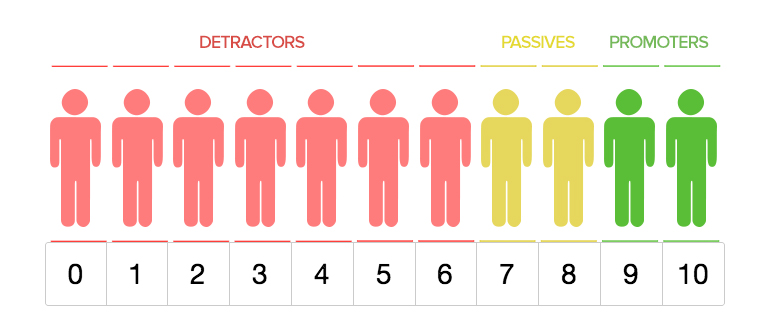
OK, you are probably wondering what NPS means. It stands for Net Promoter Score and is a tool that measures customer loyalty. The Net Promoter Score was developed in 2003 by Fred Reichheld, the private equity firm Bain and Company and Satmetrix (and is also a registered trademark of these individuals and companies). It is based upon the theory that our customers are either detractors or promoters. A detractor is unhappy to the point that they can drive away other customers. Promoters do just the opposite. The NPS is calculated based upon the response of a single question, “On a scale of 0 to 10, how likely are you to recommend this company’s product or service to a friend or a colleague?” The numerical answers to this question become an index ranging from -100 to +100. A raw score of six or less puts the respondent in the Detractor category. Passives are those who give a score of seven or eight. And Promoters give a score of nine or ten. The NPS is calculated by subtracting the percentage of Detractor respondents from the percentage of Promoter respondents (Passives are disregarded). Generally, an NPS of +50 or greater is considered outstanding.

In January 2018, our companies implemented the NPS. It’s fascinating how focused we have become on trying to move the number. Incentive compensation plans can be tailored to include the NPS – especially for team members who are able to greatly influence customer satisfaction. What we’ve learned is how very important it is to have as large a survey response as possible. Sending out 500 surveys and generating 15 responses that lead to an NPS of +60 may be very misleading. Smart companies have figured out techniques to boost the number of responses including drawings for prizes and continuous follow-up with the customer until a response is rendered.

For the NPS to be most effective, customers need to be identified when responding to a survey. This does present a bit of a dilemma as some customers are reluctant to share their true feelings when a survey is not anonymous. But the value of being able to follow-up and resolve issues that may have been encountered by the customer is well worth the extra effort to solicit responses for non-anonymous surveys. The goal is to ultimately convert Detractors and Passives into Promoters.

Hundreds of large companies including Delta Airlines, Southwest Airlines, Citigroup, Best Buy, Sony, GE, Apple, American Express, Four Seasons Hotels and AT&T are using the NPS. A large percentage of entrepreneurs with whom I’ve spoken are unfamiliar with NPS. Having a universal methodology to measure customer satisfaction and enable “closing the loop” with the customer does not have to be limited to the big boys in the business world. And software is available that can help take the NPS question from survey results and calculate a running score.

This is a new journey for us and we’re still working to get “buy-in” from all our team members. One of the advantages of NPS implementation is that everyone can see the difference they make – positive or negative – with customer satisfaction. If the product is defective, the bathroom in the store is dirty, or the service is sloppy – all can show up in the survey results. The “weak link” in the chain may drag down the score from nine or ten to a six. We expect accountability from peer pressure will improve over the next few months and years.

Our customers are the lifeblood of our businesses. We can become more precise at measuring their satisfaction with our products and services by utilizing the Net Promoter Score.

This blog is being written in tandem with my book, “An Entrepreneur’s Words to Live By,” available on Amazon.com in paperback and Kindle (My Book), as well as being available in all of the other major eBook formats.
The Mobbed-Up Entrepreneur

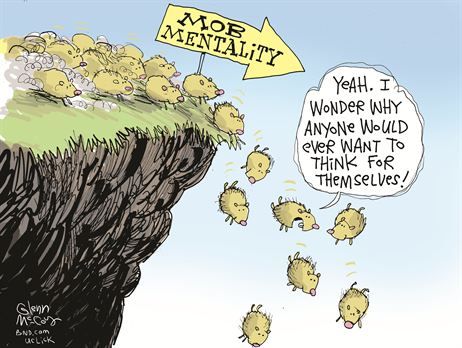
Entrepreneurs should do everything possible to avoid the Mob. If you are thinking the Mafia or La Cosa Nostra, that’s not what this is about. Our society is currently experiencing a phenomenon that I call the Mob Mentality. And there’s nothing good in it for us. If you are wondering, there are examples abound. The #MeToo movement certainly raises legitimate concerns about sexual harassment, but there are many people who are being convicted by the Mob without any opportunity to offer a defense. The same is happening with Mob convictions for racism, homophobia, and a score of other real or perceived slights. And more recently, the Mob has become focused on guns and is convicting companies that might have some association with the National Rifle Association.

I don’t get into political discussions in this blog. This is about entrepreneurship and what we can do to become better entrepreneurs. But it’s hard to avoid becoming ensnared by the Mob when its fevered pitch ratchets out of control and overwhelms us with political correctness and hyperbole. I listen to a podcast regularly about start-ups and angel investing. The host, who makes his political proclivities known every chance he gets, asked a founder he was interviewing, whether he would accept funding from a certain well-known venture capitalist that has political leanings that are out of favor with the Silicon Valley crowd. And the host and his guest pondered this question, and it became apparent that there is actually a Mob Mentality that would prevent some founders from accepting funding from this VC. Incredible!

Successful entrepreneurships are built on diversity of thought and culture. The Mob advocates monolithic thought. Rather than engaging in civil discourse, the Mob will attempt to intimidate an entrepreneur through boycotts, adverse posts on social media and via other means. This is dangerous territory for us to be in. Facts be damned, the Mob is always in search of an enemy to destroy. If we are anywhere close by, we run the risk of being swept up in the hysteria of the moment.

So, how are we supposed to avoid the Mob? If we don’t have well-thought Core Values and a healthy, positive Culture, the Mob may be waiting for us right around the corner. Why is this important? Because focusing on Core Values and Culture will help our organization and its team members move down the right path. Entrepreneurial endeavors that are drifting along without an intentional culture are more prone to make the kind of mistakes on which the Mob will pounce. Why? Because the guideposts provided by Core Values are missing. One of the five Core Values for our firm is that of Team Member Fulfillment. We work hard to evaluate decisions that we make as a company and as individual team members and align them with the concept of a positive workplace experience. In so doing, it’s clear to everyone that there’s no place in Team Member Fulfillment for sexual harassment. Obviously, someone who feels harassed or threatened can’t feel fulfilled. Does this guarantee that it won’t happen – of course not. But we believe we’ve decreased the chances because of our cultural development.

Another way to avoid the Mob is to decline to participate. The Mob Mentality is mostly fueled by emotion. Entrepreneurs who choose to enter this arena are playing with fire. Remember as kids when we wanted to do something and used the emotional (and fact-less) argument, “everybody is doing it?” I certainly did, but fortunately my parents weren’t buying it. There were several things that had I been allowed to participate, would have turned out badly for me. Just keep in mind that if you decide to jump on the Mob bandwagon, your team members and your customers may be watching. And the consequences could be detrimental to your business.

Finally, avoiding the Mob requires active leadership. Not only must we model our Core Values, but we should take the opportunity to lead our team away from or around the crowd. We should not make decisions simply to please or placate the Mob. Instead, we do the right thing for our enterprise and the team members that support it. In this day and age, we can’t hide from our leadership responsibilities, or the Mob will fill the void. Unfortunately, I’ve seen several business leaders that think they are protecting their companies from the Mob by siding with it. In most cases, this has simply caused more controversy and chaos. Strong, active leaders will chart a proper and measured course that avoids being trampled by the herd.

The Mob Mentality in our society is a dangerous thing. Entrepreneurs can avoid the Mob by adopting well-defined Core Values, creating a strong, positive Culture, declining to participate in Mob initiatives and demonstrating positive, active leadership.  

This blog is being written in tandem with my book, “An Entrepreneur’s Words to Live By,” available on Amazon.com in paperback and Kindle (My Book), as well as being available in all of the other major eBook formats.

The Self-Disciplined Entrepreneur

I have my parents to thank for my level of discipline. I think perhaps I’m naturally wired for discipline, but there’s no doubt that the conscripted nature of their approach was very influential. As a young boy, every morning for nine years, I would get up and practice the piano at 5:30 AM on weekdays. I practiced the clarinet every weekday as well. I (dutifully) mowed the lawn, shoveled the snow, cleaned up the dog poop in the backyard, did my homework and practiced basketball. There was no choice. It was either get with the program or I’m sure there would have been even more horrific chores for me to do around the house. So, I complied – I didn’t want to find out what the consequences would have been otherwise. So, today, whether it’s diet, exercise, investments, or daily routines, I’m blessed with more than enough discipline. But I’m aware that I may not be normal in this respect.

Discipline is a critical ingredient to an entrepreneur’s recipe for success. Without it we lose the “stick-to-itness” that is needed to follow through on a project or focus on a long-term strategy. The beneficial implementation of various systems and processes is dependent upon a level of discipline. It’s obvious to every adult that adopting a disciplined approach to multiple facets of our lives is essential.

So, what do we do if we are less inclined in the discipline department? First, we decide where to pick our battles. I’m a neat freak – my wife, not so much. My shoes are organized in cubbies in my closet and every time I take off a pair, they go directly into the cubby in which they belong. My wife’s shoes may be on the floor in front of the love seat where she sits in our den. In fact, there may be more than one pair there. She has cubbies in her closet too, but they are packed full, and she has dozens of pairs strewn about haphazardly on the closet floor. Naturally this used to bug me being the ultra-disciplined obsessive-compulsive individual that I am. But I’ve learned that it’s not that big of a deal. And I’ve taken a page from her playbook and decided that there are some things on which I can lighten up in my daily routine. The point is that we don’t have to be disciplined about everything. Thus, we give ourselves permission to be less so with the things that don’t really matter.

Next, we identify those areas where we must be more disciplined. This applies to both our personal and professional lives. This starts with envisioning what it looks like when we get there. In other words, we paint the grand picture of success for whatever endeavor we are pursuing. Let’s take an easy example – weight loss. We see in our mind’s eye what we look like when we are 25 pounds lighter. We visualize a new wardrobe, how much easier it is to climb stairs, how wonderful the compliments are from our friends and overall, how much healthier, and vibrant we are. This visualization exercise needs to be performed daily until we have the desire to fulfill it. This process is necessary to build commitment. Without commitment discipline may be fleeting – look at gym attendance in February (or even halfway through January).

Once we visualize our outcome and become fully committed, we next determine the steps that must be taken to achieve our outcome. Perhaps we want to become more disciplined about being aware of current affairs in our industry. Just jumping in and starting to read more trade publications doesn’t ensure that we’ll have the discipline to continue this on a long-term basis. Instead, we decide which information channels will be most productive. We determine a specific time of day we want to set aside for this initiative, and we also pick the environment most conducive to making this happen. In my case, it would be the easy chair in my den at home between the hours of 7:00 and 8:00 PM. I may read a couple of print and numerous online publications that are proven to have the content I’m seeking. And there are some endeavors requiring discipline that need to be broken into bite-sized pieces or require a build-up of some sort.

Developing self-discipline is a process that starts with identifying what requires such discipline, followed by a visualization of the outcome we desire which builds to a commitment to follow-through. Then we map out the steps we’ll be taking – but always, always we keep visualizing our end goal.

This blog is being written in tandem with my book, “An Entrepreneur’s Words to Live By,” available on Amazon.com in paperback and Kindle (My Book), as well as being available in all of the other major eBook formats.

The FOMO Entrepreneur

We live in an age of acronyms. I guess they are a form of shorthand. LOL, YOLO, DIY, IMHO, SMH, MTFBWY, FUTAB and ROTFL. If you guessed them all correctly you are in the mainstream of cool. And for those of us who are a bit more advanced in years, here’s the translation in order – Laughing Out Loud (LOL); You Only Live Once (YOLO); Do It Yourself (DIY); In My Humble Opinion (IMHO); Shaking My Head (SMH); May the Force Be with You (MTFBWY); Feet Up, Take a Break (FUTAB), and Rolling On the Floor Laughing (ROTFL).

There’s another acronym I’d like to explore today – FOMO. Give up? It’s the Fear of Missing Out and it can be deadly for entrepreneurs. One of the best examples of the FOMO concept is the crypto currency craze and more specifically, Bitcoin. It’s not important to understand the basics of Bitcoin. What’s more instructive is to understand what has happened in the marketplace. On August 15, 2010, the value of one Bitcoin was $.07. By August 1, 2015, the value of one Bitcoin had risen to $283.04. On November 9, 2016, right after the Presidential election, the value of one Bitcoin had increased to $726.36. On August 1, 2017, a single Bitcoin was worth $2,787.85. By December 20, 2017, the “value” had jumped to $18,486.51, and by February 4, 2018, the value had plummeted back to $8,922.61. Incredibly, in November 2021, Bitcoin soared to more than $67,000, then cratered to below $20,000 in the summer of 2022. Riding a roller coaster at Cedar Point would be considered like a leisurely stroll in the park compared to the volatility of Bitcoin.

Unfortunately, there are hundreds of thousands if not millions of individuals who have jumped into Bitcoin worldwide. Some have used their life savings to buy a stake. Many think they are investing. Most hear the siren song of making a quick buck without truly understanding the risk profile or even the basics of how crypto currencies function. What drove some people to plunk down $18,486.51 for a single Bitcoin on December 20, 2017, and within 46 days, see their position shrink to $8,922.61? When examining the case studies, it’s apparent that many people were motivated by the Fear of Missing Out.

FOMO is dangerous because it’s an emotional reaction. We work hard to build our businesses, and much of our success comes from analyzing data and making decisions based upon fact – even when it comes to understanding consumer sentiment (which may be emotional in itself). FOMO is impulsive in nature and flies in the face of logical decision making. We face this dilemma every day in one of our business units that is focused on acquiring market-rate apartments across the country. Apartment investments have been hot for the past few years and the fundamentals have been strong. As a result, prices have been driven higher and returns are lower. Press releases abound announcing acquisition after acquisition. It’s easy to feel the pressure to adjust our investment thesis to keep up the pace of our own acquisition initiative. But experience has taught us to resist this temptation.

The first step in avoiding the pitfalls of FOMO is recognizing our susceptibility to it in the first place. This can happen if we have a clear set of standards that guide our approach to the way we operate. Without these standards we are very vulnerable to being tugged or pulled to follow whatever hot trend happens to emerge now. With standards, we can test against that trend to see if there is alignment. If there’s not, we must have the discipline to resist pursuing it. 

The second step is to carefully analyze the risks associated with pursuing the trend. This should be a rigorous exercise that identifies all the possible ways things could go wrong and what sort of impact would be felt. Take Bitcoin for example. I’m positive that many Bitcoin buyers have done no risk analysis and really believe they are “investing.” They are just gambling. It’s one thing to speculate with money that one can afford to lose. It’s another thing to put half your life savings on Red 32.  

Finally, FOMO can be avoided when we eliminate the emotion of envy. I doubt many Bitcoin investors believe they have been driven by envy. But when they see others “making” huge amounts of money on their Bitcoin “investments” they want to get in on the action too. When I was 10 and another kid had ice cream, I wanted ice cream. I secretly envied the other kid with the cone. FOMO to some extent is the same thing. When others are doing well, let’s rejoice in their good fortune without having any feelings that we are somewhat inferior if we don’t experience the same good fortune.

This blog is being written in tandem with my book, “An Entrepreneur’s Words to Live By,” available on Amazon.com in paperback and Kindle (My Book), as well as being available in all of the other major eBook formats.

The Forgiving Entrepreneur

I met a guy who presents an interesting case study for entrepreneurs – we’ll call him Seth, though that’s not his real name. Earlier in life, he was a successful entrepreneur running his own company. He had a wife and kids and money in the bank. Then everything blew up. His wife divorced him and took a substantial amount of their assets including the dream house that they had built. Unfortunately, this is a story that plays out every single day across America. There is a myriad of causes for such break-ups – infidelity, money issues, alcoholism and drug use, physical abuse, and general incompatibility, are just a few of the more common reasons. Divorce is often a major life setback for most of those involved. But this blog isn’t about divorce, it’s about what happens next when a major negative life-changing experience occurs.

Seth became despondent and bitter. He felt that his marital problems were the fault of his ex-wife who in his opinion had become mentally unstable. He spent three years fighting her in court and when he lost, he appealed the decision. Seth spent a fortune on legal fees only to lose again and ended up paying her more than if he had accepted the original decree. He was convinced that he got a raw deal and day-by-day his obsession with his plight grew to massive proportions. When he was with his friends, all he could talk about was how badly he had been screwed by his ex and the court. Seth was consumed with his bitterness and hatred. At one point, he purchased the lot next door to his ex-wife’s house and planned to build an even larger “dream house” as an “in-your-face” gesture.

What did all of this accomplish for Seth? He lost his business and contracted cancer which fortunately he beat, but not after many rounds of chemotherapy and painful surgeries. He developed debilitating back issues and suffered with chronic ear and eye problems. For Seth, his life pretty much ended up in the toilet. While it’s not my intent to judge him, I think Seth’s hard road can serve as a wake-up call for entrepreneurs and non-entrepreneurs alike. It’s my belief that wallowing in negative energy for days, months and years, attracts negative experiences to our lives. There is scientific evidence that such negativity has an adverse impact on our immune systems and is akin to drinking pure poison.

Adversity is a fact of life. Sometimes it may be more significant than at other times. But when we choose to focus on it; obsess over it; and keep replaying it in an endless loop, we generate more adversity and negativity. Breaking out of this cycle is imperative. One of the key elements to avoiding this trap in the first place is to understand and practice forgiveness. Merriam-Webster defines forgiveness as: “to cease to feel resentment against an offender; to pardon.”

It’s quite possible that Seth could have avoided many of his problems by committing to the act of forgiveness when it was clear that his wife wanted a divorce. He would have avoided spending large amounts of money on lawyers and would have had to pay her less at the end of the day. He may have been able to avoid many (or all) of his health challenges. Had he moved on and focused positive energy on building his business, he may have been able to prosper rather than losing the company that he started years earlier. The forgiveness to which I refer was not just for the ex-wife – but also for Seth himself. Somewhere in his subconscious mind, Seth likely knows that he contributed to the demise of their marriage. While the anger and bitterness that he exhibited appeared to be directed at her, likely he was acting out some of his own guilt as well. When we forgive someone else, we may want to forgive ourselves too, for it usually takes two to tango as the saying goes.

Bitterness, anger, and hatred are the equivalent of drinking pure poison. The antidote is the act of forgiveness of others and for us.

This blog is being written in tandem with my book, “An Entrepreneur’s Words to Live By,” available on Amazon.com in paperback and Kindle (My Book), as well as being available in all of the other major eBook formats.