
Trained Monkeys

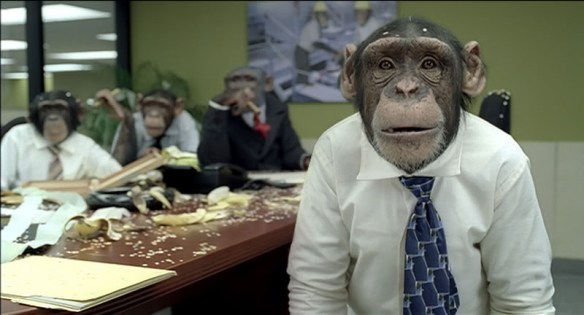
Here’s a question for entrepreneurs that can actually be a rather perplexing conundrum. What is the value that we are adding to what we do every day? Could a trained monkey do it too . . . and maybe even better? Here’s the thing. We sometimes tend to fall into a rut that’s usually within our comfort zone. And then we go through motions every day – over and over and over. Oftentimes we become very, very good at what we do and so it is really easy to keep doing it – over and over and over. But, is it a truly fulfilling experience?

My father-in-law was a funeral director. He was very, very good at what he did and it was evident that he liked helping people. But he always said that when he turned 65 he was done and would retire. And that’s exactly what he did. I concluded that while he liked what he did, he didn’t love it enough to never want to stop doing it. I never did get a chance to ask him before he died what value he brought to what he did every day.

Entrepreneurs think a lot about money. Yet, those I’ve known who do what they do just to make a lot of money tend to become restless and bored. Making a lot of money may be great, but after a while it’s really just a way to keep score. And if we’re winning every day and only doing it for the money, how does one keep the “fire in the belly?” There must be something more.

There’s no denying that we entrepreneurs want to make money. And there’s nothing wrong with this – after all, most of us are unabashed capitalists. But just focusing on the money can lead to a fairly hollow existence. Money is a commodity and eventually we find ourselves feeling like the proverbial trained monkey. That’s when the trouble can begin. Being restless and bored can lead to many issues the least of which might be extramarital affairs, drug or alcohol abuse or even daredevil types of hobbies. I’m not casting aspersion on thrill-seeking activities, but we must examine the real reason that we pursue them. Is it because we are feeling unfulfilled in our business and/or personal lives?

All of this pondering leads us to conclude that we need to be doing something of substance in order to feel fulfilled. I’ve written before about value propositions where customers are concerned. But we also need a personal value proposition that winds us up and keeps us excited, happy and content. My value proposition is the same as my personal WHY (thank you Simon Sinek) which is to make sense of complexity. This manifests in many ways including consistently developing creative ideas and solutions. If a day goes by where I wasn’t challenged creatively or didn’t become immersed in something complicated, I don’t feel fulfilled. Thus, I try and always put myself in situations where this never happens.

Each of us needs to find our own personal value proposition. Perhaps it’s doing things the right way every single time. Maybe it’s about innovation and doing things a better way. Some of us want to make a contribution or a difference in the lives of others. There are those of us who want to create trust and build relationships, while others just want to simplify things. A few entrepreneurs live for mastering what they do and others want to create clarity. Of course there are always a few Steve Jobs types who want to challenge the status quo and think differently.

Discovering our own personal value proposition energizes us and keeps us coming back for more. Being a great entrepreneur hinges on our ability to continually maintain a sense of fulfillment.

This blog is being written in tandem with my book, “An Entrepreneur’s Words to Live By,” available on Amazon.com in paperback and Kindle (My Book), as well as being available in all of the other major eBook formats.
trained monkeys

Urgent Care

Allow me to set the scene. We are about to embark upon a major project that could make or break our company. There are a wide range of complexities involving this project and it will require a supreme effort from our entire team to successfully bring it all together. But there’s just one problem. Invariably someone on the team is not as responsive as necessary or doesn’t seem to possess the same sense of urgency as does everyone else. As a result the ball gets dropped and we fail. Alternatively, others on the team step in to pick up the slack which creates resentment and hard feelings. How do we effectively deal with this rogue team member that is at the center of all this?

There are a number of steps that can be taken to stack the deck in our favor when it comes to ensuring responsiveness and urgency. Step one is to develop clear written roles and accountabilities for each member of the team. Considerable thought should be given to this process so that a high level of precision in role definition can be attained. Being as comprehensive as possible in describing a role will produce clarity. Vague and generic verbiage muddles the picture and may lead to confusion later on. As team members we have overall roles and accountabilities. For major projects it’s a good idea to dive even deeper into a separate set of intentions for each of us relative to the specific matter at hand.

Step two involves gaining a commitment from each team member. One of the best ways to accomplish this is to hold a team meeting to reaffirm the vision for the project. For example, suppose we are developing a proposal to win a major piece of business. We assemble the team that will be creating and implementing the proposal and paint the picture of what it looks like when we win (vision). In the meeting we review team member roles and accountabilities and ask each person to make a verbal (and maybe even written) commitment to do their part in this endeavor. It’s critical that this commitment be made among those on the team and not just to the enterprise.

The third step is for the team leader(s) to make an assessment of the capabilities of each team member. The roles and accountabilities have already been established for each position that will participate in the project. Will the individuals who fill those positions be able to perform the tasks assigned to them? And do they have the tools and resources that are needed to prosecute their roles effectively? If it’s determined that a team member isn’t equipped for his or her role – i.e. skills, training or experience – then that person becomes the weak link in the chain. A decision must be made at the outset whether or not to replace that team member with someone else, or be prepared to provide greater than normal support for that individual.

Finally, team members should be encouraged to set their own deadlines so long as they are compatible with the overall project timeline. When a deadline is imposed by others, there’s always the opportunity for someone to claim it to be unrealistic. Accountability is first to one’s self and then to the team. Self-imposed deadlines are congruent with this approach to accountability. As team leaders it’s equally important for us to be aware of all deadlines and check with team members well in advance of them. Then if there’s a chance that a deadline will be missed we can muster additional resources or take other steps to make sure that the train still runs on time.

Instilling responsiveness and a sense of urgency within a team is a process. When we clearly define roles and accountabilities, obtain commitment, assess capabilities and resources, and work with team-member established deadlines, the process should put us in a position to win the prize we are seeking.

This blog is being written in tandem with my book, “An Entrepreneur’s Words to Live By,” available on Amazon.com in paperback and Kindle (My Book), as well as being available in all of the other major eBook formats.

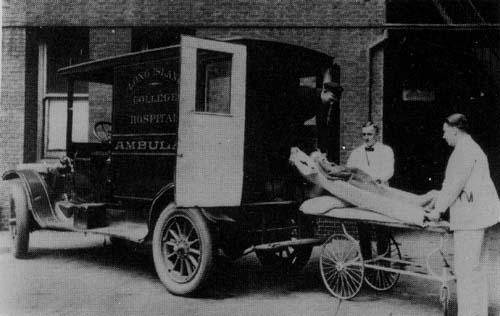
An early motorized version of a LICH ambulance.

An early motorized version of a LICH ambulance.

Swivel Head

A good pilot has his head on a swivel. He is constantly scanning his instrument panel as well as the skies around him. There may be other airplanes in the immediate area to avoid. Maybe there are TV towers or smokestacks to miss. Engine performance gauges must be monitored and navigational displays are critical to comprehend. All of this can be summarized in two words . . . situational awareness. Without situational awareness we are more vulnerable to physical dangers around us. A lack of it can result in an auto accident, stepping off a curb and breaking an ankle, or starting a fire when the grill is too close to the house.

In the entrepreneurial world, situational awareness is worth its weight in gold. Now, you may be wondering how this concept applies to business situations. It has less to do with physical proximity and more to do with possessing a sixth sense about a multitude of factors. As entrepreneurs we can attain a much higher degree of success as we develop our entrepreneurial awareness. For example, how well do we sense what is happening in our marketplace? There’s more to this than just crunching numbers. The key is to look behind the empirical data and understand what is truly happening. Here’s a simplistic illustration. A quick look at market share might show that our firm is way out in front of the competition. And yet, we know that a start-up company has won three of the last five contracts for which we’ve competed. Not enough to move the market share needle, but could signal trouble down the road. Situational awareness would have us take immediate action to understand why they are winning and we are losing, and then do something about it.

Situational awareness from an entrepreneurial perspective involves a deep understanding of our customers and what makes them tick. Customer satisfaction surveys help in this regard, but we may need more than data. In person meetings are the best bet for getting a good read on our customers. If not in person, the next best option is a phone conference. At the root, we’re looking for little tells that might indicate whether or not our customers are 100% in our camp. We encountered a situation a few years ago where we thought our client was totally satisfied with our services. Our team was convinced that we had performed as or better than expected. And yet, I had a gnawing feeling that something was amiss. When we dug in deeper we learned that the client was actually hiring a competitor. The reason had nothing to do with our performance and everything to do with the fact that a corporate decision had been made to consolidate its business to a national company. I’ve always wondered whether we might have saved the business by doing some things in a radically different manner had our situational awareness enabled us to act sooner.

Finally we must keep our finger on the pulse of our team. Are we on the lookout for signs of tension, boredom or anxiety? It’s easy to get caught up in the day-to-day chaos that we all experience and miss the signs that are flashing relative to our team. Perhaps an outgoing team member who normally participates in company activities gradually pulls back and is less gregarious. Without situational awareness, we could easily overlook that this individual is headed for the exits until it’s too late. Realizing this sooner might have given us a chance of resolving whatever issue is causing our teammate to look elsewhere.

Situational awareness at the entrepreneurial level requires a certain degree of intuition. But even more important is our being intentional about having a deeper understanding of that which is happening around us. Then we’re less likely to unwittingly step off the cliff and into the abyss.

This blog is being written in tandem with my book, “An Entrepreneur’s Words to Live By,” available on Amazon.com in paperback and Kindle (My Book), as well as being available in all of the other major eBook formats.

Shark

The Three-Legged Stool

We entrepreneurs have no shortage of books and other resource materials at our disposal to understand how to win in today’s environment. We’re barraged with a multitude of tips, tactics, strategies and a host of other concepts. Everyone has an opinion, and everyone insists theirs is the right way. Ask any coach or consultant and undoubtedly each will have their own secret sauce. I have no issue with any of this and believe that this diversity of ideas is healthy for entrepreneurship as a whole. Fortunately no one individual has it all figured out . . . so we continue to seek. As one of the “seekers” I might as well add my thoughts to the mix.

My approach involves a three-legged stool, and it’s a very simple calculus. The first leg is that of Culture. For most of my career I wasn’t very focused on Culture and we certainly didn’t do much to promote it. Our Culture just kind of happened in a laissez-faire manner. Oh sure, we had a company picnic every now and then as well as a Christmas party; and from time-to-time we would undertake a community service project. But for the most part it was nose-to-the-grindstone – chew ‘em up and spit ‘em out. However, I’ve learned a lot over the past few years and I’m now drinking the Culture Kool-Aid – lots of it. Why? Because I’ve found that Core Values matter. Not just to the company but to each member of our team. And we really live our Core Values every single day. As a result, we now have a team of people who have a common alignment and purpose. We are able to connect with millennials and Boomers alike and productivity has markedly increased. While Culture is more than just Core Values, they serve as the foundation for a Culture.

The second leg of the stool is Product. With the strengthening of our Culture we’ve become more creative and innovative with respect to the products and services we provide. The positive environment that has emerged in our companies has enabled us to shine a spotlight on our Product set. We’re constantly making tweaks every chance we get to differentiate from our competition that which we offer. “How is it different?” has become our mantra. We’ve become much more targeted with our marketing and sales effort in a manner that complements our Product refinement. A clear focus on Product has been the impetus for a much more strategic approach to decisions that we make as opposed to the small-ball tactics that we used to deploy.

Finally, the third leg of the stool is Customer. Many companies pay lip service to their customers. Everyone recognizes that without customers we don’t stay in business very long. But to succeed entrepreneurs must go far beyond basic customer service. We must do the deep dive into understanding what makes the Customer tick. It’s more than just needs and wants . . . it’s also a more comprehensive understanding of buying patterns and lifestyles. It’s about anticipating what the Customer will value. Thus, the value proposition becomes the Holy Grail. How does the customer experience attain complete and total satisfaction?

Maybe I’ve oversimplified this, but everything else seems incidental beyond Culture, Product and Customer. Without a strong Culture how can we possibly create a great Product and take care of the Customer? Without a great Product, our Culture begins to crack as team members become demoralized and the Customer eventually suffers. And yes, without the Customer, there’s no point in a Culture or a Product.

Culture, Product and Customer. A three-legged stool that looks simple, but is strong enough to support a long winning streak for us as entrepreneurs.

This blog is being written in tandem with my book, “An Entrepreneur’s Words to Live By,” available on Amazon.com in paperback and Kindle (My Book), as well as being available in all of the other major eBook formats.
3LeggedStool1

Simplicity

In today’s business world there is a constant drumbeat for clear communications. And without a doubt, we’ll find a lack of clear communication at the root of many of the issues that we have with each other. OK, I get it. We need to communicate more clearly. But here’s something you won’t hear as often. There is also a need to simplify our communications. Sometimes we may think we are communicating clearly when in fact the message we are conveying is so convoluted and complicated that our audience gets lost.

I’m involved with a venture capital business that screens large numbers of start-up companies in the biotech space as we look for potential investments. One company in particular stands out from the rest – not because of the product it was developing, but because its pitch was so impossible to understand. We have some technical people on our board as well as advisors with whom we work, and no one understood what the pitch was all about. This company used highly technical terminology and language that no one ever hears in day-to-day conversation. I suppose that it’s possible that the product could have been an amazing breakthrough in its field. But we’ll never know because we declined to invest for the simple reason that we couldn’t understand the pitch. Here’s an excerpt from the pitch summary.

(XYZ) technology allows RNA to be manufactured using well proven large scale fermentation processes. Prior to (XYZ) manufacturing innovations these large scale fermentation processes were not viable because of the ubiquitous and unavoidable presence of RNAses (enzymes that break down RNA) in the fermentation process environment. (XYZ) technology sequesters, inside a protein capsid, the RNA as it is produced thus protecting it from RNAse degradation. This protein capsid protects the RNA allowing subsequent isolation and purification. There is also a high level of interest in using the protein encapsidated RNA as a delivery mechanism.

The preceding is an extreme illustration of overly-complicated communications. But there are countless examples that occur daily to a lesser degree. I moderate panel discussions at several apartment industry conferences each year. We talk about a number of aspects of the business including debt, equity, construction and operations. Often we have audience members who are new to the industry. While the subject matter can be complex at times, the bigger problem is all of the acronyms that are the plague on our house.

It doesn’t matter whether the communication is written or verbal, we must redouble our efforts to simplify, simplify, simplify. When we write like we speak, we tend to accomplish this objective. And if we think before we speak, it’s likely our communication will be understood. Guarding against ego-creep is also in our best interest. We’ve all seen the pontificators who like to show everyone how smart they are by spouting a bunch of intellectual-sounding mumbo jumbo. Staying humble and being respectful of the audience’s desire to understand what we are communicating should be our guiding principle.

A man or woman of few(er) words conquers rambling purveyors of verbosity every time. Striving for clarity and simplicity in our communications will ensure that we are persuasive and convincing.

This blog is being written in tandem with my book, “An Entrepreneur’s Words to Live By,” available on Amazon.com in paperback and Kindle (My Book), as well as being available in all of the other major eBook formats.

einstein lecture

Tasty Crow

Crows are remarkably intelligent and can live as long as 20 years. They typically have a wingspan of more than three feet and weigh nearly three pounds. A crow can fly up to 60 miles per hour and have been found as high as 14,000 feet in mountain ranges. Being smart, fast and able to fly to great heights make them particularly hard to catch. Recently I had to catch one so I could eat it . . . metaphorically speaking of course.

To be a successful entrepreneur we must have an acquired taste for crow. We’ve all heard the saying “to eat crow” which connotes humiliation and having to admit the making of a mistake. Sometimes our ego gets in the way and we do everything we can to avoid admitting that we made a mistake. We may point the finger at others. Or we may try and cover up the mistake hoping that its results will somehow vanish into thin air. I can tell you that all of these tendencies are mistakes.

One of our companies is involved in acquiring apartment properties across the country. We sold two such assets within a much shorter holding period than we had initially projected because of an opportunity to generate substantial profits. Members of our team prepared a detailed spreadsheet that showed how the sale proceeds would be distributed. These were large and complicated transactions with several tranches of equity provided by different investors. I was pleased to call two such investors to deliver the good news that they would be receiving a significant multiple of their original investment. Needless to say they were thrilled.

Within days, I received a call from my partner who oversees our apartment acquisition business unit. Apparently there was a bust in the calculations and these two investors would be receiving less than what I had told them. They were still receiving a substantial gain on the sale, but not quite as much as the expectation I had set. The mistake was honest and unfortunate but it still had to be acknowledged. Thus, I went about the task of eating crow.

I called both investors and said the following, “I’m sorry to tell you that the distribution figure I provided the other day was erroneous. We made a mistake in calculating the sale proceeds and your new amount is $X. Happily your profit is still much greater than we projected when you made your investment three-and-a-half years ago. I wanted to get back to you as soon as I learned of the error and I hope that you will still be interested in looking at future investments with us.”

Because we are a team I did not point a finger at the person who was responsible for the calculation. Instead I said that “we” made a mistake. I did not make up an excuse for what had happened. Simple but painful. The result was an expression of understanding on the part of both investors. I’m sure they were disappointed but there were no angry words and in both cases, an indication of interest in looking at the next deal.

Relationships are built on trust and can be strengthened in situations where things don’t go as planned. But this happens only when honesty and transparency are the top priority.

This blog is being written in tandem with my book, “An Entrepreneur’s Words to Live By,” available on Amazon.com in paperback and Kindle (My Book), as well as being available in all of the other major eBook formats.

crow

Pronouns

Do you remember English class? We learned about modifiers, adjectives, adverbs, nouns, verbs and dangling participles. Diagramming sentences was a daily occurrence and understanding predicates and prepositions wasn’t far behind. And how about the way we got down in the weeds with relative clauses and rolled in the mud with non-defining or non-essential clauses? But my all-time favorite exercise in phonology involved the schwa. Which brings us to pronouns.

Pronouns are a major element of entrepreneurship. As peculiar as this may sound you’ll soon understand how very true this statement is. The next paragraph is a montage of snippets from speeches given by a very famous entrepreneur who happens to be running for president. Move past any ideological dispute you may have with this individual – that’s not the point. Instead, pay attention to the language and in particular, the pronoun usage.

“I have lobbyists. I have lobbyists who can produce for me. I have so many websites. I have them all over the place. I hire people, they do a website. It costs me $3. I will be the greatest jobs president that God ever created. I’ll bring back jobs from China, from Mexico, from Japan, from so many places. I’ll bring back our jobs, and I’ll bring back our money. I’m using my own money. I’m not using the lobbyists. I’m not using donors. I don’t care. I’m really rich. I am a nice person. I give a lot of money away to charities and other things. I think I’m actually a very nice person. I’m proud of my net worth. I’ve done an amazing job. I’ve employed tens of thousands of people over my lifetime. I’m proud of my net worth. I would build a great wall, and nobody builds walls better than me, believe me, and I’ll build them very inexpensively. I will find the guy that’s going to take that military and make it really work. I will stop Iran from getting nuclear weapons.”

I’ve selected these quotes because they overdramatize the point I’m trying to make. Notice the manner in which pronouns are used. This particular entrepreneur speaks in what I call I, Me and My language. I, Me and My language can sound arrogant and insensitive, and likely reflects the way a person thinks. Gracious and humble people don’t speak this way. They realize that it takes a team filled with talented people to succeed.

There is an alternative language that can be spoken by entrepreneurs. It’s called the We, Our and Us language. It recognizes the collective efforts and contributions of many. I’ve been working to perfect this language for many years and it has made me very much aware of how easy it is to slip into I, Me and My. Whenever I write a memo or an e-mail, I always review it before sending to replace the references to I, me and my, with we, our and us. I have come to realize how this simple act is an acknowledgement of others. And the more I write this way, the more I tend to speak this way as well. Ultimately, writing and speaking leads to thinking in this language which completes the conversion.

The entrepreneurial pronouns of we, our and us help build strong and positive relationships with others. Spreading the credit through inclusive language generates more goodwill than any amount of money could buy.

This blog is being written in tandem with my book, “An Entrepreneur’s Words to Live By,” available on Amazon.com in paperback and Kindle (My Book), as well as being available in all of the other major eBook formats.

Team Trophy

Dumpster Fires

Dumpster fires are tricky devils. They usually start out as nothing. Just a bunch of trash sitting in a big metal bin . . . and then someone flicks a cigarette butt or empties hot coals from a grill and the smoldering starts. Who knows what’s really inside the container? It could be aerosol cans, used motor oil, acetone, automotive batteries, paint thinner and a host of other accelerants. After smoldering for a while, the fire gets hotter and hotter until it becomes a raging inferno. If the dumpster is too close to a building, the entire structure could ignite and burn to the ground. Discovered early enough, a simple fire extinguisher could put out the blaze in a matter of seconds. But once it’s out of control the fire department may have a battle on its hands for hours.

There’s an obvious parallel between dumpster fires and the minor irritating problems that entrepreneurs encounter every day. We all experience situations that we tend to ignore. Perhaps there is a petty conflict between two members of our team. Maybe it’s a nagging customer service issue or a piece of equipment in the plant that isn’t functioning properly. We know the problem is there, but we simply choose not to address it wishing and hoping that it will just go away. After all, we have bigger crises to deal with. Right?

But we all know what eventually happens. The conflict between team members blows up big time and someone quits or has to be fired. Other team members are dragged into the drama which impacts productivity and damages our culture. The customer service issue results in the loss of a customer and perhaps a nasty post in the social media world hurting our brand in a much broader way. Now we’re in damage control mode involving multiple members of our team who are trying to restore our reputation. And that piece of equipment in the plant that wasn’t functioning properly? It finally breaks completely, shutting down the entire production line in the process. Oh, and one of our team members was injured when the machine finally died.

Each of these situations began as a small smoldering dumpster fire. Immediate attention (the fire extinguisher) would have resulted in a solution that put out the fire. The wider ranging consequences of inaction would have been avoided. This leads us to conclude that we need to look for small problems every day and intentionally take the necessary steps to fix them. I know that I have small festering issues that need my attention. But sometimes I just don’t want to face them at the moment. So I give myself a 24-hour pass and make sure they pop-up the next day on my task list. I’ve learned that it takes discipline to handle the small stuff or else I’ll eventually have to spend a whole lot more time and money untangling things later. I’ve found that the 24-hour pass approach works well for me. And I may even find myself thinking about what the solution will be before the end of my self-imposed deadline. Unfortunately there is no other trick to it other than “just do it.”

Small seemingly inconsequential problems can explode into dumpster fires that consume our lives. It’s better to take small incremental steps to solve the problems as they arise and then we won’t have to call the fire department because our house is burning down.

This blog is being written in tandem with my book, “An Entrepreneur’s Words to Live By,” available on Amazon.com in paperback and Kindle (My Book), as well as being available in all of the other major eBook formats.

dumpsterfire

Balls in the Air

Have you ever heard of Anthony Gatto? I hadn’t either. Gatto has been on the list of the world’s best jugglers every year since 2003 when the list was first compiled. He started juggling when he was almost four years old and is the only juggler ever featured on a Topps trading card. Among his amazing performances were juggling eight balls for one minute and 13 second; nine balls for 54 seconds; seven rings for 15 minutes and six seconds and 12 rings with 12 catches. All are world records. I’ve tried many times and can’t even master juggling two balls – much less eight. I did notice that Gatto doesn’t hold any records for juggling chainsaws – so he must be a pretty smart guy!

For entrepreneurs the obvious metaphor here involves the juggling act that we perform every day. But I want to talk about it in a bit of a different context. The question I want to pose is that of focus vs. diversification. What do I mean by this? I’ve said before that I don’t like to take risk, but I’ll manage risk all day long. This is a Grand Canyon-huge distinction. Taking risk for me is akin to gambling – and I’m not a gambler. Managing risk is a process and allows me to stack the odds in my favor. So what does focus vs. diversification have to do with managing risk?

There is a school of thought that says we should focus on what we do best. And we should hone our craft to the point that we then are the best at what we do. Several very successful companies are focused on a single product. Crocs, Spanx, Michelin, Roku and Gorilla Glue are all such companies. They have developed their product to the point that it’s in such high demand that there is no need to add to their product mix. Southwest Airlines has focused for decades on solely flying the Boeing 737 aircraft. The advantages for them are numerous including the manner in which they stock spare parts, train their mechanics and flight crews, route and position planes, etc.

I believe that there is an inherent risk to being so focused on a single product line. This risk includes business cycles where a particular product type might fall out of favor. Technological advances have been known to make many products/services obsolete. Remember Blockbuster Video? It was a high-flyer for a long time and was pretty much focused on a bricks and mortar delivery of videos. But it became so focused that it failed to realize that it needed to change its entire business model and product suite to adapt to rapidly changing consumer preferences. Now the company is out-of-business.

This brings me to the strategy of diversification. Our organization has always had multiple product lines. In the 1970s through the 1990s, we were primarily involved in the commercial real estate industry with leasing, brokerage and property management. And we handled office buildings, shopping centers, industrial facilities and apartment communities. In some years the leasing and brokerage business might be slow, but the property management business would be booming. Then there were times when the opposite occurred. Yet we were able to maintain fairly consistent revenues and margins throughout the various cycles we encountered.

Since 2000 we’ve diversified even more extensively including construction, maintenance service, building components distribution, tax credit syndication, apartment acquisitions, apartment development and venture capital investments (outside of the real estate world). We’ve organized into business units specializing in these areas with a managing director leading each. With this structure each leader is able to focus on being the best in class. The overall enterprise benefits from a highly diversified product/service offering balanced with a focus sufficient to excel. To accomplish this, a considerable investment was made in human resources to enable the focus and specialization. Our organization also wins with the vertical integration that has resulted. Multiple business units are able to participate in various internally generated projects as well as provide products and services to third parties.

Keeping a lot of balls in the air actually requires considerable focus. When we can do both successfully we are able to minimize the risks that we face as entrepreneurs.

This blog is being written in tandem with my book, “An Entrepreneur’s Words to Live By,” available on Amazon.com in paperback and Kindle (My Book), as well as being available in all of the other major eBook formats.

juggling

Gotcha Games

I purchased a couple of new beds for our home at a national mattress store. One was a fairly fancy model that is adjustable, vibrates and has other bells and whistles. I would normally pay for such a purchase outright, but the mattress store was offering free financing for a year. I thought, “what the heck, why not?” So I paid the monthly principal amounts over the course of 12 months like clockwork. Toward the end of this one year period I started looking for a payoff balance to show up on the monthly statement, but it never did. Then I received a statement showing a large amount of “deferred interest” that when calculated produced an exceptionally high interest rate.

In looking back at the previous month’s statement (four pages of legal-size paper), I found a single sentence in small print advising me to look elsewhere in the statement for an acceleration amount. I finally found the payoff figure – again in small print. Unfortunately I had missed the deadline by ten days and now owed over $3,000 in interest charges. I called the national bank that had purchased the paper from the mattress company and pointed out what my intentions had been from the outset and that the small print notice was deceptive and easily overlooked. I spoke with a supervisor and then a manager who ultimately cut my interest cost by 75%. I still contend that the interest should have been fully waived.

The national bank involved in this incident was clearly playing a “gotcha game.” There’s no doubt in my mind that they intentionally used fine print and required the customer to hunt through the bill to find the amount owed. This is despicable behavior and does nothing to help the cause of entrepreneurship. I am not a fan of a lot of government regulation, but it’s situations like this that trigger calls for more regulation in the first place.

As entrepreneurs we should look at our business practices to see if we too are playing the “gotcha game.” Are the documents we use with our customers very clear relative to what is owed as well as the terms and conditions for payment? Or are we using fine print, misdirection and incomprehensible language to obfuscate and confuse the customer? And if we’re doing this, what is our end game . . . to shake down the customer for extra dollars?

Companies that are winning in today’s environment are focused on culture, product and the customer. Profitability at any cost isn’t part of this calculus. Businesses that gouge their customers like the national bank with which I dealt, will ultimately suffer through new regulatory initiatives and/or customer abandonment. We entrepreneurs have a golden opportunity to identify competition that is perpetrating such behavior and differentiate ourselves in striking fashion. With the right messaging, winning customers from the bad actors should be relatively easy.

The integrity we maintain with our customers is one of the most valuable assets we possess. Playing the “gotcha game” can quickly turn that asset into a liability.

 This blog is being written in tandem with my book, “An Entrepreneur’s Words to Live By,” available on Amazon.com in paperback and Kindle (My Book), as well as being available in all of the other major eBook formats.

Fine Print