
Connecting the Dots

Why should I care about politics? It’s just a bunch of doublespeak from a collection of greedy, grimy people with big egos. Why should I care about the Consumer Sentiment Index? Isn’t it just some arcane statistic that gets published every so often? Why should I care about the financial crisis in Greece? Why should I care about the number of Baby Boomers who will reach 65 each year for the next ten years?

Entrepreneurs are a busy lot. We’re always on the run and totally consumed by what goes on in our world. So it’s tough to stay abreast of what is happening “on the outside.” And besides, there’s so much information out there that it’s simply overwhelming. Right? All of this is pretty much true . . . and more. But here’s the big “however.” Everything that is happening around us – 24/7 – is a treasure trove of opportunity. If we invest some time and effort, the information we uncover may help us connect the dots. These are the dots that could lead us to discover a new and innovative product; or identify a trend that could help or hurt our business.

Connecting the dots will require an open mind, a healthy dose of curiosity and the ability to think critically. I’ve always wanted to be the one to connect the dots as opposed to having someone else do so because that “someone else” could very well be a competitor. Some things we learn may have no direct connection to anything to do with our business or personal lives. And yet, we never know exactly when a supposedly random tidbit might be that final puzzle piece we’ve been desperately seeking and didn’t even know what it looked like. I’m constantly advocating that we entrepreneurs should be voracious readers of everything we can get our hands on. And what we read should be broad and diverse.

Allow me to try and tie all of this together with a hypothetical example. Let’s assume that you and I own a company that manufactures fine oak barrels for premium wines. Why do we care about politics? A stiff tariff was being proposed on the special metal bands that we import from Japan to secure our barrels. Our relationship with several elected officials enabled us to educate them on the unintended consequences of this action and the tariff idea was scrapped. Dot A was connected to Dot B. As students of the Consumer Sentiment Index (compiled and published monthly by the University of Michigan) we learned that Americans are becoming increasingly more optimistic about the future of the country. Based upon history, we know that Americans drink more expensive wines when the future outlook is bright. With this knowledge, we make the decision to expand production of our wine barrels to meet increased demand. Dot C was connected to Dot D and then Dot E.

The ongoing financial crisis in Greece proved to be a tipping point for us with respect to a significant customer there who bought large lots of our wine barrels periodically. Because the Greek government restricted the amount of cash that could be withdrawn from the banks on a daily basis, we became concerned that this customer might have difficulty selling his product. We suggested that he scale back his order until more normal conditions existed in his country which saved us from carrying a large account receivable with him. Dot F was connected to Dot G.

Finally, by studying the demographic trends involving the number of retiring Baby Boomers and matching that with their buying habits, we projected that there could be a large increase in their purchase of premium California wines. We deployed one of our top salespeople, armed her with this data and sent her to call on the wineries in the Napa Valley. She came back with a terrific picture of how these wineries intend to introduce several new brands that match with the emerging tastes of the Baby Boomers. Dot H was connected with Dot I.

Paying attention to the world around us can yield valuable information. We can then connect the dots using this data in ways that contribute to the success of our enterprise.

This blog is being written in tandem with my book, “An Entrepreneur’s Words to Live By,” available on Amazon.com in paperback and Kindle (My Book), as well as being available in all of the other major eBook formats.


connecting the dots

False Choices

It’s 3:00 AM. You’ve just awakened with a start. Your heart is racing – not pounding, just a generally anxious sort of feeling. You aren’t sure why this is happening. There’s no sound of an intruder and everything externally seems to be in order. Then you lay there struggling to return to your slumber. You know you have to get up in two or three hours, and you know you desperately need to finish getting your rest. But there’s one BIG problem. Your mind won’t let you.

I’ve never figured out exactly what causes this. There’s obviously something churning around in our subconscious. And it’s frustrating beyond belief to wake up this way, not know why, and then try to drift back to the Land of Nod. And I can attest to what happens next. I will allow my mind to conjure up False Choices. Perhaps I’ve been in the middle of a complicated real estate deal that has a lot of “hair” on it – that is, many moving parts that aren’t all moving as planned. At this point the game begins. Here’s the dialogue that occurs.

What if the appraisal for the apartment complex comes back at slightly less than is needed? Then the loan amount will be less and the equity requirement will be more. But wait a minute – I only have an equity commitment for the exact requirement and I don’t have time to raise the extra amount that will be needed! Oh my (or some other less printable phrase) – we won’t be able to close this deal!! If this happens we’ll lose the earnest money that is now totally at-risk; we’ll lose all of our credibility within the industry; we’ll never be able to do another deal again; I’ll go broke and have to live under a bridge!!!!!!

OK, the bridge part may be a little dramatic, but you get the idea. The point is that in this state of semi-consciousness it’s very easy for our mind to magnify our concerns and create wild scenarios that are disconcerting. Often, logic is totally absent in these moments, and because of this the False Choices become overwhelming. Fortunately I’ve gotten to the point where I rarely experience this anymore. But I can tell you that in years past I’ve gotten so worked up that I had to get out of bed and become totally awake to bring my full faculties to bear and find the solution. Kind of blows the opportunity to get any more sleep completely out of the water . . . right?

Rather than trying to figure out what triggers this kind of response, I’ve learned how to avoid letting my mind run away in this manner. If I do wake up with that general feeling of unease or even if something specific looms in my mind’s-eye, I immediately deny it. That’s it. I refuse to allow the monsters in my brain to come to the surface and get any satisfaction whatsoever. It’s my belief that we are extremely vulnerable when we are half-awake and half-asleep, and trying to resolve any sort of issue is futile and dangerous. If we let down our guard, invariably we end up in False Choices.

Learning how to deny these thoughts will not be easy at first. It will take a lot of practice. What I do is quickly translate the issue that is bubbling up into a visual image – perhaps it’s a dragon from a fantasy world. Then I take out my might dragon slaying sword and thrust it deeply into the dragon’s chest at which point it melts away and I fall asleep again. Thus, I’ve taken the horrible problem that somehow has invaded my sleep; turned it into a dragon; killed it instantly, and gone back to sawing logs. While this might sound corny, I can tell you that with practice it works. It doesn’t matter what the outer issue is, I simply turn it into a dragon and eliminate it.

We must avoid the False Choices that may be presented while we sleep. Denying them before they have a chance to take hold of our minds will allow us to deal with them in a rational fashion when we are awake.

This blog is being written in tandem with my book, “An Entrepreneur’s Words to Live By,” available on Amazon.com in paperback and Kindle (My Book), as well as being available in all of the other major eBook formats.
dragon_slaying

Smarty Pants

Think about the most brilliant people you know. Do they own or run a company or do they work for someone else? Chances are that they fall into both categories. For many years I’ve been trying to hire people who are smarter than am I. Fortunately I’ve succeeded in a number of cases and it certainly pays big dividends.

Across the business landscape you will find many employers who simply won’t hire scary-smart people. You’ll hear a wide range of excuses – they are too high maintenance, they’ll stick around for a short period of time and then they’ll leave, and others in the organization will resent them. For the most part this is simply code for, “I feel threatened when I have to deal with someone smarter.” Politicians are the worst offenders. Many of them have egos that are so big that they always want to be the smartest people in the room. That’s why we see so many blunders and missteps in our political and legislative process. If really smart people in much greater numbers were advising our elected officials, perhaps things might be better in the public arena.

In the entrepreneurial world we can see the result of not hiring the smartest people simply by looking at the politicians and their staffs. To begin with, we have to avoid the ego trap that doesn’t allow us to admit that there are people who have great ideas . . . maybe even better than ours! Once we get this out of the way it’s a downhill run from there. The word gets around that we are looking for the best and brightest and they beat a path to our door. Right? Well, maybe, but there is more work to be done for this to happen.

First, we must truly value the opinions of others. I can tell you that I went through a period in my career where I would seek the input of others but wasn’t convincing that I really wanted it. Rather than incorporate the suggestions of others, I simply went ahead and did things the way I wanted. I wasn’t doing this intentionally – I just didn’t know how to take such input and do anything with it. Hand-in-hand with this problem was the fact that I was way too controlling in the decision-making process. So, not only was I not valuing the opinions of others, but I was also shutting them out when it came to deciding what to do.

Smart people want to take real responsibility. They want to be coached – not told what to do. They want to believe that they are valuable to an organization and not just another cog in the wheel. Smart people need to understand our vision for the future and what role they will play along the way. They need to be challenged. Woe be to the entrepreneur who allows smart people to become bored! Keep piling on the challenges at a manageable pace and don’t stop. Above all, show gratitude on a regular basis, but don’t hesitate to provide constructive criticism when necessary. Most of this advice applies for every member of the team, but it’s especially critical for the high achievers.

When we get our ego out of the way, we open up a world of possibilities in terms of hiring amazingly gifted talent. In so doing, we create organizations that are better able to compete and win at an extremely high level.

This blog is being written in tandem with my book, “An Entrepreneur’s Words to Live By,” available on Amazon.com in paperback and Kindle (My Book), as well as being available in all of the other major eBook formats.

einstein (1)

A Warm Blanket

I was waiting for a flight and a lady came to the ticket counter from an adjoining gate and asked the attendant if an announcement could be made about the status of the flight from that gate. Apparently it was past the departure time; the monitor revealed nothing, and there was no airline person at the gate. A few minutes later an announcement about the delay was made, but not after several moments of irritation on the part of the passengers waiting for that flight.

Why is it that so many companies communicate so poorly with their customers – especially when things aren’t going quite right? Common sense tells us that communications should be amplified in such instances. And yet it seems that there is a bit of a “run and hide” mentality when the train runs off the tracks. Airlines may be the worst where this is concerned – we all have more airline stories than we can remember. But this malady is shared across the business spectrum. While visiting a resort community in California, I walked past a grocery store that had a sign on the door at midday saying, “Closed – Computers Down.” Customers were trying to open the locked door and shook their heads after reading the sign. What a missed opportunity!

There are a couple of reasons why this happens, neither of which are good. The first is a cultural issue. If a company adopts the philosophy that the customer comes first, then its response to anything going awry impacting the customer will be immediate, complete and ongoing communications. Anything less is contrary to a customer-first culture. We entrepreneurs must decide if we are going to embrace such a culture and if so, determine the steps that we are going to take to ensure that come hell or high water the customer will always be wrapped in a warm blanket. Which brings us to the second reason why many companies fail at communicating effectively when things go wrong.

A company may have every intention of effectively communicating with its customers through thick and thin. But unless there is a clearly defined strategy that translates into actionable steps for every member of the team, there’s no way that successful implementation can happen. Take the airlines for instance. I have trouble believing that they don’t have great customer service as an intention. However, there’s no other explanation than there’s a disconnect somewhere between their strategy and putting it into practice.

In our respective organizations, we can make certain that our strategy and implementation are seamless through simulation. This involves identifying every possible mishap that could occur, causing issues for our customers. Next we can create a step-by-step process for dealing with these problems while maintaining a constant focus on how we smooth the way for our customers. It will require a combination of urgency, honesty, straightforwardness, empathy, clarity and frequency. In other words, we’re going to quickly tell our customers what has happened in clear and concise terms. We aren’t going to lie – if the airplane is broken, we’ll tell them that the airplane is broken and not make up some other excuse. We will apologize for any inconvenience and take the necessary steps to make things as painless for the customer as possible – even if it costs us some money. And we will continue to communicate early and often until the situation is resolved. Every member of our team will know exactly how they are supposed to make this happen and we will practice, practice and practice some more.

If we truly care about our customers, our bottom line will be the better for it. Thus, we should do everything in our power to make sure that the customer has a positive experience even when we have trouble delivering our products or services.

This blog is being written in tandem with my book, “An Entrepreneur’s Words to Live By,” available on Amazon.com in paperback and Kindle (My Book), as well as being available in all of the other major eBook formats.

electric blanket

Enamored

Let me set the scene. You just hired a young new hotshot. This person has had a meteoric career to date and you spent months recruiting him. He went to Harvard for his undergraduate degree and Stanford for an MBA. Right out of the blocks he’s been hitting it out-of-the-park for you. His creativity and innovation is off the charts and he’s a real charmer. Everyone loves him and he’s generating one success after another. What a dream situation – right?

There’s no doubt that this is a dream situation. However, there’s also danger lurking. Why? Whenever we become enamored with someone we run the risk of being blind to their shortcomings . . . and we all have shortcomings. Further we also may not be looking critically for coaching opportunities which shortchanges our new team member. How is it that we smart entrepreneurs fall into this trap? Actually it’s very easy. Perhaps we had a less than satisfactory experience with someone our new hire has replaced. Or we may never have had talent like this in the organization before. It’s very refreshing to have a smart person in our midst that can seemingly do no wrong. We never want the honeymoon to end, nor do we want to throw cold water on our new team member, lest we demoralize him or her early in the game.

Over the course of my career I’ve seen plenty “golden haired boys and girls.” And after a while, the luster wears off a bit. Always. By no means does this indicate that we made a poor hiring decision. Walking in the front door for the first time, seldom is anyone really as good as they may seem – a fact for which we need to be reminded periodically. It’s all about setting expectations. On Day One we are well-served to establish an understanding with our new team member whereby we will be providing continuous feedback. This will include both praise as well as constructive coaching. And, we must have a mindset that no matter how wonderful this individual might be, there’s always room to help him or her become better.

Here’s how we might create a feedback process that works well for all parties. During the first 90-days we hold a short weekly meeting with our new teammate. We’ll structure it into four parts. First, we share our positive observations about what this individual has done well during the previous week. If something notable has been accomplished, we celebrate accordingly. Second, we share one or more areas where we’d like to see more progress. This doesn’t necessarily mean that we’re being critical but we shouldn’t hesitate to offer constructive criticism if warranted. Third, we provide information that may be pertinent for the coming week. Perhaps we want to lay out some new objectives, or maybe there’s some company information to be conveyed. Finally, we allow time for our team member to ask questions or offer any observations he or she might have. After 90-days these meetings may be less frequent. The bottom line is that our rising star is conditioned to receiving feedback and we’ve been able to build a strong relationship from the very beginning.

Maintaining an objective perspective on new team members – especially those who show great promise – will help turn good talent into franchise-quality players. And it helps us remember that we can always be better tomorrow than we were today.

This blog is being written in tandem with my book, “An Entrepreneur’s Words to Live By,” available on Amazon.com in paperback and Kindle (My Book), as well as being available in all of the other major eBook formats.

rocket

Urgently Patient

We entrepreneurs are a pretty restless bunch. Most of us have an ultra-high sense of urgency. I know that I certainly fall into this category. I plead guilty to always wanting things to happen a lot faster than they do. And I do realize that this creates a level of stress for the people I work with. But I’m also one of the most patient people you’ll ever meet. Huh? Does this seem like a complete contradiction? Let me explain.

My urgency meter moves quickly into the red zone when I encounter bureaucracy or if there are delays in implementation. I guess I feel like we’re all living on borrowed time and there’s a lot I want to accomplish before my time is up. Thus, anything that wastes time or energy causes anguish for me. Recently I worked with a state agency on a particular matter that took two months to finally resolve. I had a pleasant conversation with the government employee and suggested that there must be a faster way to conclude the matter. She explained that two months in government time is “lightning speed.” Unfortunately she’s probably right. In the private sector the matter would have been handled in a matter of days or perhaps even hours. Fortunately I have a great relationship with the head of this agency. At the time of this writing, I’m working with him and his team to create a more expedited manner in which to deal with issues of the kind I encountered.

Here’s a key point. My sense of urgency is with the process. I want things to be efficient. I want things to be cost-effective. I want the manner in which something is accomplished to happen quickly. In my world there’s no place for analysis-paralysis or indecision. We don’t need a committee to make decisions. It’s important to get input from different members of the team and their buy-in is critical. But someone must then step-up, take charge and lead. Poor communications is a killer of initiative and creates bottlenecks. If communication isn’t clear and concise, time is wasted when clarification is sought. All of this is process-related.

I said I’m a patient individual as well as having a high sense of urgency. Here’s another key point. I am patient when it comes to results. I’m in the type of business where results don’t materialize overnight. I have come to realize this after more than 40-years in the trenches. My philosophy is that if we take care of the basics and fundamentals through well-designed systems and processes, the results will take care of themselves. I can wait months or even years for the results because that’s often what it takes.

Here’s an example of what I’m talking about. Suppose you and I are farmers. We must get a crop in the ground by date certain or we’ll have to wait an entire season to plant again. We know the steps that must be taken. The soil must be tilled, the seeds drilled into the furrows and covered, fertilizer must be applied and the crop must be irrigated. We’re racing the clock to get in and out of the field. There’s no time for a committee to decide what crop we’re going to plant and where, when or how we’re going to plant it. We work our process with precision and complete the planting with days to spare. Now we wait patiently for the crop to grow, nurturing it as required by our process until it’s ready for harvest.

We can have a high sense of urgency and be patient, all at the same time. Our urgency lies with developing and implementing an efficient process, and our patience comes in waiting for the results.

This blog is being written in tandem with my book, “An Entrepreneur’s Words to Live By,” available on Amazon.com in paperback and Kindle (My Book), as well as being available in all of the other major eBook formats.

stopwatch

Footprints in the Sand

Much has been written about legacies. I’d like to explore the topic as well, but with a bit of a different slant. One of the first questions usually asked is, “How do you want to be remembered after you are gone?” Does the name Daniel K. Ludwig mean anything? How about Oliver H. Payne or Donald Fisher? All three of these people were billionaires. Ludwig (1897-1995) was a shipping magnate; Payne (1839-1917) was a partner with John D. Rockefeller in Standard Oil, and Fisher (1928-2009) co-founded The Gap clothing chain with his wife. The point is that each was a very, very successful and rich man and yet most of us probably never heard of them. So much for wealth in itself being a legacy.

Here’s the thing. After we’re gone almost every single one of us won’t be a passing thought for our descendants, much less for the public in general. Of course our immediate family will remember us . . . for a while. My dad has been gone since 1988 and not a day goes by that I don’t think about him. But I doubt seriously that either of our daughters does. Is this sounding macabre or depressing? It shouldn’t. It’s just the way life is. Memories of our walk on this planet are like footprints in the sand. They are there for a fleeting instant and then they are washed away.

I personally don’t care if I’m remembered at all. But here’s the silver lining in all of this. We can live on forever through the good work that we do today. A couple of things matter to me the most where legacies are concerned. First, I want to make sure that the companies that I have helped to create exist for the long term. There are hundreds of families whose loved ones are my team members. It is important to me that these families live and thrive long after I’m gone. Building a sustainable organization is the linchpin for making this a reality. This means that our corporate infrastructure must be robust; our financial condition strong; our core values are constantly at the forefront, and we remain committed to our long-range vision.

The other aspect of the legacy I wish to leave involves philanthropy. I don’t want a building, a street or anything else to be named after me. My wife and I are committed to investing some of our hard-earned dollars in philanthropic causes that help other people. Educational scholarship programs that provide funding in perpetuity are one of the steps we’ve taken in this regard. Helping other entrepreneurs build their own sustainable companies through mentoring is another passion of mine. And I’m not interested in waiting until I die to begin realizing the results of our philanthropic efforts. I want to see the results today – not decades from now after I’m dead and gone (and can’t witness the results then anyway!).

The legacy we choose to leave is very personal for each of us. I’m not about to pass judgment on these choices. However, one thing that is for certain is that it’s unlikely that any of us will be remembered a generation or two after we’re gone. So it probably makes sense to think about making our mark on the future in a way that will be more enduring than our name and our face.

We will be remembered not for who we are today, but for how we benefit mankind tomorrow. The choice is ours whether this memory will be footprints in the sand or permanent stepping stones to a better world.

This blog is being written in tandem with my book, “An Entrepreneur’s Words to Live By,” available on Amazon.com in paperback and Kindle (My Book), as well as being available in all of the other major eBook formats.

footprints

Lincoln vs. Douglas

We may often find ourselves in situations where we are on the opposite side of a particular position that is being advocated by someone else. At this point we have a choice to make. Do we speak up or keep quiet? Obviously it all depends upon the circumstances and whether or not a discussion is actually merited. I enjoy a good healthy debate but have learned that it’s not necessary to go to the mat every time someone is espousing a point of view that is different than my own. The bottom line – what is to be gained from engaging in such a discussion? Will I persuade the other person to change his or her mind? Are there others who might be listening that I want to influence? In many cases, I decide to forgo the debate when I’m reasonably certain that the other person is entrenched in his or her point of view and there is no one else around to influence.

Let’s assume that we do want to convince others to adopt our perspective on an issue. How we go about doing this will be a real test of our skill in communications and diplomacy. If you ever watch political debates pay close attention . . . and then do just the opposite of what the politicians do. Often they obfuscate, make ad hominem attacks, avoid the question and use emotional appeals. There is a much better way.

Stick to the facts. Utilizing a fact-based approach to construct our own arguments is both rational and appropriate. Of all the classes I took in college my hands-down favorite was Logic. Connecting the dots with logic supported by well-sourced data is powerful and persuasive. And my Logic professor always used to say that a clear indication that you are winning a logical argument was when the other party resorts to playing on emotions. In addition to supporting our own thesis with facts, we can also de-construct the opposing point of view in similar fashion.

Depersonalize. As we debate an issue it’s easy to become passionate about our position and allow things to get personal. Watching our words is critically important at this point. Consider the following statement. “I just don’t understand why you are being so hard-nosed with your position.” How do you suppose the other party is going to react? It would be easy to become defensive if you are on the receiving end of this barb. How does this sound? “Help me understand the ABC Company’s position.” The word “you” has been replaced with the ABC Company. And the statement avoids an inflammatory tone.

Be respectful. Above all, we should maintain a level of friendliness during our discussion. Being respectful of the other party is paramount. Belittling and mocking statements do us no favors. Others who may be listening will be turned off by this approach. We are better served by acknowledging that the opposing point of view has merit even if we disagree. For example, we might say, “John, I understand that you believe that we should invest more marketing dollars in print media and I’m sure that we would get results. On the other hand, four independent studies have shown that the ROI for an investment in social media is five times higher than with print media.” Here, we’ve been respectful of John and his position, and then de-constructed his argument with our own facts.

Debate is healthy and productive when engaged in a positive manner. Using facts, avoiding becoming personal and maintaining respect are the best ways to persuade others to accept and adopt the position that we advocate.

This blog is being written in tandem with my book, “An Entrepreneur’s Words to Live By,” available on Amazon.com in paperback and Kindle (My Book), as well as being available in all of the other major eBook formats.
debate

A Punch in the Mouth

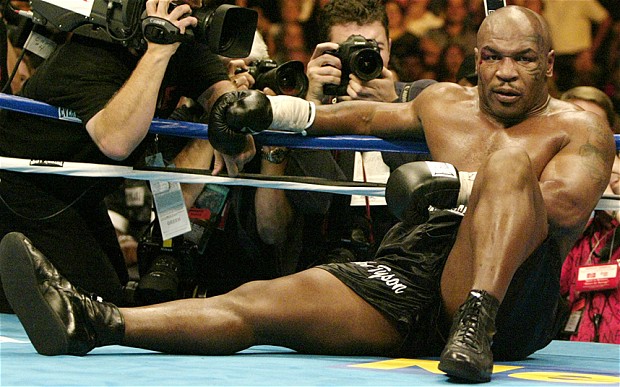
The boxer Mike Tyson is credited with once saying, “Everyone has a plan ‘till they get punched in the mouth.” This is actually a pretty profound statement even considering the source. I’ve written extensively before about resilience after getting knocked down. But let’s take another look at this subject from a different perspective. Simply put – what’s your Plan B?

It’s our nature as entrepreneurs to optimistically create a plan and work it with the full expectation that we will achieve our desired outcome. Sometimes these plans can be quite comprehensive and well-thought. And while it’s always in the back of our mind that things probably won’t go entirely as expected, we generally are confident enough in our abilities that we’ll be able to avoid running off the track. Perhaps we’ve been able to “dodge the bullet” for years with this approach. But at some point when we least expect it, that “punch in the mouth” may stagger us and as our head begins to clear we ask the question, “Now, what do I do?”

This question can be avoided entirely if we create a contingency plan prior to embarking upon whatever endeavor we are pursuing. Resilience is having the will to keep on keeping on. But to what end? We may have the resolve to never be beaten, but if something hasn’t worked we must be able to try a different way. Suppose we started a business that relies heavily on outside sales and we have a topnotch salesperson that is crushing it. Her sales volume is off the charts and our business has become very profitable. Then the unthinkable happens. Our superstar salesperson decides to leave and start her own business in another field. When we hear the news we are in a panic. Who will we ever find to replace her? How long will it take? Will the next salesperson be as strong and effective?

Alternatively, we have already contemplated that this could happen and developed a contingency plan that we implemented the day our key salesperson started. In this case, we consciously chose to build as many relationships as we could with other salespeople in a multitude of industries. Our plan directed us to make a certain number of “touches” every month with talented people who would come to know and respect us – maybe even clamor to come and work for us. Then when our superstar walked out the door we already had a list of well-vetted replacements in our hip pocket. At this point there’s no freak-out. We reach out to the top name(s) on our list and within a short period of time we are able to announce the hiring of a new salesperson.

Of course this all sounds very simple and practical. But let me ask this question. How many of us really have a well-designed Plan B for each of the numerous “punches in the mouth” that we could encounter? Better yet, how many of us have actually documented our Plan B’s; work them, and review them periodically? Contingency planning isn’t necessarily pleasant. To have a Plan B may feel like we don’t really believe that our Plan A will work in the first place. Isn’t this the kind of negative thinking that could doom our success? Not at all. The key is that we know the truth – the truth that we will succeed. We may not get to the finish line exactly the way we had anticipated, but we will win the race.

Having a contingency plan allows us to plunge ahead in a worry-free manner. We can then concentrate our energy and focus on the steps necessary to the positive results that we desire.

This blog is being written in tandem with my book, “An Entrepreneur’s Words to Live By,” available on Amazon.com in paperback and Kindle (My Book), as well as being available in all of the other major eBook formats.

mike-tyson_

Hyperopia

Here’s a fundamental question for all entrepreneurs. Are you a visionary? Being a visionary and having a corporate vision are two different things, so take care not to confuse the two. For a company, a non-profit or any other organization to thrive and succeed over a long period of time, visionary leadership is paramount. And unfortunately, many companies stagnate and die when the visionary leader moves on for whatever reason. That’s why it’s crucial for a company to continuously develop visionaries across generations that will help to sustain the organization in the future.

It’s not hard to think about individuals who exemplify the term “visionary.” Steve Jobs comes to my mind before anyone else. He was a rebel and an unconventional thinker who wasn’t afraid to take risks. Similarly, Bill Gates was a visionary who became the richest man in the world as a result of his ability to understand and shape the future. What comes to mind when you hear these names – Henry Ford, Wilbur and Orville Wright, John D.  Rockefeller, Thomas Edison, Sam Walton, Sergey Brin, Larry Page and Mark Zuckerberg? Each was a phenomenal innovator. Each had an uncanny sense of where the world was going. Each had dreams but was also a doer.

Being a visionary is partially innate and partially learned. So, what can we do to develop our visionary leadership skills? How curious are you? Do you read everything you can get your hands on? Visionaries are expansive readers and are curious about everything. Curiosity stimulates the imagination and helps bring forth new ideas manifesting in a high degree of creativity. How persevering are you? The next time you’re ready to throw in the towel remember that visionaries have a stick-to-it attitude. They are highly resilient and believe they can solve any problem. Visionaries love discussion and debate. Some may see this as confrontation but it really isn’t. Instead, a visionary likes to listen to differing points of view even when it gets a bit lively.

What other ways can we model visionary behavior? Do you embrace change or are you more comfortable living with doing things the same way? Visionaries are change agents. They like to teach and are focused on doing the right thing. Integrity ranks high on their list of values. Do you have high expectations for your team? Sometimes the line between high vs. unreasonable expectations can blur a bit. But don’t expect a visionary to set a low bar. Visionaries tend to be eternal optimists and can’t see a glass half empty – it’s always half full. And visionaries are some of the most passionate people you’ll ever meet. Finally, visionaries don’t live in the details – they are quintessential delegators.

A visionary has a knack for looking at a collection of data and telling the future. He sees things that others don’t and isn’t the least bit concerned if his ideas are pooh-poohed. In fact, he’ll work hard to persuade others to buy into what he believes because he has a supreme degree of self-confidence.

By emulating their behaviors, traits and tendencies, we too can become visionaries. Our value to our organization increases exponentially when we provide visionary leadership.

This blog is being written in tandem with my book, “An Entrepreneur’s Words to Live By,” available on Amazon.com in paperback and Kindle (My Book), as well as being available in all of the other major eBook formats.

eye doctor