
The Mistake-Admitting Entrepreneur

Crows are remarkably intelligent and can live 20 years. They typically have a wingspan of more than three feet and weigh nearly three pounds. A crow can fly up to 60 miles per hour and have been found as high as 14,000 feet in mountain ranges. Being smart, fast, and able to fly to great heights makes them particularly hard to catch. A few years ago, I had to catch one so I could eat it . . . metaphorically speaking of course. 

To be a successful entrepreneur we must have an acquired taste for crow. We have all heard the saying “to eat crow” which connotes humiliation and having to admit the making of a mistake. Sometimes our ego gets in the way, and we do everything we can to avoid admitting that we made a mistake. We may point the finger at others. Or we may try and cover up the mistake hoping that its results will somehow vanish into thin air. I can tell you that all these tendencies are mistakes. 

One of our companies is involved in acquiring apartment properties across the country. We sold two such assets within a much shorter holding period than we had initially projected because of an opportunity to generate substantial profits. Members of our team prepared a detailed spreadsheet that showed how the sale proceeds would be distributed. These were large and complicated transactions with several tranches of equity provided by different investors. I was pleased to call two such investors to deliver the good news that they would be receiving a significant multiple of their original investment. Needless to say, they were thrilled.

Within days, I received a call from my partner who oversees our apartment acquisition business unit. Apparently, there was a bust in the calculations and these two investors would be receiving less than what I had told them. They were still receiving a substantial gain on the sale, but not quite as much as the expectation I had set. The mistake was honest and unfortunate, but it still had to be acknowledged. Thus, I went about the task of eating crow.

I called both investors and said the following, “I’m sorry to tell you that the distribution figure I provided the other day was erroneous. We made a mistake in calculating the sale proceeds and your new amount is $X. Happily your profit is still much greater than we projected when you made your investment three-and-a-half years ago. I wanted to get back to you as soon as I learned of the error and I hope that you will still be interested in looking at future investments with us.”

Because we are a team, I did not point a finger at the person who was responsible for the calculation. Instead, I said that “we” made a mistake. I did not make up an excuse for what had happened. Simple but painful. The result was an expression of understanding on the part of both investors. I am sure they were disappointed but there were no angry words and in both cases an indication of interest in looking at the next deal.

Relationships are built on trust and can be strengthened in situations where things do not go as planned. But this happens only when honesty and transparency are the top priority.

This blog is being written in tandem with my book, “An Entrepreneur’s Words to Live By,” available on Amazon.com in paperback and Kindle (My Book), as well as being available in all of the other major eBook formats.

The Coach-Entrepreneur

There is a lot of talk these days about mentoring. Many members of Generation X and Generation Y (Millennials) have told researchers that having a mentor is of high importance to them. As a Baby Boomer, I take great pleasure in being called upon to mentor other entrepreneurs. But as the CEO of our family of companies, I made the mistake of also thinking that I could be a mentor to some of the up-and-coming leaders in our organization. Over the years this realization has become more apparent to me and its subtlety is what tripped me up.

By my definition, a mentor is an advisor and nothing more. The mentee can take what the mentor offers and do with it what he or she wishes. A mentor typically has no “skin in the game” where the mentee is concerned. As a result, the mentor freely dispenses advice and opinions without an agenda. CEOs should not try to be mentors within their own companies. Why? Because they clearly have an agenda which is first and foremost shaped around what is in the company’s best interest. In my experience trying to be a mentor to a handful of leaders in our firm has not worked effectively. They are deferential to a fault because I am the CEO. They listen to what I have to say differently than if I were outside the organization. For example, when I challenge them with a particular question or premise, they take it as gospel. The relationship of the CEO to any member of the team is going to be such that a true mentoring relationship will be very difficult.

So, what is an appropriate role for a CEO to play in developing leaders within his or her company? I have found that becoming a coach is the right path to take. Let us use sports as the metaphor here. The coach is a teacher. He/she may call the plays from the sidelines until a sufficient level of expertise and trust is developed with the players to allow them to call their own plays. A coach should be wise and compassionate; yet there are times when he may be appropriately demanding and exacting.

Gen Xers and Millennials are well-served to understand the distinction between coaching and mentoring. I believe that a future leader should have both. Find a mentor who is older and has plenty of experience outside the company. By building extensive relationships throughout the community, one can usually connect with someone who may be willing to serve in a mentoring capacity. Then, try and establish a coaching relationship with a superior inside the company, assuming the individual has a coaching personality. Unfortunately, this is not always the case with certain people in positions of authority who are insecure and have power issues. I submit that it is healthy for the organization to move away from the boss-employee mentality and develop an attitude of coach-player.

CEOs and members of their teams can be fulfilled by a healthy coaching relationship. And an outside mentor can be the icing on the cake.

This blog is being written in tandem with my book, “An Entrepreneur’s Words to Live By,” available on Amazon.com in paperback and Kindle (My Book), as well as being available in all of the other major eBook formats.

The Never Accept “NO” Entrepreneur

Here is a fascinating subject for all entrepreneurs (and everyone else for that matter). It is the world of auto-antonyms with a focus on one particular word in the English language. What is an auto-antonym you ask? Don’t worry; you didn’t miss anything in school. Until I looked it up, I had no idea about auto-antonyms, sometimes called a contranym. Simple answer – it is a word that can mean the opposite of what it appears to mean. Now that the picture is completely confusing, let’s focus on the word . . . NO.

“No” seems like a simple word to understand – right? Not so fast. In my world “No” can actually mean “Yes.” Let me explain. Remember when we were kids, and we bugged our parents for something? Often the default answer was “No.” But we became conditioned to realize that “No” could be changed to “Yes.” I remember a trip to Disneyland in Anaheim, California when I was five years old. There was one particular ride that I wanted to try as soon as I hit the park. My parents – in unison – said, “No” (emphasis not added). They reasoned that I was too young. But I continued to harangue them throughout the day and wore them down to the point that before we left the park that afternoon, they finally said, “Yes.” In fact, I was too young for the ride and had no clue what to do – one of the attendants had to come and rescue me – but I was victorious in my quest to flip “No” to “Yes.” I guess that was the launch of my persuasive powers on the road to becoming an entrepreneur.

Too often, we hear “No” and accept it as gospel. We interpret the word as a form of rejection; feelings may be hurt, and we may become dejected and deflated. This next statement is very, very important. NO. DOES. NOT. ALWAYS. MEAN. NO. If we simply accept the word for what we think it means then it is Strike Three and game over. But if we see “No” as the starting point for getting to “Yes,” there is still a chance for extra innings. And who knows – we might win the game in the bottom of the 12th!

Entrepreneurs who hear “Yes” when they are told “No” are “No Flippers.” They understand that being told “No” just means that they need to become more persuasive and work harder to build their relationships. By doing so, they increase the odds of flipping the “No” answer to a “Yes” answer. When we are told “No,” we have a chance to zero-in and learn something. If we are helping someone buy our product or service, it is imperative that we find out why the other party has declined. By politely asking for feedback we might discover that a minor change in the product or service could result in a totally different outcome. Had we simply accepted the “No” answer, we might not have had the chance to make the tweak that led to a sale. Sometimes we are told “No” not because the other party does not like us or what we are offering, but the timing is not right for them. This is where relationship-building is critical. We remain in touch and work to serve the relationship in whatever ways possible while staying in front of the customer in a positive manner. But remember – there is a fine line between the obnoxious childish whining we did as kids to get our way and doing what it takes to be in the right place at the right time to serve our customers.

I can’t begin to count the number of times I’ve been told “No” whether it was in raising equity from investors to acquire properties; securing a loan for an acquisition; negotiating the purchase or sale of a property or trying to hire a particular individual to join our team. Maybe I am just thickheaded, but when I hear “No,” it is just a signal to step-up my game.

As entrepreneurs we need to become accomplished “No Flippers.” It may take a while and we will need to be creative, but eventually we will get someone to say “Yes.” Maybe it is the person we have been trying to convince all along, or perhaps it’s someone else. We use the knowledge we gain from hearing “No” to make the changes necessary to get to “Yes” and achieve success.

This blog is being written in tandem with my book, “An Entrepreneur’s Words to Live By,” available on Amazon.com in paperback and Kindle (My Book), as well as being available in all of the other major eBook formats.

The Doomed Entrepreneur

What do we dread most in our business and personal lives today? No, it’s not losing. When that happens, we simply pick ourselves up and go after it again. And it’s not being overwhelmed by our workload. We solve this with a few adjustments to time management and delegating to other team members. Our biggest “dread” is insidious and frustrating beyond belief. Here’s an example of what happens. We’re attempting to do business with someone. We’re past the cold calling stage and have been interacting with other party. We send an e-mail and wait a day or two. Then we call and leave a voicemail. Perhaps we even send a text. A week goes by with radio silence. We’re officially in the Zone of Doom.

The Zone of Doom is the black hole of non-responsiveness. Unfortunately, it’s become an epidemic. With caller ID many people simply ignore calls from those of us with whom they do not wish to speak. Blowing off e-mails is even easier. I know I sound like an old geezer, but when I was growing up in the business world, I quickly learned that protocol dictated the return of every phone call the same day or next morning. We didn’t have e-mail back then, so letters and memos were the standard for written communication. The expectation was that the response be immediate. There never was any thought of not responding at all. In fact, when someone slipped and failed to provide a timely response, the word usually got back to corporate leadership and there was hell to pay.    

The biggest challenge relayed to me by members of our team is that their interactions with so many people outside the company are one-way. Simply trying to reach people is so much harder than ever before. Long ago, I resolved not to fall into this category. I think I’m about 95% true to this resolution. I do return my phone calls in a timely fashion – though I will admit that there may be a cold call here or there from a salesperson that I miss. I believe most people will attest to the fact that I usually return all my e-mails the same day if not the same hour.

So how are we supposed to deal with the Zone of Doom?  How are we supposed to do business when people are so unresponsive? There’s no question that failure to respond is not acceptable. But we must ask ourselves what might be the root cause for our receiving the silent treatment? This goes beyond the fact that people are busy. It all boils down to priorities. Think about how we develop our own set of priorities. What goes at the top of the list and what goes at the bottom? I find that the things that are most important are those which are most impactful to my business and my life. It’s a pretty good bet that others set their priorities in the same manner. When I’m trying to reach someone else, I try to bear in mind whether communicating with me will make that much difference to the other person. There’s the word . . . difference.

We must be able to differentiate ourselves when competing with someone else’s priorities. Is what we are attempting to communicate really that important to them? If not, then what can we do to push it up toward the top of the ladder. This is where relationship building becomes so important. I’ve written many times that relationships are all about service. I’ve found that the harder I work to establish and serve a relationship the more likely someone will reciprocate my attempt to communicate. You may be thinking, “How can I possibly build and serve relationships with everyone with whom I come into contact?” No one said it would be easy. Relationships take time to build and there’s no time to waste. Any and every little thing that can be done to help someone else builds that relationship. Many businesspeople seek to establish relationships to benefit themselves. If we do it differently and make every attempt to help others, our efforts will be recognized as genuine and authentic.

We can avoid the Zone of Doom by building relationships for the purpose of serving others. And through our relationships, we move up the priority list of those we are serving.

This blog is being written in tandem with my book, “An Entrepreneur’s Words to Live By,” available on Amazon.com in paperback and Kindle (My Book), as well as being available in all of the other major eBook formats.

The Entrepreneur’s Mentor

Everyone knows that the entrepreneurial game is tough and unrelenting. Our state of mind often determines whether we’ll bend or break, and those of us with unlimited amounts of resilience will generally persevere and ultimately prevail. I believe more entrepreneurs could succeed were they to take advantage of the various forms of support that are available to the entrepreneurial community. One such form of support is that of an outside mentor.

Mentoring is somewhat different than coaching. Many entrepreneurs might do well with both. Coaching often tends to be for a shorter duration and can be more focused on certain skills and objectives. A mentor tends to build a long-term relationship with the mentee and takes a more holistic approach to their interactions. I have been mentoring for more than 25 years through both a structured program and informal relationships and have found it to be mutually rewarding.

It’s not necessary to find a mentor from the same industry as the entrepreneur. More important is the chemistry between mentor and mentee. Are the parties compatible and do they feel comfortable together? Is the mentor a good listener? Does the mentor refrain from being judgmental? I have found that one of the best ways I can serve a mentee is to ask a lot of questions and challenge traditional thinking. I remember having a conversation with a mentee many years ago who had a business that provided personal services that were charged by the hour. After a lot of conversation, I asked the entrepreneur when the last time the prices had been raised. She was absolutely certain that there was no way she could bump her hourly rate. I challenged her to test the market with a $.25 per hour increase. When she did, she found there was no resistance and that $.25 dropped straight to her bottom line.

A mentor should be a haven for an entrepreneur. All that is discussed should be done so on a confidential basis. The mentee must be able to freely share his or her concerns, anxieties, strategies, and secrets without fear of having them repeated to others. Entrepreneurs must be willing to “let their hair down” and reveal all that is happening in their lives that could have an impact on their business. As a mentor, I cannot be completely helpful if I don’t understand the various factors that could be causing stress for an entrepreneur. Is the fact that a mentee is having marital troubles any of my business? Of course not. But . . . by knowing that something like this is present may explain why the entrepreneur is distracted. While I’m not a marriage counselor, I may be able to help the mentee cope with such pressures and be able to minimize the adverse effects on his or her daily life.

Here’s the thing about a mentor. We will offer our observations and provide some level of guidance. We’ll tell war stories and indicate whether we think the entrepreneur is on the right track or not. We’re not going to run the entrepreneur’s business. We’re not going to interfere or intervene. We’ll stay completely in the background and avoid overshadowing our mentees. It’s up to the entrepreneur to decide if he or she wants to listen and take the advice given. It’s up to the entrepreneur to do the heavy lifting. The mentoring process can make a profound difference for an entrepreneur, or it can be a meaningless waste of time for both parties. Fortunately, I’ve never worked with a mentee who was a “know-it-all.” Every entrepreneur with whom I’ve had the pleasure to mentor has been open and receptive to the learning process and to having someone with whom they can bounce around ideas – good and bad.

With permission, mentors can hold entrepreneurs accountable. We can evaluate products and business practices and potentially identify blind spots that could be fatal from a customer’s perspective. We can help the entrepreneur set goals and create metrics for determining whether those goals are being met. And we can help an entrepreneur press the re-set button when nothing seems to be working.

A mentor can become a lifelong friend for an entrepreneur and serve as an advisor through thick and thin. I have been blessed to have many such relationships in my life and am so proud of the success realized by each of the wonderful entrepreneurs with whom I’ve been able to help.

This blog is being written in tandem with my book, “An Entrepreneur’s Words to Live By,” available on Amazon.com in paperback and Kindle (My Book), as well as being available in all of the other major eBook formats.

The Relationship-Building Entrepreneur

Earth, Wind & Fire recorded a song in 1979 called, After the Love Has Gone. And of course, there was the classic 1976 tune by KISS, Love ‘Em and Leave ‘Em. There’s an eerie parallel between these titles and our relationships – with our friends and with our customers. Remember when we were growing up? Most of us had several friends during our school years. Then we launched our careers and families, and guess what? Many of those friendships went on hold. We found ourselves burning the candle at both ends and struggling to make the kids’ soccer games, juggle business trips with date nights, and generally keep our heads above water. Sound familiar? Gradually we sort of drifted away from all but a very small, close-knit group of friends. If we are introspective about our entrepreneurial lives, is the same thing happening with our business relationships?   

I’ve written before about my philosophy on relationships. I want to build and nurture as many relationships as possible over the course of my career for the purpose of serving them. And I’ve said before that I try to do this without any sense of quid pro quo. Deep at my core I believe that if we are truly committed to serving our relationships in whatever way possible, the Law of Attraction will bring great good into our lives.

So, what happens after the sale? We work hard for six months (sometimes much longer) to build a relationship with a prospective customer. Then she buys what we’re selling. We’re elated and we make sure that the product or service is delivered in fine fashion. Then what? Six months later, what have we done to maintain the relationship? If the customer is going to buy our product or service on a recurring basis, chances are that we’ll stay in touch and continue “selling.” Maybe we will take the customer to a ballgame or out for dinner. But what about a customer that has purchased something and there’s virtually no chance that another purchase will occur in the future? Do we “love ‘em and leave ‘em?

It’s rare that we find an entrepreneur who builds the relationship for the purpose of serving it. Usually there are strings attached. I’ve been on the receiving end of this my entire life. When someone wants to sell me something, they butter me up and shower me with accolades, gifts, and other forms of attention. If I don’t “buy” they may try for a while, but eventually they drift away. If I do buy and there’s not a reason to buy the same product or service again, I’m usually dropped like a hot potato within a week. The National Sales Executive Association says that 80% of sales are made on the fifth through the twelfth contact. This means that a significant amount of time and effort must be invested in building a relationship sufficient to close the deal. This being the case, why would we not want to continue to maintain that relationship in perpetuity?

Some of us may be thinking, “This makes sense. Even though the customer might not buy again from us, keeping the relationship alive could be good for referrals.” Yes, this may be true, BUT once again we’ve attached strings to the relationship. What if we maintained the relationship because it’s the right thing for us to do? What if we maintained the relationship because we genuinely want to help other people? What if we maintained the relationship because it’s a form of expressing gratitude for all the wonderful things that others have done for us? If we’re thinking that we just don’t have time to nurture relationships after the sale, then we are working against the Law of Attraction. There’s good flowing all around us – but if we start putting limits on our relationships, we’re preventing that good from flowing our way.  

Maintaining friendships and business relationships requires intentional effort. When we do so successfully can, we find these relationships can be our most valuable asset.

This blog is being written in tandem with my book, “An Entrepreneur’s Words to Live By,” available on Amazon.com in paperback and Kindle (My Book), as well as being available in all of the other major eBook formats.
Third Choice Was the Right Choice!

Every successful entrepreneur needs inspiration. This can take many forms and there can certainly be multiple elements of inspiration throughout our careers and our lives. I’d like to tell you a story about one such inspiration that has been a constant throughout the past five-plus decades.

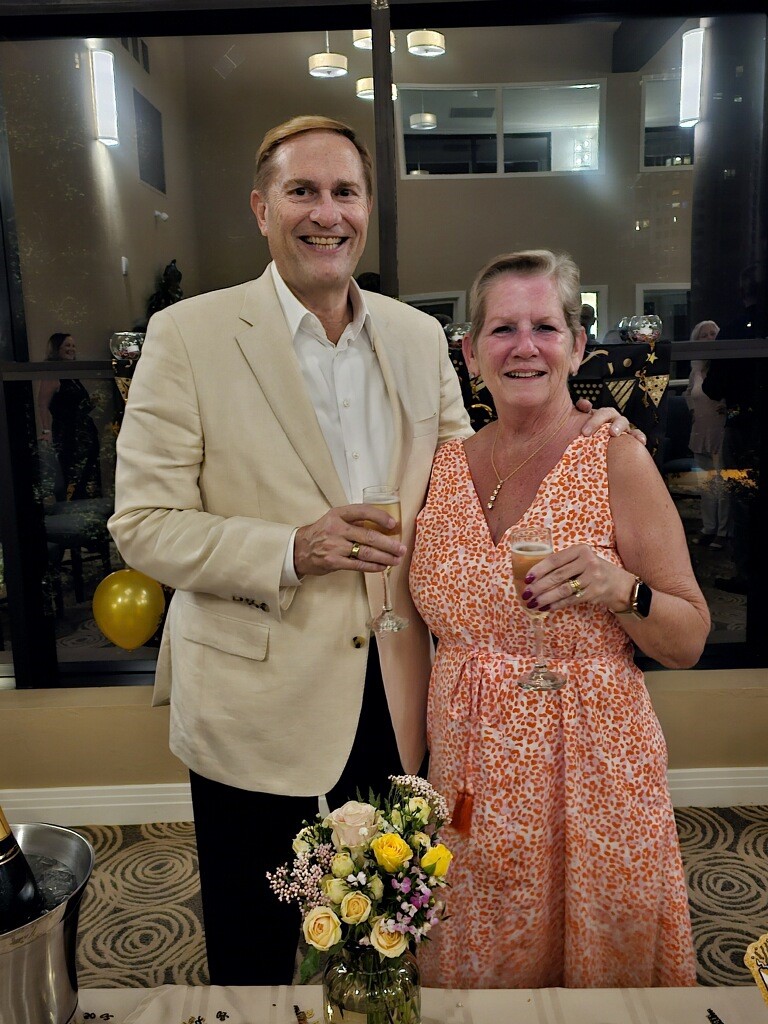
Barb and I grew up in the college town of Manhattan, Kansas. We sang in the church choir and casually got to know each other as a result. On June 6, 1971, we were putting our robes away after church and I saw this newly minted 16-year-old very shy girl walk up to one of my friends and ask him if he would be her date for a dance that was being sponsored by an organization to which she belonged. He summarily said, “No.” She then approached another of my friends and asked him the same question. He told her he was going to be out of town (or some such excuse). Finally, she made her way to me with the same inquiry. I was third choice!! I promptly told her that I needed to check with my mother. A day or so later I called and said I would accompany her to the dance.

On June 19, 1971, the big day of the dance arrived. It was a statewide event and was held on the Kansas State University campus. Now get this – there were 500 girls, 500 mothers, and three guys – I was in the group of three. At 17, I was a VERY experienced dater, and I must tell you that this was the worst date I’d ever been on. But there was something magnetic about this girl, and a couple weeks later we went to a movie and got a bite to eat – and it turned out to be a great date. And the relationship bloomed thereafter.

Roll the tapes forward to January 5, 1974. It was a bitterly cold night – minus five degrees was the actual temperature and there was snow on the ground. On that night, an 18-year-old girl and a 19-year-old boy tied the knot . . . and that was back in the day when you had to wait nine months to prove to everyone you didn’t have to get married. We smartly waited seven years to bring our daughters into the world. The ensuing decades have been a whirlwind. Much laughter, a few sorrows, tremendous successes, and many wonderful memories have been made. Through it all, Barb has been the center of my universe to which I will be eternally grateful.

We don’t talk about business very much though I tell her anything she wants to know. She was a nurse in the neonatal intensive care unit at Children’s Mercy Hospital in Kansas City for 29 years before she retired. She has a wide range of interests and activities – but above all, she “levels me out” which helps keep my Type A personality in check. We celebrated our 50th wedding anniversary a couple of days ago and I surprised her with a trip she never thought we would take, and a surprise party with our friends. Her tears of joy flowed throughout the evening, and I was overwhelmed with the knowledge that I had made her so very happy.

As an entrepreneur, it’s fascinating to see how the twists and turns in my life have resulted in the kind of inspiration I have experienced since that first date in 1971. Barb’s calm, unflappable demeanor has been critical to the positive energy that I’ve channeled into my career. We trust each other unequivocally which has developed into a partnership of equals with shared responsibility and 100% respect for each other. I can practice my professional craft knowing that I have a rock at home who is my biggest cheerleader and advocate. Our love for each other grows by the day – and having such a deep foundational relationship has allowed me to express my creativity in a multitude of ways. If I fail at something, she does not judge me. If I succeed at something, she celebrates with me. This sort of unconditional love is an accelerant for my entrepreneurial instincts.

I pinch myself every day knowing how fortunate and blessed I am to have been third choice! What an inspiration this beautiful, amazing, not-so-shy (now), wonderful woman has been to me! I love you forever, dear!

This blog is being written in tandem with my book, “An Entrepreneur’s Words to Live By,” available on Amazon.com in paperback and Kindle (My Book), as well as being available in all of the other major eBook formats.

The “Looking for the Good” Entrepreneur

When you look at me, what do you see? When you look at others, what do you see? Am I judged by my appearance? Are you skeptical or wary? These thoughts offer an interesting commentary on our society in general and on entrepreneurship in particular. Here’s what I have observed – about others and sometimes about myself. Are we looking for the good in our fellow man, or are we focused on finding fault? The political situation has disproportionately magnified this concern. Our country is so divided and partisan that it’s easy to instantly brand another person based upon what we perceive to be their ideology. Rightly or wrongly, if they are branded as a liberal or conservative; a Democrat or Republican, we may automatically draw conclusions that don’t serve us well.

I am renewing my efforts to work harder to see the good in others; to help build others up, rather than tearing them down. Does this sound trite? Think about it for a moment. Jonathan is negotiating to purchase a piece of equipment for his factory. There are major dollars involved and he has located the item that is only slightly used. Jonathan’s first thought is, “I wonder how I’m going to get screwed by the seller?” Right out of the blocks he’s telling the universe that he expects to be taken advantage of. He knows nothing about the individual who is selling the equipment. When asked why he feels this way, he responds, “Well, you can’t trust anyone these days.” Wow! We’ve all heard this before. But why would we set expectations this way? The transaction is immediately infused with negative energy from the start.

Here’s another one. Molly is the 28-year of vice-president of marketing at a consumer products company. While interacting with a prospective client who is in his sixties, he makes a rather inartful comment. Molly is immediately triggered into thinking that she is being harassed. The comment was harmless to the client from a generational perspective, but Molly now sees him as a horrible person. From this point forward, everything he says and does is seen by Molly in a negative light.

Here’s the last example. Henry is interviewing candidates to fill a software development position. One individual had a very pronounced southern accent and was slightly overweight. These traits were off-putting to Henry, and he scratched the candidate from consideration. This was a classic case of “judging a book by its cover.”

Now let’s look at the flip side of these encounters. For Jonathan, he had no idea that the company selling the used piece of equipment had a new piece of equipment arriving within two weeks and needed to quickly remove the old piece. To accomplish this, the company marked down the price significantly to move it.  The equipment had been maintained in pristine condition and was truly a bargain. Instead of her knee-jerk reaction to the older client, Molly might have chalked it up as a comment that was not intended to be offensive and watched to see if there was any other behavior that warranted concern. Finally, had Henry tested his candidate, he might have found a brilliant mind hiding inside that southern good old boy.

Ronald Reagan once used the term, “trust but verify” when answering a question about nuclear disarmament. This concept remains as viable today as it was back in the 1980s. Rather than thinking the worst about others, we instead genuinely think the best about them and through our interactions, verify that they deserve our positive feelings and goodwill. Instead of being on guard all the time, we embrace others and reject the notion that they intend to do us harm. If at some point it is clear they are intentionally breaking our trust, then we change our feelings toward them.

Our entrepreneurial endeavors are enhanced when we see the best in others. When we establish our relationships in a positive manner they will flourish. When we help build others up, both parties will be the beneficiaries. Several years ago, I had the opportunity to begin working with an individual that represents a company with which we’ve done business for years. Another member of our team had previously dealt with him numerous times and had negative things to say about their encounters. I chose not to have preconceived notions about this individual and after several e-mails and conversations, found him to be most pleasant and helpful. He conducted himself honorably and while a little slow with his responses, always managed to follow through. I believe that if I had bought into my teammate’s feelings, my interactions might have been less positive.

When we adopt the trust but verify attitude, we can build strong and lasting relationships that will flourish over time. Thus, when you ask me what I see, I say that it’s all good.

This blog is being written in tandem with my book, “An Entrepreneur’s Words to Live By,” available on Amazon.com in paperback and Kindle (My Book), as well as being available in all of the other major eBook formats.
The Coin-Operated Entrepreneur

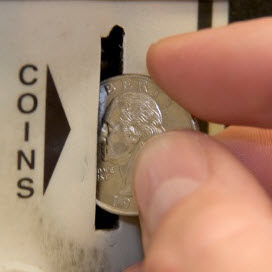
Jeff sells office equipment. He eats, sleeps, and breathes office equipment. His product line is significant – copy machines, postage meters, calculators, file cabinets, laser printers, desks, chairs – you name it, he sells it. Jeff has taken every sales training course known to mankind. He has read every book on selling techniques and attended a gazillion seminars. His lexicon includes words and phrases such as targets, sales funnel, objections, buying signals, gatekeeper, closed-end questions, open-end questions, deal flow, decision maker – you get the picture. And every day Jeff puts into practice what he has learned. But is he successful at what he does? Sure, he makes a decent living but while reaching for the stars, he’s lucky to make it to McDonald’s on the last exit out of town. While not exactly a Willy Loman, Jeff can be classified as a coin-operated salesperson.

The world is full of entrepreneurs who are really just coin-operated salespeople. They all want to be superstars and almost every single one of them will never be. They hew to the traditional basics and fundamentals of sales. The Jeffs of the world will absolutely try and close the deal seven times because that’s what the experts say must be done. They will sweat their quotas and worry that the last deal they did will be the last deal they’ll ever do. Their ultimate goal is to ring the cash register. Move that product in every increasing numbers. Numbers, numbers, numbers! What a shame. It doesn’t have to be this way. Jeff and his ilk could take a much easier road – one that would be far more productive for them and their customers.

First and foremost, real “sales” isn’t about selling. It’s about helping people buy. What’s the distinction you ask? It begins with the real reason for a sales encounter. If that reason is to put money in my pocket as a salesperson, then the motivation is all wrong out of the gate. Instead, we might want to see the sales encounter as an opportunity to help someone else. To do this we need to build a genuine relationship with the customer. We need to understand what the customer needs. Far too many salespeople are unwilling to invest the time and effort that is required to really understand their customers. If they can’t get a sale quickly, they are ready to drop the customer instantly and move on to the next one. After all, they rationalize this behavior because they have a family to feed.

We can hone our entrepreneurial approach to avoid being a coin-operated salesperson. As entrepreneurs, we’re always selling. But if we adopt the attitude that we’re going to help people buy, our mindset will be so different that we’ll avoid the coin-operated traps. For starters, we are customer-centric instead of product-centric. This means that we will do whatever it takes to make sure that we are being of service to our customers. We aren’t going to try and foist our products or services on them if they aren’t interested in buying from us. And yet we’ll continue to work to build a relationship with them over time – even if they aren’t buying today. Relationships are kings of the castle.

Building lasting relationships requires a lot more than what we learn from standard sales training. It taps into our intuition and forces us to “read” people in such a way as to understand them and the complexities of their lives. Building true relationships avoids manipulation. It avoids quid pro quo. We’ll do things for our customers because we are here to serve the relationship – regardless of whether they buy from us. And as I’ve said many times, this is not a Pollyanna-ish concept. I’ve lived my life this way and have countless examples of relationships that I’ve served that never bought anything from me. But great good has come into my life as result of these relationships whether from the referral of other customers, new team members or opportunities of which I would never have been aware. I know that it’s hard not to be a coin-operated salesperson when there’s a mortgage to pay, the kids need braces, and the car is on its last legs. But that’s even more reason to dump the “paint-by-numbers” approach and focus on relationship-building and being customer-centric.

We will have much more success when we help people buy what they need than when we try to sell to them. This requires the long-term process of building and serving relationships. But the payday in the end is far greater than the coin-operated method of selling.

This blog is being written in tandem with my book, “An Entrepreneur’s Words to Live By,” available on Amazon.com in paperback and Kindle (My Book), as well as being available in all of the other major eBook formats.

Commitment and the Entrepreneur

A few years ago, we offered a managerial position to a prospective team member. All the background screening was complete, and he accepted the offer. We even had a firm starting date and appreciated the fact that he felt that he needed to give two weeks’ notice to his current employer. A few days before his starting date he let us know that he wouldn’t be coming to work with us after all. It seems that his employer had offered him $12,000 more annually and he was going to stay put. There is so much wrong with this that I don’t know exactly where to start. Unfortunately, this has happened to us several times since. And I know that other businesses have encountered the same thing.

From the prospective team member’s standpoint, I have a real problem with this individual making a commitment and then reneging. Oh, I’ve heard all sorts of rationalization. “This is just the way of the world today.” Or “You can’t really blame someone for wanting to simply take care of his family.” And “This is classic Millennial behavior.” To all of this I say . . . hogwash. Strong relationships are built on commitment. It’s this way in a marriage, in a friendship, in business and certainly between an employer and an employee. Yet, some people see a potential job shift to force their current employer to give them a raise – never mind that they’ve led their prospective employer down the primrose path.

Let’s look at the other side of the equation. By offering more money not to leave, the current employer is effectively saying to its employee, “We’ve been underpaying you all along and we knew it.” How does this reflect the commitment of the employer? How is it that on one day an employee is worth what he has been paid all along, and the next day he’s suddenly worth $12,000 a year more? Why would the employee want to continue working for a company that does this?

One of our company’s five core values is Commitment. It’s definition – “We hold ourselves accountable and deliver on our promises.” Our rationale – “When we are fully committed, we are reliable and work diligently. Our commitment fosters dedication and loyalty.” We also wrap this core value with individual and organizational actions. From an individual perspective, “I take responsibility for my roles and accountabilities and strive to surpass expectations. I do what I say, I follow through and take ownership of my actions. I contribute constructive input for our company when requested or when needed.” From an organizational perspective, “Our leaders follow through and honor their commitments. Our leaders strive to make decisions keeping in mind the company, team members, customers, and stakeholders. Our leaders are dedicated to supporting their team members so they can fulfill their commitments.”

In 1975, I interviewed for several jobs as I was about to graduate from college. I agreed to work for my current company and was immediately contacted by another prospective employer and offered a position that would have paid more. The thought never crossed my mind to even consider the offer because I had already made a commitment to my current firm. That was the way of the world in 1975. Sadly, as a society we’ve lost the meaning of the word Commitment.  

For entrepreneurs trying to build a business, probably the most valuable resource we have is people. Without people, it’s virtually impossible to build an organization that provides a product or service to our customers. To attract and retain people we must demonstrate commitment in many forms. Our team members need to see that we are committed to making certain they are paid as promised. They need to know that we as leaders are committed to their well-being, to their growth and development, and to the long-term sustainability of our organizations. Perhaps by modeling commitment on our end, we can attract team members who will value this and become dedicated and loyal over the long haul.

I recommend that every entrepreneur adopt Commitment as a core value. By delivering on it each day, maybe it’s possible that the tide will turn, and we can return to the day when our word is our bond.

This blog is being written in tandem with my book, “An Entrepreneur’s Words to Live By,” available on Amazon.com in paperback and Kindle (My Book), as well as being available in all of the other major eBook formats.