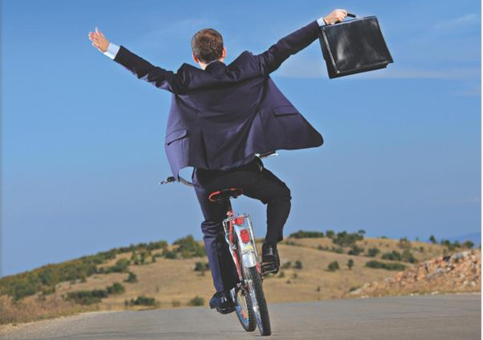
The “On-It” Entrepreneur

Nathan is an entrepreneur who started a medical device company four years ago. The enterprise is really beginning to scale with 47 employees and top-line revenues that exceed $10 million. Its gross margin is steadily improving, and serious profitability is within sight. With all his success, however, Nathan is finding each day to be more and more frustrating. He is pushed and pulled in many directions and is constantly being hounded by members of his team to make a myriad of decisions. He worries about whether things are beginning to spin out of control, and the go-go nature of his organization is beginning to take its toll.

What Nathan is experiencing is very common for entrepreneurs with companies at this stage of growth. Often, Nathan finds himself enmeshed in the tiniest of details. While it may be satisfying for him to have such a thorough understanding of every aspect of his business, something in the back of his mind tells him that this practice is not sustainable. In the final diagnosis Nathan is spending too much time working IN his business and not enough working ON it.  

I know many entrepreneurs who suffer this condition. I’ve certainly been there myself. We reach a degree of early success in our business by paying close attention to detail. Our focus is laser-like. All of this becomes one of our primary points of differentiation. But maintaining this level of focus on tactics and granularity does not allow us to scale if we continue to be in the center of it all. By the time we are starting to scale on a regular and significant basis, our energies need to shift toward becoming more strategic – that is, working ON our business. Many entrepreneurs want to lead by example. They are proud of the fact that they can go onto the plant floor and operate a machine that produces a thingamajig. In Nathan’s case, he considers it a badge of honor that he has the uncanny ability to design a state-of-the-art medical device from start-to-finish.

Here’s the problem with Nathan’s approach. He may be sending a signal to his team that they are inadequate as product designers even though this may not be true. The team may also develop a tendency to sit back and wait for Nathan to “make his move.” They are thinking, “Why bother, Nathan is going to jump in any way!” Further, there are other pressing issues that Nathan may be leaving unattended – or he may be intentionally avoiding them altogether. Eventually the lack of strategic direction will trap the company in a perpetual state of go-go where everyone feels as though they are on an endless hamster wheel and not getting anywhere.

So, what exactly does work ON the business mean? For Nathan, he needs to create a clear vision for his enterprise and communicate it in an understandable fashion to all 47 of his team members. He needs to work with his senior leaders to establish Key Performance Indicators (KPIs) that he monitors collaboratively with them. Nathan needs to have a deep understanding of his industry, its trends and how he should tweak and refine his operation to take advantage of this knowledge. He will also work with his senior team to develop specific strategies that are designed to deliver on his multi-year vision. Perhaps he’ll call on different customers periodically to learn more about what they think of his company and the products it provides. Nathan should “fly” between 50,000 and 100,000 feet most of the time. But there may be special situations where he swoops down to 500 feet to verify something he’s been told or to share domain expertise for training purposes.

I’ve known (and mentored) entrepreneurs who simply don’t want to move to a model of spending 75% or more of their time working ON their business. Working IN their business is where their heart is and where they are most comfortable. Not only that, but they are also really, really good at what they do. My advice has been to “fire” themselves from their CEO roles and hire someone to handle this function. When they finally get past their ego, they realize that they still own the business and make the final decisions. In Nathan’s case, if he’s truly a superstar medical device designer – and if this is where his passion lies – he’ll be happier (and richer) by hiring someone to work ON his business while he works IN it.

Spending most of our time working ON our business will yield positive results. But if doing so isn’t appealing, we should look in the mirror and say, “You’re fired!” Then we can hire a professional to handle this important function and devote our time and energy to what we do best.

This blog is being written in tandem with my book, “An Entrepreneur’s Words to Live By,” available on Amazon.com in paperback and Kindle (My Book), as well as being available in all of the other major eBook formats.
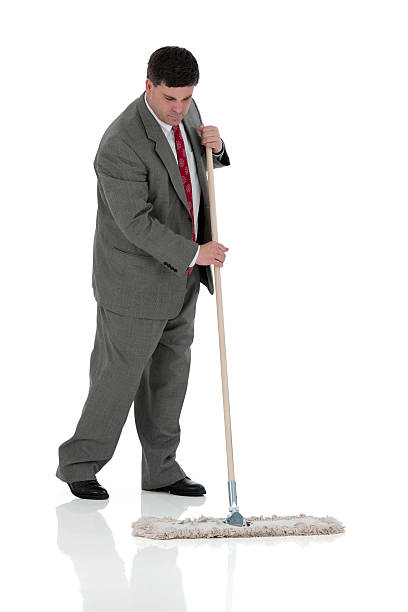
The “Paladin” Entrepreneur

I grew up in an age where the hero of the day was a cowboy or someone like Superman. I think my favorite was a character named Paladin played by Richard Boone in Have Gun Will Travel TV western series that ran from 1957 to 1963. Paladin wore a black hat, but he was definitely a good guy. He took care of the bad guys with his cunning and his fast gun. He wore a stoic expression and generally solved the problems he faced by himself. You never saw him flinch. There were no high fives; no fist bumps; no complaints, and he was always the gentleman. Many of us grew up idolizing macho heroes of this sort.

Paladin is a wonderful metaphor for today’s entrepreneur. How many of us take the “never let ‘em see you sweat” approach and soldier on to the finish line regardless of the obstacles we encounter? I know that I certainly have felt responsibility for the hundreds of employees and their families that are integral to the success of our companies. And as a result, there have been times when I have sacrificed mightily to make certain that my colleagues are safe and secure. After all, isn’t that what a leader is supposed to do?

We entrepreneurs often spend more time working in rather than on our businesses. I will stand at the head of the line to admit that in the past I handled things that others could have been doing because I a) wanted to set a good example, b) figured that I could get it done more quickly than showing someone else how to do it, or c) wanted it done properly. After a while I began to wonder why everyone stepped back and let me do these things not realizing that the example I was setting was encouraging people to believe that I would handle it! I suppose at the time that there was a feeling of indispensability on my part. I needed to be in the middle of things to pave the way to victory.

So, what did I learn following this path? I learned that no one saw me as “the hero.” They became reliant upon me and they also felt that I did not have confidence in them. Apathy became a real problem. The quality of work slipped because the “Lee will fix it – he fixes everything” syndrome was in full swing. I was burning out and not having as much fun as I had in the past.

As I’ve gotten older I’ve come to realize that if I really care about my team members and their families – and I really do – the most important thing I can do for them is to create a sustainable organization. Companies where the founder or key principal micromanages everything and strangles everyone are doomed to die when the leader retires or dies. I cannot bear the thought of that happening to the people I have worked with for decades. My solution has been to develop a culture of empowerment and coaching. I now spend time helping my teammates learn how to fish as opposed to doing the fishing for them. It is my responsibility to hold the vision for our companies, but that has become a shared vision rather than just my vision. Delegation is a key element to sustainability and all team members now have clearly defined roles and accountabilities with training and resources devoted to helping them succeed.

Heroes come from the battlefield or burning buildings and not from the boardroom. Sharing responsibility is the best way to create a sustainable organization.

This blog is being written in tandem with my book, “An Entrepreneur’s Words to Live By,” available on Amazon.com in paperback and Kindle (My Book), as well as being available in all of the other major eBook formats.

Un-Stale Leadership Ideas

There’s an interesting article by Stefan Stern from the Financial Times publication dated November 10, 2008. “While cleaning out his attic, a British business leader stumbled upon some typewritten notes on leadership from the 1950s. ‘Leadership is the art of influencing a body of people to follow a certain course of action, the art of controlling them and getting the best out of them.’” Sounds kind of old-fashioned, doesn’t it? The art of controlling them? That’s an attitude that’s not likely to win many awards in this day and age. The article and this statement in particular got me to thinking about leadership. And because I’ve lived long enough, I’ve had the good fortune to experience many different leadership styles. So, here are some personal observations that have helped me develop my own leadership style.

Entrepreneurs are often “quick on the draw.” A team member asks a question or brings us a problem and our instinct is to provide the answer or solve the problem. Then we move on . . . quickly. In the old days, that would probably have been considered “leadership.” One of my goals is to develop a sustainable organization that is no longer dependent solely upon me. If I answer every question and offer every solution, how does this support others in their quest to step-up and become leaders in their own right? I believe that leadership involves leading people to answers and solutions rather than simply telling them.

I’ve heard certain pro athletes and a number of entrepreneurs who says it’s not their job to be role models. It seems to me that anyone who has the megaphone ought to savor the opportunity to set an example for others. Doing so also enables us to become more accountable to our team. Back to the sustainable organization concept for a moment – do I want to display anger; yell at people; exhibit boorish behavior, and generally put my ego front and center? When I model this way, what message does it send to up-and-coming leaders? Here’s the simple truth for me. I don’t want to show any sort of negative behavior for which I should apologize.

One of the toughest aspects of being an entrepreneur is communicating our vision to our team. Most of us have a vision of some sort locked away in our brains. I was asked for years by my teammates for my vision, but never could figure out how to articulate it clearly until recently. Having a vision and communicating that vision are two entirely different things. When I mentor other entrepreneurs, I ask them a very basic question. What does it look like when we get there? Focusing on this question eliminates the psycho-babble and gets to the heart of the matter. In plain English it requires that we paint a word picture that everyone can understand. We should never forget that people are drawn to leaders who can express a strong and powerful vision.

As a leader, how much time do you spend working on your business rather than in your business? I can tell you that I love doing complicated real estate deals. Without question, that’s working in my business. It would be very easy (and profitable) for me to focus all of my time and energy on buying and owning apartment properties. But that doesn’t advance the cause for the sustainable organization that I have envisioned. Thus, I must spend significant time working on my business. This involves developing a wide range of strategic initiatives, cultivating and educating team members, and helping to define our mission. A great leader will spend far more time working on his or her business than working in it.

While there are many other modern leadership traits to be explored, the last one on which I want to focus is that of attitude. Leaders with negative attitudes generally produce negative results. Over the past four-plus decades I think I’ve become more and more positive and optimistic. I realized that it’s not much fun to work in a negative environment. And as a leader, if I’m down-in-the-mouth it’s pretty hard for that attitude not to become contagious. I’ve come to realize that there’s always a silver lining in every situation and it’s my aim to find it. This doesn’t mean that negative things won’t happen – they do. But the faster we can move on and regain positive footing, the faster we’ll get back on track. It’s my goal to be a positive and optimistic leader every second of the day.

Modern leadership still embodies ageless basics and fundamentals that unlike bread, never grow stale. But there are some “new age” twists that help propel us to new heights of success and create sustainable organizations in the process.

This blog is being written in tandem with my book, “An Entrepreneur’s Words to Live By,” available on Amazon.com in paperback and Kindle (My Book), as well as being available in all of the other major eBook formats.