What Happened to Recess?

Question: Why is it that so many work environments are staid and boring? No one seems to want to have any fun.

Answer: I remember how recess was a much anticipated event in my elementary school years. We’d keep our nose to the grindstone with reading, writing and ‘rithmetic, and then the teacher would announce that it was time for recess. The clouds would part, the sun would shine, the birds would chirp and the angels in heaven would sing the sweetest songs ever heard. We would stream outside for 15 or 20 minutes of pure bliss. As we grew older we bought into the notion that a play break was only for kids.

Part of the problem is that many people see work as work and play as play. For some reason they believe that there can’t be an intersection between the two. As entrepreneurs we can be pretty intense at times, so lightening things up a bit is very much in order. Many of us learned that we should always be prim and proper – if we let our hair down at all, we’d be viewed as immature and it could hurt our chances to advance in the world. Fortunately there are some companies and organizations that are discarding these old mores. Hopefully this trend will continue.

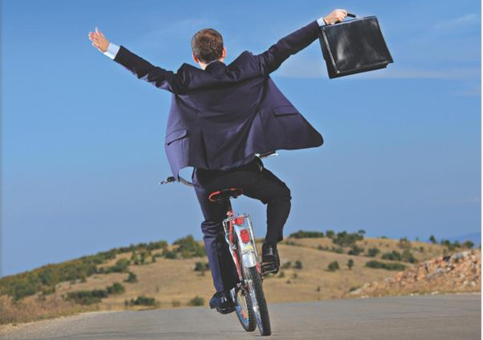
Having fun while we work makes us more productive and more effective. It also allows us to build relationships and helps us to avoid burnout. So how can we infuse the concept of recess back into our daily lives? We can start by giving ourselves permission to have fun, and to discard some of the old tapes that are playing in our heads that tell us we should not play at work. Then we find things to do during the day that bring joy and laughter to others. For a number of years during the heat of the summer, I donned an ice cream cone costume and pushed an ice cream cart around the office. I dispensed ice cream bars to our associates and elicited a lot of smiles in the process. It was fun for them and I had a blast.

One company that seems to weave the recess mentality throughout each day is Southwest Airlines. The employees are given license to have fun. Flight attendants sing and dance and the pilots provide witty commentary throughout the flight. I’ve spoken with many, many Southwest employees over the years, and every one of them provided testimony as to how much fun they have serving their customers every day.

Life is too short not to be happy and smile all the time. There’s no reason to turn off our joy when we are working. When we have fun and include others in the process everyone benefits. And the simple and beloved concept of recess lives on.

This blog is being written in tandem with my book, “An Entrepreneur’s Words to Live By,” available on Amazon.com in paperback and Kindle (My Book), as well as being available in all of the other major eBook formats.


recess

Intentional Grounding

Question: I personally have a problem with pursuing the future. When I do, I don’t live in the “now.” How can a person remain in the moment but also remain mindful of his future vision?

Answer: It does seem like we must have a bit of a split-personality to do both, doesn’t it? And there’s no doubt that it can be quite confusing at times. On the one hand we’re advised to live in the moment. I certainly subscribe to the philosophy of “live today like you’re going to die tomorrow.” If we spend too much time planning for the future we miss what’s happening today. But on the other hand, if we give no thought to the future, we may not achieve our ultimate goals and objectives.

I’m by nature a planner. I totally enjoy the “vision thing” and plotting a course of action to get there (the mission). A song from 1974 really put it in perspective for me though, and could easily be the national anthem for entrepreneurs . . . The Cat’s in the Cradle by Harry Chapin. To refresh your memory, the song refers to a father and son who are like ship’s passing in the night – always paying lip service to each other but never making the choice to spend quality time together. That song has served as a perpetual reminder to feel the full experience of what I’m doing every moment.

Living in the present and holding a future vision are not mutually exclusive. We entrepreneurs are so driven by our vision that we never have to worry about losing sight of it. It’s our natural disposition to gravitate to holding and nurturing our vision. What we generally have to work harder to accomplish is being in the now. I believe that the key to succeeding in both realms is to be intentional. This means that for whatever we’re doing we need to focus and really see what we’re looking at. If it’s a daughter’s soccer game or a son’s piano recital we need to intentionally focus our attention on this event. Enjoy it, embrace it, and celebrate it. Likewise, when we are contemplating our future vision, we do the same. Be there intentionally without any other distractions and enjoy, embrace and celebrate it. To steal a football term, I like to call this “intentional grounding.”

In the end it’s important to remember what we value. As entrepreneurs we value the passion we have for our friends and families as much as our passion for our chosen profession. The only way we can adequately tend to both passions is to be totally present for each. Succeeding in this regard takes a great deal of practice – it won’t happen overnight. But intentionality will make it so.

This blog is being written in tandem with my book, “An Entrepreneur’s Words to Live By,” available on Amazon.com in paperback and Kindle (My Book), as well as being available in all of the other major eBook formats.

spyglass

It’s Later Than You Think

Question: I have a colleague who is habitually late for everything. This is really aggravating and is hurting our business. Why is he this way?

Answer: I once had a partner who was always late to everything. When I’d say something to him about it, he’d only laugh it off. I finally realized that he was late on purpose. Why? Because I believe that he always wanted to make a grand entrance to any meeting or appointment. I think he felt it gave him some sort of power over everyone in attendance – they had to wait to start until he arrived.

There are several reasons for lateness. The first (and worst) is exemplified by my former partner (who sadly is deceased) as described in the preceding paragraph. Another reason is a lack of organization and/or poor time management. A third reason is simply not caring that others must wait. And finally, every once in a while there may be an unavoidable occurrence that prevents us from being on time.

It’s important for us to put ourselves in the shoes of others and think about how they feel when we are late. I personally resent it when others believe their time is more valuable than mine and choose not to be on time for an appointment or meeting. This drives me to try and be early to meetings that I attend. I don’t believe there is any such thing as being fashionably late. Suppose I am on a phone call and know that I need to leave in five minutes to meet an investor for lunch. And suppose that I know that the call I’m on is going to take longer than five minutes. I will ask the other party if I can call him or her back from my cell phone and finish the conversation while I’m driving. I’ve never had anyone object to this approach and I’m always on time when I use it. For the few times I’ve actually been late, I always call ahead and let my party know exactly when I will arrive – even if I’m only going to be two or three minutes late.

Recently I made an appointment to see an oral surgeon for some dental work. I arrived 10 minutes early and was informed that the surgeon was running 75 minutes behind. No one bothered to call me in advance. I re-scheduled the appointment with assurances that I would “get right in.” Once again I arrived early and was processed by the receptionist. After 30-minutes of waiting past my appointment time I left for good and wrote the surgeon a letter. He called and apologized and then blamed his staff for poor communications. Not once did he take responsibility for overbooking. This obviously was his modus operandi which seems to be the case for many in the medical profession. I formed an unfavorable opinion about him and unfortunately (for him) have related this story many times. He’s probably a fine surgeon, but projects an air of arrogance with his tardiness.

Being late is a simple choice. We may believe that we have a legitimate excuse, but again, it begins with a choice we make. When we are early for an appointment or meeting, we send a signal that we truly value the other person. This small, uncomplicated act does wonders to build strong and positive relationships.

This blog is being written in tandem with my book, “An Entrepreneur’s Words to Live By,” available on Amazon.com in paperback and Kindle (My Book), as well as being available in all of the other major eBook formats.

lateness

Speak to Me

Question: Recently I was asked to speak before an industry group. I’m very nervous about giving this presentation. How can I get rid of the butterflies and give a talk for which I can be proud?

Answer: Public speaking offers a terrific opportunity to share knowledge and gain exposure for your organization and yourself. And yet it’s something that a large percentage of the population fears . . . even dreads. Why is that? I believe that the main reason is that we are so afraid of what other people will think of us. What if we make a mistake? Will we be viewed as not having the expertise that we want to project? Perhaps we measure ourselves against the lofty speaking styles of those we perceive to be great orators.

As with most things, successful public speaking is all about mindset. We can allow the fear to consume us or we can turn the tables and actually embrace the opportunity. Think about this. The choice is very clear – consuming fear or a joyful embrace. Assuming that we choose to embrace the opportunity we then must continuously affirm how positively excited and grateful we are to be making the presentation. Making this choice is Step One in the process.

Step Two is to determine the style of speaking that is best suited for us. I detest standing behind a podium and reading a speech. Instead, I need to connect with my audience. I’ve adopted a style where I take a microphone and walk around the room – almost like a town hall format. I ask questions of the audience and encourage their feedback throughout my presentation. Thus, I do not put myself in situations where I can’t adapt the presentation to my style. And when I’ve been asked to stand behind a podium and read a speech, I’m generally able to re-work the format into my walk-around more casual approach. Finding the right style of speaking is a critical step toward a successful presentation.

Step Three is to practice, practice and practice. I recommend that you practice your presentation at least three times in front of other people if possible. The more you practice the more confident you will become. Practice also will allow you to become more fluid in your delivery and to fine tune some of the details that you wish to present.

So, now we have continuously embraced the opportunity with a positive attitude. We have developed a speaking style that is just right for us. And we’ve practiced our presentation multiple times. Now the moment of truth has arrived and perhaps we’re feeling a little jittery. Try “leaning into” the jitters. Instead of allowing them to nibble at our confidence, we turn the anxiety into excitement. Try exclaiming, “I am thrilled to have the opportunity to make the best presentation I’ve ever made in my life!” Say it multiple times along with a few deep breaths, and we’re ready to rock-and-roll.

Speaking in public is an honor. Presenting over and over ensures that we’ll become highly proficient. And then the feeling we get when we’re finished is that of supreme satisfaction.

This blog is being written in tandem with my book, “An Entrepreneur’s Words to Live By,” available on Amazon.com in paperback and Kindle (My Book), as well as being available in all of the other major eBook formats.

public speaking