
Unknown's avatar

About anentrepreneurswords

R. Lee Harris grew up in Manhattan, Kansas and has lived in the Kansas City area since 1977. A 1975 graduate of Kansas State University, Harris began his career with Cohen-Esrey, LLC as an apartment manager two weeks after he graduated. Now president and CEO, he is involved in apartment management, development and investment; construction and tax credit syndication on a nationwide scale. Over the course of his career Harris has overseen the management of more than 27 million square feet of office building, shopping center and industrial space and nearly 60,000 multi-family units. He has started dozens of business enterprises over the past 40+ years. In 1991, Harris wrote a book entitled, The Customer Is King! published by Quality Press of Milwaukee. In 2012 he authored the book, An Entrepreneur's Words to Live By. He has mentored a number of business people over the years and has been a long-time participant in the Helzberg Entrepreneurial Mentoring Program. He and his wife Barb have two grown daughters and one grandson. They are active in their church, community and university.

Ted’s Song

Southwest Airlines has been in business since 1967 and has recorded 43 consecutive years of profitability. The company flies 707 Boeing 737 aircraft with 278 more on order. Southwest pioneered low-cost air travel and has grown to be one of the largest airlines in the world. United Airlines launched Ted, its low-cost brand in 2004 with 56 Airbus 320 aircraft. It folded operations in 2008. Delta Airlines launched Song, its low-cost brand in 2003 with 47 Boeing 757 aircraft. It folded operations in 2006.

How is it that two enormous legacy air carriers failed to challenge Southwest with similar low-cost service? Just like Southwest, they flew point-to-point routes. They used a single type of aircraft, just like Southwest. And they charged low fares, just like Southwest. What’s more, they had massive financial backing from well-established parent companies. All three companies were playing a commodity game. So why did Southwest win the game?

There was one aspect that neither Ted nor Song could replicate. Southwest had developed a unique culture that was friendly, whimsical and borderline radical at times. Customers were attracted to this culture. Southwest passengers enjoyed corny songs sung by flight attendants and the overall attitude of the Southwest team. Ted and Song were simply offshoots of United and Delta and reflected their respective cultures. It’s true that there are other low-cost airlines that are profitable today, but they haven’t made serious inroads into Southwest’s market share or customer base.

What’s fascinating about all of this is how a Winning Culture can be so elusive. I’ve said many times that I’m not particularly concerned about sharing my playbook with my competitors. It’s not the design of the plays that necessarily wins the game. It’s how well those plays are executed that makes the difference. There are a multitude of sports metaphors in this respect. Think of all the professional football teams that are stocked with amazing athletes possessing world-class talent. And every single team has a playbook full of intricately designed plays for the offense and the defense. Yet, a dropped pass here and a missed block there can be the difference in whether a team wins the Super Bowl or watches it at home on TV.

What exactly is a Winning Culture? As entrepreneurs, it is something we may not think much about, but it can be the difference between success and failure. Far too often, entrepreneurs may not pay enough attention to creating and nurturing a Winning Culture, opting instead to focus more exclusively on operations and metrics. Southwest infuses the following into every employee it hires:

  • A warrior spirit
  • A servant’s heart
  • A fun-luving attitude (Southwest’s stock ticker symbol is LUV)

At Southwest, the warrior spirit is “being fearless in terms of delivering the product,” according to Ginger Hardage, the now-retired chief communications officer. The servant’s heart is based upon the Golden Rule and the need to treat everyone with respect. It’s pretty obvious what the “fun-luving attitude” is all about. Southwest looks to hire people who don’t take themselves too seriously and always have a smile on their face. There’s no question that Southwest pays a great deal of attention to operations and metrics, but its cultural foundation is rooted in these three values.

When a company stops winning and starts losing, the first place to look is to see if it has strayed from its Winning Culture. If the culture’s not right, the operations may be off kilter and the metrics will look bad. I believe that we must fix the culture first and then make the technical adjustments from there. And one more cogent point needs to be made. A Winning Culture is different than just plain culture. An organization may have a culture that has been intentionally cultivated, but doesn’t necessarily lead to winning. To win, we must be extraordinarily positive about it. Our entire team must be convinced that we are going to win and they must completely embrace the notion.

A Winning Culture is not replicable. It is unique to each company or organization and must be developed organically. It enables us to execute our playbook effectively in ways that our competition can’t.

You can also listen to a weekly audio podcast of my blog. What you hear will be different than what you read in this blog. Subscribe on iTunes or wherever you get your podcasts. You can also click on this link – Click here to listen to Audio Episode 31 – Balls in the Air.

This blog is being written in tandem with my book, “An Entrepreneur’s Words to Live By,” available on Amazon.com in paperback and Kindle (My Book), as well as being available in all of the other major eBook formats.


ted-airlines

Leap Year

It’s Leap Year! When you check on this statement you may be confused because it might not be officially true – at least according to the calendar. But from an entrepreneur’s perspective, it’s Leap Year. OK – some additional set-up is in order. Let’s think about where we are in our lives and in our careers. What have we achieved? Does it seem like we may be putting one foot in front of the other and carefully walking down the street? Is something holding us back from bursting into a full sprint? Do we have a gnawing feeling that we’re behind the curve and maybe even falling short?

I’d like to tell you a story about a friend of mine. I have his permission to share this, so I’m not talking out-of-school. More than 15 years ago he asked me if I could mentor him in a life-coaching sense. He had a great job with a well-known and highly respected company and was climbing the ladder. He had the opportunity to move to another city with the same company and eagerly did so. He continued to excel in the corporate world and was financially secure. But he was yearning for something more.

This individual had a passion for the outdoors and loved to go rock climbing and whitewater rafting. It was his release from the stress of his daily routine. Eventually this passion became a part-time business. My friend began guiding trips for other entrepreneurs that had a similar passion for the outdoors. He became a master at juggling his day job with his new hobby-business. Ultimately, his yearning overtook the conservative, safe side of him and he quit his very lucrative corporate job to work for himself. Today, I am proud of the fact that he has built a successful company providing a wide range of guided outdoor excursions to a variety of destinations.

Of course the path taken by my friend was neither direct nor smooth. He struggled mightily to make the final decision to take the Big Leap. But in the end he did and it has paid off mightily for him. He is a happy man who is in charge of his own destiny and blessed to be able to provide a good life for his family. So, how did he do it?

The Big Leap is undoubtedly different for each of us. But it requires some of the same basic elements. First, is the element of Strong Desire. Do we really want it? The Big Leap can happen when Strong Desire becomes overwhelming. We really, really want something to happen. It’s stuck in our consciousness every day. It’s a craving. All we can think about is that which we envision becoming a reality for us.

The second element is that of Knowledge. My friend amassed considerable Knowledge by experimenting with his business ideas while still working his full-time corporate job. He did this for a period of years – not weeks or months – and was able to learn what worked and what didn’t. He achieved a deep understanding of the market opportunities as well as the pitfalls to avoid. And the more Knowledge he gained, the more his Strong Desire became even stronger.

The third element is that of Confidence. I watched with admiration as my friend’s Confidence soared over time. His Strong Desire supported by Knowledge had become a quest. We worked through an Opportunities-to-Fail exercise where we inventoried all of the risks we could think of and how he would mitigate those risks. This all unfolded in a measured way. We didn’t rush but we also didn’t tarry. His Confidence grew as the result of a process.

Finally, the last element of the Big Leap is that of Faith. I’m not referring to Faith in a religious sense. Instead it’s a belief that goes beyond the empirical nature of Confidence. In this case, my friend had reached the point where his Strong Desire, Knowledge and Confidence coalesced to produce a belief that he would absolutely succeed. Oh sure, there were still moments of doubt. But they didn’t shake his Faith that he would be able to make his new venture work.

We can make every year Leap Year. When we’re ready to shake out of the same-old, same-old and take that next big step, we can do so when the four elements of Strong Desire, Knowledge, Confidence and Faith are combined to buttress the big idea that we have.

You can also listen to a weekly audio podcast of my blog. What you hear will be different than what you read in this blog. Subscribe on iTunes or wherever you get your podcasts. You can also click on this link – Click here to listen to Audio Episode 30 – 980 by 600.

This blog is being written in tandem with my book, “An Entrepreneur’s Words to Live By,” available on Amazon.com in paperback and Kindle (My Book), as well as being available in all of the other major eBook formats.

skydiving

Moats

We know from our history lessons that in medieval days, members of noble families often lived in castles. These fortresses were imposing in appearance and have stood for centuries – a testament to their design and construction. Castles were actually built over a 900-year timeframe which in itself is truly amazing. These structures were protected by a wide range of defenses including various forms of artillery, arrows, boiling oil, tar and sewage, and there are even reports of diseased dead bodies being catapulted at assailants. Finally, deep wide ditches were dug around many castles and filled with water, requiring access via drawbridges. In fairy tales we heard about moats being home to alligators, crocodiles and other horrible monsters though it’s doubtful that in real life moats were populated in this fashion.

So what’s your moat? Strange question you ask? I’ve written several times in the past about how important it is that entrepreneurs differentiate themselves from their competitors. In 2007, Warren Buffet was speaking to a group of University of Florida MBA students and had this to say about differentiation.

“I don’t want a business that’s easy for competitors. I want a business with a moat around it. I want a very valuable castle in the middle. And then I want…the Duke who’s in charge of that castle to be honest and hard-working and able. And then I want a big moat around the castle, and that moat can be various things.”

“The moat in a business like our auto insurance business at GEICO is low cost. I mean people have to buy auto insurance, so everybody’s going to have one auto insurance policy per car basically, or per driver. And…I can’t sell them twenty…but they have to buy one. What are they going to buy it on? They’re going to buy it based on service and cost. Most people will assume the service is fairly identical among companies, or close enough, so they’re going to do it on cost, so I gotta be the low cost producer. That’s my moat. To the extent my costs get further lower than the other guy, I’ve thrown a couple of sharks into the moat.”

Thinking about differentiation in terms of a moat is a slightly different perspective than I’ve had in the past. I’ve viewed differentiation proactively and as an opportunity to exploit. Buffet seems to be seeing it from a defensive standpoint – thus his moat analogy. Either way, we get to the same place. There has to be a reason that people want to do business with us beyond our charm and good looks.

I am advocating for a combination of defense and offense with respect to differentiation. On the one hand, I’m looking for products and services that have high barriers to entry. Perhaps this is due to substantial capital requirements; extremely complex aspects to the product or service; maybe it’s a patent; or perhaps there’s a vertically integrated process that is extremely difficult to replicate. All of those factors become the moat. They make it hard for competitors to easily jump into our space and make inroads.

Now let’s play offense. Simply keeping our competition at bay doesn’t ensure success or profitability. It’s what we do inside the castle that really counts. We can sit on a throne, eat rich foods and get fat (dumb and happy), or we can exploit the opportunity we have to function in an arena where competition may not be as intense. This might take the form of developing a premium product, or a marketing strategy that creates FOLO – the Fear of Losing Out. Maybe exploiting the opportunity looks like the streamlining of an internal process that produces even greater profits. The point is that with a moat in place we are able to take our endeavor to an even higher level than ever before.

Differentiating ourselves as entrepreneurs is essential to our success. Doing so with a dual strategy of building a moat and exploiting the opportunity allows us to play defense and offense at the same time.

 You can also listen to a weekly audio podcast of my blog. What you hear will be different than what you read in this blog. Subscribe on iTunes or wherever you get your podcasts. You can also click on this link – Click here to listen to Audio Episode 29 – Lost Art.

This blog is being written in tandem with my book, “An Entrepreneur’s Words to Live By,” available on Amazon.com in paperback and Kindle (My Book), as well as being available in all of the other major eBook formats.

moats

Alligator Food

When is the last time you thought about being eaten by an alligator? When was the last time you contemplated being run over by a cement mixer? Or, how about being beaned in the head by a meteorite? Probably never – right? The risk of any of these things ever happening is so low they never even crossed your mind. But there’s that pesky word that entrepreneurs love to hate . . . risk. As I write this we’ve launched a new year and it’s a good time to take stock of a lot of things.

Have you ever created a Risk Matrix? If not, let me provide some context. We entrepreneurs tend to rock and roll a lot. We have a lot on our plate and are generally an optimistic bunch. When it comes to the subject of risk we may not spend much time in contemplation. We roll with the punches and keep moving forward. This philosophy works most of the time – until it doesn’t. Sometimes what interrupts that forward movement is a risk we didn’t see coming.

Here’s how the Risk Matrix works. Slow down for a moment. Stop juggling. Don’t worry about e-mails, sales figures, meetings, personnel issues and the host of other things that occupy our mind throughout the day. Instead become singularly focused on this exercise. Let’s brainstorm for a while and identify all of the different risks that we encounter in our business or whatever endeavor in which we are engaged. I know that it may be hard, but it’s very necessary for us to follow through and complete this inventory. We need to turn over every stone even if we believe there’s nothing under some of them. There are competitive risks, operational risks, capital risks and macro risks. It’s important that we not leave a single one off of the matrix.

Once we have determined all of the risks we must then figure out how to mitigate them. This will undoubtedly require some strategic thinking on our part. What will we do if our top salesperson walks out the door? How will we respond if a competitor opens a store right across the street? If raw material prices increase by 20% how will we preserve our margins? Suppose our largest client wants to double the amount of business that it does with us? All of these are risks that need to be addressed. And our cataloging of risks has come about based upon the knowledge and understanding we have gained toiling in the trenches day-in and day-out.

Ultimately our Risk Matrix is populated. Perhaps we’ve flagged 20 different ways our train could derail. And maybe there are 30 different mitigation strategies and tactics that we’ve developed to address those risks. Regardless, we’ve spotted the gaps and done our best to plug them as effectively as possible. But there’s still another step to be taken. Suppose that a few of our mitigation strategies or tactics don’t work as advertised? Maybe one or more of the risks leak through and actually have an adverse impact on our organization. What now? We can solve this by also creating contingency plans for that “just in case” situation where a risk overpowers our mitigation efforts. In other words, what specifically will we do if our mitigation strategy to keep that top salesperson in the fold actually fails because he/she gets eaten by an alligator? Gee, we didn’t think about that!

I was a Boy Scout and everyone knows that our motto is “Be Prepared.” Entrepreneurs need to adopt this motto relative to the risks that we face every day. In doing so, we move from being risk takers to risk managers. As individuals the concept is also just as applicable. What personal risks are we exposed to? We deal with personal risks to the loss of our home, car, health and life through various forms of insurance. Perhaps there are other risks that aren’t insurable in a traditional sense, to which we should give thought.

Here’s the bottom line. We can blithely wander through life oblivious to the alligator lurking around the corner that wants to eat us. Or we can spend a few minutes once in a while and think about what could bite us and what we can do to avoid the unpleasant side effects.

 You can also listen to a weekly audio podcast of my blog. What you hear will be different than what you read in this blog. Subscribe on iTunes or wherever you get your podcasts. You can also click on this link – Click here to listen to Audio Episode 28 – Blah, Blah, Blah.

This blog is being written in tandem with my book, “An Entrepreneur’s Words to Live By,” available on Amazon.com in paperback and Kindle (My Book), as well as being available in all of the other major eBook formats.
alligator

The World’s Most Expensive Chocolate Bar

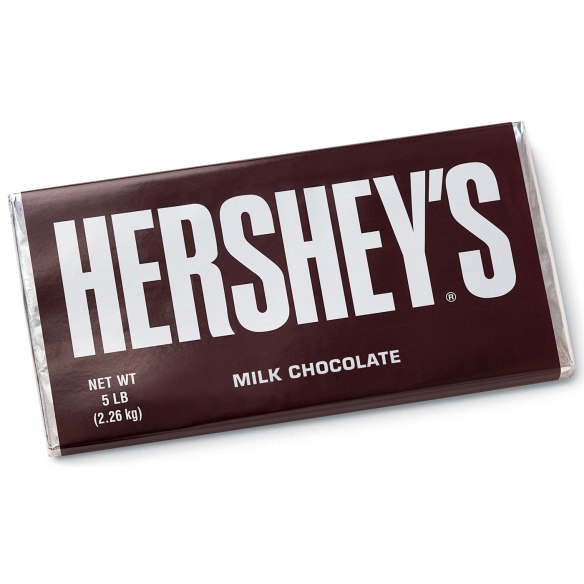
What do the following have in common? A To’ak Chocolate Bar, Sapporo’s Space Barley Beer, the Shure KSE1500 Electrostatic Earphone System, the Rolls Royce Phantom Serenity automobile, and the Bunn Tiger XL Super-Auto Espresso Machine? OK, here’s a hint. The chocolate bar costs $260; the beer retails at $110 per six pack; the earphone system costs $2,999; the Rolls Royce runs $1.1 million, and the Bunn coffee machine is $12,000. It’s obvious that all are ultra-premium products. A Hershey Bar at Sam’s Club can be purchased for $.57. A six-pack of Bud Light is about seven bucks. For less than $20 you can buy Philips SHE3590 earphones. A Toyota Corolla will set you back $18,500, and a Mr. Coffee BVMC-SJX33GT-AM 12-Cup Programmable Coffee Maker with Thermal Carafe Option is available on Amazon.com for $18.26 – and in a chrome finish no less!

You may be thinking “A chocolate bar is a chocolate bar,” right? And why would anyone want to drink a beer that costs $18.33 – would it really taste 1,467% better than a Bud Light because that’s the cost differential! Isn’t driving from Point A to Point B basically the same whether it’s in a Corolla or a Rolls? Why is there so much of a difference between a regular product and a premium one?

In nearly every industry there is always a product or service that commands a premium price. In this extremely competitive world in which we live, how can this be? There are a lot of wannabes when it comes to premium products but most come up short. As entrepreneurs we want to look for the opportunity to create a premium product or service that generate huge margins and burnish our reputation. So what do we do?

Let’s look at the primary elements that comprise a premium product or service. Certainly Quality is at the top of this list. The Rolls Royce Phantom Serenity is amazing in the category of quality. A Gearheads.org write-up had this to say, “The interior of the car received exceptionally crafted elements that are probably the most perfectly sculpted and crafted elements in the car world. Bloom effect and bloom motifs that are scattered throughout the cabin are applied by artists using a squirrel hair brush. The extent of lunacy of perfection went so far that Rolls-Royce imported a specially woven silk from Suzhou in China and integrate it throughout the cabin. Bloom effect was added onto the silk as well and Rolls-Royce officially published information that painting one silk panel with bloom effect required 600 working hours. You’ve read that right too. Basically, a man should work fifteen weeks straight to make a perfect blossom motif on only one silk covered panel.”

Another component attributable to the premium label is that of Features. Listen to this about the Shure KSE1500 from the Shure website. “Offers five EQ presets, four customizable EQ settings, and Bypass Mode which bypasses digital processing for pure analog audio enjoyment. Features high-resolution 24/96 ADC/DAC, aligning with the Japan Audio Society High-Resolution requirements for both analog-to-digital and digital-to-analog conversion. Works with any earphones or headphones with a 3.5 mm jack; compatible with Mac, PC, iOS, and Android devices. Includes paired earphones and amplifier (not compatible with other earphones or amplifiers), charger, Lightning® and OTG cables, two 1/8″ cables, 1/4″ adapter, airline adapter, attenuator, cable clip, two security bands, cleaning cloth, case and user guide.” If I wanted a set of premium earphones, I would be pretty impressed with such a wide array of meaningful features.

The final primary facet of a premium product (or service) revolves around Brand. Sometimes a brand can be so legendary that it overshadows the actual product. There’s no doubt that a Rolls Royce is exquisite in terms of quality, but the Rolls brand is so steeped in a tradition of luxury that just about any automobile it produces will be perceived as an ultra-premium vehicle.

We entrepreneurs would do well to study premium products and services and model them to the greatest extent possible in our own organizations. Too often companies charge higher prices just because it costs more to produce whatever they are selling rather than providing true value to the customer. When we give premium value to our customers we are well on our way to achieving a level of product or service differentiation that commands a premium price.

 You can also listen to a weekly audio podcast of my blog. What you hear will be different than what you read in this blog. Subscribe on iTunes or wherever you get your podcasts. You can also click on this link – Click here to listen to Audio Episode 27 – The Wheels on the Bus.

This blog is being written in tandem with my book, “An Entrepreneur’s Words to Live By,” available on Amazon.com in paperback and Kindle (My Book), as well as being available in all of the other major eBook formats.

candy-bar

O-Fer

In baseball the stat line for a hitter who strikes out, flies out or grounds out in all his at-bats during a game is shown as 0 – 4 or 0 – 5. The stat sheet for a basketball player who continually shoots and misses without scoring a point might show 0 – 7 or 0 – 10. In athletic terms this is an O-fer . . . O for 4 or O for 5 . . . O-fer. Going O-fer is an ignominious experience and generally brings on scorn from the fans. In 1922, Babe Ruth faced St. Louis Browns’ pitcher Hub Pruett. The first 14 at-bats for the Babe resulted in 10 strikeouts and two walks. During the 1922 World Series, Babe Ruth hit one single and one double in 17 trips to the plate. Arguably one of the greatest players to ever step on the diamond, Babe Ruth struck out 1,330 times. That was fewer than a number of other baseball luminaries such as Barry Bonds (1,539), Mark McGwire (1,596), Mickey Mantle (1,710), Alex Rodriquez (2,287) and Reggie Jackson (2,597). Any student of the game will tell you that all of these players were some of the best in the history of baseball.

There is another side to the story. Ruth had 2,214 Runs Batted In (RBI); Bonds had 1,996; McGwire had 1,414; Mantle had 1,509; Rodriguez had 2,086, and Jackson had 1,702. And each smacked a lot of home runs during their respective careers – Ruth (714); Bonds (762); McGwire (583); Mantle (536); Rodriguez (696) and Jackson (563). I know this is a lot of statistics and if you aren’t a baseball fan you may not fully understand the astounding nature of these feats. But there’s a point to all of this. In life we do strikeout. Baseball players strikeout. Entrepreneurs strikeout. Salespeople strikeout. Going O-fer is just part of the game.

What matters is how we deal with going O-fer. When we flameout do we play the victim and blame someone else? Or do we examine our technique as well as the surrounding circumstances and look for ways to tweak our “form?” How easy would it have been for these great baseball players to have let their propensity to strikeout destroy their careers? Instead they did something else. They figured out how to take the strikeout experience and find a way to hit the ball out of the park in a future plate appearance. Babe Ruth was number 118 in lifetime strikeouts, but he was number two in RBIs. I find this fascinating. Here’s a man who drove in far more runs than he struck out – yet he had a lot of strikeouts over the course of his career.

I listened to a podcast recently about a venture capital firm that was launching its first fund. The principals were doing the typical road show and calling on prospective investors in multiple markets. They would typically be gone for a week at a time – one week they made 25 meetings in Boston, Chicago, Atlanta, Miami and New York. During that particular week they were O-fer through 22 meetings. Imagine how this might feel! Yet, on their final day, they went three-for-three and netted tens of millions of dollars in commitments.

There’s more than just resilience at work here. It’s critical to understand that going O-fer is just part of the game. It doesn’t mean the game is over. With each new meeting, pitch, visit or idea, we’re starting zero to zero. It’s a tie game. I have learned not to look at O-fer beyond zero to zero. If we don’t win the last at-bat we simply start over with the next one. We remember the instructive elements from the encounter and discard all emotion as we make the pitch again to the next customer. We only lose if we stop playing the game. We know in our bones that eventually we’ll hit a home run or an RBI. So we keep playing the game.

If we understand that O-fer is just part of the game and can maintain our positive energy, we can erase our doubts and feelings of limitation. This sets us up to ultimately connect with the ball and score consistently.

 You can also listen to a weekly audio podcast of my blog. What you hear will be different than what you read in this blog. Subscribe on iTunes or wherever you get your podcasts. You can also click on this link – Click here to listen to Audio Episode 26 – The Really Deep Dive.

This blog is being written in tandem with my book, “An Entrepreneur’s Words to Live By,” available on Amazon.com in paperback and Kindle (My Book), as well as being available in all of the other major eBook formats.
babe-ruth

Mind-Blowingly, Stunningly Epic!!

Unique. One-of-a-kind. Award-winning. Leader. State of the art. Cutting edge. Bleeding edge. Next generation. Revolutionary. Robust. Extraordinary. Legendary. Transformative. Groundbreaking. Best in class. Magical. Out of the box. Feature-rich. World class. Dynamic. Premier. Amazing. Iconic. I think you probably see where this is going.

Ah yes, the world of superlatives and puffed-up buzz words. As an entrepreneur, I want to persuade you that my product or service is the best thing since sliced bread – maybe even better! And thus I have a tendency to use embellishments to convey a certain sense of excitement that will emotionally influence you to buy what I’m peddling. Sometimes advertising and marketing that exaggerate are just plain fun. Dos Equis beer uses a spoof in its commercials of The Most Interesting Man in the World. Generally this sort of marketing is easily identifiable and the audience goes with the flow.

What we want to avoid is falling into the “salesmany” stereotype. When I hear entrepreneurs use terms like “crushing it” or “killing it,” I cringe. It’s one thing to extoll the virtues of our product or service, but when we cross over into too much puffery our credibility suffers. Is it possible that being more quiet and understated in our approach to marketing and sales could produce the results we seek?

Our customers don’t really give a whit whether or not we are “#1” or provide “world class service.” What they are interested in is how our product or service solves their problem or provides them with real value. Here are a couple of example marketing statements to compare.

Statement #1: “At XYZ Motors we sell more Kias than anyone else in the universe! We’re also number one in service and have won more awards from Kia than any other dealership in the country.”

Statement #2: “At XYZ Motors we are creative and will help figure out a way to put you in a new car that can fit comfortably within your budget. We are also pleased to keep our service department open every weeknight until 10:00 PM because we know that many customers can’t bring their car in until they get off from work.”

Obviously the first statement is full of backpatting and chest thumping. The focus is completely on the dealership. The second statement is customer-centric. Here, XYZ Motors shows great empathy for both the customer’s pocketbook and his or her busy schedule.

One of the reasons that businesses use hyperbole is because they haven’t figured out how to differentiate their product or service. This is especially true for companies that compete in the commodity space. Apparently they believe that yelling as loud as they can, will motivate customers to show up and shell out their hard-earned dollars to save a cent or two. And there’s no question that some people are inclined this way. But I think that most people aren’t thrilled to be insulted by such boorish and uninspired messaging. An alternative approach might be for the business to become much more creative in determining its value proposition and then develop a marketing campaign around the benefits to the customer.

Entrepreneurs must also be mindful of how different generations respond to marketing and salesmanship. But as political campaigns have become more and more over-the-top with either fluff or mudslinging, I think there’s a carryover impact on the business world. All consumers, regardless of generation, are more skeptical of dubious claims and mindless drivel. Instead they want facts and substance. They need real data that supports a marketing/sales pitch and explains the WIFM in plain English. And of course WIFM means “What’s in it for me?”

Laying out the case for how our product or service solves a problem for our customers can be done in an innovative fashion. And we don’t have to appear like a stereotypical pushy salesperson to do so.

 You can also listen to a weekly audio podcast of my blog. What you hear will be different than what you read in this blog. Subscribe on iTunes or wherever you get your podcasts. You can also click on this link – Click here to listen to Audio Episode 25 – Confluences

This blog is being written in tandem with my book, “An Entrepreneur’s Words to Live By,” available on Amazon.com in paperback and Kindle (My Book), as well as being available in all of the other major eBook formats.

salesman1

Trust Me . . .

There’s a priceless element to an entrepreneur’s success when it comes to his or her customers, employees and investors. This element can be broken. It can be elusive. And it can be very difficult to regain when lost. Of course I’m talking about “trust.” But this isn’t so much a blog about trust as it is one of the foundational components to building trust. Let’s explore the concept of transparency.

Transparency is a word that is used a lot these days – sometimes it becomes a bit trite as well as overused. Don’t you just love print advertising and television commercials that implore us to “trust” the company peddling the product? My guard goes up when I hear this sort of naked appeal – I probably am much more cynical about companies that resort to this messaging. If we start with the premise that “trust” is the given baseline, why then, is there a need to say, “Trust me?”

If I do a poor job of delivering what I promise to my customers, I’d much rather admit in an open and honest manner that I screwed up. Too many times we see companies stonewall, deny and otherwise obfuscate when the train goes off the track. Of course this results in mistrust rather than accomplishing whatever we had hoped for by not being transparent. The old saying that the cover-up is worse than the crime certainly applies here!

Transparency begins with the basic core value of integrity. Either we have it or we don’t. We use this core value to guide us in the actions we take to fulfill transparency. I know that there are those who will say, “I’d like to be more transparent but in today’s litigious society I can’t say what I really want to say – I’ll be sued if I do!” However, there are ways to be open and honest without creating legal jeopardy.

We must also remember that most people don’t like surprises – at least not the negative kind. This is especially true when we’re working with our team members and investors. A number of years ago we acquired some land and launched a residential subdivision which turned out to be a bad idea. Shortly after we completed the purchase, installed the streets and sold our first three lots, the financial world came to an end (2008 – 2009). Our lot sales came to a screeching halt and remained very anemic for several years thereafter. We had raised substantial investor equity for this project and needless to say, the lack of sales was a difficult thing to report. Nevertheless, we dutifully wrote and sent investor reports every year laying out the facts. There was no sugarcoating nor did we try to sound overly hopeful. Eventually there was good news to report and we were naturally pleased to do so. I’ve been told by several of our investors that they never lost confidence or trust in us because we were totally transparent throughout the process. It also helped that we explained in detail what we were doing to try and solve the problem.

Transparency means getting in front of the message rather than being behind the curve. Here’s an example. We learned that a major employer was about to close its doors in a market where we had an apartment property. Immediately, we contacted the investor and let him know that this was happening and apprised him of how we thought this closure might impact the property. We also laid out our plan of action for minimizing the negative impact to the investment. He was also an investor in another property in the same market that was handled by one of our competitors. He told us he never heard from the competitor and appreciated the fact that we delivered bad news as soon as we knew it. Our transparent approach built trust and enabled us to do more business with this investor.

Transparency is one of the cornerstones of trust. By operating with integrity we are never afraid to deliver good news or bad, and share all that is relevant with our customers, team and investors.

You can also listen to a weekly audio podcast of my blog. What you hear will be different than what you read in this blog. Subscribe on iTunes or wherever you get your podcasts. You can also click on this link – Click here to listen to Audio Episode 24 – Disruptive.

This blog is being written in tandem with my book, “An Entrepreneur’s Words to Live By,” available on Amazon.com in paperback and Kindle (My Book), as well as being available in all of the other major eBook formats.

transparency

The 1,057 Point Swing

The 2016 presidential election results surprised everyone and created much uncertainty in many quarters. Often uncertainty produces fear about what’s going to happen in the future. There’s no doubt that many people have expressed such fear in recent weeks. I watched the election results during the evening of November 8 and remember how futures for the Dow Jones Industrial average plummeted as much as 800 points on the prospects of Donald Trump being elected president. Then when the markets opened on Wednesday, November 9, the Dow marched ahead closing up 257 points. This is a swing of more than 1,000 points in less than 24 hours. What the heck happened?

It’s pretty clear to me that there was a great deal of uncertainty surrounding the direction the election results were headed. This uncertainty produced much irrational fear that drove the markets lower. When cooler heads prevailed the irrationality evaporated and the markets moved up. What is the byproduct of uncertainty and fear? It’s opportunity. It’s my opinion that the greater the level of uncertainty the greater the level of opportunity.

I attended an affordable housing industry conference a week after the election. There was a lot of hand-wringing and pessimism. A number of attendees were convinced that support for affordable housing was going to decline and the industry would blow up. No doubt there are some potential threats on the horizon, but there are an equal if not greater number of opportunities. As entrepreneurs we have a choice to make. It’s the classic “glass half-full or half-empty” choice. There’s no question that things can and will happen that are less than desirable – that’s an absolute. It’s how we prepare and deal with them that matters.

At the industry conference I sat on a panel and posed the following question to the audience. I’ll pose it to you as well. “How many of us have a strategy to deal with the effects of uncertainty?” Out of a room of 750 people maybe two or three hands were raised. Was your hand raised? It’s so easy to become lulled into a sense of complacency. We think we know where our business is positioned in the marketplace, and we generally understand the direction our industry is headed. But then something happens to completely upset the apple cart. Simulating various scenarios and their impact in advance of such occurrences can be very helpful in identifying potential courses of action. But there’s still a healthy dose of optimism that is also required.

The real test for us is how we react to uncertainty. Do we immediately begin envisioning all of the negative possibilities? Or do we lick our chops at what uncertainty could mean in positive terms? Some entrepreneurs thrive on uncertainty. They run toward the disruption caused when things don’t go as planned. Why? Because they know how to adapt. They modify their strategy to fit the current situation. They are nimble and opportunistic. They are unafraid and know how to manage risk.

We too can learn how to use uncertainty to our advantage. To do so we must constantly be looking at a multitude of “what-ifs.” What if the election goes a certain way? What if interest rates increase? What if our top salesman walks out the door? As we cycle through the various possibilities, we weigh the pros and cons. And only seeing the cons misses the entire picture. There are always silver linings in whatever happens – we just have to look and find them.

One of the biggest threats to our affordable housing development business is the prospect of corporate tax reform. Investors use a federal affordable housing tax credit to help fund our developments. If the tax rate goes down, the value of the credit is less and there are fewer funds available for development. With the election of Donald Trump and a Republican Congress, the prospects for corporate tax reform are much improved. But we’ve been hearing about corporate tax reform for the past several years. And tax reform won’t cause the demand for affordable housing to be any less. So even before the election, I’ve been mulling over other ways to deliver affordable housing should the tax credit be diminished or even eliminated. We do have a strategy to pursue an additional product set that will enable us to continue providing such housing with or without the credit.

When we develop a strategy to deal with the effects of uncertainty the sky is the limit. We are able to move forward with confidence and optimism while others may be mired in negativity and limited thinking.

You can also listen to a weekly audio podcast of my blog. What you hear will be different than what you read in this blog. Subscribe on iTunes or wherever you get your podcasts. You can also click on this link – Click here to listen to Audio Episode 23 – Misplaced.

This blog is being written in tandem with my book, “An Entrepreneur’s Words to Live By,” available on Amazon.com in paperback and Kindle (My Book), as well as being available in all of the other major eBook formats.
threedoors-copy

Vacuum Cleaners and Movies

“If you think life is magical or life is hard, either way you are right. Your thoughts are the source of reality.” I love this quote by Dr. Debasish Mridha, an American physician and philosopher. And here’s a phrase that is toxic to the entrepreneurial mindset – “It’s too hard.” Why? Because it’s an affirmation – and a powerful one at that. There’s nothing wrong with acknowledging that the mountain in front of us may be huge. But we can easily tip over into defeatist territory if we say something is “too hard.” Often that’s a signal that it’s time to give up. Au contraire!

Conquering something difficult and maybe even insurmountable is a true entrepreneur’s dream, much in the same vein as climbing Mount Everest or something less daring like public speaking. I want to “run to hard” and embrace it. I do so because I know that many others have run away from it. “Too hard” is an opportunity to blend innovation and creativity into a solution. It’s an opportunity to witness the power of a positive attitude. It’s an opportunity to learn how tough we are and how able we are to persevere.

There are examples all around us of how “too hard” really wasn’t. Think how hard it must have been to put a man on the moon in 1969 before the technological advancements we have today. The first heart transplant must have been amazingly hard – yet someone did it. And how hard was it for swimmer Michael Phelps to win 28 Olympic medals over the course of his career? There’s no doubt that someone uttered the “too hard” phrase with each of these accomplishments. And that someone was obviously dead wrong.

Here’s what I’ve learned. A leader must be the eternal optimist. He or she must absolutely and totally believe in the goal or objective. This belief must be authentic and genuine – not playacting for the team. There’s confidence on steroids at work here. But more than sheer willpower is necessary to generate the desired result. The effort must be strategic and smart.

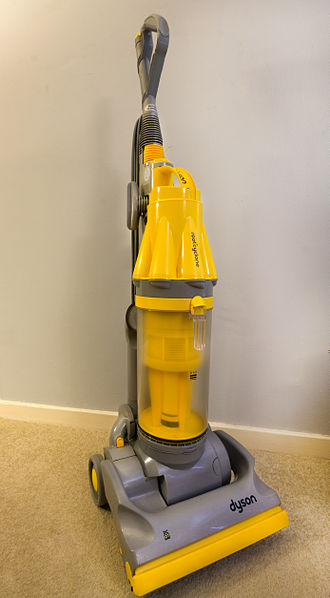
Hoover, Electrolux and Oreck seemed to have a corner on the vacuum market for years. Then along came James Dyson with a revolutionary idea in the late 1970s.  He created 5,127 prototypes over five years and the G-Force Dual Cyclone was born. Dyson has since become a worldwide market leader with 2015 sales of more than $2 billion. Here’s another example. Blockbuster had 2004 revenue of $6 billion while Netflix brought in $500 million. Today, Netflix has more than 75 million streaming subscribers and Blockbuster is out of business. What happened to “too hard” with Dyson and Netflix?

Dyson revolutionized vacuum cleaner design and eliminated the need for a bag. It was clearly a disruptor in its industry. Its swivel ball technology also made it easier to use a vacuum cleaner in tight spaces – something the incumbent makers had failed to do. Netflix was all about convenience for its customers. I remember having to drive to the Blockbuster store to rent a movie. Meanwhile Netflix was sending them through the mail. Ultimately, the company figured out that streaming was the future and rode the wave in handsome fashion. “Too hard” was transformed into stunning success through innovation, creativity, perseverance, resilience and above all a “can’t lose” mindset.

How do these stories apply to us? If nothing else, it’s imperative that we learn how to convert too hard into let’s do it.” We must first convince ourselves that we can do whatever we set out to do. Then we must persuade our team to believe the same way. I know that this sounds like a lot of rah-rah. But the formula is a pretty simple one. Yes, there will be risks – but we figure out how to manage them. Yes, there will be failure – but we use it to learn what works and what doesn’t. And yes, there will be periods where progress seems painfully slow – but we keep moving forward until we break through.

You can also listen to a weekly audio podcast of my blog. What you hear will be different than what you read in this blog. Subscribe on iTunes or wherever you get your podcasts. You can also click on this link – Click here to listen to Audio Episode 22 – Yin and Yang

This blog is being written in tandem with my book, “An Entrepreneur’s Words to Live By,” available on Amazon.com in paperback and Kindle (My Book), as well as being available in all of the other major eBook formats.

vacuum_cleaner