
The Appreciative Entrepreneur

Robin goes to work every day at the consumer products company where she has been employed for the past two years. She faithfully performs her roles and accountabilities and has received relatively high marks from her supervisor. In fact, she has never taken a sick day and is proud of the fact that she’s never missed a day of work other than scheduled holidays and vacations. But recently, Robin has begun to feel more and more like she’s on a hamster wheel. She believes her compensation is relatively fair, and she likes what she does. However, she often wonders about what she might be missing at another firm.

Robin is feeling unappreciated and undervalued. No one has been disrespectful or mean to her, so that’s not the problem. More than anything no one outside of her operating unit seems to really care whether she’s part of the team or not. It’s this level of apathy that’s eating at her. She sees the “big boss” almost every day, but he’s never once spoken to her. She rationalizes this by acknowledging that there are over 1,000 employees in the company and it’s impossible for him to know everyone. Still, her accomplishments are seemingly unnoticed and taken for granted.

The scenario just described is repeated countless times every single day across a wide spectrum of companies – large and small. There are multiple studies showing that feeling valued is more important to many people than what they are paid. And this is not a problem that is easily solved with a large company event, a cruise or other significant activity. No, our team members need to feel valued on a regular and ongoing basis.

Leaders need to understand that helping others to feel appreciated and valued is one of the most important functions we can perform. It requires a genuine and authentic mindset that we are here to serve. Yes, you read that correctly. We are servant-leaders. The objective is to look for every way we can to make others feel important and fulfilled. It’s not a mindset that we can turn on and off depending upon who we encounter. We can start creating this mindset by trying to find something good and positive about every situation and everyone. When we are served in a restaurant, we can call the server by name and tell him or her what great service was provided. In public spaces there are always people cleaning the floors or polishing the glass. We can compliment them on how they are creating a sparkling appearance.

We continue to practice our appreciative mindset at our workplace. We make certain to greet everyone we walk by and call them by name. We go out of our way to acknowledge the efforts of others and thank them for their contribution. As leaders, it’s our job to encourage other leaders to create a culture of gratitude.  

An initiative we launched several years ago involves sending a letter to each of our team members on their work anniversary. It’s form letter that changes annually and is signed by me as the CEO. But we’ve taken it a step further. A spreadsheet is created onto which is recorded comments about each team member’s accomplishments provided by his or her supervisor. Toward the bottom of the letter, I handwrite a personal note – several sentences – citing these individual accomplishments and thanking the team member for being a part of the team. I write several hundred of these each year and can tell you that it’s one of the high points of my month. I also call team members when I hear about exceptional performance and express my appreciation for their service.

It’s equally important for our team to feel as though their input is needed. Mandates from on high are sometimes necessary, but soliciting feedback from team members and involving them in the decision-making process whenever possible promotes buy-in. And we need to make sure when people speak that we listen and act accordingly. There are many great ideas and practical solutions that can be accessed from such a collaborative approach.

Acknowledging value and showing respect starts at the top of an organization. If the executive leadership doesn’t incorporate this as part of the cultural fabric, it’s not likely that it will be a priority for others either. If the “big boss” would simply say hello to Robin and show a little interest in her and what she does, it’s unlikely that she would feel the way she does.

This blog is being written in tandem with my book, “An Entrepreneur’s Words to Live By,” available on Amazon.com in paperback and Kindle (My Book), as well as being available in all of the other major eBook formats.


The Respect-Earning Entrepreneur

Successful entrepreneurs display many different leadership traits. But there’s at least one aspect of leadership that an entrepreneur cannot just automatically possess – instead it must be earned. Of course, I’m talking about Respect. Many believe that respect should be granted simply due to a station in life or perhaps a position that is held. Certainly, there may be some truth to this, but true respect is not something that is simply bestowed. Yes, the Queen of England, the President of the United States, and other heads of state command respect. But it’s for the office and not necessarily the individual.

Rodney Dangerfield made a living as a comedian with his trademark phrase, “I don’t get no respect.” With apologies to Rodney, respect is no laughing matter. It should be viewed with the utmost of seriousness because it can be a life-or-death factor for businesses and organizations of all sizes. When CEOs misbehave not only is the individual disgraced but the company he or she represents is shamed as well. On September 28, 2015, the EPA announced an order to recall Volkswagen cars built from 2009 – 2015 due to software that was programmed to cheat on emissions testing. Two days later the company admitted to this malfeasance and on September 23 the CEO resigned. Volkswagen has since paid well over $20 billion in financial penalties and legal settlements – not to mention the long-lasting reputational damage that would bankrupt smaller firms. Rebuilding the respect of the public for the VW brand will be a long and arduous process. And who knows if the former CEO will ever again be truly respected.

Earning respect doesn’t just happen. There is an intentional process that is required, and it consists of multiple facets. From my perspective it all starts with integrity. Do we always do the right thing even if it’s seemingly detrimental to our best interests? And do we always do the right thing even when no one is watching? Integrity cannot be turned on and off on a whim. Either it’s there or it’s not. Our team members, customers, suppliers – everyone is watching. If we keep our moral compass centered, we will have taken a giant step toward the pinnacle of respect.

Together with integrity is authenticity. It’s impossible to be authentic and genuine without integrity. Are we comfortable enough in our own skin to be ourselves? We’ve all seen others who are struggling with inner demons and insecurities. They “put on airs” and engage in bragging and blowhard behavior. It’s hard to respect someone who is living in disguise and can’t deal productively with his or her personal issues.

Entrepreneurs who have empathy and genuinely care about others are more likely to earn respect than an insensitive tyrant. Think about this. An individual is completely honest; does everything in an above board and straight forward manner; is totally authentic – but he’s also a flaming a-hole. How much respect do you suppose those people with whom he interacts have for him? Treating people poorly is a fast way to lose the respect of others. The leader who is courteous and thoughtful is earning respect. The leader who shows a real interest in others and their welfare is earning respect. The leader who subordinates his needs or desires to the wishes of another, is earning respect. When a leader enjoys success but publicly gives the credit to members of his team, he is earning respect.

Consistency is the final ingredient in this recipe for respect. We can’t be hit or miss with our integrity, authenticity or in the way we treat people. Inconsistency sows seeds of doubt about our real motives. In a worst-case scenario others see us as being manipulative and conniving. Clearly when we stay true to our principles, we have no problem remaining consistent.

Earning respect takes time and once achieved the quest to maintain it should be sacred. Earning and keeping respect is best accomplished through integrity, authenticity, empathy, and consistency.

This blog is being written in tandem with my book, “An Entrepreneur’s Words to Live By,” available on Amazon.com in paperback and Kindle (My Book), as well as being available in all of the other major eBook formats.

The Inspirational Entrepreneur

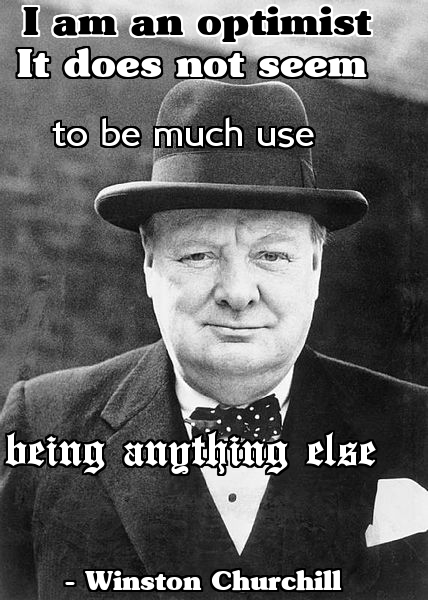
“. . . we shall fight in France, we shall fight on the seas and oceans, we shall fight with growing confidence and growing strength in the air, we shall defend our island, whatever the cost may be, we shall fight on the beaches, we shall fight on the landing grounds, we shall fight in the fields and in the streets, we shall fight in the hills; we shall never surrender.” “Let us therefore brace ourselves to our duties, and so bear ourselves, that if the British Empire and its Commonwealth last for a thousand years, men will still say, ‘This was their finest hour’.” Winston Churchill uttered these words during World War II and led Great Britain through one of its darkest periods in history.

“. . . I still have a dream. It is a dream deeply rooted in the American dream. I have a dream that one day this nation will rise up, live out the true meaning of its creed: We hold these truths to be self-evident, that all men are created equal.” On August 28, 1963, Dr. Martin Luther King made this proclamation at the Lincoln Memorial in Washington, DC, witnessed by 250,000 civil rights supporters.   

Have you ever heard of Patrick Henry Hughes? He is an amazing story. Born without eyes and a congenital birth defect that prevented him from straightening his arms and legs, Patrick became an accomplished vocalist as well as playing the piano and trumpet. He even became a member of the University of Louisville Marching and Pep Bands, and a UP Premiere movie, “I Am Potential,” is based upon his life and success.

What is the common theme for these three individuals? Inarguably each is an inspiration. Churchill inspired his countrymen to stand strong during the difficult days when Britain was under siege. King inspired millions seeking equality in their everyday lives. Patrick Henry Hughes as served as an inspiration for everyone who has encountered a challenge – and haven’t we all?

As entrepreneurs we want to be inspirational leaders. We want to lead inspirational organizations. We want our mission and vision to be inspirational. But sometimes the notion of inspiration can be confusing and even elusive. Exactly how do we inspire? I have looked high and low and there is no handbook. There are as many definitions as there are inspirational quotes – the quantities are massive. Here is an equation that I have developed over the years that I believe stimulates inspiration.

Passion + Authenticity + Conviction = Inspiration

This formula can be measured by the likes of Winston Churchill, Martin Luther King, Jr. and Patrick Henry Hughes. Is there any question that each had incredible passion for their cause? And is there any doubt as to their authenticity? Think about it. How could anyone play-act the power and impact that each had on society? Finally, they never wavered. They never quit. They stood by their beliefs no matter what. When we genuinely have a deep and lasting positive passion; demonstrate it in authentic ways, and are steadfast in maintaining this passion, we cannot help but inspire others. People are not inspired by wishy-washy. People are not inspired by fake. And people are not inspired by quitters.

Inspirational intelligence exists in great leaders. By emulating the inspirational formula, Passion + Authenticity + Conviction, we too can motivate others to join with us in doing great things.

This blog is being written in tandem with my book, “An Entrepreneur’s Words to Live By,” available on Amazon.com in paperback and Kindle (My Book), as well as being available in all of the other major eBook formats.

The Respect-Earning Entrepreneur

Successful entrepreneurs display many different leadership traits. But there’s at least one aspect of leadership that an entrepreneur cannot just automatically possess – instead it must be earned. Of course, I’m talking about Respect. Many believe that respect should be granted simply due to a station in life or perhaps a position that is held. Certainly, there may be some truth to this, but true respect is not something that is simply bestowed. Yes, the Queen of England, the President of the United States, and other heads of state command respect. But it’s for the office and not necessarily the individual.

Rodney Dangerfield made a living as a comedian with his trademark phrase, “I don’t get no respect.” With apologies to Rodney, respect is no laughing matter. It should be viewed with the utmost of seriousness because it can be a life-or-death factor for businesses and organizations of all sizes. When CEOs misbehave not only is the individual disgraced but the company he or she represents is shamed as well. On September 28, 2015, the EPA announced an order to recall Volkswagen cars built from 2009 – 2015 due to software that was programmed to cheat on emissions testing. Two days later the company admitted to this malfeasance and on September 23 the CEO resigned. Volkswagen has since paid well over $20 billion in financial penalties and legal settlements – not to mention the long-lasting reputational damage that would bankrupt smaller firms. Rebuilding the respect of the public for the VW brand will be a long and arduous process. And who knows if the former CEO will ever again be truly respected.

Earning respect doesn’t just happen. There is an intentional process that is required, and it consists of multiple facets. From my perspective it all starts with integrity. Do we always do the right thing even if it’s seemingly detrimental to our best interests? And do we always do the right thing even when no one is watching? Integrity cannot be turned on and off on a whim. Either it’s there or it’s not. Our team members, customers, suppliers – everyone is watching. If we keep our moral compass centered, we will have taken a giant step toward the pinnacle of respect.

Together with integrity is authenticity. It’s impossible to be authentic and genuine without integrity. Are we comfortable enough in our own skin to be ourselves? We’ve all seen others who are struggling with inner demons and insecurities. They “put on airs” and engage in bragging and blowhard behavior. It’s hard to respect someone who is living in disguise and can’t deal productively with his or her personal issues.

Entrepreneurs who have empathy and genuinely care about others are more likely to earn respect than an insensitive tyrant. Think about this. An individual is completely honest; does everything in an above board and straight forward manner; is totally authentic – but he’s also a flaming a-hole. How much respect do you suppose those people with whom he interacts have for him? Treating people poorly is a fast way to lose the respect of others. The leader who is courteous and thoughtful is earning respect. The leader who shows a real interest in others and their welfare is earning respect. The leader who subordinates his needs or desires to the wishes of another, is earning respect. When a leader enjoys success but publicly gives the credit to members of his team, he is earning respect.

Consistency is the final ingredient in this recipe for respect. We can’t be hit or miss with our integrity, authenticity or in the way we treat people. Inconsistency sows seeds of doubt about our real motives. In a worst-case scenario others see us as being manipulative and conniving. Clearly when we stay true to our principles, we have no problem remaining consistent.

Earning respect takes time, and once achieved the quest to maintain it should be sacred. Earning and keeping respect is best accomplished through integrity, authenticity, empathy, and consistency.

This blog is being written in tandem with my book, “An Entrepreneur’s Words to Live By,” available on Amazon.com in paperback and Kindle (My Book), as well as being available in all of the other major eBook formats.
The Inspirational Entrepreneur

“. . . we shall fight in France, we shall fight on the seas and oceans, we shall fight with growing confidence and growing strength in the air, we shall defend our island, whatever the cost may be, we shall fight on the beaches, we shall fight on the landing grounds, we shall fight in the fields and in the streets, we shall fight in the hills; we shall never surrender.” “Let us therefore brace ourselves to our duties, and so bear ourselves, that if the British Empire and its Commonwealth last for a thousand years, men will still say, ‘This was their finest hour’.” Winston Churchill uttered these words during World War II and led Great Britain through one of its darkest periods in history.

“. . . I still have a dream. It is a dream deeply rooted in the American dream. I have a dream that one day this nation will rise up, live out the true meaning of its creed: We hold these truths to be self-evident, that all men are created equal.” On August 28, 1963, Dr. Martin Luther King made this proclamation at the Lincoln Memorial in Washington, DC, witnessed by 250,000 civil rights supporters.    

Have you ever heard of Patrick Henry Hughes? He is an amazing story. Born without eyes and a congenital birth defect that prevented him from straightening his arms and legs, Patrick became an accomplished vocalist as well as playing the piano and trumpet. He even became a member of the University of Louisville Marching and Pep Bands, and a UP Premiere movie, “I Am Potential,” is based upon his life and success.

What is the common theme for these three individuals? Inarguably each is an inspiration. Churchill inspired his countrymen to stand strong during the difficult days when Britain was under siege. King inspired millions seeking equality in their everyday lives. Patrick Henry Hughes as served as an inspiration for everyone who has encountered a challenge – and haven’t we all?

As entrepreneurs we want to be inspirational leaders. We want to lead inspirational organizations. We want our mission and vision to be inspirational. But sometimes the notion of inspiration can be confusing and even elusive. Exactly how do we inspire? I have looked high and low and there is no handbook. There are as many definitions as there are inspirational quotes – the quantities are massive. Here is an equation that I have developed over the years that I believe stimulates inspiration.

Passion + Authenticity + Conviction = Inspiration

This formula can be measured by the likes of Winston Churchill, Martin Luther King, Jr. and Patrick Henry Hughes. Is there any question that each had incredible passion for their cause? And is there any doubt as to their authenticity? Think about it. How could anyone play-act the power and impact that each had on society? Finally, they never wavered. They never quit. They stood by their beliefs no matter what. When we genuinely have a deep and lasting positive passion; demonstrate it in authentic ways, and are steadfast in maintaining this passion, we cannot help but inspire others. People are not inspired by wishy-washy. People are not inspired by fake. And people are not inspired by quitters.

Inspirational intelligence exists in great leaders. By emulating the inspirational formula, Passion + Authenticity + Conviction, we too can motivate others to join with us in doing great things.

This blog is being written in tandem with my book, “An Entrepreneur’s Words to Live By,” available on Amazon.com in paperback and Kindle (My Book), as well as being available in all of the other major eBook formats.

Apologies to Rodney

Successful entrepreneurs display many different leadership traits. But there’s at least one aspect of leadership that an entrepreneur cannot just automatically possess – instead it must be earned. Of course I’m talking about Respect. Many believe that respect should be granted simply due to a station in life or perhaps a position that is held. Certainly there may be some truth to this but true respect is not something that is simply bestowed. Yes, the Queen of England, the President of the United States and other heads of state command respect. But it’s for the office and not necessarily the individual.

Rodney Dangerfield made a living as a comedian with his trademark phrase, “I don’t get no respect.” With apologies to Rodney, respect is no laughing matter. It should be viewed with the utmost of seriousness because it can be a life or death factor for businesses and organizations of all sizes. When CEOs misbehave not only is the individual disgraced but the company he or she represents is shamed as well. On September 28, 2015, the EPA announced an order to recall Volkswagen cars built from 2009 – 2015 due to software that was programmed to cheat on emissions testing. Two days later the company admitted to this malfeasance and on September 23 the CEO resigned. As of this writing, Volkswagen faces enormous financial penalties and long-lasting reputational damage that would bankrupt smaller firms. Rebuilding the respect of the public for the VW brand will be a long and arduous process. And who knows if the former CEO will ever again be truly respected.

Earning respect doesn’t just happen. There is an intentional process that is required and it consists of multiple facets. From my perspective it all starts with integrity. Do we always do the right thing even if it’s seemingly detrimental to our best interests? And do we always do the right thing even when no one is watching? Integrity cannot be turned on and off on a whim. Either it’s there or it’s not. Our team members, customers, suppliers – everyone is watching. If we keep our moral compass centered we will have taken a giant step toward the pinnacle of respect.

Hand-in-hand with integrity is authenticity. It’s impossible to be authentic and genuine without integrity. Are we comfortable enough in our own skin to be ourselves? We’ve all seen others who are struggling with inner demons and insecurities. They “put on airs” and engage in bragging and blowhard behavior. It’s pretty hard to respect someone who is living in disguise and can’t deal productively with his or her personal issues.

Entrepreneurs who have empathy and genuinely care about others are more likely to earn respect than an insensitive tyrant. Think about this. An individual is completely honest; does everything in an above board and straight forward manner; is totally authentic – but he’s also a flaming asshole. How much respect do you suppose those people with whom he interacts have for him? Treating people poorly is a fast way to lose the respect of others. The leader who is courteous and thoughtful is earning respect. The leader who shows a real interest in others and their welfare is earning respect. The leader who subordinates his needs or desires to the wishes of another, is earning respect. When a leader enjoys success but publicly gives the credit to members of his team, he is earning respect.

Consistency is the final ingredient in this recipe for respect. We can’t be hit or miss with our integrity, authenticity or in the way we treat people. Inconsistency sows seeds of doubt about our real motives. In a worst case scenario others see us as being manipulative and conniving. Clearly when we stay true to our principles we have no problem remaining consistent.

Earning respect takes time and once achieved the quest to maintain it should be sacred. Earning and keeping respect is best accomplished through integrity, authenticity, empathy and consistency.

You can also listen to a weekly audio podcast of my blog. What you hear will be different than what you read in this blog. Subscribe on iTunes or wherever you get your podcasts. You can also click on this link – Click here to listen to Audio Episode 37 – Master’s Degree.

This blog is being written in tandem with my book, “An Entrepreneur’s Words to Live By,” available on Amazon.com in paperback and Kindle (My Book), as well as being available in all of the other major eBook formats.

rodney-dangerfield

P+A+C=I

“. . . we shall fight in France, we shall fight on the seas and oceans, we shall fight with growing confidence and growing strength in the air, we shall defend our island, whatever the cost may be, we shall fight on the beaches, we shall fight on the landing grounds, we shall fight in the fields and in the streets, we shall fight in the hills; we shall never surrender.” “Let us therefore brace ourselves to our duties, and so bear ourselves, that if the British Empire and its Commonwealth last for a thousand years, men will still say, ‘This was their finest hour’.” Winston Churchill uttered these words during World War II and led Great Britain through one of its darkest periods in history.

“. . . I still have a dream. It is a dream deeply rooted in the American dream. I have a dream that one day this nation will rise up, live out the true meaning of its creed: We hold these truths to be self-evident, that all men are created equal.” On August 28, 1963, Dr. Martin Luther King made this proclamation at the Lincoln Memorial in Washington, DC, witnessed by 250,000 civil rights supporters.

Have you ever heard of Patrick Henry Hughes? He is an amazing story. Born without eyes and a congenital birth defect that prevented him from straightening his arms and legs, Patrick became an accomplished vocalist as well as playing the piano and trumpet. He even became a member of the University of Louisville Marching and Pep Bands, and a UP Premiere movie, “I Am Potential,” is based upon his life and success.

What is the common theme for these three individuals? Inarguably each is an inspiration. Churchill inspired his countrymen to stand strong during the difficult days when Britain was under siege. King inspired millions seeking equality in their everyday lives. Patrick Henry Hughes as served as an inspiration for everyone who has encountered a challenge – and haven’t we all?

As entrepreneurs we want to be inspirational leaders. We want to lead inspirational organizations. We want our mission and vision to be inspirational. But sometimes the notion of inspiration can be confusing and even elusive. Exactly how do we inspire? I’ve looked high and low and there’s no handbook. There are as many definitions as there are inspirational quotes – the quantities are massive. Here’s an equation that I’ve developed over the years that I believe stimulates inspiration.

Passion + Authenticity + Conviction = Inspiration

This formula can be measured by the likes of Winston Churchill, Martin Luther King, Jr. and Patrick Henry Hughes. Is there any question that each had incredible passion for their cause? And is there any doubt as to their authenticity? Think about it. How could anyone play-act the power and impact that each had on society? Finally, they never wavered. They never quit. They stood by their beliefs no matter what. When we genuinely have a deep and lasting positive passion; demonstrate it in authentic ways, and are steadfast in maintaining this passion, we can’t help but inspire others. People aren’t inspired by wishy-washy. People aren’t inspired by fake. And people aren’t inspired by quitters.

Inspirational intelligence exists in great leaders. By emulating the inspirational formula, Passion + Authenticity + Conviction, we too can motivate others to join with us in doing great things.

This blog is being written in tandem with my book, “An Entrepreneur’s Words to Live By,” available on Amazon.com in paperback and Kindle (My Book), as well as being available in all of the other major eBook formats.

Patrick-Henry-Hughes