
Just Do It

Nike’s corporate tag line is “Just Do It.” And that could be the tag line for many companies of all sizes. Leaders at all levels send the message of “Just Do It” to their “charges.” This notion boils down to a command and control style of management. And I probably don’t need to point out how poorly this approach works with today’s Millennial workforce. We Boomers grew up in this environment and may have a tendency to continue its practice. Perhaps it’s time for something different.

I know that many entrepreneurs agree in principle with a more collaborative style of leadership. Yet, the language that is used may belie this agreement. Examine the following statement that rolls up many of the words used into a massive contradiction with collaboration. Mr. Smith is a senior executive with the ABC Company and he’s describing a recent business win for his company.

My employees really came through with this project. I have a hundred people working under me and every one of them did their jobs like they were supposed to. I set their goals and they achieved them. I’ve been focused on this opportunity for a long time. I love winning this way!”

At first blush Mr. Smith seems to be giving credit for the win to others. But the way he says it indicates that he isn’t yet a convert to a more enlightened style of leadership. Note the highlighted words. It’s pretty clear that he’s in charge here and other people have done his bidding.

Entrepreneurs can change this narrative. When we are comfortable in our own skin we are easily able to eliminate the unhealthy aspects of our ego from our interactions with others. It’s often the case that having to take the credit for an accomplishment or reinforcing the fact that we were “at the top of the food chain” is a result of our own lack of confidence or some other insecurity. With our new level of comfort we are able to relax, smile and become totally humble.

Here’s another version of the previous statement. Mr. Doe is a senior executive with XYZ, Inc. and is celebrating a recent success.

“The XYZ team is amazing! They worked together to establish the goal and drew upon our Core Values to develop a winning strategy. We are so appreciative of each and every one of the hundred team members who worked tirelessly on this project for more than a year. Their commitment, dedication and creativity are the reasons for our success.”

Sounds a little different doesn’t it? There’s not a single mention of the words “I,” “me” or “my.” The word “employee” has been replaced with “team member.” Mr. Doe simply delivers the message without allowing his ego to enter the picture. It’s clear that Mr. Doe’s team members work “with” him – not “under” him. I’ve written before about how we need to be intentional about modifying our vernacular away from “I,” “me,” and “my,” and changing to “we,” “us,” and “our.”

Collaborative leadership is not decision making by committee – as a leader we still make the ultimate critical decisions. Collaborative leadership is about seeking out team members and listening to their thoughts and ideas. It is valuing others as human beings and the contribution they make to the enterprise. It is about having empathy and creating a culture of respect. And it is about using the words we say as a reflection of all of these factors.

When we think about what we write and say we can ask ourselves this simple question – “Do my words focus the spotlight on me or on others?” Doing so helps us move away from the old command and control approach of the past.

You can also listen to a weekly audio podcast of my blog. What you hear will be different than what you read in this blog. Subscribe on iTunes or wherever you get your podcasts. You can also click on this link – https://anentrepreneurswords.com/audio-podcast-17-sleepless-in-seattle/.

This blog is being written in tandem with my book, “An Entrepreneur’s Words to Live By,” available on Amazon.com in paperback and Kindle (My Book), as well as being available in all of the other major eBook formats.

george-patton

Liars

Here’s a set-up question. What do you think of companies that aren’t honest with their customers? The answers range from, “That’s terrible” to “It happens every day.” Unfortunately both answers are correct. What’s particularly irritating is when those companies beat their chests about how much they care about their customers. There’s a disconnect between words and actions which is pretty disturbing and serves as an excellent lesson for entrepreneurs.

Allow me to tell you a personal story. Each summer we look forward to spending a couple of weeks at a beautiful destination spot in the mountains with enormous trees, blue skies and a fabulous lake. We fly into a nearby airport, collect our bags and head to the car rental counter where we’ve previously made a reservation. After checking in we venture to the car pick-up area – and every single year, bar none, our vehicle is never ready. We’ve waited anywhere from 20 minutes to as long as 45 minutes. The attendants smile and promise that “They are just cleaning up the car as we speak – it will only be a few more minutes.” Fifteen or twenty minutes later they smile again and disappear to go “check” and see where things stand. Sometimes we go through the same drill with two or three more attendants – they seem to work in a tag team sort of manner. Finally, someone tells us that “They’re bringing around the car right now.” Any reasonable person would conclude that would mean the car would arrive in two or three minutes. But it never happens. Eventually we may get the car we ordered. More often than not, we end up with a different vehicle – sometimes better and sometimes worse. Adjustments are made to the price and we’re finally on our way.                                                                                                                                                                                Here’s what’s so bothersome about this experience. We are never told the truth. The attendants are friendly enough. They explain that they’ve been slammed with returns and pickups. But the string-a-long routine is always the same. Yes, I know. I should probably use a different car rental company – though I’ve encountered similar issues elsewhere with other firms. With this particular car rental company, on their website they make a big deal about how they focus on the customer. Part of their mission statement extolls their desire “To exceed our customers’ expectations for service, quality and value.” Elsewhere we’re told that, “Take care of your customers and employees first, and the profits will follow.”

This situation is emblematic of a pervasive problem in the business and entrepreneurial world today. Sometimes we’re so afraid of disappointing a customer that we’d rather try to give them hope while we juggle difficult circumstances. We say things that aren’t quite true and eventually we’re in worse shape than if we would have just been totally honest. Lying doesn’t usually end well. I learned this as a kid and have watched others suffer the consequences as an adult. What should the car rental company have done? For starters, they have a very sophisticated IT operation and could easily have collected data from every hour of every day at every location. Then they would know from my stated pick-up time that there usually is a 30-minute wait and set my expectation accordingly. But we all know that sometimes things unexpectedly go wrong. Training their employees to have empathy in such situations and be totally honest would go a long way.

In a circumstance like this, here’s what I would rather have someone say to me. “We had 50 cars returned within a 30-minute timeframe. Normally we never have more than 20 cars returned in such a short period of time. We’re running at least 45 minutes behind. I’m going to give you a 15% discount for the delay and recommend that you come back at 3:30. In the meantime, here are some drink coupons for the bar inside the airport terminal. Please accept our most sincere apologies.” This statement is pro-active and wrapped with empathy, honesty and realistic expectations. The customer may not be pleased, but at least the company can’t be criticized for not doing everything possible to atone for a bad situation.

We need to ask ourselves whether or not we set honest and realistic expectations for our customers. When we do, we’ll have a much greater chance of solidifying customer loyalty – even when things don’t go as planned.

You can also listen to a weekly audio podcast of my blog. What you hear will be different than what you read in this blog. Subscribe on iTunes or wherever you get your podcasts. You can also click on this link – Click here to listen to Audio Episode 8 – The E Factor.

This blog is being written in tandem with my book, “An Entrepreneur’s Words to Live By,” available on Amazon.com in paperback and Kindle (My Book), as well as being available in all of the other major eBook formats.

Pinnochio

Toe-Stepping

We live in a hypersensitive society today. It seems as though every time we turn around someone is being offended by something. It may be words, actions, facial expressions or even the way someone looks. The whole notion of being offended stems from a belief that we are somehow victims. Victims of what, I’m not really sure. But our culture is at a point where it promotes victimhood and all that goes with it. This is a very dangerous place for entrepreneurs to be.

Many of us Baby Boomers raised our children in an environment where everybody wins and there were no losers. I remember sporting events in which our daughters participated and each child received a ribbon or a small trophy. Obviously in the real world there are winners and losers yet somehow, losing has become linked with victimization. I’m not saying that this is the sole reason for the hypersensitivity we are experiencing but it may be a contributing factor.

Entrepreneurs are in a tough spot. On the one hand we want to be sufficiently sensitive to saying or doing things that others could perceive as a slight. And yet we are in a rough and tumble business world that takes no prisoners. Unfortunately it’s not enough to simply treat others as we would like to be treated. I’ve grown pretty thick skin over the years and as others will attest, it’s pretty hard to offend me. A few years ago I took a computerized test that measured resilience among a number of traits and tendencies. My score was 97 out of 100 which I’m told indicates that I have very strong self-acceptance. My point in sharing is to demonstrate that I may be somewhat oblivious to attempts by others to offend me. So what to do?

First, we need to measure our intent when we are interacting with others. Do we say certain things to another person because we want to make them feel inferior? Do we take certain actions because we want to “send a message” to a specific individual that we expect could result in hurt feelings? A compassionate leader will communicate honestly and openly while doing so with sufficient empathy. His or her ego will be totally eliminated from the interaction. If our intent is pure and we’ve separated from our ego then it is unlikely that we will offend someone.

Second, it’s important to understand what behavior is unacceptable. This is especially challenging from a generational perspective. A young female colleague of mine was at a luncheon recently. She shared that she sat next to an older man (Boomer generation) who was nice but commented as they were leaving that he was pleased to have been able to sit next to such an attractive young woman. My colleague was not offended but related that she thought the comment was unnecessary and inappropriate. What was intended as a compliment by an older man was interpreted as mild condescension by a younger woman. While I doubt that it was his intent to be condescending, it was clear that he has not learned that you just don’t say things like this.

I’m not advocating for political correctness. We’ve gone completely overboard with PC and it’s causing huge problems in our country. But I do think that we need to pay closer attention to how we might be perceived by others. And let’s do our own gut check. Do we find ourselves being offended with any frequency? If so, we might benefit from exploring what we see when we look in the mirror. Do we have a positive or negative self-image? Are we preoccupied with conflict or feelings of inferiority? If so, we may be prone to being easily offended.

As entrepreneurs we must develop thick skin through a strongly positive self-image. At the same time, we need to measure our intent when interacting with others as well as understand what is unacceptable to society. Doing so will minimize the likelihood that we will offend others.

This blog is being written in tandem with my book, “An Entrepreneur’s Words to Live By,” available on Amazon.com in paperback and Kindle (My Book), as well as being available in all of the other major eBook formats.
toe stepping

Do You Read Me?

Question: I’ve heard the term “reading people” and I think I know what it is but I’m not sure how to do it. Do you have any tips on how to go about doing this?

Answer: Learning how to read people is a critical skill for everyone. It doesn’t matter if it’s the business world, government, academia or any other walk of life, understanding the reactions of others will help us improve our relationships – guaranteed.

The first step toward learning how to read people is to push ourselves out of the picture. All of our focus and powers of observation must be directed at the person with whom we are interacting. If we’re thinking about what we’re going to say next, or our mind is wandering, we may very well miss the subtle signals that the other person is sending. Often our desire to engage in conversation may also cause us to be oblivious to how the other person is really feeling.

I have a theory that successful poker players may be more skilled at reading their opponents than utilizing whatever strategy they may be deploying. Start with the use of our auditory senses. How articulate is the other person? What is his/her cadence like? Are the conversational pauses appropriate in duration? Are there increases in the voice pitch? The manner in which a person speaks reveals whether he or she is nervous, happy, sad, lying and a host of other emotions.

What visual cues do we see? Can the other person maintain eye contact? Is the person slouching or sitting or standing in an erect manner? How genuine is his or her smile? Does this person fidget or shake a foot? Some people play with their ear lobes or hide their mouths behind their hands. What kind of hand gestures do we see?

Reading people requires that we finely tune our powers of observation. Think about how well we really pay attention. What color are the other person’s eyes? Which side does he or she part their hair? How was this person attired? Was this person wearing rings, earrings or other jewelry? If you are like me, you aren’t as keenly aware of the other person so as to notice these details. This is something I’ve been working on lately and I can tell you that it has helped me pay closer attention to all aspects of whomever I am interacting.

Ultimately the objective in reading people is not to manipulate them but to make a connection. When a connection is made a relationship can be built. And I would much rather build a strong and lasting relationship with someone than use my ability to read them for purposes of gaining an advantage of some sort. If someone is in distress, I want to empathize with them. If someone is in a euphoric state, I want to celebrate with them. If someone is anxious, I want to help calm them. Above all, I want to support them and can do this if I understand them.

We can become better leaders, better colleagues, better acquaintance or better friends when we look below the surface and understand how another person is feeling. Reading people for this purpose is truly a noble calling.

This blog is being written in tandem with my book, “An Entrepreneur’s Words to Live By,” available on Amazon.com in paperback and Kindle (My Book), as well as being available in all of the other major eBook formats.

inspector clouseau

Spike It

Question: I see people who appear to be very successful that have very large egos. How much ego is too much?

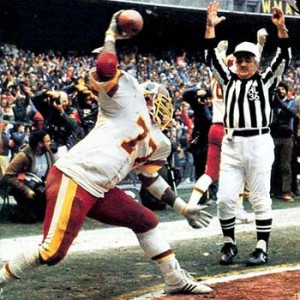
Answer: I remember one of the best football players to ever play the game was Marcus Allen. He was a running back for the Oakland Raiders and later, the Kansas City Chiefs. Every time he scored a touchdown (145 of them) he simply handed the ball to the referee and trotted off the field. I never saw him spike the ball in the end zone or do some sort of “look at me” dance that is so prevalent today. It seems like professional athletes in most sports celebrate in ways that may indicate ego issues.

Perhaps ego displays in the business world don’t equal the level that we see on the gridiron or hardwood courts, but they are on display nonetheless. There are those who will say that this is really about demonstrating one’s pride. Nilton Bonder, a Brazilian rabbi said this, “Many people believe that humility is the opposite of pride, when, in fact, it is a point of equilibrium. The opposite of pride is actually a lack of self-esteem.”

Have you heard the term “ego drive?” Ego drive has been defined as the inner need to persuade others as a means of gaining personal gratification. It’s all about getting someone else to say “yes” and the satisfaction derived from this act. Ego drive is generally a healthy trait as opposed to egotism which is closely related to narcissism.

I’ve always believed that the “bigger” you become the more humble you should be. With success comes the need for less arrogance; less pomposity; more sensitivity and more empathy. Here’s a small way you can practice this. Every time you compose an e-mail or verbally speak to someone else, see how often you can eliminate the reference to “I” and “my” and replace them with “we” and “us.” The more we can think in terms of crediting others with helping us achieve success the more humility we gain.

To the extent that we can be comfortable with who we are on the inside, the more likely it is that we will become a genuinely humble person. And at that point the respect and admiration of others will come naturally and effortlessly because it will have been truly earned.

This blog is being written in tandem with my book, “An Entrepreneur’s Words to Live By,” available on Amazon.com in paperback and Kindle (My Book), as well as being available in all of the other major eBook formats.
Football Spiking