
The “Loyal-to-a-Fault” Entrepreneur

Think about how much loyalty is a part of your life. How loyal are you to others? And how loyal are they to you? Do you have loyal customers; loyal partners; loyal employees, loyal friends and loyal family members? Loyalty is a strong and positive quality. It’s a key element in building and maintaining relationships. So, everything must be peaches and cream, right? Ah, but there’s a bit of a dark side to loyalty.

You probably have heard the term, “loyal to a fault.” This is when we may be too loyal to someone else, and that loyalty clouds our judgment and may even be damaging to our business. Whether or not we’re being too loyal can be a tough call. It requires us to be very objective about a particular person and their performance. This can be exceptionally difficult for anyone and nearly impossible for someone who places a very high value on the loyalty trait.

Here’s a scenario that may be familiar. Perhaps it’s even happened in your own organization. A high-level executive has been with a firm for 30 years and reports to the founder and CEO. This executive is part of the CEO’s inner circle, and his advice and counsel are often sought by the CEO. Unfortunately, this executive is also a flaming jerk. He’s very nice and thoughtful to other senior level executives, but when it comes to those who don’t have as prominent a position in the organization, he can be unreasonably demanding and thoughtless. Because of his tenure with the CEO, his behavior is tolerated. The employees of the firm have learned to steer clear of him and know that he is “protected” by the CEO. Complaints were lodged about him in years past but it’s well known by everyone working for this company that he will always get away with whatever he wants.

If asked about this high-level executive, the CEO would undoubtedly say, “I know that he can sometimes be a bit abrasive, but overall, he’s done a great job for this company.” The CEO might also say something like this, “He and I were fraternity brothers, and he’s always had my back.” Sound like something you might have heard before? In this situation, many of the employees of this company have lost respect for the CEO because he won’t fix the problem. If this was a family business, it could very well be that the CEO and high-level executive are related – brothers perhaps. The bottom line is that the organization cannot function effectively because the CEO has misplaced loyalty to a problem individual.

As entrepreneurs we must learn how to maintain our objectivity, especially when it comes to employees and team members who are key to us. We must be able to separate our feelings of loyalty from what is best for our organization. Loyalty can easily become a blind spot for us unless we have a method to deal with it. In a larger organization this can be done through a human resources department. The HR director must be given permission by the CEO to lay the facts on the table about every employee. In a smaller firm, it may be helpful to hire a consultant who can facilitate the performance of a 360-degree review of senior executives or even all members of the firm. In both cases, the HR director or the consultant should provide an honest perspective to the CEO that one of his or her reports needs to be coached, disciplined or even dismissed. 

Loyalty is generally a good thing. But when there’s loyalty to a fault, we need to be willing to listen to someone tell us when we have a problem. And then we must deal with it accordingly.

This blog is being written in tandem with my book, “An Entrepreneur’s Words to Live By,” available on Amazon.com in paperback and Kindle (My Book), as well as being available in all of the other major eBook formats.

The Entrepreneur’s False Choices

It’s 3:00 AM. You’ve just awakened with a start. Your heart is racing – not pounding, just a generally anxious sort of feeling. You aren’t sure why this is happening. There’s no sound of an intruder and everything externally seems to be in order. Then you lay there struggling to return to your slumber. You know you must get up in two or three hours, and you know you desperately need to finish getting your rest. But there’s one BIG problem. Your mind won’t let you.

I’ve never figured out exactly what causes this. There’s obviously something churning around in our subconscious. And it’s frustrating beyond belief to wake up this way, not know why, and then try to drift back to the Land of Nod. And I can attest to what happens next. I will allow my mind to conjure up False Choices. Perhaps I’ve been in the middle of a complicated real estate deal that has a lot of “hair” on it – that is, many moving parts that aren’t all moving as planned. At this point the game begins. Here’s the dialogue that occurs.

What if the appraisal for the apartment complex comes back at slightly less than is needed? Then the loan amount will be less, and the equity requirement will be more. But wait a minute – I only have an equity commitment for the exact requirement, and I don’t have time to raise the extra amount that will be needed! Oh my (or some other less printable phrase) – we won’t be able to close this deal!! If this happens, we’ll lose the earnest money that is now totally at-risk; we’ll lose all of our credibility within the industry; we’ll never be able to do another deal again; I’ll go broke and have to live under a bridge!!!!!!

OK, the bridge part may be a little dramatic, but you get the idea. The point is that in this state of semi-consciousness it’s very easy for our mind to magnify our concerns and create wild scenarios that are disconcerting. Often, logic is totally absent in these moments, and because of this the False Choices become overwhelming. Fortunately, I’ve gotten to the point where I rarely experience this anymore. But I can tell you that in years past I’ve gotten so worked up that I had to get out of bed and become totally awake to bring my full faculties to bear and find the solution. Kind of blows the opportunity to get any more sleep completely out of the water . . . right?

Rather than trying to figure out what triggers this kind of response, I’ve learned how to avoid letting my mind run away in this manner. If I do wake up with that general feeling of unease or even if something specific looms in my mind’s-eye, I immediately deny it. That’s it. I refuse to allow the monsters in my brain to come to the surface and get any satisfaction whatsoever. It’s my belief that we are extremely vulnerable when we are half-awake and half-asleep, and trying to resolve any sort of issue is futile and dangerous. If we let down our guard, invariably we end up in False Choices.

Learning how to deny these thoughts will not be easy at first. It will take a lot of practice. What I do is quickly translate the issue that is bubbling up into a visual image – perhaps it’s a dragon from a fantasy world. Then I take out my mighty dragon slaying sword and thrust it deeply into the dragon’s chest at which point it melts away and I fall asleep again. Thus, I’ve taken the horrible problem that somehow has invaded my sleep; turned it into a dragon; killed it instantly and gone back to sawing logs. While this might sound corny, I can tell you that with practice it works. It doesn’t matter what the outer issue is, I simply turn it into a dragon and eliminate it.

We must avoid the False Choices that may be presented while we sleep. Denying them before they have a chance to take hold of our minds will allow us to deal with them in a rational fashion when we are awake.

This blog is being written in tandem with my book, “An Entrepreneur’s Words to Live By,” available on Amazon.com in paperback and Kindle (My Book), as well as being available in all of the other major eBook formats.

The Blessed Entrepreneur

We all have aspirations. So, what kind of an entrepreneur do we aspire to be? I would like to be a Blessed Entrepreneur. How would this manifest?

The Blessed Entrepreneur has a rock-solid set of principles and core values. He or she marches to a tune of integrity and honor. Decisions are made in part with an eye toward how others are helped and most certainly an avoidance of intentionally hurting anyone. The purest test of this individual comes when a choice must be made between earning substantial profits by “cutting corners” or doing the right thing that generates little or no gain.

The Blessed Entrepreneur sees the glass not half empty or half full. This person sees many glasses overflowing and is always in deep gratitude for such bounty. A completely positive mindset is one of the strongest attributes of the Blessed Entrepreneur. Thoughts of lack and limitation are quickly swept away with optimism and hope; then translated into process and action that pre-ordains the desired outcomes. Even moments of doubt and challenge are transformed into opportunity and silver linings.

The Blessed Entrepreneur exudes quiet confidence. There is no arrogance – only competence. This confidence evolves through knowledge, experience and selflessness. The Blessed Entrepreneur is never too proud to ask for help or admit ignorance about a particular subject or situation. He or she is totally comfortable in his or her own skin. There’s no need to “put on airs” or pretend to be someone they’re not.

The Blessed Entrepreneur is the quintessential leader. This person is a role model and a collaborator. A command-and-control style is never utilized. Coaching is the approach most favored, and a clear vision is continuously articulated. The Blessed Entrepreneur inspires members of the team to do better and be better. He or she is always looking for ways to recognize the accomplishments and success of others. An intentionally positive culture is developed and nurtured.

The Blessed Entrepreneur understands his or her priorities. Outside of a vocation, this individual has a strong focus on living a healthy lifestyle. This includes regular exercise, eating right and getting regular medical checkups. The Blessed Entrepreneur is aware that good health impacts all other aspects of his or her life. Similarly, this person also pays attention to the family unit, spending quality time with a spouse or partner, children, parents, grandparents and other family members. Most important of all, being fully present defines quality time.

The Blessed Entrepreneur is financially prosperous but not because wealth is his or her goal. Instead, a passion for a profession drives this person to excel and discover new opportunities. This passion unlocks a powerful creative flow that results in amazing success. And part of this success can be measured in a level of financial benefit that becomes a by-product of the overall effort.

The Blessed Entrepreneur embraces change and fearlessly pursues innovative solutions to problems that are faced. The prospects of change stimulate excitement and a desire to lead the process that enables an orderly transition. There’s no hand wringing about the past – only a positive outlook for the future with an expectation that every day will be even better than the last. This attitude converts to boundless energy that is infectious for all those with whom contact is made.

Finally, the Blessed Entrepreneur lives a life of service to others. He or she is always looking for ways to offer a helping hand without quid pro quo. There is no need or anticipation for accolades and recognition. The Blessed Entrepreneur has an innate ability to spot those who need assistance whether it be a colleague, a friend, a family member or even a stranger. This giving of oneself may be small in nature or significant – it matters not.

Blessed Entrepreneurs lead complete and satisfying lives. They are committed to their aspirations which become inspirational for the rest of us.

This blog is being written in tandem with my book, “An Entrepreneur’s Words to Live By,” available on Amazon.com in paperback and Kindle (My Book), as well as being available in all of the other major eBook formats.

The Urgently Patient Entrepreneur

We entrepreneurs are a pretty restless bunch. Most of us have an ultra-high sense of urgency. I know that I certainly fall into this category. I plead guilty to always wanting things to happen a lot faster than they do. And I do realize that this creates a level of stress for the people I work with. But I’m also one of the most patient people you’ll ever meet. Huh? Does this seem like a complete contradiction? Let me explain.

My urgency meter moves quickly into the red zone when I encounter bureaucracy or if there are delays in implementation. I guess I feel like we’re all living on borrowed time and there’s a lot I want to accomplish before my time is up. Thus, anything that wastes time or energy causes anguish for me. Recently I worked with a state agency on a particular matter that took two months to finally resolve. I had a pleasant conversation with the government employee and suggested that there must be a faster way to resolve the matter. She explained that two months in government time is “lightning speed.” Unfortunately, she’s probably right. In the private sector the matter would have been handled in a matter of days or perhaps even hours. Fortunately, I have a great relationship with the head of this agency. I went on to work with him and his team to create a more expedited way to deal with issues of the kind I encountered.

Here’s a key point. My sense of urgency is with the process. I want things to be efficient. I want things to be cost-effective. I want the way something is accomplished to happen quickly. In my world there’s no place for analysis-paralysis or indecision. We don’t need a committee to make decisions. It’s important to get input from different members of the team and their buy-in is critical. But someone must then step up, take charge and lead. Poor communication is a killer of initiative and creates bottlenecks. If communication isn’t clear and concise, time is wasted when clarification is sought. All of this is process related.

I said I’m a patient individual as well as having a high sense of urgency. Here’s another key point. I am patient when it comes to results. I’m in the type of business where results don’t materialize overnight. I have come to realize this after more than 49 years in the trenches. My philosophy is that if we take care of the basics and fundamentals through well-designed systems and processes, the results will take care of themselves. I can wait months or even years for the results because that’s often what it takes.

Here’s an example of what I’m talking about. Suppose you and I are farmers. We must get a crop in the ground by date certain or we’ll have to wait an entire season to plant again. We know the steps that must be taken. The soil must be tilled, the seeds drilled into the furrows and covered, fertilizer must be applied, and the crop must be irrigated. We’re racing the clock to get in and out of the field. There’s no time for a committee to decide what crop we’re going to plant and where, when or how we’re going to plant it. We work our process with precision and complete the planting with days to spare. Now we wait patiently for the crop to grow, nurturing it as required by our process until it’s ready for harvest.

We can have a high sense of urgency and be patient, all at the same time. Our urgency lies with developing and implementing an efficient process, and our patience comes in waiting for the results.

This blog is being written in tandem with my book, “An Entrepreneur’s Words to Live By,” available on Amazon.com in paperback and Kindle (My Book), as well as being available in all of the other major eBook formats.
The Adaptable Entrepreneur

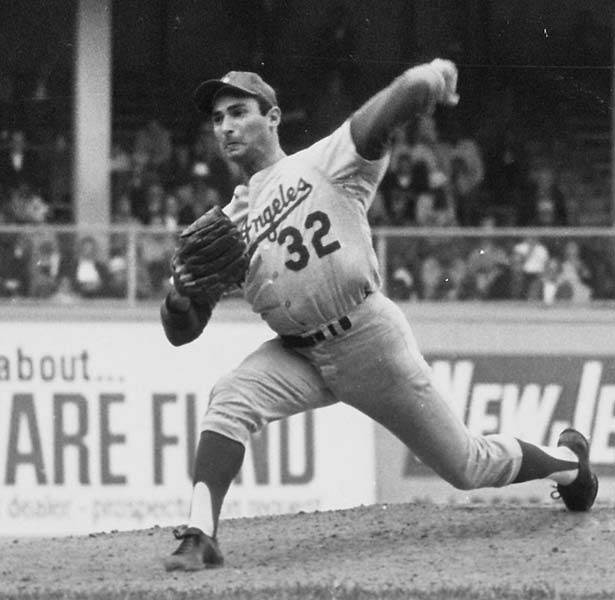
Major league baseball pitchers throw some amazing pitches. Their repertoire includes the breaking ball, changeup, forkball, screwball, slider, curveball, knuckleball, four-seam fastball, split-finger fastball, cutter, sinker, two-seam fastball and probably some other customized versions of all the above. These pitches range in speed from 70+ to over 100 miles-per-hour. How a batter can even see a pitch that is screaming in at speeds above 90 and dancing all over the place is an incredible feat. And the fact that such pitches can be hit for home runs is even more stupefying. How do they do it?

Major league batters expect to adapt. They know that they are going to see a wide array of pitches that are surgically placed in different locations in the general area of home plate. Thus, every at-bat requires them to adapt to a host of variables. Top-flight big leaguers have an uncanny knack for successfully adapting their vision and their swing to hit the ball and get on base. They go to the plate knowing with absolute certainty that they must be able to adapt, or they will strike out, fly out or ground out.

As entrepreneurs we would be well-served to study successful major league baseball players and observe how they adapt. Sometimes they shorten their swing. At other times they become supremely patient. They may try and push the ball to the opposite field; they may bunt, and they might also time their swing to pull the ball. All of this happens within a split second.

We entrepreneurs often work hard to create elaborate strategies and backfill with a host of tactics. We plan and we create extensive systems and processes. All are absolutely necessary to succeed. But sometimes we forget that we must expect to adapt. There is nothing negative about holding this expectation. The game plan provides a roadmap for us to follow, but it doesn’t account for every possible instance where we may need to be flexible.

With the disruption caused by COVID-19, our ability to adapt was tested more than ever before. Businesses were turned upside down along with the rest of our lives. Having a playbook was important but being able to turn on a dime and act entrepreneurially was critical to adapting to a bizarre situation at the time. Over the years I’ve tried to muscle my way through a plan that I was convinced was the only way to go. Most of the time it led to failure or at least results that were less than stellar. I realized that I was being resistant to adaptation.

What I wish I had understood at the time is that the need to adapt can offer some incredible opportunities. And my resistance caused me to miss those opportunities. It’s easy to say, “OK, I have a plan and undoubtedly something will knock me off-course.” What goes unsaid is the thought that, “Then I’ll do whatever it takes to get back on-course.” But what if we had a mindset of expecting the need to adapt and actually turning it into a desire?” Think about all the wonderful inventions that have occurred in the past. If you’ve ever read the story of Steve Jobs, you’ll know that he was a master of adaptation. Through his flexible nature he embraced the chance to make changes to the iPhone and the result was, “WOW!” It’s well-documented that the initial vision for this technology would not have been nearly as phenomenally functional as what was eventually developed.

When we rejoice at the prospect of adapting our ideas, our creativity increases exponentially. Then we are positioned to achieve greatness in whatever we choose to do.

 This blog is being written in tandem with my book, “An Entrepreneur’s Words to Live By,” available on Amazon.com in paperback and Kindle (My Book), as well as being available in all of the other major eBook formats.

The Second Place Entrepreneur

I was talking to a woman a few years ago who told me that she had interviewed for a position that she really wanted but came in second. Her statement got me thinking that sometimes second place is the best outcome. We’re conditioned that winning is the only outcome for which we should strive. After all, who runs a race with a goal of coming in second? But what if second place really turns out to be first place? Let me explain.

I have always believed that there’s always a reason that things work out the way they are supposed to. It’s not fate – it’s simply the way the world works. Here’s my story. When I was about to become a newly minted college graduate, I interviewed for a job managing a shopping center in a medium-sized Midwestern city. I pulled out the stops to prepare for the interview and dazzled the owner’s representative with my charm and good looks because I had no experience! But alas, the owner opted to hire someone else that did have experience. Naturally I was disappointed. But had I won that job, who knows where my career path might have led? Instead, I have been blessed with the most incredible opportunities to live my passion over the past 49+ years. In the end, I definitely ended up in first place!

Some may see this as a Pollyanna sort of mindset. After all, who really thinks that they’ve won when they’ve lost? But there’s a method to this madness. The key is to truly believe the notion that something better is always in store for us. When we succeed, it’s a reflection of this reality. When we are unsuccessful it’s a signal that what we wanted wasn’t meant to be . . . because we’re destined for something better. If we doubt that the latter is true, then it’s highly unlikely that we’ll experience that “something better.” We all know the power of the mind. And yes, it’s powerful enough to block and deny positive outcomes when we aren’t open to all possibilities.

It’s hard not to be disappointed when we take second place. But with practice we can learn how to quickly replace the feeling of disappointment with feelings of excitement and anticipation. I’ve reached an interesting point in my life. When I expend extreme effort, work smart and am innovative but still come up short, my heart pounds a little faster and I think to myself, “OK, something pretty amazing must be in store and I can’t wait to find out what it is.” I may even work with some positive affirmations at this point to ensure that I am open and receptive to however the script is about to be re-written.

Here’s a current example of how this worked for us. My wife and I spend a lot of time in Florida (where it’s much warmer than in Kansas City). Years ago, we decided to stop renting and purchase a condo. We found what we thought was the perfect unit and made an offer which was countered by the seller. We submitted a counteroffer to the seller’s counter and then heard nothing. I was certain that another buyer had emerged, which turned out to be the case. But rather than being disappointed, we chose to truly believe that something better was about to happen. And boy did it! A magnificent unit we had previously seen in another building came back on the market. Right after we had initially looked at this unit it went under contract. Apparently, the buyer backed out at the last minute, and we quickly bought the unit. It has exceeded our wildest expectations. Had we wallowed in despair over the first unit we didn’t get, I’m absolutely convinced that we wouldn’t have connected with the unit we ended up purchasing.

By being open and receptive that something bigger and better is waiting to be revealed, our losses can become spectacular wins. Clearly there is no downside to embracing this mindset.

 This blog is being written in tandem with my book, “An Entrepreneur’s Words to Live By,” available on Amazon.com in paperback and Kindle (My Book), as well as being available in all of the other major eBook formats.

The Entrepreneur Under Siege

Consider this. One of your key employees just gave her two-week notice. Your company didn’t win a major contract for which it was bidding. The vice-president of production just informed you that delivery of a key component for manufacturing a product that is 30% of your sales has been indefinitely delayed. Your company website was hacked last night and decorated with cyber graffiti. Cash flow is a bit tight right now. Oh, and you haven’t been able to squeeze in a workout for a week. How does all of this feel right about now? Certainly, being under siege might be one way to describe it.

Let me assure you that similar situations like this are experienced by many entrepreneurs every single day. Perhaps some of it is preventable. But more importantly – how do you handle it? Are you able to stay calm, smile and find your way through the minefield? Or is it meltdown time and maybe a visit to the local tavern after work? The key is how we choose to view and respond to such events. If we see all that I’ve described as a crisis, then we may react with fear and panic. However, if we simply see this as a “Confluence of Events,” we may be a bit more sanguine about it. Let’s look at some of the reactions I’ve witnessed over the years when I see entrepreneurs encounter a “Confluence of Events.”

  1. The Beginning of the End – those who go here lay awake at night conjuring images of complete and total disaster and destruction. They are convinced that their company is going down the tubes; they’ll personally go broke, and they’ll end up living under a bridge. They go to the office and try to slug it out, but they have this feeling of impending doom. Sometimes this becomes a self-fulfilling prophecy.
  2. Deny and Hide – others utilize the Deny and Hide approach. They refuse to acknowledge that something needs to be done and go play golf, take a “business” trip or find some other distraction. Rather than face the issues at hand, they rationalize their reaction by positing that “others need to step up and show leadership” to solve the problems.
  3. Focus, Focus, Focus – I’ve watched leaders with the best of intentions sharpen their focus . . . in over-the-top ways! They tend to jump in and micro-manage a particular situation to the exclusion of everything else that is occurring. By plunging in this way, they believe that they are being productive – except that the rest of the issues that need solving are languishing.

These are just three of the reactions I’ve observed, and each demonstrates the classic fight or flight response. There is another way.

When the “siege” begins, and a Confluence of Events is in sight, the first thing we can do is take a deep breath. Seriously. Spending several minutes to become quiet will help clear the mind. There’s plenty of time to deal with the issues at hand and becoming centered will make the process easier. Next, we write down the specific facts surrounding each challenge that we’re facing. This helps move us away from dwelling on the emotional elements. I’ve found that when I push out emotion, things generally aren’t as bad as they seem. Finally, we map out how we are going to tackle each situation that is contributing to our Confluence of Events. We identify the priorities and start working our way through them. At no time do we feel victimized or defeated. We show leadership by maintaining an even keel and demonstrating that no matter what the situation, there’s always a resolution.

A confluence of problems in our business and personal lives may seem insurmountable. Avoiding a siege mentality begins with remaining calm and unemotional. Then we’re able to methodically and successfully work through or around the obstacles we are facing.

This blog is being written in tandem with my book, “An Entrepreneur’s Words to Live By,” available on Amazon.com in paperback and Kindle (My Book), as well as being available in all of the other major eBook formats.

The Cold Calling Entrepreneur

My cell phone rang the other day. The person on the other end started by introducing himself but did not speak clearly so I couldn’t catch his name. He immediately launched with a hearty, “Mr. Harris, how are you doing today?” This sort of greeting is always a warning signal for me that someone is going to try and sell something. Being a polite person, I responded by saying that I was fine. Before I could say anything else, he began reading from his script. He was peddling the most amazing product since the invention of the light bulb, and it was going to save me millions of dollars . . . or something like that. This guy literally filibustered for more than 30 seconds without taking a breath. He obviously had a lot of practice doing this.

Does this sort of old school cold calling really work? Perhaps it does to a point, but I question whether it is the most effective approach. Let’s examine all the ways I found this conversation to be off-putting. #1 – Failure to speak clearly – the fact that he spoke so fast that I couldn’t understand his name was certainly not the right way to get started. #2 – Cliché greeting – asking how I was doing is incredibly trite and inauthentic. #3 – No need-determination – this was at the heart of his ineffective approach. He arrogantly assumed that I needed his product or service and made no attempt to validate this assumption. #4 – Reading from a script – I had no confidence that he understood what he was supposed to be selling. After listening to him tout his product for a while I finally interrupted him and said, “I’m not interested, thank you.” And then I hung up. I wonder how many times this happens to him every day.

This type of cold calling utilizes a classic high-pressure technique, and I’m surprised that in today’s business world there are still companies (and salespeople) who use it. Cold calling can be a thankless task yielding poor results except for a high degree of discouragement. Cold calling should be less about the product or service we are selling and more about building and collecting relationships that we can serve. The problem is that many companies still expect salespeople to meet quotas and apply extreme pressure to sell, sell and sell. The alternative (and much more effective) approach is to call without making any attempt whatsoever to sell anything. Instead, the call is to introduce oneself and build a rapport with the customer. This process includes attempting to understand how the customer does business and to identify his points of pain.

I would begin a call like this by indicating that I’m not calling to sell anything. This statement is usually somewhat disarming and increases the chance for a customer to stay on the phone. Instead, I’m doing some research to learn more about how customers are dealing with a certain issue. If my product is inventory management software, I’m going to ask open-ended questions that get the customer to talk about what problems he might be experiencing with his current inventory management system. And I’m going to carefully listen to his responses and ask pertinent follow-up questions based upon what he has told me. I will not read from a script. Once I have a greater understanding about my prospective customer and his needs, I’m going to thank him for his time and hang up.

I’ll follow up with a handwritten note expressing appreciation to the customer for his time. Very few people write notes anymore. I won’t send it by e-mail because I won’t stand out as much. I may wait several days and send him something relating to the conversation we had – perhaps it’s an article that is applicable to his situation. But I’m still not selling him anything. Instead, I’m working to build a relationship. By the time I call him again, he knows who I am. And there’s a reasonable chance that I’ve differentiated myself from the high-pressure cold callers he hears from every day. When I finally call him days or even weeks later to help him buy my product, it’s now a warm call.

Effective selling isn’t about the product we’re pushing. It’s all about the customer and his or her needs. And while this premise seems so basic, it’s not practiced extensively. Thus, when we take the personal approach rather than the product approach, we have a real opportunity to stand out from our competition.

This blog is being written in tandem with my book, “An Entrepreneur’s Words to Live By,” available on Amazon.com in paperback and Kindle (My Book), as well as being available in all of the other major eBook formats.

The “When” Entrepreneur

The minister in church one Sunday talked about his anticipation of future events and it got me to think about the subject in a different way. How many times have you heard someone say, “I’ll be happy when . . .” or “I’ll have plenty of money when . . .” or “I’ll have more fun when . . .”?

As a classic Type A entrepreneur, I tend to focus on the future. Oh, I do live in the now, but I am constantly thinking about the next steps in building my businesses. But it goes beyond that. If I am going on a trip in a few days I’m thinking about what all will be involved in the travel process. I’m thinking about what I’ll do when I get to my destination. Once I’m on my trip and have reached my destination, I think about where we’ll eat dinner or an event that we’ll attend. I don’t think that it’s necessarily a bad thing to be planning ahead though I can easily flip over into the realm of obsession with planning. What’s more problematic is when the thinking ahead becomes the “When Affliction.”

The When Affliction manifests in several ways. It can occur when we are so focused on thinking about something that is to happen in the future that we don’t pay close enough attention to something critical that is happening right now. This is the perfect environment for mistakes to be made. The other day while driving I was so engrossed in thinking about an upcoming meeting that I nearly caused a wreck. I was changing lanes, turned on my blinker and quickly looked over my shoulder. There was a car in the other lane – I know I saw it – but it didn’t register as I pulled over anyway. Horns blared and my heart leapt into my throat. My focus on the moment was blinded by my focus on the future.

The When Affliction can have us so wrapped up in getting past the next milestone that we are unable to truly appreciate what we are experiencing in the process of getting there. So, here’s a question. How many magical moments do we miss with the When Affliction? I remember our youngest daughter’s wedding many years ago. It was a splendid affair and one where I was truly present every second of the day. I simply allowed myself to be swept up in the pomp and pageantry that is often woven into such an event. Not once was I contemplating a future action. And I can treasure the memories because I really was a part of making them. There are so many other things I don’t remember about what has happened in my life because I was looking forward so much of the time.

It’s OK to plan ahead. If we simply allow ourselves to float along the river of life without regard for the snags and rapids in front of us, our boat could easily be swamped. The key is to find the right balance between thinking ahead and maintaining a “now presence.” To accomplish this, I have discovered a game that I play with myself. Let’s say that someone is coming to my office to meet with me. Before the meeting I will identify several things that I want to notice during this meeting. What color are the clothes this person is wearing? What color are his or her eyes? Is the person right-handed or left-handed? Sharpening my observation skills in this manner helps me focus on the other person and the moment, thereby avoiding the When Affliction.

We intuitively know that tomorrow never comes because there always is another tomorrow. Thus, we can avoid becoming obsessed with the future if we limit our planning to that which really matters, allowing us to revel in the now.

This blog is being written in tandem with my book, “An Entrepreneur’s Words to Live By,” available on Amazon.com in paperback and Kindle (My Book), as well as being available in all of the other major eBook formats.

Goal – Sports Equipment, Message, Plan – Document, Sign, Word

The Fulfilled Entrepreneur

Here’s a question for entrepreneurs that can be a rather perplexing conundrum. What is the value that we are adding to what we do every day? Could a trained monkey do it too . . . and maybe even better? Here’s the thing. We sometimes tend to fall into a rut that’s usually within our comfort zone. And then we go through motions every day – over and over and over. Oftentimes we become very, very good at what we do and so it is easy to keep doing it – over and over and over. But is it a truly fulfilling experience?

My father-in-law was a funeral director. He was very, very good at what he did, and it was evident that he liked helping people. But he always said that when he turned 65, he was done and would retire. And that’s exactly what he did. I concluded that while he liked what he did, he didn’t love it enough to never want to stop doing it. I never did get a chance to ask him before he died what value he brought to what he did every day.

Entrepreneurs think a lot about money. Yet, those I’ve known who do what they do just to make a lot of money tend to become restless and bored. Making a lot of money may be great, but after a while it’s just a way to keep score. And if we’re winning every day and only doing it for the money, how does one keep the “fire in the belly?” There must be something more.

There’s no denying that we entrepreneurs want to make money. And there’s nothing wrong with this – after all, most of us are unabashed capitalists. But just focusing on the money can lead to a hollow existence. Money is a commodity and eventually we find ourselves feeling like the proverbial trained monkey. That’s when the trouble can begin. Being restless and bored can lead to many issues the least of which might be extramarital affairs, drug or alcohol abuse or even daredevil types of hobbies. I’m not casting aspersion on thrill-seeking activities, but we must examine the real reason that we pursue them. Is it because we are feeling unfulfilled in our business and/or personal lives?

All this pondering leads us to conclude that we need to be doing something of substance to feel fulfilled. I’ve written before about value propositions where customers are concerned. But we also need a personal value proposition that winds us up and keeps us excited, happy and content. My value proposition is the same as my personal WHY (thank you Simon Sinek) which is to make sense of complexity. This manifests itself in many ways including consistently developing creative ideas and solutions. If a day goes by where I wasn’t challenged creatively or didn’t become immersed in something complicated, I don’t feel fulfilled. Thus, I try and always put myself in situations where this never happens.

Each of us needs to find our own personal value proposition. Perhaps it’s doing things the right way every single time. Maybe it’s about innovation and doing things in a better way. Some of us want to make a contribution or a difference in the lives of others. There are those of us who want to create trust and build relationships, while others just want to simplify things. A few entrepreneurs live to master what they do, and others want to create clarity. Of course, there are always a few Steve Jobs types who want to challenge the status quo and think differently.

Discovering our own personal value proposition energizes us and keeps us coming back for more. Being a great entrepreneur hinges on our ability to continually maintain a sense of fulfillment.

This blog is being written in tandem with my book, “An Entrepreneur’s Words to Live By,” available on Amazon.com in paperback and Kindle (My Book), as well as being available in all of the other major eBook formats.