
The Entrepreneur’s “Reasonableness” Test

Some time ago while vacationing, my wife and I had the occasion to dine at several restaurants that we have enjoyed over the years. Something happened at two of them that was somewhat of a surprise. Here’s what occurred. At the first restaurant we had been told by a nearby merchant that a particular dish was extremely good. Naturally we wanted to partake, only to be told by the waiter that this item was only available on the bar menu. I told him that we were willing to pay an upcharge, if necessary, to enjoy this seemingly delectable delight. No dice was his reply. He went on to spin a tale about how the kitchen was too small to serve both the bar and the dining room. The explanation was not remotely plausible.

We had enjoyed a scrumptious dinner at the second restaurant and were attended to by a very outgoing server. The entrée I selected had a side dish that I didn’t prefer, and I asked if some sliced tomatoes could be substituted. This was done without issue and the service was impeccable. Roll the tape forward a week with a different server but the same entrée. Again, I asked for sliced tomatoes and was very abruptly informed that the chef was not going to accommodate my request. This server (a bit on the snippy side to begin with) said that there had been quite a conversation with the chef about such a substitution and he wasn’t going to slice any tomatoes.

In both situations, the desires of the customer were secondary to the desires of the restaurants. In both cases, I wrote social media reviews pointing out that the operational efficiencies of the eateries were apparently more important than offering a memorable customer experience. And as I thought about it more, I realized how often this approach is taken by many businesses. But why?

We’re in the day and age of creating customer experiences. No longer is it just about selling a product or service. I’ve advocated for years that we should avoid “selling to” customers (product-centric) and help customers “buy from” (customer-centric). Helping people buy something provides us with an opportunity to create a more tailored and pleasant experience – something they might mention in a positive manner when speaking with friends and family . . . or posting on social media. Both restaurants failed the test. The food was so-so at the first establishment but truly amazing at the second. Yet, the wonderful cuisine was overshadowed by the negative experience of a chef who apparently was throwing a hissy fit for unknown reasons. I would have certainly understood if the tomatoes were of poor quality and that had been explained to me. And while the chef may have had a limited supply of tomatoes to be reserved for other dishes that included tomatoes, there is a fabulous modern-day invention called a “grocery store.”

I eat breakfast regularly at a restaurant where the proprietor often makes a run to the nearby grocery store when she runs low on a particular food item. The last thing she wants to tell a customer is that she is out of something and can’t accommodate a request. The upshot of all of this is to pause for a moment and look at our own operations. Are there things we can do to make sure we are creating a positive customer experience? Do we have systems and processes that are designed to make our operations more efficient and profitable, but could potentially stand in the way of putting a smile on the customer’s face? Are we a slave to rigidity and adherence to a very precise “recipe?” Perhaps we should consider applying the “reasonableness test.” In other words, is the request of a customer reasonable or not? If it is, we should accommodate it to create the desired experience. If I had asked for Baked Alaska, that probably wouldn’t have passed the “reasonableness test.” But sliced tomatoes?

Entrepreneurs can differentiate themselves by working to create a memorable customer experience. This can be accomplished by developing a reasonableness test when it comes to customer requests.

This blog is being written in tandem with my book, “An Entrepreneur’s Words to Live By,” available on Amazon.com in paperback and Kindle (My Book), as well as being available in all of the other major eBook formats.


The Angry Entrepreneur

When I was a kid growing up it seems like my mother was always cooking something in a pressure cooker. I have no recollection of exactly what food she was preparing; I just remember the mystique of the pressure cooker. I think I must have been warned that there was an inherent danger with this device, and I never wanted to stand too close. It’s possible that I was told that the thing could blow up at any second and I would be maimed by flying shrapnel, pork chop bones or some other lethal object. In retrospect, I think this admonition was one more way to keep me out of the kitchen while Mom was cooking dinner.

Anger is like the pressure cooker. It can simmer for a while and then seemingly explode in an unpredictable manner. From a physiological standpoint, the amygdala is the part of our brain that is the culprit. When the amygdala sounds the alarm to the body that something is present that will make us angry, our adrenal glands start pumping and testosterone is also produced. We begin speaking in a louder and more rapid voice. Our muscles tense, our cheeks flush, and our heart beats faster. Anger is the ticket to higher risk for heart disease, and it also accelerates the aging process as well as decreases lung functions. Pure and simple – anger isn’t good for us.

Here’s the thing. It takes a superhuman effort not to get angry, especially when things aren’t going as planned. Now think about leadership and anger. Is there a productive correlation? The answer is obvious. To be strong and effective leaders we must curb our temper. Perhaps we’ve experienced the type of boss who has a hair trigger. When he goes off the meltdown is epic. His face gets beet red. He yells and screams. There may be a plethora of profanities laced throughout his diatribe. In extreme cases he may even shove files and papers to the floor or even throw something. What is the usual result of such a tantrum? There’s a general feeling of embarrassment and a specific sympathetic reaction to the party that is bearing the brunt of the boss’s emotion. Everyone keeps their head down and makes a detour away from the boss for the rest of the day. Overall, morale is destroyed. Fear is palpable. Is there any silver lining here? The simple answer is no.

If all the preceding is true, what is the point in getting angry? You guessed it – there is none. Do we truly feel better after we get angry? Do we enjoy the headache that ensues, the elevated blood pressure, and increased anxiety? I’ve worked for decades at “lengthening my fuse.” Those who have known me for a long time can attest to the fact that I rarely get mad anymore. This doesn’t mean that I’ve become a pushover. I’ve just learned that the toll that anger takes on my colleagues and me is just too high.

Here’s what I’ve discovered. When something is about to trigger an anger response, I recognize the need to become stoic. A stoic is defined as “a person who can endure pain or hardship without showing their feelings or complaining.” Think Mr. Spock in Star Trek or Andy Dufresne in the Shawshank Redemption. I have also come to realize that maintaining a positive mindset in every circumstance is critical to problem solving. Anger is a negative emotion and does nothing to get to a solution. This doesn’t mean that I don’t feel disappointment or even a momentary flash of “extreme dissatisfaction.” But staying in such a feeling is poisonous in every respect and is not the way I want to model for others.

Temper tantrums are for little kids and are usually best ignored. The best leaders control their emotions and help their team move in a positive direction no matter what.

This blog is being written in tandem with my book, “An Entrepreneur’s Words to Live By,” available on Amazon.com in paperback and Kindle (My Book), as well as being available in all the other major eBook formats.

The Law of Attraction and the Entrepreneur

Gil Penchina is a 25-year angel investor in start-up companies. He was one of the earliest members of the eBay team and has invested in unicorn companies such as LinkedIn, Dollar Shave Club, PayPal and Cruise Automotive. I heard him tell a fascinating story about what he sometimes does when he’s traveling. He posts on Facebook that he’ll be away and offers his apartment to whoever wants it. Total strangers are often staying in his apartment – and have been identified not through a formal Airbnb arrangement! He’s done this 15 or 20 times and simply asks that the apartment be left clean, and the bed linens and towels put in the washing machine. Only once has he been burned and that was by one of his cousins. Why would he do this? As Gil tells it, he believes that people are inherently good, and he doesn’t believe they will harm his property.

How many times do we “look for trouble?” Do we have expectations that someone is going to try and take advantage of us? I’ve known many people who always have their guard up. They truly believe that if they don’t aggressively take protective action that they are going to be screwed. I’ve worked with people who spend more time trying to figure out how they are getting the short end of the stick in a transaction than time spent figuring out how to optimize the deal. Guess what? This mindset can become a self-fulfilling prophesy.

I believe as does Gil, that most of us operate in good faith. Sure, there are bad people in the world – I’m not naïve enough to deny this. But the number is infinitesimally small, and I will do nothing to seek them out. I’ve said it many times that I’m going to put as much Good out into the world with no expectation of getting anything in return. What I’ve always found is that Good comes back to me, often beyond my wildest dreams. While there’s no quid pro quo for specific actions, I know that as I am doing Good, I will attract Good into my life. This is applicable to business, personal relationships, our health, and all other facets of our existence.

Let’s be clear about something. This isn’t about blithely skipping down Candy Cane Lane oblivious to obstacles and pitfalls. When we believe in all Good, we manage risk such that we aren’t worried about bad things happening. Why? Because we have a mitigation plan in place that we methodically work through if the unexpected occurs. Simply planning for risks does not mean we think they will come to fruition. It gives us the peace of mind to know that we can successfully deal with them and allows us to devote our time and energy to the positive aspects of whatever we are doing.

In my 46+-year career I can count on one hand the number of times someone has maliciously taken advantage of me. Conversely, I know many businesspeople who are constantly embroiled in lawsuits and always complaining about how awful others are to deal with. I guess I must be running in the wrong circles because I just haven’t encountered that many of those kinds of people.

Several years ago, we were purchasing an apartment property and placed a large amount of earnest money in escrow. During our due diligence process, we found some issues that were unacceptable, and we informed the seller that we were cancelling the contract. The seller wanted to fight over returning our earnest money and we spent a few dollars on lawyers before settling with him. He received less than 50% of the earnest money and we moved on. All of us believed that the seller was acting in bad faith, and we could have endured a long protracted legal battle and won. But to do this would have required a huge expenditure of negative energy and prevented us from pursuing other positive opportunities. It turned out to be a minor blip in our process and was soon forgotten.

The Law of Attraction is a powerful force in our lives. When we think positive thoughts and do good things for others, we attract the same for ourselves. Negative thoughts and negative actions are also attractors. The choice is easy to make.

This blog is being written in tandem with my book, “An Entrepreneur’s Words to Live By,” available on Amazon.com in paperback and Kindle (My Book), as well as being available in all of the other major eBook formats.

The Entrepreneur Saboteur

We’ve all seen the World War II movies where U.S. soldiers crept behind enemy lines and blew up bridges, tunnels, and other elements of infrastructure. We hold our breath as our boys used cunning and guile to defeat the Germans at every turn. This was classic sabotage at its finest.

Would you believe that entrepreneurial leaders can sometimes be saboteurs too? Are you wondering how? Consider this. Nathan owns an internet marketing company with 24 employees. He has a couple of up-and-comers on the team. Nathan is a strong, hard-charging Type-A personality and is quite a taskmaster. He seldom expresses his gratitude to his rising stars. Instead, he can be hypercritical at times. Nathan claims that he is simply trying to push his best and brightest to excel. Because of his sense of urgency, he tends to issue instructions in a rapid-fire manner. When mistakes are made, Nathan becomes impatient and can even unleash a tirade that is directed in a very personal manner. His colleagues do not want to bring him bad news – it’s not that they don’t want to let him down, but because they fear his wrath and tantrums. On the other hand, he can be witty and charming. And his company has achieved enormous success.

By contrast, Amanda started a consumer products research firm while she was in college and has watched it grow over the past five years to 35 employees. Amanda is also a high-achiever and a similar Type-A personality. She sets lofty expectations for her team, and they respond by meeting or beating their goals every quarter. While it’s clear that she’s the boss, team members love Amanda’s collaborative style. Even when a mistake is made, she remains positive and upbeat while counseling the errant employee. Amanda never berates anyone and is always supportive. She’s no pushover either – if certain employees continue to underperform, she will show them the door. During a 360 review, the most common statement made about Amanda is, “I always feel that she values my contribution.”

The difference in leadership styles between Nathan and Amanda is very stark. They are both generating eye-popping results, but their paths are totally divergent. Nathan is a saboteur and is succeeding despite his approach . . . for now. But like a Roman candle that pierces the night sky, eventually it flames out and disintegrates. Nathan’s company is always in a state of upheaval. Drama is occurring at every turn. Employee turnover is high and if it weren’t for his two blossoming lieutenants keeping everything together, the whole enterprise would blow up. When the boss constantly undermines his team the implosion clock is ticking.

Strong leadership – the kind demonstrated by Amanda – begins and ends with positive encouragement. A calm sense of urgency replaces the chaos, and team members do not fear for their sanity (or safety!) when a failure is experienced. The basic premise is easy to understand. Are people more motivated to succeed in an upbeat and encouraging environment, or one that is negative and subjects people to personal embarrassment?

The legendary Steve Jobs of Apple fame was an awful boss. Ramon Henson, an instructor of Management and Global Business at Rutgers Business School wrote this about Jobs in 2011. “It is well-known that Steve Jobs could be arrogant, dictatorial, and mean-spirited.  Despite the observations of some about Mr. Jobs’ arrogant style, I believe that he had at least three qualities that great executive leaders have: a clear vision, a passion for the company and its people, and an ability to inspire trust.  This is what I would consider his leadership character. In fact, Mr. Jobs not only had a vision, but he also made sure that everyone in the company bought into that vision, and this created a ‘higher purpose’ for the company that really excited Apple employees. Of course, his passion for the company and its products is legendary. And employees trusted Mr. Jobs – not because he founded the company but because he showed time and again his competence in many areas, especially product design and marketing.  And because employees saw – through his behavior – that Mr. Jobs was not driven by his own ego or by some self-interested needs (like the outrageous pay packages of some executives), they trusted him. So, if Mr. Jobs was at times arrogant, even nasty, employees viewed these behaviors in the context of these underlying qualities.”

I believe Steve Jobs was an anomaly as a leader. That Apple achieved great results while enduring his leadership style is a testament to this outlier notion. In other words, “don’t try this at home.” The probability of success is exponentially higher when creating an environment of positive encouragement than one of daily sabotage.

This blog is being written in tandem with my book, “An Entrepreneur’s Words to Live By,” available on Amazon.com in paperback and Kindle (My Book), as well as being available in all of the other major eBook formats.

The Failed and Defeated Entrepreneur

What two words in the English language couldn’t be further apart in their meaning, but are often intertwined for entrepreneurs? The first word by itself is part of the everyday life of an entrepreneur – and every other person in the world as well. This word is relatively innocuous. But when connected with the second word it’s like adding the primer to dynamite. The resulting explosion can have all sorts of detrimental effects on our lives.

That first word is “failure.” Many entrepreneurs (and others) fear failure. But successful entrepreneurs have almost always experienced failure in different ways and multiple times. They use their failure to recalibrate or pivot and find a new way to make something work. David H. McConnell was a door-to-door book salesman who offered a little gift of perfume to female customers. Selling the books didn’t work out so well, but there was great demand for the perfume. So, McConnell ditched the books and turned the perfume concept into what is now known as Avon. Ever heard of Traf-O-Data? It was a partnership between Bill Gates and Paul Allen for the purpose of developing reports from traffic counters for traffic engineers. The business was not a success. But Gates went on to launch another venture called . . . Microsoft. And then there’s the famous story about a man named Fred Smith who wrote a paper for his Yale University economics class involving overnight parcel deliveries. The professor wasn’t impressed and gave him what Smith recalls was a C. Undaunted, Smith pursued the idea which today is known as Federal Express.

This brings us to the second word. The word is toxic to entrepreneurs for it can easily become a mindset. The word . . . “defeat.” Failure is part of a process of experimentation and discovery. Defeat is the end. Once defeat is admitted, there’s nothing more to be done. I knew a man who worked for someone else for several decades. Then he decided to spread his entrepreneurial wings and bought a business. He labored mightily but eventually had to close his doors. But rather than lean into the experience and use it as a steppingstone to success, he withdrew. His confidence was shaken, and he began making unhealthy choices. He tried working for someone else again but eventually ended up driving a taxi. Now there’s nothing wrong with driving a taxi if it’s for the right reason. But in this case, it was his way of curling up in the fetal position and saying, “I can’t.”

I think that it boils down to whether we have a “die trying” mentality. It boils down to whether we have a positive image of ourselves. It boils down to moving as fast as we can to kill our own bad ideas so we can make room for the good ones! When we are afraid to fail, we are setting ourselves up for defeat. One of the most important things about failure is making certain that it’s not so monumental that we can’t right our ship. A mindset of defeat occurs when we are convinced, we’ve lost it all – forever.

Here’s what I’ve learned. I don’t set out to fail at anything but accept the fact that I will, and I must, if only to find the good ideas that work. I always make sure there’s enough of a margin of safety that my failures aren’t going to “kill” me. This leaves room for a pivot or a more significant shift. Regardless of my failures I will always remain positive and optimistic. Sometimes this can be very hard but it’s fundamental to avoiding defeat. When I do fail, I look for what can be salvaged from the experience to bolt onto the next iteration of whatever I’m doing. And finally, I know that I’m a step closer to success by eliminating a step in the process that didn’t work.

Failure and defeat are not connected in any way, shape, or form. Great opportunity and great success can rise from failure. Nothing good comes from defeat.

This blog is being written in tandem with my book, “An Entrepreneur’s Words to Live By,” available on Amazon.com in paperback and Kindle (My Book), as well as being available in all of the other major eBook formats.

The Self-Defeating Entrepreneur

My beloved Kansas City Chiefs NFL football team did not go to the Super Bowl on February 13, 2022. They were maddening to watch during the season and through the playoffs. The talent on the team is off-the-charts incredible. For four straight seasons, they played in the AFC Championship Game, two Super Bowls, winning one. Why didn’t they advance to the Big Game in 2022? Very simply – they beat themselves. They lost several games during the regular season by beating themselves. But the AFC Championship Game versus the Cincinnati Bengals was the ultimate demonstration of this self-defeating notion.

The Chiefs were ahead 21-3 well into the first half and clearly were stronger and faster than the Bengals. The game should have been a blowout for the Chiefs playing in front of their home crowd in the loudest stadium in the world. And yet, they lost by a field goal in overtime. How did this happen? At the end of the first half, it was first and goal on the one-yard line. Rather than bulldoze the ball into the end zone, they misfired a couple times and used their last timeout. On third down, the quarterback swung a pass to a receiver who was well-covered and tackled behind the line of scrimmage as the clock ran out. All the QB had to do was throw the ball away and bring on the kicker for a last second field goal. Instead, the momentum swung away, and the team was shell-shocked coming out of the locker room at halftime. In the second half, the Bengals dropped eight men in coverage and rushed three defenders. Rather than take advantage of this situation by running the ball, the Chiefs proceeded to continue passing – unsuccessfully – resulting in multiple punts and interceptions. Cincinnati grabbed the momentum and ended up winning the game and going to the Super Bowl. Had Kansas City made slight adjustments and played its game, there is no question that they would have won in decisive fashion.

What transpired at Arrowhead Stadium in Kansas City on January 30, 2022, was a classic case of Self Defeat. And this is something that some entrepreneurs tend to do every day. We go on a winning streak for a while and think we have it all figured out. Then we get cute and cocky one day, or we shortcut the basics and fundamentals, and voilà – we hit the wall. This may be followed by “locker kicking” or rants about how the deck was stacked against us, or a competitor played dirty pool. But in the end, we beat ourselves. Had we followed our game plan and made the adjustments necessary we would likely have continued to win.

How do we avoid the Self Defeat Trap? We must never take our success for granted. We work hard to succeed and just when we believe that it is going to be easy, we stub our toe. Perhaps we made it a practice to regularly write notes of gratitude to our key customers and check in with them by phone periodically. Then things seem to be going well and we stop sending the notes and making the calls. The next thing we know, a major customer has walked out the door – not necessarily because we stopped with the notes and the calls, but because we stopped paying attention and missed signs of dissatisfaction. We must reinforce the basics and fundamentals that led to our success and always keep them front and center.

Then, we must look for how and when we need to adjust our approach. If we simply continue to power along the way every day, we may beat ourselves because we missed subtle signals that would have told us an adjustment was in order if only we had watched for them. Back to the previous example. Maybe the notes of gratitude and the check-in calls worked just fine for several years. But on one such call the customer mentioned that he’d love to see us in person someday. The smart entrepreneur gets on an airplane and goes to visit the customer in-person. The Self-Defeating entrepreneur doesn’t pay attention to what the customer said and continues sending notes and making phone calls. Then a competitor waltzes in to see the customer in-person and the rest is history.

We entrepreneurs can stop beating ourselves if we avoid taking our success for granted, maintaining a disciplined approach to the basics and fundamentals that have enabled us to win, and paying attention to the signals that tell when to adjust our strategy and tactics. If we do this, our chances of winning our own Super Bowl will increase exponentially.

This blog is being written in tandem with my book, “An Entrepreneur’s Words to Live By,” available on Amazon.com in paperback and Kindle (My Book), as well as being available in all of the other major eBook formats.

The Difference-Making Entrepreneur

Here’s an obvious statement – entrepreneurs want to build successful businesses. But there’s something more that drives many of us. In some cases, this objective is just as important as building the business itself. It’s a notion that invokes strong emotions and can be a driving force. Yes, many entrepreneurs want to make a difference in the world. They want to help change lives in a positive way. This is especially true of the millennial generation but also strikes a multi-generational chord for many.

While making a difference sounds great, how do we go about creating a company that does good work? A strong set of core values and a vision that embraces changing the world are critical factors. But to truly move forward to effectively and sustainably implement this concept we must start . . . with ourselves. Making a difference must become a mindset and a lifestyle. Think about it this way. If we want to lose weight permanently, we don’t go on a diet, we change our lifestyle. It works the same way when we want to make a difference – we must change our lifestyle.

There is a simple yet powerful method that will help us move in the direction we desire. It revolves around a daily journal that we keep in which we record each attempt we make to do something that positively impacts one or more people. Here’s something else to think about. Making a difference doesn’t have to involve massive sweeping changes in the world. It starts with a lot of little steps that eventually have a cumulative effect. One of the mistakes that lead to frustration for entrepreneurs is believing that they can be the catalyst for major transformations overnight. Sure, once in a while this can happen. But shooting for the stars without enough fuel is certainly going to end up in a fizzling disappointment.

What sort of baby steps should we be taking to develop a difference-making lifestyle and mindset? Look at all the opportunities we have to make a positive impact on the lives of others every single day. In the restaurant where we are having breakfast or lunch, we can compliment our waitperson on providing excellent service. We can hold the door open so that another person can enter or exit. Perhaps we even anonymously pay for someone else’s meal in that restaurant from time-to-time. Maybe we handwrite a thank-you note to someone who has done something nice for us. Or we call a person with best wishes for their birthday. Do we always remember to acknowledge others with a smile and a warm greeting when we see them? Are our “please” and “thank you” manners always on display?

The little every-day habits we develop to brighten the day of another individual are foundational toward taking bigger steps. Suppose one of our team members is apparently in distress. We can lend a sympathetic ear. Volunteering is a terrific way to make a positive difference in the lives we touch and can run the gamut of activities. Helping at a homeless shelter, mentoring other entrepreneurs, reading to sick kids in a children’s hospital and providing assistance to scouting organizations are examples of such bigger steps.

To keep ourselves on track, we utilize the Daily Difference Journal to record what we have done each day toward our lifestyle change. While it may seem trite to make an entry like, “told Olivia that her smile brightened the day,” the act of keeping such a tally reinforces the intentionality of our desire to do good things for our world. Repeating this process day-in and day-out helps set the pattern that we desire. Initially it pushes us to remember to look for opportunities to say and do things that create a positive experience for others. Eventually it becomes second nature, and we don’t have to remember anything. We simply live each day looking for ways to make others happy and live better lives.

Making a difference in the world is a terrific benefit of being an entrepreneur. A Daily Difference Journal puts us on the path to accomplishing this with gusto!

This blog is being written in tandem with my book, “An Entrepreneur’s Words to Live By,” available on Amazon.com in paperback and Kindle (My Book), as well as being available in all of the other major eBook formats.

The Customer-Obsessed Entrepreneur

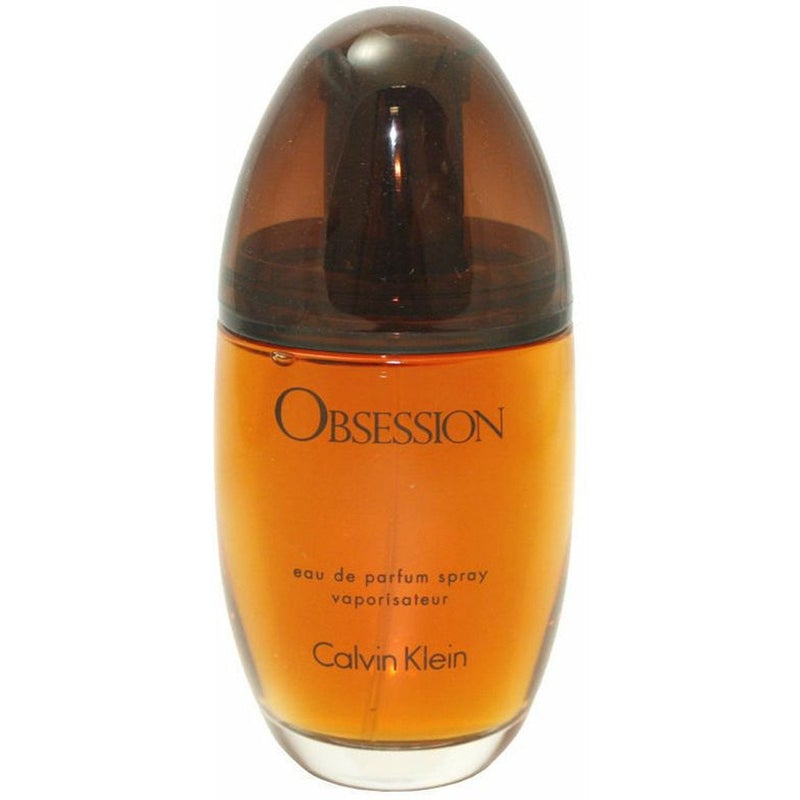
Calvin Klein has a women’s fragrance called Obsession Perfume. It’s relatively inexpensive – around 25 bucks or so for a 3.4-ounce spray bottle. This blog is not about the perfume, but it is about a particular type of “obsession;” one that is worth far more than 25 bucks.

What dominates our thoughts as entrepreneurs? Is it cash flow? How about the competition? Maybe it’s growth or perhaps it’s market share. Most of these aspects aren’t worth becoming obsessions. In fact, there is very little that rises to the level of importance to be worthy of obsession. Yet, there is one element that is so fundamental to the success of our businesses that it should be front and center as a focal point. You might say it’s the “Obsession on a Pedestal.” Everyone throughout the organization starting with the CEO should be obsessed about . . . the Customer.

Well of course, you say, it’s obvious that the Customer is important. No, I’m talking about something more intense than “important.” Customer Obsession takes many forms. There are certain business establishments – stores, restaurants, gas stations, etc., where I enter the restroom and am amazed at how sparkling clean they are. And they even smell good! That’s Customer Obsession. There are certain business establishments where I am called by name when I walk in the door. That’s Customer Obsession. Or take the case of a regular customer of a resort who developed a fondness for a particular type of clock radio. She looked high and low trying to purchase one but to no avail. She messaged the resort staff to see if they could point her in the right direction but was told that the clock was not commercially available. She was pleasantly surprised on her next visit to find a clock radio waiting for her as a gift upon her arrival. That’s Customer Obsession.

Wouldn’t it be incredible if we could create a culture where everyone is equally obsessive about the Customer? This utopia would have every member of the team smile and greet a Customer in a friendly manner when in his or her presence. This utopia would be a flurry of random thank-you notes, thank-you calls and other forms of true expressions of gratitude to our Customers. When a mistake occurs involving a Customer, our culture encourages a quick, heartfelt apology and a genuine attempt to make amends.

When I think about Customer Obsession, I want to know exactly what the Customer needs and wants. This requires a deep dive into data and other methods to understand what makes the Customer tick. And I want to go way beyond understanding what the Customer currently needs and wants. I must determine what his/her future needs and wants are going to be. I want my Customers to seek me out and tell me that they aren’t just satisfied. No, I want them to tell me that they are fulfilled beyond their wildest dreams.

I want to know when a Customer quits and why; and then I want to make a supreme effort to save that Customer and regain his or her trust. I want to talk directly to our Customers on a regular basis to understand as much as I can about the experience we have provided them. I realize that the cash flow, the competition, the growth, and the market share are all secondary to Customer Obsession. Those aspects of our business will be fine if we have an ever-expanding base of Customers for whom we are fanatical about making ecstatically happy. Finally, I want to constantly innovate with an eye on how to better serve the Customer. Running in place is not an option. We can and must always do better for the Customer’s sake.

Many obsessions aren’t necessarily healthy. However, obsessing about our Customers will help ensure that our business is healthy and prosperous for years to come.

This blog is being written in tandem with my book, “An Entrepreneur’s Words to Live By,” available on Amazon.com in paperback and Kindle (My Book), as well as being available in all of the other major eBook formats.
The Entrepreneurial Gold Miner

Have you ever watched the TV series Gold Rush? It’s a lot of fun to see different miners interact with each other; spend a lot of money and fight amazing odds to discover GOLD! They are grizzled guys and gals who brave the harsh Alaskan elements to find the elusive precious metal . . . and of course, smile (or snarl) at the TV camera.

If you watch very many episodes you will be led to believe that it is very, very difficult to succeed in finding gold. I disagree. In fact, I believe that every one of us already owns a gold mine. You may think this is a metaphorical reference and that’s partly true. But there is a literal aspect to this concept that I will explain in a moment. So, what is this gold mine that each of us owns and where do we find it?

If you’ve read my blogs over the years and listened to my podcasts, you already know that I’m a dyed-in-the-wool advocate of maintaining a positive mindset. I believe that there’s a positive energy flow in the world into which we all can tap. When we worry; when we think negative thoughts, and when we act in ways that are hurtful to others, we block that positive energy flow. Then we wallow in our fears, our hurt, our frustrations, and our misery – a process that feeds upon itself. And at the end of the day where are we?

Eliminating negativity is critical to discovering our gold mine. Being in a positive place all day, every day, allows us to harness the amazing power of passion and creativity. Do you ever feel stuck in place, spinning your wheels and not moving forward? You may be stuck right on top of your gold mine, and you don’t even know it! So, what to do? First, start with developing a meditative practice. Meditation is simply the act of dumping the wastebasket of stuff that collects in our minds. When we become quiet and discard the noise and negativity, we create a vacuum. But nature abhors a vacuum and what comes next is the exciting part. For me, a torrent of creative ideas begins to flow.

I want to support those creative ideas in every way possible. I do this with positive affirmations. If you want to become an expert at this, develop a positive affirmation that rings true for you. Then say it 100 times each day in blocks of ten. “Wonderful things are happening in my life right now!” is an example of a positive affirmation. Say it with gusto and different voice inflections. If you do this for a week, your conscious and subconscious mind will believe it.

When negative thoughts creep in, we recognize them and release them. One way to do this is to keep a journal in which we record our negative thoughts. We transfer them out of our minds and onto paper (electronically works too) – and we leave them there. At some point we might revisit them to determine what prompted the thoughts in the first place. But most importantly we get them out of our heads as fast as possible.

So, where’s the gold? Here’s an example of how I found my gold mine. Several years ago, I was speaking with a broker about listing for sale a property that we own. The property was purchased a few years earlier and we knew it was going to have an excellent valuation – we just didn’t know how valuable it was going to be. In the process, I remembered that many years ago, we sold an apartment property and completed a tax-deferred exchange for a couple of drug stores. Frankly, I figured that this was simply a process of protecting the tax positions for our investor limited partners. I never thought that we’d realize any value as general partners. While speaking with the broker, I mentioned that we owned the drug store properties as well. He responded by telling me that the market for this type of property has changed dramatically over the years. On a whim, I had him analyze the properties and he came back with an eye-popping valuation. We listed those two properties as well and cashed significant checks from the resulting sale.

I truly believe that by maintaining a positive mindset, a creative spark stimulated me to mention these properties to this broker. Up until that point I had completely written them off as having any value for my partner and me. By tapping into the flow of positive energy we discovered another vein of gold in our mine. I can tell you that this is not an isolated incident. It happens all the time.

The calculus is simple. An enduring positive mindset allows for the flow of creative ideas that in turn helps us find the gold mines that are ours to claim.

This blog is being written in tandem with my book, “An Entrepreneur’s Words to Live By,” available on Amazon.com in paperback and Kindle (My Book), as well as being available in all of the other major eBook formats.

The Apologetic Entrepreneur

There’s something we all need to do from time-to-time, but many of us find it to be quite difficult. To become great leaders, entrepreneurs need to be able to perform this act in a genuine and authentic way. And yes, there’s a right way and a wrong way. Before I give away the punchline, let me share an example that will illustrate the concept.

Our company has a set of core values that includes Integrity. One of the individual actions prescribed in this core value is, “I speak directly with people to resolve issues as they arise.” This translates into the notion that rather than triangulate with other people about a problem we are having with someone, we go directly to that person to resolve the matter. Seems simple enough, right? Now, suppose a member of the team is in a meeting with senior leaders including the CEO and this team member makes a comment that makes other uncomfortable. Some might believe the comment to be slightly disrespectful to the CEO. After the meeting, the CEO and a couple of the senior leaders are debriefing, and the CEO mentions that the comment that was made was probably inappropriate. The team member’s supervisor then goes to the team member and advises her that she should refrain from making similar comments in the future. The team member becomes upset that the CEO didn’t address this directly with her. What should the CEO do?

This situation actually occurred in our company and the CEO was me. It was brought to my attention by the supervisor that I may not have been keeping with our core value of Integrity because I triangulated with that supervisor rather than bringing the issue directly to the attention of the team member. What did I do? I picked up the phone and called the team member (who is based in another city). I told her that I had in fact mishandled the matter and should have come to her to discuss it. And I apologized for screwing up. In no way was this individual trying to deflect away any focus on her comment – she admitted that the remark was inappropriate, and she apologized to me. But she was absolutely right in her observation that a fundamental core value had not been observed.

Earlier in my career I might have been defensive about the feedback I received. I might have been indignant that somehow, I was wrong when it was another person who made the inappropriate comment to me in the first place. But I’ve learned a lot over the years and particularly how important it is to expunge false pride and an unhealthy ego to become a humble leader. Learning the Art of the Apology has been of great value to me.

Telling someone we’re sorry and admitting a mistake is important. But the way it’s done and what we say is equally critical. We’ve all heard this kind of an apology. “I want to apologize if what I did offended you.” This isn’t an admission that the perpetrator did anything wrong. He is simply apologizing if you are offended. The correct apology would have been, “I am sorry and want to apologize to you because what I did was wrong.” Another mistake is that of trying to rationalize the offense and then apologizing for it. In a way we’re still trying to defend what we did – although somewhat weakly. And it can come across in a condescending sort of way with the message that the aggrieved party is overly sensitive.

Smart entrepreneurs admit their mistakes and move on. Not making the same mistakes over and over is also a factor here. When a team member sees the leader of the organization easily and genuinely apologizing for his or her toe stubs, it goes a long way toward making it easier for others to follow suit.

This blog is being written in tandem with my book, “An Entrepreneur’s Words to Live By,” available on Amazon.com in paperback and Kindle (My Book), as well as being available in all of the other major eBook formats.