
The Winning Entrepreneur

“Just concentrate on throwing the ball over the plate rather than breaking the sound barrier and be more varied and selective with your pitches.” That’s the advice catcher Norm Sherry gave to future Hall of Fame pitcher, Sandy Koufax, in 1961. Prior to that Koufax had labored through several seasons of mediocre pitching. Once he solved his control problem, he became nearly unhittable striking out 2,396 batters in his relatively short career. Koufax retired from the game in 1967 at age 30. Without a doubt, he went out a winner.

When we think of winning, what comes to mind? Most of us would say that we have achieved the success of victory – that’s the obvious answer. But when we’re asked how we won, the answer becomes a bit murkier. So, exactly how do we win? Do we simply throw the ball harder than anyone else? Or is there something deeper?

As we study great winners in sports and other walks of life one thing becomes abundantly clear. Great winners are fanatical about the basics and fundamentals of what they do. We’ve all heard how the basics and fundamentals are the foundational elements to success. And yet many times we just want to swing hard and hit the ball into the left field seats. The result is that we often strike out. Lesson #1 – we’ll strikeout less and win more if we pay attention to how well we are executing the basics and fundamentals of our game. In business, perhaps we have enjoyed a winning streak lately. Human nature may cause us to take our foot off the accelerator and start enjoying the ride. What happens then? Maybe our winning streak will come to an end. We haven’t spent the time and energy continuing to cultivate relationships. We aren’t making the follow-up calls that we used to make. And we aren’t doing the homework necessary to understand what our customers really need and want.

Sandy Koufax would be an anomaly in today’s sports environment. He shunned the spotlight and stayed out of the public eye. He loved violin music – it’s said that Mendelsohn was one of his favorite composers. He chose not to chase the money and quit the game rather than risk further injury to an ailing arm. He was his own man which is a special mindset. Lesson #2 – ignoring the noise in the world around us and maintaining our focus puts us on the path to winning.

Winning is seemingly about competing – right? Well, yes and no. If we are out to “beat” someone else the chances are higher that we won’t. In other words, if we become fixated on how to beat the competition, we’re really ceding our power to someone else. Why? Because our focus has shifted away from what we need to do to execute in the necessary fashion, and we’re now conjuring a methodology that we think will give us a competitive advantage. Unfortunately, we’ve forgotten that the way we win is to ignore the noise around us and execute our game plan in a flawless manner. Lesson #3 – don’t allow our competition to dictate the terms and conditions for winning.

Zig Ziglar famously said, “You were born to win, but to be a winner, you must plan to win, prepare to win, and expect to win.” I used the term “special mindset” in this blog. The only thing special is the absolute, 100% core belief that we deserve to win, and we will win. But there’s one more piece to this puzzle. We must relax into winning. If our intensity is too great, we can easily deviate from the basics and fundamentals and overcompensate. I’ve seen terrific baseball pitchers that start losing because they are so amped up that they try to “throw” the ball and over-control it, rather than relaxing and “pitching” the way they know how. Lesson #4 – to win, we must believe that we will, and we must remain relaxed while doing so.

Winning is a relatively simple formula that involves always executing the basics and fundamentals; ignoring all the noise that is going on around us; playing our game and not trying to beat the competition and believing without any doubt that we’ll win. Oh, and yes, relax. Putting it altogether ensures that we’ll be Hall of Famers in our own right.

This blog is being written in tandem with my book, “An Entrepreneur’s Words to Live By,” available on Amazon.com in paperback and Kindle (My Book), as well as being available in all of the other major eBook formats.

Little Steps to Sweet Success

A friend of mine has a company he started several years ago and he’s on an unbelievable roll. If he’s not there already it won’t be long before his top line revenues exceed nine figures. When I first met him his business was grossing nearly $10 million. Not only has he seen a gigantic increase in his sales, but his profitability is off the charts. I fully expect to read about him in Forbes one of these days. How has he done it?

My friend is not a particularly flashy guy. He didn’t design fancy strategies or engage in crazy risks. Instead, he concentrated on taking little steps. You or I might see them individually as pretty mundane. But when viewed collectively these small steps have become giant leaps, propelling his organization to dizzying heights. What have I learned over the years about how my friend has built such a successful company?

In the early days my friend was the classic bootstrapper. He literally did everything. He and one key associate were the “executive” level management. They paid attention to the little details and obsessed over their customers. I remember urging my friend to spend more time working “on” his business than “in” it. Over time he took this to heart and began to be more strategic. But initially he was the chief cook and bottle washer as well as the CEO.

Also in the beginning, this man was allergic to debt. He re-invested his profits and made sacrifices to get through the leaner times. I suggested that he procure a line of credit to which he responded, “Why? I don’t need it.” I explained that at some point in the future he would need a lending relationship with a bank and that he should establish it sooner rather than later. He could borrow against it and then pay it right back if that would make him feel better. Ultimately he did obtain a line of credit and it was eventually quite helpful in accelerating his growth.

My friend was very particular about the business he would take. There were opportunities abound, but he showed great discipline in staying in his lane. He did not set out to be the biggest company in his industry, nor did he care if he developed a national footprint. By only taking assignments that he knew he could handle, he avoided the pitfalls that many entrepreneurs have made (including yours truly) by gobbling up every piece of business they could. At first I thought he might have an affliction of limited thinking. But I was wrong. Though it wasn’t articulated, it was obvious that he had a winning formula that was taking shape as a result of his intuition.

Over time, my friend learned how to scale his company. He gradually created the infrastructure necessary to meet the needs of more and more customers. Today he hires more than 50,000 people a year to staff the industrial operations of his customers. He attributes his continued growth to his ability to identify and value talent. The “value” part is especially intriguing. He genuinely cares about the team he has assembled. It would be easy to view 50,000 workers as a commodity. But he doesn’t. My friend goes to great lengths to make certain that everyone is treated fairly and with respect.

Above all, he’s played it straight as long as I’ve known him. He makes certain that he only hires team members who are legal and I’ve never seen him cut corners. Over many breakfast meetings and other encounters, I’ve observed this man to be grounded in principle and integrity. We’ve all heard about high-flying businesses that came crashing down when it was revealed that they had been involved in some form of cheating. My friend is Mr. Straight Arrow and has marched to that tune from Day One.

Overall, I think I can ascribe his level of success to his ability to execute. Some leaders are born to perform – my friend seems to do so effortlessly. I’m sure he’s stubbed his toe along the way. But I’m not aware that he’s made any major mistakes that would have jeopardized his future. I can’t say that he was studious about creating strategic plans and organizational charts or subscribed to the Harvard Business Review. Maybe he did. My guess is that he simply exercised a great deal of common sense and had an amazingly deep understanding of his industry.

My friend is a living example of how taking little steps can lead to sweet success. What he has done can be instructive for the rest of us as we grow and flourish as entrepreneurs.

You can also listen to a weekly audio podcast of my blog. What you hear will be different than what you read in this blog. Subscribe on iTunes or wherever you get your podcasts. You can also click on this link – Click here to listen to Audio Episode 79 – The Disneyland Story.

This blog is being written in tandem with my book, “An Entrepreneur’s Words to Live By,” available on Amazon.com in paperback and Kindle (My Book), as well as being available in all of the other major eBook formats.
Master’s Degree

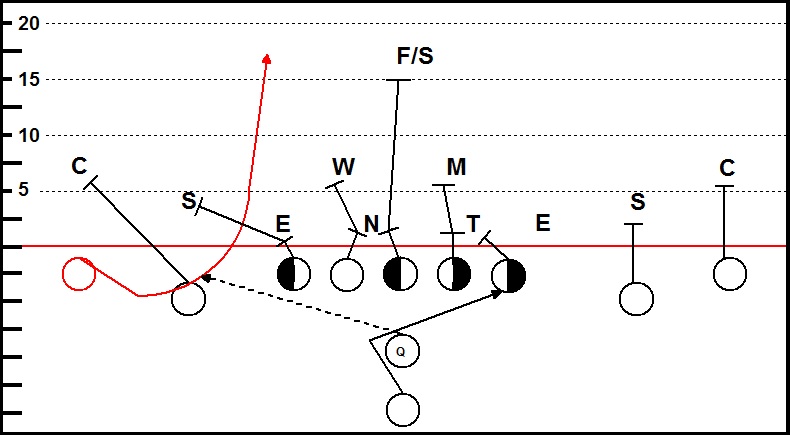
What would you think of an entrepreneur who says that he or she will give his strategy to his/her competition? The sporting metaphor would be the equivalent of a football coach giving away his playbook. Is this total insanity? Why would we lay out our game plan for competitors that are trying to beat our brains out? I’m not advocating that we do this but I do believe that the hype over being secretive about business strategies may be overblown. Why? Because I don’t believe that the strategy itself is as important as the execution of that strategy.

It’s completely true that most entrepreneurs need to spend more time working on their business than in their business. Translation – entrepreneurs need to be more strategic and less tactical, which is not an easy task in small organizations. But what trumps everything is the effective and successful implementation of a strategy. If we lay out our strategy for a competitor, that doesn’t necessarily mean that our competitor will beat us with it. Our strategy was developed with extensive input from a number of stakeholders in our company. It evolved through our culture and is nuanced by a wide range of variables that are specific to our enterprise. It’s highly unlikely that our competitor can implement our strategy as well as we can

So, if it’s principally about execution, how does an entrepreneur ensure that this process achieves success? Execution is a mixture of tangible and intangible factors. First, the team must have confidence in its abilities; in the strategy; in the data that is foundational to the strategy, and in the resources that must be brought to bear to implement the strategy. Hand-in-hand with this confidence is the trust factor. Team members must totally trust each other to fulfill their roles and be accountable accordingly. Without this trust, the execution of a strategy is impossible.

Sound strategies are often developed with the experience of members of the implementing team in mind. A strategy to manufacture and sell a particular type of product assumes that the engineers designing it and the equipment operators on the line have the minimum level of experience needed to turn out a flawless finished product.  In addition to experience there’s an assumption that team members have certain skills that will be married with experience to deliver the product at a cost and level of quality that results in happy customers and a financial profit to the company.

Strategy execution involves a myriad of mechanics. Translation – there’s a well-thought comprehensive process that enables a step-by-step methodology from start to finish. This process encompasses everything from market research, engineering and design, procurement of raw materials (still assuming a manufactured product for illustration purposes), production, quality control, marketing, sales, shipping, customer service, billing and collections . . . the list goes on. The point here is that the mechanics of implementation are vital to successful strategy execution.

Finally, the team must have a winning mindset. This goes beyond confidence. It’s about truly believing that without question the strategy will win. It’s about visualizing success. True believer team members celebrate their impending success on a daily basis. The culture is upbeat and positive. It is focused on honoring the team AND the customer. The winning mindset transcends confidence and envisions the strategy as already implemented in perfect order.

The ability to execute a strategy defines an entrepreneur and his or her organization. Some can and many cannot. Entrepreneurs who can consistently blend all of the right ingredients are masters of implementation.

This blog is being written in tandem with my book, “An Entrepreneur’s Words to Live By,” available on Amazon.com in paperback and Kindle (My Book), as well as being available in all of the other major eBook formats.

Football Playbook