2,300 Feet and No Ropes!

On May 15, 1963, astronaut Gordon Cooper blasted into space on Mercury-Atlas 9. The Mercury capsule was 10.8 feet long and 6.0 feet wide. The duration was 34 hours and 19 minutes 46 seconds at a maximum velocity of 17,547 miles per hour and an altitude of 166 miles.

Alex Honnold is a world-renowned big wall free solo rock climber. He is particularly famous for climbing Yosemite’s Triple Crown – The Nose (El Capitan), Mt. Watkins and The Regular Northwest Face of Half Dome – completed in 18-hours and 50-minutes. Free solo climbing is done without ropes, pitons or carabiners.

Navy Commander Jeremiah Denton was a POW in North Vietnam for eight years (1965-1973) four of which were in solitary confinement. He was forced to participate in a 1966 televised press conference during which he blinked the letters T-O-R-T-U-R-E in Morse code. After his release from captivity he retired at the rank of Rear Admiral and became a U.S. senator from Alabama.

What is the common thread that runs through all three of these individuals? Of course their physical stamina is obvious. But perhaps even more amazing is their mental toughness. I can’t imagine what it would have been like stuck in a tiny Mercury capsule all by myself hurtling through space at an incredible speed. What if something went wrong and I couldn’t get back down? Or how about being 2,300 feet up the 3,000 foot face of El Capitan with no ropes or anchors and suddenly feeling sick? And being tortured and isolated for years in a prison camp is incomprehensible. Without mental grit, think about how easy it would have been to go stark-raving mad in each of these situations and just totally lose it.

Fortunately as entrepreneurs we’re generally not faced with situations that threaten our mortality. But developing a strong mental state is critical to our entrepreneurial success. There are many situations that we encounter that call for mental toughness. If we waver or lose our way, we can lose a whole lot – financially, in terms of relationships, team members and reputation.

Exactly what should we do to become mentally tougher? First, how do we contemplate and deal with failure? Failing is actually a crossroads for us. When something doesn’t work the way we had planned we have a choice to make. We either give up or we get back up and keep trying. Feelings of pain and discomfort create patterns that our brain wants to avoid in the future. True progress is made when we decide to move forward past the pain and into a state of endurance.

Second, we need to identify the self-imposed limitations that hold us back. Do we have routines that have actually become ruts? If we keep pushing the goal we achieve real growth. Breaking out of old habits and happily accepting new challenges is mentally stimulating and helps us become conditioned for success. As is always the case, constantly maintaining a positive attitude is an enormous step toward becoming mentally tough.

Finally, we visualize the end result then write the script for the journey to get there. Mental toughness cannot be achieved aimlessly. We must have an end game in mind. Gordon Cooper wanted to finish the mission and get home safely. Alex Honnold wanted to get to the summit of El Capitan. Jeremiah Denton wanted to put his feet back on American soil. In each case they had a clear objective and kept it front and center at all times.

To become mentally tough we embrace failure and use it to create endurance. We discard self-imposed limitations and through positivity, set the table for success. Ultimately we paint a clear picture of what our success will look like and then execute the strategy and tactics that take us there.

You can also listen to a weekly audio podcast of my blog. What you hear will be different than what you read in this blog. Subscribe on iTunes or wherever you get your podcasts. You can also click on this link – Click here to listen to Audio Episode 5 – Now What?

This blog is being written in tandem with my book, “An Entrepreneur’s Words to Live By,” available on Amazon.com in paperback and Kindle (My Book), as well as being available in all of the other major eBook formats.


Yosemite_El_Capitan

Pluses and Minuses

There’s one thing of which I’m certain . . . I think. Have you ever had this kind of feeling? We entrepreneurs are a pretty confident lot. We are scrappy and tough. There’s nothing we can’t do including leaping over tall buildings in a single bound. Throw us a challenge and we’ll whip it with one hand tied behind our back and blindfolded to boot. Right? Well, maybe. And most of the time.

Entrepreneurs have several “thought enemies,” one of them being gnawing and nagging doubts. Here’s a not-so-fictional example. Let’s say that things have been going pretty well in our business and we’ve had some nice wins along the way. Then we hit a little speed bump – perhaps a contract doesn’t get signed that we thought we had in the bag. Or an important customer stops doing business with us. In other words, we get knocked off our game a bit. That part we can handle with aplomb as we go on to sign another contract or we fix the problem with our important customer. It’s what happens next that can be perplexing.

After we’ve been bucked off the horse so to speak, we begin to have feelings of doubt. For example, we are ready to introduce a new product or service, but we wonder if it might flop. In the past, we would have launched without any trepidation, but now it feels different. Could something else go wrong that that might cause everything to come unraveled? We know that these gnawing and nagging doubts aren’t healthy and could become self-fulfilling prophecies. Yet still they are there and hard to push out of our mind.

Why is our confidence shaken, and doubts have entered the picture? I’ve thought about all of the times this has happened in my life and believe it centers on a rather recent failure in the past. The earlier example that I gave where the contract or customer was lost illustrates this notion. Coming off of a failure makes us wary and more sensitive. As entrepreneurs we have winning in our DNA. Failure is for losers. And yet we do fail and we do lose. Sure we’re resilient, but we can’t ignore what it felt like to fail and lose and we don’t want to experience it again. And so we’re vulnerable to doubt and uncertainty. Subconsciously we’re thinking, “I’m sure what I’m doing now is going to work, but if it doesn’t, I don’t want to be hurt again.” We find ourselves moving forward but wondering . . . always wondering when the other shoe will drop.

Here’s what I’ve learned about myself when these insidious doubts start creeping into my consciousness. I step back and take inventory of all of the positive successes that I know lay in front of me. I may have just lost a deal, but there are ten more that I believe with all my heart will succeed. Now here’s the key – even if only half of the ten deals actually succeed, I’m still way, way ahead. In other words, I’m not looking at the glass half full, but I’m looking at multiple glasses and every one of them is overflowing. Immediately my mindset changes and all is right with my world again. I’ve accepted the fact that I had a prior setback. I’ve accepted the fact that I’ll have more setbacks in the future. But I know that the pluses will always far outweigh the minuses and the winning score will be in my favor – overwhelmingly!

Gnawing and nagging doubts are usually a product of a recent failure. We get past such feelings by looking at the scoreboard and realizing that we are way ahead in the game. Ultimately this makes us unbeatable.

This blog is being written in tandem with my book, “An Entrepreneur’s Words to Live By,” available on Amazon.com in paperback and Kindle (My Book), as well as being available in all of the other major eBook formats.

water glasses

980 by 600

I saw a video clip the other day of the Haohan Qiao Bridge that stretches 980 feet between two cliffs in China’s Shiniuizhai National Geological Park. It’s a suspension footbridge that is extremely unique in one particular sense . . . it’s made of glass. As you walk (or crawl) across, you see through the glass floor and look straight down 600 feet to the canyon below. We’re told that the glass is 25 times stronger than ordinary glass and if it breaks it is so dense that a person won’t fall through.

What’s interesting about this bridge is the fact that it’s bold, it’s big AND it’s safe (we’ll assume for the moment that what we’re being told about the bridge’s safety is correct). This bridge is the perfect metaphor for what we’re trying to accomplish as entrepreneurs. There’s nothing wrong with small-ball, but after playing this way for a number of years we sometimes yearn to take that big leap across the canyon. Doing so requires that we push beyond our comfort zone and summon a fearlessness that we may not have previously experienced.

What prevents us from taking big and bold action? Often it’s a question of safety. We’ve invested much in the way of blood, sweat and tears to get to where we are today and we don’t want to risk our bank account, our 401(k), our home, our health, our reputation and yes, the possibility of failure. The risk of failure is likely the Number One reason we don’t take those big and bold steps. The rest of the risks can be successfully managed. We use them as “why not” reasons, but ultimately it all boils down to the chance that we might fail.

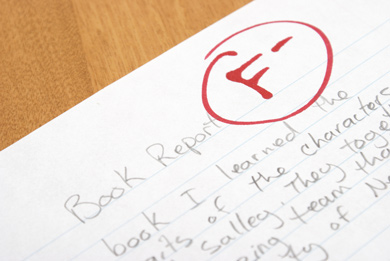
What does failure look like to you? Many of us are programmed to abhor failure. In school, getting an F was something to dread. Our parents were disappointed. We thought we looked stupid in the eyes of our classmates. There was real shame associated with this letter grade. Throughout our lives we have been conditioned to avoid failure at all costs. And so we say things like, “I don’t want to go all-in on my business idea because I can’t afford to put my family at risk.” But at the root of it, we are afraid to get that paper back from the teacher with a red F in the upper right hand corner.

I’ve said many times that failure is simply an unfinished experiment in the laboratory of life. Failed experiments can sometimes be the only way we eventually get it right. I’ve started numerous business ventures that failed. In one case we raised investor money to fund a particular concept but could not get the traction we were looking for. Within a few months we realized that we were going to fail and so we gave everyone’s money back and shut down the venture. The goodwill from the early recognition of our failure and the act of returning the investment capital enabled us to build even stronger relationships with those investors who have invested in subsequent ventures. Long ago I realized that there is nothing to be ashamed about when we fail, and maintain our integrity in doing so. I just haven’t figured out how to go big and bold without the risk of failure somewhere in the equation.

Here’s the bottom line. Step One – think big and then think bigger. Step Two – focus on how to mitigate the risks that could be associated with failing when launching that big (bigger) idea. Step Three – release the ego and realize that failure doesn’t diminish us as individuals. Step Four – create a solid implementation plan. Step Five – GO FOR IT!

Going big and bold is a process to be managed. But it also means that we have to get out of our own way to deny the insecurities and perceptions of failure that prevent us from moving forward.

 This blog is being written in tandem with my book, “An Entrepreneur’s Words to Live By,” available on Amazon.com in paperback and Kindle (My Book), as well as being available in all of the other major eBook formats.

glass bridge.

Hammer, Hammer, Hammer

Is trying to hammer a square peg into a round hole a cliché or what? Just for grins, I tried to do this once and had no problem. Of course the hole was a heck of a lot bigger than the peg. But of course that’s not the point. The more we try to force things that aren’t meant to be, the more likely we are to become frustrated and fail. This I do know from lots of experience.

Here’s an example. In the old days I might have interviewed a great candidate for a position we had open. This individual had all the right qualities, the right experience and seemed enthusiastic about joining our firm. We would extend a job offer and perhaps there would have been some back-and-forth dialogue over the terms, salary, etc. But then the candidate went dark and stopped responding. My tendency was for my sales instincts to kick into overdrive and really put the hard press on this person. More often than not the person might eventually come to work for us. But it usually wasn’t a happy marriage and ultimately ended in divorce. What did I learn? If we have to “chase” someone and “sell” them on joining our company, then they probably aren’t the right fit in the first place.

Here’s another example. I have a big decision to make. I’m trying my darnedest to find complete clarity in this situation. I list all of the pros and cons, but the answer still isn’t there for me. I talk to other people whom I trust, but no one grabs me by the hand and opens the door for me. I continue to press for a revelation, but none comes to me. The frustration mounts and I feel stress because the decision must be made immediately. The stupid peg just won’t go into the hole! What did I learn? Complete clarity is often elusive and most of the time we have to make the best decision we can after considering all of the facts. And we need to trust our gut to some extent.

Here’s the final example. A number of years ago there was an investor who owned a large apartment complex that our firm wanted to manage. I cultivated a relationship with this investor and met with him regularly. I tried everything I could think of to convince him to retain our services. He was self-managing the property and I just knew we could improve his bottom line. All of my creative marketing and sales methods were for naught. We never were able to win the business. I hammered and hammered and hammered, and the square peg never made it into the round hole. What did I learn? We’re not going to win 100% of the time. As long as we’re paying attention to the basics and fundamentals mixed with a sufficient dose of creativity, we’ve done what should be done. Sometimes we’ll succeed and sometimes we won’t. Trying to force success is a pathway to being demoralized.

When we force things and try to muscle through, we often flounder and fail. When we relax, pay attention to the details and trust our instincts, we improve the probability that things will fall into place. And if they don’t, we simply stop hammering and move on.

This blog is being written in tandem with my book, “An Entrepreneur’s Words to Live By,” available on Amazon.com in paperback and Kindle (My Book), as well as being available in all of the other major eBook formats.
hammer

The “F” Word

Question: Recently I’ve been unsuccessful with several things in my life including a relationship, a business initiative and with an attempt to buy a house. How do I stop feeling like such a loser?

Answer: You are referring to a concept that most of us call failure. And you can take comfort in knowing that all of us encounter it periodically. Everyone. How each of us deals with failure is another matter. In my book, An Entrepreneur’s Words to Live By, I wrote a chapter in which I say that “Mistakes are simply unfinished experiments in the laboratory of life.” I believe that the same statement can be made about failure.

If we look at failure as a finite experience it can be profoundly negative. But if we see failure as merely a step in a process, then there is hope. And hope is generally a positive emotion. It all boils down to how we choose to view what the world might typically deem a failure. The process of failure is actually a process of elimination . . . what works and what doesn’t. We tend to get caught up in the emotions surrounding failure and may be unable to see the good that can come from it. These emotions run the gamut from frustration, embarrassment and inadequacy to anger, despair and blame.

We owe Thomas A. Edison a huge debt of gratitude (as well as a number of other inventors over the centuries). He made 1,000 unsuccessful attempts to invent the light bulb but when asked about this by a reporter, he responded, “I didn’t fail 1,000 times. The light bulb was an invention with 1,000 steps.” Imagine the emotional control he must have had. But rather than giving up and accepting each “step” as a failure, he learned how to make little tweaks that eventually led to success.

Perhaps if we look at our failures in a more scientific manner – as part of a discovery process – we can overcome the negative emotion that often is associated with apparent setbacks. This along with a good dose of perseverance, resilience, a positive mindset and coupled with an expectation of good results, can propel us to the success we seek. This is a powerful recipe that all boils down to how we choose to think.

When we choose to learn from our experiences the “steps” toward success are infinitely good. As entrepreneurs and human beings we can then embrace this process as part of the richness and fullness of life.

This blog is being written in tandem with my book, “An Entrepreneur’s Words to Live By,” available on Amazon.com in paperback and Kindle (My Book), as well as being available in all of the other major eBook formats.

Test Score

Strategic Retreat

Question: I know that you often quote Winston Churchill’s statement, “Never, ever, ever give up.” But it seems that there are situations where it’s clearly better to step away and move on. Please help reconcile this with your “never quit” philosophy.

Answer: There’s actually no conflict at all. But there is a difference. A bit confused, are you? Giving up means quitting in defeat. That’s a mindset. Strategic adjustments are also a mindset but there’s still a purpose. The difference is that giving up and quitting often comes with a sense of resignation and lost hope. Usually there’s an element of finality involved – perhaps even failure.

I was talking to a friend who told me the story of one of his twenty-something sons. The young man had done very well for himself financially at an early age by investing in rental properties at bargain basement prices. One day he went to his father and said he was giving it all up and selling everything. He didn’t like the fact that he was becoming obsessed with material possessions. Then he took his money, invested it in more liquid assets and went to a foreign country to do charitable work. At first I thought that he was quitting and running away. But as my friend talked further I realized that his son had simply made a strategic adjustment. He hadn’t failed at all but simply wanted to re-purpose his life.

In my entrepreneurial career I’ve made many strategic adjustments including some that might be deemed as strategic retreats. But they always fit into a bigger picture. Never once do I believe that I ever gave up or quit on anything. Never did I think that I had failed or was defeated. There were a number of business ventures that did not follow the plan and as such, could not be defined as successful. After tinkering with them and making adjustments, I eventually surmised that our efforts (and capital) could be deployed more wisely and profitably in other areas. This led to the shutdown or sale of those ventures.

How do we know when it’s time to make a strategic retreat? The decision is one that can be made by answering three simple yet powerful questions. Is the endeavor I’m evaluating meeting my expectations, goals and objectives? If the answer is no, then I ask, have I made all adjustments that could reasonably be made to make the endeavor succeed? If the answer is yes, then I ask my final question. Have I allowed enough time for all of the adjustments to produce the desired results? If I answer yes, then it’s time to move on.

The less we allow our emotions to cloud the decision to make a strategic retreat, the less likely we will be to see it as quitting or giving up. This will give us the strength and confidence to make more such decisions in the future and move us ever closer to our ultimate vision.

This blog is being written in tandem with my book, “An Entrepreneur’s Words to Live By,” available on Amazon.com in paperback and Kindle (My Book), as well as being available in all of the other major eBook formats.

White-Flag