
The Fearless Entrepreneur

I’ve heard it said that fear is a major motivation for entrepreneurs. This may be true but it’s not a healthy or effective motivator in my book. Think about what happens when we are afraid. Do we think with a high degree of clarity or are we focused on some form of self-preservation? Is our creativity in full bloom or do we just want to escape that which is making us fearful? Do we really want to be motivated by something so negative as fear?

There’s no question that we entrepreneurs have moments when we are afraid. Perhaps we just learned that a major customer is going to stop giving us his business. What’s our immediate reaction? “Oh no! That customer represents 20% of our revenues and we’re going to have to lay people off!” We conjure up all sorts of horrible outcomes when we hear this news. And then it gets worse. Our negative thoughts multiply. “If that customer is unhappy enough to leave, I wonder how many other customers feel the same way. This could be a disaster! Our company could enter a death spiral and we’ll have to close the doors. What will I do next? Would someone even hire me after this debacle?”

It’s been my experience that rarely are things ever as bad as they might seem in the heat of the moment. What’s needed is an automatic diversion of some sort when thoughts of fear start to creep into our minds. And I have the perfect alternative for the ravages of dread and despair. Here’s the antidote . . . What could go right?

Here’s how it works. When something occurs that could have negative connotations – perhaps an event that stirs up severe anxiety – we stop and say, “what could go right?”  It’s like a train that is barreling down the tracks and it comes to a switch. If the switch is turned one way, the train goes to the left. If the switch is turned the other way, the train goes to the right. The mantra, “what could go right?” acts as that switch. If we go to the left, we are on the path to being afraid with a cascade of undesirable results. If we go to the right, we are on the path to calm and a highly desirable conclusion.

The notion of “what could go right?” is not just a blind state of Pollyanna. Instead, it’s a powerful frame of mind. In the example previously cited, let’s see how it might work. When the customer declares his intention to stop doing business with us, we immediately ask the question, “what could go right?” Rather than dwell on the loss of business, we drill down further and explore the cause for the customer’s departure. Let’s say that this individual was simply retiring and shutting down his operations – his decision had nothing to do with the product we’ve been providing. That doesn’t necessarily make the loss of revenues any easier, but at least we didn’t drive him away. We now have more capacity in our organization. In our newly found state of tranquility, we remember hearing about a prospective customer that we had not pursued because we did not have the production capacity to meet her needs. But now . . . ! Without missing a beat, we set up a meeting with the prospective customer and guess what? She wants our product, and her order will push our revenues beyond where they were with the departing customer.

Had we wallowed in fear, there is no way we would have looked for this new opportunity. We would have been “licking our wounds,” “regrouping,” and “hanging on for dear life.” Instead, we conquered fear before it ever took hold by asking ourselves the simple question, “What could go right?” We took the positive energy from that question and used it to kick our creativity into overdrive. And rather than seeing the situation as a problem to be solved, we viewed it as a steppingstone to even greater good.

As entrepreneurs we’re in a much better position to enjoy positive outcomes when we look at everything with the question, “What could go right?”

This blog is being written in tandem with my book, “An Entrepreneur’s Words to Live By,” available on Amazon.com in paperback and Kindle (My Book), as well as being available in all of the other major eBook formats.

The Hustling Entrepreneur

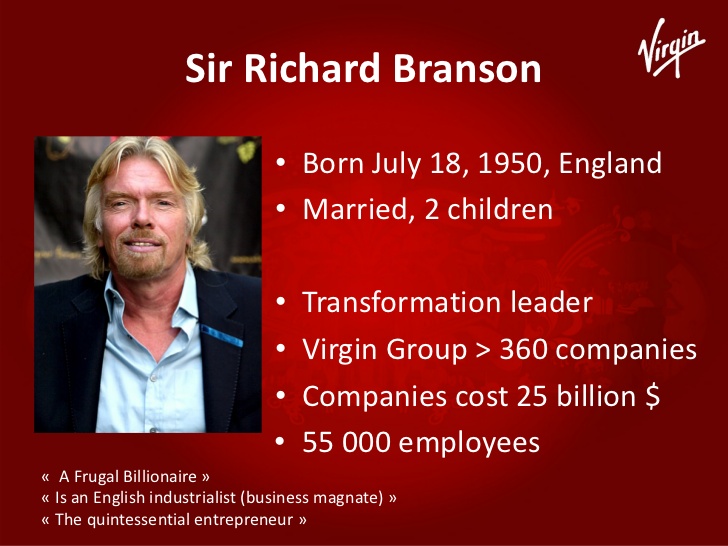
The legendary Sir Richard Branson was 16 when he launched his first business venture in 1967 – a magazine called Student. He followed this with a business selling records through the mail. Thus, was born Virgin Records and ultimately a multitude of companies under the Virgin brand.

Mark Cuban was 25-years old when he started software company, MicroSolutions. Seven years later he sold it at a price that put $6 million in his pocket. He reinvested his winnings into another of his start-ups, Broadcast.com which netted $5.7 billion when sold.

John Paul DeJoria bounced around in the foster system as a boy. He was involved with crime and spent time in the military before he borrowed $700 to start John Paul Mitchell Systems. His humble beginnings included door-to-door sales and a lot of blood, sweat and tears. Later he founded Patron tequila, another killer brand. Today he’s worth more than $3 billion.

What did all three of these entrepreneurs have in common? They were all “hustlers.” I know that when many of us hear that term, it doesn’t have positive connotations. We have images of a smarmy, greasy, fast-talking character who is constantly trying to run a con. But this isn’t the kind of hustle to which I refer. Instead, this kind of hustle is all about a desire to win.

Entrepreneurs who have hustle are resilient. They are creative and they are fearless. The easiest way to describe an entrepreneurial hustler is to look at the parallel of a hard-fought basketball game. We’ve all seen players scrambling after loose balls, flying into the stands, and throwing themselves onto the floor. They are willing to sacrifice their bodies with reckless abandon in their quest to achieve victory.

When we hustle we have a warrior’s mindset. Our initial focus is on survival. How many successful entrepreneurs started from deep and dark places? Remember how J. K. Rowling faced tremendous adversity in the early days before her celebrity as the author of the Harry Potter books? Her mother passed away; she gave birth to a child and went through a divorce; was clinically depressed and lived on welfare for a time. But her only choice was to write to survive. When we are ready to curl up and hide from the world, we should remember how others were able to make it through the tough times and come out the other side stronger and ready to whip the world. Resilience is a major key to survival.

Perhaps our business isn’t growing like we planned. Maybe we’ve even seen it slide backward. Now is the time to get into “hustle mode.” This can take many forms but the most important is a mindset of renewed determination. We examine our strategy and tactics so that we can make the necessary adjustments . . . with renewed determination. We push to new levels of innovation . . . with renewed determination. And we may even do things we’ve never done before . . . with renewed determination, so that we can survive.

Eventually we begin to achieve momentum. We begin to win. And we continue to hustle. Our mindset shifts away from simple survival, and the focus is now on how to thrive. We are relentless in discovering ways to become even more creative. We absolutely, positively know that we are going to succeed. Our “hustle” now involves an even greater sense of urgency along with commitment and dedication to setting our goals even higher. We ignore our critics and all the naysayers. We work hard and we endure the pain. There is no question we’ll make many sacrifices along the way. I can remember in the early years of my career when we were building our business. We had passed the point of survival and were beginning to thrive. I would sometimes arrive at work very early – 3:00 AM. And I would meet another colleague who was leaving to go home for a few hours of sleep. We were hustling and we were winning.

The entrepreneurial hustle often begins with survival and eventually results in a breakthrough where we thrive. Resilience, hard work, creativity, a fanatically positive mindset, and laser like focus are some of the more important factors to this equation.

This blog is being written in tandem with my book, “An Entrepreneur’s Words to Live By,” available on Amazon.com in paperback and Kindle (My Book), as well as being available in all of the other major eBook formats.