
The Prom Night Entrepreneur

The Holy Grail for business start-ups and mature organizations alike is customer procurement. Winning customers at a sufficient pace is critical to the survival of every company and especially for those at the fledgling stage. And yet I cannot tell you how many times I have seen entrepreneurs focus more on other aspects of their business rather than making sure they have enough customers to keep the doors open.

There is no doubt that we must have a minimally viable product that our customers want to buy. And implementing a wide variety of systems and processes is also an important factor. But without the customers, everything else is moot. To find the customers and convince them to spend their money with us requires pulling out all the stops. Top notch interactive websites, regular informational blogs, referral programs, social media, drip marketing, multi-media advertising and positive publicity are building blocks toward customer procurement. Yet, even with full implementation, the customers may not come in numbers or as quickly as are needed. What to do? Go back to the basics and fundamentals.

Think back to prom night – what was happening? Girls had their hair done. Guys were renting tuxedos. Corsages and boutonnieres were purchased; makeup was applied, and shoes were shined to a fine gloss. In other words, we were all trying to look our very best. Think about this with respect to our products or services. Have we done everything possible to look fantastic to those outside our company?

Do prospective customers clearly understand our value proposition? How strongly are we able to demonstrate that our product or service solves a problem and preferably one with which a lot of pain is associated? This is a major failure for a vast number of companies. Their product/service might be nice to have, but the customer cannot find a compelling reason to purchase it. Think of Colgate Kitchen Entrees. Never heard of this? You are not alone. The folks that make Colgate toothpaste thought it might be a good idea to launch a line of frozen dinners. Customers could eat a Colgate meal and then use Colgate toothpaste to brush their teeth. What kind of value proposition is that?! If we can’t nail our value proposition, then neither can our customers.

Customers have many choices when purchasing a product or service. Entrepreneurs sometimes become so enamored with their own ideas that they fail to objectively assess the competition. I have certainly been guilty of this myself in the past. I would pooh-pooh a competitor and rationalize that our approach was far more sophisticated and desirable. And yet, I did not ask the bottom-line question of what customers liked better about the competition. We may have a product or service that truly is twice as good as anything else on the market, but unless we can make a clear and concise case for differentiation, we’ll be stuck with the rest of the pack. Effectively communicating product or service differentiation means life or death in the business world.

A strong uptrend for customer procurement will happen if we practice the basics and fundamentals. This can be accomplished by presenting our product or service in as attractive a manner as possible; when we have a killer value proposition, and when we effectively communicate how we are different. Doing all of this will ensure that we will be the hit of the party.

This blog is being written in tandem with my book, “An Entrepreneur’s Words to Live By,” available on Amazon.com in paperback and Kindle (My Book), as well as being available in all of the other major eBook formats.

An Iconic Entrepreneur

Right after he passed away several years ago, I wrote a blog as a tribute to Herb Kelleher. I think it’s worth sharing again.

On January 3, 2019, one of the legendary icons of entrepreneurship stepped on a rainbow. Herb Kelleher died at age 87 after living a storied life. Kelleher famously co-founded Southwest Airlines in the late 1960s. He was practicing law in San Antonio when a client brought him an idea to launch a new airline in 1967. Competing airlines did everything they could to prevent the new airline, originally incorporated as Air Southwest Company, from getting off the ground. Lawsuits were the only thing flying for several years, and at one point the board told Kelleher that the venture needed to be shut down. Kelleher offered to fight the lawsuits and pay the court costs out of his own pocket, at which point the board agreed to stay in business. It took four years and victories at both the Texas and the U.S. Supreme Courts – twice – before Southwest Airlines flew for the first time on June 18, 1971. His resilience and tenaciousness are credited for enabling Southwest to persevere and become the major airline that it is today.

Kelleher was general counsel and served on the board of directors, becoming chairman in 1978. In 1981 he became the full-time CEO and built the airline into a powerhouse because of his vision. At the time, the airline industry was highly regulated and when an airline started losing money, it would petition the Civil Aeronautics Board (CAB) to allow for a fare increase. As a result, it became exceedingly expensive for the public to fly – something that Kelleher saw as the opportunity of a lifetime. Initially Southwest was an intrastate carrier flying within Texas, making flying between Dallas, San Antonio, and Houston affordable through ultra-low fares. Over the years the airline started flying outside the state of Texas but was hamstrung by the Wright Amendment – legislation designed to help the legacy carriers and hurt Southwest. The law required that Southwest could not fly from another state directly into Dallas’ Love Field without first stopping in an immediately adjacent state including Arkansas, Louisiana, Oklahoma, and New Mexico. I can remember flying from Kansas City to Dallas and having to stop in Oklahoma City to change planes because of this requirement. Eventually the Wright Amendment was defeated in Congress and Southwest was able to operate like any other airline in the country.

Kelleher was a marketing genius and employed numerous outrageous stunts that endeared Southwest to its employees and to the public. He never took himself too seriously and is well known for his love of Wild Turkey bourbon and a daily dose of five packs of Marlboro cigarettes. When it came to compensation, Kelleher chose to take less in cash salary and more stock options. This approach helped considerably with the Southwest labor force (where the CEO was not receiving an exorbitant level of pay) and made him a billionaire two-and-a-half times over. He claims to have been a “flamboyant marketer but was fiscally conservative.” His shrewd financial prowess put Southwest on a path to profitability that is unmatched by any other airline – and few public companies in any industry. Since 1973, the company has been profitable every single year.

For decades, the culture at Southwest Airlines has been studied under a microscope by business schools and business leaders. It’s safe to say that Kelleher defined and sustained that culture for the 20 years he was the CEO and even after he retired in 2001 (he remained chairman of the board until 2008). He spent an enormous amount of time talking to employees and gaining understanding of what was working and what needed to be fixed. He loaded baggage onto planes every Thanksgiving Day; met technicians at 2:00 AM in a maintenance hangar; visited operators at reservation centers and spent time as a gate agent. According to Terry Maxon, in a 2015 article for the Dallas News, Kelleher dressed up like Elvis Presley, a woman, the Easter bunny, a leprechaun and a flight attendant to promote Southwest. Maxon went on to explain the corporate culture was that of a 1) scrappy underdog to the public; 2) fierce warrior to its competitors, and 3) warm, supportive, and protective atmosphere for the employees.

Herb Kelleher was a larger-than-life model for us as entrepreneurs to emulate. He had all the requisite entrepreneurial traits – vision, tenacity, resilience, marketing skills, financial acumen, a cultural leader, and a genuine love for people. Above all he had a passion for life. They broke the mold when Herb Kelleher left this planet. R.I.P.

This blog is being written in tandem with my book, “An Entrepreneur’s Words to Live By,” available on Amazon.com in paperback and Kindle (My Book), as well as being available in all of the other major eBook formats.

Puffery and the Entrepreneur

Unique. One-of-a-kind. Award-winning. Leader. State of the art. Cutting edge. Bleeding edge. Next generation. Revolutionary. Robust. Extraordinary. Legendary. Transformative. Groundbreaking. Best in class. Magical. Out of the box. Feature-rich. World class. Dynamic. Premier. Amazing. Iconic. I think you probably see where this is going.

Ah yes, the world of superlatives and puffed-up buzz words. As an entrepreneur, I want to persuade you that my product or service is the best thing since sliced bread – maybe even better! And thus, I tend to use embellishments to convey a certain sense of excitement that will emotionally influence you to buy what I am peddling. Sometimes advertising and marketing that exaggerate are just plain fun. Dos Equis beer uses a spoof in its commercials of The Most Interesting Man in the World. Generally, this sort of marketing is easily identifiable, and the audience goes with the flow.    

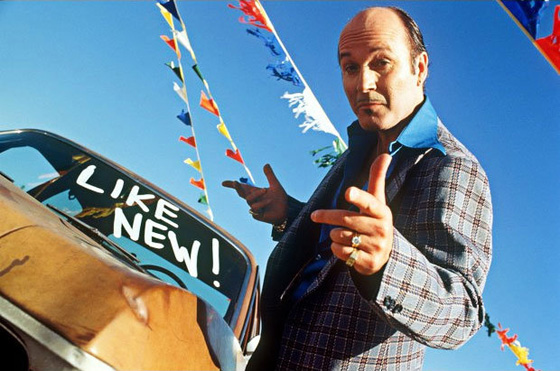
What we want to avoid is falling into the “salesmany” stereotype. When I hear entrepreneurs use terms like “crushing it” or “killing it,” I cringe. It is one thing to extoll the virtues of our product or service, but when we cross over into too much puffery our credibility suffers. Is it possible that being more quiet and understated in our approach to marketing and sales could produce the results we seek?

Our customers do not really give a whit whether we are “#1” or provide “world class service.” What they are interested in is how our product or service solves their problem or provides them with real value. Here are a couple of example marketing statements to compare.

Statement #1: “At XYZ Motors we sell more Kias than anyone else in the universe! We’re also number one in service and have won more awards from Kia than any other dealership in the country.”

Statement #2: “At XYZ Motors we are creative and will help figure out a way to put you in a new car that can fit comfortably within your budget. We are also pleased to keep our service department open every weeknight until 10:00 PM because we know that many customers can’t bring their car in until they get off from work.”

Obviously the first statement is full of back patting and chest thumping. The focus is completely on the dealership. The second statement is customer centric. Here, XYZ Motors shows great empathy for both the customer’s pocketbook and his or her busy schedule.

One of the reasons that businesses use hyperbole is because they have not figured out how to differentiate their product or service. This is especially true for companies that compete in the commodity space. Apparently, they believe that yelling as loud as they can, will motivate customers to show up and shell out their hard-earned dollars to save a cent or two. And there is no question that some people are inclined this way. But I think that most people are not thrilled to be insulted by such boorish and uninspired messaging. An alternative approach might be for the business to become much more creative in determining its value proposition and then develop a marketing campaign around the benefits to the customer.

Entrepreneurs must also be mindful of how different generations respond to marketing and salesmanship. But as political campaigns have become more and more over-the-top with either fluff or mudslinging, I think there is a carryover impact on the business world. All consumers, regardless of generation, are more skeptical of dubious claims and mindless drivel. Instead, they want facts and substance. They need real data that supports a marketing/sales pitch and explains the WIFM in plain English. And of course, WIFM means “What’s in it for me?”

Laying out the case for how our product or service solves a problem for our customers can be done in an innovative fashion. And we do not have to appear like a stereotypical pushy salesperson to do so.

This blog is being written in tandem with my book, “An Entrepreneur’s Words to Live By,” available on Amazon.com in paperback and Kindle (My Book), as well as being available in all of the other major eBook formats.
All Else Being Equal . . .

Question: Competition is tougher than ever. What is the most effective way to be different?

Answer: You have certainly asked the right question. Whether we are selling a product, a service or looking for a job, the key is differentiation. Think for a moment about great companies in America today and how they are different. Walmart is known for huge selection and low prices. Nordstrom is a champion of customer service but sells at a higher price point. TOMS Shoes donates one pair of shoes to a needy person for every pair of shoes a customer purchases.

Identify your niche and figure out how you can be the absolute master of that niche. But don’t stop there. Make sure that everything about your company, your product/service and about you – is reflective of this mastery. Allow me to share an example. One of our companies acquires, owns and operates apartment communities across the country. Buying apartments is a very competitive business these days. We have chosen to focus on purchasing properties that were initially developed using affordable housing tax credits. There aren’t as many buyers for this type of property due to the complexity of the tax credit program. We have become known as a buyer that understands the program and will pay a fair price.

We’ve taken the niche a step further. We market extensively to prospective apartment sellers and have attempted to be just as unique about the way we go about doing this. We don’t use e-mail – everyone does that now. Instead we send personally addressed high-quality marketing materials via snail mail. Our kick-off piece was a gold cardboard tube that contained a cover letter and a black velvet bag. Inside the bag was a gold dollar coin with a message saying, “Consider this to be a down payment on a profitable relationship.” Every three weeks an announcement of an apartment acquisition is sent to our prospective sellers. And one of our associates makes follow-up phone calls every 60 days. Believe me it is having the desired effect.

Here’s the takeaway. Do your homework and find that area in which you can specialize. Get creative and devise unique ways to deliver your message. Remember that those who win are able to convey a value proposition that resonates with their customers (or prospective employers). Above all remember that life is about making a difference in the lives of others. From an entrepreneurial perspective, those who follow through and truly make a difference will prosper.