
After the Love Has Gone

Earth, Wind & Fire recorded a song in 1979 called, After the Love Has Gone. And of course there was the classic 1976 tune by KISS, Love ‘Em and Leave ‘Em. There’s an eerie parallel with these titles and our relationships – with our friends and with our customers. Remember when we were growing up? Most of us had a number of friends during our school years. Then we launched our careers and families, and guess what? Many of those friendships went on hold. We found ourselves burning the candle at both ends and struggling to make the kids’ soccer games, juggle business trips with date nights, and generally keep our heads above water. Sound familiar? Gradually we sort of drifted away from all but a very small, close-knit group of friends. If we are introspective about our entrepreneurial lives, is the same thing happening with our business relationships?  

I’ve written before about my philosophy on relationships. I want to build and nurture as many relationships as possible over the course of my career for the purpose of serving them. And I’ve said before that I try to do this without any sense of quid pro quo. Deep at my core I believe that if we are truly committed to serving our relationships in whatever way possible, the Law of Attraction will bring great good into our lives.

So what happens after the sale? We work hard for six months (sometimes much longer) to build a relationship with a prospective customer. Then she buys what we’re selling. We’re elated and we make sure that the product or service is delivered in fine fashion. Then what? Six months later, what have we done to maintain the relationship? If the customer is going to buy our product or service on a recurring basis, chances are that we’ll stay in touch and continue “selling.” Maybe we take the customer to a ballgame or out for dinner. But what about a customer that has purchased something and there’s virtually no chance that another purchase will occur in the future? Do we “love ‘em and leave ‘em?

It’s rare that we find an entrepreneur who builds the relationship for the purpose of serving it. Usually there are strings attached. I’ve been on the receiving end of this my entire life. When someone wants to sell me something they butter me up and shower me with accolades, gifts and other forms of attention. If I don’t buy, they may try for a while, but eventually they drift away. If I do buy and there’s not a reason to buy the same product or service again, I’m usually dropped like a hot potato within a week. The National Sales Executive Association says that 80% of sales are made on the fifth through the twelfth contact. This means that a significant amount of time and effort must be invested to build a relationship sufficient to close the deal. This being the case, why would we not want to continue to maintain that relationship in perpetuity?

Some of us may be thinking, “This makes sense. Even though the customer might not buy again from us, keeping the relationship alive could be good for referrals.” Yes, this may be true, BUT once again we’ve attached strings to the relationship. What if we maintained the relationship because it’s the right thing for us to do? What if we maintained the relationship because we genuinely want to help other people? What if we maintained the relationship because it’s a form of expressing gratitude for all of the wonderful things that others have done for us? If we’re thinking that we just don’t have time to nurture relationships after the sale, then we are working against the Law of Attraction. There’s good flowing all around us – but if we start putting limits on our relationships we’re preventing that good from flowing our way.

Maintaining friendships and business relationships requires an intentional effort. It also means that we have to make a choice about the true purpose of such relationships. Will it be “Get Off of My Cloud” (Rolling Stones – 1965) or “Better Together” (Jack Johnson – 2005)?

You can also listen to a weekly audio podcast of my blog. What you hear will be different than what you read in this blog. Subscribe on iTunes or wherever you get your podcasts. You can also click on this link – Click here to listen to Audio Episode 11 – A Warm Blanket.

This blog is being written in tandem with my book, “An Entrepreneur’s Words to Live By,” available on Amazon.com in paperback and Kindle (My Book), as well as being available in all of the other major eBook formats.


get_off_my_cloud

The Zone of Doom

What do we dread most in our business and personal lives today? No, it’s not losing. When that happens, we simply pick ourselves up and go after it again. And it’s not being overwhelmed by our workload. We solve this with a few adjustments to time management and delegating to other team members. Our biggest “dread” is insidious and frustrating beyond belief. Here’s an example of what happens. We’re attempting to do business with someone. We’re past the cold calling stage and actually have been interacting with other party. We send an e-mail and wait a day or two. Then we call and leave a voicemail. Perhaps we even send a text. A week goes by with radio silence. We’re officially in the Zone of Doom.

The Zone of Doom is the black hole of non-responsiveness. Unfortunately it’s become an epidemic. With caller ID many people simply ignore calls from those of us with whom they do not wish to speak. Blowing off e-mails is even easier. I know I sound like an old geezer, but when I was growing up in the business world I quickly learned that protocol dictated the return of every phone call the same day or next morning. We didn’t have e-mail back then so letters and memos were the standard for written communications. The expectation was that the response be immediate. There never was any thought of not responding at all. In fact, when someone slipped and failed to provide a timely response, the word usually got back to corporate leadership and there was hell to pay.

The biggest challenge relayed to me by members of our team is that their interactions with so many people outside the company are one-way. Simply trying to reach people is so much harder than ever before. Long ago, I resolved not to fall into this category. I think I’m about 95% true to this resolution. I do return my phone calls in a timely fashion – though I will admit that there may be a cold call here or there from a salesperson that I miss. I believe most people will attest to the fact that I usually return all my e-mails the same day if not the same hour.

So how are we supposed to deal with the Zone of Doom?  How are we supposed to do business when people are so unresponsive? There’s no question that failure to respond is not acceptable. But we must ask ourselves what might be the root cause for our receiving the silent treatment? This goes beyond the fact that people are busy. It all boils down to priorities. Think about how we develop our own set of priorities. What goes at the top of the list and what goes at the bottom? I find that the things that are most important are those which are most impactful to my business and my life. It’s a pretty good bet that others set their priorities in the same manner. When I’m trying to reach someone else I try to bear in mind whether or not communicating with me will make that much difference to the other person. There’s the word . . . difference.

We must be able to differentiate ourselves when competing with someone else’s priorities. Is what we are attempting to communicate really that important to them? If not, then what can we do to push it up toward the top of the ladder. This is where relationship building becomes so important. I’ve written many times that relationships are all about service. I’ve found that the harder I work to establish and serve a relationship the more likely someone will reciprocate my attempt to communicate. You may be thinking, “How can I possibly build and serve relationships with everyone with whom I come into contact?” No one said it would be easy. Relationships take time to build and there’s no time to waste. Any and every little thing that can be done to help someone else builds that relationship. Many business people seek to establish relationships to benefit themselves. If we do it differently and make every attempt to help others, our efforts will be recognized as genuine and authentic.

We can avoid the Zone of Doom by building relationships for the purpose of serving others. And through our relationships, we move up the priority list of those we are serving.

This blog is being written in tandem with my book, “An Entrepreneur’s Words to Live By,” available on Amazon.com in paperback and Kindle (My Book), as well as being available in all of the other major eBook formats.

abyss

Ice and Eskimos

I’ve written before about the sales mindset. But I’d like to expand on this subject with some additional thoughts. Entrepreneurs are always selling whether it’s raising money, peddling a product or convincing a new team member to come on board. We’ve all heard the adage, “he could sell ice to an eskimo.” This conjures up an image of a slick, fast-talking huckster who cons his “marks” into purchasing something they really don’t need. Obviously this is the antithesis of how we want to be perceived as  entrepreneurs.

I’m trying to expunge the terminology of “selling” from my vocabulary. Why? In my opinion the traditional notion of selling is product-based. In other words I have a product and I’m going to do everything I can to convince you to buy it. What goes unsaid here is, “I’m going to do everything I can to convince you to buy it whether you want it or not.” Maybe this is just my personal bias, but I’ve observed others over the years that act in similar fashion when they get into the sales mode. Instead of “selling to” I’ve moved into a “buying from” mindset. I submit the following:

  • When we sell something to someone else we’re product-focused.
  • When we help someone buy something we’re customer-focused.

The difference in these two approaches is night and day. When we help someone buy, the product takes a back seat. We’re more interested in building a relationship and creating trust with someone else. We’re more interested in understanding exactly what they need. Through this discovery process we may find that our product is not best-suited for this particular individual. But that’s OK because we are helping them buy what they need – not what we want them to have. You may be thinking, “This flies in the face of so many of the selling techniques that are time-tested and proven.” And you may be right. But I’m willing to wager that an entrepreneur who genuinely wants to help people buy what they need is going to win far more often than a salesman who just wants to move product. When relationships take precedence, they can produce unanticipated results. I’ve experienced numerous instances where I determined that what we were helping a customer buy wasn’t right for him or her. But it was clear that the relationship was more important than the sale. And ultimately we received referrals from those customers that did result in someone else buying from us.

When we just have to make the sale, we’re less likely to focus on the customer. We’re desperate to close the deal. One of my colleagues told me about an encounter she had with an individual who had called her to set up an introductory meeting. From the outset he was selling. He made no effort to learn more about her and establish a rapport – much less build a relationship. He made no effort to understand what she needed to purchase. He simply launched into his pitch and barely took a breath. By the end she was worn out listening to him and told me how off-putting the whole encounter had been.

There are some very simple rules that we can follow to ensure that we avoid the “selling to” approach.

  1. Always start the process by asking questions of the customer. This will help to establish a rapport and to determine his or her needs.
  2. Eliminate the terms “sales” and “selling” from our vocabulary.
  3. Genuinely care about the customer and find a way to meet his/her needs even if it involves a product that’s not our own.
  4. Make certain that it’s clear to the customer that it’s his/her best interest that we have at heart and not our own.
  5. Remember the only way to develop long-term satisfied customers is to help them buy what they need. And the endorsement of long-term satisfied customers is worth its weight in gold.

When we maintain our focus on the customer at all times we win. Sometimes this requires us to look past an immediate transaction. But it will always pay big dividends in the end.

This blog is being written in tandem with my book, “An Entrepreneur’s Words to Live By,” available on Amazon.com in paperback and Kindle (My Book), as well as being available in all of the other major eBook formats.
Igloo

Walking Shoes

We’ve all known hard-charging Type A entrepreneurs who have a “take no prisoners” attitude. These people are the doers. They are decisive and they know how to execute. But sometimes there is a downside to this sort of personality. Yes, sometimes those of us who are very driven may have a tendency to be insensitive. This usually isn’t intentional but nonetheless it can have a detrimental effect on our team members and the culture we are trying to build.

There are a number of ways that insensitivity can manifest. It can be as direct as making derogatory or belittling comments to as subtle as failing to acknowledge someone with a friendly greeting in the morning. Think about an exchange like this. Team member – “I’d like to volunteer to work with Jim on the Norton project.” Entrepreneur – “No, you just need to stay focused on what you are doing.” While it may be absolutely true that the team member needs to keep doing what she’s doing, the way the entrepreneur delivered the message could be construed as insensitive. A different selection of words would make all the difference. How about this instead? “Jan – thanks for the offer. Your project is critically important and I’m counting on you to get it wrapped up. But I will take a rain check on having you help with the next one.” This statement acknowledges the team member with an expression of appreciation and also affirms her value. And it gives her hope that she’ll be given another opportunity in the future.

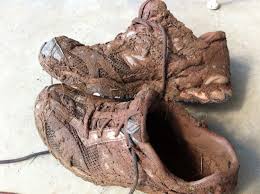
So, how do we develop the appropriate level of sensitivity without going so far as to sing Kumbaya all the time? There’s a very simple method that I’ve learned over the years. I will admit to once-upon-a-time being the insensitive Type A hard-charger that was described in the opening paragraph. I justified my behavior by believing that I was simply being expedient in my dealings with others. After all, I was moving at 100 miles an hour and the quicker I could get through with one meeting the sooner I could move on to the next. But I gradually became aware that my people skills were suffering. I wasn’t doing anything to cultivate relationships or goodwill. Eventually I developed a new awareness by just putting myself in the other person’s shoes. How would I feel if someone spoke to me a certain way; said something in a certain manner, or failed to somehow acknowledge me?

The key is to practice, practice and constantly practice. I try to pay attention to how everyone around me is feeling. In a restaurant, I want to make sure that the wait staff is properly appreciated. At the office I try to make eye contact with members of our team as I walk by and greet each and every one of them. I pay attention to the language that I use, going the extra mile to avoid careless statements that could be misconstrued. Again, I’m always testing what I say or do against the basic premise of how I would want to be treated if I were the other person. After a while it becomes very intuitive.

The mark of a good leader is the manner in which he or she treats others. Running roughshod or being humble and sensitive? The choice is easy when walking a mile in another’s shoes.

This blog is being written in tandem with my book, “An Entrepreneur’s Words to Live By,” available on Amazon.com in paperback and Kindle (My Book), as well as being available in all of the other major eBook formats.

dirty shoes

A Right Way and a Wrong Way

My cell phone rang the other day. The person on the other end started by introducing himself but did not speak clearly so I couldn’t catch his name. He immediately launched with a hearty, “Mr. Harris, how are you doing today?” This sort of greeting is always a warning signal for me that someone is going to try and sell something. Being a polite person I responded by saying that I was fine. Before I could say anything else he began reading from his script. He was peddling the most amazing product since the invention of the light bulb and it was going to save me millions of dollars . . . or something like that. This guy literally filibustered for more than 30 seconds without taking a breath. He obviously had a lot of practice doing this.

Does this sort of old school cold-calling really work? Perhaps it does to a point, but I question whether it is the most effective approach. Let’s examine all of the ways I found this conversation to be off-putting. #1 – Failure to speak clearly – the fact that he spoke so fast that I couldn’t understand his name was certainly not the right way to get started. #2 – Cliché greeting – asking how I was doing is incredibly trite and inauthentic. #3 – No need-determination – this was at the heart of his ineffective approach. He arrogantly assumed that I needed his product or service and made no attempt to validate this assumption. #4 – Reading from a script – I had no confidence that he understood what he was supposed to be selling. After listening to him tout his product for a while I finally interrupted him and said, “I’m not interested, thank you.” And then I hung up. I wonder how many times this happens to him every day?

This type of cold calling utilizes a classic high-pressure technique and I’m surprised that in today’s business world there are still companies (and sales people) who use it. Cold calling can be a thankless task yielding poor results except for a high degree of discouragement. Cold calling should be less about the product or service we are selling and more about building and collecting relationships that we can serve. The problem is that many companies still expect sales people to meet quotas and apply extreme pressure to sell, sell and sell. The alternative (and much more effective) approach is to call without making any attempt whatsoever to sell anything. Instead the call is to introduce one’s self and build a rapport with the customer. This process includes making an attempt to understand how the customer does business and to identify his points of pain.

I would begin a call like this by indicating that I’m not calling to sell anything. This statement is usually somewhat disarming and increases the chance for a customer to stay on the phone. Instead, I’m doing some research to learn more about how customers are dealing with a certain issue. If my product is inventory management software, I’m going to ask open-ended questions that get the customer to talk about what problems he might be experiencing with his current inventory management system. And I’m going to carefully listen to his responses and ask pertinent follow-up questions based upon what he has told me. I will not read from a script. Once I have a greater understanding about my prospective customer and his needs, I’m going to thank him for his time and hang up.

I’ll follow-up with a handwritten note expressing appreciation to the customer for his time. Very few people write notes anymore. I won’t send it by e-mail because I won’t stand out as much. I may wait several days and send him something relating to the conversation we had – perhaps it’s an article that is applicable to his situation. But I’m still not selling him anything. Instead, I’m working to build a relationship. By the time I call him again, he knows who I am. And there’s a reasonable chance that I’ve differentiated myself from the high-pressure cold callers he hears from every day. When I finally call him days or even weeks later to help him buy my product, it’s now a warm call.

Effective selling isn’t about the product we’re pushing. It’s all about the customer and his or her needs. And while this premise seems so basic, it’s not practiced extensively. Thus, when we take the personal approach rather than the product approach, we have a real opportunity to stand out from our competition.

This blog is being written in tandem with my book, “An Entrepreneur’s Words to Live By,” available on Amazon.com in paperback and Kindle (My Book), as well as being available in all of the other major eBook formats.
cold calling

No Scorecard

Question: What do you think is the lifeblood of entrepreneurship?

Answer: Entrepreneurship is comprised of a great many elements. Creativity, vision, patience, perseverance, capital and integrity are some of the more prominent components. But in my opinion, the lifeblood of entrepreneurship is the building of relationships.

We’ve all heard about how important relationships are but at times I’m not sure that we truly comprehend their vital nature – both as entrepreneurs and as human beings. Early in our business lives many of us are out to “prove something.” We want to make sure that we are perceived as worthy or serious. And at times we may not work as hard to build relationships as we could.

For many years, we had in our family of companies, a commercial real estate leasing and brokerage unit. We leased and sold office buildings, shopping centers, industrial facilities and other commercial properties. The art of building relationships was something we constantly preached and several of our salespeople were receptive to this. Many were not. Those that didn’t buy-in were focused on the transaction. They would make or receive a call to or from someone interested in a property. After some discussion if the prospect wasn’t interested in a property these salespeople would move on to work on another prospect. Other more enlightened salespeople sought to become better acquainted with the prospect, maintained contact and found ways to help that individual even if no transaction was imminent. It was these salespeople who ultimately were able to be the most successful.

Building relationships requires an investment on our part. It is an investment of ourselves in other people. Perhaps that investment takes the form of time, money or emotion. Building relationships does not focus on transactions. Instead it focuses on finding opportunities to genuinely serve others. And we’re not doing so with any expectation of receiving something immediately in return. We serve because it’s the right thing to do. When we do focus on gaining a quid pro quo we often find that the relationship we are trying to establish lacks loyalty – in both directions. Do we hope that the day may come that the person with whom we have a relationship will serve us in some way – i.e. a transaction? Sure, there’s nothing wrong with thinking this, but only because it’s the way the world works.

We can be most successful when we build relationships with others where there is no scorecard. When we have this mindset the game will be won by both parties.

This blog is being written in tandem with my book, “An Entrepreneur’s Words to Live By,” available on Amazon.com in paperback and Kindle (My Book), as well as being available in all of the other major eBook formats.

scoreboard

Bridges

Question: Sometimes I get so angry with people that I want to tell them exactly how I feel about them. Don’t you think that such honesty is always the best policy?

Answer: Well, yes and no. We have to evaluate how the other person will react to our “honesty” and we also need to understand whether we are really being constructive with our comments or simply seeking the satisfaction of telling someone off.

There have been many times over my career that I’ve felt wronged by someone and wanted to lambaste them for what they did. I can’t tell you how many letters I’ve written to such people; put them in the drawer; “slept on it,” and then never mailed the letters (or hit the Send button for an e-mail). I guess writing the letters and e-mails was therapeutic but a little voice kept telling me not to follow-through and send them.

Recently a former investor of ours was in my office visiting from another city. Toward the end of our relationship with his firm things became a bit strained. We had gone above and beyond our contractual obligations with his company and yet there was no “give” on his part. However, we went out of our way to keep things businesslike and cordial. He commented during his recent meeting with me that he respected the way we handled the situation. He pointed out that he was in our office talking to us about doing another deal with his firm because we did not burn bridges with him.

Reacting emotionally and burning bridges may feel good at the time. But in the long run it costs us relationships, friendships and money. I still get irritated with people that don’t adhere to my business principles and values. However, I’ve come to realize that making the choice to protect the relationship is much more important and I quickly moderate my emotions. Sure it’s hard to smile and keep an even tone – but we never know when that person who has caused the irritation may become our best client or even our best friend.

I’ve said for years that one of my objectives as an entrepreneur is to collect and serve as many relationships as I possibly can over the course of my career. A lot of time and effort is invested in doing this – so why would I want to throw this all away by burning a bridge with one of these relationships? Perhaps when a bridge becomes shaky or weak, the best course of action is to work to strengthen it rather than burning it.

This blog is being written in tandem with my book, “An Entrepreneur’s Words to Live By,” available on Amazon.com in paperback and Kindle (My Book), as well as being available in all of the other major eBook formats.

burning-bridge

It’s An Art

Question: I am beginning to attend more social and business functions. I’m not sure exactly how to make the most of such events. Some people seem so natural at being in groups. What advice do you have for me?

Answer: Working a room is an art. Certain unique individuals walk into a room and suck all the air out of it. They have big personalities and people naturally gravitate to them. For most of us we have to expend more effort to get the results we want. Which brings us to the question of just exactly what do we want to gain from personal encounters in group settings? For me it’s about the fact that I enjoy meeting and being around other people. And it’s about collecting as many relationships as possible over the course of my life . . . relationships that I can serve in some way.

I have developed a very specific approach to working a room. I make sure that I have a good supply of business cards in my coat pocket. I generally stop at the bar for a glass of water (I’d rather not drink alcohol at these functions) and then I’m ready to launch. If I see someone I know, I’ll make a beeline to him or her and strike up a conversation. Usually this will result in the person I know introducing me to someone else whom I haven’t previously met. Ultimately, I try to meet everyone in the room depending of course upon the size of the gathering. I tend to make the first move – look the person in the eye, shake their hand firmly and give them my name. I get their name in return and then I usually ask a question of some sort. It may be about the event, the host or something I’ve observed about the person. The conversation usually comes easy after that.

My purpose for meeting people is not to see what they can do for me. It’s the other way around. I live my life knowing that when I help others, good things will come back to me in ways I can’t imagine. So, I’m not “targeting” people to meet in order to position myself to eventually “sell” them something. Over the years I’ve met some of the most fascinating people on the planet. I’ve figured out ways to help them, and my life – both business and personally – has been richly blessed as a result.

The key to success with social or business group situations is to have a well-defined purpose. If we show sincere and genuine interest in other people; are there to talk about them; listen to them; and find ways to help them, we’ll be rewarded beyond our wildest dreams.

This blog is being written in tandem with my book, “An Entrepreneur’s Words to Live By,” available on Amazon.com in paperback and Kindle (My Book), as well as being available in all of the other major eBook formats.
Just the Facts Ma’am

Question: I have become increasingly concerned about the tone of e-mails that I have been receiving lately. And I find that people aren’t responding to my e-mails in a timely manner. Why aren’t people more courteous?

Answer: E-mail is a wonderful medium. It’s hard to remember what it was like before the days of “You’ve Got Mail.” We’ve become so accustomed to popping off an e-mail every time we feel like it that we take for granted this amazing tool. And now we don’t have to be sitting at a computer to send an e-mail – we can do it from our phones or an electronic tablet. All this makes for a high level of efficiency – wouldn’t you agree?

But we are paying a price with this advancement. We sit in our offices and send an e-mail to a colleague who may be less than 10 feet away. We send text messages to family members sitting in the same room. We send messages via Facebook and Twitter. So what don’t we do? We don’t talk to each other anymore. What I’ve come to learn is that e-mail is a great one-dimensional form of communications. It is perfect for conveying factual information. But all too often we use e-mail to express emotion and sometimes this can be misinterpreted by others.

I remember as a kid how a neighbor’s German shepherd would sometimes chase me into my house while nipping at my heels. Once inside, I’d turn around and scold the dog through the screen door – knowing he couldn’t bite me because I was safe inside. We may have the tendency to say things in an e-mail that we wouldn’t say in person. I call this “talking tough behind the locked screen door.” How easy it is to fire off an e-mail that expresses our feelings about something – especially if those feelings aren’t totally positive. Yet the recipient cannot see our eyes or the expression on our face. He or she cannot hear the intonation in our voice.

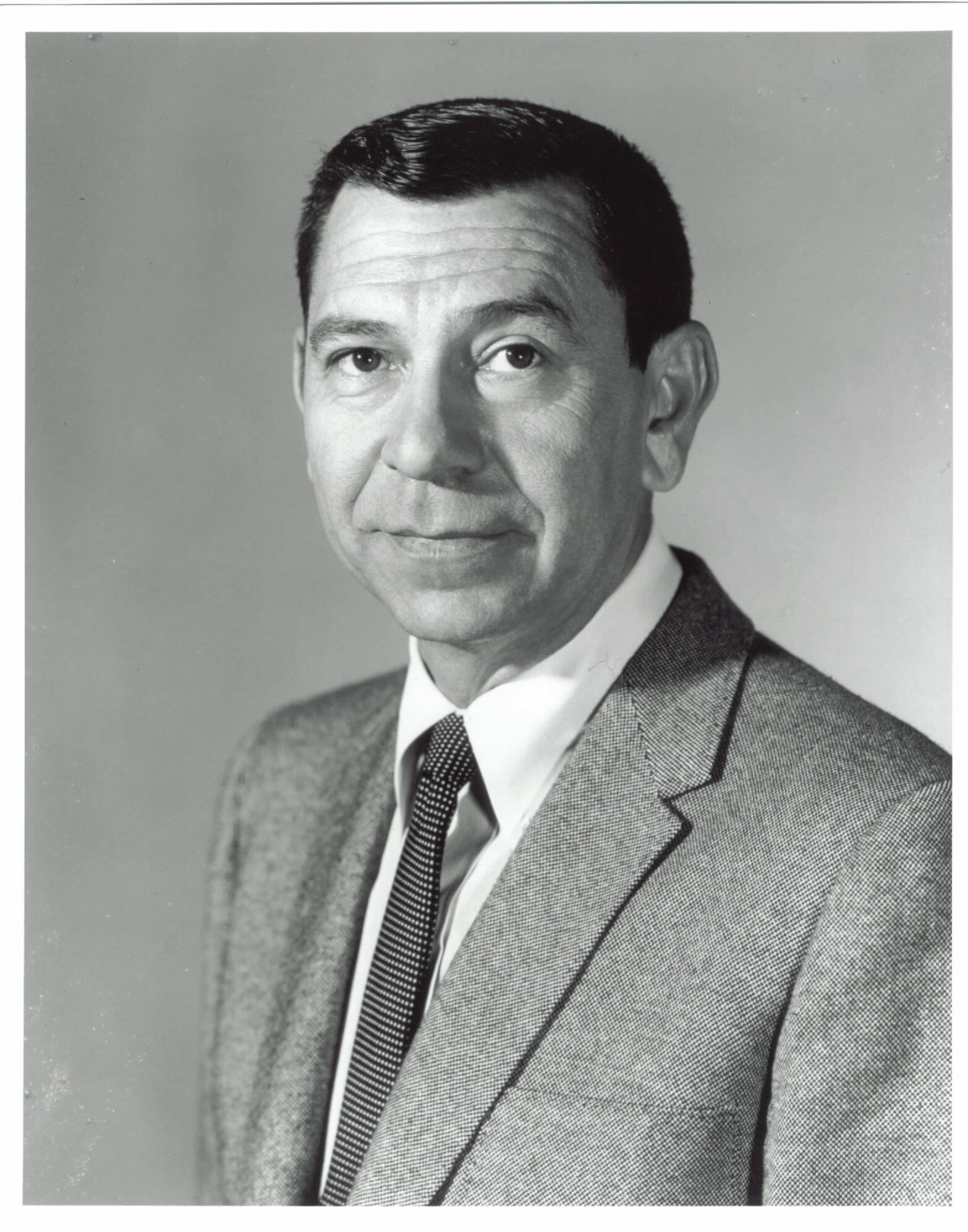
We should consider reserving e-mail for what I call “just the facts ma’am” communications. Remember how that was the trademark line from Sgt. Joe Friday of the old TV program, Dragnet? When there is a chance that something slightly contentious needs to be discussed, the best way is in person or at least by phone. I find that when I do this, I’m more likely to be sensitive of the other person’s feelings and talk about the issue in a more positive manner.

E-mail makes our business and personal lives more productive. Good old-fashioned, eyeball-to-eyeball encounters protect relationships, and enable us to maintain our personal connections with others.

This blog is being written in tandem with my book, “An Entrepreneur’s Words to Live By,” available on Amazon.com in paperback and Kindle (My Book), as well as being available in all of the other major eBook formats.
Armor Plated

Question: I have worked for years with a particular client and he never shows me one single sign of appreciation. The results I have produced for this client have been terrific by any standard. Why won’t he recognize my efforts?

Answer: I’ve certainly experienced the same thing over the course of my career. And I’ve learned several things that may be helpful in understanding this sort of situation. First, some people are just not wired to show appreciation to others. Second, there may be the belief that we are being paid for the services we provide and that is enough of a demonstration of appreciation. Third, if the business arrangement is recurring and requires the renewal of a contract the client may feel that the continuation of the relationship is sufficient proof of appreciation. Fourth, some people may believe that showing appreciation is reserved for personal relationships and not business situations. And finally, it’s possible that a client doesn’t express appreciation because he isn’t satisfied with the product or service being provided.

I’ve come to realize that none of these reasons is necessarily right or wrong. What’s more important is how we feel and react. We have no control over how others act but we do make a choice as to how we respond. Do we allow ourselves to feel hurt and victimized? Do we choose to become resentful and irritated?

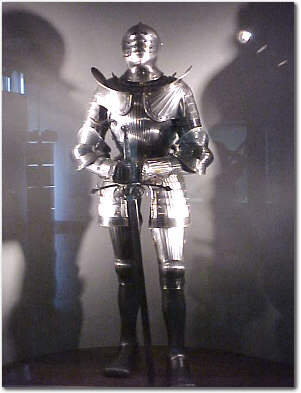
Feeling unappreciated can actually be turned into a positive experience. We can make the choice not to allow how we are treated by others to affect the way we see ourselves. This is akin to developing a suit of armor that enables us not to even give a second thought to what may be perceived or real sleights on the part of others. But the bigger win is to observe what we consider to be the less desirable traits and tendencies of others and do just the opposite. If someone is not showing appreciation, rather than allowing this to upset us we can make an extra effort to show appreciation to others.

Life is full of opportunity. Almost every situation that we might consider negative has a positive side. The choices we make will determine whether or not we live a happy and vibrant life. How others act toward us need not have any bearing on this truth.

This blog is being written in tandem with my book, “An Entrepreneur’s Words to Live By,” available on Amazon.com in paperback and Kindle (My Book), as well as being available in all of the other major eBook formats.