
Super Powers

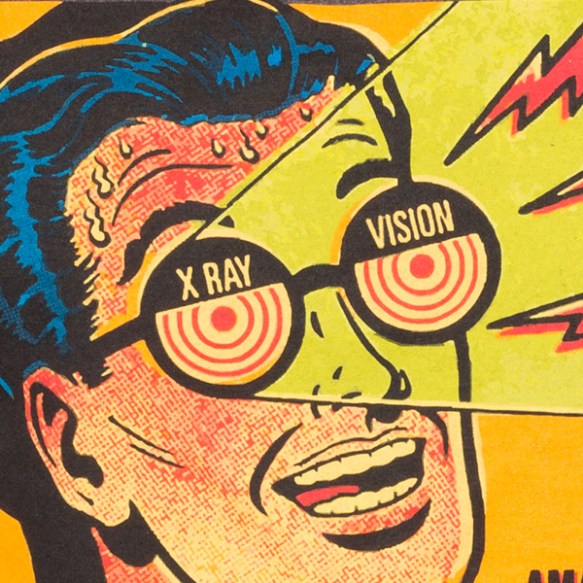
Super heroes are known for their super powers. Superman could fly and possessed incredible strength. Captain Marvel could levitate. Wonder Woman had x-ray vision. Hercules could self-heal. Iron Man could become invisible, and Stretch Armstrong was a shape shifter. Cartoon characters are bestowed with amazing super powers and always seem to find themselves in situations that call for the use of those powers specifically unique to them.

Successful entrepreneurs also have their own unique super powers. Discovering and utilizing such powers can lead to some amazing results. As we progress through our careers, we become more and more aware of our super powers. The earlier in life we are able to discern our special abilities, the sooner we’ll be able to focus them and realize our full potential. Just like most of the super heroes, we entrepreneurs can’t lay claim to all of the super powers which is why we need to understand what is ours and how to use it. Here are a few ideas on the subject.

Creativity and Imagination are foundational super powers for many entrepreneurs. Probably one of the most creative individuals ever to walk the planet was Steve Jobs of Apple fame. Jobs had a vision that was unmatched and he transformed society by imagining things that had never been done before. He envisioned the iPhone to have on-screen features rather than the old buttons that were used on other cell phones.

Tesla’s Elon Musk exemplifies the super powers of Perseverance and Resilience. Another of his enterprises is a company called SpaceX which is attempting to commercialize space travel. Even though there have been countless setbacks including rockets that failed to function properly or exploded in 2006, 2007, 2008, 2015 and 2016, Musk continued to stay the course to reach his ultimate goal of making space travel affordable and colonizing Mars.

McDonald’s would not be the company it is today had it not been for its founder, Ray Kroc and his super powers of Optimism and Ambition. Very early in his career he met Earl Prince, the inventor of a five-spindle milk shake machine called the Multimixer. He spent 15 years selling the machine to a variety of customers including two brothers in San Bernardino, California. Dick and Mac McDonald entered into an arrangement with Kroc to expand McDonald’s beyond a single restaurant and the rest is history. Because of his Ambition, Kroc was able to effectively push the expansion plan. And his Optimism was contagious and enabled others – franchisees, suppliers, bankers and investors, to believe in him and his plan.

When we think of Amazon we understandably think of its founder Jeff Bezos. Here is a man who is not afraid of failure because his super power is seeing the world as a laboratory in which to Experiment. Is there any doubt that he’s done exactly that? He started selling books online, and today sells EVERYTHING through the Amazon website. In addition, Amazon Web Services, is a subsidiary that provides a cloud-based computing platform to the business community. Bezos convinced investors to back his approach of experimentation from Amazon’s launch in 1995 to 2016 when it achieved annual sales of $136 billion. He advises entrepreneurs to focus on process not failure, and further to “deconstruct products, processes and ideas.”

Building and serving Relationships are Reid Hoffman’s super powers. Hoffman was the COO of PayPal and co-founder of LinkedIn. He likes to build deep, long-term relationship that give insider knowledge. Says he, “If you reverse engineer the relationships of many successful entrepreneurs as I have, you will realize that many people work with the same people over and over in their careers.”

What is your super power? Once you find it, focus on it, refine it and exploit it. It may not enable you to leap over tall buildings in a single bound, but it may be just what you need to build a successful and sustainable organization.

You can also listen to a weekly audio podcast of my blog. What you hear will be different than what you read in this blog. Subscribe on iTunes or wherever you get your podcasts. You can also click on this link – Click here to listen to Audio Episode 72 – Vacuum Cleaners & Movies.

This blog is being written in tandem with my book, “An Entrepreneur’s Words to Live By,” available on Amazon.com in paperback and Kindle (My Book), as well as being available in all of the other major eBook formats.

Entrepreneurial Insecurities

Let’s go exploring. Let’s explore the mind of an entrepreneur. What types of thoughts are entrepreneurs thinking? The answer may surprise you. Many people see entrepreneurs as self-confident, assertive individuals who always have it “all together.” Look at the roster of famous entrepreneurs – Sir Richard Branson, Mark Cuban, Steve Jobs, Bill Gates, Jeff Bezos and Mark Zuckerberg. Certainly no shrinking violets in this bunch!

So, we’re all like this star-studded list of entrepreneurs – right? Well . . . maybe not so much. All that moxie and nerves of steel gives way to self-doubts and uncertainty. Am I a fake? Am I not good enough? What if I fail and lose all my money? No one likes me or my idea. These thoughts are insidious and destructive. And yet we think them anyway.

We’ve all heard the “fake it till you make it” mantra. This implies that an entrepreneur is continuing to perfect his or her product/service while still pulling out the stops to sell it. Products and services are iterative and there will always be newer and better models. Our entrepreneurial insecurities emerge when we worry that there may be flaws in the current version that cause such a strong level of customer dissatisfaction that our whole enterprise bombs. This is where the “fake it” part of the equation can spill over into our psyche and cause us to question whether or not we really know what we’re doing.

“What if I’m not good enough?” Often we’ll see other entrepreneurs who seem to be riding the wave. Everything is going right for them and we surmise that they are on top of the world. Perhaps we’ve just suffered a setback of some sort. We look at the competitive landscape and begin to wonder if we’re losing the race. This feeling intensifies as this cycle persists – others seem to be winning and we aren’t.

It’s 3:00 AM and we wake up in a cold sweat. Our hearts are pounding and we’re a bit disoriented. We’ve just launched a major project that by our assessment, involves more risk than we’re used to taking. Then the mind games begin. We see the endeavor cratering which will cost us a lot of money . . . not to mention reputation. This is followed by the thought that we’re losing our mojo and our business will eventually fail. Ultimately we declare bankruptcy, lose our house, are divorced by our spouse and end up living under a bridge!

Finally, some of us may be feeling rejected. Again, we may have been told “no” so many times that we begin to wonder what is wrong with us. Is there something about our personality, the way we look, the things we say or the way we act? Maybe it has something to do with where we live, the car we drive, the people who are our friends or even where we went to school. Our natural reaction is to feel hurt and maybe even victimized.

Entrepreneurial insecurities are understandable but unproductive. It’s important that we recognize them; resolve them as quickly as possible, and move on. Allowing them to fester can be a slippery slope to some serious career or life-threatening behaviors. Drug and alcohol abuse, deteriorating health, extramarital affairs, gambling, physical and psychological abuse of loved ones and even suicidal tendencies are some of the more prevalent examples.

We entrepreneurs thrive when we have a healthy self-image. Developing great resilience is critical to our success in this arena. Smoothing out the ups and downs of our fast-paced lives is also a step in the right direction. Earlier in my career I would experience the euphoria of winning to the fullest. But similarly, I would experience the depression of losing to the fullest as well. These wild emotional swings would result in my feeling on “edge” much of the time. The feeling of victory was fantastic, but I always wondered when the other shoe was going to drop.

I’ve learned to moderate my emotions. When I am part of a winning experience, I know I’ve been there before. And it’s the same with the losses. I know what it takes to achieve victory and I know what to do to avoid defeat. Some of this is simply age and experience. But I believe most of it is the mindset I have chosen for myself. The key word in the previous sentence is “choice.”

We can avoid the pitfalls and traps that are set when we have entrepreneurial insecurities. This is accomplished by celebrating our success not by spiking the ball in the end zone, but through understanding exactly how we won and replicating it over and over. Steadfastly focusing on our vision for the future is paramount to warding off negativity and self-doubt. Above all, we build our resilience by maintaining our optimism and positive attitude, no matter what.

You can also listen to a weekly audio podcast of my blog. What you hear will be different than what you read in this blog. Subscribe on iTunes or wherever you get your podcasts. You can also click on this link – Click here to listen to Audio Episode 71 – Civil War.

This blog is being written in tandem with my book, “An Entrepreneur’s Words to Live By,” available on Amazon.com in paperback and Kindle (My Book), as well as being available in all of the other major eBook formats.

Alarm clock on night table showing 3 a.m.

Gut Check

Entrepreneurs make decisions every day. Some are large and many are small. Have you ever stopped to determine how it is that you go about making your decisions? Some entrepreneurs are deliberate and others tentative. Some are procrastinators and some use a consensus approach. I’d like to focus on two methodologies that present quite a conundrum for entrepreneurs – gut vs. data.

How many times have you heard the expression, “go with your gut?” We all know what this means. When presented with a choice or several choices, we use our intuition to select the one that “feels” right. Gut level decisions typically require no cognition or rational thought. To a great extent they are based simply on a feeling that we have. But . . . that feeling is generally developed over time on the basis of a wide range of experiences. The word “experience” is the key here. I’ll grant that there may be times when a gut decision can be successful without foundational experience. But I do not believe that gut-driven decision making can consistently be accurate in the absence of incrementally derived experience.

Decisions that are made utilizing factual data and logic may seem like a safe bet. But . . . there are a couple of caveats. First, we can sometimes be too analytical. We ponder the data and agonize over it. Do we have every last fact that might make a difference? What if one or more of the facts aren’t correct? Ultimately we can end up in an analysis paralysis situation that turns into a first class muddle. Second, even with data we still must interpret it. Assume that all of the facts are correct and that we have everything we need. The wrong conclusion can be reached if the information is improperly interpreted.

Early in our careers we should make decisions much more on the basis of facts and logic. As much as we might want to “trust our gut,” we just don’t have the experience necessary to do so and consistently make the right decisions. As we gain age and experience there’s a possibility that we also become a bit wiser. Wisdom is the magical ingredient that allows us to listen to our gut and make the right call. This doesn’t mean that we ignore fact-based decision making. But there will be situations where we’ve seen this rodeo several times. And as a result, we can pretty much predict what is going to transpire.

We all have intuition at the earliest stages of our adult lives. The big question is whether or not to trust it. Steve Jobs famously said, “Have the courage to follow your heart and intuition. They somehow know what you truly want to become.” This is all fine and good. However, lofty and soaring statements like this aren’t necessarily helpful. The point I’m trying to make is that we can sharpen our intuitive skills by validating the patterns we observe over time. Here’s an analogy that will put this in a better perspective. Suppose we have a 26 year-old airline pilot. He’s very good at executing the mechanics of flying a jet aircraft. He’s been flying since he was 16 and has logged nearly 5,000 hours in the cockpit including 400 in his current aircraft type. Suppose you are one of 120 passengers aboard his aircraft. How comfortable are you placing your life in his hands if he tends to be more “intuitive” about the way he flies? Compare this to a 60 year-old airline captain who has been flying for more than 40 years. He has over 35,000 hours of flight time including 10,000 hours in the Boeing 757 that he currently drives around the sky. Which pilot’s “intuition” are you more likely to trust?

The veteran pilot has developed a sixth sense – aka intuition – for his aircraft and for flight in general. He’s seen it all over the course of his career. While he flies by the book and always checks the facts on all things weather, mechanical and aeronautical, he just “knows” when he needs to act on something that may not be factual in nature. Perhaps a little voice is telling him that there’s a problem with an engine even though the gauges are in the green. That little voice might be a subtle tone or vibration that only he can feel. Why? Because he knows his airplane so well that he has almost become one with it.

When we combine age, experience and wisdom, we sharpen our intuitive skills. Laying such a foundation enables us to rely more and more on our gut as we move down our career path.

You can also listen to a weekly audio podcast of my blog. What you hear will be different than what you read in this blog. Subscribe on iTunes or wherever you get your podcasts. You can also click on this link – Click here to listen to Audio Episode 70 – Get Outta the Way!

This blog is being written in tandem with my book, “An Entrepreneur’s Words to Live By,” available on Amazon.com in paperback and Kindle (My Book), as well as being available in all of the other major eBook formats.

Whale Sharks

Solving problems is a hallmark of entrepreneurship. Challenges are presented every single day of our existence – some small, some large and some that are the size of a 41,000 pound Whale Shark. Regardless of their size, we know that we must persevere and work through the many issues we face. Let’s stop for a moment and think about our problem-solving encounters. Are they particularly stressful or do we handle them on a pretty even-keeled basis?

There have been periods in my career where problem-solving was extremely hard. Why? Because I made it so. There were times when nothing seemed to go right. It was like putting together a jig-saw puzzle and there was a piece that I absolutely, positively knew belonged in a specific location, but it wouldn’t quite fit. It was a maddening experience until I eventually figured out that I had jammed the correct piece in another spot – and that was also wrong. How did I feel? Frustrated is an understatement. At other times I’d be cruising along fixing little nits and nats along the way, only to find that other minor issues would keep cropping up. I remember putting together model airplanes as a kid. I might get a little too much glue on one part that would leak out through the seam. Or my hand wasn’t as steady as necessary and I’d get some paint in the wrong place. How did I feel? Irritated is the proper term.

Frustration, irritation, anger and anxiety are all emotions that we can feel when we are dealing with our challenges du jour. Then when a Whale Shark-sized problem swims by, it can push us over the edge into a full-blown meltdown. I’ve been there with all of this and I’m betting that you’ve been there too. Eliminating the drama in my life has been a priority in recent years. I decided to try and become more like a robot in this regard  . . . a robot named Zen! As time has passed, I’ve become much friendlier with Zen. I’m much less inclined to major in drama where problem-solving is concerned.

Here’s how I’m succeeding at experiencing less in the way of negative emotions when dealing with business and personal obstacles alike. I’m not a poker player but have watched enough poker to understand what a “poker face” is all about. So I try and emulate a poker player when I’m working a problem. It’s become a game for me to see if I can reach a solution without anyone (including myself) detecting frustration, irritation or any other unfavorable emotion. This works most of the time for small issues.

For larger problems I take a deep breath, smile and gulp in a healthy dose of positivity and optimism. Starting from a positive place is critical. Recently I heard someone reject optimism in favor of hope. To me, optimism is more of an action-oriented belief system. Hope is like keeping my fingers crossed. I’d rather place my trust in visualizing a positive outcome than keeping a rabbit’s foot in my pocket. Each step of the way I remind myself to stay positive and avoid the negative emotions. I look for the small victories along the way. And guess what – there are small victories in the midst of solving large challenges if we look for them. They are like stepping stones that take us from one side of the stream to the other without getting our feet wet.

Finally, here’s my approach to the Whale Shark problems. I get into a clinical state of mind. I map out a process from A to Z. My business colleagues know that I work a lot with spreadsheets and diagrams. I use these tools quite often to figure out the really big, hairy, tough stuff. This is where my robot, Zen, enters the picture. I love the story about Captain Sully Sullenberger who landed his US Airways aircraft on the Hudson River when both engines flamed out after ingesting a flock of geese. This man became a robot. In his mind he mapped out a solution to the problem. He remained calm and didn’t panic. Sully didn’t agonize over the decisions he made because there wasn’t time to do so. Embracing a process-driven approach and maintaining focus is the best way to avoid destructive negative emotions when solving the Whale Shark-sized problems.

We will succeed to a much greater degree when we learn how to control or eliminate negative emotions when solving problems. Then it doesn’t matter if the issue is small, large or of a Whale Shark scale – we’re well prepared.

You can also listen to a weekly audio podcast of my blog. What you hear will be different than what you read in this blog. Subscribe on iTunes or wherever you get your podcasts. You can also click on this link – Click here to listen to Audio Episode 69 – Old Fashioned or New-Fangled?

This blog is being written in tandem with my book, “An Entrepreneur’s Words to Live By,” available on Amazon.com in paperback and Kindle (My Book), as well as being available in all of the other major eBook formats.