
The Urgent Team

Allow me to set the scene. We are about to embark upon a major project that could make or break our company. There are a wide range of complexities involving this project and it will require a supreme effort from our entire team to successfully bring it all together. But there’s just one problem. Invariably someone on the team is not as responsive as necessary or doesn’t seem to possess the same sense of urgency as does everyone else. As a result the ball gets dropped and we fail. Alternatively, others on the team step in to pick up the slack which creates resentment and hard feelings. How do we effectively deal with this rogue team member that is at the center of all this?

There are a number of steps that can be taken to stack the deck in our favor when it comes to ensuring responsiveness and urgency. Step one is to develop clear written roles and accountabilities for each member of the team. Considerable thought should be given to this process so that a high level of precision in role definition can be attained. Being as comprehensive as possible in describing a role will produce clarity. Vague and generic verbiage muddles the picture and may lead to confusion later on. As team members we have overall roles and accountabilities. For major projects it’s a good idea to dive even deeper into a separate set of intentions for each of us relative to the specific matter at hand.

Step two involves gaining a commitment from each team member. One of the best ways to accomplish this is to hold a team meeting to reaffirm the vision for the project. For example, suppose we are developing a proposal to win a major piece of business. We assemble the team that will be creating and implementing the proposal and paint the picture of what it looks like when we win (vision). In the meeting we review team member roles and accountabilities and ask each person to make a verbal (and maybe even written) commitment to do their part in this endeavor. It’s critical that this commitment be made among those on the team and not just to the enterprise.

The third step is for the team leader(s) to make an assessment of the capabilities of each team member. The roles and accountabilities have already been established for each position that will participate in the project. Will the individuals who fill those positions be able to perform the tasks assigned to them? And do they have the tools and resources that are needed to prosecute their roles effectively? If it’s determined that a team member isn’t equipped for his or her role – i.e. skills, training or experience – then that person becomes the weak link in the chain. A decision must be made at the outset whether or not to replace that team member with someone else, or be prepared to provide greater than normal support for that individual.

Finally, team members should be encouraged to set their own deadlines so long as they are compatible with the overall project timeline. When a deadline is imposed by others, there’s always the opportunity for someone to claim it to be unrealistic. Accountability is first to one’s self and then to the team. Self-imposed deadlines are congruent with this approach to accountability. As team leaders it’s equally important for us to be aware of all deadlines and check with team members well in advance of them. Then if there’s a chance that a deadline will be missed we can muster additional resources or take other steps to make sure that the train still runs on time.

Instilling responsiveness and a sense of urgency within a team is a process. When we clearly define roles and accountabilities, obtain commitment, assess capabilities and resources, and work with team-member established deadlines, the process should put us in a position to win the prize we are seeking.

This blog is being written in tandem with my book, “An Entrepreneur’s Words to Live By,” available on Amazon.com in paperback and Kindle (My Book), as well as being available in all of the other major eBook formats.


Is the Grass Really Greener?

The U.S. unemployment rate is at its lowest since 1969. Companies are becoming more and more creative in their recruiting efforts. From an employee’s perspective, times have probably never been better. There’s certainly a temptation to job-hop the way up the compensation ladder in the belief that an employer is going to be much more generous than would have been the case during the Great Recession and for many years thereafter. But the question must be asked, is the grass really greener on the other side of the fence?

Everyone knows that there’s much more to a career than a paycheck. Those who blindly chase the dollars may get what they want – but there may be a whole lot more than they bargained for. I know many people who were thrilled with the amount of money they were going to make only to find out that their new boss was ridiculously difficult, the stress levels were off the charts and working conditions were abysmal. Yet, it’s very tempting to jump at the chance to make a lot more money and pick up a cool new title. So, how should we look at the “grass” on the other side of the fence?

Over the past 44 years, I’ve had numerous opportunities to make the jump. I resisted every time. Why? Long ago I realized that 1) I was working for and with honorable people; 2) I was allowed incredible freedom to be creative and experiment, and 3) I was working in an industry that I loved and had dreamt about since I was in the 8th grade. You’ll notice that nowhere did I mention money. The reason is simple. I was allowed to continually figure out how to add value to whatever I was pursuing, and my compensation increased accordingly. This approach is my suggested template for viewing the “grass is greener” dilemma.

I’ve always believed that most people work a job. A few pursue a career. And then there are those of us who are lucky enough to live our passion. I don’t think I’ve felt at any point in time (after the first three months in the mid-1970s) that I was working a job. For awhile I was pursuing a career. But for most of my adult life I’ve been able to live my passion. This is important to understand for it’s one of the three foundational elements to answering the “grass is greener” question. Each of us must find our own passion to pursue, and the sooner the better.

Let’s assume that we generally know that we are in the right industry – yes, I know – that’s a big assumption to make. But we must start somewhere. This brings us to the other two foundational elements. Am I working for and with honorable people? There’s much more to this question than it’s literal interpretation. What is the company’s culture? Is there a vision of where the organization is heading? Are there core values that are more than slogans in a fancy frame on the wall? Are employees valued and treated fairly? Do senior leaders express gratitude? Do they seek out feedback; listen to it, and act upon it? No situation is going to be perfect. But if the environment is comfortable and efforts are constantly being made to improve, that’s a good sign that we are in the midst of honorable people.

Finally, we need to measure how likely we will be to succeed over the long haul. In my case, I was pretty much allowed to make my own way. Sure, I had specific roles and responsibilities, but I always wanted to do more and be more. I saw a myriad of opportunities and developed plans to exploit them. I made plenty of mistakes – more than I can count. But I was allowed to make them and learn valuable lessons in the process. I always figured that as long as my successes exponentially outweighed my failures, I was on solid ground. And that turned out to be true. You’ve likely heard the old adage, “the cream rises to the top.” If we are working for and with honorable people, we can always know that we earn more trust and more latitude through our performance.

Ultimately there’s no need to look at the grass on the other side of the fence so long as we can grow a lush, green lawn on our side. When we do this we’ll surely reap the benefits accordingly.

This blog is being written in tandem with my book, “An Entrepreneur’s Words to Live By,” available on Amazon.com in paperback and Kindle (My Book), as well as being available in all of the other major eBook formats.

Is It Really a Struggle?

How many times have you heard that entrepreneurship is a struggle? Heck, we’ve all heard how life in general can be a struggle. But is it really? I think it’s worth exploring the notion of “struggling.” Various definitions of the word “struggle” reference adversaries, opposing forces, bodily effort, fight, conflict or contest. I’m just not feeling it.

Let’s paint a picture. Three years ago, Entrepreneur Ed launched his new enterprise. He has encountered many interesting issues along the way. There have been untimely resignations of key team members; nail-biting moments when it was questionable whether he would make payroll; a patent infringement lawsuit; shortages of raw materials that were critical in producing Ed’s product; brutal competition resulting in a price war; cancellation of a liability insurance policy, and the loss of a key customer. Many might say that the last three years have been a “struggle” for Entrepreneur Ed, after all, it appears that he has faced a great deal of adversity. But Ed doesn’t see it that way.

Here is Ed’s perspective. What others see as negative experiences Ed sees as puzzles to solve. Challenging – sure! But Ed believes that what doesn’t kill him will make him stronger and smarter. The utopian view would have us sail along on calm seas growing our businesses from 8 to 5, then going home to play with the kids and spend weekends at the beach. Uh, sorry, it doesn’t work that way. What matters most is the mindset we have as we move through the course of each day. Do we feel like we’re on a perpetual treadmill, grinding away and being attacked from all sides? Do we wonder when the proverbial “other shoe” is going to drop? Perhaps we have become totally overwhelmed to the point of depression. It doesn’t have to be.

Here’s the antidote to the “struggle.” We know we’ve signed on for an adventure – both in the entrepreneurial world and for life in general. That adventure is going to be whatever we make it. If we are fearful and expect disaster . . . we’re likely to find ourselves with a front row seat on the deck of the Titanic as it slowly sinks into the North Atlantic. However, every challenge does not need to end in catastrophe.

We have been rapidly scaling our companies for the past few years. There have been many moments when someone looking in from the outside might believe we were seconds from colliding with a massive iceberg (sorry, I can’t seem to shake out of the Titanic metaphor). I have never believed for a moment that we were on the wrong course. I’ve seen each challenge as a positive opportunity for creativity and growth. And guess what? It’s working! Every time we think we’re flirting with disaster we seem to pull a rabbit out of a hat – except there’s really nothing magical about it at all. Instead, we have a well-thought plan and we have an extremely positive mindset. We know there will be detours along the way. Sometimes we’ll have to backtrack to find the trail, but we are never lost, and we are always focused on our vision.

As I write this, it’s worth noting that I’ve been with the same company and on the same quest for 44 years. I can now look back and realize how incredible the ride has been. Did it ever seem like a struggle? There definitely were times early in my career where I wondered if we were going to survive. But the older (and maybe wiser) I’ve become, the more I’ve come to understand that success comes from within us. While there may be some external influences, it’s really all about how we see the world when we get up in the morning; how we choose to look at each experience throughout the day, and the impression with which we are left when our head hits the pillow at night. In other words, we’ll struggle if we believe we are struggling. Or, we’ll see the incredibly short time we are riding this planet as a golden opportunity for experimentation, innovation, mastery and joy.

We throw off the chains of “struggle” when we embrace a life filled with positive energy and gratitude. And then we can pursue our purposeful vision with confidence.

This blog is being written in tandem with my book, “An Entrepreneur’s Words to Live By,” available on Amazon.com in paperback and Kindle (My Book), as well as being available in all of the other major eBook formats.
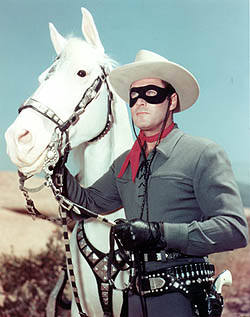
The Lone Ranger Entrepreneur

One of the businesses with which I’m involved is in the venture capital space. We identify, evaluate, vet and fund startup companies in the animal health, agribusiness and human health verticals. As you might imagine, we see everything under the sun. Founders present some pretty unique ideas along with financial projections that are pretty concrete on one end of the scale, to total pie in the sky on the other; slide decks that range from extremely good to extremely poor; business plans that might be exquisite or often are ridiculous; and valuations that are mostly “are you kidding?” though there are a few that are quite reasonable.

We really dig into the details, ask a lot of questions and look at a lot of documents. We pay close attention to whether the founder has the right passion and temperament as well as what kind of a problem his or her idea solves. It’s a good sign if the founder has some skin in the game and a vision that goes beyond simply cashing out down the road. And then we get to one of the central Go vs. No-Go questions – is the founder the Lone Ranger or is there a strong team in place?

Believe me when I tell you that there are some amazingly brilliant entrepreneurs out there. These people are scary smart and have world-changing ideas . . . but many won’t get funded because they haven’t (or won’t) put together a world-class team. The risk is too great from an investor’s perspective to make a bet on a Lone Ranger. Growing a business to any scalable level requires some very talented human capital. And the founder that says, “Invest in me now and I’ll go out and hire the talent,” just doesn’t understand. As investors we want to know who is going to be on the team from the get-go. It’s important for us to know if the chemistry is right; if everyone is committed; if the necessary principal skillsets are covered, and if all members of the team are on the same page.

There’s an obvious parallel here between startups looking for funding and our own entrepreneurial endeavors. In fact, we should step back and take a hard look at our own organizations as though we are presenting to venture capitalists. And here’s the hardball question we must ask. If we are hit by the proverbial bus today will our team be able to carry on tomorrow? Will our company survive and thrive, or will it die? I know many entrepreneurs who believe their businesses are too small to justify a world-class team. To manage the risks that are inherent in entrepreneurship I think we need to scale to a size where such a team is a must-have. But can we afford not to have such a team in place as we push to scale? Think about it this way. It’s kind of like walking on thin ice across a lake. We hope with every step that we can make it to the other side without falling in. And if the ice breaks and we fall through we’re dead without the team. On the other hand, if the team is in place, it can pull us out of the water should we take the icy plunge.

Some of us may be Lone Rangers because we think we can do it better than anyone else. In other cases, we may know we need to build a team but don’t know how to find the right people. And there may yet be other instances where we don’t believe we can afford to hire the team at the present time. My response to all these reasons is a repeat of my previously posed question, “If I’m hit by the bus today, will my company survive and thrive tomorrow?” If the answer is no, then it’s probably time to get busy with developing and implementing a strategy to build a strong team as quickly as possible.

While the Lone Ranger was a beloved fictional character from a different era, it isn’t a concept well-suited for a growing company. Building a world-class team is a solid way to manage risk in today’s entrepreneurial environment.

This blog is being written in tandem with my book, “An Entrepreneur’s Words to Live By,” available on Amazon.com in paperback and Kindle (My Book), as well as being available in all of the other major eBook formats.This blog is being written in tandem with my book, “An Entrepreneur’s Words to Live By,” available on Amazon.com in paperback and Kindle (My Book), as well as being available in all of the other major eBook formats.

The “We” Entrepreneur

Entrepreneurship is a team sport. Successful organizations are built on the collective effort of many talented and dedicated people. As leaders, we need to look for every opportunity to acknowledge the contribution of others. I’ve seen study after study that tells us that recognition and appreciation is very important to the culture that we are building – in some cases it is valued as highly as compensation and benefits. And yet there are countless instances where leaders shine the spotlight on themselves and take the credit for a successful endeavor. How does this manifest?

A business leader has been asked by a reporter how his company competed for and won a very large piece of business. Listen to how this statement sounds. “I have had a long-term relationship with the client and have worked for years to get to this point. I developed an innovative strategy that worked just as I thought it would. It’s all queued up so that all my employees have to do is execute.” A more thoughtful leader might have said it this way. “We have had a long-term relationship with the client, and our team worked hard to develop and implement an innovative strategy that was spot-on. Our entire organization had a hand in this success, and we are grateful to each and every team member for their contribution. We especially want to thank Alice Doe and John Smith who led the effort.” Notice the second statements did not contain the word “I” a single time? It was filled with the words “we” and “our.” It acknowledged the entire team and focused the spotlight on those team members who were at the forefront of the initiative.

What does it take to become a “We” Entrepreneur? First and foremost, we must have a genuine and authentic attitude about who gets the credit. If we are secure enough in our own skin, we check our ego at the door and do whatever we can to shine the spotlight on the good work provided by members of our team. This means that we must reverse some of the patterning we received as children. When I was young and attending school, we were praised for properly answering a question posed by the teacher. While there was nothing wrong with this, it did create an attention-craving atmosphere for some students. We wanted to receive the approval from an adult which was our proof that we were worthy of their accolades. Parents, teachers, coaches and a host of other adults were a party to this endless cycle.

Breaking out of the childhood approval-and-acceptance-seeking mode to become an authentic “We” Entrepreneur requires a couple of steps. First, we need to come to a deep understanding within ourselves that we are worthy. In the early years of my career this was a difficult concept because I had little to no experience. I felt a compelling need to prove to the world that I belonged in the big leagues. Eventually I found that when I excelled, my actions spoke louder than chest-beating. In other words, we develop the understanding of worthiness by challenging ourselves and steadily performing at high levels.

Once we have developed a strong sense of self-worth, we look for ways to focus on the accomplishments of others and celebrate when they occur. In other words, we fix the “inner” (me) first and then move to the “outer” (others). This will take practice. We won’t become adept at the “We” concept overnight as I, me, my and mine will creep in to our consciousness periodically. Here’s something that helped me and I still do to this day. When I write an e-mail, a text message, a letter or any other form of written communications, I review it before sending and remove any I, me, my and mine references and replace them with we, our and us, wherever that it makes sense. This approach helps keep me mindful of my mission to be a “We” Entrepreneur and spills over into my verbal communications as well. And after doing this for an extended period of time, it will be more than just a communications tool – you’ll really believe it! We will see the value in the contribution of others and be truly grateful. At that point our acknowledgement will become a genuine part of our persona.

The “We” Entrepreneur is gracious and unassuming. He or she is always appreciative of what others contribute to the success of the team and makes a special effort to shine the spotlight accordingly.

This blog is being written in tandem with my book, “An Entrepreneur’s Words to Live By,” available on Amazon.com in paperback and Kindle (My Book), as well as being available in all of the other major eBook formats.