Unknown's avatar

About anentrepreneurswords

R. Lee Harris grew up in Manhattan, Kansas and has lived in the Kansas City area since 1977. A 1975 graduate of Kansas State University, Harris began his career with Cohen-Esrey, LLC as an apartment manager two weeks after he graduated. Now president and CEO, he is involved in apartment management, development and investment; construction and tax credit syndication on a nationwide scale. Over the course of his career Harris has overseen the management of more than 27 million square feet of office building, shopping center and industrial space and nearly 60,000 multi-family units. He has started dozens of business enterprises over the past 40+ years. In 1991, Harris wrote a book entitled, The Customer Is King! published by Quality Press of Milwaukee. In 2012 he authored the book, An Entrepreneur's Words to Live By. He has mentored a number of business people over the years and has been a long-time participant in the Helzberg Entrepreneurial Mentoring Program. He and his wife Barb have two grown daughters and one grandson. They are active in their church, community and university.

The Cold Calling Entrepreneur

My cell phone rang the other day. The person on the other end started by introducing himself but did not speak clearly so I couldn’t catch his name. He immediately launched with a hearty, “Mr. Harris, how are you doing today?” This sort of greeting is always a warning signal for me that someone is going to try and sell something. Being a polite person, I responded by saying that I was fine. Before I could say anything else, he began reading from his script. He was peddling the most amazing product since the invention of the light bulb, and it was going to save me millions of dollars . . . or something like that. This guy literally filibustered for more than 30 seconds without taking a breath. He obviously had a lot of practice doing this.

Does this sort of old school cold calling really work? Perhaps it does to a point, but I question whether it is the most effective approach. Let’s examine all the ways I found this conversation to be off-putting. #1 – Failure to speak clearly – the fact that he spoke so fast that I couldn’t understand his name was certainly not the right way to get started. #2 – Cliché greeting – asking how I was doing is incredibly trite and inauthentic. #3 – No need-determination – this was at the heart of his ineffective approach. He arrogantly assumed that I needed his product or service and made no attempt to validate this assumption. #4 – Reading from a script – I had no confidence that he understood what he was supposed to be selling. After listening to him tout his product for a while I finally interrupted him and said, “I’m not interested, thank you.” And then I hung up. I wonder how many times this happens to him every day.

This type of cold calling utilizes a classic high-pressure technique, and I’m surprised that in today’s business world there are still companies (and salespeople) who use it. Cold calling can be a thankless task yielding poor results except for a high degree of discouragement. Cold calling should be less about the product or service we are selling and more about building and collecting relationships that we can serve. The problem is that many companies still expect salespeople to meet quotas and apply extreme pressure to sell, sell and sell. The alternative (and much more effective) approach is to call without making any attempt whatsoever to sell anything. Instead, the call is to introduce oneself and build a rapport with the customer. This process includes attempting to understand how the customer does business and to identify his points of pain.

I would begin a call like this by indicating that I’m not calling to sell anything. This statement is usually somewhat disarming and increases the chance for a customer to stay on the phone. Instead, I’m doing some research to learn more about how customers are dealing with a certain issue. If my product is inventory management software, I’m going to ask open-ended questions that get the customer to talk about what problems he might be experiencing with his current inventory management system. And I’m going to carefully listen to his responses and ask pertinent follow-up questions based upon what he has told me. I will not read from a script. Once I have a greater understanding about my prospective customer and his needs, I’m going to thank him for his time and hang up.

I’ll follow up with a handwritten note expressing appreciation to the customer for his time. Very few people write notes anymore. I won’t send it by e-mail because I won’t stand out as much. I may wait several days and send him something relating to the conversation we had – perhaps it’s an article that is applicable to his situation. But I’m still not selling him anything. Instead, I’m working to build a relationship. By the time I call him again, he knows who I am. And there’s a reasonable chance that I’ve differentiated myself from the high-pressure cold callers he hears from every day. When I finally call him days or even weeks later to help him buy my product, it’s now a warm call.

Effective selling isn’t about the product we’re pushing. It’s all about the customer and his or her needs. And while this premise seems so basic, it’s not practiced extensively. Thus, when we take the personal approach rather than the product approach, we have a real opportunity to stand out from our competition.

This blog is being written in tandem with my book, “An Entrepreneur’s Words to Live By,” available on Amazon.com in paperback and Kindle (My Book), as well as being available in all of the other major eBook formats.


The “When” Entrepreneur

The minister in church one Sunday talked about his anticipation of future events and it got me to think about the subject in a different way. How many times have you heard someone say, “I’ll be happy when . . .” or “I’ll have plenty of money when . . .” or “I’ll have more fun when . . .”?

As a classic Type A entrepreneur, I tend to focus on the future. Oh, I do live in the now, but I am constantly thinking about the next steps in building my businesses. But it goes beyond that. If I am going on a trip in a few days I’m thinking about what all will be involved in the travel process. I’m thinking about what I’ll do when I get to my destination. Once I’m on my trip and have reached my destination, I think about where we’ll eat dinner or an event that we’ll attend. I don’t think that it’s necessarily a bad thing to be planning ahead though I can easily flip over into the realm of obsession with planning. What’s more problematic is when the thinking ahead becomes the “When Affliction.”

The When Affliction manifests in several ways. It can occur when we are so focused on thinking about something that is to happen in the future that we don’t pay close enough attention to something critical that is happening right now. This is the perfect environment for mistakes to be made. The other day while driving I was so engrossed in thinking about an upcoming meeting that I nearly caused a wreck. I was changing lanes, turned on my blinker and quickly looked over my shoulder. There was a car in the other lane – I know I saw it – but it didn’t register as I pulled over anyway. Horns blared and my heart leapt into my throat. My focus on the moment was blinded by my focus on the future.

The When Affliction can have us so wrapped up in getting past the next milestone that we are unable to truly appreciate what we are experiencing in the process of getting there. So, here’s a question. How many magical moments do we miss with the When Affliction? I remember our youngest daughter’s wedding many years ago. It was a splendid affair and one where I was truly present every second of the day. I simply allowed myself to be swept up in the pomp and pageantry that is often woven into such an event. Not once was I contemplating a future action. And I can treasure the memories because I really was a part of making them. There are so many other things I don’t remember about what has happened in my life because I was looking forward so much of the time.

It’s OK to plan ahead. If we simply allow ourselves to float along the river of life without regard for the snags and rapids in front of us, our boat could easily be swamped. The key is to find the right balance between thinking ahead and maintaining a “now presence.” To accomplish this, I have discovered a game that I play with myself. Let’s say that someone is coming to my office to meet with me. Before the meeting I will identify several things that I want to notice during this meeting. What color are the clothes this person is wearing? What color are his or her eyes? Is the person right-handed or left-handed? Sharpening my observation skills in this manner helps me focus on the other person and the moment, thereby avoiding the When Affliction.

We intuitively know that tomorrow never comes because there always is another tomorrow. Thus, we can avoid becoming obsessed with the future if we limit our planning to that which really matters, allowing us to revel in the now.

This blog is being written in tandem with my book, “An Entrepreneur’s Words to Live By,” available on Amazon.com in paperback and Kindle (My Book), as well as being available in all of the other major eBook formats.

Goal – Sports Equipment, Message, Plan – Document, Sign, Word

The Fulfilled Entrepreneur

Here’s a question for entrepreneurs that can be a rather perplexing conundrum. What is the value that we are adding to what we do every day? Could a trained monkey do it too . . . and maybe even better? Here’s the thing. We sometimes tend to fall into a rut that’s usually within our comfort zone. And then we go through motions every day – over and over and over. Oftentimes we become very, very good at what we do and so it is easy to keep doing it – over and over and over. But is it a truly fulfilling experience?

My father-in-law was a funeral director. He was very, very good at what he did, and it was evident that he liked helping people. But he always said that when he turned 65, he was done and would retire. And that’s exactly what he did. I concluded that while he liked what he did, he didn’t love it enough to never want to stop doing it. I never did get a chance to ask him before he died what value he brought to what he did every day.

Entrepreneurs think a lot about money. Yet, those I’ve known who do what they do just to make a lot of money tend to become restless and bored. Making a lot of money may be great, but after a while it’s just a way to keep score. And if we’re winning every day and only doing it for the money, how does one keep the “fire in the belly?” There must be something more.

There’s no denying that we entrepreneurs want to make money. And there’s nothing wrong with this – after all, most of us are unabashed capitalists. But just focusing on the money can lead to a hollow existence. Money is a commodity and eventually we find ourselves feeling like the proverbial trained monkey. That’s when the trouble can begin. Being restless and bored can lead to many issues the least of which might be extramarital affairs, drug or alcohol abuse or even daredevil types of hobbies. I’m not casting aspersion on thrill-seeking activities, but we must examine the real reason that we pursue them. Is it because we are feeling unfulfilled in our business and/or personal lives?

All this pondering leads us to conclude that we need to be doing something of substance to feel fulfilled. I’ve written before about value propositions where customers are concerned. But we also need a personal value proposition that winds us up and keeps us excited, happy and content. My value proposition is the same as my personal WHY (thank you Simon Sinek) which is to make sense of complexity. This manifests itself in many ways including consistently developing creative ideas and solutions. If a day goes by where I wasn’t challenged creatively or didn’t become immersed in something complicated, I don’t feel fulfilled. Thus, I try and always put myself in situations where this never happens.

Each of us needs to find our own personal value proposition. Perhaps it’s doing things the right way every single time. Maybe it’s about innovation and doing things in a better way. Some of us want to make a contribution or a difference in the lives of others. There are those of us who want to create trust and build relationships, while others just want to simplify things. A few entrepreneurs live to master what they do, and others want to create clarity. Of course, there are always a few Steve Jobs types who want to challenge the status quo and think differently.

Discovering our own personal value proposition energizes us and keeps us coming back for more. Being a great entrepreneur hinges on our ability to continually maintain a sense of fulfillment.

This blog is being written in tandem with my book, “An Entrepreneur’s Words to Live By,” available on Amazon.com in paperback and Kindle (My Book), as well as being available in all of the other major eBook formats.

The Fearless Entrepreneur

I’ve heard it said that fear is a major motivation for entrepreneurs. This may be true but it’s not a healthy or effective motivator in my book. Think about what happens when we are afraid. Do we think with a high degree of clarity or are we focused on some form of self-preservation? Is our creativity in full bloom or do we just want to escape that which is making us fearful? Do we really want to be motivated by something so negative as fear?

There’s no question that we entrepreneurs have moments when we are afraid. Perhaps we just learned that a major customer is going to stop giving us his business. What’s our immediate reaction? “Oh no! That customer represents 20% of our revenues and we’re going to have to lay people off!” We conjure up all sorts of horrible outcomes when we hear this news. And then it gets worse. Our negative thoughts multiply. “If that customer is unhappy enough to leave, I wonder how many other customers feel the same way. This could be a disaster! Our company could enter a death spiral and we’ll have to close the doors. What will I do next? Would someone even hire me after this debacle?”

It’s been my experience that rarely are things ever as bad as they might seem in the heat of the moment. What’s needed is an automatic diversion of some sort when thoughts of fear start to creep into our minds. And I have the perfect alternative for the ravages of dread and despair. Here’s the antidote . . . What could go right?

Here’s how it works. When something occurs that could have negative connotations – perhaps an event that stirs up severe anxiety – we stop and say, “what could go right?”  It’s like a train that is barreling down the tracks and it comes to a switch. If the switch is turned one way, the train goes to the left. If the switch is turned the other way, the train goes to the right. The mantra, “what could go right?” acts as that switch. If we go to the left, we are on the path to being afraid with a cascade of undesirable results. If we go to the right, we are on the path to calm and a highly desirable conclusion.

The notion of “what could go right?” is not just a blind state of Pollyanna. Instead, it’s a powerful frame of mind. In the example previously cited, let’s see how it might work. When the customer declares his intention to stop doing business with us, we immediately ask the question, “what could go right?” Rather than dwell on the loss of business, we drill down further and explore the cause for the customer’s departure. Let’s say that this individual was simply retiring and shutting down his operations – his decision had nothing to do with the product we’ve been providing. That doesn’t necessarily make the loss of revenues any easier, but at least we didn’t drive him away. We now have more capacity in our organization. In our newly found state of tranquility, we remember hearing about a prospective customer that we had not pursued because we did not have the production capacity to meet her needs. But now . . . ! Without missing a beat, we set up a meeting with the prospective customer and guess what? She wants our product, and her order will push our revenues beyond where they were with the departing customer.

Had we wallowed in fear, there is no way we would have looked for this new opportunity. We would have been “licking our wounds,” “regrouping,” and “hanging on for dear life.” Instead, we conquered fear before it ever took hold by asking ourselves the simple question, “What could go right?” We took the positive energy from that question and used it to kick our creativity into overdrive. And rather than seeing the situation as a problem to be solved, we viewed it as a steppingstone to even greater good.

As entrepreneurs we’re in a much better position to enjoy positive outcomes when we look at everything with the question, “What could go right?”

This blog is being written in tandem with my book, “An Entrepreneur’s Words to Live By,” available on Amazon.com in paperback and Kindle (My Book), as well as being available in all of the other major eBook formats.

The Exhilarated Entrepreneur

Here’s a simple test. Do you wake up in the morning and can’t wait to tackle the day ahead? Does your brain function in overdrive with an idea a minute? Are you ever bored? Are you able to stay in “the zone” from a productivity standpoint for long periods of time? Do you experience endorphin rushes at times other than when you are exercising? Are you almost always in an upbeat mood no matter what? If you answered “yes” to all these questions except for being bored (and answered it “no”) then you are experiencing the “E” Factor.

The E Factor is a major ingredient in the recipe for the success of an entrepreneur (and everyone else for that matter). The E Factor is . . . Exhilaration! Exhilaration is the energizing excitement that puts an exclamation point on our lives. There’s no drudgery in Exhilaration. There’s no exhaustion in Exhilaration. There’s no negativity in Exhilaration. There’s nothing boring about Exhilaration. Exhilaration is all about positivity, optimism, the glass is overflowing (as opposed to half full), fireworks-on-the-4th-of-July, the sun is always shining and everything WOW!

From personal experience I can tell you that my life is so much richer and fuller because of reaching and staying in a state of Exhilaration. The little setbacks along the way that might throw others for a loop are mere speed bumps for me. My existence goes far beyond my vocation and has become totally holistic in nature. I know this may sound corny, but I truly am in love with life and life is in love with me.

How do we reach and stay in a state of Exhilaration? There are three steps that have worked for me. First, we must make serious choices about how we think. If you read my blogs regularly, you know that I constantly talk about how much of a difference our mindset can make. We all know this for the most part, but it’s not always easy to remember. Maintaining a positive state of mind is absolutely and totally critical to the E Factor. We must recognize when we are starting to veer into negative thinking; stop and release the negative thought and replace it with a positive thought. I have found that a positive affirmation said over and over is a perfect replacement for a negative thought. 

Second, we deserve to live our passion. I realize that sometimes there needs to be a ramp-up process to reach this passion. My passion isn’t just what I do for a living. My passion is the way I live. It’s filled with many things for which I have a passion including my relationships, my philanthropy, my health, my creativity, my faith and many more elements. I’ve said numerous times that passion is what allows us to see in color. Just because we may not be totally passionate about our careers now doesn’t mean that there aren’t many other aspects to our lives for which we can have passion. And with respect to our careers – we should have a step-by-step plan that provides the light at the end of the tunnel for when our career does become our passion.

Finally, we must practice intense gratitude. Being grateful for what we have and what we receive keeps the energy channel open for us to receive greater good in our lives. When I think back over the years about all the wonderful people who have done wonderful things for me, my gratitude needle explodes off the meter. Saying thank you isn’t enough. Doing good things for other people is an expression of our gratitude that recognizes what others have done for us. It’s a bit of a pay-it-forward mentality.

We can live in a state of Exhilaration if we choose to do so. It’s as simple as that. And to achieve the E Factor we must be positive, passionate and grateful. Enjoy the fireworks show!

This blog is being written in tandem with my book, “An Entrepreneur’s Words to Live By,” available on Amazon.com in paperback and Kindle (My Book), as well as being available in all of the other major eBook formats.

The Burned-Out Entrepreneur

Imagine a warm summer night, a meadow away from the city lights and a cloudless, moonless sky. A blanket is spread on the ground, and you stretch out on your back and gaze at the heavens above. Trillions of pin dots twinkle back at you. Suddenly, as luck would have it, a streak of light crosses right in front of your eyes – a brief moment of intense action in an otherwise passive setting. Yes, a meteor is truly a sight to behold and provides a metaphorical warning to us as entrepreneurs.

The romanticism of a shooting star quickly gives way to the realization that we have just witnessed a piece of interplanetary debris burning up in the earth’s atmosphere. The operative words here are “burning up.” In entrepreneurial parlance, we’re talking about “burnout.” We all know what burnout is, so I don’t need to describe its symptoms. In fact, we’ve all probably experienced burnout in some form over the course of our careers. More important are two central questions. How do we prevent burnout in the first place? And how do we get out of burnout if it already holds us captive?

Preventing burnout in the first place is actually easier than figuring out how to get out of it once we’re in it. Consider this example. Jeff is focused on his software training business in laser-like fashion. He eats, sleeps and breathes software training and hasn’t had a vacation in six years. The business is growing in a very profitable fashion, but Jeff worries every day that if he takes his eye off the ball, his competition could easily overtake him, and he’d begin losing money. He justifies his herculean efforts as the right way to provide for his family (but he’s missed eight of his son’s last ten soccer games). By contrast, Amy has a competing software training business. She is passionate about her company which is growing like Jeff’s and is also profitable. Amy has learned through time management techniques and following a carefully thought plan, how to be incredibly productive while she’s at work. She serves on a non-profit board, exercises and meditates every day, volunteers at a local homeless shelter, plays tennis and takes a ten-day vacation every six months. It’s pretty obvious which entrepreneur is a prime candidate for burnout. Because she has embraced a life balance, Amy is more creative and innovative. When Jeff finally hits the wall Amy will blow on by him because she has learned how to build a strong team to which she can delegate.

Extracting ourselves from the clutches of burnout is a real challenge. The first step is to go back to the basics and determine if our vision and mission are the same now as they were when we were filled with passion at the outset of our endeavor. Do they need to be tweaked? What made us passionate about what we started doing in the first place? Are our core values intact? Reconnecting with our passion is critical and can only happen when we become grounded in our vision, mission and values. Without this re-set we cannot know for certain if the passion is truly alive.

Next, we need to make the choice to move toward a more balanced approach to life. Nothing prevents us from adopting Amy’s M.O. Experts say that it takes three weeks to form a habit. Every day we must become intentional about identifying and implementing the different elements that will compose our newly balanced life. Getting out of ourselves and doing good things for others is one of the best ways to break out of the burnout cycle.

Finding a balance in life is the best preventive medicine for warding off burnout . . . and for getting out of it. While shooting stars are spectacular to watch there’s no need to be one.

 This blog is being written in tandem with my book, “An Entrepreneur’s Words to Live By,” available on Amazon.com in paperback and Kindle (My Book), as well as being available in all of the other major eBook formats.
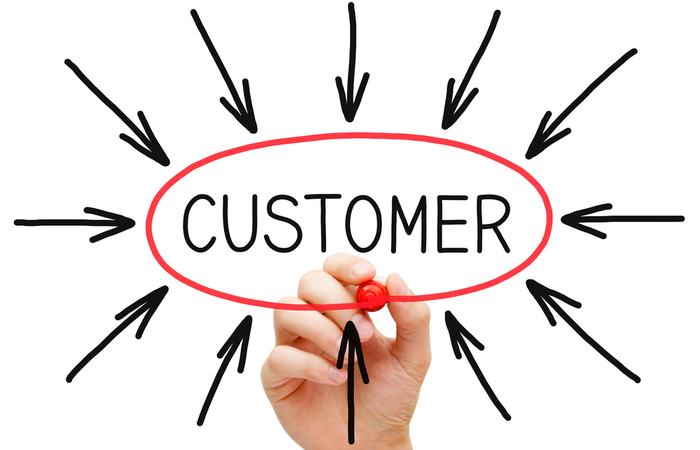
The Customer-Centric Entrepreneur

Way back in the olden days I can envision a prehistoric man trapping a small animal of some variety and trading it to another prehistoric man for a new spear. And at that precise moment in time, the first entrepreneur and the first customer were born. Now suppose that this first entrepreneur continued to trap small animals and trade them to other “customers” for the basic necessities that they could provide. This economy worked reasonably well until something happened. Another prehistoric man decided to do his own trapping and he too made his “product” available for trade. But a funny thing occurred. He was willing to trade it for something of less value than the first entrepreneur. So “customers” flocked to him leaving the first entrepreneur with “unsold” “inventory.” And thus, competition was born.

Ever since the earliest days of commerce, entrepreneurs have developed a rudimentary understanding of their customers. More recently, highly sophisticated techniques and technologies have been created to aid with this customer understanding. Yet still, a vast number of businesses do not truly have the depth of customer knowledge that is necessary to consistently win. How could this possibly be considering the amazing advances that have been made since prehistoric days? The answer is relatively simple. Many entrepreneurs have not chosen to make their customers the absolute primary focus of their business. Much time and effort are spent improving processes, creating systems, increasing productivity, cutting costs, managing revenue and a host of other business practices. There’s no question that all of this is necessary. But from where does it emanate? If it starts with the bottom line instead of with the customer, the road may be rocky.

A customer-centric business starts with the basic question, “How well do I really know my customer?” Most of us think we have a pretty good idea who our customers are and what makes them tick. But I’m willing to bet that we probably have only scratched the surface with respect to the depth of our customer knowledge. Do we know the stratification of age cohorts across our product and service offerings? That’s an easy one. Do we understand the subtle preferences, needs and desires of these different age groups? Have we spent much time fine tuning our products and services to address this information? Oh sure, we conduct ongoing customer surveys. But often they are designed to determine whether our customers are satisfied with our products and services. How much survey work do we do to get to know our customers better? We suspect that live customer focus groups might provide some valuable insights, but we believe that this approach is too expensive, something left to big corporations, or we have no idea how to go about implementing such focus groups.

I submit that we all need to step back and take a deep breath. Then we need to pull together our team and begin to examine just how we are going about a deep dive into customer understanding. I’m championing this effort in my own companies and believe that it may dramatically transform our product and service offerings. Big Data is a treasure trove in this regard. We’ll be combining extensive demographic studies with customer focus groups, surveys and other initiatives to know for certain that we absolutely understand exactly what our customers need and want. We are looking for more than just what our customers tell us, however. Big Data will help us go beyond the obvious and identify the buying habits and other trends with our customers that might not be readily apparent. And then with the customer front-and-center, we’ll make sure that our products and services precisely meet those needs and wants – stated and unstated.

Developing a deep understanding of what our customers really want and need will help us create more customer-centric organizations. Then we can align our products and services with this customer focus that will manifest in high levels of customer satisfaction and greater profitability for our enterprises.

This blog is being written in tandem with my book, “An Entrepreneur’s Words to Live By,” available on Amazon.com in paperback and Kindle (My Book), as well as being available in all of the other major eBook formats.

The Opportunity-Seeking Entrepreneur

Knock-knock. Who’s there? Problem. Problem who? This childhood riddle is emblematic of a common perspective that many of our daily encounters present problems for us. But are they really problems? I’m sure that an argument can be made that anything a bit perplexing or where a less-than-favorable outcome is realized, could be considered a problem. But why do we choose to believe this so often? Some of us by nature are problem-solvers (I’ve been known to fall in this category) and so we may see situations as problems to be solved. But I submit that there is a different way to look at this.

For the last many years, I’ve become more and more inclined to be an “opportunity-seeker.” And what a difference it makes to see things as less problematic and more opportunistic. Obviously, this is a subtle shift in mindset – does it really matter what we call it? I believe that it does because of how we tend to react internally to problems versus opportunities. Some of our natural feelings when facing a problem may be dread, fear, surprise, fatigue, victimization, overload, resignation, procrastination and apathy. All of these feelings are cloaked in negativity. Of course, there are positive ways to view problems and many of us may do so; but I’ll bet that the natural tendency is to focus more on the negative perspective.

On the other hand, becoming an “opportunity-seeker” is a proactive and positive way to move through challenging situations. Notice my language here. I didn’t talk about “facing” a problem. I didn’t talk about a “resolution.” Instead, I used the words “move through challenging situations.” This sounds effortless but it’s not. However, the process of “moving through challenging situations” does not have to be filled with our own emotional downside drama. And there’s one component to being an “opportunity-seeker” that makes it all worthwhile in my view. We get to unleash our creativity.

Creativity is one of the most positive energies that we can experience. It’s much more expansive than just figuring out how to fix something. Metaphorically speaking, creativity enables us to make things bigger and better. I’m sure you’ve felt the frustration of trying to put together a puzzle where you simply can’t find the right piece. We just want to “fix” the situation by finding the missing piece and moving on – right? Contrast this with taking a pile of Lego® pieces and building an object right out of our minds-eye. That’s the difference between being a problem-solver and an opportunity seeker. Some situations will always require finding the right piece to the puzzle no matter how creative we want to be. But we can find a way to harness our creativity in every situation. In the literal case of the puzzle, perhaps we can become more imaginative in the way we sift through the pieces to find the right one. Or maybe we make a game out of it.

The office lease for our company’s space recently expired. Even though we’re a commercial real estate company we always leased space rather than owned it. In the past we were able to secure the leasing and management of an office building by offering to be a tenant and pay a market rent. After we sold the commercial side of our business to focus on apartments, we no longer needed to rent our corporate office space. We began the search for new office space nearly a year ahead of our lease expiration. Several buildings were possibilities and we got serious enough about one such building to make an offer to purchase it. In retrospect, it was a blessing that the seller was unwilling to come anywhere close to the price we wanted to pay, and the deal stalled. This building would have quickly been too small, and we would have been spread across three floors.

Then, I woke up in the middle of the night and the image of another building popped into my head. It wasn’t on the market, and I had had a long relationship with the building owner. We reached out and lo and behold – the owner was willing to sell. We completed a private transaction several months thereafter and now occupy beautiful space in a much larger (and more attractive) building, with plenty of room to grow, and in a much better location. I am so glad that we didn’t try to “force” the opportunity we were seeking with the other building. The problem we faced regarding where to re-locate was solved with relative ease and grace.

When we choose to stop seeing challenging situations as problems, we cease to limit ourselves to being only problem-solvers. Moving through challenging situations by looking for opportunities to be creative opens the way for feelings of joy, accomplishment, euphoria, happiness and satisfaction. Knock-knock. Who’s there? Opportunity!

This blog is being written in tandem with my book, “An Entrepreneur’s Words to Live By,” available on Amazon.com in paperback and Kindle (My Book), as well as being available in all of the other major eBook formats.

The Assertive (or Aggressive?) Entrepreneur

Dear Entrepreneur:

I watched you the other day as you “took command” of a situation involving a vendor who works with your company. Obviously, the vendor did not perform his service satisfactorily – you certainly let him know this in no uncertain terms. I did get a little concerned when I saw the veins begin to pop out in your neck. I’m sure glad I wasn’t on the other end of that call!

Sincerely – One of your employees

Just reading this feels a bit embarrassing. Have you ever known anyone like this? Some entrepreneurs pride themselves on being very direct and matter of fact. They pull no punches and sugarcoat nothing. They wear their bluntness as a badge of honor. Unfortunately, they have become confused about the virtues of honesty and transparency and feel the need to demonstrate these traits in an extremely intense manner. But to what end? Did this approach resolve the situation? Did it build a stronger relationship? Is the vendor more or less likely to want to go out of his way for the entrepreneur in the future?

This brings us to an interesting point of discussion. Is it better to be more assertive or more aggressive? When we’re assertive, we’re able to be direct and straight-forward without becoming angry. Being aggressive typically brings with it a sort of heavy-handedness that evokes negativity. Often, aggression is more a demonstration of power than anything else. It’s a real art to being able to deal with a situation assertively where everyone walks away with generally positive feelings – but the message has been clearly delivered.

What can we do to re-pattern our aggressive tendencies and convert them into a more positive and assertive approach? Years ago, I took a Caliper Profile. It’s a computerized test that identifies traits and tendencies and is an excellent tool for hiring people. On a scale of 1 to 100, my Assertiveness score was 99 and my Aggressiveness score was 92. I was told that this was a bit of a dicey pattern. I could just as easily flip from being assertive to being aggressive – and sometimes too aggressive. Knowing this, I’ve been working for years to try and tone down my aggressiveness. I’ve learned that I need to keep my temper in check and try and remain as James Bond-like as possible. Sure, that may sound corny, but the goal is to be unflappable and even keeled.

I try to remember to keep a smile on my face even when the bullets are flying at me. I attempt to stay on a fact-path and eliminate emotion from my conversation. Every once-in-a-while when someone else is being aggressive I’ll succeed in lowering the volume of my voice. In turn, the other person may begin to calm down and lower his or her volume as well. Once the temper is in check, being assertive is much easier. Clear and persuasive arguments can be made in a cool and calm fashion. Now I’m working more on the intensity I convey, particularly with my body language. When I’m feeling quite passionate or positive about something, I can sit forward in my chair and raise my voice a bit – even though I’m not at all angry. I must try harder to be less animated which some people can misinterpret as aggressiveness.

We are much more likely to reach our goals when we replace aggressiveness with assertiveness. Then the badge of honor we wear is that of positive outcomes instead of trampled feelings.

This blog is being written in tandem with my book, “An Entrepreneur’s Words to Live By,” available on Amazon.com in paperback and Kindle (My Book), as well as being available in all of the other major eBook formats.

The Bad News Entrepreneur

Uh-oh. Jack just learned that he did not win a contract that was supposedly all but certain. He was counting on this deal to make his quota and had been bragging to the vice-president of sales and his co-workers that it was in the bag. What’s more troubling is the fact that he’s been under the gun by upper management over the past few months to improve his production. Now what?

Jack must deliver the bad news. The first thought running through his head is that he’s going to be fired on the spot. He’s deep in debt and has a wife and two small kids at home. What does he do? Unfortunately, Jack chooses to do what so often happens in situations like this. He fudges the truth. He tells his boss that he hasn’t yet “heard the final word” from the client. Jack holds onto a thread of hope that he might be able to salvage the deal.

It’s obvious that delivering bad news is never fun. It starts with an organization’s culture. What is the reaction to bad news by the leadership? Is there screaming, yelling and threats? How about chaos and recriminations? If so, this sets the tone for anyone on the wrong side of having to report unfavorable results. It’s human nature to try and avoid painful encounters of this sort. Thus, some people may tend to stretch the truth, fudge the facts or outright lie about the situation, rather than endure the wrath of the boss.

In a healthy organization, delivering bad news is just another routine task to be performed. The enlightened leader will encourage team members to openly talk about what isn’t working including setbacks that have recently occurred or are anticipated. He or she will work with the team to understand what went wrong and how to avoid a similar result in the future. There’s no negative emotion or drama associated with this analysis. In so doing, team members feel safe in bringing news of any sort – good or bad.

A leader who operates in a fair and even-handed manner is entitled to expect full and total integrity from the team. The team member in a healthy organization who fudges the facts like Jack did should be dealt with in a severe manner. Here’s the calculus. I won’t blow up and make you feel lower than whale poop, and you owe me complete transparency. It’s as simple as that.

If you are part of an organization that struggles with bad news, first look inward and remember that it’s a two-way street. If the organization is unwilling to react in a calm and measured way, then it cannot expect team members to want to deliver bad tidings.

There’s another element to delivering bad news. It may be that the leader does not have an angry tantrum at all. This individual may always be very upbeat and optimistic. But members of his or her team may still not want to tell it like it is. Why? Because they don’t want to disappoint him. In many situations feeling like one has let down a co-worker or a leader is a powerful motive to duck or delay the inevitable. It’s circumstances like this where the leader must take care not to send any signals that he/she may be disappointed. In fact, this leader should go out of his way to encourage members of his team not to equate bad news with a disappointed boss.

One way to solve this dilemma is to embrace failure as simply a step in a process. A forward-thinking entrepreneur will model this attitude by sharing his or her failures with the team. Being vulnerable in this manner may encourage others to be more comfortable doing the same without fear of disappointing the leader.

Let’s replay Jack’s scenario with a different twist. Jack learns that he did not win the contract. He immediately goes to his boss and explains the facts of the situation. His boss says, “Jack, this reminds me of a situation a few years ago where I was positive, I was going to win the brass ring only to be left holding the bag. But I scrambled together a radical new approach and took a long shot by asking to see the client one last time. Believe it or not he changed his mind, and I won the deal after all. You might try the same approach.” Maybe Jack went on to win the deal and maybe not. Regardless, there was no hesitation when it came time to deliver the bad news initially.

Delivering bad news can be done in a matter-of-fact fashion if an organization’s culture encourages it. If not, we can expect that people will take extreme measures to avoid this unpleasant task.

This blog is being written in tandem with my book, “An Entrepreneur’s Words to Live By,” available on Amazon.com in paperback and Kindle (My Book), as well as being available in all of the other major eBook formats.