
The Mystery of the Undercooked Steak

Customers quit all the time. Many entrepreneurs work extremely hard to prevent the big screw-ups that alienate and enrage customers. Yet, even with this effort, there are still customers that leave and don’t come back. What’s up with this?

Consider this scenario. An entrepreneur has opened a new restaurant and works 24/7 to develop a loyal clientele. Over time the restaurant grows and enjoys success – it’s even profitable! But then its trajectory levels off. It’s not growing like it was and some of the regular faces aren’t there anymore. The entrepreneur studies his operation but can’t find anything glaring that is causing this trend. His puzzlement and frustration grows. Why isn’t he winning like he used to?

Had the entrepreneur taken a much closer and more granular look, he might have discovered the root cause of his problem. Had he followed one of his oldest customers – we’ll be original and call him Mr. Smith – he might have observed the following occurrences. On one occasion, Mr. Smith made a reservation in advance, but when he arrived the time was wrong. The hostess apologized profusely, but it did cause minor inconvenience to the customer. In another instance Mr. Smith’s credit card was declined. After an embarrassing moment for Mr. Smith, the server found that the credit card terminal was on the fritz. A few weeks later Mr. Smith was in a hurry to leave for a business appointment and his lunch was delayed due to a mix-up in the kitchen. Another time his steak wasn’t properly prepared. In still another instance, one of the side dishes he ordered was forgotten.

These seemingly small and inconsequential issues continued to occur over a period of months. Mr. Smith did not encounter problems every time he ate at the restaurant. But they happened often enough that he began to feel as though this eatery wasn’t the bright and shiny object that it had once appeared to be. Gradually Mr. Smith came to the restaurant with less frequency. The final straw came on a day when Mr. Smith noticed he had been charged for an appetizer he hadn’t ordered. The bill was corrected, but that was the last time Mr. Smith ever patronized the restaurant.

I call what happened here The Cumulative Effect of Little Things. The entrepreneur who owned the restaurant was prone to look at each minor problem on a stand-alone basis. And when viewed in this manner, it’s a mystery to see how a slightly undercooked steak here or a credit card snafu there could be enough to chase away a customer. He was looking for and trying to prevent, much larger issues. What he failed to understand is that the small stuff contributes to an overall customer experience. If Mr. Smith had visited the restaurant only once, he probably wouldn’t have given much thought to the fact that his meal arrived four minutes before that of his dining companion. But Mr. Smith was a regular customer and his impression of the restaurant was driven by an accumulation of experiences.

We can keep The Cumulative Effect of Little Things from causing our customers to quit. How? There are two ways. First, we must be sticklers for the small details. With the right systems, processes and team member training, we can eliminate the small mistakes that seemingly happen every day and yet are excused as too minor to matter. Second, we must be joined at the hip with our customers. It’s crucial that we know what they are experiencing at all times. Continuing with the restaurant example, when the owner or general manager shows up at my table at some point during the meal; chats briefly with me and asks (genuinely) what can be done to make my dining experience better, then I know I’m dealing with someone who really cares about me as a customer. I generally don’t ever encounter problems in those restaurants.

Customers leave more often than not as a result of The Cumulative Effect of Little Things rather than a major malfunction. Caring about the little details AND the customer will go a long way to creating a loyal following.

This blog is being written in tandem with my book, “An Entrepreneur’s Words to Live By,” available on Amazon.com in paperback and Kindle (My Book), as well as being available in all of the other major eBook formats.


Steak

The End

This topic may be uncomfortable for some but it’s a very necessary discussion to have. What happens to your organization if you die tomorrow? Would it be a loss so catastrophic that the company fails? Or have you created a sustainable business that can survive and thrive without you? Many entrepreneurs neglect this subject – after all we think we have a lot of good years left. And besides, it’s a real downer to think about dying.

One of my most important objectives is to make sure that each of the various companies with which I’m involved is sustainable for the long haul. I care deeply for the hundreds of families that depend upon us for their livelihood. Even if your company only has six employees, they likely have families too that are counting on you. So we need to take the steps necessary to ensure sustainability. Let’s examine the different components of a sustainability plan.

Growing future leaders is critical to sustainability. And avoiding a power struggle is equally critical. Who is your heir apparent? I don’t believe that it’s healthy for any leadership team to wonder at any point in time who will step in to lead in the event of the demise of the leader at any level. If your potential successor isn’t yet apparent, perhaps someone you know very well and trust could be designated to step in on an interim basis. There’s no doubt that identifying such a person may be tough, but this is tough stuff and your team deserves to know who is going to succeed you. Focusing on sustainability at all times forces us to make leadership development a top priority. A quarterly review of a hypothetical organizational chart is a good approach to spotting the gaps and filling them promptly.

If we are the majority owner of our company, what will happen to the ownership going forward? Will it be left to one or more family members? If so, what will they plan to do with the business? Many heirs aren’t prepared to own a company and all that is entailed. It’s crucial to have a conversation with family members and offer them a clear understanding about what will happen to the ownership if we die suddenly. What if there are multiple owners? Buy/sell agreements are an excellent tool for situations like this and can be funded by insurance. Such agreements should be precise on exactly how a deceased owner’s interest is to be valued.

Let’s talk money. The death of an entrepreneur can have far-reaching consequences financially. There may be covenants that accelerate loans. Perhaps the entrepreneur has been self-funding a certain project or expansion of the business. It’s also possible that without the entrepreneur’s balance sheet, credit facilities may dry up creating varying degrees of hardship. Again, insurance can help but may not be the long-term solution. It may be prudent to identify a potential financial partner that could be called upon to help. Of course there’s a price to pay for this kind of support – an ownership stake or a percentage of the profits – but such an arrangement may be necessary for sustainability. Now is the time to figure this out while we’re still alive to do so.

Finally we need to contemplate how our vision and the culture we have created can be preserved. This is the trickiest and most intangible task that we will face in planning for sustainability. Have we sufficiently communicated our vision; reinforced it repeatedly, and is it shared by all? Many leaders are so consumed by tactical decisions that the vision for their organization is muddled. And it goes without saying that our culture is built around our vision. Maintaining a vibrant culture can only be accomplished if it is front and center every day. Do we have core values? Are we truly living them?

Creating a sustainable organization that will survive us requires intense planning and tough decision making. Doing so is the greatest gift we can give to our team members.

This blog is being written in tandem with my book, “An Entrepreneur’s Words to Live By,” available on Amazon.com in paperback and Kindle (My Book), as well as being available in all of the other major eBook formats.
cowboy sunset

Headwinds

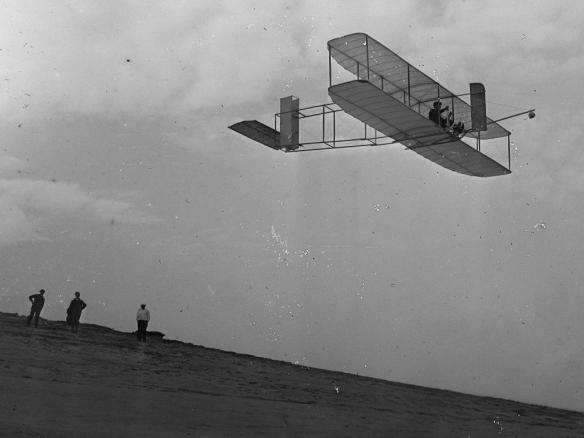
An airplane wing gains lift by taking off into the wind. This then causes the airplane to defy gravity and fly . . . an entrepreneurial metaphor if ever there was one. Interestingly, in my pilot days I once experimented with a downwind takeoff (on a very long runway) and could barely get off the ground. I quickly put the plane back on the runway and ended the experiment!

To build a muscle we exercise it regularly adding more weight and repetitions. Members of the military become elite Seals, Green Berets, Delta Force and Rangers by undergoing rigorous training involving obstacles that severely test the physical and psychological strength of a human being. In Kenya, long distance runners often wear no shoes as they traverse inhospitable terrain, toughening the soles of their feet in the process. I think you can probably see the lessons here.

Adversity can be an entrepreneur’s best friend if we allow it to be. If success comes without challenge it’s easy to become complacent. We’re also robbed of growth opportunities that result from what we learn as we work through various hardships on the road to achievement. No one says we have to like adversity. But avoiding it and fighting it does not work. I’ve found that the most constructive approach is to actually embrace it. For me this means relaxing and easing into adversity. It means establishing a positive mindset and expecting that much good will comes from the experience. We’ve all heard the term “silver linings” and used it many times. Often we look back on what has transpired and almost as a consolation prize we identify the silver linings. Looking for them in advance can give us the lift that we need to fly through the clouds.

In addition to the tangible benefits that come from overcoming adversity in specific situations, there are numerous more global wins that can occur. Think about the last time you had a tough puzzle to solve. Perhaps one of the outcomes was that of heightened creativity and innovation. When faced with the prospects of failure our creative instincts kick in and the results can be amazing. We also find that collaboration and teamwork increases reinforcing the notion that two heads are better than one. While I thrive on making sense of complexity and solving tough problems, I find that doing it with others is more productive and builds a stronger organization.

Suppose a professional basketball team plays a game against the best high school team in the country. There’s no doubt about which team would win. Now, imagine that the same NBA team plays against the reigning world champion NBA team and beats them. Which win do you suppose offers a greater sense of accomplishment? We need to feel like we are doing something really worthwhile which can be difficult when we prevail without any struggle whatsoever.

Adversity helps us to identify weaknesses within our company as well as with our strategy. When we aren’t tested and succeed anyway we don’t really know what could happen if our feet were held to the fire. Challenges and obstacles also allow us to develop resilience and perseverance – both individually and organizationally. I truly hated those first few months of my career when I was an apartment manager. I was kicked in the teeth, the rear and every other part of my body – I was totally miserable. But something finally clicked and I figured it out. Quitting wasn’t an option for many reasons – thank goodness! Now I look back and understand how valuable the tough times were in teaching me how to get off the ground and back on the horse.

When we embrace adversity we can make it work for us like an airplane uses the wind to take off. Then it can become a powerful tool in the entrepreneur’s tool box.

This blog is being written in tandem with my book, “An Entrepreneur’s Words to Live By,” available on Amazon.com in paperback and Kindle (My Book), as well as being available in all of the other major eBook formats.

1911_Wright_Glider

F-

I’ve had many aspiring entrepreneurs express frustration over their inability to gain traction in the marketplace with their products or services. Sometimes they tell me that others in their organizations won’t take them seriously. I can remember my early days in business – especially during my twenties – when I was treated like a little boy and being patted on the head periodically. I would work my tail off only to have the client want to talk about his property with our CEO and not me. At times it felt downright condescending.

I finally (and painfully) realized that everyone at my age was experiencing the same thing and much of this treatment was simply a function of youth. But the other lesson I learned was that of credibility. While there are many elements to credibility there is a primary formula that I discovered.

Results + Consistency = Credibility

Let’s break this down further. Results do not necessarily correlate with effort. Yes, I like members of our team to work hard and make a great effort but that doesn’t mean the job gets done. There were times in the past where it was difficult to terminate an employee because I knew that person had given his all and no one had worked harder. Unfortunately, even with all of the blood, sweat and tears this person still wasn’t getting the necessary results. It was kind of like studying diligently for an exam in school and still getting an F. The professor really didn’t care about the three all-nighters; only that in the end the answers were wrong.

Results are produced through a combination of skill, perseverance, creativity, timing, risk management, training, attitude and yes, effort. If any aspect of this combination is out of whack we might fail or barely produce an acceptable outcome. This leads us to the second factor in the formula – consistency.

Here’s an obvious statement. When we are hit or miss with our results we are thus inconsistent which damages our credibility. The goal is always to produce high quality, consistent results. How does McDonald’s turn out the same identical hamburger no matter what store we visit? It’s accomplished through a fanatical adherence to specific standards and delivered through comprehensive systems and processes. McDonald’s uses the very same equipment at every location. They purchase in bulk the ingredients used to make the hamburger and are extremely exacting in their specifications for the quality and composition of these ingredients. Employee training is intense and standardized. Quality control measures are baked into their culture. Everything they do is geared to providing a consistent high quality customer experience.

When we can “McDonaldize” our operations we greatly improve our chances to achieve consistency. But it’s not enough to just be consistent. There are some companies that are consistent . . . they are just consistently terrible. For example, why is it that so many of the cable television providers receive consistently terrible customer service ratings? Ditto the U.S. Postal Service? When I send a document via FedEx or UPS I know that it will arrive exactly when it is supposed to. But a similar delivery by the USPS has always been consistently inconsistent for me. I speculate that this may have something to do with business models and customer focus. A business model that is designed around selling a product or service – i.e. cable TV or overnight letters, is less likely to generate consistent quality results. By contrast, an enterprise dedicated to delivering an amazing customer experience is more likely to far and away be the winner.

Our credibility is built on a foundation of producing consistent high quality results. Implementing strong systems and processes focused on wowing the customer helps maintain our hard-earned credibility.

This blog is being written in tandem with my book, “An Entrepreneur’s Words to Live By,” available on Amazon.com in paperback and Kindle (My Book), as well as being available in all of the other major eBook formats.

Report Card

Nice to Be With You

In 1972 an American soft rock band called Gallery recorded the song, “Nice to Be With You.” I’ve always liked that song and believe it could reflect the personality of successful entrepreneurs. Think about all the people in your life and who you like most to be around. Is that person always complaining and negative? Or, is he/she upbeat and positive? A Harris Poll reported in 2013 that only one in three Americans were very happy. Obviously there’s a lot of progress to be made. We entrepreneurs can lead the way.

Entrepreneurs often get a bad rap. They are portrayed in the media and the movies as cold, heartless, ruthless and conniving. Certain politicians may characterize entrepreneurs as money-hungry and corrupt. We need to change this narrative and can do so every time we interact with someone else. How? I submit that when we’re nice to be around we can easily dispel the myths and stereotypes about entrepreneurs.

Now if you are rolling your eyes right now think about a single word . . . trust. Who do you trust more – a genuinely happy and friendly person, or someone who is sour and inconsiderate? I haven’t done a scientific survey on this question but informally asked a number of my friends and colleagues. It was nearly unanimous in favor of trusting someone who is nice. Our success is built on others trusting us, our team, our products and our services. Why wouldn’t we want to stack the deck in our favor?

Let’s take stock and see what we can do to ensure that others see us as nice to be around. I used a word in the last paragraph that is of critical importance, and that word is genuine. If we contrive our niceness it will be apparent and will cause others to think we’re slick and manipulative. We must be real about who we are and develop the traits and tendencies of a happy person.

Here are some ideas that can endear us to others:

  1. We think of others first. When we can make someone else feel valued and appreciated, their happiness quotient increases exponentially. In a restaurant when the service is great, I like to look the server in the eye, call them by name, smile and tell them what a great job they are doing. And the enormous grin (and sometimes tears) I get in return absolutely makes my day. Taking a servant’s attitude – where I’m here to help and serve you – helps me avoid the feelings of entitlement that afflict some successful entrepreneurs.
  2. Be an optimist and positive. No matter what happens I see no point in wallowing around in despair and negativity. It’s like being in quicksand – no one wants to get in it with us! We want to attract people with whom we can build trust and relationships. That’s much easier to do when we are giving off good vibes rather than being a Gloomy Gus.
  3. Avoid the limelight. Have you ever known someone who does nothing but talk about herself/himself? I’ve been to more than a few cocktail parties where I’ve been cornered by these individuals. And I’m reminded how much I don’t want to be like them. In fact, I prefer to ask questions about other people and what they do more than I care to talk about myself. It’s not that I have anything to hide. I guess it’s just that I was taught as a child that the world doesn’t revolve around me.

When we are genuinely a nice person the odds increase for building a trusting relationship. We can make this happen by thinking of others first; being optimistic and positive, and avoiding the limelight.

This blog is being written in tandem with my book, “An Entrepreneur’s Words to Live By,” available on Amazon.com in paperback and Kindle (My Book), as well as being available in all of the other major eBook formats.

gallery band

The Last Word

My daughter, son-in-law and their brood visited a fairly affluent Sunbelt community recently. They saw a lot of luxury cars, expensive jewelry, pricey condos and homes along with some monster yachts. I asked my son-in-law what surprised him the most about his experience and his response was not what I expected. He had several encounters with obviously well-to-do people that were less than pleasant.

In one instance he was preparing to pull into a parking place at a tony shopping center and a man tried to bull his way into the same space. I witnessed the incident and my son-in-law clearly was in the right. Yet the man berated him for not ceding the parking spot. There were other instances where people were pushy, impatient and downright rude. My son-in-law is still learning how to take these kinds of situations in stride. Instead of ignoring the bad behavior of others he chose to retort with his sarcastic wit.

There are a couple of lessons here for entrepreneurs and everyone in general. One of the wonderful benefits of entrepreneurship is the opportunity to gain substantial material wealth. And as our bank account grows we may want to enjoy the fruits of our labor in the form of an upscale lifestyle. Long ago I adopted the philosophy that the “bigger” we get the more humble we become. By “bigger” I am referring to wealth, success, power and station in life. In other words, I would never want someone to identify me from a socio-economic standpoint by the way I act.

Unfortunately there are those who think that their ascension to the riches they have accumulated entitles them to inhabit a special place in society. Metaphorically speaking they think it’s their right to go to the head of the line. Graciousness gives way to boorishness and snobbishness. There’s a very simple way to combat this attitude and prevent it from happening to us. My formula goes like this – I look to the person on my right and the person on my left and realize that I’m no better and no worse than either of those individuals. And, nothing I’ve done and nothing I will do will ever make me any better. Our true bounty comes from within – not from external sources. How we treat others is far more important than the price tag on any of our possessions.

The second lesson is that of how to respond to the kind of behavior I previously described. It’s a natural human reaction to be a bit defensive when we believe someone is attacking us. We want to stand our ground, and perhaps we even want to walk away as the winner of the bout. Newsflash – there is no victor when we engage in tit-for-tat. Sarcasm or verbal jabs may produce a momentary feeling of vindication but to what end? Did the other person change his or her mind? Did we actually solve the problem?

How should we respond? After sixty some-odd years I still remember my mother’s advice to “be the bigger person.” So I’m pretty much done fighting with people. Instead, when I find myself in situations like my son-in-law experienced I say two simple words . . . “I’m sorry.” It doesn’t matter if I’m 100% right, I say “I’m sorry.” At that point the other person doesn’t know what to say. They realize that anything more is pointless and the situation is quickly defused. I can’t say that I am able to react this way every time, but it’s more often than not.

We have an opportunity to become more modest and unpretentious as we achieve more success in our lives. And with it comes eliminating the propensity to have the last word in confrontational situations.

This blog is being written in tandem with my book, “An Entrepreneur’s Words to Live By,” available on Amazon.com in paperback and Kindle (My Book), as well as being available in all of the other major eBook formats.

yacht

Obstacle-Proof

The space shuttle had approximately 2.5 million moving parts. There are 100,000 miles of blood vessels in the human brain. There are approximately 2,300,000 stone blocks weighing from two to 30 tons each in the Great Pyramid of Giza. The Chinese Tianhe-2 supercomputer is purportedly the fastest in the world with 33.86 quadrillion of FLOPS (floating-point operations per second).

“That’s really going to be hard.” “I don’t know if we can do that.” Ever heard someone utter these phrases? Sometimes we struggle to get our head around a difficult project or initiative and our default thinking goes to seeing the obstacles rather than the opportunity. This may be especially true for those who are linear thinkers. The obvious cliché here is that of “staying inside the box.” We are stuck in traditional thought patterns and are unable to immediately see the multiple options that exist with nearly every decision that must be made. It doesn’t have to be this way – witness the amazing feats described in building the space shuttle, performing complicated brain surgery, constructing the Great Pyramid and creating the supercomputer.

Every organization needs a combination of linear and abstract thinkers to provide a healthy balance of ideas. Those of us who are extremely creative and can dream in a big way need down-to-earth team members with whom we test our ideas. That said, I’m an advocate for the notion that the organizational mindset should be “how we can” as opposed to “why we can’t.”

Here’s an example of the “how we can” philosophy. Let’s say that Company A manufactures a particular type of fastener. Business has been growing and then the CEO receives a call from a prospective customer, Company B, indicating that it would like to place an order for fasteners that represents 35% of the company’s production. Company A is operating at full capacity and cannot divert any product away from its steady customers. But the CEO in typical entrepreneurial fashion, isn’t about to tell Company B that he can’t supply the fasteners. When he pulls his team together he could hear a lot of “why we can’t,” or he can challenge his team members to tell him how Company A can meet the current production requirements and also increase production by 35%.

Instilling the “how we can” mindset is not a walk down Pollyanna lane. Instead it involves convincing a team to develop a default perspective of looking around, over and under the obstacles and figuring out what steps can be taken to achieve the goal. We start by creating the path to success. Then we work backwards and look at the risks involved and how to manage them. Perhaps Company A can’t add a second shift to produce the extra fasteners because it doesn’t want to risk having excess labor capacity after the order is filled. But as an alternative, maybe Company C that’s not a direct competitor, could “white label” the fasteners and produce them under the watchful eye of Company A. While the profitability may be less by using Company C, Company A may be able to win a new customer in Company B, whose repeat business results in a permanent expansion of production capacity.

It’s also important that the entrepreneur not send the signal to his team that “we’re going to make this work come hell or high water.” The danger with plowing ahead is that the more skeptical and cautious members of the team may simply acquiesce rather than express their true opinions. And those who are the natural risk takers may run toward the cliff at full speed without realizing that there’s real pain 400 feet down!

We want to inspire team members to build a “how we can” enterprise. And simultaneously we thoughtfully measure risk and return on investment. The endgame is a dynamic organization that always pushes the boundaries to grow in a healthy fashion.

This blog is being written in tandem with my book, “An Entrepreneur’s Words to Live By,” available on Amazon.com in paperback and Kindle (My Book), as well as being available in all of the other major eBook formats.

obstaclecourse

Toe-Stepping

We live in a hypersensitive society today. It seems as though every time we turn around someone is being offended by something. It may be words, actions, facial expressions or even the way someone looks. The whole notion of being offended stems from a belief that we are somehow victims. Victims of what, I’m not really sure. But our culture is at a point where it promotes victimhood and all that goes with it. This is a very dangerous place for entrepreneurs to be.

Many of us Baby Boomers raised our children in an environment where everybody wins and there were no losers. I remember sporting events in which our daughters participated and each child received a ribbon or a small trophy. Obviously in the real world there are winners and losers yet somehow, losing has become linked with victimization. I’m not saying that this is the sole reason for the hypersensitivity we are experiencing but it may be a contributing factor.

Entrepreneurs are in a tough spot. On the one hand we want to be sufficiently sensitive to saying or doing things that others could perceive as a slight. And yet we are in a rough and tumble business world that takes no prisoners. Unfortunately it’s not enough to simply treat others as we would like to be treated. I’ve grown pretty thick skin over the years and as others will attest, it’s pretty hard to offend me. A few years ago I took a computerized test that measured resilience among a number of traits and tendencies. My score was 97 out of 100 which I’m told indicates that I have very strong self-acceptance. My point in sharing is to demonstrate that I may be somewhat oblivious to attempts by others to offend me. So what to do?

First, we need to measure our intent when we are interacting with others. Do we say certain things to another person because we want to make them feel inferior? Do we take certain actions because we want to “send a message” to a specific individual that we expect could result in hurt feelings? A compassionate leader will communicate honestly and openly while doing so with sufficient empathy. His or her ego will be totally eliminated from the interaction. If our intent is pure and we’ve separated from our ego then it is unlikely that we will offend someone.

Second, it’s important to understand what behavior is unacceptable. This is especially challenging from a generational perspective. A young female colleague of mine was at a luncheon recently. She shared that she sat next to an older man (Boomer generation) who was nice but commented as they were leaving that he was pleased to have been able to sit next to such an attractive young woman. My colleague was not offended but related that she thought the comment was unnecessary and inappropriate. What was intended as a compliment by an older man was interpreted as mild condescension by a younger woman. While I doubt that it was his intent to be condescending, it was clear that he has not learned that you just don’t say things like this.

I’m not advocating for political correctness. We’ve gone completely overboard with PC and it’s causing huge problems in our country. But I do think that we need to pay closer attention to how we might be perceived by others. And let’s do our own gut check. Do we find ourselves being offended with any frequency? If so, we might benefit from exploring what we see when we look in the mirror. Do we have a positive or negative self-image? Are we preoccupied with conflict or feelings of inferiority? If so, we may be prone to being easily offended.

As entrepreneurs we must develop thick skin through a strongly positive self-image. At the same time, we need to measure our intent when interacting with others as well as understand what is unacceptable to society. Doing so will minimize the likelihood that we will offend others.

This blog is being written in tandem with my book, “An Entrepreneur’s Words to Live By,” available on Amazon.com in paperback and Kindle (My Book), as well as being available in all of the other major eBook formats.

toe stepping

Pluses and Minuses

There’s one thing of which I’m certain . . . I think. Have you ever had this kind of feeling? We entrepreneurs are a pretty confident lot. We are scrappy and tough. There’s nothing we can’t do including leaping over tall buildings in a single bound. Throw us a challenge and we’ll whip it with one hand tied behind our back and blindfolded to boot. Right? Well, maybe. And most of the time.

Entrepreneurs have several “thought enemies,” one of them being gnawing and nagging doubts. Here’s a not-so-fictional example. Let’s say that things have been going pretty well in our business and we’ve had some nice wins along the way. Then we hit a little speed bump – perhaps a contract doesn’t get signed that we thought we had in the bag. Or an important customer stops doing business with us. In other words, we get knocked off our game a bit. That part we can handle with aplomb as we go on to sign another contract or we fix the problem with our important customer. It’s what happens next that can be perplexing.

After we’ve been bucked off the horse so to speak, we begin to have feelings of doubt. For example, we are ready to introduce a new product or service, but we wonder if it might flop. In the past, we would have launched without any trepidation, but now it feels different. Could something else go wrong that that might cause everything to come unraveled? We know that these gnawing and nagging doubts aren’t healthy and could become self-fulfilling prophecies. Yet still they are there and hard to push out of our mind.

Why is our confidence shaken, and doubts have entered the picture? I’ve thought about all of the times this has happened in my life and believe it centers on a rather recent failure in the past. The earlier example that I gave where the contract or customer was lost illustrates this notion. Coming off of a failure makes us wary and more sensitive. As entrepreneurs we have winning in our DNA. Failure is for losers. And yet we do fail and we do lose. Sure we’re resilient, but we can’t ignore what it felt like to fail and lose and we don’t want to experience it again. And so we’re vulnerable to doubt and uncertainty. Subconsciously we’re thinking, “I’m sure what I’m doing now is going to work, but if it doesn’t, I don’t want to be hurt again.” We find ourselves moving forward but wondering . . . always wondering when the other shoe will drop.

Here’s what I’ve learned about myself when these insidious doubts start creeping into my consciousness. I step back and take inventory of all of the positive successes that I know lay in front of me. I may have just lost a deal, but there are ten more that I believe with all my heart will succeed. Now here’s the key – even if only half of the ten deals actually succeed, I’m still way, way ahead. In other words, I’m not looking at the glass half full, but I’m looking at multiple glasses and every one of them is overflowing. Immediately my mindset changes and all is right with my world again. I’ve accepted the fact that I had a prior setback. I’ve accepted the fact that I’ll have more setbacks in the future. But I know that the pluses will always far outweigh the minuses and the winning score will be in my favor – overwhelmingly!

Gnawing and nagging doubts are usually a product of a recent failure. We get past such feelings by looking at the scoreboard and realizing that we are way ahead in the game. Ultimately this makes us unbeatable.

This blog is being written in tandem with my book, “An Entrepreneur’s Words to Live By,” available on Amazon.com in paperback and Kindle (My Book), as well as being available in all of the other major eBook formats.

water glasses

Blind Pigs

I’m sure you’ve heard the saying that even blind pigs find a truffle once in a while. Sometimes people will say that their luck has run out. Author Josephine Hart once wrote, “Lucky people should hide. Pray the days of wrath do not visit their home.” Theodore Roosevelt said, “As regards the extraordinary prizes, the element of luck is the determining factor.” Bill Watterson, creator of the comic strip Calvin and Hobbes once quoted Calvin as saying, “You know, Hobbes, some days even my lucky rocket ship underpants don’t help.” That one is my favorite.

So, how often do we chalk things that happen up to luck? There’s always been a lot of talk about coincidence, destiny and fate. It’s as if there are certain influences in our lives that are out of our control. And it’s pretty hard not to believe that this is totally true. But as the years have gone by, I’ve come to believe that we do control pretty much everything that happens, just not always at a conscious level. Once, I was talking with a friend who had been struggling with his job performance. He wasn’t hitting the sales goals his company had set and was on the firing line to improve. He had a breakthrough month and said this about it, “Basically, my team was down three points, and I got fouled shooting a half-court shot at the buzzer that happened to go in. I worked hard to get there, but it was purely coincidence that it all came together at one time for me.” But the reality of what transpired for him had nothing to do with coincidence or the serendipity that he describes.

What my friend didn’t realize is that he set an intention and then persevered to make it so. In the process, he created an energy that opened the door for him to win. We are such a tangible society. If we can’t touch it or see it, we often don’t believe it. Ah, ye of little faith, as the saying goes . . . right? But I’ve said many times how powerful our minds can be. Think about it. When we are in a negative frame of mind, how productive are we? How often do good things happen? Likewise, when we have a positive mindset how productive are we? How often do good things happen? I can’t think of a single time when I was in a sour mood and wallowing in negativity that anything really good came of it. And I do know that everything good that has transpired occurred when I was in a positive place. Thus, I have reached a pretty simplistic conclusion that if I stay positive, I’ll create the energy necessary to draw good things into my life.

Do you believe that NBA star LeBron James is the luckiest man alive because he can shoot the lights out and dominate the game? Or, do you believe that LeBron James maintains a positive mindset that propels him to work hard to take advantage of an opportunity given to him by his innate skills? He does a combination of stretching and yoga throughout the day. He works out in the gym and on the basketball court. He is fanatical about his nutrition and water. James has a tireless work ethic, preparing himself mentally and physically to be the best basketball player in the world. Is that luck?

We do not stumble into our success but will it to be so with our preparation and mindset. Keeping negativity at bay opens the door to the positive energy that is anything but luck.

This blog is being written in tandem with my book, “An Entrepreneur’s Words to Live By,” available on Amazon.com in paperback and Kindle (My Book), as well as being available in all of the other major eBook formats.

blind pigs