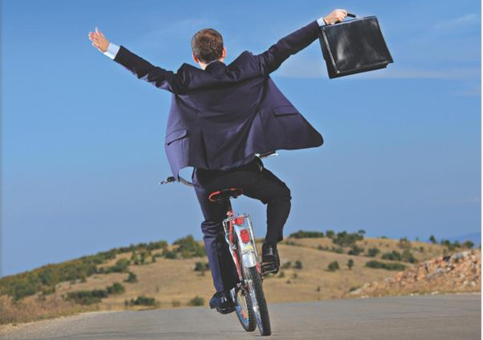
Misplaced

Think about how much loyalty is a part of your life. How loyal are you to others? And how loyal are they to you? Do you have loyal customers; loyal partners; loyal employees, loyal friends and loyal family members? Loyalty is a strong and positive quality. It’s a key element in building and maintaining relationships. So everything must be peaches and cream, right? Ah, but there’s a bit of a dark side to loyalty.

You probably have heard the term, “loyal to a fault.” This is when we may be too loyal to someone else and that loyalty clouds our judgment and may even be damaging to our business. Whether or not we’re being too loyal can be a tough call. It requires us to be very objective about a particular person and their performance. This can be exceptionally difficult for anyone and nearly impossible for someone who places a very high value on the loyalty trait.

Here’s a scenario that may be familiar. Perhaps it’s even happened in your own organization. A high-level executive has been with a firm for 30-years and reports to the founder and CEO. This executive is part of the CEO’s inner circle and his advice and counsel is often sought by the CEO. Unfortunately this executive is also a flaming jerk. He’s very nice and thoughtful to other senior level executives, but when it comes to those who don’t have as prominent a position in the organization, he can be unreasonably demanding and thoughtless. Because of his tenure with the CEO, his behavior is tolerated. The employees of the firm have learned to steer clear of him and know that he is “protected” by the CEO. Complaints were lodged about him in years past but it’s well-known by everyone working for this company that he will always get away with whatever he wants.

If asked about this high-level executive, the CEO would undoubtedly say, “I know that he can sometimes be a bit abrasive, but overall he’s done a great job for this company.” The CEO might also say something like this, “He and I were fraternity brothers and he’s always had my back.” Sound like something you might have heard before? In this situation, many of the employees of this company have lost respect for the CEO because he won’t fix the problem. If this was a family business, it could very well be that the CEO and high-level executive are related – brothers perhaps. The bottom line is that the organization cannot function effectively because the CEO has misplaced loyalty to a problem individual.

As entrepreneurs we must learn how to maintain our objectivity, especially when it comes to employees and team members who are key to us. We have to be able to separate our feelings of loyalty from what is best for our organization. Loyalty can easily become a blind spot for us unless we have a method to deal with it. In a larger organization this can be done through a human resources department. The HR director must be given permission by the CEO to lay the facts on the table about each and every employee. In a smaller firm, it may be helpful to hire a consultant who can facilitate the performance of a 360-degree review of senior executives or even all members of the firm. In both cases, the HR director or the consultant should provide an honest perspective to the CEO that one of his or her reports needs to be coached, disciplined or even dismissed.

Loyalty is generally a good thing. But when there’s loyalty to a fault, we need to be willing to listen to someone tell us when we have a problem. And then we must deal with it accordingly.

This blog is being written in tandem with my book, “An Entrepreneur’s Words to Live By,” available on Amazon.com in paperback and Kindle (My Book), as well as being available in all of the other major eBook formats.
Loyalty

Intensitivity

Dear Entrepreneur:

I watched you the other day as you “took command” of a situation involving a vendor who works with your company. Obviously the vendor did not perform his service satisfactorily – you certainly let him know this in no uncertain terms. I did get a little concerned when I saw the veins begin to pop out in your neck. I’m sure glad I wasn’t on the other end of that call!

Sincerely – One of your employees

Just reading this feels a bit embarrassing. Have you ever known anyone like this? Some entrepreneurs pride themselves in being very direct and matter-of-fact. They pull no punches and sugarcoat nothing. They wear their bluntness as a badge of honor. Unfortunately they have become confused about the virtues of honesty and transparency, and feel the need to demonstrate these traits in an extremely intense manner. But to what end? Did this approach resolve the situation? Did it build a stronger relationship? Is the vendor more or less likely to want to go out of his way for the entrepreneur in the future?

This brings us to an interesting point of discussion. Is it better to be more assertive or more aggressive? When we’re assertive, we’re able to be direct and straight-forward without becoming angry. Being aggressive typically brings with it a sort of heavy-handedness that evokes negativity. It’s a real art to being able to deal with a situation assertively where everyone walks away with generally positive feelings – but the message has been clearly delivered.

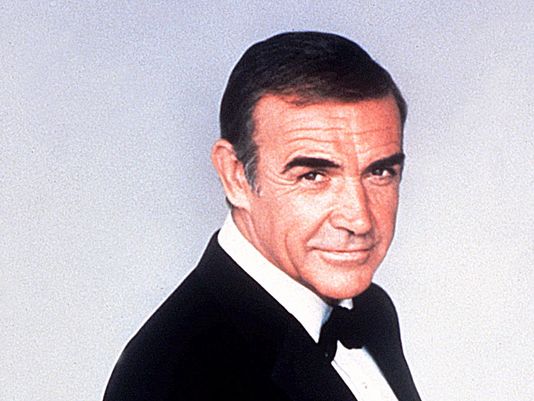
What can we do to re-pattern our aggressive tendencies and convert them into a more positive and assertive approach? Years ago, I took a Caliper Profile. It’s a computerized test that identifies traits and tendencies and is an excellent tool for hiring people. On a scale of 1 to 100, my Assertiveness score was a 99 and my Aggressiveness score was a 92. I was told that this was a bit of a dicey pattern. I could just as easily flip from being assertive to being aggressive – and sometimes too aggressive. Knowing this, I’ve been working for years to try and tone down my aggressiveness. I’ve learned that I need to keep my temper in check and try and remain as James Bond-like as possible. Sure, that may sound corny, but the goal is to be unflappable and even-keeled.

I try to remember to keep a smile on my face even when the bullets are flying at me. I attempt to stay on a fact-path and eliminate emotion from my conversation. Every once in a while when someone else is being aggressive I’ll succeed in lowering the volume of my voice. In turn, the other person may begin to calm down and lower his or her volume as well. Once the temper is in check, being assertive is much easier. Clear and persuasive arguments can be made in a cool and calm fashion. Now I’m working more on the intensity I convey, particularly with my body language. When I’m feeling quite passionate or positive about something, I can sit forward in my chair and raise my voice a bit – even though I’m not at all angry. I have to try harder to be less animated which some people can misinterpret as aggressiveness.

We are much more likely to reach our goals when we replace aggressiveness with assertiveness. Then the badge of honor we wear is that of positive outcomes instead of trampled feelings.

This blog is being written in tandem with my book, “An Entrepreneur’s Words to Live By,” available on Amazon.com in paperback and Kindle (My Book), as well as being available in all of the other major eBook formats.

James Bond

Reality Superstar

There are many acts we perform as entrepreneurs that are very similar to walking on a tightrope. They require just the right amount of focus, nerve-control and balance to keep from falling into the abyss. You are probably experiencing one or more right now. But here’s one to which you may not have given much thought. How do we be an “all-in optimist” and yet maintain a perspective that is grounded in reality? Another way of putting it is, “how do we see reality through rose-colored glasses?”

Let’s face it; sometimes reality bites. We prefer not to look at the downside which may lead us to fantasize about the upside. Eventually our point of view becomes one of hope which should not be confused with optimism. Rick Page wrote a great book a number of years ago entitled, Hope Is Not a Strategy. He’s right. I’ve tried to remove “hope” from my belief system. To me, the concept of hope conveys a sense of passivity. I’m more interested in assertively taking action in such a way that there is no room for hope in the equation.

If there is no hope and we must face reality, how can we possibly be optimistic? I believe that there is a way to be very optimistic about almost every situation while still understanding and living in reality. First, we must assess and face the downside head-on. This means that we need to take an objective look at the situation and in a cold and calculating fashion determine the facts – whatever they may be, good and bad. There is no room in this process for ignoring, denying or rationalizing. It’s critical that we inventory everything.

Next, we look at the facts and develop a complete understanding of the risks at hand. We must look at every risk as an opportunity to fail. Identifying the risks puts us in a position to figure out how we’ll mitigate those risks. So let’s review so far. We’ve recorded all of the facts we know about a situation – good and bad. We’ve determined the risks and mitigated them. And now we want to stack the deck in our favor. We do this by creating a clear path to win. Think about it this way. Suppose you are the captain of a sailboat. You need to get from Point A to Point B. But you know that there are many rocks, shoals, severe currents and other dangers lurking beneath the water. Before you set sail, you take charts, weather conditions, current sailor reports, and every other piece of information you can get your hands on. You then plot your course (creating a clear path to win) around the obstacles (mitigating the risks you identified from your fact-finding effort).

The last step in this process is that of holding a positive mindset. This should be relatively easy because you know the clear path that you need to take to win. And you’ve already planned for known and unknown challenges. The end result is that you possess an air of confidence, for in your positive state of mind, you know without a doubt that you are going to sail the waters smoothly, calmly and successfully. Now that’s optimism!

Becoming a Reality Superstar requires that we be optimistic. Optimism goes hand-in-hand with reality when we utilize a fact-based process to embrace the challenges that we experience. No longer do we need to hold onto hope, because we are supremely confident of our success.

This blog is being written in tandem with my book, “An Entrepreneur’s Words to Live By,” available on Amazon.com in paperback and Kindle (My Book), as well as being available in all of the other major eBook formats.
pigs-fly

Knock-Knock . . .

Knock-knock. Who’s there? Problem. Problem who? This childhood riddle is emblematic of a common perspective that many of our daily encounters present problems for us. But are they really problems? I’m sure that an argument can be made that anything a bit perplexing or where a less-than-favorable outcome is realized, could be considered a problem. But why do we choose to believe this so often? Some of us by nature are problem-solvers (I’ve been known to fall in this category) and so we may see situations as problems to be solved. But I submit that there is a different way to look at this.

For the last many years, I’ve become more and more inclined to be an “opportunity-seeker.” And what a difference it makes to see things as less problematic and more opportunistic. Obviously this is a subtle shift in mindset – does it really matter what we call it? I believe that it does because of how we tend to react internally to problems versus opportunities. Some of our natural feelings when facing a problem may be dread, fear, surprise, fatigue, victimization, overload, resignation, procrastination and apathy. All of these feelings are cloaked in negativity. Of course there are positive ways to view problems and many of us may do so; but I’ll bet that the natural tendency is to focus more on the negative perspective.

On the other hand, becoming an “opportunity-seeker” is a proactive and positive manner in which to move through challenging situations. Notice my language here. I didn’t talk about “facing” a problem. I didn’t talk about a “resolution.” Instead I used the words “move through challenging situations.” This sounds effortless but it’s not. However, the process of “moving through challenging situations” does not have to be filled with our own emotional downside drama. And there’s one component to being an “opportunity-seeker” that makes it all worthwhile in my view. We get to unleash our creativity.

Creativity is one of the most positive energies that we can experience. It’s much more expansive than just figuring out how to fix something. Metaphorically speaking, creativity enables us to make things bigger and better. I’m sure you’ve felt the frustration of trying to put together a puzzle where you simply can’t find the right piece. We just want to “fix” the situation by finding the missing piece and moving on – right? Contrast this with taking a pile of Lego® pieces and building an object right out of our minds-eye. That’s the difference between being a problem-solver and an opportunity seeker. Some situations will always require finding the right piece to the puzzle no matter how creative we want to be. But we can find a way to harness our creativity in every situation. In the literal case of the puzzle, perhaps we can become more imaginative in the way we sift through the pieces to find the right one. Or maybe we make a game out of it.

When we choose to stop seeing challenging situations as problems we cease limiting ourselves to being only problem-solvers. Moving through challenging situations by looking for opportunities to be creative opens the way for feelings of joy, accomplishment, euphoria, happiness and satisfaction. Knock-knock. Who’s there? Opportunity!

This blog is being written in tandem with my book, “An Entrepreneur’s Words to Live By,” available on Amazon.com in paperback and Kindle (My Book), as well as being available in all of the other major eBook formats.

flyingcar

Perfect Alignment

There are numerous obstacles that we encounter along the trail of life. Many are of our own making and some are not. What can we do to smooth out the path and avoid the monsters that jump out of the bushes to bite us? One answer involves a concept that I’ve only recently begun to understand at a deeper level and come to embrace. The concept is that of core values.

In the past I probably would have quit reading by this point and moved on to something that seemed more tangible to me at the time. After all “core values” sounds a bit esoteric and maybe even a bit “psycho-babblish” – not something a macho entrepreneur would be interested in. But after studying and witnessing the effects of core values, I’ve become a believer.

More than a year ago our collection of companies made a conscious decision to change our culture. A Core Values Team was formed and the group did amazing work. They spent countless hours brainstorming and debating the basic values they thought we should epitomize. The result was five core values including Integrity, Commitment, Team Member Fulfillment, Customer Fulfillment and Community Impact. A second team was formed called Building Internal Communities, and worked in tandem with the Core Values Team to roll out the core values to team members across all the companies with locations scattered across the country. Tremendous effort has been undertaken to keep the core values at the forefront and live them accordingly. And it seems to be working in an impressive fashion.

Here’s where it gets interesting. We determined early on that we wanted to make certain that everyone on the team was in perfect alignment with the core values; AND everyone with whom we work outside the organization is also aligned with these beliefs as well. It has become obvious over the past several months that some of our team members don’t completely buy into the core values and they have left (or in some cases, were asked to leave). But what’s even more fascinating is the fact that we can see very clearly that certain vendor and client relationships aren’t necessarily aligned either. In the past we’ve butted heads with these relationships or felt like we weren’t on the same page with them. Through understanding our core values we now have a means of assessing our external relationships to see how well we are in alignment.

The upshot of this process is that we are severing some of the ties that we have with external parties. Harkening back to my opening salvo – why live with the obstacles that stand in our way? This doesn’t mean that the external parties with whom we have been struggling are bad or dishonest. It simply means that we may not share the same values which can cause friction and anxiety. This can be eliminated by building relationships with those external parties where we are in perfect alignment. Gone are the hard feelings and the unrealistic expectations. No longer do we waste time hashing and re-hashing unpleasant interactions with other parties.

Establishing a strong set of core values helps team members become aligned. But of equal importance, working with external parties that share the same values helps make our lives richer and happier.

This blog is being written in tandem with my book, “An Entrepreneur’s Words to Live By,” available on Amazon.com in paperback and Kindle (My Book), as well as being available in all of the other major eBook formats.

flock of migrating canada geese birds

Mistake-Prone

I have a philosophy that mistakes are simply unfinished experiments in the laboratory of life. That doesn’t mean we want to leave unfinished the same experiment over and over. But being too tentative and too cautious to avoid making a mistake may itself be a mistake! The obvious conclusion is that we want to learn from our mistakes and turn them into productive experiences.

To turn our mistakes into productive experiences we need to analyze them in a process-oriented manner. Being a go-go entrepreneur, it’s not easy for me to slow down long enough to reflect on what went wrong. Generally I just want to get back in the game and do it right the next time. This worked somewhat well in the past, but as I’ve gotten older I’ve learned that being more intentional about analyzing mistakes increases the odds of not making the same mistake again. It also has caused me to look for the “silver lining” – that nugget of information that might enable me to turn the mistake into something unintentionally positive.

Step One in my mistake analysis process involves the simple act of identifying what went wrong and writing it down. Yes, I know this takes time, but it forces us to take a hard look at what happened. Did I follow an established process or did I deviate from it – maybe even wing it? Did I fail to build-in a sufficient margin of safety at the front end? Did I somehow ignore warning signals that were flashing at me? Was I driven by emotion or was my initiative grounded in facts? I’ve found that most of my mistakes came from deviating from an established process. Because of my go-go nature I want results to happen very quickly. By analyzing my mistakes I’ve recognized a tendency pattern to cut corners.

Step Two requires that we consciously determine what we need to do differently and commit to do it. Knowing that I have the propensity to cut corners, I have become committed to following established processes. Before I move forward with anything I’m doing, I stop myself and ask the simple question, “What is the process that needs to be followed?” I make certain that I know exactly what the process should be and then I affirm, “I know the process and I will follow it.” Sometimes I may even make this pledge to a close colleague for accountability sake.

The final step in mistake analysis is that of looking for the “silver lining.” History is littered with mistakes that resulted in brilliance. Alexander Fleming discovered penicillin due to a mistake he made in his lab. Another famous mistake at the 3M laboratories turned into Post-it Notes. Plastic was invented as the result of a mistake – some say that Charles Goodyear left a mixture of rubber and sulfur on the stove too long and found that he had created a new material. Wilson Greatbatch was building a heart rhythm recording device in 1956; used a wrong part, and realized that the device would maintain a heart rhythm – thus the pacemaker was born. If we don’t look for the silver linings in our mistakes we may never find that little (or big) something that manifests into a positive development. Finding the silver lining requires a creative mindset – perhaps this is an exercise that can be done with others. Take the mistake and purposefully look through the “rubble” to see if there’s anything of value that might be useful.

Mistakes don’t have to be the end of the world for us if we take the time to find out what happened; how we’re going to act differently in the future and committing to such different action, and finding the silver linings that may be hiding in plain sight.

This blog is being written in tandem with my book, “An Entrepreneur’s Words to Live By,” available on Amazon.com in paperback and Kindle (My Book), as well as being available in all of the other major eBook formats.

mistakes

The When Affliction

The minister in church one Sunday talked about his anticipation of future events and it got me to thinking about the subject in a different way. How many times have you heard someone say, “I’ll be happy when . . .” or “I’ll have plenty of money when . . .” or “I’ll have more fun when . . .”?

As a classic Type A entrepreneur I tend to focus on the future. Oh, I do live in the now, but I am constantly thinking about the next steps in building my businesses. But it goes beyond that. If I am going on a trip in a few days I’m thinking about what all will be involved in the travel process. I’m thinking about what I’ll do when I get to my destination. Once I’m on my trip and have reached my destination, I think about where we’ll eat dinner or an event that we’ll attend. I don’t think that it’s necessarily a bad thing to be planning ahead though I can easily flip over into the realm of obsession with planning. What’s more problematic is when the thinking ahead becomes the “When Affliction.”

The When Affliction manifests in several ways. It can occur when we are so focused on thinking about something that is to happen in the future that we don’t pay close enough attention to something critical that is happening right now. This is the perfect environment for mistakes to be made. The other day while driving I was so engrossed in thinking about an upcoming meeting that I nearly caused a wreck. I was changing lanes, turned on my blinker and quickly looked over my shoulder. There was a car in the other lane – I know I saw it – but it didn’t register as I pulled over anyway. Horns blared and my heart leapt into my throat. My focus on the moment was blinded by my focus on the future.

The When Affliction can have us so wrapped up in getting past the next milestone that we are unable to truly appreciate what we are experiencing in the process of getting there. So here’s a question. How many magical moments do we miss with the When Affliction? I remember my youngest daughter’s wedding. It was a splendid affair and one where I was truly present every second of the day. I simply allowed myself to be swept up in the pomp and pageantry that is often woven into such an event. Not once was I contemplating a future action. And I am able to treasure the memories because I really was a part of making them. There are so many other things I don’t remember about what has happened in my life because I was looking forward so much of the time.

It’s OK to plan ahead. If we simply allow ourselves to float along the river of life without regard for the snags and rapids in front of us, our boat could easily be swamped. The key is to find the right balance between thinking ahead and maintaining a “now presence.” To accomplish this, I have discovered a game that I play with myself. Let’s say that someone is coming to my office to meet with me. Before the meeting I identify several things that I want to notice during this meeting. What color are the clothes this person is wearing? What color are his or her eyes? Is the person right handed or left handed? Sharpening my observation skills in this manner helps me focus on the other person and the moment, thereby avoiding the When Affliction.

We intuitively know that tomorrow never comes because there always is another tomorrow. Thus we can avoid becoming obsessed with the future if we limit our planning to that which really matters.

This blog is being written in tandem with my book, “An Entrepreneur’s Words to Live By,” available on Amazon.com in paperback and Kindle (My Book), as well as being available in all of the other major eBook formats.

Huckleberry Finn

Celebritude!

As I write this it’s just days before the end of the year. It’s a time of rest and reflection. It’s a time of excitement for the New Year ahead. And it’s a time for celebration and gratitude – Celebritude! What is Celebritude?

Celebritude is a celebration of gratitude. Think about all for which we can be grateful. It’s not very hard, is it? Hopefully we’ve been acknowledging our gratitude throughout the year. After all, we know that maintaining an attitude of gratitude is part of the giving and receiving equation that enriches our lives. But we can do more in the gratitude department by creating “Celebritude.”

Celebritude is a time to think about those who have been particularly instrumental in supporting us and helping to make our lives better. Was there a teacher who inspired us during our early years? Perhaps there was a mentor somewhere along the way. How about a friend who lent a sympathetic ear during tough times? Maybe a colleague encouraged us to step up and do something we never thought we could do. And of course there may be a spouse or significant other who always believed in us.

To create Celebritude we must intentionally inventory those seminal figures that have helped shape our lives in positive ways. Then we take the opportunity to celebrate them and all that they have meant to us. There are many ways to do this. For example we could write a heartfelt letter to that teacher expressing our appreciation for his or her inspiration so many years ago. We might make a charitable contribution in the name of the mentor we appreciate so much. Dinner at a nice restaurant for that fabulous friend who has been so encouraging could be a perfect expression of gratitude. A nice gift might be appropriate for that colleague who challenged us to stretch ourselves and be better. And maybe we could take a special trip to say thank you to the spouse or significant other who has stood by our side through thick and thin.

When we create Celebritude we amp-up the gratitude process. It grounds us in the knowing that others have lifted us up and helped to propel us forward throughout our lives. By celebrating our gratitude for these wonderful souls we open a major channel of positive energy that benefits others as well as ourselves. And we can continue to live in Celebritude by paying it forward. Now, we can become that significant benefactor in someone else’s life by providing inspiration, support, mentorship, challenges and love.

The creation of Celebritude can be life changing for us and for others. Truly celebrating our gratitude brings a new level of momentum to the positive energy in which we thrive.

This blog is being written in tandem with my book, “An Entrepreneur’s Words to Live By,” available on Amazon.com in paperback and Kindle (My Book), as well as being available in all of the other major eBook formats.
Celebration

Bridge Building

Recently I was in a meeting with a group of entrepreneurs. One of them has been struggling to get traction with his entrepreneurial venture. His stress level was quite high and he indicated that he was under severe financial pressure. And to cap it off, his spouse was suffering with some anxiety issues that rendered her unable to care for their children at times. This all was adding up to a perfect storm of events that was creating considerable negative energy in his life.

This individual wants his entrepreneurial idea to work in the worst way. Obviously that is adding to the pressure. But he must clear up the various issues he’s dealing with in order to achieve the success that he desires. I suggested that he initially do only three things. First he needs to put his idea on the shelf for the time being – simply let it go. This doesn’t mean that he abandons it permanently but simply takes a breather with it. Second, I told him he needs to get a job so that he can provide for his family and relieve the financial pressure he is experiencing. I recommended that he live as frugally as possible and try and save some money that can be utilized when he resumes the pursuit of his entrepreneurial venture. Finally, I advised him to make a consistent practice of meditation – finding a quiet time each day to clear his mind and work on deep breathing. The purpose here is for him to become centered and release his negative energy.

Another entrepreneurial friend had been trying for quite some time to raise money for her venture and was having no success. She was extremely frustrated and was very emotionally invested in her idea. I had been following her situation for quite some time and suggested that she move on and do something else. She went home and took everything related to the idea; put those items in a clear plastic tub and stashed them in her attic. She had completely released her idea at that point. Within days she received a call from another investor asking her to reconsider. She revived her idea at that point by pivoting and re-tooling her concept. Today she is well on her way to raising the necessary funds for her revamped business concept.

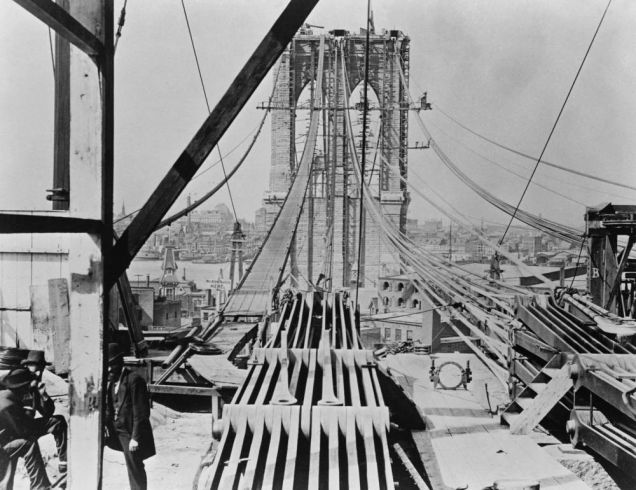
I liken the steps I recommended to my friends as bridge building. When we are pursuing success it doesn’t just happen instantly. There often are obstacles that we must face, some of which can create significant adversity. Sometimes our instinct is to continue “fighting the fight.” By trying to muscle through, we constrict our flow of positive energy and end up wallowing in our circumstances. And when this happens we remain stuck on the wrong side of the river.

To cross the river we must build a bridge. That requires that we take the necessary steps to restore positive energy and an optimistic outlook. One of the hardest things for an entrepreneur to do is to let go of his or her idea – even if it’s just momentary. But we know that when we continue to try and hammer, hammer and hammer – we’re not actually building the bridge. Instead we’re just stuck in the mud.

The entrepreneurial journey will periodically require the building of bridges to reach our success. To build the bridge we need to pause for a moment and identify forward-moving actions that will eventually ensure that we succeed.

This blog is being written in tandem with my book, “An Entrepreneur’s Words to Live By,” available on Amazon.com in paperback and Kindle (My Book), as well as being available in all of the other major eBook formats.

Bridge Building

The Eeyore Effect

Once upon a time there was a donkey; a very sour, pessimistic, woe-is-me, black-cloud-hanging-over-his-head donkey. Do you ever feel like this Winnie the Pooh character, Eeyore? What sort of a load are you carrying? As entrepreneurs we may often feel like that load is very heavy. As a result, our productivity is stunted and our emotional state is negatively impacted.

Feeling the weight of the world can be triggered by so many things. And feeling the weight of the world can have a compounding effect and further escalate our woes. Perhaps we are experiencing a health challenge of some sort. What happens to our functionality when we don’t feel good? Our focus isn’t as sharp and we may be more prone to making mistakes. Realizing this, we try even harder to focus; end up having tunnel vision, and miss something important happening outside of our line of sight.

Maybe we’re having a relationship issue. A member of our team is causing severe problems in the office, and is making outrageous, false and highly personal statements that are very hurtful. We find ourselves dwelling on what is being said about us and become distracted to the point that we miss the signals of dissatisfaction from one of our clients. By the time we realize what is happening, things are spinning out of control and we become even more beaten down.

Entrepreneurship is all about solving problems. We make a clear choice about how we are going to deal with what may be perceived as “the load we carry.” We are most effective when we don’t accept the problems as our own. How can we say that we aren’t going to accept a situation that is ours and only ours? The previously mentioned health challenge isn’t someone else’s problem, is it? True enough. But the key word here is accept. We can view a challenge as a load that we must shoulder, or we can look at it as a problem we must solve. If our mindset is that a problem is a load to carry, then it’s likely that we’ll see all of our problems as loads to carry. If each problem represents a 50-pound weight, three problems are the equivalent of carrying 150-pounds on our back.

Rather than carry our challenges as weights on our back, we can choose to embrace them as opportunities to demonstrate our creativity; our resolve; our discipline, and our skill. In so doing, we refuse to “accept” our challenges as problems. We refuse to carry a load of any sort. Our mindset is that of clinical detachment. How many times have you seen someone appear to juggle a multitude of issues in an apparently effortless manner? And even more impressive is that while doing so they always maintain a sunny disposition. This ability is more than just resilience. It’s not allowing the load to be placed on our back in the first place.

We must draw a line in the sand with respect to whether or not we will allow our challenges to result in problems that accumulate as weights on our back. Seeing our challenges as golden opportunities is a sure-fire winning formula.

This blog is being written in tandem with my book, “An Entrepreneur’s Words to Live By,” available on Amazon.com in paperback and Kindle (My Book), as well as being available in all of the other major eBook formats.

eeyore