
The O-Fer Entrepreneur

In baseball the stat line for a hitter who strikes out, flies out or grounds out in all his at-bats during a game is shown as 0 – 4 or 0 – 5. The stat sheet for a basketball player who continually shoots and misses without scoring a point might show 0 – 7 or 0 – 10. In athletic terms this is an O-fer . . . O for 4 or O for 5 . . . O-fer. Going O-fer is an ignominious experience and generally brings on scorn from the fans. In 1922, Babe Ruth faced St. Louis Browns’ pitcher Hub Pruett. The first 14 at-bats for the Babe resulted in 10 strikeouts and two walks. During the 1922 World Series, Babe Ruth hit one single and one double in 17 trips to the plate. Arguably one of the greatest players to ever step on the diamond, Babe Ruth struck out 1,330 times. That was fewer than other baseball luminaries such as Barry Bonds (1,539), Mark McGwire (1,596), Mickey Mantle (1,710), Alex Rodriquez (2,287) and Reggie Jackson (2,597). Any student of the game will tell you that all these players were some of the best in the history of baseball.

There is another side to the story. Ruth had 2,214 Runs Batted In (RBI); Bonds had 1,996; McGwire had 1,414; Mantle had 1,509; Rodriguez had 2,086, and Jackson had 1,702. And each smacked a lot of home runs during their respective careers – Ruth (714); Bonds (762); McGwire (583); Mantle (536); Rodriguez (696) and Jackson (563). I know this is a lot of statistics and if you are not a baseball fan you may not fully understand the astounding nature of these feats. But there is a point to all of this. In life we do strikeout. Baseball players strikeout. Entrepreneurs strike out. Salespeople strike out. Going O-fer is just part of the game.    

What matters is how we deal with going O-fer. When we flame out do we play the victim and blame someone else? Or do we examine our technique as well as the surrounding circumstances and look for ways to tweak our “form?” How easy would it have been for these great baseball players to have let their propensity to strikeout destroy their careers? Instead, they did something else. They figured out how to take the strikeout experience and find a way to hit the ball out of the park in a future plate appearance. Babe Ruth was number 118 in lifetime strikeouts, but he was number two in RBIs. I find this fascinating. Here is a man who drove in far more runs than he struck out – yet he had a lot of strikeouts over the course of his career. 

I listened to a podcast a few years ago about a venture capital firm that was launching its first fund. The principals were doing the typical road show and calling on prospective investors in multiple markets. They would typically be gone for a week at a time – one week they made 25 meetings in Boston, Chicago, Atlanta, Miami, and New York. During that week they were O-fer through 22 meetings. Imagine how this might feel! Yet, on their final day, they went three-for-three and netted tens of millions of dollars in commitments.

There’s more than just resilience at work here. It is critical to understand that going O-fer is just part of the game. It does not mean the game is over. With each new meeting, pitch, visit or idea, we are starting zero to zero. It is a tie game. I have learned not to look at O-fer beyond zero to zero. If we do not win the last at-bat, we simply start over with the next one. We remember the instructive elements from the encounter and discard all emotion as we make the pitch again to the next customer. We only lose if we stop playing the game. We know in our bones that eventually we will hit a home run or an RBI. So, we keep playing the game.

If we understand that O-fer is just part of the game and can maintain our positive energy, we can erase our doubts and feelings of limitation. This sets us up to ultimately connect with the ball and score consistently.

This blog is being written in tandem with my book, “An Entrepreneur’s Words to Live By,” available on Amazon.com in paperback and Kindle (My Book), as well as being available in all of the other major eBook formats.

The Mentally Tough Entrepreneur

On May 15, 1963, astronaut Gordon Cooper blasted into space on Mercury-Atlas 9. The Mercury capsule was 10.8 feet long and 6.0 feet wide. The duration was 34 hours and 19 minutes 46 seconds at a maximum velocity of 17,547 miles per hour and an altitude of 166 miles.

Alex Honnold is a world-renowned big wall free solo rock climber. He is particularly famous for climbing Yosemite’s Triple Crown – The Nose (El Capitan), Mt. Watkins and The Regular Northwest Face of Half Dome – completed in 18-hours and 50-minutes. Free solo climbing is done without ropes, pitons, or carabiners.

Navy Commander Jeremiah Denton was a POW in North Vietnam for eight years (1965-1973) four of which were in solitary confinement. He was forced to participate in a 1966 televised press conference during which he blinked the letters T-O-R-T-U-R-E in Morse code. After his release from captivity, he retired at the rank of Rear Admiral and became a U.S. senator from Alabama.

What is the common thread that runs through all three of these individuals? Of course, their physical stamina is obvious. But perhaps even more amazing is their mental toughness. I cannot imagine what it would have been like stuck in a tiny Mercury capsule all by myself hurtling through space at an incredible speed. What if something went wrong and I could not get back down? Or how about being 2,300 feet up the 3,000-foot face of El Capitan with no ropes or anchors and suddenly feeling sick? And being tortured and isolated for years in a prison camp is incomprehensible. Without mental grit, think about how easy it would have been to go stark-raving mad in each of these situations and just totally lose it.

Fortunately, as entrepreneurs we are generally not faced with situations that threaten our mortality. But developing a strong mental state is critical to our entrepreneurial success. There are many situations that we encounter that call for mental toughness. If we waver or lose our way, we can lose a whole lot – financially, in terms of relationships, team members and reputation.

Exactly what should we do to become mentally tougher? First, how do we contemplate and deal with failure? Failing is actually a crossroads for us. When something doesn’t work the way we had planned we have a choice to make. We either give up or we get back up and keep trying. Feelings of pain and discomfort create patterns that our brain wants to avoid in the future. True progress is made when we decide to move forward past the pain and into a state of endurance.

Second, we need to identify the self-imposed limitations that hold us back. Do we have routines that have become ruts? If we keep pushing the goal, we achieve real growth. Breaking out of old habits and happily accepting new challenges is mentally stimulating and helps us become conditioned for success. As is always the case, constantly maintaining a positive attitude is an enormous step toward becoming mentally tough.

Finally, we visualize the result then write the script for the journey to get there. Mental toughness cannot be achieved aimlessly. We must have an end game in mind. Gordon Cooper wanted to finish the mission and get home safely. Alex Honnold wanted to get to the summit of El Capitan. Jeremiah Denton wanted to put his feet back on American soil. In each case they had a clear objective and kept it front and center at all times.

To become mentally tough, we embrace failure and use it to create endurance. We discard self-imposed limitations and through positivity, set the table for success. Ultimately, we paint a clear picture of what our success will look like and then execute the strategy and tactics that take us there.

This blog is being written in tandem with my book, “An Entrepreneur’s Words to Live By,” available on Amazon.com in paperback and Kindle (My Book), as well as being available in all of the other major eBook formats.

The Doubting Entrepreneur

There’s one thing which I’m certain . . . I think. Have you ever had this kind of feeling? We entrepreneurs are a pretty confident lot. We are scrappy and tough. There’s nothing we can’t do including leaping over tall buildings in a single bound. Throw us a challenge and we’ll whip it with one hand tied behind our back and blindfolded to boot. Right? Well, maybe. And most of the time.

Entrepreneurs have several “thought enemies,” one of them being gnawing and nagging doubts. Here’s a not-so-fictional example. Let’s say that things have been going pretty well in our business and we’ve had some nice wins along the way. Then we hit a little speed bump – perhaps a contract doesn’t get signed that we thought we had in the bag. Or an important customer stops doing business with us. In other words, we get knocked off our game a bit. That part we can handle with aplomb as we go on to sign another contract or we fix the problem with our important customer. It’s what happens next that can be perplexing.

After we’ve been bucked off the horse so to speak, we begin to have feelings of doubt. For example, we are ready to introduce a new product or service, but we wonder if it might flop. In the past, we would have launched without any trepidation, but now it feels different. Could something else go wrong that might cause everything to come unraveled? We know that these gnawing and nagging doubts aren’t healthy and could become self-fulfilling prophecies. Yet still they are there and hard to push out of our mind.

Why is our confidence shaken, and doubts have entered the picture? I’ve thought about all the times this has happened in my life and believe it centers on a rather recent failure in the past. The earlier example that I gave where the contract or customer was lost illustrates this notion. Coming off a failure makes us wary and more sensitive. As entrepreneurs we have winning in our DNA. Failure is for losers. And yet we do fail, and we do lose. Sure, we’re resilient, but we can’t ignore what it felt like to fail and lose, and we don’t want to experience it again. And so, we’re vulnerable to doubt and uncertainty. Subconsciously we’re thinking, “I’m sure what I’m doing now is going to work, but if it doesn’t, I don’t want to be hurt again.” We find ourselves moving forward but wondering . . . always wondering when the other shoe will drop.

Here’s what I’ve learned about myself when these insidious doubts start creeping into my consciousness. I step back and take inventory of all the positive successes that I know lay in front of me. I may have just lost a deal, but there are ten more that I believe with all my heart will succeed. Now here’s the key – even if only half of the ten deals actually succeed, I’m still way, way ahead. In other words, I’m not looking at the glass half full, but I’m looking at multiple glasses and every one of them is overflowing. Immediately my mindset changes and all is right with my world again. I’ve accepted the fact that I had a prior setback. I’ve accepted the fact that I’ll have more setbacks in the future. But I know that the pluses will always far outweigh the minuses, and the winning score will be in my favor – overwhelmingly!

Gnawing and nagging doubts are usually a product of a recent failure. We get past such feelings by looking at the scoreboard and realizing that we are way ahead in the game. Ultimately this makes us unbeatable.

This blog is being written in tandem with my book, “An Entrepreneur’s Words to Live By,” available on Amazon.com in paperback and Kindle (My Book), as well as being available in all of the other major eBook formats.

The Big and Bold Entrepreneur

A few years ago, I saw a video clip of the Haohan Qiao Bridge that stretches 980 feet between two cliffs in China’s Shiniuizhai National Geological Park. It’s a suspension footbridge that is extremely unique in one particular sense . . . it’s made of glass. As you walk (or crawl) across, you see through the glass floor and look straight down 600 feet to the canyon below. We’re told that the glass is 25 times stronger than ordinary glass and if it breaks it is so dense that a person won’t fall through.

What’s interesting about this bridge is the fact that it’s bold, it’s big AND it’s safe (we’ll assume for the moment that what we’re being told about the bridge’s safety is correct). This bridge is the perfect metaphor for what we’re trying to accomplish as entrepreneurs. There’s nothing wrong with small ball, but after playing this way for many years we sometimes yearn to take that big leap across the canyon. Doing so requires that we push beyond our comfort zone and summon a fearlessness that we may not have previously experienced.

What prevents us from taking big and bold action? Often, it’s a question of safety. We’ve invested much in the way of blood, sweat and tears to get to where we are today and we don’t want to risk our bank account, our 401(k), our home, our health, our reputation and yes, the possibility of failure. The risk of failure is likely the Number One reason we don’t take those big and bold steps. The rest of the risks can be successfully managed. We use them as “why not” reasons, but ultimately it all boils down to the chance that we might fail.

What does failure look like to you? Many of us are programmed to abhor failure. In school, getting an F was something to dread. Our parents were disappointed. We thought we looked stupid in the eyes of our classmates. There was real shame associated with this letter grade. Throughout our lives we have been conditioned to avoid failure at all costs. And so, we say things like, “I don’t want to go all-in on my business idea because I can’t afford to put my family at risk.” But at the root of it, we are afraid to get that paper back from the teacher with a red F in the upper right-hand corner.

I’ve said many times that failure is simply an unfinished experiment in the laboratory of life. Failed experiments can sometimes be the only way we eventually get it right. I’ve started numerous business ventures that failed. In one case we raised investor money to fund a particular concept but could not get the traction we were looking for. Within a few months we realized that we were going to fail and so we gave everyone’s money back and shut down the venture. The goodwill from the early recognition of our failure and the act of returning the investment capital enabled us to build even stronger relationships with those investors who have invested in subsequent ventures. Long ago I realized that there is nothing to be ashamed of when we fail and maintain our integrity in doing so. I just haven’t figured out how to go big and bold without the risk of failure somewhere in the equation.

Here’s the bottom line. Step One – think big and then think bigger. Step Two – focus on how to mitigate the risks that could be associated with failing when launching that big (bigger) idea. Step Three – release the ego and realize that failure doesn’t diminish us as individuals. Step Four – create a solid implementation plan. Step Five – GO FOR IT!

Going big and bold is a process to be managed. But it also means that we must get out of our own way to deny the insecurities and perceptions of failure that prevent us from moving forward.

This blog is being written in tandem with my book, “An Entrepreneur’s Words to Live By,” available on Amazon.com in paperback and Kindle (My Book), as well as being available in all of the other major eBook formats.

The Bad News Entrepreneur

Uh-oh. Jack just learned that he did not win a contract that was supposedly all but certain. He was counting on this deal to make his quota and had been bragging to the vice-president of sales and his co-workers that it was in the bag. What’s more troubling is the fact that he’s been under the gun by upper management over the past few months to improve his production. Now what?

Jack must deliver the bad news. The first thought running through his head is that he’s going to be fired on the spot. He’s deep in debt and has a wife and two small kids at home. What does he do? Unfortunately, Jack chooses to do what so often happens in situations like this. He fudges the truth. He tells his boss that he hasn’t yet “heard the final word” from the client. Jack holds onto a thread of hope that he might be able to salvage the deal.

It’s obvious that delivering bad news is never fun. It starts with an organization’s culture. What is the reaction to bad news by the leadership? Is there screaming, yelling and threats? How about chaos and recriminations? If so, this sets the tone for anyone on the wrong side of having to report unfavorable results. It’s human nature to try and avoid painful encounters of this sort. Thus, some people may tend to stretch the truth, fudge the facts or outright lie about the situation, rather than endure the wrath of the boss.

In a healthy organization, delivering bad news is just another routine task to be performed. The enlightened leader will encourage team members to openly talk about what isn’t working including setbacks that have recently occurred or are anticipated. He or she will work with the team to understand what went wrong and how to avoid a similar result in the future. There’s no negative emotion or drama associated with this analysis. In so doing, team members feel safe in bringing news of any sort – good or bad.

A leader who operates in a fair and even-handed manner is entitled to expect full and total integrity from the team. The team member in a healthy organization who fudges the facts like Jack did should be dealt with in a severe manner. Here’s the calculus. I won’t blow up and make you feel lower than whale poop, and you owe me complete transparency. It’s as simple as that.

If you are part of an organization that struggles with bad news, first look inward and remember that it’s a two-way street. If the organization is unwilling to react in a calm and measured way, then it cannot expect team members to want to deliver bad tidings.

There’s another element to delivering bad news. It may be that the leader does not have an angry tantrum at all. This individual may always be very upbeat and optimistic. But members of his or her team may still not want to tell it like it is. Why? Because they don’t want to disappoint him. In many situations feeling like one has let down a co-worker or a leader is a powerful motive to duck or delay the inevitable. It’s circumstances like this where the leader must take care not to send any signals that he/she may be disappointed. In fact, this leader should go out of his way to encourage members of his team not to equate bad news with a disappointed boss.

One way to solve this dilemma is to embrace failure as simply a step in a process. A forward-thinking entrepreneur will model this attitude by sharing his or her failures with the team. Being vulnerable in this manner may encourage others to be more comfortable doing the same without fear of disappointing the leader.

Let’s replay Jack’s scenario with a different twist. Jack learns that he did not win the contract. He immediately goes to his boss and explains the facts of the situation. His boss says, “Jack, this reminds me of a situation a few years ago where I was positive, I was going to win the brass ring only to be left holding the bag. But I scrambled together a radical new approach and took a long shot by asking to see the client one last time. Believe it or not he changed his mind, and I won the deal after all. You might try the same approach.” Maybe Jack went on to win the deal and maybe not. Regardless, there was no hesitation when it came time to deliver the bad news initially.

Delivering bad news can be done in a matter-of-fact fashion if an organization’s culture encourages it. If not, we can expect that people will take extreme measures to avoid this unpleasant task.

This blog is being written in tandem with my book, “An Entrepreneur’s Words to Live By,” available on Amazon.com in paperback and Kindle (My Book), as well as being available in all of the other major eBook formats.
The Adversity-Beating Entrepreneur

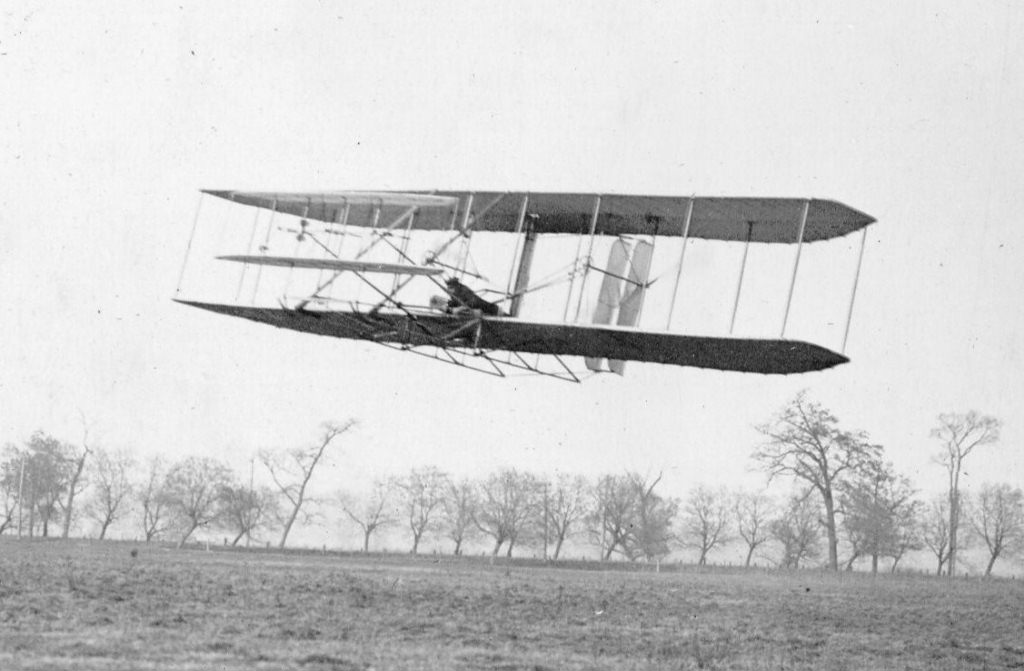
An airplane wing gains lift by taking off into the wind. This then causes the airplane to defy gravity and fly . . . an entrepreneurial metaphor if ever there was one. Interestingly, in my pilot days I once experimented with a downwind takeoff (on a very long runway) and could barely get off the ground. I quickly put the plane back on the runway and ended the experiment!

To build a muscle we exercise it regularly adding more weight and repetitions. Members of the military become elite Seals, Green Berets, Delta Force and Rangers by undergoing rigorous training involving obstacles that severely test the physical and psychological strength of a human being. In Kenya, long distance runners often wear no shoes as they traverse inhospitable terrain, toughening the soles of their feet in the process. I think you can probably see the lessons here.

Adversity can be an entrepreneur’s best friend if we allow it to be. If success comes without challenge, it’s easy to become complacent. We’re also robbed of growth opportunities that result from what we learn as we work through various hardships on the road to achievement. No one says we must like adversity. But avoiding it and fighting it does not work. I’ve found that the most constructive approach is to actually embrace it. For me this means relaxing and easing into adversity. It means establishing a positive mindset and expecting that much good will comes from the experience. We’ve all heard the term “silver linings” and used it many times. Often, we look back on what has transpired and almost as a consolation prize, we identify the silver linings. Looking for them in advance can give us the lift that we need to fly through the clouds.

In addition to the tangible benefits that come from overcoming adversity in specific situations, there are numerous more global wins that can occur. Think about the last time you had a tough puzzle to solve. Perhaps one of the outcomes was that of heightened creativity and innovation. When faced with the prospects of failure our creative instincts kick in and the results can be amazing. We also find that collaboration and teamwork increases reinforcing the notion that two heads are better than one. While I thrive on making sense of complexity and solving tough problems, I find that doing it with others is more productive and builds a stronger organization.

Suppose a professional basketball team plays a game against the best high school team in the country. There’s no doubt about which team will win. Now, imagine that the same NBA team plays against the reigning world champion NBA team and beats them. Which win do you suppose offers a greater sense of accomplishment? We need to feel like we are doing something really worthwhile which can be difficult when we prevail without any struggle whatsoever.

Adversity helps us to identify weaknesses within our company as well as with our strategy. When we aren’t tested and succeed anyway, we don’t really know what could happen if our feet were held to the fire. Challenges and obstacles also allow us to develop resilience and perseverance – both individually and organizationally. I truly hated those first few months of my career when I was an apartment manager. I was kicked in the teeth, the rear, and every other part of my body – I was totally miserable. But something finally clicked, and I figured it out. Quitting wasn’t an option for many reasons – thank goodness! Now I look back and understand how valuable the tough times were in teaching me how to get off the ground and back on the horse.

When we embrace adversity, we can make it work for us like an airplane uses the wind to take off. Then it can become a powerful tool in the entrepreneur’s toolbox.

This blog is being written in tandem with my book, “An Entrepreneur’s Words to Live By,” available on Amazon.com in paperback and Kindle (My Book), as well as being available in all of the other major eBook formats.

The Fearful Entrepreneur

What are you afraid of? I don’t mind confessing that I have issues with claustrophobia. This manifests when I get inside an MRI machine. Even an open CT scanner gives me the heebie jeebies. My heart pounds in my chest and my blood pressure goes through the roof. I don’t know what happened in the past for me to develop this fear, but it’s a cross I bear. I’ll never forget the time I heard about a poor soul who was exploring a cave and got stuck deep inside – upside down – and no matter how hard they tried, rescuers could not get him out. Within days of that story, I found myself in an MRI machine for 45 minutes. It took every ounce of my fortitude not to completely freak out.

I don’t know of a single entrepreneur who doesn’t experience a fear of something. There is the fear of public speaking, fear of heights, fear of flying, fear of being in social settings, fear of spiders (and snakes), fear of death and a wide assortment of other phobias that we may experience at a personal level. And then there’s what I consider to be “entrepreneurial fears.” Let’s examine a few of them and their antidotes.

  1. Competition“I’m afraid that the competition will overtake my company. I’m also fearful that someone is going to steal my business concept and crush us.” There’s a lot to unpack here. The forward-thinking entrepreneur will see competition as a healthy factor in his or her business life. If we have the right mindset, we can use competition to make us better. How? We do this by understanding exactly what our customers need and want and tooling our product or service accordingly. We know that the competition is probably studying the customer in a similar fashion – we must do it better!
  2. Ideas “My ideas are no good. I’m afraid that I’m just not creative enough to win in this business.” No one knows our ideas better than do we. And it’s not so much about having fresh new ideas as it is our ability to iterate on those we already have – or that someone else has. Look at Facebook for example. Many students of the Facebook phenomenon point out that the company has rarely had a new idea. They simply steal ideas from other developers or companies and execute them better.
  3. Failure “I’m afraid to fail and I’m afraid of what others will think of me if I fail.” This is one of the most common entrepreneurial fears that I’ve heard during my career. Unfortunately, this fear reflects a misunderstanding about what failure is. Too many entrepreneurs confuse “failure” with “defeat.” Failure is simply an unfinished experiment in the laboratory of life. It’s part of a process that we undertake to achieve success. Success is built on failure. Without some failure along the way, how do we really know that we have succeeded in optimal fashion?
  4. Money “I’m afraid that my money is going to run out before I succeed.” There are entrepreneurial stories abound where the founder was down to a triple digit bank balance and somehow pulled a rabbit out of a hat and turned things around. I also know that there are many more stories of businesses that folded when the cash spigot turned off. In the entrepreneurial world we learn how to improvise. We learn how to stretch a buck. We barter and trade. Better yet, we always have a Plan B in our hip pocket . . . just in case. Having a little bit of the “cash-strapped” fear is actually a healthy thing as long as we use it in a positive way to maintain focus on scaling our enterprise.
  5. Talent “I’m afraid a competitor is going to steal my best people; or my best people are going to walk across the street and start their own company.” Here’s the thing. If we provide the best value for our team, they’ll stick around, which is the same philosophy we adopt with our customers. Sure, employees want to be fairly compensated, but loyalty goes beyond pay and benefits. Developing a dynamic culture goes a long way toward talent retention. So does making people feel that they and the contribution they make are genuinely valued. In the companies with which I’m involved, we don’t lock up our team members with long-term contracts or non-compete agreements. Instead, it’s incumbent upon us as leaders to show our team every single day how they are in the right place with our firm.

Being afraid can either be paralyzing or motivating. Smart entrepreneurs overcome fear to propel themselves to great success.

This blog is being written in tandem with my book, “An Entrepreneur’s Words to Live By,” available on Amazon.com in paperback and Kindle (My Book), as well as being available in all of the other major eBook formats.

The “Opportunities to Fail” Entrepreneur

Some years back we developed an exercise that can be beneficial for every entrepreneur. We all want to manage risk – not take risk. I’ve said it before that taking risk is akin to rolling the dice. Managing risk is an intentional process to minimize or eliminate risk to the greatest extent possible. To this end we created a process called Opportunities to Fail.

Some might say that “Opportunities to Fail” sounds negative and ought to be called something else. But it is named this way on purpose. Why? Because we believe that whether we succeed, or fail is almost totally within our control. Thus, we have the opportunity to succeed or to fail – it’s up to us as entrepreneurs which we choose.

Let’s say that we are considering launching a new division, a new product or service, or embarking upon some other endeavor for which there are numerous risks. The Opportunities to Fail exercise begins with assembling all the stakeholders from the team and beginning a series of brainstorming sessions. The first such session is that of identifying all the different risks that are inherent surrounding whatever we are preparing to do. For this purpose, we developed a simple Excel spreadsheet on which we log the risks. To each, we assign a numerical value on a scale of one to 10 – both in terms of Probability and Impact. We arbitrarily determined that we would weigh Impact 25% higher. So, if a particular risk is assigned a 10 for Probability it means that there’s a high likelihood of this risk being realized. And if that same risk is also a 10 for Impact, it means that if the risk is realized, it could have a very detrimental effect. Thus, the Probability score is 10 and the Impact score is 12.5 (due to the 25% extra weighting) for a total score of 22.5.

Remember that during the first exercise we are only identifying the various risks and assigning Probability and Impact scores – we’re not solving anything yet. Usually, this inventory process takes a couple of hours and there may be as many as 25, 30 or even more risks. When someone says, “An asteroid could drop out of the sky and destroy us,” it’s probably time to wrap it up. We then re-order the risks in the spreadsheet from the highest numerical value to the lowest and circulate it to the stakeholders for a few days of contemplation. Everyone is empowered to offer additional risks during this time frame with their thoughts on scoring.

The second meeting of the group will take place within three or four days of the first and is devoted to risk mitigation. We look at the highest scoring risks and discuss ways that we will prevent the risk from coming to fruition. In addition, wherever possible we also add a contingency plan should somehow the risk “leaks through” our mitigation program. This way if a high-risk item bites us, it doesn’t kill us. We have found that there’s a natural breakpoint in the list. Perhaps there are 17 risks that rank at 14 or higher, and then there’s a gap with the next grouping of risks starting at a score of eight. We generally don’t worry too much about low-scoring risks as their Probability is usually low, and even if they happen, the Impact is minimal. Instead, we spend our time ensuring that we have robust mitigation and contingency plans for the most dangerous risks.

At the end of the second meeting, we ask this simple question – “Are we totally comfortable moving ahead with this endeavor?” If there is still fear and trepidation, then it means that we haven’t sufficiently mitigated one or more of the risks. Or it could mean that there is something nagging in the back of the minds of our team that still needs to be put on the table. It’s at this point that we engage in additional discussion and mitigate further until we have total buy-in; we modify our endeavor to the point that everyone is comfortable, or we determine that should not move forward at all. The ultimate objective is to either move ahead knowing that we aren’t going to fail, or not to move forward at all.

A few days later a third meeting of stakeholders occurs. Each member of the group reaffirms his or her belief that we have adequately mitigated the risks and should proceed. Then we brainstorm for ways to Exploit the Opportunity. This is a lot of fun. We spend our time looking for ways that we can enhance the opportunity and make it even bigger and better than we initially envisioned – without adding new risks. Utilizing the Opportunities to Fail exercise is a liberating experience. It puts us in a position to manage risk rather than take risk and allows us to choose success.

This blog is being written in tandem with my book, “An Entrepreneur’s Words to Live By,” available on Amazon.com in paperback and Kindle (My Book), as well as being available in all of the other major eBook formats.

The “Terminator” Entrepreneur

A few years ago, I was listening to an entrepreneur talk about a period in his career where he was firing lots of people. His manufacturing company had many employees and sometimes he would fire as many as five in a day. It appeared that he kind of enjoyed this task. He liked to make a public spectacle of a termination. He’d yell at someone in front of their co-workers and then tell them they were through. And I quote, “There was none of this ‘you’re just not a good fit for this job’ nonsense. Very simply – you’re fired!” Whoa! This sounds cold – maybe even cruel. I don’t agree at all with his approach, but the conversation was positive from the standpoint that it crystallized a concept for me.

Firing equals failure. You may think this is an obvious thing to say – of course the employee who is fired has failed. But I’m looking at it as a failure on the part of the employer. This is a critical distinction for entrepreneurs. The reasons for terminations are numerous. Poor performance, lying, misappropriation of company property, behavior that is contrary to company policy, insubordination, being tardy or excessively absent, drug (or alcohol) abuse during the workday – the list goes on and on. Still, failure mostly falls on us as entrepreneurs when an involuntary separation occurs.

For starters, it’s quite possible that we hired the right person for the wrong job. The current labor market is very difficult for employers, and there can be a tendency to hire job candidates that simply aren’t the right fit. We resolve not to fall into this trap, but weeks later we’re hearing the rumblings from our team that they are overworked as they are covering the vacant position. Productivity is suffering and we finally hire someone who we know is probably “iffy.” We rationalize that we can make this person a project, and with a little mentoring they’ll be fine. The outcome is predictable. It seldom works out – both the mentoring and the new employee.

Hiring the right folks is hard work. Our company needs to at least have a neutral to positive reputation if we expect to attract the kind of talent we need. A negative reputation will likely result in driving away quality talent. A strong positive culture supported by authentic core values will bolster our reputation. Creating comprehensive roles and accountabilities is an absolute must. Actively recruiting new team members is mandatory. Simply posting a position on an online recruiting website isn’t enough anymore. We must do everything in our power to create a large pool of qualified candidates from which to choose.

Once we have prospects for a vacant position, we need to pull out the stops to find the sparkling diamond that adds value to our organization. Testing, psychological profiling and multiple interviews with different members of the management team are standard fare. Background checks and drug screening are also part of the process. Interviews must be carefully crafted to develop the full picture of an individual – strengths, weaknesses, traits, tendencies and even danger signals. Here’s the bottom line. It’s on us if we don’t hire the right person to begin with. And if we must fire someone because they weren’t the right person, that firing is our failure.

When we terminate someone’s employment, we must also take an introspective look at our own performance. We may have hired the right person for the right job, but did we do our part? How well did we train our new team member? Or was it the famous, “here’s your desk, here’s your phone, lots of luck, you’re on your own?” Another common rationalization for lack of solid training goes like this, “John Doe was in a similar position at Company X. We’re a fast-paced organization and we don’t have time to train people who ought to already know what to do based upon their level of experience.” There may be a grain of truth to this but for the most part, every new team member needs to be trained. The training may be less focused on the mechanics of doing the job and more centered around our company’s way of serving the customer, maintaining efficiency, being safe and increasing productivity. If we must fire someone because they weren’t sufficiently trained, that firing is our failure.

Finally, we must ask ourselves whether the team member we are terminating had the proper tools and/or resources to do their job. How unfair is it to fire someone when we haven’t provided such basic elements to ensure his or her success? You probably wouldn’t be surprised to know how often this happens due to budgetary constraints. We expect someone to do their job perfectly, but then we hold the purse strings so tightly that they can’t even meet minimum standards. If we must fire someone because they didn’t have the necessary tools and resources, that firing is our failure.

Firing a member of our team is nothing to celebrate. In fact it is often a failure of our leadership and can be prevented by putting the right person in the right job; providing sufficient training, and making sure to provide the proper tools and/or resources.

This blog is being written in tandem with my book, “An Entrepreneur’s Words to Live By,” available on Amazon.com in paperback and Kindle (My Book), as well as being available in all of the other major eBook formats.

The Failed and Defeated Entrepreneur

What two words in the English language couldn’t be further apart in their meaning, but are often intertwined for entrepreneurs? The first word by itself is part of the everyday life of an entrepreneur – and every other person in the world as well. This word is relatively innocuous. But when connected with the second word it’s like adding the primer to dynamite. The resulting explosion can have all sorts of detrimental effects on our lives.

That first word is “failure.” Many entrepreneurs (and others) fear failure. But successful entrepreneurs have almost always experienced failure in different ways and multiple times. They use their failure to recalibrate or pivot and find a new way to make something work. David H. McConnell was a door-to-door book salesman who offered a little gift of perfume to female customers. Selling the books didn’t work out so well, but there was great demand for the perfume. So, McConnell ditched the books and turned the perfume concept into what is now known as Avon. Ever heard of Traf-O-Data? It was a partnership between Bill Gates and Paul Allen for the purpose of developing reports from traffic counters for traffic engineers. The business was not a success. But Gates went on to launch another venture called . . . Microsoft. And then there’s the famous story about a man named Fred Smith who wrote a paper for his Yale University economics class involving overnight parcel deliveries. The professor wasn’t impressed and gave him what Smith recalls was a C. Undaunted, Smith pursued the idea which today is known as Federal Express.

This brings us to the second word. The word is toxic to entrepreneurs for it can easily become a mindset. The word . . . “defeat.” Failure is part of a process of experimentation and discovery. Defeat is the end. Once defeat is admitted, there’s nothing more to be done. I knew a man who worked for someone else for several decades. Then he decided to spread his entrepreneurial wings and bought a business. He labored mightily but eventually had to close his doors. But rather than lean into the experience and use it as a steppingstone to success, he withdrew. His confidence was shaken, and he began making unhealthy choices. He tried working for someone else again but eventually ended up driving a taxi. Now there’s nothing wrong with driving a taxi if it’s for the right reason. But in this case, it was his way of curling up in the fetal position and saying, “I can’t.”

I think that it boils down to whether we have a “die trying” mentality. It boils down to whether we have a positive image of ourselves. It boils down to moving as fast as we can to kill our own bad ideas so we can make room for the good ones! When we are afraid to fail, we are setting ourselves up for defeat. One of the most important things about failure is making certain that it’s not so monumental that we can’t right our ship. A mindset of defeat occurs when we are convinced, we’ve lost it all – forever.

Here’s what I’ve learned. I don’t set out to fail at anything but accept the fact that I will, and I must, if only to find the good ideas that work. I always make sure there’s enough of a margin of safety that my failures aren’t going to “kill” me. This leaves room for a pivot or a more significant shift. Regardless of my failures I will always remain positive and optimistic. Sometimes this can be very hard but it’s fundamental to avoiding defeat. When I do fail, I look for what can be salvaged from the experience to bolt onto the next iteration of whatever I’m doing. And finally, I know that I’m a step closer to success by eliminating a step in the process that didn’t work.

Failure and defeat are not connected in any way, shape, or form. Great opportunity and great success can rise from failure. Nothing good comes from defeat.

This blog is being written in tandem with my book, “An Entrepreneur’s Words to Live By,” available on Amazon.com in paperback and Kindle (My Book), as well as being available in all of the other major eBook formats.