
The Competitive Entrepreneur

Evil, dirty, underhanded, devious, conniving, despicable, dishonest, cutthroat, backstabbing, snobbish, arrogant, lying and cheating. These are terms I have heard applied to competitors over the last 50 years. Without a doubt I have missed some. What emotions are evoked when you think about your competitors? Some entrepreneurs I know have pure hatred for the competition and others display a great deal of fear. Why do we associate such negativity about our competition?

The amateur psychologist in me believes it has something to do with our childhood (don’t all our issues?). On the playground we engaged in competitive duels involving kickball, dodge ball, four-square and other gladiator-like activities. Losers were vanquished with taunts and teasing. When we were older, competition for relationships with the opposite sex was intense. When a sought-after girl or boy chose someone else, we were crushed and dejected. Fast forward to today and it is no wonder that we often see our competition as the enemy.

But do we really benefit from viewing our competitors in this manner? Competition is actually a wonderful thing. Let’s look at several of the reasons why.

  • Competition stimulates creativity and innovation. Every day we know that our competitors are working overtime to develop new products or services. To keep from being left behind we do the same. New discoveries are made from this process that may generate greater profits and capture a larger market share.
  • Best practices emanate from a competitive environment. Let’s face it; we don’t have all the answers. So, observing how others do things and testing our approach accordingly can lead us to implement better systems and processes. Without competition what would be the incentive to improve?
  • An inefficient market is the byproduct of competition. Some competitors are stronger, and some are weaker. If every competitor is equally strong how would anyone win? The concept of winners and losers is critical to a healthy yet inefficient market.
  • Hand-in-hand with the inefficient market theory is the opportunity for differentiation. This is good for the consumer, and it is outstanding for the entrepreneur. Why? Because we can create a level of variety that may appeal to more customers. It is not just about “better;” it’s also about “different.” If every boutique sold the same black dress, doesn’t it stand to reason that a boutique selling a purple skirt might win a few more customers than the black dress sellers?
  • Competition helps to broaden the talent pool. It provides career paths for the workforce into which we as entrepreneurs can tap. We can create cultures where people want to work, giving them the chance to grow and advance their careers. And in the process, we get to attract the best and the brightest.

For years we have enjoyed good relationships with our competitors. We view them with respect and in some cases, admiration. Other terms come to mind as well: friendship, collaboration, empathy, and gratitude. Collaboration you ask? Yes, we have often referred customers to our competitors when we could not meet their needs, and they have done the same for us. In 2008 a Maine portable restroom business owned by Jeff Bellino burned to the ground. Who came to the rescue? Bellino’s competitors! They provided portable restrooms, toilet tissue and chemicals so that he could keep going while he rebuilt his operation. Competition is at its healthiest when competitors have each other’s backs in a time of need.

When we embrace the notion of strong and healthy competition, we enhance our chances for success. There is no doubt that competition makes us better entrepreneurs in every respect.

This blog is being written in tandem with my book, “An Entrepreneur’s Words to Live By,” available on Amazon.com in paperback and Kindle (My Book), as well as being available in all of the other major eBook formats.


The Fulfillment-Focused Entrepreneur

I don’t want our customers to be satisfied. Put another way, customer satisfaction is not our objective. I also don’t want our team members to be satisfied. There, I have said it. I will bet you are thinking that there is a punchline somewhere in all of this. And yes, there is. But let’s dig a bit deeper before getting to the bottom line.

When we serve others, we certainly want them to be satisfied – right? This seems like a perfectly rational objective because we all know what happens when a customer or team member is dissatisfied. So, when a customer (or team member) makes a request, we do our best to satisfy that request. We generally believe that when someone is satisfied, they are happy. Here is an interesting dilemma. Suppose we have done everything we can to satisfy our customer; they tell us they are happy, but then they quit anyway. What is up with that? 

One of our companies is involved in managing apartment properties for our own account and for third-party clients as well. I can remember several times over the past many years that a long-time client told us he was perfectly satisfied with our service, only to make a change and hire another firm. We were assured that we had done nothing wrong and other circumstances stimulated the change. In some cases, the client was consolidating the management of all his properties with a national property management firm. In another instance we were told that the client had a relationship with another company and though he was satisfied with our performance, he thought he might do better with the other firm. Naturally, there is a strong level of disappointment when we hear that someone is satisfied and yet they are still making a change. What in the world are we to do?

OK, here comes the punchline. Customer satisfaction is not enough. Team member satisfaction is not enough. Customers and team members leave even when they are completely satisfied. Attempting to achieve customer and team member satisfaction is a siren song that will lure us into the rocks and sink our ship. Instead, we need to focus on fulfillment. Fulfillment is a much higher state than satisfaction. It is a concept that is like exceeding expectations but is even more than that. Trust me – you will not get any help from the dictionary on this one. It says that to fulfill is to satisfy. I think the dictionary’s definition misses a very important nuance here.

Suppose an apartment resident calls and reports that her kitchen faucet is dripping. If our maintenance technician goes to her apartment and completes the repair, then he has satisfied her request. However, if he goes and fixes the faucet, and then checks several other physical elements in her apartment and fixes other items that he finds, then we are moving toward a level of fulfillment for the customer. Total fulfillment comes when there is nothing else a customer could possibly want or need, even if he or she has not articulated it. In other words, we have anticipated every possible scenario that could impact the customer, and we have taken all the steps we could to resolve unforeseen issues and create an over-the-top experience. This was what was missing when we lost a client who told us he was satisfied. We had not gone above and beyond to create the over-the-top experience that achieved total fulfillment.

Customers and team members leave or quit all the time when they are satisfied. Usually, it is because they are not aware of a better alternative. But when that better mousetrap is presented to them it is not hard to understand their motivation for making a change. Changing our focus from satisfaction to fulfillment increases the odds in our favor that we possess the better mousetrap.

Achieving fulfillment for our customers and team members requires a combination of commitment, innovation, understanding, vigilance, appreciation, and gratitude. Fulfillment is the best mousetrap in today’s highly competitive entrepreneurial environment.

This blog is being written in tandem with my book, “An Entrepreneur’s Words to Live By,” available on Amazon.com in paperback and Kindle (My Book), as well as being available in all of the other major eBook formats.

The Entrepreneurial Delegator

Let’s look at two scenarios. A busy and stressed-out entrepreneur is on the run. He stops by the desk of a colleague and says the following, “I need some PowerPoint slides for a presentation about our XYZ product. This is a top priority – I need it ASAP.” Now, let’s contrast that with the same encounter but different characters.

A busy and stressed-out entrepreneur is on the run. She goes to the office of a colleague and sits down to explain what she needs. “We have an opportunity to make a presentation to the ABC Company for potentially one of the largest orders of our XYZ product ever received. We’ve been building a relationship with ABC for the past year, and they called last night and said we could have 30 minutes on Tuesday. Could you please help me put together this presentation? I’m going to work on exactly what I’m going to say – would you be able to put together eight PowerPoint slides that show how the XYZ product is different than the top competing products? I’m wide open to any ideas you must be creative here. I realize that this will require some juggling on your part – what is a reasonable timeline to get this completed? What can I do to help?”                                                                                                                                                                                                                                                                                                                                                                                                                                                                                                                                                                                                                                                                                                                                                                                                                                                                                                                                                                                                                                                                                                                                                                                                                                                                                                                                    

The difference in approaches isn’t hard to spot. In the first case, the entrepreneur performed the Dump and Run maneuver flawlessly. If Olympic judges were grading him, he would have nailed a perfect 10. In the second case, the entrepreneur used the Delegation technique. She too would have received high marks. So, if you were on the receiving end of this encounter, which of these entrepreneurs would you prefer to work with?

Dump or Delegate. Both start with the same letter but that’s where the similarity ends. Which is more efficient and effective? Some might say that from the entrepreneur’s perspective, handing off an assignment and quickly moving on to the next task is indeed efficient. And there’s no doubt that there are many things that simply can be “dumped” with a minimum of explanation. The problem is that some of us tend to make this the default practice rather than the exception. When I discussed this with another businessperson at some point in the past, he told me that “if my people aren’t smart enough to figure it out for themselves, then I have the wrong people.” I think I disagree . . . strongly.

Delegating work in a true sense requires collaboration. I’ve found the collaborative approach to be much more efficient and effective. Why? Because by spending the time necessary to bring others up-to-speed the chances for an error-free outcome increase substantially. Further, the odds also improve for a higher quality result. This happens because people can engage their brains in a much more comprehensive manner when they have a full understanding of the situation at hand. It stands to reason that if I just give someone a “snapshot” of what is needed without the broader context then I’m likely to get a narrowly focused work product.

Here are the steps I’ve found most productive when delegating to others.

  • First, I try to provide the whole story – not just snippets. In doing so, I’m showing respect to my colleagues by making sure they have the same information as do I.
  • Second, I try to be as specific as I can about what I need. But I also encourage my colleague to be innovative to the extent the situation warrants. This sends a message of flexibility as opposed to rigidity. It also enables the colleague to “personalize” the finished product.
  • Third, I make sure my colleague understands the overall timeline. It’s important that the colleague understands when I learned of the assignment. How many times have we seen someone sit on a project then do the last-minute mad dash to finish in time? The last thing I want is for my co-worker to think I’m doing this to him or her. I also want my colleague to set the deadline for completing what I’ve asked to be produced. If his/her timing doesn’t work for the assignment, I can always negotiate a tighter date.

Our team grows stronger when we Delegate every chance we get. While it may take a little longer at the front end, the result is usually much better than what comes from the Dump scenario.

This blog is being written in tandem with my book, “An Entrepreneur’s Words to Live By,” available on Amazon.com in paperback and Kindle (My Book), as well as being available in all of the other major eBook formats.

The Anatomy of an Entrepreneur

As entrepreneurs exactly who are we? What makes us tick? Is there some sort of DNA gene that we can point to? I’ve thought a lot about some of the exceptional entrepreneurs I’ve known over the past four decades and have identified some of their traits and tendencies that stand out.

Let’s start with creativity and innovation. Entrepreneurs use their creative powers to innovate and find a better way to do something. Elon Musk must be one of the most prolific entrepreneurs when it comes to innovation – Tesla Motors, SpaceX, Pay Pal and Solar City come to mind to name a few. Often, creative entrepreneurs are also visionaries. They have an uncanny ability to see into the future and understand what their customers will want and how their company needs to be designed to win. GoPro CEO Nick Woodman is one of the foremost visionaries in America today. Who could ever have imagined a series of high-definition video cameras that are small, durable and light enough to capture our daily adventures – daring and mundane? And successful entrepreneurs understand risk. Rather than taking risk they are adept at managing it.

When they get knocked down, great entrepreneurs get back up – over and over and over. They are amazingly resilient and don’t see failure . . . only opportunity. Walt Disney was fired by his employer, the Kansas City Star, because he supposedly lacked creativity. That didn’t seem to impact his storied career. When things don’t work out as planned, they are flexible and know how to adapt and make the best of every situation. Top-flight entrepreneurs are persuasive and can convince others to say yes. They do so through the power of their passion. Does Steve Jobs come to mind? Look what he convinced us to buy! Along with their persuasive powers, successful entrepreneurs are strong communicators in both verbal and written formats.

Entrepreneurs are assertive – the great ones are less aggressive than assertive. They have a healthy degree of empathy and are sensitive to the feelings of others. Entrepreneurs at the top of their game have a certain amount of charisma. They can be sociable and gregarious – even if those aren’t their core tendencies. Without charisma an entrepreneur will find it tougher to raise money, develop important relationships and influence others. Billionaire entrepreneur Sir Richard Branson is one of the most charismatic leaders on the planet. And he has woven his charisma into a tapestry of empathy and caring about other people.

Culture King is another descriptor for the cream-of-the-crop entrepreneur. Ben Chestnut, founder, and CEO of MailChimp fits into this category in the ways he has empowered the 500+ members of his team. Together with a strong culture is a smart entrepreneur’s ability to delegate. According to a 2013 Gallup survey of Inc. 500 CEOs, an average three-year growth rate of 1,751% was realized where the CEO had a high Delegator talent. Entrepreneurs typically have a high sense of urgency and tend to be very self-structured – there’s no way anyone is going to tell them what to do! Entrepreneurs simply don’t want to be a cog in someone else’s machine. Most entrepreneurs also can juggle many things at once and in fact need to feel the rush and excitement of pursuing multiple projects and initiatives simultaneously. Finally, ultra-successful entrepreneurs are generally positive and optimistic people. They don’t dwell on mistakes and never play the victim.

Remember the DNA thing I mentioned at the beginning of this blog? Well, there may be something to it. A February 17, 2016, research paper published in the Austin Journal of Molecular and Cellular Biology reported on the Dopamine Receptor D4 Gene and concluded that entrepreneurs have a higher tolerance for risk-taking in part, due to this gene      (https://www.researchgate.net/publication/294874673_Entrepreneurship_and_its_Genetic_Basis). Apparently, genetics governs approximately 30% of what makes one an entrepreneur. But that leaves 70% to a wide range of personality traits and tendencies.

There are many such traits and tendencies that are identified with entrepreneurs. No one person possesses them all, but the more to which we lay claim the closer we come to attaining world class status.

This blog is being written in tandem with my book, “An Entrepreneur’s Words to Live By,” available on Amazon.com in paperback and Kindle (My Book), as well as being available in all of the other major eBook formats.
The Extinct Entrepreneur

By now, everyone knows that tens of thousands of retail stores have closed across the country over the past several years. One industry source predicts another 50,000 stores could close by 2027. Covid certainly had an impact while public access was locked down for an extended time. But the trend started well before Covid. This year, Bed, Bath & Beyond is just one of the latest chains to close the doors. At its peak, Bed, Bath had 1,552 locations. Sears at its peak had 3,500 stores and Kmart had 2,300 locations. Now both Sears and Kmart have a combined 23 stores remaining in the U.S. Bricks and mortar retailers are fighting for their collective lives. They are up against the likes of Amazon and Walmart, to name two of their biggest competitors. Amazon is open 24/7 and Walmart stores seem to be open most of the hours people are awake.

This data has gotten me to think about how some businesses simply fail to change with the times. This isn’t anything new. But by now one would think that the ability to adapt would be case study Numero Uno in the school of entrepreneurship. Let’s look at another example – this one is in the educational sector. For years, we’ve seen tuition spiking at public universities and colleges. According to Education Data.org, tuition has increased approximately 136.5% from 2000 – 2021, an annual rate of 6.8%. Meanwhile inflation has averaged 2.55% per year for the same timeframe. Why has this happened? Government-insured student loans have been a major contributor to the upward movement of tuition. Universities have known that they could just keep pushing tuition because students could borrow cheap money to finance the cost. There’s only one problem. The student loan bubble is bursting as millions of young people are questioning why they should take on debt of as much as $100,000 or more to earn a college degree. Public funding for higher education has been under pressure for years. Meanwhile, colleges and universities blithely continue to build new buildings and act like the good times will roll forever. There’s scant evidence that leadership is plotting how to adapt to what could become a very scary situation.

The landscape is littered with the carcasses of companies that failed to adapt. Besides Bed, Bath & Beyond, Sears, and Kmart, we’ve seen store closings and/or bankruptcies at Mattress Firm, Brookstone, David’s Bridal, Tuesday Morning, Party City, Serta Simmons Bedding, Rockport, Nine West, Claire’s, Toys R Us, iHeartMedia, Gibson’s (the guitar maker) and Bon-Ton to name a few. Many of these companies had accumulated too much debt. Others grew too quickly and saturated the market with stores (Mattress Firm comes to mind). Others clearly kept plodding along with a business strategy that no longer worked.

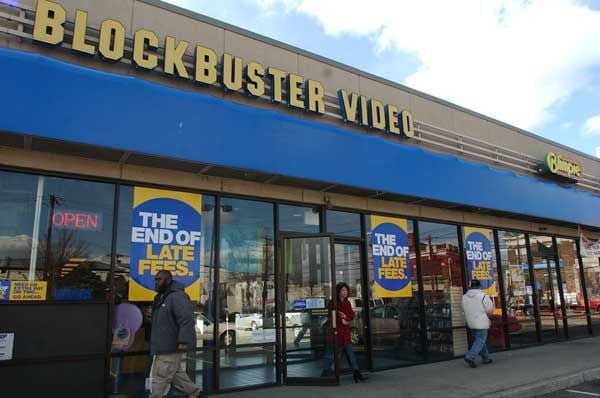
The Netflix vs. Blockbuster Video story is common knowledge. Blockbuster never came to grips with the fact that streaming services were going to be king of the mountain, pushing the business of renting videocassettes into the abyss. Eastman Kodak failed to understand that digital photography was the future – not film and photographic paper. Yahoo blew it when Google was offering everything for free; yet Yahoo thought it could charge for e-mail and file sharing. 

When we as entrepreneurs become comfortable and believe that we have the best idea, we’re probably headed for a fall. Because there’s absolutely no doubt that someone else is already working on the next best idea and may roll it out as early as tomorrow. Dr. Ichak Adizes, CEO of the Adizes Institute and one of the world’s leading management experts has developed a concept he calls the Corporate Lifecycle. He identifies a “Mature” organization as one that is about to experience “The Fall.” He goes on to say, “The leaders of The Fall companies are starting to feel content and somewhat complacent. This attitude has been developing for some time. The company is strong, but it is starting to lose flexibility. It is at the top of its lifecycle curve, but it has expended nearly all the “developmental momentum” it amassed during its growing stages. The rocket is slowing down and starting to change direction and head down the lifecycle curve. The organization suffers from an attitude that says, ‘If it ain’t broke, don’t fix it.’ The company is losing the spirit of creativity, innovation, and the desire to change that brought it to Prime (the ultimate phase of the corporate lifecycle). It has sown the seeds of mediocrity.”

There are many lessons to be learned here. As our organizations continue to grow and become rocket ships, it’s critical that we maintain our spirit of creativity, innovation, and the desire to change. Always. Every day. Forever.  

This blog is being written in tandem with my book, “An Entrepreneur’s Words to Live By,” available on Amazon.com in paperback and Kindle (My Book), as well as being available in all of the other major eBook formats.
The Visionary Entrepreneur

Here is a fundamental question for all entrepreneurs. Are you a visionary? Being a visionary and having a corporate vision are two different things, so take care not to confuse the two. For a company, a non-profit or any other organization to thrive and succeed over a long period of time, visionary leadership is paramount. And unfortunately, many companies stagnate and die when the visionary leader moves on for whatever reason. That is why it is crucial for a company to continuously develop visionaries across generations that will help to sustain the organization in the future.

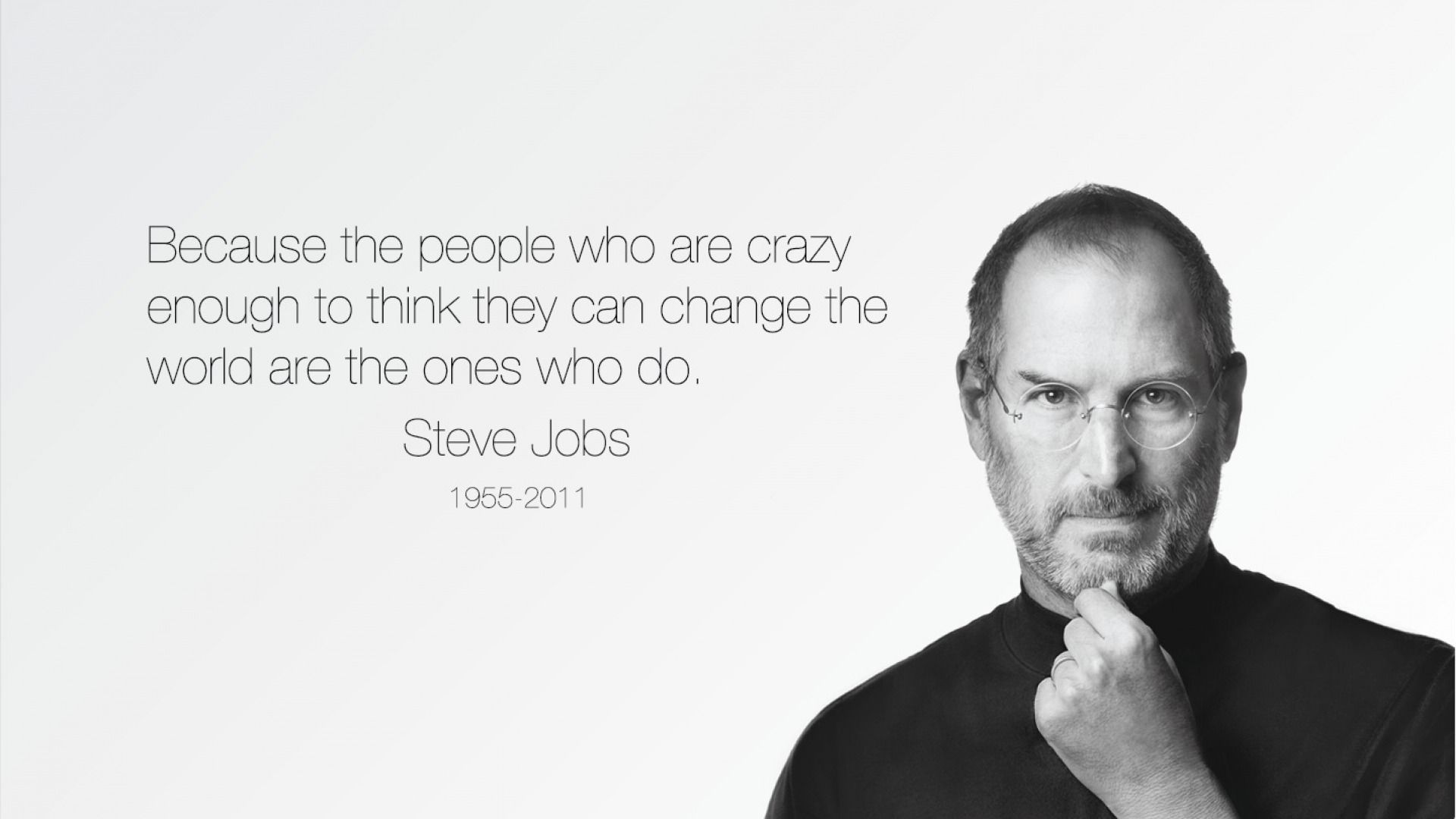
It is not hard to think about individuals who exemplify the term “visionary.” Steve Jobs comes to my mind before anyone else. He was a rebel and an unconventional thinker who was not afraid to take risks. Similarly, Bill Gates was a visionary who became the richest man in the world because of his ability to understand and shape the future. What comes to mind when you hear these names – Henry Ford, Wilbur and Orville Wright, John D.  Rockefeller, Thomas Edison, Sam Walton, Sergey Brin and Larry Page and Mark Zuckerberg? Each was a phenomenal innovator. Each had an uncanny sense of where the world was going. Each had dreams but was also a doer.

Being a visionary is partially innate and partially learned. So, what can we do to develop our visionary leadership skills? How curious are you? Do you read everything you can get your hands on? Visionaries are expansive readers and are curious about everything. Curiosity stimulates the imagination and helps bring forth new ideas manifesting in a high degree of creativity. How persevering are you? The next time you are ready to throw in the towel remember that visionaries have a stick-to-it attitude. They are highly resilient and believe they can solve any problem. Visionaries love discussion and debate. Some may see this as confrontational, but it really is not. Instead, a visionary listens to differing points of view even when it gets a bit lively.

What other ways can we model visionary behavior? Do you embrace change or are you more comfortable living with doing things the same way? Visionaries are change agents. They like to teach and are focused on doing the right thing. Integrity ranks high on their list of values. Do you have high expectations for your team? Sometimes the line between high vs. unreasonable expectations can blur a bit. But do not expect a visionary to set a low bar. Visionaries tend to be eternal optimists and cannot see a glass half empty – it is always half full or even more. And visionaries are some of the most passionate people you will ever meet. Finally, visionaries do not live in the details – they are quintessential delegators.

A visionary has a knack for looking at a collection of data and telling the future. He or she sees things that others do not and is not the least bit concerned if his or her ideas are pooh-poohed. In fact, visionaries will work hard to persuade others to buy into what they believe because they have a supreme degree of self-confidence.

By emulating their behaviors, traits, and tendencies, we too can become visionaries. Our value to our organization increases exponentially when we provide visionary leadership.

This blog is being written in tandem with my book, “An Entrepreneur’s Words to Live By,” available on Amazon.com in paperback and Kindle (My Book), as well as being available in all of the other major eBook formats.

The Competitive Entrepreneur

Evil, dirty, underhanded, devious, conniving, despicable, dishonest, cutthroat, backstabbing, snobbish, arrogant, lying and cheating. These are terms I have heard applied to competitors over the last 45 years. Without a doubt I have missed some. What emotions are evoked when you think about your competitors? Some entrepreneurs I know have pure hatred for the competition and others display a great deal of fear. Why do we associate such negativity to our competition?

The amateur psychologist in me believes it has something to do with our childhood (don’t all our issues?). On the playground we engaged in competitive duels involving kickball, dodge ball, four-square and other gladiator-like activities. Losers were vanquished with taunts and teasing. When we were older, competition for relationships with the opposite sex was intense. When a sought-after girl or boy chose someone else, we were crushed and dejected. Fast forward to today and it is no wonder that we often see our competition as the enemy.

But do we really benefit from viewing our competitors in this manner? Competition is actually a wonderful thing. Let’s look at several of the reasons why.

  • Competition stimulates creativity and innovation. Every day we know that our competitors are working overtime to develop new products or services. To keep from being left behind we do the same. New discoveries are made from this process that may generate greater profits and capture a larger market share.
  • Best practices emanate from a competitive environment. Let’s face it; we don’t have all the answers. So, observing how others do things and testing our approach accordingly can lead us to implement better systems and processes. Without competition what would be the incentive to improve?
  • An inefficient market is the byproduct of competition. Some competitors are stronger, and some are weaker. If every competitor is equally strong how would anyone win? The concept of winners and losers is critical to a healthy yet inefficient market.
  • Hand-in-hand with the inefficient market theory is the opportunity for differentiation. This is good for the consumer and it is outstanding for the entrepreneur. Why? Because we can create a level of variety that may appeal to more customers. It is not just about “better;” it’s also about “different.” If every boutique sold the same black dress, doesn’t it stand to reason that a boutique selling a purple skirt might win a few more customers than the black dress sellers?
  • Competition helps to broaden the talent pool. It provides career paths for the workforce into which we as entrepreneurs can tap. We can create cultures where people want to work, giving them the chance to grow and advance their careers. And in the process, we get to attract the best and the brightest.

For years we have enjoyed good relationships with our competitors. We view them with respect and in some cases, admiration. Other terms come to mind as well: friendship, collaboration, empathy, and gratitude. Collaboration you ask? Yes, we have often referred customers to our competitors when we could not meet their needs and they have done the same for us. In 2008 a Maine portable restroom business owned by Jeff Bellino burned to the ground. Who came to the rescue? Bellino’s competitors! They provided portable restrooms, toilet tissue and chemicals so that he could keep going while he rebuilt his operation. Competition is at its healthiest when competitors have each other’s backs in a time of need.

When we embrace the notion of strong and healthy competition, we enhance our chances for success. There is no doubt that competition makes us better entrepreneurs in every respect.

This blog is being written in tandem with my book, “An Entrepreneur’s Words to Live By,” available on Amazon.com in paperback and Kindle (My Book), as well as being available in all of the other major eBook formats.

The Fulfillment-Focused Entrepreneur

I don’t want our customers to be satisfied. Put another way, customer satisfaction is not our objective. I also don’t want our team members to be satisfied. There, I have said it. I will bet you are thinking that there is a punchline somewhere in all of this. And yes, there is. But let’s dig a bit deeper before getting to the bottom line.

When we serve others, we certainly want them to be satisfied – right? This seems like a perfectly rational objective because we all know what happens when a customer or team member is dissatisfied. So, when a customer (or team member) makes a request, we do our best to satisfy that request. We generally believe that when someone is satisfied, they are happy. Here is an interesting dilemma. Suppose we have done everything we can to satisfy our customer; they tell us they are happy, but then they quit anyway. What is up with that?

One of our companies is involved in managing apartment properties for our own account and for third-party clients as well. I can remember several times over the past many years that a long-time client told us he was perfectly satisfied with our service, only to make a change and hire another firm. We were assured that we had done nothing wrong and other circumstances stimulated the change. In some cases, the client was consolidating the management of all his properties with a national property management firm. In another instance we were told that the client had a relationship with another company and though he was satisfied with our performance, he thought he might do better with the other firm. Naturally, there is a strong level of disappointment when we hear that someone is satisfied and yet they are still making a change. What in the world are we to do?

OK, here comes the punchline. Customer satisfaction is not enough. Team member satisfaction is not enough. Customers and team members leave even when they are completely satisfied. Attempting to achieve customer and team member satisfaction is a siren song that will lure us into the rocks and sink our ship. Instead, we need to focus on fulfillment. Fulfillment is a much higher state than satisfaction. It is a concept that is like exceeding expectations but is even more than that. Trust me – you will not get any help from the dictionary on this one. It says that to fulfill is to satisfy. I think the dictionary’s definition misses a very important nuance here.

Suppose an apartment resident calls and reports that her kitchen faucet is dripping. If our maintenance technician goes to her apartment and completes the repair, then he has satisfied her request. However, if he goes and fixes the faucet, and then checks several other physical elements in her apartment and fixes other items that he finds, then we are moving toward a level of fulfillment for the customer. Total fulfillment comes when there is nothing else a customer could possibly want or need, even if he or she has not articulated it. In other words, we have anticipated every possible scenario that could impact the customer and we have taken all the steps we could to resolve unforeseen issues and create an over-the-top experience. This was what was missing when we lost a client who told us he was satisfied. We had not gone above and beyond to create the over-the-top experience that achieved total fulfillment.

Customers and team members leave or quit all the time when they are satisfied. Usually it is because they are not aware of a better alternative. But when that better mousetrap is presented to them it is not hard to understand their motivation for making a change. Changing our focus from satisfaction to fulfillment increases the odds in our favor that we possess the better mousetrap.

Achieving fulfillment for our customers and team members requires a combination of commitment, innovation, understanding, vigilance, appreciation, and gratitude. Fulfillment is the best mousetrap in today’s highly competitive entrepreneurial environment.

This blog is being written in tandem with my book, “An Entrepreneur’s Words to Live By,” available on Amazon.com in paperback and Kindle (My Book), as well as being available in all of the other major eBook formats.

The Anatomy of an Entrepreneur

As entrepreneurs exactly who are we? What makes us tick? Is there some sort of DNA gene that we can point to? I’ve thought a lot about some of the exceptional entrepreneurs I’ve known over the past four decades and have identified some of their traits and tendencies that stand out.

Let’s start with creativity and innovation. Entrepreneurs use their creative powers to innovate and find a better way to do something. Elon Musk has to be one of the most prolific entrepreneurs when it comes to innovation – Tesla Motors, SpaceX, Pay Pal and Solar City come to mind to name a few. Often, creative entrepreneurs are also visionaries. They have an uncanny ability to see into the future and understand what their customers will want and how their company needs to be designed to win. GoPro CEO Nick Woodman is one of the foremost visionaries in America today. Who could ever have imagined a series of high definition video cameras that are small, durable and light enough to capture our daily adventures – daring and mundane? And successful entrepreneurs understand risk. Rather than taking risk they are adept at managing it.

When they get knocked down, great entrepreneurs get back up – over and over and over. They are amazingly resilient and don’t see failure . . . only opportunity. Walt Disney was fired by his employer, the Kansas City Star, because he supposedly lacked creativity. That didn’t seem to impact his storied career. When things don’t work out as planned, they are flexible and know how to adapt and make the best of every situation. Top-flight entrepreneurs are persuasive and can convince others to say yes. They do so through the power of their passion. Does Steve Jobs come to mind? Look what he convinced us to buy! Along with their persuasive powers, successful entrepreneurs are strong communicators in both verbal and written formats.

Entrepreneurs are assertive – the great ones are less aggressive than assertive. They have a healthy degree of empathy and are sensitive to the feelings of others. Entrepreneurs at the top of their game have a certain amount of charisma. They can be sociable and gregarious – even if those aren’t their core tendencies. Without charisma an entrepreneur will find it tougher to raise money, develop important relationships and influence others. Billionaire entrepreneur Sir Richard Branson is one of the most charismatic leaders on the planet. And he has woven his charisma into a tapestry of empathy and caring about other people.

Culture King is another descriptor for the cream-of-the-crop entrepreneur. Ben Chestnut, founder and CEO of MailChimp fits into this category in the ways he has empowered the 500+ members of his team. Hand-in-hand with a strong culture is a smart entrepreneur’s ability to delegate. According to a 2013 Gallup survey of Inc. 500 CEOs, an average three-year growth rate of 1,751% was realized where the CEO had a high Delegator talent. Entrepreneurs typically have a high sense of urgency and tend to be very self-structured – there’s no way anyone is going to tell them what to do! Entrepreneurs simply don’t want to be a cog in someone else’s machine. Most entrepreneurs also have the ability to juggle many things at once and in fact need to feel the rush and excitement of pursuing multiple projects and initiatives simultaneously. Finally, ultra-successful entrepreneurs are generally positive and optimistic people. They don’t dwell on mistakes and never play the victim.

Remember the DNA thing I mentioned at the beginning of this blog? Well, there may be something to it. A February 17, 2016, research paper published in the Austin Journal of Molecular and Cellular Biology reported on the Dopamine Receptor D4 Gene and concluded that entrepreneurs have a higher tolerance for risk-taking in part, due to this gene      (https://www.researchgate.net/publication/294874673_Entrepreneurship_and_its_Genetic_Basis). Apparently genetics govern approximately 30% of what makes one an entrepreneur. But that leaves 70% to a wide range of personality traits and tendencies.

There are many such traits and tendencies that are identified with entrepreneurs. No one person possesses them all, but the more to which we lay claim the closer we come to attaining world class status.

This blog is being written in tandem with my book, “An Entrepreneur’s Words to Live By,” available on Amazon.com in paperback and Kindle (My Book), as well as being available in all of the other major eBook formats.

Entrepreneurial Extinction

The other day it was raining. I usually walk outside – I’m a step-counting junkie – and treadmills don’t do much for me. So, I put on my walking shoes and went to a nearby mall to warm up my Fitbit. There was only one problem. The mall was closed. It was Sunday morning and apparently the mall doesn’t open until noon on Sunday. Needless to say, I was perplexed. During 2017 more than 5,000 stores closed across the nation and purportedly 5,000 more closed during 2018. I say purportedly because I haven’t seen any sort of “official” final tally for 2018. Some media sources report that more than 12,000 stores closed that year. Regardless, bricks and mortar retailers are fighting for their collective lives. They are up against the likes of Amazon and Walmart to name two of their biggest competitors. Amazon is open 24/7 and Walmart stores seem to be open most of the hours people are awake. And yet, the mall I mentioned doesn’t open until noon on Sunday and 10:00 AM on Monday through Saturday. Store (or mall) hours aren’t the only problem for bricks and mortar retail, but they certainly have to be on the list of troubles.

This experience got me to thinking about how some businesses simply fail to change with the times. This isn’t anything new. But by now one would think that the ability to adapt would be case study Numero Uno in the school of entrepreneurship. Let’s look at another example – this one is in the educational sector. For years, we’ve seen tuition spiking at public universities and colleges. According to the College Board, tuition has increased approximately 5% per annum over the past ten years. Meanwhile inflation has averaged 1.66% per year for the same timeframe. Why has this happened? Government-insured student loans have been a major contributor to the upward movement of tuition. Universities have known that they could just keep pushing tuition because students could borrow cheap money to finance the cost. There’s only one problem. The student loan bubble will burst someday, and maybe sooner rather than later. Public funding for higher education has been under pressure for years. Meanwhile, colleges and universities blithely continue to build new buildings and act like the good times will roll forever. There’s scant evidence that leadership is plotting how to adapt to what could become a very scary situation.

The landscape is littered with the carcasses of companies that failed to adapt. During 2018 we saw the death of Sears, Mattress Firm, Brookstone, David’s Bridal, Rockport, Nine West, Claire’s, Toys R Us, iHeartMedia, Gibson’s (the guitar maker) and Bon-Ton to name a few. Many of these companies had accumulated too much debt. Others grew too quickly and saturated the market with stores (Mattress Firm comes to mind). Others clearly kept plodding along with a business strategy that no longer worked.

The Netflix vs. Blockbuster Video story is common knowledge. Blockbuster never came to grips with the fact that streaming services was going to be king of the mountain, pushing the business of renting videocassettes into the abyss. Eastman Kodak failed to understand that digital photography was the future – not film and photographic paper. Yahoo blew it when Google was offering everything for free; yet Yahoo thought it could charge for e-mail and file sharing.

When we as entrepreneurs become comfortable and believe that we have the best idea, we’re probably headed for a fall. Because there’s absolutely no doubt that someone else is already working on the next best idea and may roll it out as early as tomorrow. Dr. Ichak Adizes, CEO of the Adizes Institute and one of the world’s leading management experts has developed a concept he calls the Corporate Lifecycle. He identifies a “Mature” organization as one that is about to experience “The Fall.” He goes on to say, “The leaders of The Fall companies are starting to feel content and somewhat complacent. This attitude has been developing for some time. The company is strong, but it is starting to lose flexibility. It is at the top of its lifecycle curve, but it has expended nearly all the “developmental momentum” it amassed during its growing stages. The rocket is slowing down and starting to change direction and head down the lifecycle curve. The organization suffers from an attitude that says, ‘If it ain’t broke, don’t fix it.’ The company is losing the spirit of creativity, innovation, and the desire to change that brought it to Prime (the ultimate phase of the corporate lifecycle). It has sown the seeds of mediocrity.”

There are many lessons to be learned here. As our organizations continue to grow and become rocket ships, it’s critical that we maintain our spirit of creativity, innovation and the desire to change. Always. Every day. Forever.

You can also listen to a weekly audio podcast of my blog. What you hear will be different than what you read in this blog. Subscribe on iTunes or wherever you get your podcasts. You can also click on this link – Click here to listen to Audio Podcast 133 – Five Reasons Exponential Growth Can Be Elusive.

This blog is being written in tandem with my book, “An Entrepreneur’s Words to Live By,” available on Amazon.com in paperback and Kindle (My Book), as well as being available in all of the other major eBook formats.