
The Adversity-Beating Entrepreneur

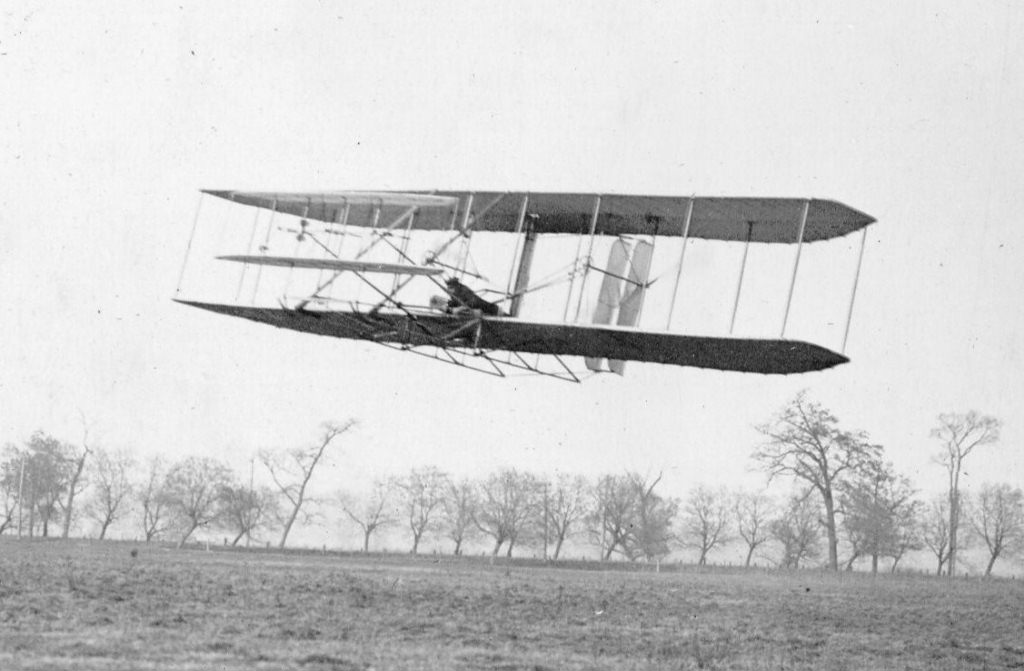
An airplane wing gains lift by taking off into the wind. This then causes the airplane to defy gravity and fly . . . an entrepreneurial metaphor if ever there was one. Interestingly, in my pilot days I once experimented with a downwind takeoff (on a very long runway) and could barely get off the ground. I quickly put the plane back on the runway and ended the experiment!

To build a muscle we exercise it regularly adding more weight and repetitions. Members of the military become elite Seals, Green Berets, Delta Force and Rangers by undergoing rigorous training involving obstacles that severely test the physical and psychological strength of a human being. In Kenya, long distance runners often wear no shoes as they traverse inhospitable terrain, toughening the soles of their feet in the process. I think you can probably see the lessons here.

Adversity can be an entrepreneur’s best friend if we allow it to be. If success comes without challenge, it’s easy to become complacent. We’re also robbed of growth opportunities that result from what we learn as we work through various hardships on the road to achievement. No one says we must like adversity. But avoiding it and fighting it does not work. I’ve found that the most constructive approach is to actually embrace it. For me this means relaxing and easing into adversity. It means establishing a positive mindset and expecting that much good will comes from the experience. We’ve all heard the term “silver linings” and used it many times. Often, we look back on what has transpired and almost as a consolation prize, we identify the silver linings. Looking for them in advance can give us the lift that we need to fly through the clouds.

In addition to the tangible benefits that come from overcoming adversity in specific situations, there are numerous more global wins that can occur. Think about the last time you had a tough puzzle to solve. Perhaps one of the outcomes was that of heightened creativity and innovation. When faced with the prospects of failure our creative instincts kick in and the results can be amazing. We also find that collaboration and teamwork increases reinforcing the notion that two heads are better than one. While I thrive on making sense of complexity and solving tough problems, I find that doing it with others is more productive and builds a stronger organization.

Suppose a professional basketball team plays a game against the best high school team in the country. There’s no doubt about which team will win. Now, imagine that the same NBA team plays against the reigning world champion NBA team and beats them. Which win do you suppose offers a greater sense of accomplishment? We need to feel like we are doing something really worthwhile which can be difficult when we prevail without any struggle whatsoever.

Adversity helps us to identify weaknesses within our company as well as with our strategy. When we aren’t tested and succeed anyway, we don’t really know what could happen if our feet were held to the fire. Challenges and obstacles also allow us to develop resilience and perseverance – both individually and organizationally. I truly hated those first few months of my career when I was an apartment manager. I was kicked in the teeth, the rear, and every other part of my body – I was totally miserable. But something finally clicked, and I figured it out. Quitting wasn’t an option for many reasons – thank goodness! Now I look back and understand how valuable the tough times were in teaching me how to get off the ground and back on the horse.

When we embrace adversity, we can make it work for us like an airplane uses the wind to take off. Then it can become a powerful tool in the entrepreneur’s toolbox.

This blog is being written in tandem with my book, “An Entrepreneur’s Words to Live By,” available on Amazon.com in paperback and Kindle (My Book), as well as being available in all of the other major eBook formats.

The Entrepreneur’s Trap

There is a trap that is well known to most human beings. This trap ensnares the young and the old; the rich and the poor; the healthy and the sick – it does not discriminate. The trap is that of seeing something negative and believing that it is so. You may think that this is black and white. Either something is negative or it’s not. Ah, but that’s the epitome of the trap. In fact, it’s not black or white.

For entrepreneurs this trap is especially dangerous. As we toil to grow our enterprise, we constantly encounter situations that could easily be perceived as negative. Let’s look at a hypothetical example. Eddie the Entrepreneur has watched his team work tirelessly to grow revenue. But the process has been slow, and Eddie is struggling to juggle his bills and keep vendors at bay. Scaling his company is happening but he’s quickly running out of cash. Eddie exhorts his team to pick up the pace and generate more revenue more quickly. Secretly, he thinks that his days are numbered and he’s going to have to face the inevitable and close the doors. Eddie sees what appears to be a negative situation and believes it. What do you suppose will happen next? Yes, Eddie’s belief becomes a self-fulfilling prophesy, and his company goes out of business.

Then there’s the story of Ingrid the Impresario. Her situation is like that of Eddie. Her company is making headway, but revenue isn’t keeping pace with expenses. She hates the calls she receives daily from bill collectors. But Ingrid is not going to be beaten. Rather than see a negative appearance and believe it, she is resolved to look beyond it. She realizes that she needs to act immediately before it’s too late. Ingrid asks her vice-presidents of sales, operations, and manufacturing to spend a day with her off-site. During that day, they identify a small pivot that will drastically cut costs, pump sales, and give them a much longer runway to reach consistent profitability. Rather than continue to try and “muscle through” they deftly make this tweak and quickly see the results they were seeking.

The difference in these examples is profound. In Eddie’s case he saw his business failing and became resigned to that negative appearance – he believed it. Conversely, Ingrid realized that adjustments were needed in her business – and she believed it. What Ingrid saw was not what others might have seen – a negative situation. Instead, she saw an opportunity to make changes that put her company on the path to success and looked beyond the negative appearance.

The ability to look beyond negative appearances is a superpower for entrepreneurs. Doing so takes discipline and a generally positive outlook on everything. I’ve often wondered why human nature seems to default to fear and negativity. I’ve concluded that we while tend to be afraid of the unknown, it’s relatively easy to believe that we will fail. We hear the statistics about how many companies die an early death. We read story after story detailing the failure of retailers, restaurants, start-ups of all types . . . and the list goes on. It takes a supreme effort not to succumb to the constant drumbeat of negativity.

I learned long ago to ignore the admonitions and warnings of others who lacked a clear understanding of that with which I was involved. Instead, I choose to view every situation and circumstance as an opportunity to inject a healthy dose of creativity. Of course, I’m not naïve enough to ignore reality. But I look for ways to push the boundaries of reality to my advantage. We’ve abandoned business ideas (and businesses!) that did not work. But that was done in clinical fashion after first exploring all our options and determining that we could better spend our time and capital in a more productive and profitable manner. We weren’t resigned to the “inevitable” failure. Instead, we were coldly calculating in our assessments and made choices that were in our best interests. After more than 49 years in business, I’ve never yet seen the sky fall. We’ve had setbacks and hit speed bumps. But by steadfastly looking for opportunity in every situation, we always find a way.

Seeing beyond negative appearances is an entrepreneur’s superpower. Following this approach opens infinite possibilities to prosper and succeed in ways we may not even imagine.

This blog is being written in tandem with my book, “An Entrepreneur’s Words to Live By,” available on Amazon.com in paperback and Kindle (My Book), as well as being available in all of the other major eBook formats.

The Chronic Issue Entrepreneur

Have you ever had a chronic issue that simply couldn’t be resolved in a cost-effective manner? In fact, maybe there isn’t any sort of solution at all. What do you do – especially if the situation has a negative impact on customer satisfaction? Here’s an example of what we encountered on one of our apartment communities. In this case, there is an issue with our water supply lines. Very simply – they break a lot. When this happens, apartments flood; sheetrock is damaged; carpet is destroyed, and residents are inconvenienced. We’ve spent huge sums of money to clean up the aftermath and have looked for every way possible to prevent the problem in the first place. Unfortunately, the piping material is flawed and short of re-piping the property, there isn’t another solution. And re-piping could run to the millions of dollars, so it’s just not an option.

The impact that this issue has had on our team and our residents has been profound. We’ve lost staff because of this problem. Several residents have moved out. Our team is weary of dealing with a challenge they cannot solve. Unfortunately, there’s a lot of negativity on display among our team members. This negative energy feeds on itself and everyone holds their breath each day hoping that the phone doesn’t ring with more bad news.

But all is not lost because there is something we can do. We can (and must) take a chronic situation like our pipe-break dilemma and turn it into a positive. We accept the fact that we are going to have pipes break from time-to-time. Acceptance is the first step in this process. For far too long we’ve operated in a state of denial. But this doesn’t have to be. Knowing that this problem will persist, we next amass as much data as we can generate and continually pore over it, looking for patterns or any other key elements that might help us identify where the next break might happen. Is there a particular location in the piping runs where most breaks occur? Does temperature or water pressure play a role?  We obviously focus on higher level units first since breaks on those floors can wreak more havoc than a first-floor apartment. Ultimately, we take whatever proactive steps we can to prevent the breaks – even to the extent of making some repairs before a break occurs.

The next part of this turn-the-negative-into-a-positive process can be fun. We develop a comprehensive plan for how we are going to create a wonderful experience for our residents when a pipe breaks and their apartment floods. Sounds crazy – right? How could anyone think wet carpet and water coming through the ceiling is a “wonderful experience?” But here’s how we make it happen. We mobilize our clean-up and repair team that is highly trained to deal with issues like this. We communicate clearly and often. We do everything in our power to minimize the inconvenience to the residents. Knowing that we are going to have a certain vacancy factor built into our financial model, we take a few vacant apartments and fully furnish and equip them with all the comforts of home. When a flood occurs, our team quickly moves clothing and other necessary items for the resident(s) affected into one of the furnished units. We treat them to a nice dinner out and provide them with gift baskets. Perhaps we’ll even offer them movie tickets or send them to an amusement park. In other words, we try to create a positive experience for them that they might not otherwise enjoy. Meanwhile, our team is working fast and furiously to repair the leak, clean and sanitize the carpet, repair the sheetrock, and put the apartment back the way it was before the flood. Then, as quickly as possible, we move the resident back into their original apartment. And I can’t emphasize enough the need for clear and constant communications.

Probably the most critical aspect of dealing with chronic problems like the one I’ve described is the mindset of the team. If the attitude is negative – we’re doomed from the start. When we look for creative ways to “wow” the customer, we can create goodwill AND it can be exciting and stimulating for our team. No, the problem doesn’t go away and coping with it may still be costly. But when our team finds a way to turn a negative into a positive for the customer – we will experience even greater levels of success than we might have otherwise.

This blog is being written in tandem with my book, “An Entrepreneur’s Words to Live By,” available on Amazon.com in paperback and Kindle (My Book), as well as being available in all of the other major eBook formats.

The Stressless Entrepreneur

Entrepreneurship can be a very stressful proposition. We’re trying to build our business and encounter countless challenges along the way. Cutthroat competition, product design issues, labor shortages, cash flow problems, slow sales, shipping snafus, government regulations, incredibly tight deadlines, lack of sleep and a host of other struggles. A lot of this is simply unavoidable and part of the growth and scaling process. How we deal with stress under duress is the name of the game.

Here are several questions we can ask ourselves. Is stress negative and draining? Do we view stress with fear and trepidation? Is stress something that we must survive? Or do we embrace stress and use it to “lean in” and thrive? You may think that thriving in stress is counterintuitive. But it is not.

It’s a fact that there are many opportunities for situations to become stressful. However, just because a situation is stressful doesn’t mean that we must buy in and take on the stress for ourselves. I know – this is certainly easier said than done. We start by observing how we normally react when confronted with potentially stressful circumstances. Some people withdraw and climb into a shell. Others might be combative and hypersensitive. Still others may wear their heart on their sleeve and present a woe-is-me portrait. Finally, there are those who may show panic and confusion. As entrepreneurial leaders we cannot afford to display any of these tendencies.

How we react outwardly is important to our team. If we are snippy and curt with the people around us, they will sense that something is wrong. If we show fear, they will smell fear and know that something is wrong. By always maintaining an optimistic and cheery demeanor, we can ensure the mental health of our enterprise. I realize that this is hard to do if we really aren’t feeling all that confident in the situation. It’s very difficult to fake it successfully. What to do?

On April 17, 2018, Southwest Airlines Flight 1380 bound from New York to Dallas suffered a massive engine failure that resulted in the loss of cabin pressure and the life of a passenger. Captain Tammie Jo Shults and First Officer Darren Ellisor remained calm under fire and safely landed the aircraft. They didn’t panic and followed their training to the letter. Once back on terra firma, Captain Shults personally spoke to each passenger as they deplaned. What was their secret? They eliminated the emotion and worked the problem.  

When we’re overwhelmed stress can build exponentially. This is the time to heed the old saying – eat the elephant one bite at a time. We break down whatever massive undertaking that is causing stress into manageable tasks. I am a compulsive list-maker. When a mountain looms in front of me I try and avoid looking at it in its totality. Instead, I develop a series of individual tasks and check them off my list as I finish them. I know this may sound like a mental game, but it works for me, and it might work for you too.

The next idea may seem like a bit of a stretch but can achieve the concept of leaning in and thriving. When faced with a sticky situation we look for the silver lining and ask the question, “How can I turn this into something positive?” Accomplishing this takes a lot of practice. It involves rising above the chaos and stress to take a clinical look at the landscape and find a way to succeed. I remember talking to a friend who had a major client that was terminating the relationship. Many entrepreneurs would have wrung their hands in despair. My friend immediately reached out to the primary competitor of the departing client and told him that he was now available to work with the competitor. This new relationship was worth twice the amount of business for my friend than before.

There are many other stress-busting techniques – and there may be times when we need to utilize all of them at our disposal. We should make certain we don’t become one-dimensional. Having other interests besides work provides outlets for our stress and frustration. This may include physical activities, hobbies, civic or charitable work to name a few. Meditation and deep-breathing exercises are excellent ways to remain centered and relaxed. It’s important to practice them continuously and not just when we are in distress. Finally, I’m a big proponent of creating and saying positive affirmations. Positive affirmations pattern our minds away from negativity and fear. For example, saying something like, “I am totally relaxed and ready to claim my good!” may be a great way to start. I know it may sound corny, but I’m living proof that it works. Saying a positive affirmation in groups of ten at least 100 times a day will lay the foundation. Doing it for a week or two adds the cement.

We all have moments where stress can build to overwhelming levels. But it doesn’t have to be debilitating if we choose to embrace it; lean into it and thrive.

This blog is being written in tandem with my book, “An Entrepreneur’s Words to Live By,” available on Amazon.com in paperback and Kindle (My Book), as well as being available in all of the other major eBook formats.

The Mistake-Prone Entrepreneur

I have a philosophy that mistakes are simply unfinished experiments in the laboratory of life. That does not mean we want to leave unfinished the same experiment over and over. But being too tentative and too cautious to avoid making a mistake may itself be a mistake! The obvious conclusion is that we want to learn from our mistakes and turn them into productive experiences.

To turn our mistakes into productive experiences we need to analyze them in a process-oriented manner. Being a go-go entrepreneur, it is not easy for me to slow down long enough to reflect on what went wrong. Generally, I just want to get back in the game and do it right the next time. This worked somewhat well in the past, but as I have gotten older, I’ve learned that being more intentional about analyzing mistakes increases the odds of not making the same mistake again. It also has caused me to look for the “silver lining” – that nugget of information that might enable me to turn the mistake into something unintentionally positive.

Step One in my mistake analysis process involves the simple act of identifying what went wrong and writing it down. Yes, I know this takes time, but it forces us to take a hard look at what happened. Did I follow an established process, or did I deviate from it – maybe even wing it? Did I fail to build-in a sufficient margin of safety at the front end? Did I somehow ignore warning signals that were flashing at me? Was I driven by emotion or was my initiative grounded in facts? I have found that most of my mistakes came from deviating from an established process. Because of my go-go nature I want results to happen very quickly. By analyzing my mistakes, I have recognized a tendency pattern to cut corners.

Step Two requires that we consciously determine what we need to do differently and commit to do it. Knowing that I have the propensity to cut corners, I have become committed to following established processes. Before I move forward with anything I am doing, I stop myself and ask the simple question, “What is the process that needs to be followed?” I make certain that I know exactly what the process should be and then I affirm, “I know the process and I will follow it.” Sometimes I may even make this pledge to a close colleague for accountability sake.

The final step in mistake analysis is that of looking for the “silver lining.” History is littered with mistakes that resulted in brilliance. Alexander Fleming discovered penicillin due to a mistake he made in his lab. Another famous mistake at the 3M laboratories turned into Post-it Notes. Plastic was invented as the result of a mistake – some say that Charles Goodyear left a mixture of rubber and sulfur on the stove too long and found that he had created a new material. Wilson Greatbatch was building a heart rhythm recording device in 1956; used a wrong part and realized that the device would maintain a heart rhythm – thus the pacemaker was born. If we do not look for the silver linings in our mistakes, we may never find that little (or big) something that manifests into a positive development. Finding the silver lining requires a creative mindset – perhaps this is an exercise that can be done with others. Take the mistake and purposefully look through the “rubble” to see if there is anything of value that might be useful.

Mistakes don’t have to be the end of the world for us if we take the time to find out what happened; how we’re going to act differently in the future and committing to such different action, and finding the silver linings that may be hiding in plain sight.

This blog is being written in tandem with my book, “An Entrepreneur’s Words to Live By,” available on Amazon.com in paperback and Kindle (My Book), as well as being available in all of the other major eBook formats.

The Adversity-Beating Entrepreneur

An airplane wing gains lift by taking off into the wind. This then causes the airplane to defy gravity and fly . . . an entrepreneurial metaphor if ever there was one. Interestingly, in my pilot days I once experimented with a downwind takeoff (on a very long runway) and could barely get off the ground. I quickly put the plane back on the runway and ended the experiment!

To build a muscle we exercise it regularly adding more weight and repetitions. Members of the military become elite Seals, Green Berets, Delta Force and Rangers by undergoing rigorous training involving obstacles that severely test the physical and psychological strength of a human being. In Kenya, long distance runners often wear no shoes as they traverse inhospitable terrain, toughening the soles of their feet in the process. I think you can probably see the lessons here.

Adversity can be an entrepreneur’s best friend if we allow it to be. If success comes without challenge, it’s easy to become complacent. We’re also robbed of growth opportunities that result from what we learn as we work through various hardships on the road to achievement. No one says we must like adversity. But avoiding it and fighting it does not work. I’ve found that the most constructive approach is to actually embrace it. For me this means relaxing and easing into adversity. It means establishing a positive mindset and expecting that much good will comes from the experience. We’ve all heard the term “silver linings” and used it many times. Often, we look back on what has transpired and almost as a consolation prize we identify the silver linings. Looking for them in advance can give us the lift that we need to fly through the clouds.

In addition to the tangible benefits that come from overcoming adversity in specific situations, there are numerous more global wins that can occur. Think about the last time you had a tough puzzle to solve. Perhaps one of the outcomes was that of heightened creativity and innovation. When faced with the prospects of failure our creative instincts kick in and the results can be amazing. We also find that collaboration and teamwork increases reinforcing the notion that two heads are better than one. While I thrive on making sense of complexity and solving tough problems, I find that doing it with others is more productive and builds a stronger organization.

Suppose a professional basketball team plays a game against the best high school team in the country. There’s no doubt about which team would win. Now, imagine that the same NBA team plays against the reigning world champion NBA team and beats them. Which win do you suppose offers a greater sense of accomplishment? We need to feel like we are doing something really worthwhile which can be difficult when we prevail without any struggle whatsoever.

Adversity helps us to identify weaknesses within our company as well as with our strategy. When we aren’t tested and succeed anyway, we don’t really know what could happen if our feet were held to the fire. Challenges and obstacles also allow us to develop resilience and perseverance – both individually and organizationally. I truly hated those first few months of my career when I was an apartment manager. I was kicked in the teeth, the rear and every other part of my body – I was totally miserable. But something finally clicked, and I figured it out. Quitting wasn’t an option for many reasons – thank goodness! Now I look back and understand how valuable the tough times were in teaching me how to get off the ground and back on the horse.

When we embrace adversity, we can make it work for us like an airplane uses the wind to take off. Then it can become a powerful tool in the entrepreneur’s toolbox.

This blog is being written in tandem with my book, “An Entrepreneur’s Words to Live By,” available on Amazon.com in paperback and Kindle (My Book), as well as being available in all of the other major eBook formats.

Stress and the Entrepreneur

Entrepreneurship can be a very stressful proposition. We’re trying to build our businesses and encounter countless challenges along the way. Cutthroat competition, product design issues, labor shortages, cash flow problems, slow sales, shipping snafus, government regulations, incredibly tight deadlines, lack of sleep and a host of other struggles. A lot of this is simply unavoidable and part of the growth and scaling process. How we deal with stress under duress is the name of the game.

Here are several questions we can ask ourselves. Is stress negative and draining? Do we view stress with fear and trepidation? Is stress something that we must survive? Or do we embrace stress and use it to “lean in” and thrive? You may think that thriving in stress is counterintuitive. But it is not.

It’s a fact that there are many opportunities for situations to become stressful. However, just because a situation is stressful doesn’t mean that we have to buy-in and take on the stress for ourselves. I know – this is certainly easier said than done. We start by observing how we normally react when confronted with potentially stressful circumstances. Some people withdraw and climb into a shell. Others might be combative and hypersensitive. Still others may wear their heart on their sleeve and present a woe-is-me portrait. Finally, there are those who may show panic and confusion. As entrepreneurial leaders we cannot afford to display any of these tendencies.

How we react outwardly is important to our team. If we are snippy and curt with the people around us, they will sense that something is wrong. If we show fear they will smell fear and know that something is wrong. By maintaining an optimistic and cheery demeanor at all times, we can ensure the mental health of our enterprise. I realize that this is pretty hard to do if we really aren’t feeling all that confident in the situation. It’s very difficult to fake it successfully. What to do?

On April 17, 2018, Southwest Airlines Flight 1380 bound from New York to Dallas suffered a massive engine failure that resulted in the loss of cabin pressure and the life of a passenger. Captain Tammie Jo Shults and First Officer Darren Ellisor remained calm under fire and safely landed the aircraft. They didn’t panic and followed their training to the letter. Once back on terra firma, Captain Shults personally spoke to each passenger as they deplaned. What was their secret? They eliminated the emotion and worked the problem.

When we’re overwhelmed, stress can build exponentially. This is the time to heed the old saying – eat the elephant one bite at a time. We break down whatever massive undertaking that is causing the stress into manageable tasks. I am a compulsive list-maker. When a mountain looms in front of me I try and avoid looking at it in its totality. Instead, I develop a series of individual tasks and check them off my list as I finish them. I know this may sound like a mental game but it works for me and it might work for you too.

The next idea may seem like a bit of a stretch, but actually can achieve the concept of leaning in and thriving. When faced with a sticky situation we look for the silver lining and ask the question, “How can I turn this into something positive?” Accomplishing this takes a lot of practice. It involves rising above the chaos and stress to take a clinical look at the landscape and find a way to succeed. I remember talking to a friend who had a major client that was terminating the relationship. Many entrepreneurs would have wrung their hands in despair. My friend immediately reached out to the primary competitor of the departing client and told him that he was now available to work with the competitor. This new relationship was worth twice the amount of business for my friend than before.

There are many other stress-busting techniques – and there may be times when we need to utilize all of them at our disposal. We should make certain we don’t become one-dimensional. Having other interests besides work provides outlets for our stress and frustration. This may include physical activities, hobbies, civic or charitable work to name a few. Meditation and deep-breathing exercises are excellent ways to remain centered and relaxed. It’s important to practice them continuously and not just when we are in distress. Finally, I’m a big proponent of creating and saying positive affirmations. Positive affirmations pattern our minds away from negativity and fear. For example, saying something like, “I am totally relaxed and ready to claim my good!” may be a great way to start. I know it may sound corny, but I’m living proof that it works. Saying a positive affirmation in groups of ten at least 100 times a day will lay the foundation. Doing it for a week or two adds the cement.

We all have moments where stress can build to overwhelming levels. But it doesn’t have to be debilitating if we choose to embrace it; lean into it, and thrive.

You can also listen to a weekly audio podcast of my blog. What you hear will be different than what you read in this blog. Subscribe on iTunes or wherever you get your podcasts. You can also click on this link – Click here to listen to Audio Episode 100 – Congratulations – You Own a Gold Mine!

This blog is being written in tandem with my book, “An Entrepreneur’s Words to Live By,” available on Amazon.com in paperback and Kindle (My Book), as well as being available in all of the other major eBook formats.