
Pluses and Minuses

There’s one thing of which I’m certain . . . I think. Have you ever had this kind of feeling? We entrepreneurs are a pretty confident lot. We are scrappy and tough. There’s nothing we can’t do including leaping over tall buildings in a single bound. Throw us a challenge and we’ll whip it with one hand tied behind our back and blindfolded to boot. Right? Well, maybe. And most of the time.

Entrepreneurs have several “thought enemies,” one of them being gnawing and nagging doubts. Here’s a not-so-fictional example. Let’s say that things have been going pretty well in our business and we’ve had some nice wins along the way. Then we hit a little speed bump – perhaps a contract doesn’t get signed that we thought we had in the bag. Or an important customer stops doing business with us. In other words, we get knocked off our game a bit. That part we can handle with aplomb as we go on to sign another contract or we fix the problem with our important customer. It’s what happens next that can be perplexing.

After we’ve been bucked off the horse so to speak, we begin to have feelings of doubt. For example, we are ready to introduce a new product or service, but we wonder if it might flop. In the past, we would have launched without any trepidation, but now it feels different. Could something else go wrong that that might cause everything to come unraveled? We know that these gnawing and nagging doubts aren’t healthy and could become self-fulfilling prophecies. Yet still they are there and hard to push out of our mind.

Why is our confidence shaken, and doubts have entered the picture? I’ve thought about all of the times this has happened in my life and believe it centers on a rather recent failure in the past. The earlier example that I gave where the contract or customer was lost illustrates this notion. Coming off of a failure makes us wary and more sensitive. As entrepreneurs we have winning in our DNA. Failure is for losers. And yet we do fail and we do lose. Sure we’re resilient, but we can’t ignore what it felt like to fail and lose and we don’t want to experience it again. And so we’re vulnerable to doubt and uncertainty. Subconsciously we’re thinking, “I’m sure what I’m doing now is going to work, but if it doesn’t, I don’t want to be hurt again.” We find ourselves moving forward but wondering . . . always wondering when the other shoe will drop.

Here’s what I’ve learned about myself when these insidious doubts start creeping into my consciousness. I step back and take inventory of all of the positive successes that I know lay in front of me. I may have just lost a deal, but there are ten more that I believe with all my heart will succeed. Now here’s the key – even if only half of the ten deals actually succeed, I’m still way, way ahead. In other words, I’m not looking at the glass half full, but I’m looking at multiple glasses and every one of them is overflowing. Immediately my mindset changes and all is right with my world again. I’ve accepted the fact that I had a prior setback. I’ve accepted the fact that I’ll have more setbacks in the future. But I know that the pluses will always far outweigh the minuses and the winning score will be in my favor – overwhelmingly!

Gnawing and nagging doubts are usually a product of a recent failure. We get past such feelings by looking at the scoreboard and realizing that we are way ahead in the game. Ultimately this makes us unbeatable.

This blog is being written in tandem with my book, “An Entrepreneur’s Words to Live By,” available on Amazon.com in paperback and Kindle (My Book), as well as being available in all of the other major eBook formats.

water glasses

Keep the Line Moving

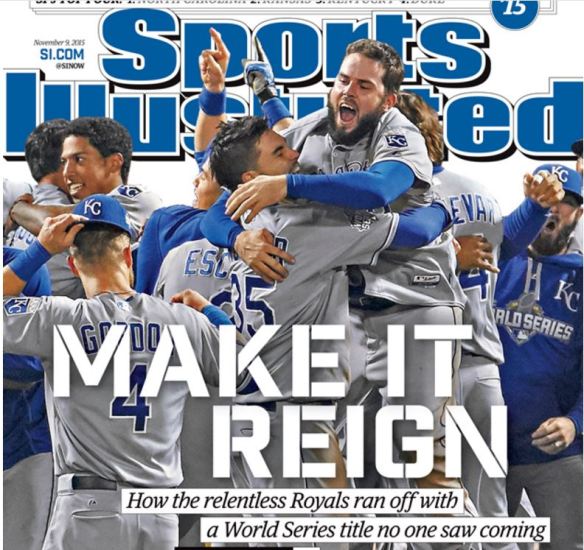
In November 2014, I wrote a blog about the Kansas City Royals major league baseball team and its losing effort in the World Series. A year later I’m pleased to once again write about the Kansas City Royals and the World Series . . . but this time the outcome is different because the Royals won the Series in five games. There’s a real symmetry with the parallels between how the Royals won and how entrepreneurs can win.

The 2015 Kansas City Royals was not a team of superstars. They were not a team of power hitters swinging for the fences and hitting the ball out of the park. In fact, Kansas City only hit two home runs during the World Series, and one was inside-the-park. The Royals won for a combination of reasons. First, all of the players bought into the culture and the plan that was conceived during spring training to win the championship. The players were aggressive at the plate and simply aspired to hit the ball and put it in play. They were intentional about trying to make contact with the ball and send it through the gaps. Once a player was on base the mantra became “keep the line moving.” In other words, the key to producing runs was to generate singles, doubles, walks – whatever it took for the next player to get on base and advance runners across home plate.

Kansas City players and coaches spent considerable time doing research on their opponents. But it didn’t stop there. They also analyzed data on the umpires to understand how strike zones were being maintained. They watched how certain infielders threw the ball to first base; how quickly outfielders got the ball back into the infield and the tendencies of pitchers with their windup motions. The Royals used this information to decide when to stretch singles into doubles – or when Eric Hosmer decided to make a mad dash from third base to home on a ball hit to the third baseman in Game 5. This was a team that hustled. This was a team where it was obvious that all of the players were having fun and enjoyed playing the game. Probably the most amazing trait of the Kansas City Royals was their ability to come back from being behind in the later innings of a game and win. Seven times in the postseason they came from multiple runs behind to win, and outscored their opponents 55 – 11 after the sixth inning. Every player believed that no matter what the odds, they would win and they literally willed it so.

Each of our entrepreneurial endeavors would be well served to use the 2015 Royals as a model. Do we have superstars in our midst who require the feeding of big egos? Do they sulk or create drama when things don’t go their way? Are we focused on hitting the big time, or do we work hard to apply the basics and fundamentals that produce the singles (and sometimes a double) in our everyday business lives? Have we developed a winning culture within our organization that values the contribution of every team member? Christian Colón, a Royals backup infielder, hadn’t played a single game in the post season. And yet he was asked to bat in the 12th inning of the final Game 5 against the Mets. Down in the count with two strikes he proceeded to hit the go-ahead run that led to the championship. Manager Ned Yost trusted Colón to bat as a backup just as he trusted every starting player on the team.

Are we sticklers for diving in and digging up data, then translating it into the myriad of ways that will help us win? Is our team all about hustle and having fun? Do our team members have resilience and a comeback mindset? When the chips are down do they give up or do they truly believe that they can cobble together whatever it takes to put a W on the scoreboard? Sports often offer a plethora of wonderful metaphors that correlate with the business world. But the winning ways of the 2015 Kansas City Royals may be the ultimate example in this respect.

“Keep the line moving” is both an aspirational and an inspirational business concept. It certainly worked for the Royals and is a winning notion for us as entrepreneurs.

This blog is being written in tandem with my book, “An Entrepreneur’s Words to Live By,” available on Amazon.com in paperback and Kindle (My Book), as well as being available in all of the other major eBook formats.

Royals World Series

Second Place

I was talking to a woman the other day who told me that she had recently interviewed for a position that she really wanted, but came in second. Her statement got me thinking that sometimes second place is the best outcome. We’re conditioned that winning is the only outcome for which we should strive. After all, who runs a race with a goal of coming in second? But what if second place really turns out to be first place? Let me explain.

I have always believed that there’s always a reason that things work out the way they are supposed to. It’s not fate – it’s simply the way the world works. Here’s my story. When I was about to become a newly-minted college graduate I interviewed for a job managing a shopping center in a medium-sized Midwestern city. I pulled out the stops to prepare for the interview and dazzle the owner’s representative with my charm and good looks because I had no experience! But alas, the owner opted to hire someone else that actually did have experience. Naturally I was disappointed. But had I won that job, who knows where my career path might have led? Instead, I have been blessed with the most incredible opportunities to live my passion over the past 40+ years. In the end, I definitely ended up in first place!

Some may see this as a Pollyanna sort of mindset. After all, who really thinks that they’ve won when they’ve lost? But there’s a method to this madness. The key is to truly believe the notion that something better is always in store for us. When we succeed, it’s a reflection of this reality. When we are unsuccessful it’s a signal that what we wanted wasn’t meant to be . . . because we’re destined for something better. If we doubt that the latter is true, then it’s highly unlikely that we’ll experience that “something better.” We all know the power of the mind. And yes, it’s powerful enough to block and deny positive outcomes when we aren’t open to all possibilities.

It’s hard not to be disappointed when we take second place. But with practice we can learn how to quickly replace the feeling of disappointment with feelings of excitement and anticipation. I’ve reached an interesting point in my life. When I expend extreme effort, work smart and am innovative but still come up short, my heart pounds a little faster and I think to myself, “OK, something pretty amazing must be in store and I can’t wait to find out what it is.” I may even work with some positive affirmations at this point to ensure that I am open and receptive to however the script is about to be re-written.

Here’s a current example of how this actually worked for us. My wife and I have been spending time each winter in Florida (where it’s much warmer than in Kansas City). We decided to stop renting and purchase a condo. We found what we thought was the perfect unit and made an offer which was countered by the seller. We submitted a counteroffer to the seller’s counter and then heard nothing. I was fairly certain that another buyer had emerged which turned out to be the case. But rather than being disappointed, we chose to truly believe that something better was about to happen. And boy did it! A magnificent unit we had previously seen in another building came back on the market. Right after we had initially looked at this unit it went under contract. Apparently the buyer backed out at the last minute and we quickly bought the unit. It has exceeded our wildest expectations. Had we wallowed in despair over the first unit we didn’t get, I’m absolutely convinced that we wouldn’t have connected with the unit we ended up purchasing.

By being open and receptive that something bigger and better is waiting to be revealed, our losses can become spectacular wins. Clearly there is no downside to embracing this mindset.

This blog is being written in tandem with my book, “An Entrepreneur’s Words to Live By,” available on Amazon.com in paperback and Kindle (My Book), as well as being available in all of the other major eBook formats.
secondplace

Master’s Degree

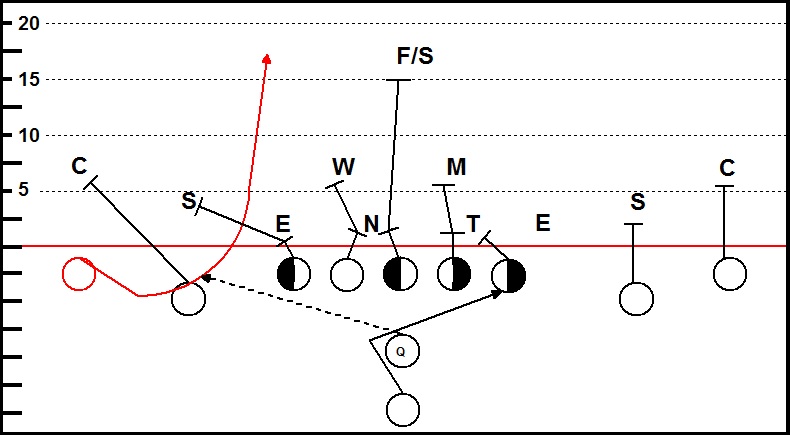
What would you think of an entrepreneur who says that he or she will give his strategy to his/her competition? The sporting metaphor would be the equivalent of a football coach giving away his playbook. Is this total insanity? Why would we lay out our game plan for competitors that are trying to beat our brains out? I’m not advocating that we do this but I do believe that the hype over being secretive about business strategies may be overblown. Why? Because I don’t believe that the strategy itself is as important as the execution of that strategy.

It’s completely true that most entrepreneurs need to spend more time working on their business than in their business. Translation – entrepreneurs need to be more strategic and less tactical, which is not an easy task in small organizations. But what trumps everything is the effective and successful implementation of a strategy. If we lay out our strategy for a competitor, that doesn’t necessarily mean that our competitor will beat us with it. Our strategy was developed with extensive input from a number of stakeholders in our company. It evolved through our culture and is nuanced by a wide range of variables that are specific to our enterprise. It’s highly unlikely that our competitor can implement our strategy as well as we can

So, if it’s principally about execution, how does an entrepreneur ensure that this process achieves success? Execution is a mixture of tangible and intangible factors. First, the team must have confidence in its abilities; in the strategy; in the data that is foundational to the strategy, and in the resources that must be brought to bear to implement the strategy. Hand-in-hand with this confidence is the trust factor. Team members must totally trust each other to fulfill their roles and be accountable accordingly. Without this trust, the execution of a strategy is impossible.

Sound strategies are often developed with the experience of members of the implementing team in mind. A strategy to manufacture and sell a particular type of product assumes that the engineers designing it and the equipment operators on the line have the minimum level of experience needed to turn out a flawless finished product.  In addition to experience there’s an assumption that team members have certain skills that will be married with experience to deliver the product at a cost and level of quality that results in happy customers and a financial profit to the company.

Strategy execution involves a myriad of mechanics. Translation – there’s a well-thought comprehensive process that enables a step-by-step methodology from start to finish. This process encompasses everything from market research, engineering and design, procurement of raw materials (still assuming a manufactured product for illustration purposes), production, quality control, marketing, sales, shipping, customer service, billing and collections . . . the list goes on. The point here is that the mechanics of implementation are vital to successful strategy execution.

Finally, the team must have a winning mindset. This goes beyond confidence. It’s about truly believing that without question the strategy will win. It’s about visualizing success. True believer team members celebrate their impending success on a daily basis. The culture is upbeat and positive. It is focused on honoring the team AND the customer. The winning mindset transcends confidence and envisions the strategy as already implemented in perfect order.

The ability to execute a strategy defines an entrepreneur and his or her organization. Some can and many cannot. Entrepreneurs who can consistently blend all of the right ingredients are masters of implementation.

This blog is being written in tandem with my book, “An Entrepreneur’s Words to Live By,” available on Amazon.com in paperback and Kindle (My Book), as well as being available in all of the other major eBook formats.

Football Playbook

Big Mo

Question: Some people seem to be on a roll with everything going their way. How can I get some of that?

Answer: What you are suggesting is like a sports team. The team begins to win some games and the next thing you know they’ve put together a pretty impressive winning streak. Did you know that the 1916 New York Giants baseball team won 26 games in a row? The college basketball UCLA Bruins recorded 88 consecutive wins between 1971 and 1974. And at 17 – 0 the 1972 Miami Dolphins was the only NFL team to win the Super Bowl with a perfect season.

What did these teams have in common? They were able to use their talent optimally. They executed the basics and fundamentals of the sport they were playing. They had a solid game plan. They were well-coached. They had confidence and faith in their abilities. And they absolutely positively believed that they would win. What a powerful combination of factors! Blended together they created momentum.

We’ve all seen momentum in our business and personal lives. A company creates a winning product and can do no wrong. It captures an ever increasing percentage of market share and then garners a lot of favorable press. This in turn creates more demand for its product and feeds the momentum. But how do we build momentum for ourselves and our businesses? What if we don’t have that magical product or service that gets all the buzz?

We can create our own momentum following the same pattern as the great sports teams that put together incredible winning streaks. It’s incumbent upon us to assemble a team that has top flight talent. Are there team members who don’t have the talent we need? If so, it will be difficult to gain momentum. Do we pay attention to the basics and fundamentals of our business? Is our customer service second-to-none? Is our product the best that we can build? Do we have a sound business strategy? Our game plan must be well-thought and proven to work successfully. How can we create a winning streak if we don’t have such a strategy in place? Is our team well-coached? Do we micro-manage our teammates? Are people held accountable? All of these elements will build momentum. But there’s one thing that will push us over the top and sustain that momentum. Do we have confidence in our abilities? Do we really truly believe that we will win? Individuals and teams that continuously win have an everyday belief that they will always win. And if they do suffer a loss, they get right back in the winning groove the next day.

The most powerful aspect of momentum is faith. It’s the humble belief that we have the ability to win and nothing can shake that belief. There’s never a shadow of a doubt in our being that we will succeed. Believe in momentum and it will be so.

This blog is being written in tandem with my book, “An Entrepreneur’s Words to Live By,” available on Amazon.com in paperback and Kindle (My Book), as well as being available in all of the other major eBook formats.

locomotives