
“No” Flippers

Here is a fascinating subject for all entrepreneurs (and everyone else for that matter). It’s the world of auto-antonyms with a focus on one particular word in the English language. What is an auto-antonym you ask? Don’t worry; you didn’t miss anything in school. Until I looked it up, I had no idea about auto-antonyms, sometimes called a contranym. Simple answer – it’s a word that can mean the opposite of what it appears to mean. Now that the picture is completely confused, let’s focus on the word . . . NO.

“No” seems like a pretty simple word to understand – right? Not so fast. In my world “No” can actually mean “Yes.” Let me explain. Remember when we were kids and we bugged our parents for something? Often times the default answer was “No.” But we became conditioned to realize that “No” could be changed to “Yes.” I remember a trip to Disneyland in Anaheim, California when I was five years old. There was one particular ride that I wanted to try as soon as I hit the park. My parents – in unison – said, “No” (emphasis not added). They reasoned that I was too young. But I continued to harangue them throughout the day and wore them down to the point that before we left the park that afternoon, they finally said, “Yes.” In fact I was too young for the ride and had no clue what to do – one of the attendants had to come and rescue me – but I was victorious in my quest to flip “No” to “Yes.” I guess that was the launch of my persuasive powers on the road to becoming an entrepreneur.

Too often, we hear “No” and accept it as gospel. We interpret the word as a form of rejection; feelings may be hurt, and we may become dejected and deflated. This next statement is very, very important. NO. DOES. NOT. ALWAYS. MEAN. NO. If we simply accept the word for what we think it means then it’s Strike Three and game over. But if we see “No” as the starting point for getting to “Yes,” there’s still a chance for extra innings. And who knows – we might win the game in the bottom of the 12th!

Entrepreneurs who hear “Yes” when they are told “No” are “No Flippers.” They understand that being told “No” just means that they need to become more persuasive and work harder to build their relationships. By doing so, they increase the odds of flipping the “No” answer to a “Yes” answer. When we are told “No,” we have a chance to zero-in and learn something. If we’re helping someone buy our product or service, it’s imperative that we find out why the other party has declined. By politely asking for feedback we might discover that a minor change in the product or service could result in a totally different outcome. Had we simply accepted the “No” answer, we might not have had the chance to make the tweak that led to a sale. Sometimes we are told “No” not because the other party doesn’t like us or what we are offering, but the timing isn’t right for them. This is where relationship-building is critical. We remain in touch and work to serve the relationship in whatever ways possible while staying in front of the customer in a positive manner. But remember – there’s a fine line between the obnoxious childish whining we did as kids to get our way, and doing what it takes to be in the right place at the right time to serve our customers.

I can’t begin to count the number of times I’ve been told “No” whether it was in raising equity from investors to acquire properties; securing a loan for an acquisition; negotiating the purchase or sale of a property, or trying to hire a particular individual to join our team. Maybe I’m just thickheaded, but when I hear “No,” it’s just a signal to step-up my game.

As entrepreneurs we need to become accomplished “No Flippers.” It may take a while and we will need to be creative, but eventually we’ll get someone to say “Yes.” Maybe it’s the person we have been trying to convince all along, or perhaps it’s someone else. We use the knowledge we gain from hearing “No” to make the changes necessary to get to “Yes” and achieve success.

You can also listen to a weekly audio podcast of my blog. What you hear will be different than what you read in this blog. Subscribe on iTunes or wherever you get your podcasts. You can also click on this link – Click here to listen to Audio Episode 3 – Visually Unimpaired.

This blog is being written in tandem with my book, “An Entrepreneur’s Words to Live By,” available on Amazon.com in paperback and Kindle (My Book), as well as being available in all of the other major eBook formats.

yes

The Anatomy of an Entrepreneur

As entrepreneurs exactly who are we? What makes us tick? Is there some sort of DNA gene that we can point to? I’ve thought a lot about some of the exceptional entrepreneurs I’ve known over the past four decades and have identified some of their traits and tendencies that stand out.

Let’s start with creativity and innovation. Entrepreneurs use their creative powers to innovate and find a better way to do something. Elon Musk has to be one of the most prolific entrepreneurs when it comes to innovation – Tesla Motors, SpaceX, Pay Pal and Solar City come to mind to name a few. Often, creative entrepreneurs are also visionaries. They have an uncanny ability to see into the future and understand what their customers will want and how their company needs to be designed to win. GoPro CEO Nick Woodman, is one of the foremost visionaries in America today. Who could ever have imagined a series of high definition video cameras that are small, durable and light enough to capture our daily adventures – daring and mundane? And successful entrepreneurs understand risk. Rather than taking risk they are adept at managing it.

When they get knocked down, great entrepreneurs get back up – over and over and over. They are amazingly resilient and don’t see failure . . . only opportunity. Walt Disney was fired by his employer, the Kansas City Star, because he supposedly lacked creativity. That didn’t seem to impact his storied career. When things don’t work out as planned they are flexible and know how to adapt and make the best of every situation. Top flight entrepreneurs are persuasive and can convince others to say yes. They do so through the power of their passion. Does Steve Jobs come to mind? Look what he convinced us to buy! Along with their persuasive powers, successful entrepreneurs are strong communicators in both verbal and written formats.

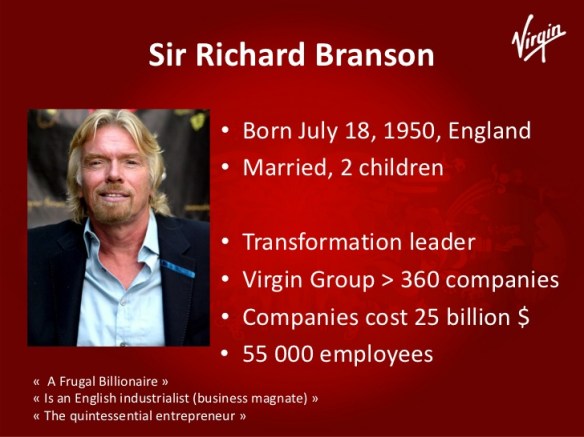
Entrepreneurs are assertive – the great ones are less aggressive than assertive. They have a healthy degree of empathy and are sensitive to the feelings of others. Entrepreneurs at the top of their game have a certain amount of charisma. They can be sociable and gregarious – even if those aren’t their core tendencies. Without charisma an entrepreneur will find it tougher to raise money, develop important relationships and influence others. Billionaire entrepreneur Sir Richard Branson is one of the most charismatic leaders on the planet. And he has woven his charisma into a tapestry of empathy and caring about other people.

Culture King is another descriptor for the cream-of-the-crop entrepreneur. Ben Chestnut is the founder and CEO of MailChimp fits into this category in the ways he has empowered the 500+ members of his team. Hand-in-hand with a strong culture is a smart entrepreneur’s ability to delegate. According to a 2013 Gallup survey of Inc. 500 CEOs, an average three-year growth rate of 1,751% was realized where the CEO had a high Delegator talent. Entrepreneurs typically have a high sense of urgency and tend to be very self-structured – there’s no way anyone is going to tell them what to do! Entrepreneurs simply don’t want to be a cog in someone else’s machine. Most entrepreneurs also have the ability to juggle many things at once and in fact need to feel the rush and excitement of pursuing multiple projects and initiatives simultaneously. Finally, ultra-successful entrepreneurs are generally positive and optimistic people. They don’t dwell on mistakes and never play the victim.

Remember the DNA thing I mentioned at the beginning of this blog? Well, there may be something to it. A February 17, 2016, research paper published in the Austin Journal of Molecular and Cellular Biology reported on the Dopamine Receptor D4 Gene and concluded that entrepreneurs have a higher tolerance for risk-taking in part, due to this gene (Link to research publication.). Apparently genetics govern approximately 30% of what makes one an entrepreneur. But that leaves 70% to a wide range of personality traits and tendencies.

There are many such traits and tendencies that are identified with entrepreneurs. No one person possesses them all, but the more to which we lay claim the closer we come to attaining world class status.

You can also listen to a weekly audio podcast of my blog. What you hear will be different than what you read in this blog. Subscribe on iTunes or wherever you get your podcasts. You can also click on this link – Click here to listen to Audio Episode 2 – The When Affliction.

This blog is being written in tandem with my book, “An Entrepreneur’s Words to Live By,” available on Amazon.com in paperback and Kindle (My Book), as well as being available in all of the other major eBook formats.
richard-branson-as-a-leader-4-728

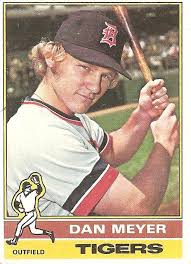
Who Is Dan Meyer?

In 1961 Major League Baseball’s Philadelphia Phillies suffered a 23 game losing streak. The 2013-14 NBA Philadelphia 76ers endured a 26 game losing streak. In 1976-77 the Tampa Bay Buccaneers had the longest losing streak in NFL history at 26 games. Dan Meyer played both in the infield and the outfield for the 1983 Oakland Athletics and captured the MLB record for hitless at-bats in 48 attempts by a non-pitcher. Talk about slumps! A quick check of the dictionary offers the following definition of slump – “a period during which a person performs slowly, inefficiently, or ineffectively, especially a period during which an athlete or team fails to play or score as well as usual.”

We’ve all watched sports teams at amateur and professional levels encounter slumps. Ditto for businesses. And we’ve undoubtedly experienced periods in our own lives where we perform slowly, inefficiently or ineffectively. Feelings of hopelessness and victimization set in. Day after day we become more lethargic. It’s harder and hard to get out of bed. We’re defeated shortly after we arise. When things don’t turn out the way they should we say things like, “it figures – I just can’t win,” and an air of resignation sets in.

A slump is simply a state of mind. While I don’t have scientific proof, I believe we enter a slump as a result of negative thinking. We’re rocking along with everything going fine and something happens that has negative connotations. Maybe we were certain we were going to win a certain piece of business and then we don’t. Rather than shake it off and re-double our efforts with a positive attitude, we allow the loss to gnaw at us. It might be very subtle or even subconscious. But we let that little bit of negativity into our psyche and that, my friends, can be the beginning of a slump. Which is why I am such a staunch advocate for maintaining a positive frame of mind 100% of the time. Positivity is the best armor against a slump. When something doesn’t go right we need to see it as an opportunity to get right back on the horse and ride again . . . without hesitation. The negative creep in our consciousness will kill us if we don’t.

Suppose that somehow we find ourselves in a slump. How do we pull out of it? The same way we avoid falling into a slump in the first place. The first and most important step is to examine our attitude. Recognizing the negative thoughts and replacing them with positive ones is absolutely crucial. And we need to make sure we get every last one of them. Even a lingering doubt of any sort can be enough to keep the slump alive.

Once we return to a positive frame of mind we can take some additional steps to ensure that we’re back on track and the slump is behind us. Look for a small victory of some sort. No need to swing for the fences – just get a base hit. For example, we don’t need to immediately make that next big sale. Instead, simply get an appointment to meet with a prospective customer. Also, it’s a good time to review the basics and fundamentals of whatever it is that you do. This becomes a necessary grounding exercise. A baseball player who is struggling at the plate will often focus on the mechanics of his hitting. Perhaps he finds that a very minor change in technique makes all the difference. With a completely positive mindset and solid basics and fundamentals working in concert, the final step is going to a place of gratitude. We have so much for which to be grateful and must intentionally create a thanksgiving inventory. Focusing on gratitude will close the circle and put us back in the winning mode again.

Slumps occur because we let in a tiny bit of negativity. We can quickly end a slump by regaining our positive attitude; by focusing on the basics and fundamentals of what we do, and by being thankful for all of the good that is in our life.

You can also listen to a weekly audio podcast of my blog. What you hear will be different than what you read in this blog. Subscribe on iTunes or wherever you get your podcasts. You can also click on this link – Click here to listen to Audio Episode 1 – False Choices.

This blog is being written in tandem with my book, “An Entrepreneur’s Words to Live By,” available on Amazon.com in paperback and Kindle (My Book), as well as being available in all of the other major eBook formats.

Dan Meyer

Innie or Outie?

Are you an “innie or an outie?” And I’m not talking about belly buttons. Are you an introvert or an extrovert? Before you answer you should know that there are many common misconceptions about these terms. The famous Swiss psychiatrist, Carl Jung developed extensive research on this subject. In fact, Jung actually used the term “extravert” instead of “extrovert.” Over the years the word seemed to have morphed into the “extrovert” terminology we use today. So, when you hear these words, what do you think? An introvert is shy and an extrovert is outgoing? As with many things, this is an oversimplification. Think about how we recharge our batteries. Do you find that you gain renewed energy from being alone in solitude or by being around other people? Technically, introverts seek renewal alone and extroverts recharge through interaction with others. But enough with the technicalities. Let’s explore introversion and extroversion in the more traditional sense.

How can introverts and extroverts survive and thrive with each other? How can an introvert succeed when many situations call for a high degree of sociability and gregariousness? And how do extroverts avoid coming across as a bull in a china shop in situations that need reflection and finesse?

I know a person who has a position that requires considerable interaction with others in a public setting. This individual makes outstanding presentations to large groups of people but struggles mightily with one-on-one interaction. I and others question his genuineness and authenticity as a result of this challenge with his personality. People see him as a masterful “performer” on stage but are frustrated because the “act” doesn’t translate into personal charisma.

For those of us who might find it challenging to engage easily with others, here are some ideas. Step into it. Play offense instead of defense. We can put ourselves in situations where we have the opportunity for interaction. Maybe it’s at a conference or a gathering of some sort. We find someone who isn’t already talking to others and go introduce ourselves. Be strong. The handshake is firm and we make friendly eye contact. The person I mentioned in the preceding paragraph has a tendency to either avoid eye contact or look over my shoulder. Smile. Always smile. It helps us to put ourselves and others at ease. Relax. Don’t try too hard. We just need to be who we are – not someone else. And yes, we can be strong and relaxed at the same time. This actually projects confidence.

On the other end of the spectrum some of us may be somewhat supercharged with extroversion. In certain situations this can be overwhelming to others and can come across in a high pressure salesman manner. Of course we don’t want to be perceived this way. Many extroverts have a great deal of nervous energy and perhaps even a touch (or mega dose) of ADHD. This reflects in their speech patterns and mannerisms.

As extroverts we need to work to “dial it back” at times. Zip it. We may have a tendency to dominate conversations. Instead, we need to make a concerted effort to create a dialogue where we make sure that others have a chance to express themselves. Chill. Somehow we have to resist the urge to outwardly manifest all of the energy that is pent-up inside. Calm. We need to replace the pent-up energy with calmness. Don’t worry; our charisma is so strong that we won’t be seen as a shrinking violet. Smile. A friendly smile is disarming and sends positive vibes to others. As extroverts we may have a tendency to be too intense. Remembering to always smile will put others at ease.

Introverts and extroverts must make a mutual effort to co-exist and collaborate. When they succeed, they can do great things together.

This blog is being written in tandem with my book, “An Entrepreneur’s Words to Live By,” available on Amazon.com in paperback and Kindle (My Book), as well as being available in all of the other major eBook formats.

bull-china-shop

P+A+C=I

“. . . we shall fight in France, we shall fight on the seas and oceans, we shall fight with growing confidence and growing strength in the air, we shall defend our island, whatever the cost may be, we shall fight on the beaches, we shall fight on the landing grounds, we shall fight in the fields and in the streets, we shall fight in the hills; we shall never surrender.” “Let us therefore brace ourselves to our duties, and so bear ourselves, that if the British Empire and its Commonwealth last for a thousand years, men will still say, ‘This was their finest hour’.” Winston Churchill uttered these words during World War II and led Great Britain through one of its darkest periods in history.

“. . . I still have a dream. It is a dream deeply rooted in the American dream. I have a dream that one day this nation will rise up, live out the true meaning of its creed: We hold these truths to be self-evident, that all men are created equal.” On August 28, 1963, Dr. Martin Luther King made this proclamation at the Lincoln Memorial in Washington, DC, witnessed by 250,000 civil rights supporters.

Have you ever heard of Patrick Henry Hughes? He is an amazing story. Born without eyes and a congenital birth defect that prevented him from straightening his arms and legs, Patrick became an accomplished vocalist as well as playing the piano and trumpet. He even became a member of the University of Louisville Marching and Pep Bands, and a UP Premiere movie, “I Am Potential,” is based upon his life and success.

What is the common theme for these three individuals? Inarguably each is an inspiration. Churchill inspired his countrymen to stand strong during the difficult days when Britain was under siege. King inspired millions seeking equality in their everyday lives. Patrick Henry Hughes as served as an inspiration for everyone who has encountered a challenge – and haven’t we all?

As entrepreneurs we want to be inspirational leaders. We want to lead inspirational organizations. We want our mission and vision to be inspirational. But sometimes the notion of inspiration can be confusing and even elusive. Exactly how do we inspire? I’ve looked high and low and there’s no handbook. There are as many definitions as there are inspirational quotes – the quantities are massive. Here’s an equation that I’ve developed over the years that I believe stimulates inspiration.

Passion + Authenticity + Conviction = Inspiration

This formula can be measured by the likes of Winston Churchill, Martin Luther King, Jr. and Patrick Henry Hughes. Is there any question that each had incredible passion for their cause? And is there any doubt as to their authenticity? Think about it. How could anyone play-act the power and impact that each had on society? Finally, they never wavered. They never quit. They stood by their beliefs no matter what. When we genuinely have a deep and lasting positive passion; demonstrate it in authentic ways, and are steadfast in maintaining this passion, we can’t help but inspire others. People aren’t inspired by wishy-washy. People aren’t inspired by fake. And people aren’t inspired by quitters.

Inspirational intelligence exists in great leaders. By emulating the inspirational formula, Passion + Authenticity + Conviction, we too can motivate others to join with us in doing great things.

This blog is being written in tandem with my book, “An Entrepreneur’s Words to Live By,” available on Amazon.com in paperback and Kindle (My Book), as well as being available in all of the other major eBook formats.

Patrick-Henry-Hughes