
Unknown's avatar

About anentrepreneurswords

R. Lee Harris grew up in Manhattan, Kansas and has lived in the Kansas City area since 1977. A 1975 graduate of Kansas State University, Harris began his career with Cohen-Esrey, LLC as an apartment manager two weeks after he graduated. Now president and CEO, he is involved in apartment management, development and investment; construction and tax credit syndication on a nationwide scale. Over the course of his career Harris has overseen the management of more than 27 million square feet of office building, shopping center and industrial space and nearly 60,000 multi-family units. He has started dozens of business enterprises over the past 40+ years. In 1991, Harris wrote a book entitled, The Customer Is King! published by Quality Press of Milwaukee. In 2012 he authored the book, An Entrepreneur's Words to Live By. He has mentored a number of business people over the years and has been a long-time participant in the Helzberg Entrepreneurial Mentoring Program. He and his wife Barb have two grown daughters and one grandson. They are active in their church, community and university.

Mousetraps²

I don’t want our customers to be satisfied. Put another way, customer satisfaction is not our objective. I also don’t want our team members to be satisfied. There, I’ve said it. I’ll bet you’re thinking that there’s a punchline somewhere in all of this. And yes, there is. But let’s dig a bit deeper before getting to the bottom line.

When we serve others we certainly want them to be satisfied – right? This seems like a perfectly rational objective because we all know what happens when a customer or team member is dissatisfied. So, when a customer (or team member) makes a request, we do our best to satisfy that request. We generally believe that when someone is satisfied they are happy. Here’s an interesting dilemma. Suppose we’ve done everything we can to satisfy our customer; they tell us they are happy, but then they quit anyway. What’s up with that?

One of our companies is involved in managing apartment properties for our own account and for third-party clients as well. I can remember several times over the past many years that a long-time client told us he was perfectly satisfied with our service, only to make a change and hire another firm. We were assured that we’d done nothing wrong and other circumstances stimulated the change. In some cases the client was consolidating the management of all his properties with a national property management firm. In another instance we were told that the client had a relationship with another company and though he was satisfied with our performance, he thought he might do better with the other firm. Naturally there’s a strong level of disappointment when we hear that someone is satisfied and yet they are still making a change. What in the world are we to do?

OK, here comes the punchline. Customer satisfaction isn’t enough. Team member satisfaction isn’t enough. Customers and team members leave even when they are completely satisfied. Attempting to achieve customer and team member satisfaction is a siren song that will lure us into the rocks and sink our ship. Instead, we need to focus on fulfillment. Fulfillment is a much higher state than satisfaction. It’s a concept that’s similar to exceeding expectations but is even more than that. Trust me – you won’t get any help from the dictionary on this one. It says that to fulfill is to satisfy. I think the dictionary’s definition misses a very important nuance here.

Suppose an apartment resident calls and reports that her kitchen faucet is dripping. If our maintenance technician goes to her apartment and completes the repair, then he’s satisfied her request. However, if he goes and fixes the faucet, and then checks a number of other physical elements in her apartment and fixes other items that he finds, then we’re moving toward a level of fulfillment for the customer. Total fulfillment comes when there’s nothing else a customer could possibly want or need, even if he or she hasn’t articulated it. In other words, we’ve anticipated every possible scenario that could impact the customer and we’ve taken all the steps we could to resolve unforeseen issues and create an over-the-top experience. This was what was missing when we lost a client who told us he was satisfied. We had not gone above and beyond to create the over-the-top experience that achieved total fulfillment.

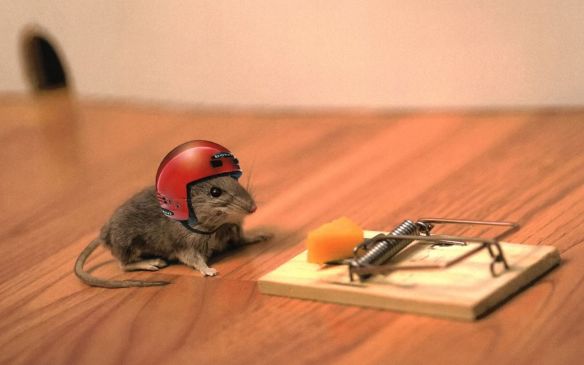
Customers and team members leave or quit all the time when they are satisfied. Usually it’s because they aren’t aware of a better alternative. But when that better mousetrap is presented to them it’s not hard to understand their motivation for making a change. Changing our focus from satisfaction to fulfillment increases the odds in our favor that we possess the better mousetrap.

Achieving fulfillment for our customers and team members requires a combination of commitment, innovation, understanding, vigilance, appreciation and gratitude. Fulfillment is the best mousetrap in today’s highly competitive entrepreneurial environment.

This blog is being written in tandem with my book, “An Entrepreneur’s Words to Live By,” available on Amazon.com in paperback and Kindle (My Book), as well as being available in all of the other major eBook formats.

mouse-trap-helmet

The “Disneyland” Story

We’ve explored the concept of Vision in this blog before. But I’d like to share a technique that has worked for me – perhaps you’ll find it valuable too. Simply put, vision is “what it looks like when we get there.” Remember when we were young and a family vacation to Disneyland was being planned? What was the focus? It wasn’t so much on the long journey to get there. Instead, we could see ourselves riding in the Tomorrowland Jets (long gone now) or in a Matterhorn Bobsled. We could taste the cotton candy and hear the whistle on the Mark Twain Riverboat. In other words, we had a vision in our minds-eye of what we were going to experience.

As entrepreneurs we have that same vision. The problem for most of us is that it remains trapped inside our heads. We struggle to articulate it to others. And so our team members punch the clock every day with no clear idea of “what it looks like when we get there.” It seems pretty clear to us, but they don’t have a clue.

I’ve been struggling with communicating my vision for many years. I often launch initiatives and undertake projects that all make sense within the framework of my vision – but to others it seems like a helter-skelter approach to something that is undefined. At times, members of our team have expressed frustration with the process and begged for a clearer picture. I’ve tried reducing my vision to writing, but a few bullet points later even I’ve been uninspired.

At the urging of a friend and former colleague I took another stab at it recently. But instead of trying to put it on paper in a concise one or two paragraph manner I went a different direction. I decided to tell a story. I mocked up a Wall Street Journal masthead and put myself in the shoes of a WSJ reporter writing a profile of my company – ten years in the future. I actually picked the name of a real reporter and the date on the masthead was really ten years out. And then I told the story in considerable detail. What unfolded were several aspirations; explanations of how the aspirations were to be achieved, and ensuing measures of success. I quoted real people. I talked about how our customers were going to feel. Our culture was highlighted and several strategies were outlined. One thousand seven hundred and seventy words later a clear picture emerged representing “what it looks like when we get there.”

I’ve started sharing the vision story with various teams – our Executive Leadership Team, Senior Managers Team, etc. My vision needs to become a shared vision and I’m eager and willing to tweak it so that it is inspiring to as many members of the team as possible. We’re beginning to work backwards from what it looks like ten years in the future, to identify the various strategies that will be needed to reach the vision. Clearly there’s a lot of work to be done – but finally; for the first time in more than 40 years, everyone has a clear picture of where we’re going.

If you’ve been having a tough time articulating your vision, I encourage you to write your own story. And if writing isn’t really your thing, sit down with someone who has the gift of prose and tell him or her the story from your heart. This person can serve as your translator and put on paper the story that you will share with your team. You’ll have several re-writes. You’ll add, delete, clarify, expand and fine tune. Just remember that the final product should be inspirational. It should be as big and bold as you desire. And anyone reading it should come away without any doubt about “what it looks like when we get there.”

We all have a Disneyland image of some sort for the organization to which we have committed so much of our lives. We can share it with others through a storytelling process that creates clarity and a call to action.

This blog is being written in tandem with my book, “An Entrepreneur’s Words to Live By,” available on Amazon.com in paperback and Kindle (My Book), as well as being available in all of the other major eBook formats.

Disneyland

A$$holes and Angels

Life is full of contrasts which span our personal and professional lives. Happy and sad. Victory and defeat. Sunny and rainy. Dogs and cats. A$$holes and angels. Wait a minute – a$$holes and angels! What the heck?

As humans we have a lot of issues. Sometimes we are able to deal with these issues and at other times we are not. When we are successful in meeting our challenges we tend to be more measured and pleasant. But when these challenges become seemingly insurmountable brick walls there is a chance that our personality changes – and not for the better. Feelings of insecurity and inferiority may manifest through biting and snide remarks, ugly facial expressions or downright hostility.

A guy walks into McDonald’s and orders lunch. He just was chewed out by a client and he’s not a happy camper. The person taking his order is a little slow or distracted and he snaps, “Your service is terrible.” Obviously he’s well on his way to winning friends and influencing people. Angelic behavior? Probably just the opposite. Little encounters like this happen all of the time. Unfortunately when unchecked, a pattern develops where lashing out in this manner can become a habit.

In an entrepreneurial organization rudeness and disrespect cause a great deal of tension. It produces negative energy, creates conflict and can destroy the chemistry of a team. Leaders who ignore it are giving implicit approval of the perpetrators. It’s one thing for there to be disagreements between team members. This can be a healthy process toward a successful end result. But when the disagreements turn uncivil and personal the healthy part of the process has come to an end.

I have a pretty high tolerance factor for dissent. I encourage my colleagues to offer different opinions and ideas. And I don’t mind a lively discussion that stimulates new ways of thinking. However, I’ve been told that there are times when others begin to feel uncomfortable because of the intensity of some conversations. The line may have been crossed where the comments have become too biting and even personal. So, I’m learning how to interrupt such situations and nip them in the bud before they digress into the world of the unproductive.

This all easily translates into one very simple premise. There is no place for a$$holes – anywhere in life. When unacceptable behavior is observed it needs to be stopped immediately. If there are several team members present it may be best to take a break in the meeting and consult with the offender in a one-on-one manner. There’s nothing gained by embarrassing an individual publicly. Everyone has a bad day once in a while and a kind and empathetic word may be all that is necessary to diffuse a brewing tempest and prevent it from escalating.

It’s much more troublesome when a member of the team has become a chronic a$$hole. Such a person may walk around with a permanent scowl on his or her face. Colleagues may go out of their way to avoid this individual. No one looks forward to meetings that include him or her, and encounters with this person often end with feelings of hurt, anger or humiliation. Chronic a$$holes must be dealt with swiftly and firmly. As soon as it becomes apparent that this person has chronic issues he or she must be advised that his/her behavior is unacceptable and will not be tolerated. When this person is a high performer it makes dealing with him/her that much more difficult. But for the sake of the team action must be taken including removal from the team as a last resort.

Life (and business) is tough enough without having to contend with a$$holes. Dispensing with such behavior as soon as possible will help restore the equilibrium of a team.

This blog is being written in tandem with my book, “An Entrepreneur’s Words to Live By,” available on Amazon.com in paperback and Kindle (My Book), as well as being available in all of the other major eBook formats.

gargoygle

The Really Big Bus

“Tom’s personal preferences on his footballs are something that he can talk about in much better detail and information than I could possibly provide,” Belichick said, “I can tell you that in my entire coaching career, I have never talked to any player (or) staff member, about football air pressure.” This is a quote from a press conference held by New England Patriots coach Bill Belichick during which he spoke about Patriots quarterback Tom Brady and the infamous “Deflategate” case. What just happened here?

This was a classic case of someone being “thrown under the bus.” In this instance it was very public and left some massive tire marks. In an entrepreneurial environment this is pure poison. Throwing someone under the bus destroys team spirit and leads to major internal trust issues.

As children, we had a tendency to point fingers at others rather than accept responsibility for ourselves. The blame game was in full swing and a fairly normal aspect of childhood. We should have seen its destructive nature then and refrained from carrying it into adulthood. How often have you heard something like this? “Our revenues are down because the salespeople didn’t move enough of our product.” Or, “The contract was late being delivered to the client because my administrative assistant was sick.” And how about, “I’m sorry we delivered poor customer service – I’m going to fire John Doe whom you spoke to on the phone.”

Wow! These are some heavy duty statements and perfect examples of what it looks like to be thrown under the bus. They are also perfect examples of scapegoating, finger-pointing, excuse-making and general lack of accountability. At all costs the speaker wants to distance himself from what went wrong. It’s pretty obvious that this is not enlightened leadership. How simple it would be to change a few words and ultimately the whole message. Consider these alternatives. “We’re pulling the whole team together to identify a new strategy to increase revenues.” No one is being blamed here and a positive step has been identified. “I’m very sorry the contract was late. Please let us know if there is anything that needs to be changed.” The client doesn’t really care why the contract was late. Thus, a heartfelt apology is all that needs to be said. “I’m sorry our customer service wasn’t satisfactory. What else can we do to make this right?” Again, a straightforward apology and no one is blamed.

Teams become strong when each member knows everyone has his or her back. What if clearly someone screwed up and makes the whole team look bad? Shouldn’t that person be held accountable? This is a fair question and the answer is yes to accountability. But as leaders, we should never publicly do so – to a customer or in front of the whole team. Individual issues should be dealt with individually. We accomplish nothing when we embarrass a member of a team in front of others. Not only does that team member resent such treatment, but the other members become afraid of making mistakes for fear of being called out in similar fashion. Rather than move forward with positive energy, the team then becomes tentative and apprehensive.

A respected leader will always take one for the team. He or she understands that an individual failure is a team failure. The failure could have happened because the team member didn’t have the training or the resources to succeed. It could have happened because systems and processes within the organization were broken. Perhaps there was a lack of communication or understanding. And it’s possible that the organization failed because it placed a bet on a team member that really wasn’t qualified for the job. Rarely is failure isolated to a specific individual. Recognizing this, the strong leader will resist the temptation to single out an individual and instead accept responsibility on behalf of the entire enterprise.

Being thrown under the bus is humiliating and painful. People want to work within companies that create a climate of trust and avoid blaming individuals for problems when they arise.

This blog is being written in tandem with my book, “An Entrepreneur’s Words to Live By,” available on Amazon.com in paperback and Kindle (My Book), as well as being available in all of the other major eBook formats.

bus

Oatmeal on the Floor

I’ve been watching with great interest as my 2½ year-old grandson and his 11-month old sister explore their relatively new lives. Building an entrepreneurial business is a lot like raising a child. There’s a tremendous amount of nurturing required. Let’s look at the parallels.

My grandson is prone to tantrums which come with the territory during the terrible twos. Usually this happens because he’s frustrated or doesn’t get his way. In a growing business we can feel extreme frustration when things don’t go our way. We may have a tendency to take out our frustration on others in the form of an adult tantrum – possibly we say or do things that are less than kind. I also notice what happens when baby sister picks up one of his toys. Now, this may be a toy that he hasn’t touched for weeks, but if she latches onto it he suddenly wants and needs it right then and there. He’ll push her and she’ll push him – and trust me, she’s a strong little cuss! In our entrepreneurial endeavors we may regularly experience conflict with others who see things differently. As with children it sometimes seems like all we do is attempt to resolve such conflicts.

Do you want to talk about hyperactivity? I’m an expert on this subject. When you look up the word in the dictionary, my grandson’s picture is there. He and his sister are both afflicted with this tendency. They are all over the place all of the time. He’ll put together a couple pieces of a puzzle, then zip over and ride his tricycle, then run upstairs and bang on his drum set (a hand-me-down from his older cousin who received it from yours truly – kind of a Karma thing). Baby sister is motoring around and climbing on everything during every single waking moment. Think about the entrepreneurial environment. It’s hectic. The pace is frenetic and we’re constantly putting out fires and incubating new ideas – all at the same time. The downside of course, can be a lack of focus and a failure to complete tasks and projects.

Kids make ginormous messes. When I visit at my daughter’s house I’m always struck by all the “stuff” that is strewn about. At our home I watch these kids drag things out of the toy box and leave them in their wake as they move on to the next “thing.” Fortunately we have fewer “stuff” items at our home, but there’s no question that the little munchkins can actually pull everything out and cover the floor in a matter of seconds. And when it comes to eating, that’s a whole other story. There’s no other way to put it – it looks like a daily occurrence of an Animal House food fight. There’s oatmeal on the floor, eggs on the walls and cheese stuck to the ceiling! Our businesses may look the same way. Building an entrepreneurial organization is a messy proposition. Things break. The prototype product we created isn’t the sleek game-changer we had anticipated. Systems and processes are half-completed and sometimes customers are less than pleased.

For all the trials and tribulations of raising children, there are many rewarding moments. Watching my grandson take his first few steps and become more confident every day thereafter was pretty cool. Listening to a 2½ year-old sing the “ABC Song” perfectly is a proud moment. Seeing the smiles and hearing them lovingly call me “Poppa” melts my heart. I guess it’s true what they say about grandkids being the reward we receive for not killing our children. Likewise, our hearts sing when things come together and we actually take three steps forward as entrepreneurs. Oh sure, there will be two-step-backward days as well, but the net effect is positive. How do we make sure that the rewards are always there? Like parents, we remain committed to building our business just like we’re committed to raising our kids. We learn how to be patient. We learn how to be positive. And we learn how to celebrate the victories along the way.

When we grow an entrepreneurial business we know there’s going to be oatmeal on the floor. But if we are committed, patient, positive and celebrate success, eventually our baby will grow up and make us very proud.

This blog is being written in tandem with my book, “An Entrepreneur’s Words to Live By,” available on Amazon.com in paperback and Kindle (My Book), as well as being available in all of the other major eBook formats.
Messy Baby

Is the Lone Ranger Dead?

One of the businesses with which I’m involved is in the venture capital space. We identify, evaluate, vet and fund startup companies in the animal health, agribusiness and human health verticals. As you might imagine, we see everything under the sun. Founders present some pretty unique ideas along with financial projections that are pretty concrete on one end of the scale, to total pie in the sky on the other; slide decks that range from extremely good to extremely poor; business plans that might be exquisite or often are ridiculous; and valuations that are mostly “are you kidding?” though there are a few that are quite reasonable.

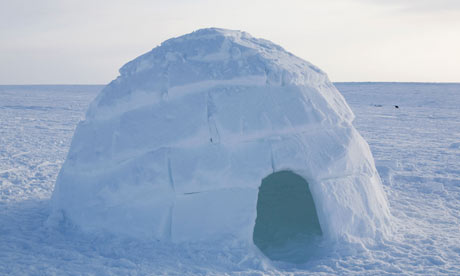
We really dig into the details, ask a lot of questions and look at a lot of documents. We pay close attention to whether or not the founder has the right passion and temperament as well as what kind of a problem his or her idea solves. It’s a good sign if the founder has some skin in the game and a vision that goes beyond simply cashing out down the road. And then we get to one of the central Go vs. No-Go questions – is the founder the Lone Ranger or is there a strong team in place?

Believe me when I tell you that there are some amazingly brilliant entrepreneurs out there. These people are scary smart and have world-changing ideas . . . but many won’t get funded because they haven’t (or won’t) put together a world-class team. The risk is too great from an investor’s perspective to make a bet on a Lone Ranger. Growing a business to any scalable level requires some very talented human capital. And the founder that says, “Invest in me now and I’ll go out and hire the talent,” just doesn’t understand. As investors we want to know who is going to be on the team from the get-go. It’s important for us to know if the chemistry is right; if everyone is committed; if the necessary principal skillsets are covered, and if all members of the team are on the same page.

There’s an obvious parallel here between startups looking for funding and our own entrepreneurial endeavors. In fact, we should step back and take a hard look at our own organizations as though we are presenting to venture capitalists. And here’s the hardball question we must ask. If we are hit by the proverbial bus today will our team be able to carry on tomorrow? Will our company survive and thrive or will it die? I know many entrepreneurs who believe their businesses are too small to justify a world-class team. To manage the risks that are inherent in entrepreneurship I think we need to scale to a size where such a team is a must-have. But can we afford not to have such a team in place as we push to scale? Think about it this way. It’s kind of like walking on thin ice across a lake. We hope with every step that we can make it to the other side without falling in. And if the ice breaks and we fall through we’re dead without the team. On the other hand if the team is in place, it can pull us out of the water should we take the icy plunge.

Some of us may be Lone Rangers because we think we can do it better than anyone else. In other cases we may know we need to build a team but don’t know how to find the right people. And there may yet be other instances where we don’t believe we can afford to hire the team at the present time. My response to all of these reasons is a repeat of my previously posed question, “If I’m hit by the bus today, will my company survive and thrive tomorrow?” If the answer is no, then it’s probably time to get busy with developing and implementing a strategy to build a strong team as quickly as possible.

While the Lone Ranger was a beloved fictional character from a different era, it isn’t a concept well-suited for a growing company. Building a world-class team is a solid way to manage risk in today’s entrepreneurial environment.

This blog is being written in tandem with my book, “An Entrepreneur’s Words to Live By,” available on Amazon.com in paperback and Kindle (My Book), as well as being available in all of the other major eBook formats.
Lone Ranger

Ice and Eskimos

I’ve written before about the sales mindset. But I’d like to expand on this subject with some additional thoughts. Entrepreneurs are always selling whether it’s raising money, peddling a product or convincing a new team member to come on board. We’ve all heard the adage, “he could sell ice to an eskimo.” This conjures up an image of a slick, fast-talking huckster who cons his “marks” into purchasing something they really don’t need. Obviously this is the antithesis of how we want to be perceived as  entrepreneurs.

I’m trying to expunge the terminology of “selling” from my vocabulary. Why? In my opinion the traditional notion of selling is product-based. In other words I have a product and I’m going to do everything I can to convince you to buy it. What goes unsaid here is, “I’m going to do everything I can to convince you to buy it whether you want it or not.” Maybe this is just my personal bias, but I’ve observed others over the years that act in similar fashion when they get into the sales mode. Instead of “selling to” I’ve moved into a “buying from” mindset. I submit the following:

  • When we sell something to someone else we’re product-focused.
  • When we help someone buy something we’re customer-focused.

The difference in these two approaches is night and day. When we help someone buy, the product takes a back seat. We’re more interested in building a relationship and creating trust with someone else. We’re more interested in understanding exactly what they need. Through this discovery process we may find that our product is not best-suited for this particular individual. But that’s OK because we are helping them buy what they need – not what we want them to have. You may be thinking, “This flies in the face of so many of the selling techniques that are time-tested and proven.” And you may be right. But I’m willing to wager that an entrepreneur who genuinely wants to help people buy what they need is going to win far more often than a salesman who just wants to move product. When relationships take precedence, they can produce unanticipated results. I’ve experienced numerous instances where I determined that what we were helping a customer buy wasn’t right for him or her. But it was clear that the relationship was more important than the sale. And ultimately we received referrals from those customers that did result in someone else buying from us.

When we just have to make the sale, we’re less likely to focus on the customer. We’re desperate to close the deal. One of my colleagues told me about an encounter she had with an individual who had called her to set up an introductory meeting. From the outset he was selling. He made no effort to learn more about her and establish a rapport – much less build a relationship. He made no effort to understand what she needed to purchase. He simply launched into his pitch and barely took a breath. By the end she was worn out listening to him and told me how off-putting the whole encounter had been.

There are some very simple rules that we can follow to ensure that we avoid the “selling to” approach.

  1. Always start the process by asking questions of the customer. This will help to establish a rapport and to determine his or her needs.
  2. Eliminate the terms “sales” and “selling” from our vocabulary.
  3. Genuinely care about the customer and find a way to meet his/her needs even if it involves a product that’s not our own.
  4. Make certain that it’s clear to the customer that it’s his/her best interest that we have at heart and not our own.
  5. Remember the only way to develop long-term satisfied customers is to help them buy what they need. And the endorsement of long-term satisfied customers is worth its weight in gold.

When we maintain our focus on the customer at all times we win. Sometimes this requires us to look past an immediate transaction. But it will always pay big dividends in the end.

This blog is being written in tandem with my book, “An Entrepreneur’s Words to Live By,” available on Amazon.com in paperback and Kindle (My Book), as well as being available in all of the other major eBook formats.

Igloo

The Mystery of the Undercooked Steak

Customers quit all the time. Many entrepreneurs work extremely hard to prevent the big screw-ups that alienate and enrage customers. Yet, even with this effort, there are still customers that leave and don’t come back. What’s up with this?

Consider this scenario. An entrepreneur has opened a new restaurant and works 24/7 to develop a loyal clientele. Over time the restaurant grows and enjoys success – it’s even profitable! But then its trajectory levels off. It’s not growing like it was and some of the regular faces aren’t there anymore. The entrepreneur studies his operation but can’t find anything glaring that is causing this trend. His puzzlement and frustration grows. Why isn’t he winning like he used to?

Had the entrepreneur taken a much closer and more granular look, he might have discovered the root cause of his problem. Had he followed one of his oldest customers – we’ll be original and call him Mr. Smith – he might have observed the following occurrences. On one occasion, Mr. Smith made a reservation in advance, but when he arrived the time was wrong. The hostess apologized profusely, but it did cause minor inconvenience to the customer. In another instance Mr. Smith’s credit card was declined. After an embarrassing moment for Mr. Smith, the server found that the credit card terminal was on the fritz. A few weeks later Mr. Smith was in a hurry to leave for a business appointment and his lunch was delayed due to a mix-up in the kitchen. Another time his steak wasn’t properly prepared. In still another instance, one of the side dishes he ordered was forgotten.

These seemingly small and inconsequential issues continued to occur over a period of months. Mr. Smith did not encounter problems every time he ate at the restaurant. But they happened often enough that he began to feel as though this eatery wasn’t the bright and shiny object that it had once appeared to be. Gradually Mr. Smith came to the restaurant with less frequency. The final straw came on a day when Mr. Smith noticed he had been charged for an appetizer he hadn’t ordered. The bill was corrected, but that was the last time Mr. Smith ever patronized the restaurant.

I call what happened here The Cumulative Effect of Little Things. The entrepreneur who owned the restaurant was prone to look at each minor problem on a stand-alone basis. And when viewed in this manner, it’s a mystery to see how a slightly undercooked steak here or a credit card snafu there could be enough to chase away a customer. He was looking for and trying to prevent, much larger issues. What he failed to understand is that the small stuff contributes to an overall customer experience. If Mr. Smith had visited the restaurant only once, he probably wouldn’t have given much thought to the fact that his meal arrived four minutes before that of his dining companion. But Mr. Smith was a regular customer and his impression of the restaurant was driven by an accumulation of experiences.

We can keep The Cumulative Effect of Little Things from causing our customers to quit. How? There are two ways. First, we must be sticklers for the small details. With the right systems, processes and team member training, we can eliminate the small mistakes that seemingly happen every day and yet are excused as too minor to matter. Second, we must be joined at the hip with our customers. It’s crucial that we know what they are experiencing at all times. Continuing with the restaurant example, when the owner or general manager shows up at my table at some point during the meal; chats briefly with me and asks (genuinely) what can be done to make my dining experience better, then I know I’m dealing with someone who really cares about me as a customer. I generally don’t ever encounter problems in those restaurants.

Customers leave more often than not as a result of The Cumulative Effect of Little Things rather than a major malfunction. Caring about the little details AND the customer will go a long way to creating a loyal following.

This blog is being written in tandem with my book, “An Entrepreneur’s Words to Live By,” available on Amazon.com in paperback and Kindle (My Book), as well as being available in all of the other major eBook formats.

Steak

The End

This topic may be uncomfortable for some but it’s a very necessary discussion to have. What happens to your organization if you die tomorrow? Would it be a loss so catastrophic that the company fails? Or have you created a sustainable business that can survive and thrive without you? Many entrepreneurs neglect this subject – after all we think we have a lot of good years left. And besides, it’s a real downer to think about dying.

One of my most important objectives is to make sure that each of the various companies with which I’m involved is sustainable for the long haul. I care deeply for the hundreds of families that depend upon us for their livelihood. Even if your company only has six employees, they likely have families too that are counting on you. So we need to take the steps necessary to ensure sustainability. Let’s examine the different components of a sustainability plan.

Growing future leaders is critical to sustainability. And avoiding a power struggle is equally critical. Who is your heir apparent? I don’t believe that it’s healthy for any leadership team to wonder at any point in time who will step in to lead in the event of the demise of the leader at any level. If your potential successor isn’t yet apparent, perhaps someone you know very well and trust could be designated to step in on an interim basis. There’s no doubt that identifying such a person may be tough, but this is tough stuff and your team deserves to know who is going to succeed you. Focusing on sustainability at all times forces us to make leadership development a top priority. A quarterly review of a hypothetical organizational chart is a good approach to spotting the gaps and filling them promptly.

If we are the majority owner of our company, what will happen to the ownership going forward? Will it be left to one or more family members? If so, what will they plan to do with the business? Many heirs aren’t prepared to own a company and all that is entailed. It’s crucial to have a conversation with family members and offer them a clear understanding about what will happen to the ownership if we die suddenly. What if there are multiple owners? Buy/sell agreements are an excellent tool for situations like this and can be funded by insurance. Such agreements should be precise on exactly how a deceased owner’s interest is to be valued.

Let’s talk money. The death of an entrepreneur can have far-reaching consequences financially. There may be covenants that accelerate loans. Perhaps the entrepreneur has been self-funding a certain project or expansion of the business. It’s also possible that without the entrepreneur’s balance sheet, credit facilities may dry up creating varying degrees of hardship. Again, insurance can help but may not be the long-term solution. It may be prudent to identify a potential financial partner that could be called upon to help. Of course there’s a price to pay for this kind of support – an ownership stake or a percentage of the profits – but such an arrangement may be necessary for sustainability. Now is the time to figure this out while we’re still alive to do so.

Finally we need to contemplate how our vision and the culture we have created can be preserved. This is the trickiest and most intangible task that we will face in planning for sustainability. Have we sufficiently communicated our vision; reinforced it repeatedly, and is it shared by all? Many leaders are so consumed by tactical decisions that the vision for their organization is muddled. And it goes without saying that our culture is built around our vision. Maintaining a vibrant culture can only be accomplished if it is front and center every day. Do we have core values? Are we truly living them?

Creating a sustainable organization that will survive us requires intense planning and tough decision making. Doing so is the greatest gift we can give to our team members.

This blog is being written in tandem with my book, “An Entrepreneur’s Words to Live By,” available on Amazon.com in paperback and Kindle (My Book), as well as being available in all of the other major eBook formats.
cowboy sunset

Headwinds

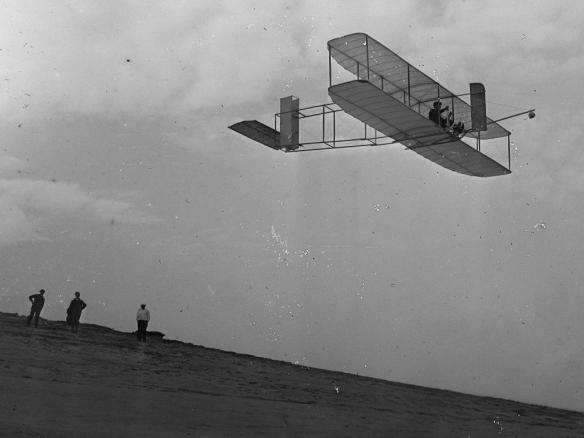
An airplane wing gains lift by taking off into the wind. This then causes the airplane to defy gravity and fly . . . an entrepreneurial metaphor if ever there was one. Interestingly, in my pilot days I once experimented with a downwind takeoff (on a very long runway) and could barely get off the ground. I quickly put the plane back on the runway and ended the experiment!

To build a muscle we exercise it regularly adding more weight and repetitions. Members of the military become elite Seals, Green Berets, Delta Force and Rangers by undergoing rigorous training involving obstacles that severely test the physical and psychological strength of a human being. In Kenya, long distance runners often wear no shoes as they traverse inhospitable terrain, toughening the soles of their feet in the process. I think you can probably see the lessons here.

Adversity can be an entrepreneur’s best friend if we allow it to be. If success comes without challenge it’s easy to become complacent. We’re also robbed of growth opportunities that result from what we learn as we work through various hardships on the road to achievement. No one says we have to like adversity. But avoiding it and fighting it does not work. I’ve found that the most constructive approach is to actually embrace it. For me this means relaxing and easing into adversity. It means establishing a positive mindset and expecting that much good will comes from the experience. We’ve all heard the term “silver linings” and used it many times. Often we look back on what has transpired and almost as a consolation prize we identify the silver linings. Looking for them in advance can give us the lift that we need to fly through the clouds.

In addition to the tangible benefits that come from overcoming adversity in specific situations, there are numerous more global wins that can occur. Think about the last time you had a tough puzzle to solve. Perhaps one of the outcomes was that of heightened creativity and innovation. When faced with the prospects of failure our creative instincts kick in and the results can be amazing. We also find that collaboration and teamwork increases reinforcing the notion that two heads are better than one. While I thrive on making sense of complexity and solving tough problems, I find that doing it with others is more productive and builds a stronger organization.

Suppose a professional basketball team plays a game against the best high school team in the country. There’s no doubt about which team would win. Now, imagine that the same NBA team plays against the reigning world champion NBA team and beats them. Which win do you suppose offers a greater sense of accomplishment? We need to feel like we are doing something really worthwhile which can be difficult when we prevail without any struggle whatsoever.

Adversity helps us to identify weaknesses within our company as well as with our strategy. When we aren’t tested and succeed anyway we don’t really know what could happen if our feet were held to the fire. Challenges and obstacles also allow us to develop resilience and perseverance – both individually and organizationally. I truly hated those first few months of my career when I was an apartment manager. I was kicked in the teeth, the rear and every other part of my body – I was totally miserable. But something finally clicked and I figured it out. Quitting wasn’t an option for many reasons – thank goodness! Now I look back and understand how valuable the tough times were in teaching me how to get off the ground and back on the horse.

When we embrace adversity we can make it work for us like an airplane uses the wind to take off. Then it can become a powerful tool in the entrepreneur’s tool box.

This blog is being written in tandem with my book, “An Entrepreneur’s Words to Live By,” available on Amazon.com in paperback and Kindle (My Book), as well as being available in all of the other major eBook formats.

1911_Wright_Glider