
Unknown's avatar

About anentrepreneurswords

R. Lee Harris grew up in Manhattan, Kansas and has lived in the Kansas City area since 1977. A 1975 graduate of Kansas State University, Harris began his career with Cohen-Esrey, LLC as an apartment manager two weeks after he graduated. Now president and CEO, he is involved in apartment management, development and investment; construction and tax credit syndication on a nationwide scale. Over the course of his career Harris has overseen the management of more than 27 million square feet of office building, shopping center and industrial space and nearly 60,000 multi-family units. He has started dozens of business enterprises over the past 40+ years. In 1991, Harris wrote a book entitled, The Customer Is King! published by Quality Press of Milwaukee. In 2012 he authored the book, An Entrepreneur's Words to Live By. He has mentored a number of business people over the years and has been a long-time participant in the Helzberg Entrepreneurial Mentoring Program. He and his wife Barb have two grown daughters and one grandson. They are active in their church, community and university.

Footprints in the Sand

Much has been written about legacies. I’d like to explore the topic as well, but with a bit of a different slant. One of the first questions usually asked is, “How do you want to be remembered after you are gone?” Does the name Daniel K. Ludwig mean anything? How about Oliver H. Payne or Donald Fisher? All three of these people were billionaires. Ludwig (1897-1995) was a shipping magnate; Payne (1839-1917) was a partner with John D. Rockefeller in Standard Oil, and Fisher (1928-2009) co-founded The Gap clothing chain with his wife. The point is that each was a very, very successful and rich man and yet most of us probably never heard of them. So much for wealth in itself being a legacy.

Here’s the thing. After we’re gone almost every single one of us won’t be a passing thought for our descendants, much less for the public in general. Of course our immediate family will remember us . . . for a while. My dad has been gone since 1988 and not a day goes by that I don’t think about him. But I doubt seriously that either of our daughters does. Is this sounding macabre or depressing? It shouldn’t. It’s just the way life is. Memories of our walk on this planet are like footprints in the sand. They are there for a fleeting instant and then they are washed away.

I personally don’t care if I’m remembered at all. But here’s the silver lining in all of this. We can live on forever through the good work that we do today. A couple of things matter to me the most where legacies are concerned. First, I want to make sure that the companies that I have helped to create exist for the long term. There are hundreds of families whose loved ones are my team members. It is important to me that these families live and thrive long after I’m gone. Building a sustainable organization is the linchpin for making this a reality. This means that our corporate infrastructure must be robust; our financial condition strong; our core values are constantly at the forefront, and we remain committed to our long-range vision.

The other aspect of the legacy I wish to leave involves philanthropy. I don’t want a building, a street or anything else to be named after me. My wife and I are committed to investing some of our hard-earned dollars in philanthropic causes that help other people. Educational scholarship programs that provide funding in perpetuity are one of the steps we’ve taken in this regard. Helping other entrepreneurs build their own sustainable companies through mentoring is another passion of mine. And I’m not interested in waiting until I die to begin realizing the results of our philanthropic efforts. I want to see the results today – not decades from now after I’m dead and gone (and can’t witness the results then anyway!).

The legacy we choose to leave is very personal for each of us. I’m not about to pass judgment on these choices. However, one thing that is for certain is that it’s unlikely that any of us will be remembered a generation or two after we’re gone. So it probably makes sense to think about making our mark on the future in a way that will be more enduring than our name and our face.

We will be remembered not for who we are today, but for how we benefit mankind tomorrow. The choice is ours whether this memory will be footprints in the sand or permanent stepping stones to a better world.

This blog is being written in tandem with my book, “An Entrepreneur’s Words to Live By,” available on Amazon.com in paperback and Kindle (My Book), as well as being available in all of the other major eBook formats.

footprints

Lincoln vs. Douglas

We may often find ourselves in situations where we are on the opposite side of a particular position that is being advocated by someone else. At this point we have a choice to make. Do we speak up or keep quiet? Obviously it all depends upon the circumstances and whether or not a discussion is actually merited. I enjoy a good healthy debate but have learned that it’s not necessary to go to the mat every time someone is espousing a point of view that is different than my own. The bottom line – what is to be gained from engaging in such a discussion? Will I persuade the other person to change his or her mind? Are there others who might be listening that I want to influence? In many cases, I decide to forgo the debate when I’m reasonably certain that the other person is entrenched in his or her point of view and there is no one else around to influence.

Let’s assume that we do want to convince others to adopt our perspective on an issue. How we go about doing this will be a real test of our skill in communications and diplomacy. If you ever watch political debates pay close attention . . . and then do just the opposite of what the politicians do. Often they obfuscate, make ad hominem attacks, avoid the question and use emotional appeals. There is a much better way.

Stick to the facts. Utilizing a fact-based approach to construct our own arguments is both rational and appropriate. Of all the classes I took in college my hands-down favorite was Logic. Connecting the dots with logic supported by well-sourced data is powerful and persuasive. And my Logic professor always used to say that a clear indication that you are winning a logical argument was when the other party resorts to playing on emotions. In addition to supporting our own thesis with facts, we can also de-construct the opposing point of view in similar fashion.

Depersonalize. As we debate an issue it’s easy to become passionate about our position and allow things to get personal. Watching our words is critically important at this point. Consider the following statement. “I just don’t understand why you are being so hard-nosed with your position.” How do you suppose the other party is going to react? It would be easy to become defensive if you are on the receiving end of this barb. How does this sound? “Help me understand the ABC Company’s position.” The word “you” has been replaced with the ABC Company. And the statement avoids an inflammatory tone.

Be respectful. Above all, we should maintain a level of friendliness during our discussion. Being respectful of the other party is paramount. Belittling and mocking statements do us no favors. Others who may be listening will be turned off by this approach. We are better served by acknowledging that the opposing point of view has merit even if we disagree. For example, we might say, “John, I understand that you believe that we should invest more marketing dollars in print media and I’m sure that we would get results. On the other hand, four independent studies have shown that the ROI for an investment in social media is five times higher than with print media.” Here, we’ve been respectful of John and his position, and then de-constructed his argument with our own facts.

Debate is healthy and productive when engaged in a positive manner. Using facts, avoiding becoming personal and maintaining respect are the best ways to persuade others to accept and adopt the position that we advocate.

This blog is being written in tandem with my book, “An Entrepreneur’s Words to Live By,” available on Amazon.com in paperback and Kindle (My Book), as well as being available in all of the other major eBook formats.
debate

A Punch in the Mouth

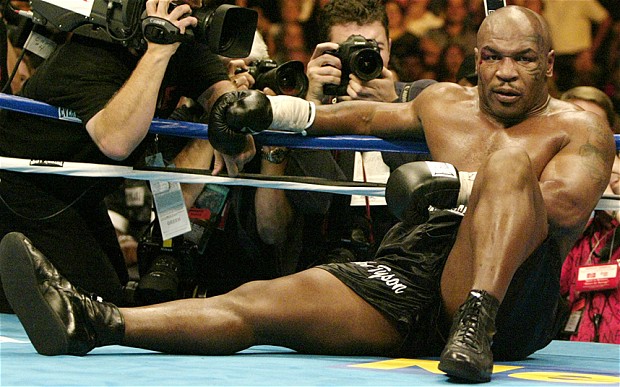
The boxer Mike Tyson is credited with once saying, “Everyone has a plan ‘till they get punched in the mouth.” This is actually a pretty profound statement even considering the source. I’ve written extensively before about resilience after getting knocked down. But let’s take another look at this subject from a different perspective. Simply put – what’s your Plan B?

It’s our nature as entrepreneurs to optimistically create a plan and work it with the full expectation that we will achieve our desired outcome. Sometimes these plans can be quite comprehensive and well-thought. And while it’s always in the back of our mind that things probably won’t go entirely as expected, we generally are confident enough in our abilities that we’ll be able to avoid running off the track. Perhaps we’ve been able to “dodge the bullet” for years with this approach. But at some point when we least expect it, that “punch in the mouth” may stagger us and as our head begins to clear we ask the question, “Now, what do I do?”

This question can be avoided entirely if we create a contingency plan prior to embarking upon whatever endeavor we are pursuing. Resilience is having the will to keep on keeping on. But to what end? We may have the resolve to never be beaten, but if something hasn’t worked we must be able to try a different way. Suppose we started a business that relies heavily on outside sales and we have a topnotch salesperson that is crushing it. Her sales volume is off the charts and our business has become very profitable. Then the unthinkable happens. Our superstar salesperson decides to leave and start her own business in another field. When we hear the news we are in a panic. Who will we ever find to replace her? How long will it take? Will the next salesperson be as strong and effective?

Alternatively, we have already contemplated that this could happen and developed a contingency plan that we implemented the day our key salesperson started. In this case, we consciously chose to build as many relationships as we could with other salespeople in a multitude of industries. Our plan directed us to make a certain number of “touches” every month with talented people who would come to know and respect us – maybe even clamor to come and work for us. Then when our superstar walked out the door we already had a list of well-vetted replacements in our hip pocket. At this point there’s no freak-out. We reach out to the top name(s) on our list and within a short period of time we are able to announce the hiring of a new salesperson.

Of course this all sounds very simple and practical. But let me ask this question. How many of us really have a well-designed Plan B for each of the numerous “punches in the mouth” that we could encounter? Better yet, how many of us have actually documented our Plan B’s; work them, and review them periodically? Contingency planning isn’t necessarily pleasant. To have a Plan B may feel like we don’t really believe that our Plan A will work in the first place. Isn’t this the kind of negative thinking that could doom our success? Not at all. The key is that we know the truth – the truth that we will succeed. We may not get to the finish line exactly the way we had anticipated, but we will win the race.

Having a contingency plan allows us to plunge ahead in a worry-free manner. We can then concentrate our energy and focus on the steps necessary to the positive results that we desire.

This blog is being written in tandem with my book, “An Entrepreneur’s Words to Live By,” available on Amazon.com in paperback and Kindle (My Book), as well as being available in all of the other major eBook formats.

mike-tyson_

Hyperopia

Here’s a fundamental question for all entrepreneurs. Are you a visionary? Being a visionary and having a corporate vision are two different things, so take care not to confuse the two. For a company, a non-profit or any other organization to thrive and succeed over a long period of time, visionary leadership is paramount. And unfortunately, many companies stagnate and die when the visionary leader moves on for whatever reason. That’s why it’s crucial for a company to continuously develop visionaries across generations that will help to sustain the organization in the future.

It’s not hard to think about individuals who exemplify the term “visionary.” Steve Jobs comes to my mind before anyone else. He was a rebel and an unconventional thinker who wasn’t afraid to take risks. Similarly, Bill Gates was a visionary who became the richest man in the world as a result of his ability to understand and shape the future. What comes to mind when you hear these names – Henry Ford, Wilbur and Orville Wright, John D.  Rockefeller, Thomas Edison, Sam Walton, Sergey Brin, Larry Page and Mark Zuckerberg? Each was a phenomenal innovator. Each had an uncanny sense of where the world was going. Each had dreams but was also a doer.

Being a visionary is partially innate and partially learned. So, what can we do to develop our visionary leadership skills? How curious are you? Do you read everything you can get your hands on? Visionaries are expansive readers and are curious about everything. Curiosity stimulates the imagination and helps bring forth new ideas manifesting in a high degree of creativity. How persevering are you? The next time you’re ready to throw in the towel remember that visionaries have a stick-to-it attitude. They are highly resilient and believe they can solve any problem. Visionaries love discussion and debate. Some may see this as confrontation but it really isn’t. Instead, a visionary likes to listen to differing points of view even when it gets a bit lively.

What other ways can we model visionary behavior? Do you embrace change or are you more comfortable living with doing things the same way? Visionaries are change agents. They like to teach and are focused on doing the right thing. Integrity ranks high on their list of values. Do you have high expectations for your team? Sometimes the line between high vs. unreasonable expectations can blur a bit. But don’t expect a visionary to set a low bar. Visionaries tend to be eternal optimists and can’t see a glass half empty – it’s always half full. And visionaries are some of the most passionate people you’ll ever meet. Finally, visionaries don’t live in the details – they are quintessential delegators.

A visionary has a knack for looking at a collection of data and telling the future. He sees things that others don’t and isn’t the least bit concerned if his ideas are pooh-poohed. In fact, he’ll work hard to persuade others to buy into what he believes because he has a supreme degree of self-confidence.

By emulating their behaviors, traits and tendencies, we too can become visionaries. Our value to our organization increases exponentially when we provide visionary leadership.

This blog is being written in tandem with my book, “An Entrepreneur’s Words to Live By,” available on Amazon.com in paperback and Kindle (My Book), as well as being available in all of the other major eBook formats.

eye doctor

The Wheels of the Bus Go Round and Round

Here’s a scenario. Sales are flat. The product development team is feuding with the marketing folks. Production is lagging and customer complaints are trending in the wrong direction. Sounds like a nightmare situation – right? It’s at a time like this that makes us wonder why we became entrepreneurs in the first place! As we try to sort out this mess, something becomes quickly apparent. We have the wrong people on the bus.

The whole problem wouldn’t even exist if we had selected the right people in the first place. But for most of us, we are where we are and have to deal with an unwise hire here and a hopeful hire there. Rarely do we make the right hiring decisions from the get-go and find smooth sailing forevermore. Something I’ve grappled with for decades is when to change out the people on the bus – and sometimes the bus driver to boot! The mistake I’ve made over and over has been to give people too many chances and believe that if I just find the “right slot” for someone, that I can “save” him or her. In recent times I’ve come to realize that we’re not in the business of doing social work and it does no favor to someone who is miscast to continue to try and salvage them.

Most of us have a level of empathy that prevents us from being Donald Trump . . . that is to simply say, “You’re fired!” But there’s undoubtedly a middle ground. We don’t have to have a hair trigger and instantly terminate someone who is beginning to struggle. And we also don’t need to continue to enable someone for months or even years who can’t get the job done.

As with much about entrepreneurship, there is a process that can make the decision to invite someone off the bus both humane and timely. We start with clear written roles and accountabilities. It’s imperative that our team members truly understand what is expected of them. Roles and accountabilities should be quite comprehensive and they must be measurable. We also must make sure that our team members understand how to perform their roles and accountabilities and that they have the proper resources to succeed. If I tell a non-pilot that he is responsible for flying a passenger jet from New York to LA I can be very clear about this. But if he’s not trained to fly the plane, then it will either fail to get off the ground or if it does, well, what happens might not be pretty. I realize that this is a bit of an exaggeration, but it illustrates the point.

Hand-in-hand come key performance indicators. These are the metrics by which we determine if the roles and accountabilities are being sufficiently executed. Ongoing performance reviews are also an important element of ensuring that the right people are on the bus. Some companies do an annual performance review. This may be fine in a formal sense, but team members need a continual feedback loop. Then there will be no surprises when the annual review is performed. It’s also helpful (and often judicious) to offer a written assessment as part of the continual feedback process. It’s not so much to build the file as it is to make sure that everyone is on the same page regarding where improvement is needed.

Often when things are going poorly, it’s the result of a lack of roles and accountabilities; or a lack of training; or a lack of proper resources to get the job done; or a lack of measuring results; or a lack of providing team member feedback, or all of the above. When this happens and we must make a change in personnel, we dread having to take action. Why? Because we know deep inside that we probably didn’t do everything necessary to be completely fair with our team member.

Ensuring that we have the right people on the bus is a strong step toward building a successful culture and producing the results we desire. And following a well-designed process to invite people off the bus who aren’t the right fit will allow us to act objectively and at the right pace.

This blog is being written in tandem with my book, “An Entrepreneur’s Words to Live By,” available on Amazon.com in paperback and Kindle (My Book), as well as being available in all of the other major eBook formats.
school bus

Prom Night

The Holy Grail for business start-ups and mature organizations alike is customer procurement. Winning customers at a sufficient pace is critical to the survival of every company and especially for those at the fledgling stage. And yet I can’t tell you how many times I’ve seen entrepreneurs focus more on other aspects of their businesses rather than making sure they have enough customers to keep the doors open.

There’s no doubt that we must have a minimally viable product that our customers want to buy. And implementing a wide variety of systems and processes is also an important factor. But without the customers, everything else is moot. To find the customers and convince them to spend their money with us requires pulling out all of the stops. Top notch interactive websites, regular informational blogs, referral programs, social media, drip marketing, multi-media advertising and positive publicity are building blocks toward customer procurement. Yet, even with full implementation, the customers may not come in numbers or as quickly as are needed. What to do? Go back to the basics and fundamentals.

Think back to prom night – what was happening? Girls had their hair done. Guys were renting tuxedos. Corsages and boutonnieres were purchased; makeup was applied, and shoes were shined to a fine gloss. In other words, we were all trying to look our very best. Think about this with respect to our products or services. Have we done everything possible to look fantastic to those outside our company?

Do prospective customers clearly understand our value proposition? How strongly are we able to demonstrate that our product or service solves a problem and preferably one with which a lot of pain is associated? This is a major failure for a vast number of companies. Their product/service might be nice to have, but the customer can’t find a compelling reason to purchase it. Think Colgate Kitchen Entrees. Never heard of this? You’re not alone. The folks that make Colgate toothpaste thought it might be a good idea to launch a line of frozen dinners. Customers could eat a Colgate meal and then use Colgate toothpaste to brush their teeth. What kind of a value proposition is that?! If we can’t nail our value proposition then neither can our customers.

Customers have many choices when purchasing a product or service. Entrepreneurs sometimes become so enamored with their own ideas that they fail to objectively assess the competition. I’ve certainly been guilty of this myself in the past. I would pooh-pooh a competitor and rationalize that our approach was far more sophisticated and desirable. And yet, I didn’t ask the bottom-line question of what customers liked better about the competition. We may have a product or service that truly is twice as good as anything else on the market, but unless we can make a clear and concise case for differentiation, we’ll be stuck with the rest of the pack. Effectively communicating product or service differentiation means life or death in the business world.

A strong uptrend for customer procurement will happen if we practice the basics and fundamentals. This can be accomplished by presenting our product or service in as attractive a manner as possible; when we have a killer value proposition, and when we effectively communicate how we’re different. Doing all of this will ensure that we’ll be the hit of the party.

This blog is being written in tandem with my book, “An Entrepreneur’s Words to Live By,” available on Amazon.com in paperback and Kindle (My Book), as well as being available in all of the other major eBook formats.

prom night

The Really Deep Dive

Way back in the olden days I can envision a prehistoric man trapping a small animal of some variety (probably a mini-dinosaur) and trading it to another prehistoric man for a new spear. And at that precise moment in time, the first entrepreneur and the first customer were born. Now suppose that this first entrepreneur continued to trap small animals and trade them to other “customers” for the basic necessities that they could provide. This economy worked reasonably well until something happened. Another prehistoric man decided to do his own trapping and he too made his “product” available for trade. But a funny thing happened. He was willing to trade it for something of less value than the first entrepreneur. So “customers” flocked to him leaving the first entrepreneur with “unsold” “inventory.” And thus, competition was born.

Ever since the earliest days of commerce, entrepreneurs have developed a rudimentary understanding of their customers. More recently, highly sophisticated techniques and technologies have been created to aid with this customer understanding. Yet still, a vast number of businesses do not truly have the depth of customer knowledge that is necessary to consistently win. How could this possibly be considering the amazing advances that have been made since prehistoric days? The answer is relatively simple. Many entrepreneurs have not chosen to make their customers the absolute primary focus of their business. Much time and effort is spent improving processes, creating systems, increasing productivity, cutting costs, managing revenue and a host of other business practices. There’s no question that all of this is necessary. But from where does it emanate? If it starts with the bottom line instead of with the customer, the road may be rocky.

A customer-centric business starts with the basic question, “How well do I really know my customer?” Most of us think we have a pretty good idea who our customers are and what makes them tick. But I’m willing to bet that we probably have only scratched the surface with respect to the depth of our customer knowledge. Do we know the stratification of age cohorts across our product and service offerings? That’s an easy one. Do we understand the subtle preferences, needs and desires of these different age groups? Have we spent much time fine tuning our products and services to address this information? Oh sure, we perform ongoing customer surveys. But often they are designed to determine whether our customers are satisfied with our products and services. How much survey work do we do to get to know our customers better? We suspect that live customer focus groups might provide some valuable insights, but we believe that this approach is too expensive, something left to big corporations or we have no idea how to go about implementing such focus groups.

I submit that we all need to step back and take a deep breath. Then we need to pull together our team and begin to examine just how we are going about a deep dive into customer understanding. I’m championing this effort in my own companies and believe that it may dramatically transform our product and service offerings. Big Data is a treasure trove in this regard. We’ll be combining extensive demographic studies with customer focus groups, surveys and other initiatives to know for certain that we absolutely understand exactly what our customers need and want. We are looking for more than just what our customers tell us however. Big Data will help us go beyond the obvious and identify the buying habits and other trends with our customers that might not be readily apparent. And then with the customer front-and-center, we’ll make sure that our products and services precisely meet those needs and wants – stated and unstated.

Developing a deep understanding of what our customers really want and need, will help us create more customer-centric organizations. Then we are able to align our products and services with this customer focus that will manifest in high levels of customer satisfaction and greater profitability for our enterprises.

This blog is being written in tandem with my book, “An Entrepreneur’s Words to Live By,” available on Amazon.com in paperback and Kindle (My Book), as well as being available in all of the other major eBook formats.
deep dive

Walking Shoes

We’ve all known hard-charging Type A entrepreneurs who have a “take no prisoners” attitude. These people are the doers. They are decisive and they know how to execute. But sometimes there is a downside to this sort of personality. Yes, sometimes those of us who are very driven may have a tendency to be insensitive. This usually isn’t intentional but nonetheless it can have a detrimental effect on our team members and the culture we are trying to build.

There are a number of ways that insensitivity can manifest. It can be as direct as making derogatory or belittling comments to as subtle as failing to acknowledge someone with a friendly greeting in the morning. Think about an exchange like this. Team member – “I’d like to volunteer to work with Jim on the Norton project.” Entrepreneur – “No, you just need to stay focused on what you are doing.” While it may be absolutely true that the team member needs to keep doing what she’s doing, the way the entrepreneur delivered the message could be construed as insensitive. A different selection of words would make all the difference. How about this instead? “Jan – thanks for the offer. Your project is critically important and I’m counting on you to get it wrapped up. But I will take a rain check on having you help with the next one.” This statement acknowledges the team member with an expression of appreciation and also affirms her value. And it gives her hope that she’ll be given another opportunity in the future.

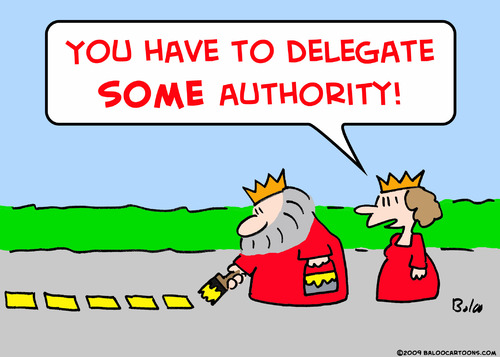
So, how do we develop the appropriate level of sensitivity without going so far as to sing Kumbaya all the time? There’s a very simple method that I’ve learned over the years. I will admit to once-upon-a-time being the insensitive Type A hard-charger that was described in the opening paragraph. I justified my behavior by believing that I was simply being expedient in my dealings with others. After all, I was moving at 100 miles an hour and the quicker I could get through with one meeting the sooner I could move on to the next. But I gradually became aware that my people skills were suffering. I wasn’t doing anything to cultivate relationships or goodwill. Eventually I developed a new awareness by just putting myself in the other person’s shoes. How would I feel if someone spoke to me a certain way; said something in a certain manner, or failed to somehow acknowledge me?

The key is to practice, practice and constantly practice. I try to pay attention to how everyone around me is feeling. In a restaurant, I want to make sure that the wait staff is properly appreciated. At the office I try to make eye contact with members of our team as I walk by and greet each and every one of them. I pay attention to the language that I use, going the extra mile to avoid careless statements that could be misconstrued. Again, I’m always testing what I say or do against the basic premise of how I would want to be treated if I were the other person. After a while it becomes very intuitive.

The mark of a good leader is the manner in which he or she treats others. Running roughshod or being humble and sensitive? The choice is easy when walking a mile in another’s shoes.

This blog is being written in tandem with my book, “An Entrepreneur’s Words to Live By,” available on Amazon.com in paperback and Kindle (My Book), as well as being available in all of the other major eBook formats.
dirty shoes

On It or In It?

I have the good fortune to regularly mentor several amazing entrepreneurs. One question I frequently ask is, “how much time do you spend working on your business versus in your business?” A similar question is, “how much time do you spend working on strategy vs. tactics?” Usually the answer to both questions is, “not much.” The problem is easy to identify. Entrepreneurs find themselves sucked into the daily grind of firefighting and there’s no time left to do much else.

So how do we focus on strategy and vision when the bullets are flying and we’re hunkered down in our foxholes? For starters, we need to examine exactly what it is that we are doing. As part of my mentoring process I inquire on specifically what an entrepreneur is spending his or her time. It’s interesting to listen to the responses which often reflect the fact that  entrepreneurs are handling things that really shouldn’t be their responsibility. Mostly this includes performing tasks for which others should be held accountable. And it’s not just about the failure to delegate. Some entrepreneurs take the position that “if I want it done right, I need to do it myself.” Or, “I really don’t have the time to show someone else how to do it – it’s more efficient for me to bang it out.”

To solve this we need to understand what prevents us from delegating that which should be handled by others. Do we have the right people on the bus? Do we have enough people? Are the right people properly trained? Are we too high control? When I have experienced problems with delegation in the past it’s usually been the result of not having the right people to whom I can delegate. Getting to the root cause of our inability to delegate is crucial. If we don’t have the right people, what is more important than solving this problem? One of the nice things about having the right people on the team is the fact that they may not need as much training – bright, right people figure out a lot of things on their own.

How is an entrepreneur who has a very small team able to delegate effectively? In other words, he or she is a player/coach and is on the field for every single play. This is where blocking out specific amounts of time to plan and strategize can be invaluable. Perhaps this occurs every morning from 8:00 to 9:00 without fail. During that timeframe, the entrepreneur takes no phone calls or any other interruptions and refines the strategy for the enterprise, reviews key performance indicators and determines if the business is on track with respect to vision and mission. Then the entrepreneur suits up and runs out on the field with the rest of the team to face another day. I cannot emphasize enough how absolutely nothing can be allowed to disrupt this daily routine.

We can ill afford to procrastinate when it comes to working on our business because we are too busy working in our business. The more this happens the more likely it is that we’ll get caught on the hamster wheel. Around and around we go as fast as our legs will churn – but we’re not making any headway. Why exert so much energy (and money) to end up right back where we started?

Learning how to delegate and hold others accountable will allow us to strategize and envision the future for our enterprise. And sequestering ourselves for a specified period of time every single day will enable that planning and visioning to happen.

This blog is being written in tandem with my book, “An Entrepreneur’s Words to Live By,” available on Amazon.com in paperback and Kindle (My Book), as well as being available in all of the other major eBook formats.

delegate_authority_king_621555

Confluences

Consider this. One of your key employees just gave her two-week notice. Your company didn’t win a major contract for which it was bidding. The vice-president of production just informed you that delivery of a key component for manufacturing a product that is 30% of your sales has been indefinitely delayed. Your company website was hacked last night and decorated with cyber graffiti. Cash flow is a bit tight right now. Oh, and you haven’t been able to squeeze in a workout for a week. How does all of this feel right about now? Certainly being under siege might be one way to describe it.

Let me assure you that similar situations like this are experienced by many entrepreneurs every single day. Perhaps some of it is preventable. But more importantly – how do you handle it? Are you able to stay calm, smile and find your way through the minefield? Or is it meltdown time and maybe a visit to the local tavern after work? The key is how we choose to view and respond to such events. If we see all that I’ve described as a crisis, then we may react with fear and panic. However, if we simply see this as a “Confluence of Events,” we may be a bit more sanguine about it. Let’s look at some of the reactions I’ve witnessed over the years when I see entrepreneurs encounter a “Confluence of Events.”

  • The Beginning of the End – those who go here lay awake at night conjuring images of complete and total disaster and destruction. They are convinced that their company is going down the tubes; they’ll personally go broke, and they’ll end up living under a bridge. They go to the office and try to slug it out, but they have this feeling of impending doom. Sometimes this becomes a self-fulfilling prophesy.
  • Deny and Hide – others utilize the Deny and Hide approach. They refuse to acknowledge that something needs to be done and go play golf, take a “business” trip or find some other distraction. Rather than face the issues at hand, they rationalize their reaction by positing that “others need to step up and show leadership” in order to solve the problems.
  • Focus, Focus, Focus – I’ve watched leaders with the best of intentions sharpen their focus . . . in over-the-top ways! They tend to jump in and micro-manage a particular situation to the exclusion of everything else that is occurring. By plunging in this way they believe that they are being productive – except that the rest of the issues that need solving are languishing.

These are just three of the reactions I’ve observed and each demonstrates the classic fight or flight response. There is another way.

When the “siege” begins and a Confluence of Events is in sight the first thing we can do is take a deep breath. Seriously. Spending several minutes to become quiet will help clear the mind. There’s plenty of time to deal with the issues at hand, and becoming centered will make the process easier. Next, we write down the specific facts surrounding each challenge that we’re facing. This helps move us away from dwelling on the emotional elements. I’ve found that when I push out the emotion, things generally aren’t as bad as they seem. Finally, we map out the manner in which we are going to tackle each situation that is contributing to our Confluence of Events. We identify the priorities and start working our way through them. At no time do we feel victimized or defeated. We show leadership by maintaining an even keel and demonstrating that no matter what the situation, there’s always a resolution.

A confluence of problems in our business and personal lives may seem insurmountable. Avoiding a siege mentality begins with remaining calm and unemotional. Then we’re able to methodically and successfully work through or around the obstacles we are facing.

This blog is being written in tandem with my book, “An Entrepreneur’s Words to Live By,” available on Amazon.com in paperback and Kindle (My Book), as well as being available in all of the other major eBook formats.

bomber